
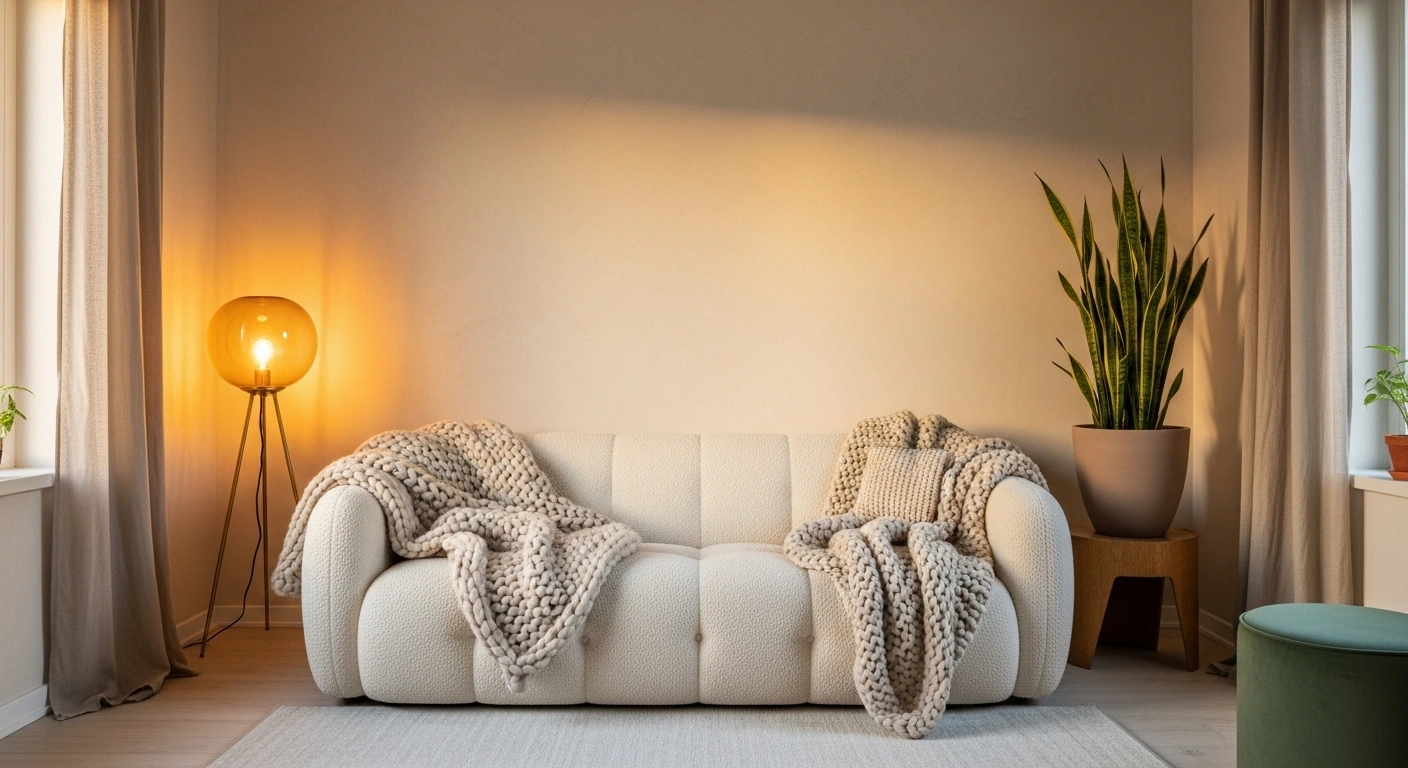
How To Turn Your Tiny Apartment Into a Nervous System Sanctuary
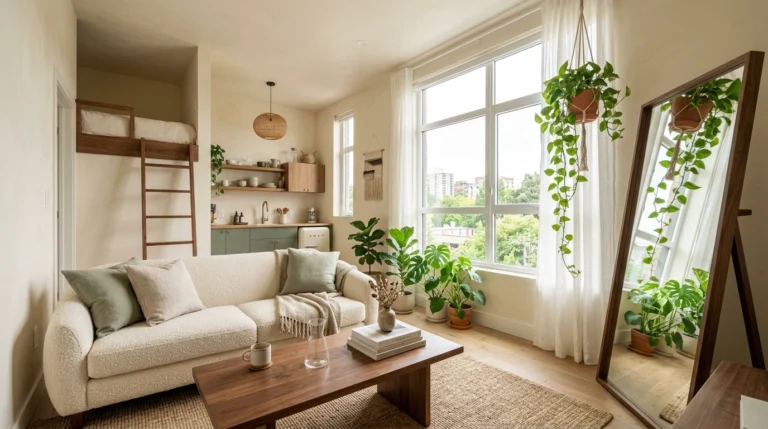
A tiny apartment sanctuary isn’t about square footage. It’s about intention. With the right sensory choices, even the most compact studio can become a space that actively calms your body, quiets your mind, and restores your energy every single day. This guide walks you through every layer — from color and light to scent, texture, sound, and daily ritual — so your tiny apartment becomes the most restorative place you enter all day.
What Is a Nervous System Sanctuary and Why Your Apartment Space Matters
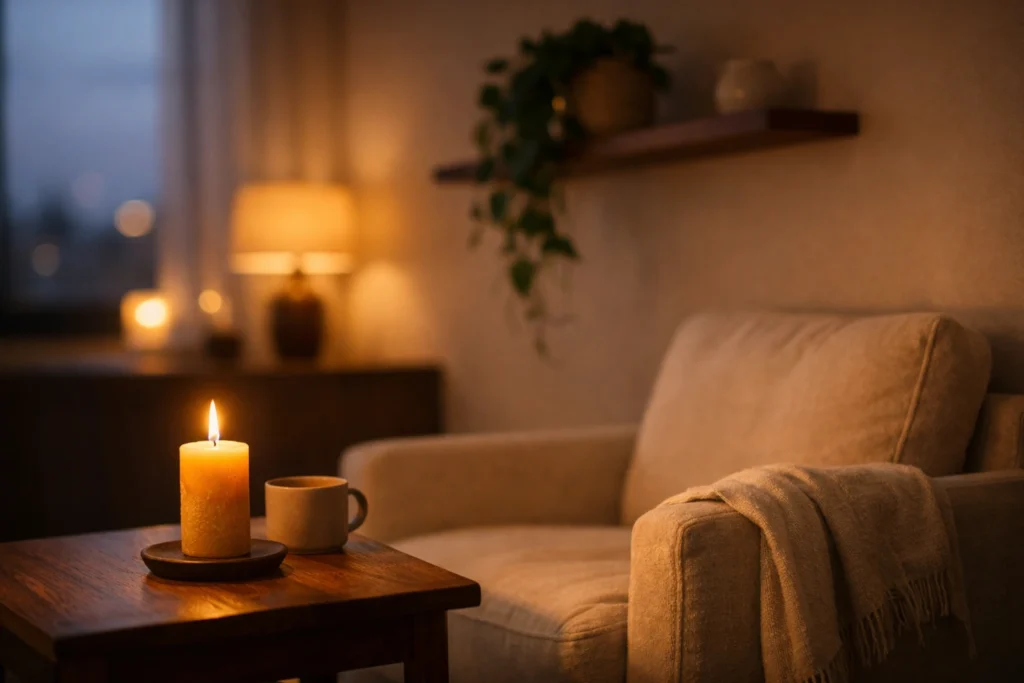
A nervous system sanctuary is a physical environment deliberately designed to activate your parasympathetic nervous system — the part of your body responsible for rest, digestion, and genuine recovery. Your environment speaks to your nervous system constantly, silently, and powerfully. Visual clutter, harsh artificial light, synthetic materials, and ambient noise all keep your body in a low-grade stress state even when you think you’re relaxing. Peaceful tiny apartment decor addresses this at the root level — not just the surface.
What makes a tiny apartment feel like a sanctuary isn’t one single thing. It’s a collection of intentional sensory signals that tell your nervous system it’s finally safe to release. Research from the University of Exeter confirms that well-designed personal spaces reduce perceived stress significantly and improve overall wellbeing. Your apartment either depletes you or restores you. There is genuinely no neutral. Small space sanctuary design makes the active choice to restore — and this guide shows you exactly how.
Declutter Your Tiny Apartment First — Calm Starts With Clarity
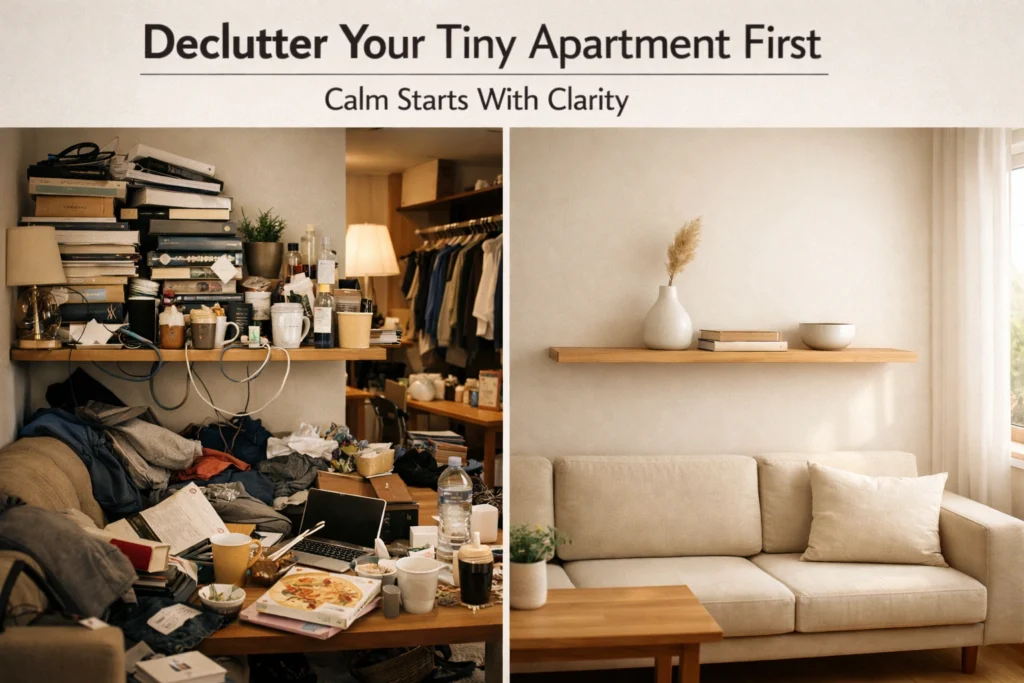
Visual clutter is the most powerful hidden stressor in any tiny apartment. Princeton University Neuroscience Institute research proves that visual clutter directly competes for cognitive attention — keeping your brain in a constant low-grade state of alertness even when you’re trying to rest. In a tiny apartment, this effect is amplified. Every visible object demands micro-processing energy. Multiply that across fifty surfaces and you understand why a cluttered apartment feels so exhausting. How to declutter a tiny apartment to feel like a sanctuary starts with one radical act — removing more than you add.
Minimalist apartment sanctuary design doesn’t mean empty or cold. It means intentional. Keep only what is beautiful, functional, or emotionally meaningful. Remove everything else without apology. Cozy apartment sanctuary decor lives in the negative space — the empty shelf, the clear coffee table, the uncluttered windowsill. These open spaces aren’t wasted. They’re where your nervous system finally exhales. Start with one surface tonight. Clear it completely. Notice how differently that corner of the room makes you feel. That feeling is the beginning of your sanctuary.
Choose a Soothing Color Palette That Tells Your Nervous System To Rest
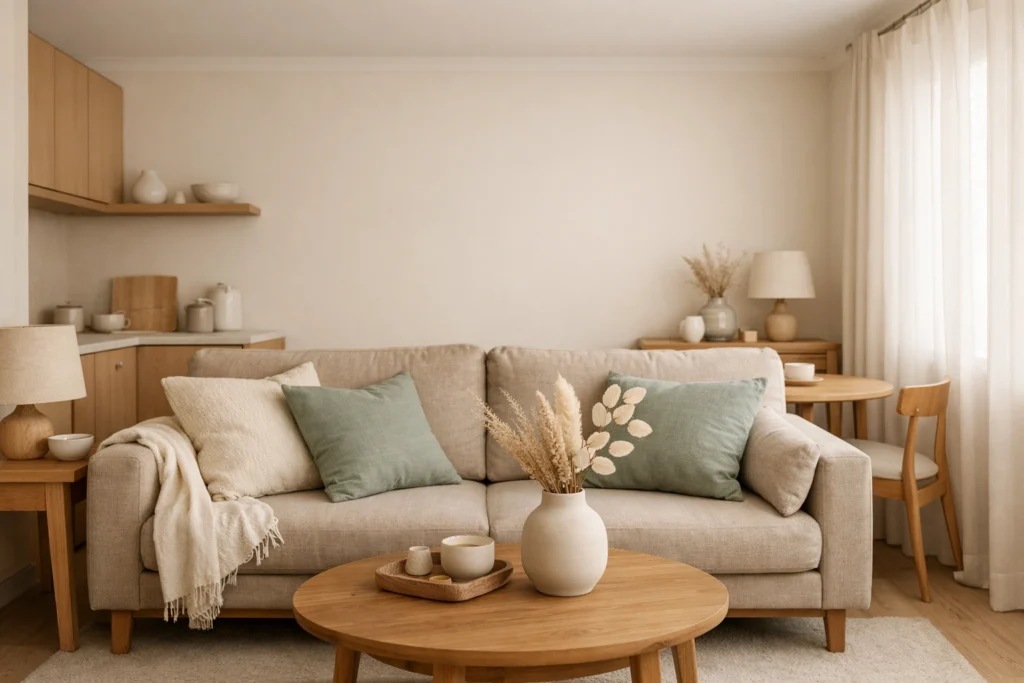
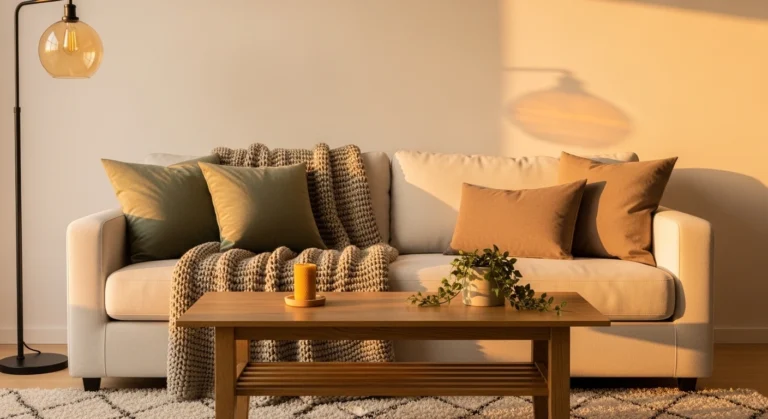
Color speaks directly to your autonomic nervous system through a mechanism called chromotherapy. Different wavelengths of light trigger measurably different physiological responses. Cool blues and stark whites activate alertness. Warm earthy neutrals promote calm. Best colors for a tiny apartment sanctuary always draw from the natural world — sandy beiges, soft creams, warm taupes, dusty sage greens, and muted terracottas. These tones feel instinctively safe because they mimic the landscapes humans evolved in. Calm apartment sanctuary aesthetic always starts with the walls.
you may also like this:9 Affordable and Natural Small Apartment Christmas Decor Ideas
| Color Role | Best Sanctuary Choices | Always Avoid |
|---|---|---|
| Walls | Warm white, soft cream, dusty sage | Cool grey, stark white, bold colors |
| Ceiling | Same as walls or slightly lighter | Bright white, high contrast |
| Large furniture | Sandy taupe, warm oat, soft greige | Black, navy, high saturation |
| Textiles | Warm beige, muted terracotta, blush | Busy patterns, neon, cool tones |
| Accents | Dried botanicals, warm wood, ceramic | Synthetic, shiny, plastic materials |
Use Warm Layered Lighting To Shift Your Apartment From Stress to Calm
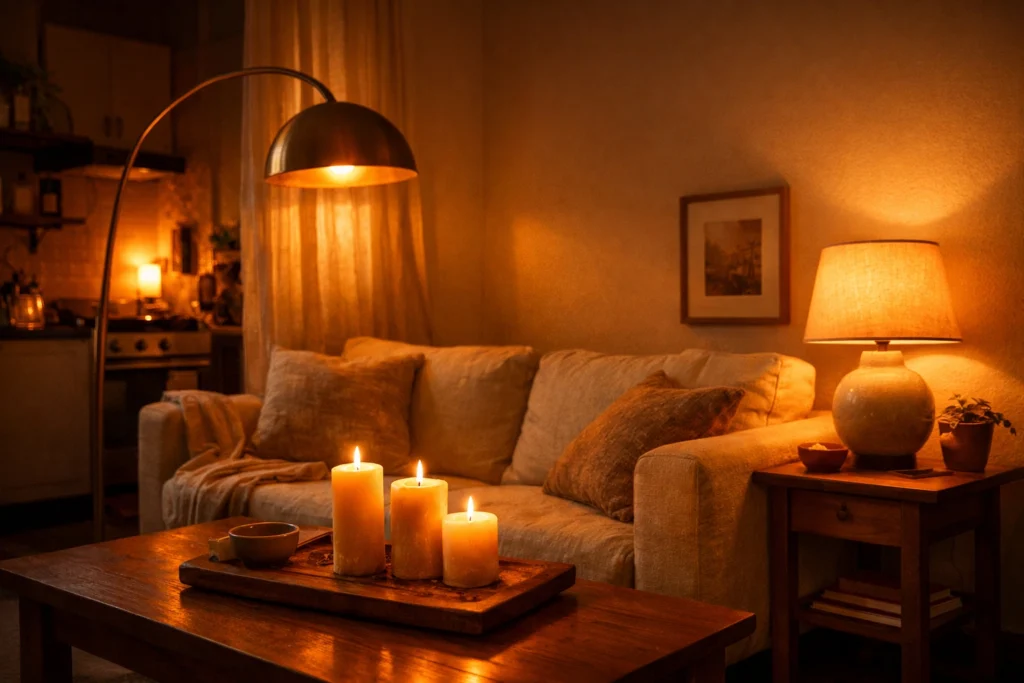
Bright overhead lighting is one of the most underestimated nervous system stressors in American apartments. Harsh cool-toned ceiling lights suppress melatonin production and keep your sympathetic nervous system — the fight-or-flight system — running long after you’ve come home. What lighting works best for a tiny apartment sanctuary is the complete opposite. Warm, layered, low-level light at multiple heights tells your brain that the threat is gone. The day is done. It’s safe to rest now. Warm tiny apartment sanctuary design treats lighting as a nervous system tool first and an aesthetic choice second.
| Lighting Layer | Best Fixture | Color Temp | Nervous System Effect |
|---|---|---|---|
| Ambient | Dimmable warm ceiling fixture | 2700K | General relaxed warmth |
| Floor lamp | Arc or tripod with warm shade | 2700K | Corner softness, grounding |
| Table lamp | Ceramic or wood base | 2700K | Intimate, close comfort |
| Candles | Beeswax pillar or soy jar | Flame warmth | Deepest parasympathetic calm |
| Under-shelf | LED warm strip lighting | 2700K | Ambient glow, no glare |
Bring in Natural Materials That Ground Your Body and Quiet Your Mind
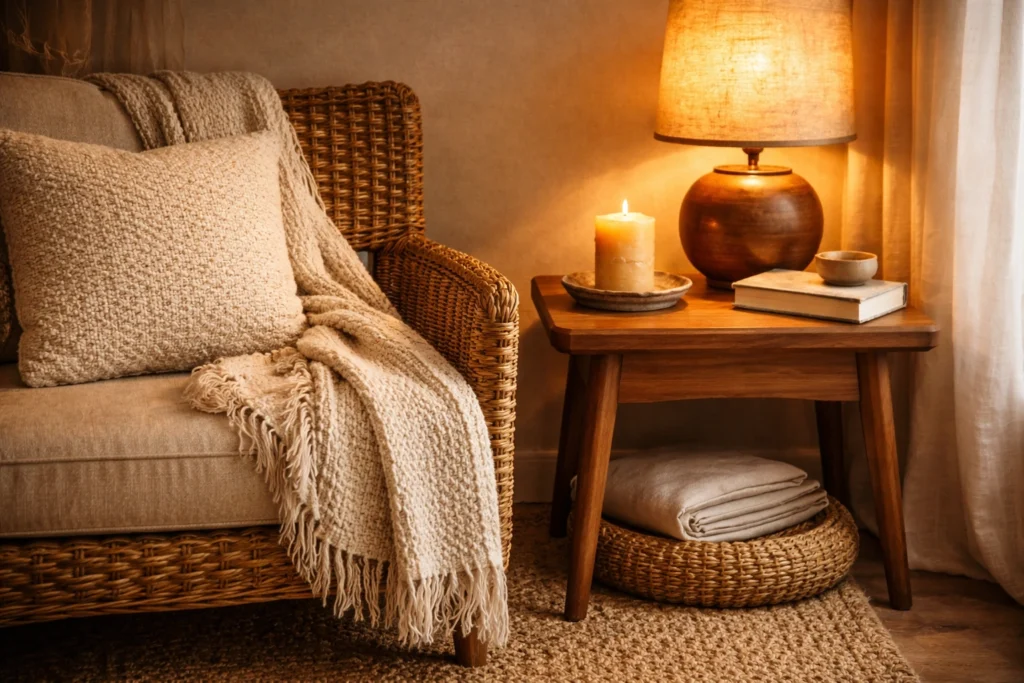
Natural materials trigger what researchers call the biophilic grounding response. When your hands make contact with wood, wool, linen, or ceramic, your nervous system registers something ancient and reassuring — these materials come from the earth, and the earth means safety. How to design a cozy sanctuary in a tiny apartment always starts by replacing synthetic materials with natural ones. Not all at once. One piece at a time. A linen throw instead of a polyester one. A solid wood shelf instead of a plastic one. A ceramic lamp base instead of a synthetic resin one.
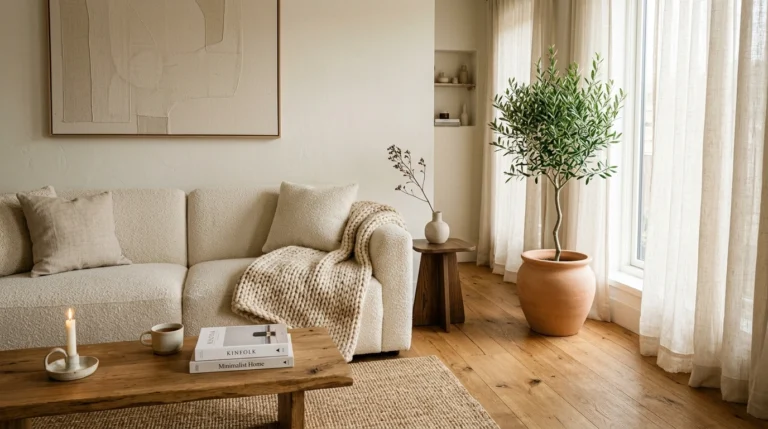
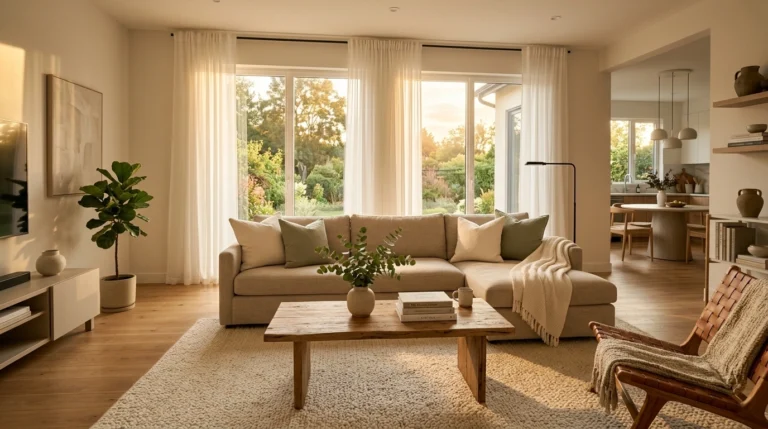
Tiny home sanctuary styling with natural materials creates a sensory environment that engages your touch, your sight, and even your smell in gentle, restorative ways. Solid wood. Linen. Wool. Rattan. Jute. Ceramic. Stone. Beeswax. Each material adds a different layer of organic warmth. Small apartment healing space design often transforms dramatically with just three natural material swaps — a wool rug on the floor, a linen throw on the sofa, and a wooden tray on the coffee table. The room shifts. The body follows.
Layer Soft Comforting Textures That Make Your Tiny Apartment Feel Safe

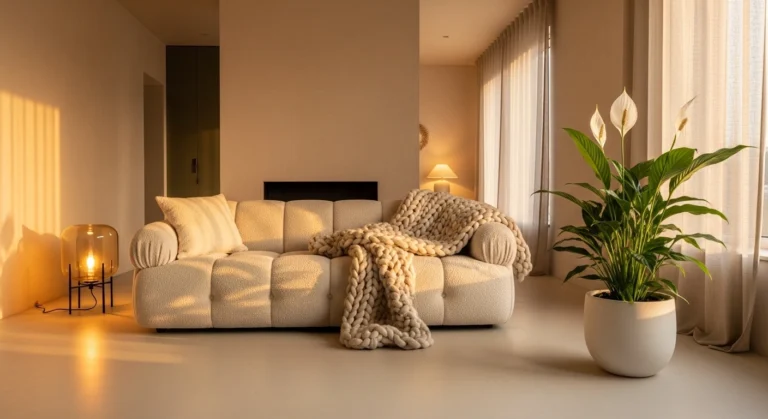
Soft textures activate C-tactile afferent nerve fibers in your skin — specialized sensory receptors that send direct safety signals to your brain. This is the neuroscience behind why wrapping yourself in a chunky knit blanket feels so instinctively calming. How to use texture to create a sanctuary in a tiny apartment means deliberately choosing materials that stimulate these fibers gently and consistently. Chunky knit throws. Bouclé cushion covers. A plush wool area rug underfoot. Velvet accent pillows. Worn linen upholstery that gets softer with every wash. Cozy sanctuary apartment styling lives in these layers.
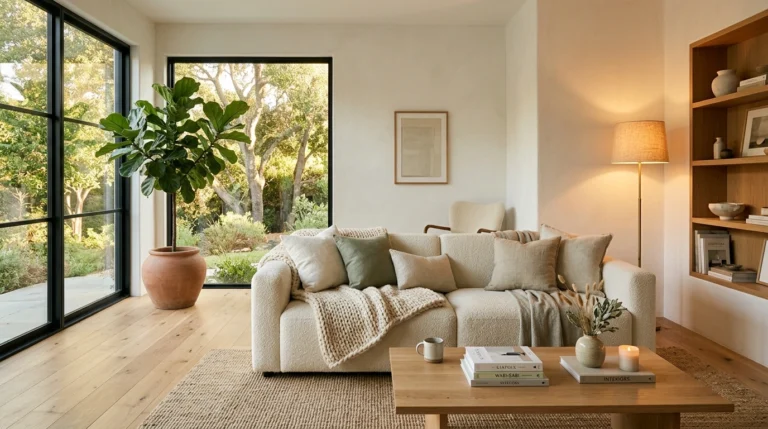
Apartment sanctuary interior ideas for texture follow one guiding principle — vary the texture but keep the color tonal. A cream chunky knit throw, a sandy linen pillow, a warm wool rug, and a bouclé armchair all feel completely different under your hands but share the same warm earthy color story. They layer beautifully without creating visual noise. How to make a tiny apartment bedroom feel like a sanctuary almost always starts with a large wool rug beside the bed — the moment your feet touch it every morning, your nervous system receives a gentle, grounding signal of softness and safety.
Add Calming Plants That Purify Your Space and Restore Your Energy
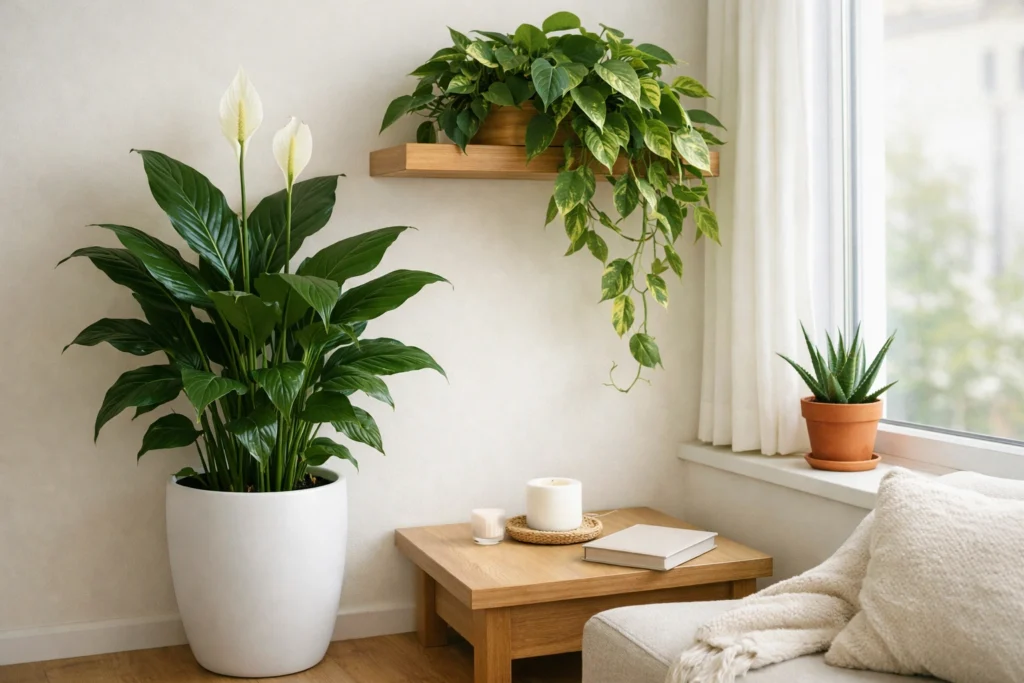
Plants restore. That’s not poetry — that’s biology. NASA’s landmark Clean Air Study found that specific indoor plants reduce airborne toxins including benzene, formaldehyde, and trichloroethylene by up to 87% within 24 hours. Cleaner air means a calmer, better-functioning nervous system. How to style a tiny apartment sanctuary with plants starts with choosing varieties that thrive indoors with minimal care: Peace Lily, Snake Plant, Golden Pothos, ZZ Plant, Aloe Vera, and Lavender. Each one delivers air quality benefits alongside genuine visual beauty. Mindful apartment decor ideas always include at least one living plant.
The deeper benefit is neurological. Humans evolved in natural environments rich with living greenery. How to create a zen space in a tiny apartment consistently features plants because they trigger the biophilic response — a deep, instinctive sense of safety and ease that living in built environments naturally suppresses. Tiny apartment sanctuary ideas for plant styling: one large statement plant in a corner, trailing Pothos on a high shelf, a small herb pot on the kitchen windowsill. Keep pots natural — terracotta, matte ceramic, or woven rattan. The combination of living plant and natural pot creates maximum grounding effect with minimum visual clutter.
Create a Dedicated Rest Corner That Trains Your Brain To Decompress
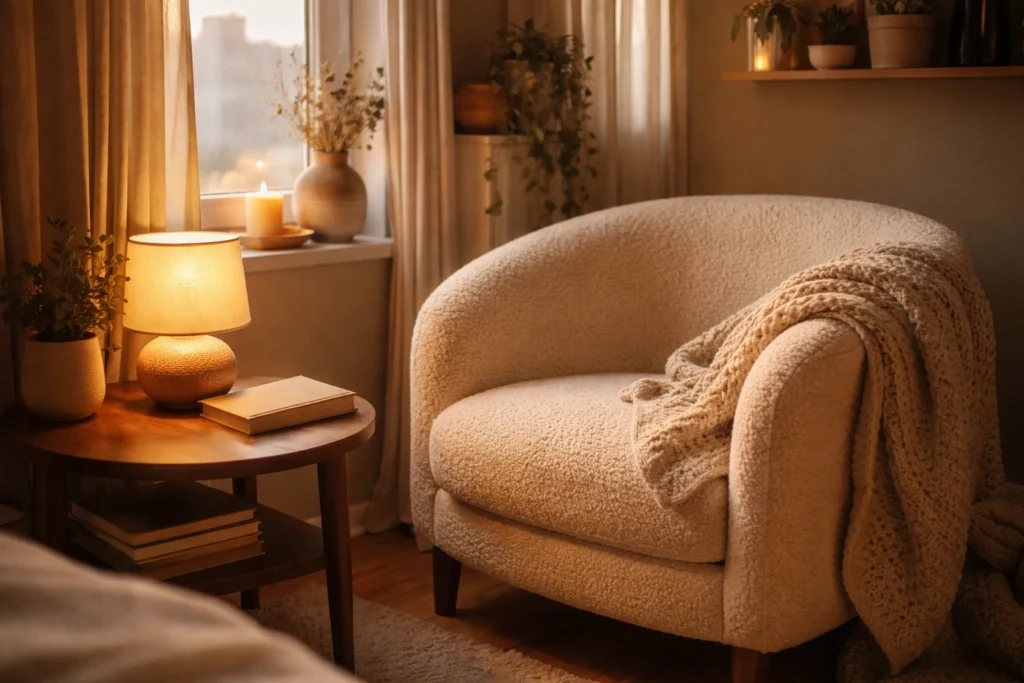
A rest corner is a micro-sanctuary within your sanctuary — a specific physical spot your nervous system learns to associate with safety, rest, and release. How to create a cozy reading nook in a tiny apartment follows a simple but powerful formula: one comfortable armchair with soft upholstery, a warm throw draped over one arm, a small wooden side table, a gentle warm lamp beside it, and zero screens within direct sightline. That’s the complete setup. Cozy small apartment retreat energy lives in exactly this kind of deliberate, screen-free, beautifully contained space.
The neuroscience behind this is compelling. Conditioned relaxation — the brain’s learned association between a specific environment and a specific physiological state — strengthens through repetition. Tiny apartment sanctuary ideas for renters that include a consistent rest corner build this conditioned response over time. The American Psychological Association confirms that even 10 minutes daily in a designated rest space measurably reduces cortisol. Your armchair becomes a trigger. Sit in it consistently enough and your body begins to soften before you’ve even reached for your throw.
Use Calming Scents To Instantly Shift Your Nervous System Into Rest Mode
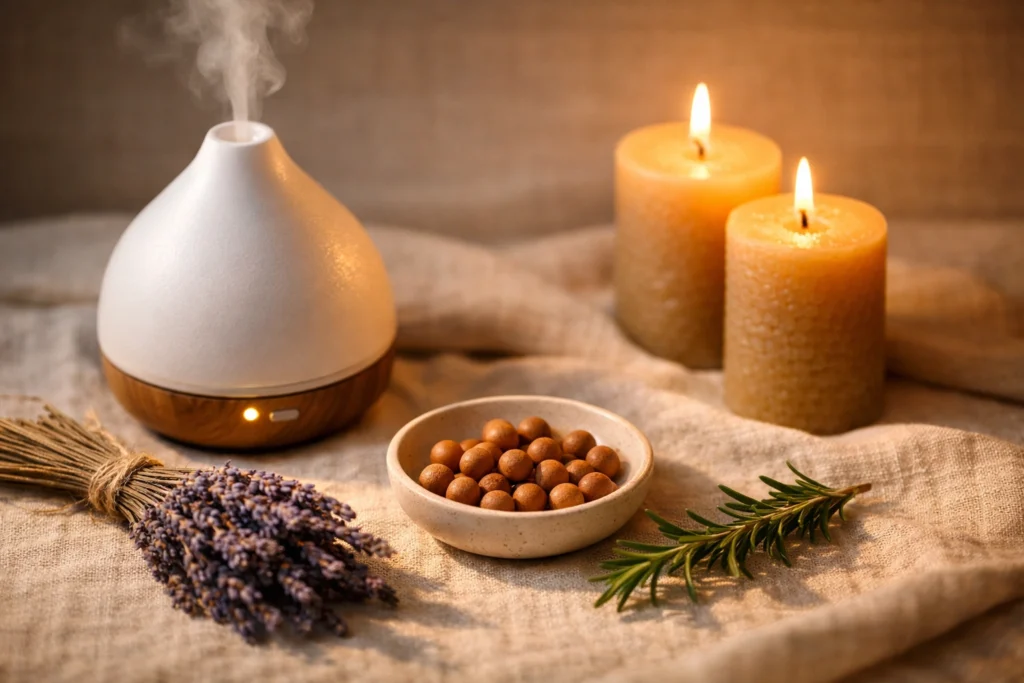
Scent is the fastest nervous system reset available in any tiny apartment. Unlike sight or sound, olfactory signals travel directly to the limbic system — the brain’s emotional and survival center — bypassing rational thought entirely. Best scents for a tiny apartment sanctuary include lavender, cedarwood, bergamot, vetiver, vanilla, clary sage, and sandalwood. Each one has peer-reviewed research behind its calming efficacy. Lavender reduces anxiety and heart rate measurably. Cedarwood promotes deep physical relaxation. Bergamot lifts mood while simultaneously calming the nervous system. Small apartment relaxation space design treats scent as a first-layer tool, not an afterthought.
Build a signature sanctuary scent and use it consistently. Over weeks, your nervous system develops a Pavlovian calm response — the moment that scent reaches you, your body begins to soften before you’ve consciously registered it. Apartment sanctuary on a budget through scent is remarkably achievable. A $12 beeswax candle. A $15 essential oil diffuser with pure lavender oil. A stovetop simmer of orange peel, cinnamon, and cedarwood. A linen spray on your sofa cushions. How to make a tiny apartment feel like a retreat through scent costs almost nothing and delivers an immediate, measurable nervous system response every single time.
Control Noise in Your Tiny Apartment for Deeper Daily Calm
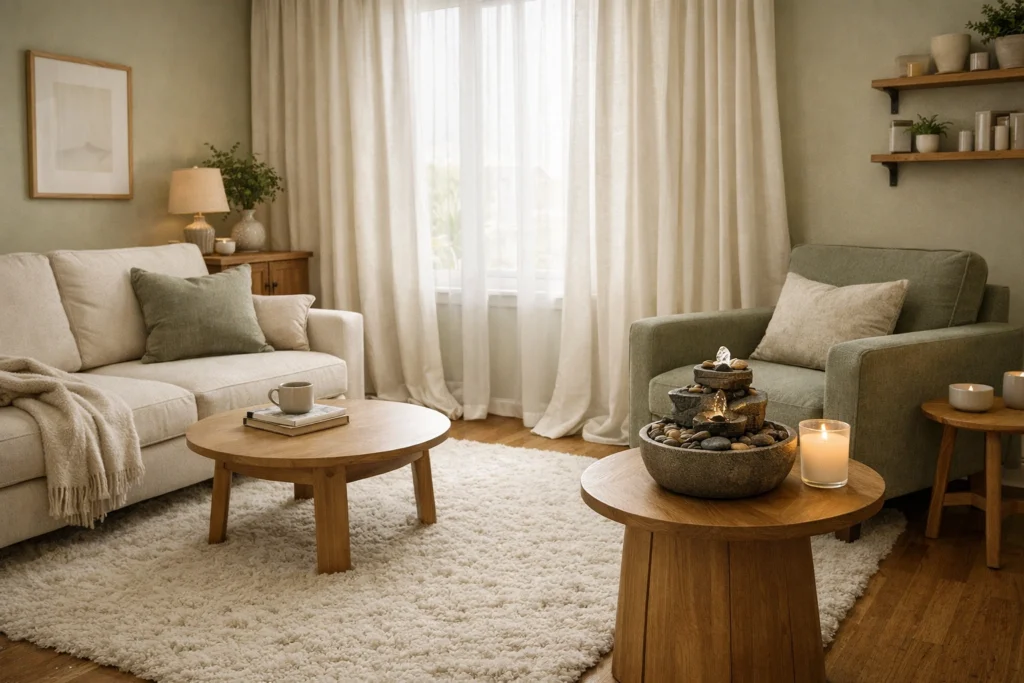
Chronic ambient noise is one of the most overlooked nervous system stressors in urban American apartments. Traffic outside. Neighbors through thin walls. Appliance hum. The constant background noise of city living keeps your nervous system in a persistent state of low-level alertness that makes genuine rest almost impossible. Tranquil tiny apartment design addresses acoustics with the same intentionality it brings to color, light, and texture. Soft furnishings absorb sound naturally and effectively. A large wool rug reduces floor reflection dramatically. Heavy linen curtains dampen window noise. Upholstered furniture absorbs mid-range frequencies throughout the room.
Tiny apartment calm aesthetic also incorporates intentional sound additions that mask external noise with calming alternatives. A small tabletop water fountain introduces rhythmic flowing water sounds that research consistently identifies as deeply restorative — running water signals safety and abundance at a primal, evolutionary level. Soft instrumental music at low volume, nature soundscapes through a small speaker, or intentional silence after 9pm all serve the nervous system powerfully. Small apartment peaceful retreat design for urban dwellers should always include a white noise machine near the window — it’s one of the most effective and affordable sound management tools available for apartment living.
Choose Furniture That Supports Rest and Recovery Over Visual Performance
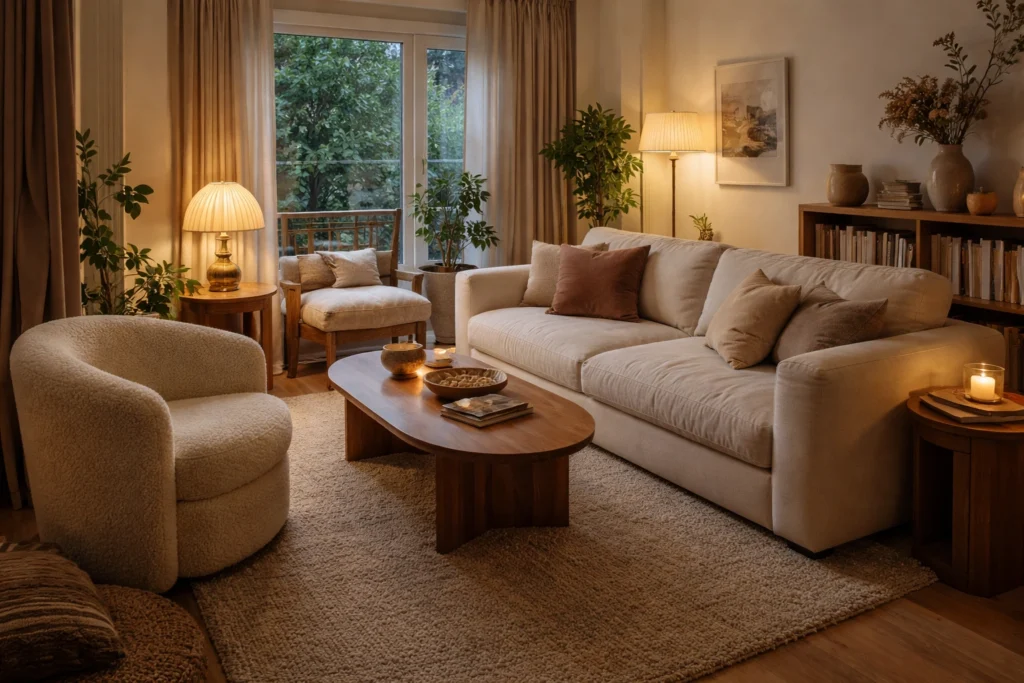
Some furniture looks beautiful but punishes your body for staying in it too long. A tiny apartment sanctuary needs furniture that actively invites rest and recovery. What furniture works best for a tiny apartment sanctuary prioritizes deep comfortable seating, soft natural upholstery, low profiles, and rounded edges over rigid formal silhouettes that look impressive but feel cold. A deep linen sofa you can genuinely sink into. A bouclé armchair with wide enveloping arms. A low wooden coffee table that doesn’t demand you sit upright to reach it. These choices support the body rather than performing for an imaginary audience.
Arrangement matters as much as selection. Furniture positioned in an inward-facing configuration — pieces angled toward each other rather than all facing the television — creates psychological enclosure and signals community safety to the nervous system. How to make a small apartment feel calm and relaxing through furniture also means choosing rounded and curved forms wherever possible. Research in environmental psychology shows that sharp angular furniture forms subconsciously activate alertness while rounded organic shapes signal safety and ease. Peaceful tiny apartment decor furniture always chooses curves over corners when given the choice.
Build Simple Daily Rituals That Keep Your Sanctuary Feeling Alive
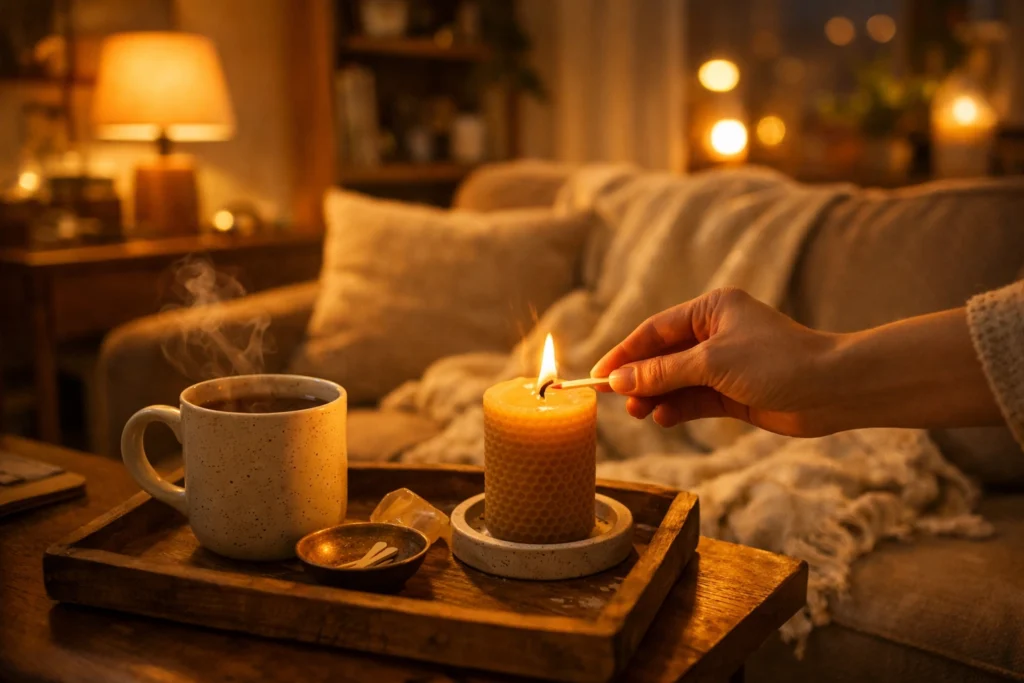
A sanctuary isn’t built in a weekend and then maintained automatically. It’s tended daily through small, consistent sensory rituals that reinforce the calm response over time. Tiny apartment sanctuary ideas for renters that work long-term always include a daily ritual stack: open a window for five minutes of fresh air upon arrival home, light a candle within the first ten minutes, tidy all surfaces before sitting down, dim every light after sunset, and brew a calming tea — chamomile, lavender, or ashwagandha — before bed. Tiny apartment sanctuary ideas built on these five rituals take less than fifteen minutes total and compound into a profoundly different daily experience.
The neuroscience of ritual is clear and well-documented. Predictable sensory sequences trigger anticipatory calm — your nervous system begins to relax before the ritual is even complete because it has learned what follows. Calm apartment sanctuary aesthetic is maintained not through constant redecorating but through consistent daily tending. Light the same candle. Use the same scent. Sit in the same rest corner. Brew the same evening tea. Repetition is the mechanism. How to create a peaceful sanctuary in a small apartment long-term is less about design and more about devotion — showing up for your space the same way it shows up for you.
Final Thoughts — How To Maintain Your Tiny Apartment as a Long Term Sanctuary
A tiny apartment sanctuary is never finished — and that’s actually wonderful news. It grows more effective over time as your nervous system deepens its association between your space and genuine rest. Every candle lit, every surface cleared, every warm lamp switched on in the evening strengthens the sanctuary response. How to turn a tiny apartment into a sanctuary isn’t a one-time project. It’s a daily practice of choosing calm over chaos, warmth over harshness, and intention over accumulation.
Start with one thing today. Just one. Swap a harsh bulb for a warm one. Clear one surface completely. Place one plant in an empty corner. Light one candle this evening. Best decor ideas for a tiny apartment sanctuary always begin with this same quiet, single step. Your nervous system deserves a home that actively supports it — not one that adds to its daily burden. Your tiny apartment can be that home. It already has everything it needs. It just needs your intention. Give it that and it will give you everything back.
One Comment