
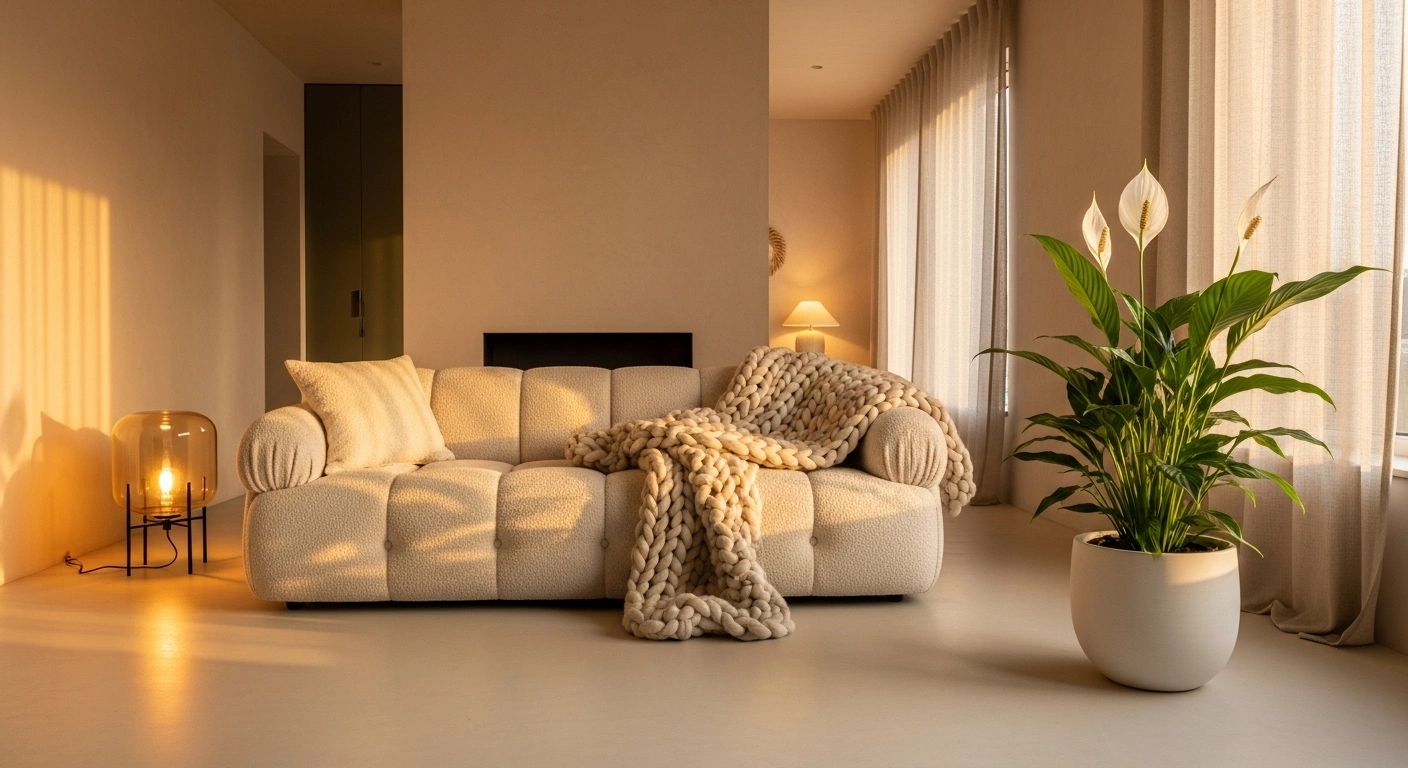
How To Create a Peaceful Home That Supports Nervous System Regulation
You walk through the front door and one of two things happens. Either the space catches you — wraps you in warmth, quiets the noise in your head, and lets your shoulders finally drop. Or it adds to the chaos you just escaped. Most homes do the second thing without anyone intending them to. Peaceful home design changes that. Deliberately. Scientifically. And more affordably than you might think.
What Is Nervous System Regulation and Why Your Home Design Matters
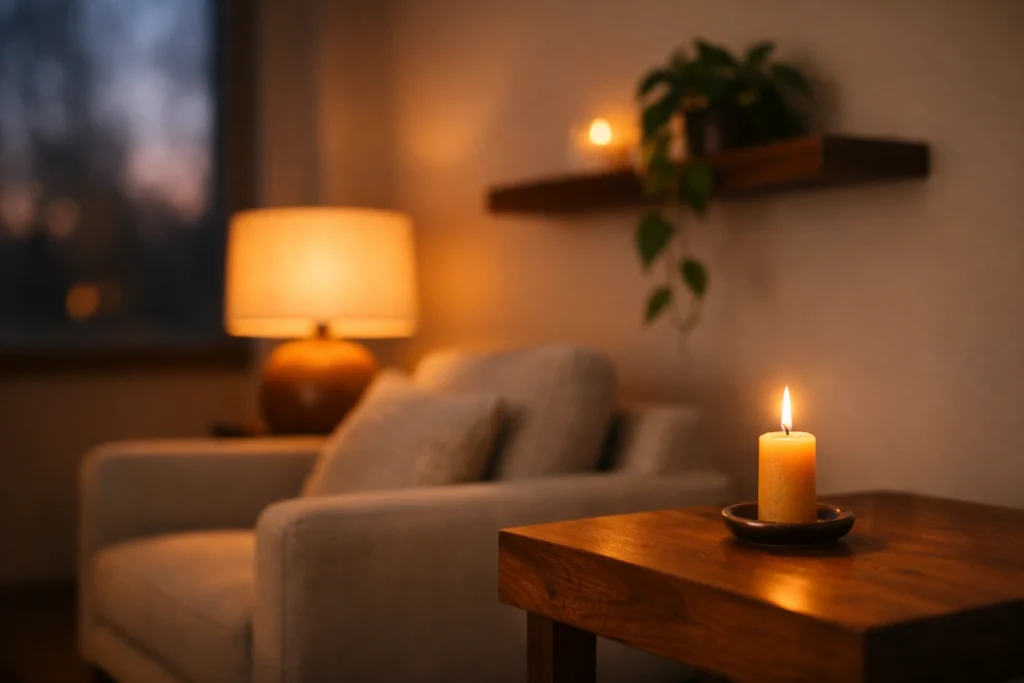
Nervous system regulation is your body’s capacity to move fluidly between activation and rest. Two branches govern this movement: the sympathetic nervous system — responsible for fight-or-flight responses — and the parasympathetic nervous system — responsible for rest, digestion, and genuine recovery. Most Americans spend the majority of their waking hours in chronic low-grade sympathetic activation. Not full panic. Just a persistent hum of alertness that never fully switches off. Peaceful home interior design directly addresses which branch dominates during your time at home.
What is peaceful home design at its most fundamental level? It’s the intentional use of color, light, material, texture, scent, and sound to create an environment rich in what neuroscientist Stephen Porges calls neuroception of safety — the nervous system’s unconscious detection of environmental cues that signal it’s safe to rest. Calm home design ideas work because they flood your home with these safety cues. Your nervous system responds before your conscious mind even registers what’s happening. That’s the power of a well-designed space.
The Science Behind How Your Home Environment Affects Your Brain
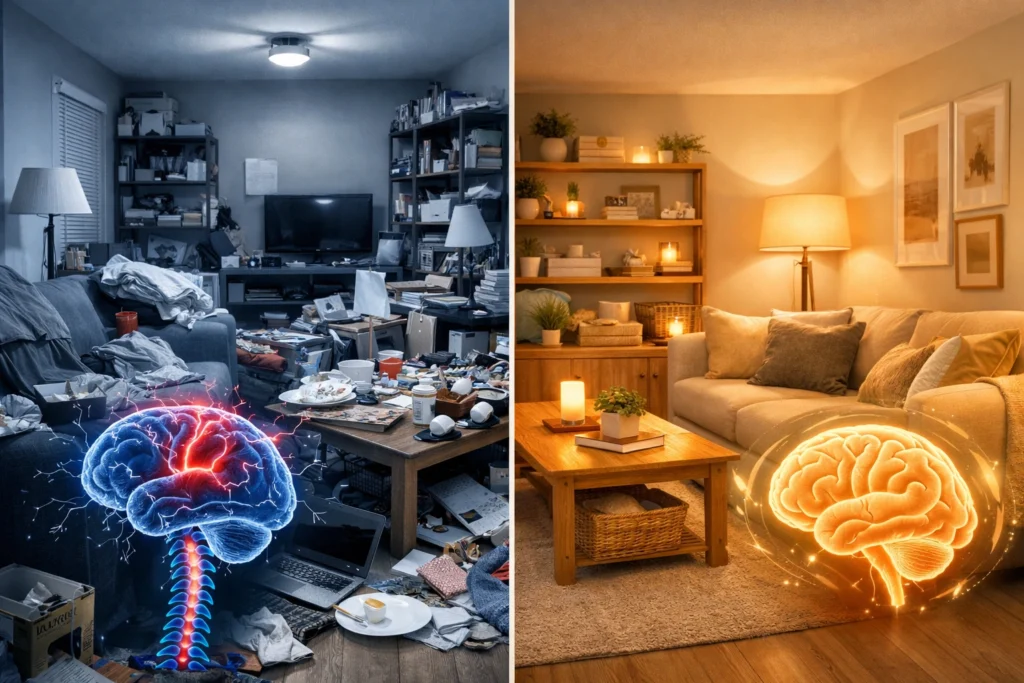
The research is clear and it’s worth knowing. Princeton University Neuroscience Institute confirmed that visual clutter directly competes for cognitive attention — keeping your brain in a persistent low-grade alertness state even during supposed rest time. UCLA’s Center on Everyday Lives of Families linked cluttered home environments to measurably elevated cortisol levels — particularly in female homeowners — throughout the entire day. Calm home design ideas that address clutter aren’t an aesthetic preference. They’re a neurological intervention.
Environmental psychology — the scientific study of how built environments shape human behavior, mood, and physiology — has demonstrated repeatedly that well-designed personal spaces reduce perceived stress significantly. Research from the University of Exeter found that workers and residents in thoughtfully designed spaces reported dramatically higher wellbeing and lower stress than those in poorly designed environments. How to create a peaceful home design is therefore not a decorating project. It’s a health project. And it starts with understanding exactly what your nervous system needs from the space it inhabits.
Start With Intentional Decluttering To Give Your Mind Room To Breathe
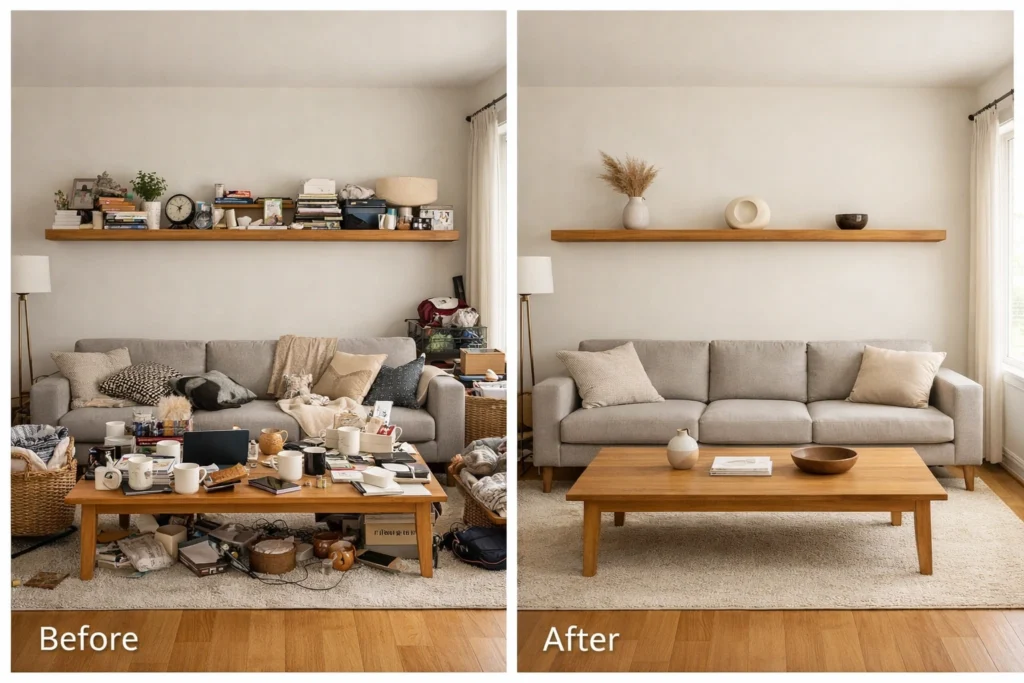
Decluttering is the non-negotiable foundation of any peaceful home design transformation. You cannot layer calm onto chaos. Every visible object in your home makes a micro-demand on your brain’s attention — it asks to be noticed, categorized, and processed. In a cluttered home, those micro-demands never stop. Princeton’s research makes this neurological cost measurable: visual clutter literally steals cognitive resources from whatever else you’re trying to do. Minimalist peaceful home design starts not with buying anything but with removing everything that doesn’t earn its place.
you may also like this:How To Create a Weekly Home Reset That Supports Your Nervous System
How to make a home feel peaceful and calm through decluttering means adopting one powerful framework — keep only what is beautiful, functional, or emotionally meaningful. Everything else leaves. This isn’t minimalism for minimalism’s sake. It’s creating deliberate negative space — empty areas that give your eyes and your nervous system genuine rest between visual stimuli. Simple peaceful home decor always looks more intentional and more expensive than cluttered decor because the objects that remain have room to breathe and be truly seen.
Choose a Peaceful Color Palette That Calms Your Nervous System Daily
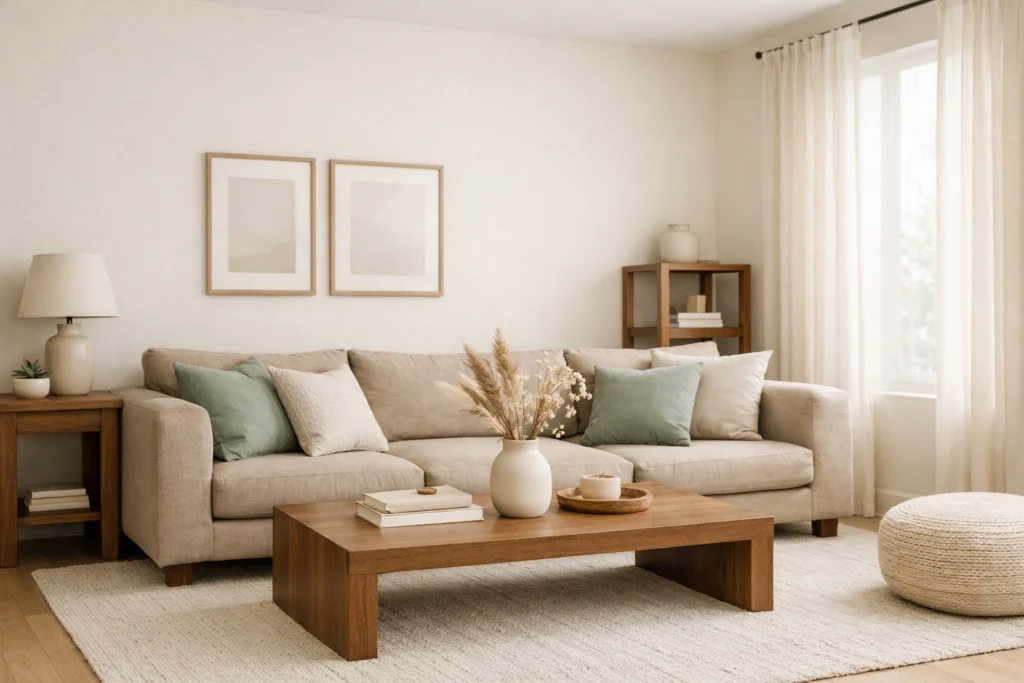
Best colors for a peaceful home design work through a mechanism called chromotherapy — the measurable effect of color wavelengths on autonomic nervous system responses. Warm, muted, earth-toned colors reduce cortisol and promote parasympathetic activation. Cool, saturated, high-contrast colors do the opposite. How to use color to create a peaceful home starts with this physiological reality and builds from it. Soft cream, sandy beige, warm taupe, dusty sage green, and muted terracotta are the most consistently calming color choices for American homes — they mimic the landscapes human beings evolved in.
| Color Role | Best Peaceful Choices | Avoid For Calm |
|---|---|---|
| Walls | Warm white, soft cream, dusty sage | Cool grey, stark white, bold hues |
| Ceiling | Same as walls or slightly lighter | Bright white, high contrast |
| Large furniture | Sandy taupe, warm oat, soft greige | Black, navy, jewel tones |
| Textiles | Warm beige, muted terracotta, blush | Busy patterns, neon, cool tones |
| Accents | Warm wood, dried botanicals, ceramic | Synthetic, shiny plastic materials |
Use Warm Layered Lighting To Shift Your Home From Stress to Stillness
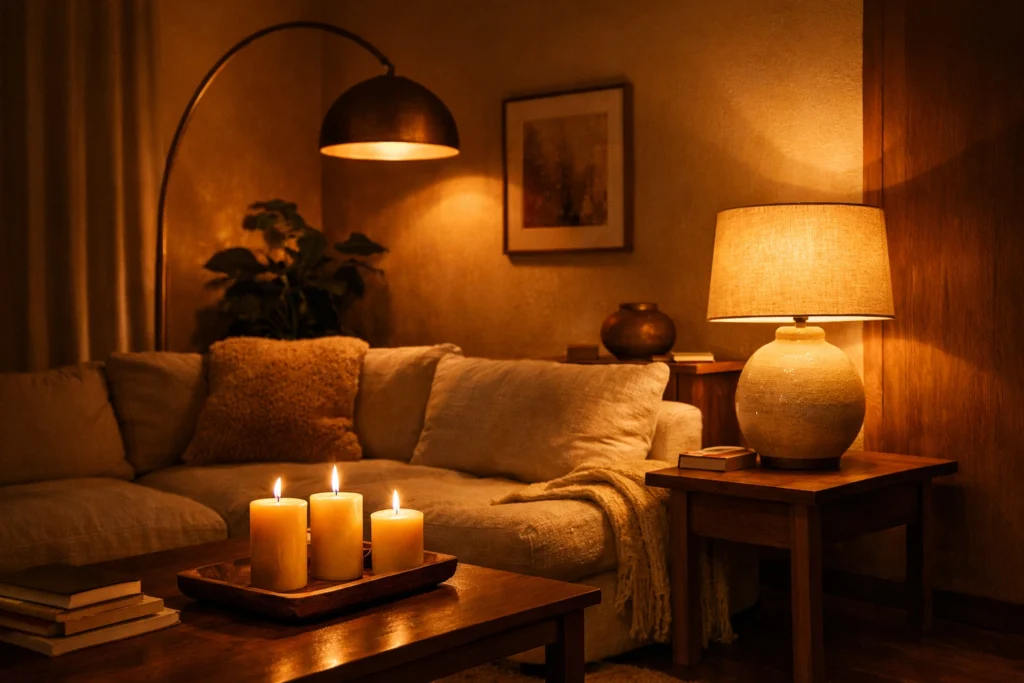
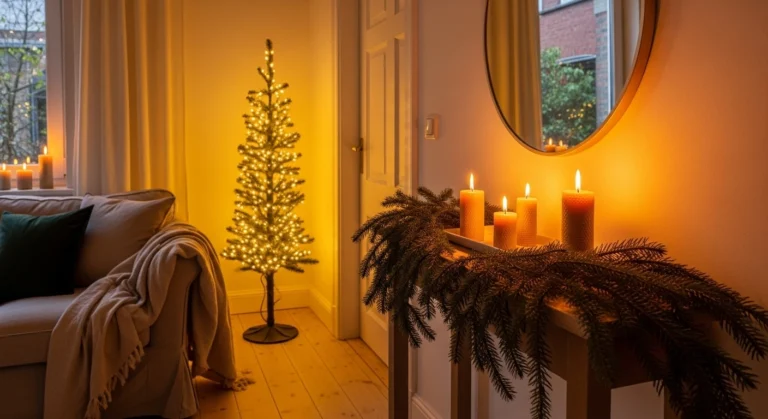
Harsh overhead lighting is one of the most underestimated nervous system stressors in the modern American home. Bright cool-toned ceiling fixtures suppress melatonin production and keep your sympathetic nervous system running long after your workday has technically ended. How to use lighting in peaceful home design means treating every light source as a nervous system signal rather than just an illumination tool. The goal isn’t a brightly lit room. The goal is a warmly glowing series of light pools at varying heights that tell your body the day is done. Warm peaceful home interior design always layers light rather than flooding it.
| Lighting Layer | Best Fixture | Color Temp | Nervous System Effect |
|---|---|---|---|
| Ambient | Dimmable warm ceiling fixture | 2700K | General relaxed warmth |
| Floor lamp | Arc or tripod with warm shade | 2700K | Corner softness, grounding |
| Table lamp | Ceramic or wooden base | 2700K | Intimate, close comfort |
| Candles | Beeswax pillar or soy jar | Flame warmth | Deepest parasympathetic calm |
| Under-shelf | LED warm strip lighting | 2700K | Ambient glow without glare |
Bring Natural Materials Into Your Home To Ground and Restore Your Body
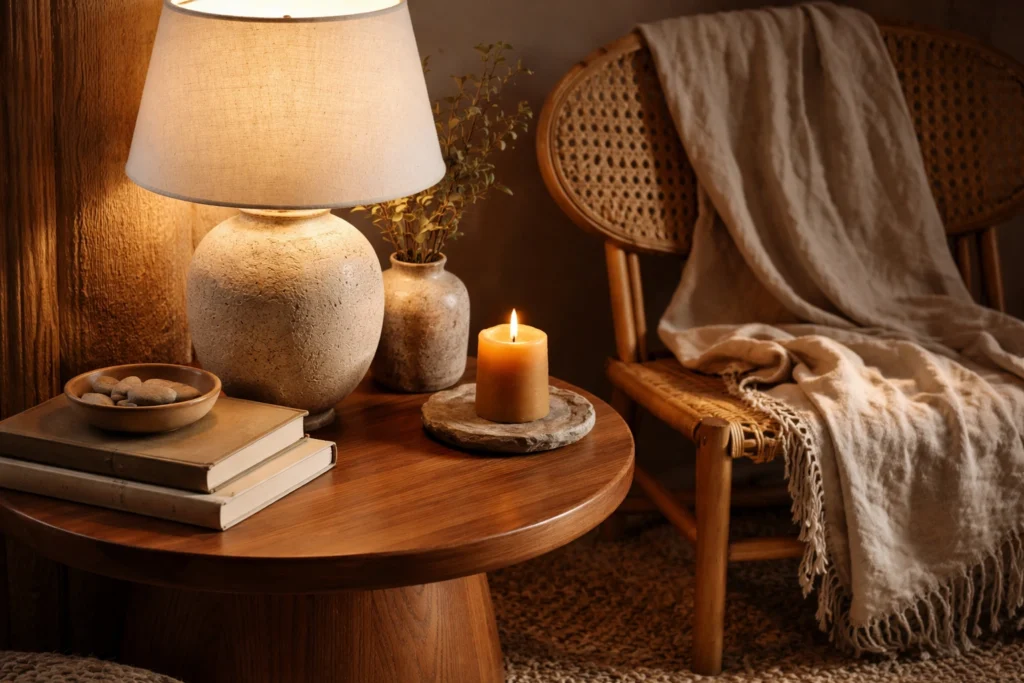
Natural materials trigger the biophilic grounding response — a deeply physiological reaction in which tactile or visual contact with materials from the natural world activates the parasympathetic nervous system. How to use natural materials in peaceful home design means systematically replacing synthetic materials with natural alternatives. Solid wood for laminate. Linen for polyester. Wool for acrylic. Ceramic for plastic. Rattan for synthetic wicker. Nature inspired peaceful home design doesn’t require a complete renovation — it requires a series of intentional swaps made one piece at a time.
How to add warmth to a peaceful home design through natural materials compounds beautifully over time. Each natural addition deepens the sensory warmth of the space. A single wool rug changes how a room feels underfoot. A linen throw changes how the sofa feels under your hands. A wooden tray on the coffee table changes how your eyes rest when they land there. Harmonious home design ideas built on natural materials create environments where every sensory input — touch, sight, smell — contributes to the same calming signal rather than competing with it.
Layer Soft Comforting Textures That Signal Safety to Your Nervous System
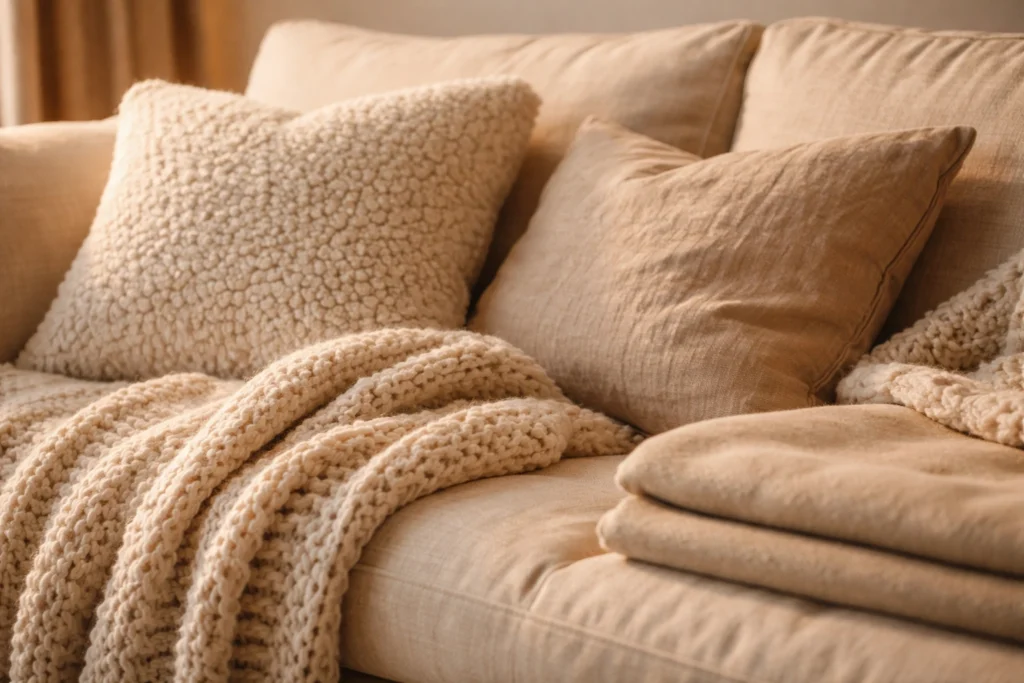
What textures work best in peaceful home design? The answer comes from neuroscience rather than aesthetics. C-tactile afferent nerve fibers in the skin respond specifically to gentle, soft tactile contact — sending direct safety signals to the brain’s amygdala and reducing threat response activation. Chunky knit throws. Bouclé cushion covers. Plush wool area rugs. Velvet accent pillows. Worn linen upholstery that grows softer with every wash. Each texture stimulates these nerve fibers gently and continuously throughout your time at home. Cozy peaceful home aesthetic lives in exactly these soft, natural, deeply tactile layers.
How to style a peaceful home with natural decor through texture follows one guiding principle — vary the texture but keep the color tonal. A chunky cream knit throw beside a sandy linen pillow beside a warm wool rug all feel completely different under your hands but share the same warm earthy color family. They layer beautifully without creating visual competition. Relaxing home interior design consistently uses this same strategy — maximum tactile variety within minimum color contrast — to create rooms that feel both visually calm and physically irresistible.
Design a Peaceful Living Room That Melts Away Daily Tension
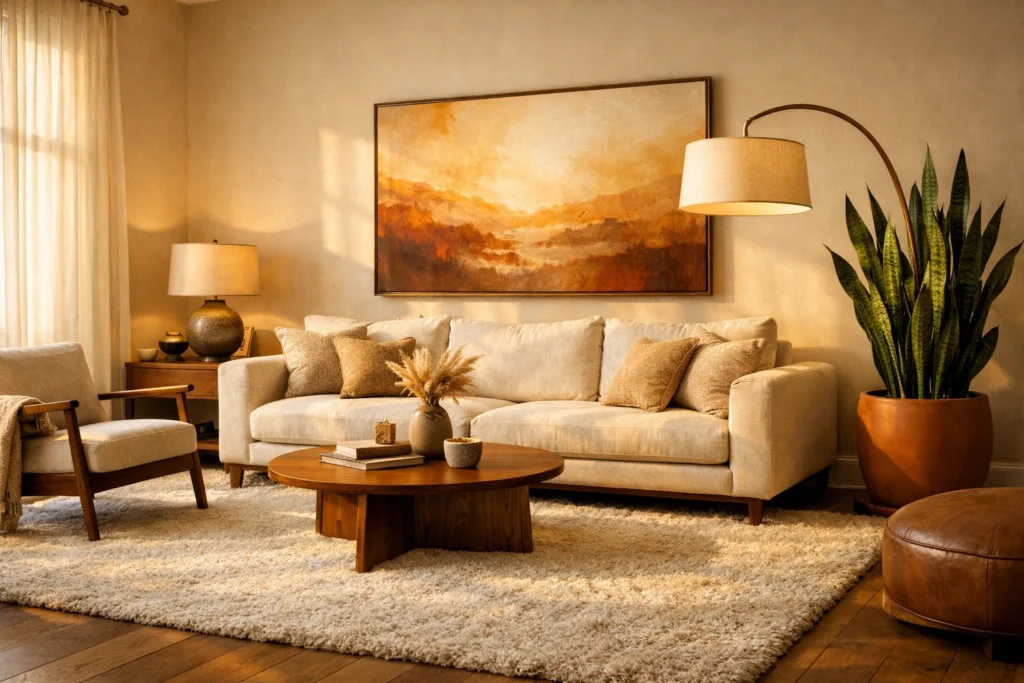
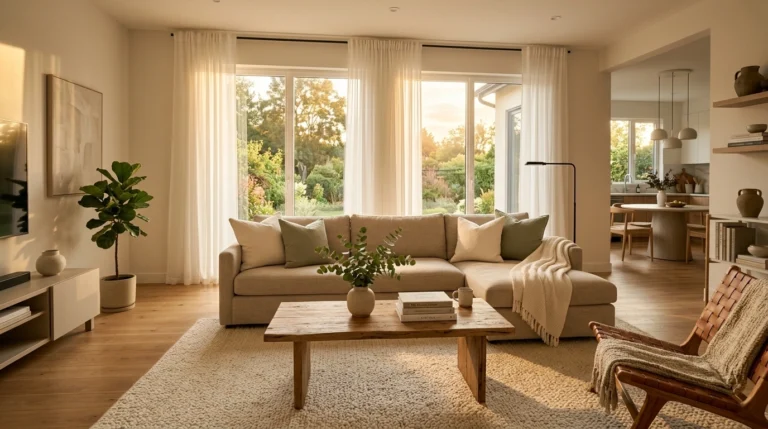
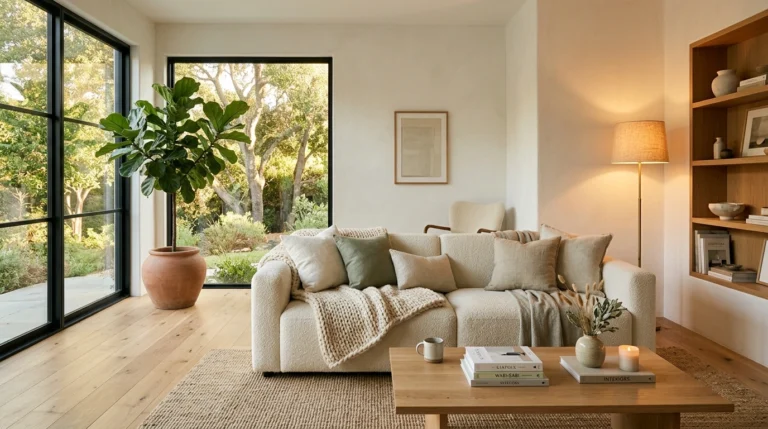
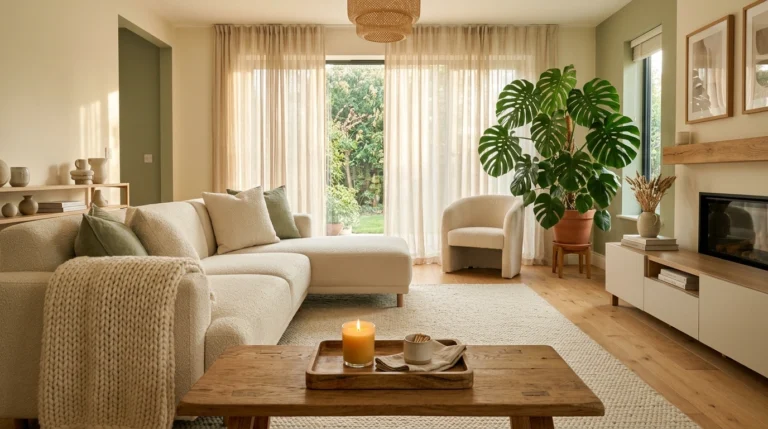
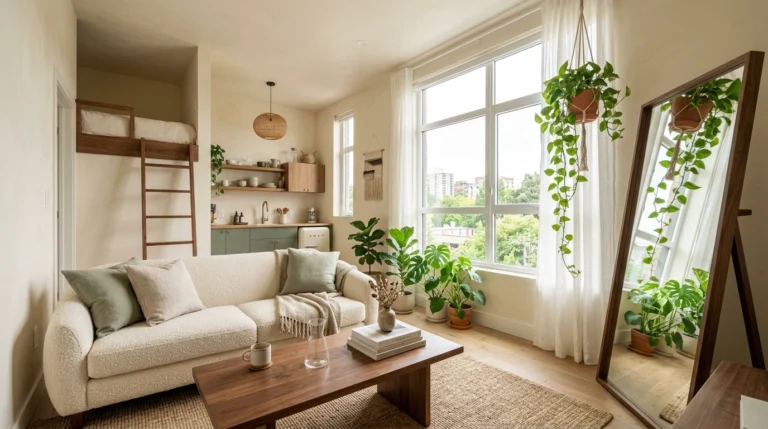
The living room is where most Americans spend their recovery hours — and where peaceful home design principles deliver their most immediate and powerful results. How to design a peaceful living room starts with one anchor piece: a deep, comfortable sofa in natural linen, cotton, or bouclé upholstery with clean lines and solid wood legs. Then add a large natural fiber rug that extends beyond the sofa edges. Layer in warm lighting, one large statement plant, and 3–5 intentionally chosen surface objects. That foundation creates a room that invites genuine rest rather than performing for an imaginary audience.
Arrangement transforms living rooms as powerfully as decoration does. Furniture positioned in an inward-facing configuration — sofas and chairs angled toward each other — creates psychological enclosure that signals community safety to the nervous system. Peaceful living space design keeps walls relatively bare — one large warm-toned art piece above the sofa, open shelving styled with maximum five objects per shelf, and linen curtains that soften window light rather than blocking it. Peaceful home design inspiration for modern homes consistently returns to this same restrained, intentional, deeply warm formula.
Create a Bedroom That Fully Supports Deep Rest and Recovery
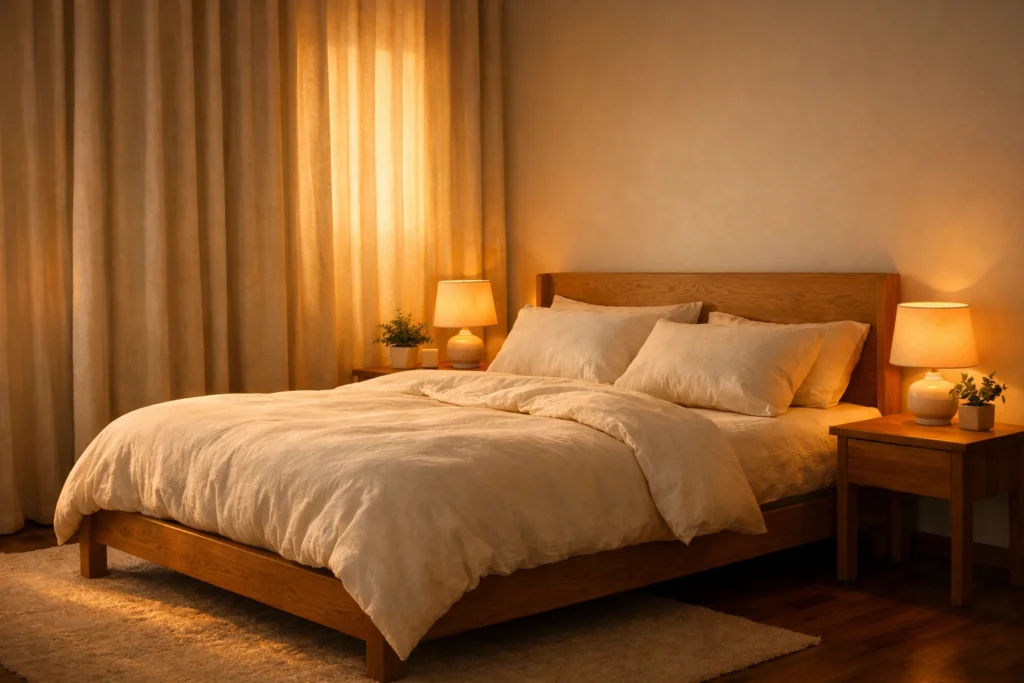
The bedroom is the most neurologically important room in any peaceful home design — it’s where your nervous system attempts its deepest nightly recovery. Every design choice in a bedroom either supports or undermines this process. How to create a peaceful bedroom design starts with one non-negotiable rule: no screens. Television, laptop, and phone screens emit blue light that suppresses melatonin and keeps the sympathetic nervous system active regardless of how tired you feel. Remove them entirely or place them where they’re out of sightline from the bed.
Quiet home interior ideas for the bedroom include quality linen bedding in warm white or sandy oat, blackout linen curtains that soften rather than block morning light, a simple wooden or upholstered bed frame with clean unfussy lines, and warm bedside lighting only — one small ceramic or wooden table lamp on each nightstand. Keep both nightstands clear except for the lamp, one plant, and one meaningful object. A consistent pre-sleep sensory ritual in a well-designed bedroom — dim lights, calming scent, soft music or silence — measurably improves sleep quality and reduces morning cortisol levels significantly.
Build a Peaceful Kitchen That Reduces Daily Overwhelm and Anxiety
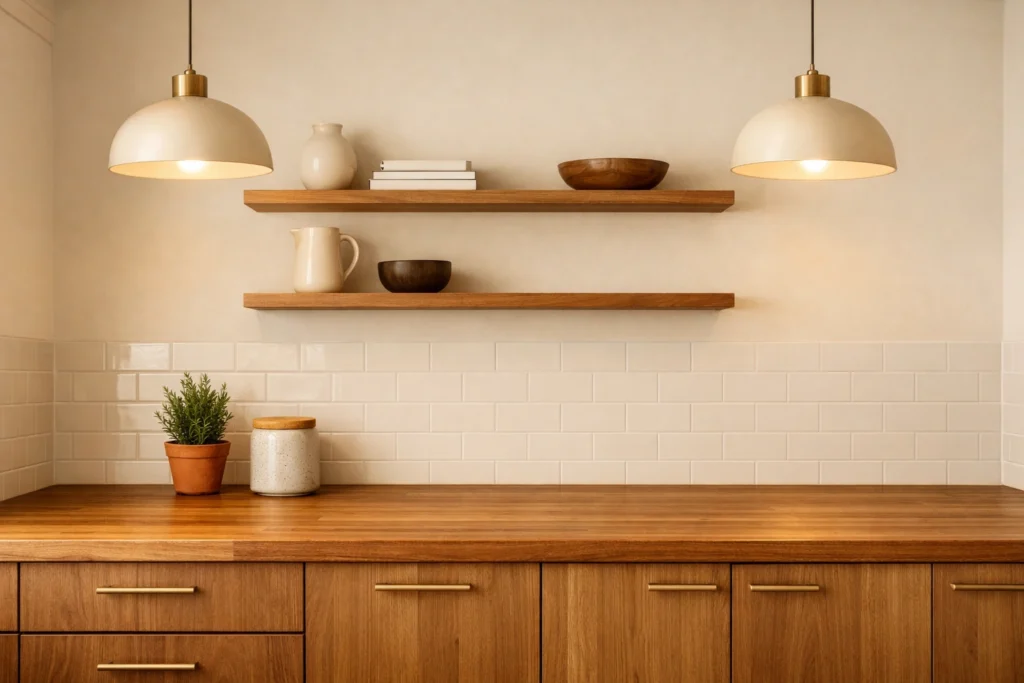
The kitchen is often the most neurologically chaotic room in the American home. Appliances on every counter. Mismatched containers visible through cabinet doors. Harsh overhead lighting. A sink that’s rarely empty. Peaceful home design ideas on a budget in the kitchen start with one powerful zero-cost intervention — clearing every single counter surface completely. Remove everything. Then add back only what you use daily and what genuinely looks beautiful. A wooden cutting board. A ceramic canister set in warm neutral tones. One small potted herb. The visual calm is immediate and dramatic.
How to design a peaceful home on a budget in the kitchen continues with matte hardware in brushed brass or matte black, warm wood cabinet fronts or open shelving, and stone or butcher block countertops where budget allows. Hidden storage — appliances behind cabinet doors, pantry items in uniform ceramic or glass containers — maintains visual calm throughout the day. Mindful home design style in the kitchen treats every visible surface as a deliberate design choice rather than a default storage opportunity. The result feels simultaneously functional and deeply serene.
Add Calming Indoor Plants That Restore Air Quality and Mental Calm
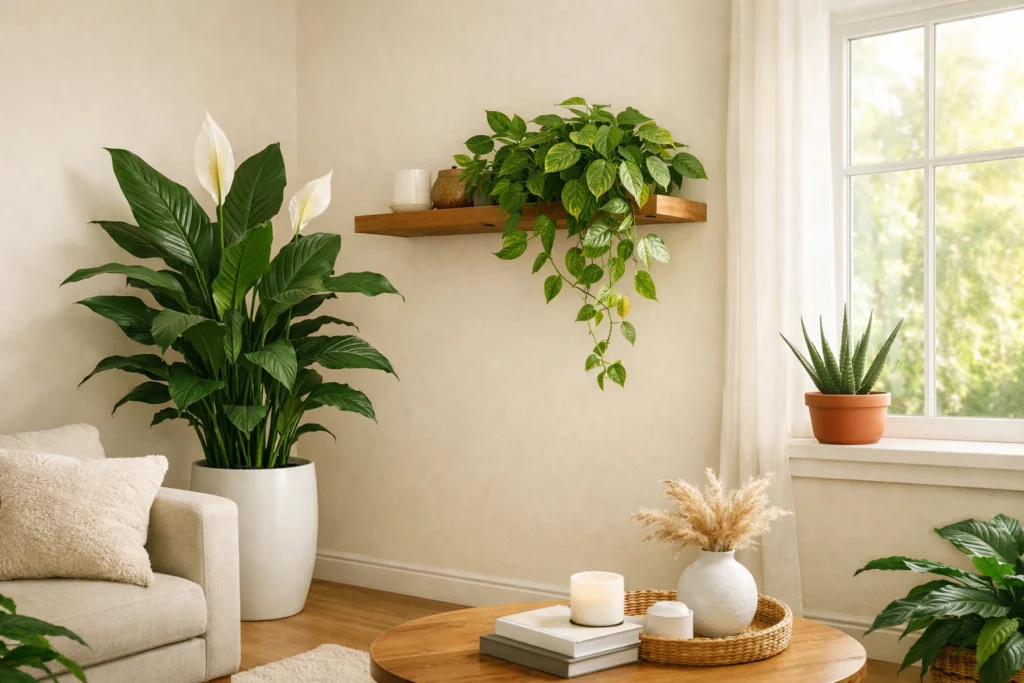
How to create a peaceful home with plants delivers two simultaneous benefits that no decorative object can replicate: cleaner air and a calmer nervous system. NASA’s landmark Clean Air Study identified specific indoor plants that reduce airborne toxins — including benzene, formaldehyde, and trichloroethylene — by up to 87% within 24 hours. Cleaner air directly supports better nervous system function. Zen home design ideas consistently feature living plants as essential rather than optional elements precisely because the biophilic benefit is neurological, not just visual.
The best calming plants for a peaceful home design include Peace Lily, Snake Plant, Golden Pothos, ZZ Plant, Aloe Vera, and Lavender. Each thrives indoors with minimal care while delivering genuine air quality and aesthetic benefits simultaneously. Style them intentionally — one large statement plant per room to anchor the space, trailing varieties on floating shelves, small herb pots on kitchen windowsills. Tranquil home design aesthetic always keeps plant pots natural: terracotta, matte ceramic, or woven rattan. The combination of living plant and natural pot creates maximum biophilic grounding with minimum visual clutter.
Use Scent Strategically To Trigger Instant Nervous System Relief at Home
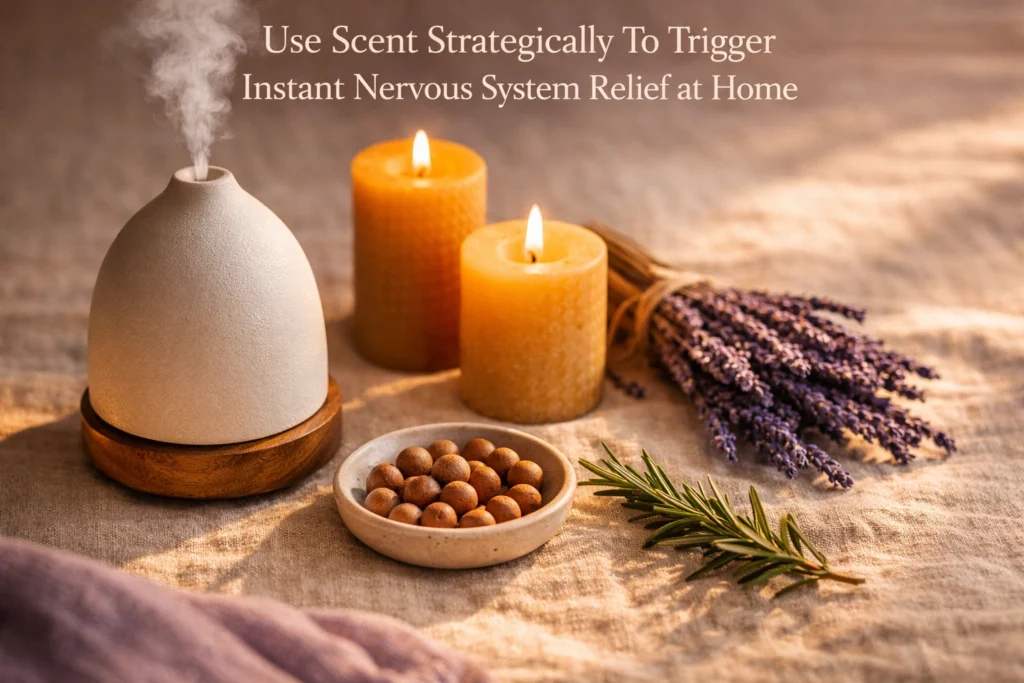
Scent is the fastest nervous system regulation tool your home contains. Olfactory signals bypass the rational prefrontal cortex entirely and travel directly to the limbic system — the brain’s emotional and survival center. How to style a peaceful home with natural decor through scent means choosing a signature home scent and applying it consistently throughout every room. Lavender reduces anxiety and heart rate measurably in peer-reviewed research. Cedarwood promotes deep physical relaxation. Bergamot simultaneously lifts mood and calms the nervous system. Serene home decor style treats scent as a first-layer design tool, not a finishing touch.
Building a signature home scent creates what neuroscientists call a conditioned calm response — a Pavlovian association between that specific scent and the parasympathetic state your home induces. Over weeks of consistent use, your nervous system begins to relax the moment the scent reaches it, before you’ve even sat down. Peaceful home design ideas on a budget through scent are remarkably accessible: a $12 beeswax candle, a $15 essential oil diffuser with pure lavender oil, a linen spray on sofa cushions, or a stovetop simmer of orange peel and cinnamon. Instant, measurable, deeply affordable nervous system relief.
Control Sound in Your Home for a Deeper and More Sustained Calm
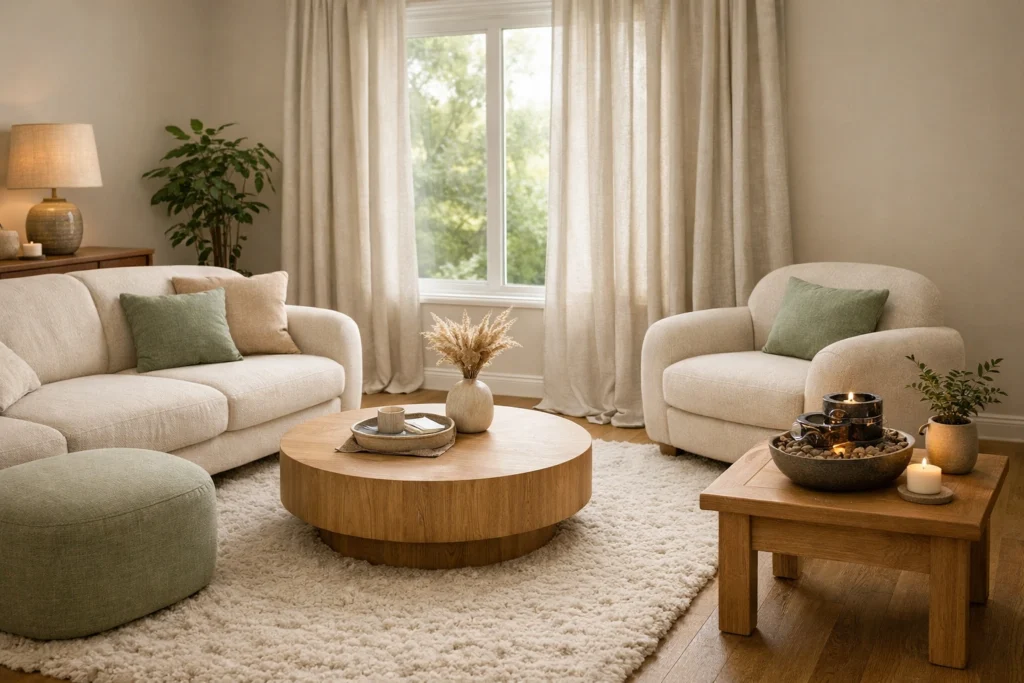
Chronic ambient noise is one of the most overlooked nervous system stressors in modern American homes. Traffic outside. Neighbors through thin walls. Appliance hum. The dishwasher. The hum of a refrigerator. These sounds maintain your sympathetic nervous system in a persistent state of low-level alertness that makes genuine rest almost impossible — even in a visually beautiful space. Serene home decor style treats acoustic design with the same seriousness it brings to color and light. Soft furnishings absorb sound naturally. A large wool rug reduces floor reflection. Heavy linen curtains dampen window noise significantly.
What makes a home feel peaceful and serene acoustically comes down to intentional sound management on two fronts — absorption and replacement. Upholstered furniture absorbs mid-range sound frequencies. Bookshelves against shared walls dramatically reduce neighbor noise transmission. Then replace harsh ambient sound with intentional calming alternatives: a small tabletop water fountain whose rhythmic running water research confirms reduces cortisol and heart rate measurably, soft instrumental music at low volume, or intentional silence supported by a white noise machine near urban-facing windows. Harmonious home design ideas always consider what a room sounds like, not just what it looks like.
Choose Furniture Intentionally To Support Rest Over Visual Performance
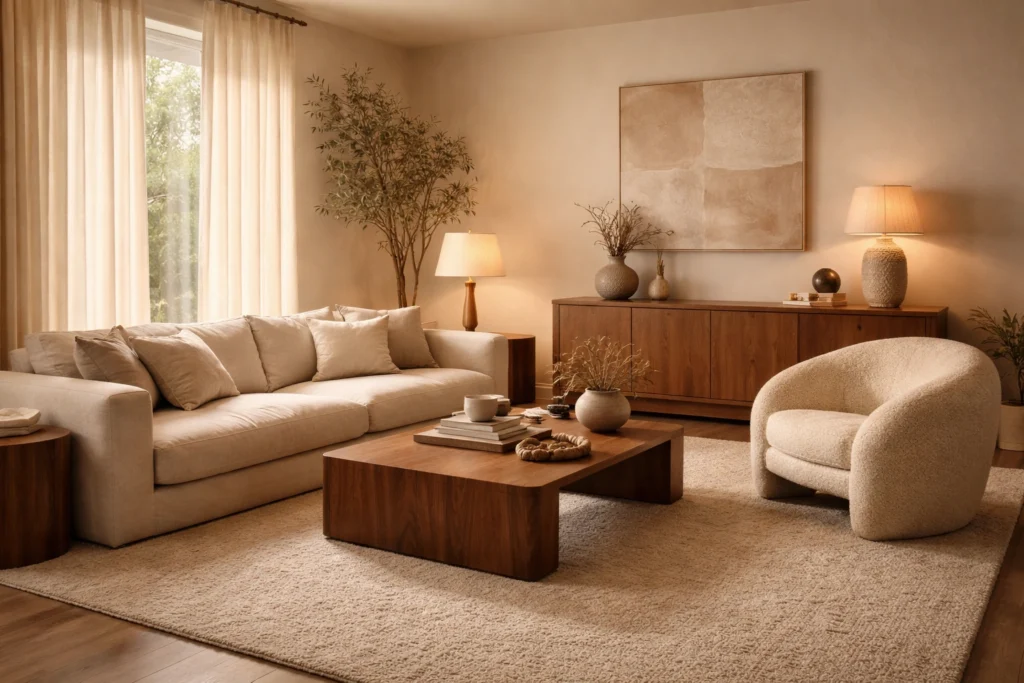
Best furniture for a peaceful home design shares one quality above all others — it actively invites your body to rest. Not to perform. Not to sit up straight and look alert. To genuinely, deeply rest. Peaceful home design vs minimalist design makes one important distinction here: peaceful design prioritizes physical comfort alongside visual simplicity, while minimalism sometimes sacrifices comfort for aesthetic severity. A deep linen sofa you can genuinely sink into. A bouclé armchair with wide enveloping arms. A low wooden coffee table that doesn’t demand perfect posture. These choices support nervous system recovery through physical comfort, not just visual calm.
Furniture arrangement carries as much neurological weight as furniture selection. Inward-facing configurations — pieces angled toward each other rather than all facing the television — create psychological enclosure and signal community safety to the nervous system. Understated peaceful home style furniture also favors rounded and curved forms wherever possible. Environmental psychology research consistently shows that sharp angular furniture forms subconsciously activate alertness while rounded organic shapes signal safety and ease. What are the key elements of peaceful home design in furniture selection always come down to this: comfort first, natural materials second, proportional scale third, and rounded forms fourth.
Final Thoughts — How To Maintain a Peaceful Home as a Daily Practice
Peaceful home design is not a renovation project you complete and then forget. It’s a daily practice of small, consistent choices that compound into a profoundly restorative living environment over time. Clear a surface each evening. Light a candle at arrival. Open a window each morning. Dim the lights after sunset. These micro-habits take less than five minutes daily and maintain the nervous system benefits of your design choices continuously rather than letting them erode under the weight of daily life. How to create a peaceful home design long-term is less about decorating and more about tending.
Start with one change today. Just one. Swap a harsh overhead bulb for a 2700K warm alternative. Place a linen throw on your sofa. Clear your kitchen counter completely. Put a small plant in an empty corner. Peaceful home design ideas on a budget always begin with this same quiet, single, intentional step. Your nervous system doesn’t need a perfect home. It needs a home that’s trying — consistently, daily, and with genuine care. Give it that and it will give you something invaluable in return: a place where you can finally, fully rest.
One Comment