
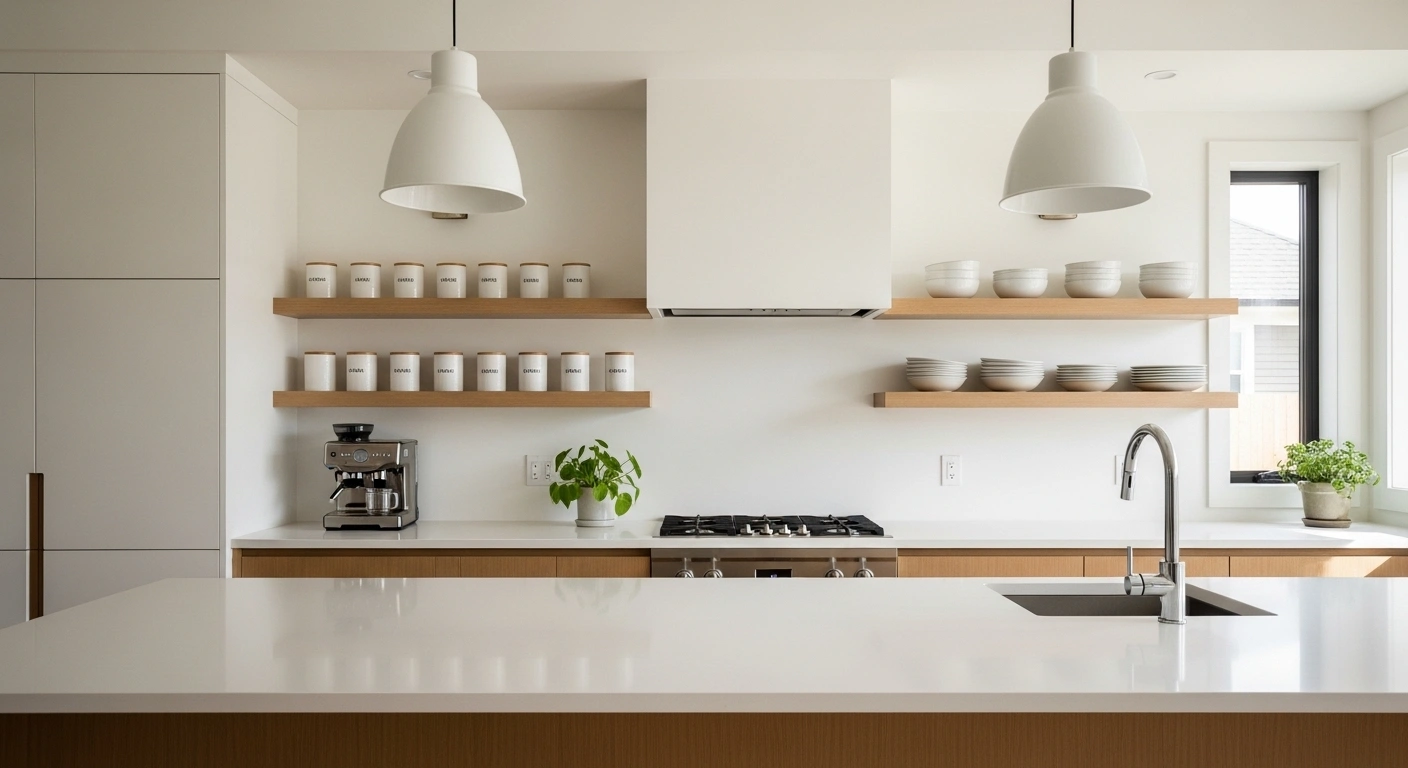
Rethink Your Stuff: A Simple Framework for Everyday Home Organization
The problem isn’t you. It’s the system. Or rather, the absence of one. Home organization that actually sticks isn’t about buying more storage containers or spending a weekend reorganizing your entire house. It’s about building a simple, honest framework that works with your actual life — not the ideal version you’d like to have. This guide gives you exactly that. Let’s rethink your stuff.
Why Most Home Organization Systems Fail and What Actually Works
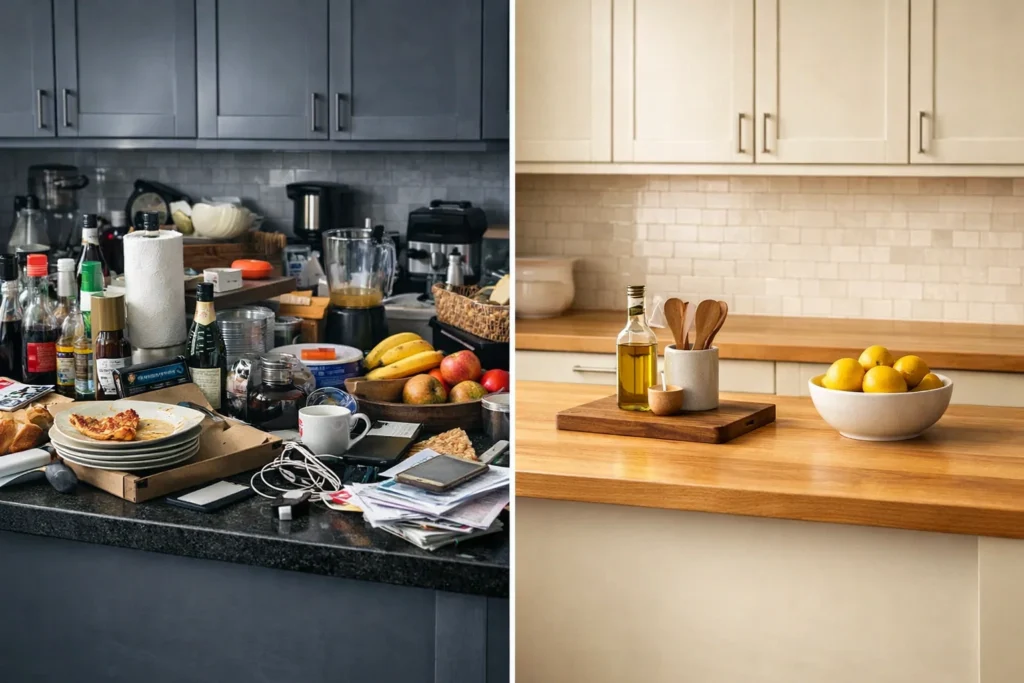
Most home organization systems fail for one fundamental reason — they’re designed for the ideal version of your life rather than the actual version. They assume you’ll always return things immediately, maintain perfect labeling systems, and never have a chaotic Tuesday. Life doesn’t work that way. The average American home contains over 300,000 items according to research from the Los Angeles Times. Most of those items have no designated home. That’s not a storage problem. That’s a volume problem.
Home organization ideas that actually work are built on three non-negotiable principles: declutter first, designate a home for everything, and maintain daily through micro-habits rather than weekly overhauls. Simple home organization ideas that respect your actual lifestyle — your real morning routine, your real energy levels, your real household members — always outlast elaborate color-coded systems that look stunning on Pinterest but collapse under the weight of real daily life within weeks of implementation.
The Simple Mindset Shift That Makes Home Organization Feel Easy

How to organize your home starts not with a storage bin but with a single powerful mindset shift — organization isn’t about perfection, it’s about function. The goal isn’t a magazine-worthy home. The goal is a home where every object has a designated place and returning it to that place takes less than 30 seconds. That’s it. That’s the entire philosophy. Minimalist home organization takes this further — own less and you organize less. Every object you remove from your home is an object you never have to find a home for, clean around, or reorganize again.
Sustainable home organization ideas treat organization as an ongoing daily practice rather than a periodic project. Japanese organizational philosophy — particularly the concept that every object deserves a specific, intentional home — underpins the most effective long-term organization systems in the world. How to organize your home for mental clarity begins the moment you stop thinking of organization as a chore you do occasionally and start treating it as a daily act of care for yourself and your living environment. That single reframe changes everything.
How To Audit Your Home Before You Organize a Single Thing
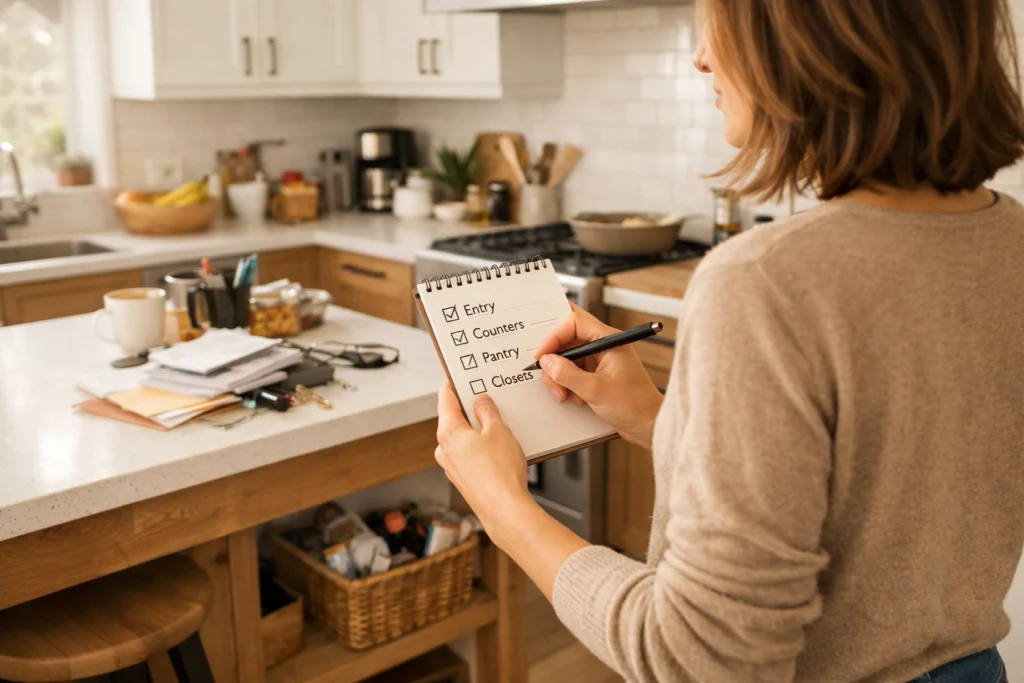
How to start organizing your home when overwhelmed always begins with observation — not action. Before you buy a single bin, label, or shelf, walk through every room with fresh eyes and complete honesty. The home audit identifies three categories of objects: what you use daily, what you use occasionally, and what you haven’t touched in over a year. Home declutter and organize philosophy is clear on this — the third category leaves the house. All of it. Without apology and without the guilt-driven “but I might need it someday” negotiation.
you may also like this:How to Make Your Home Smell Irresistibly Welcoming
| Room | Common Hotspot 1 | Common Hotspot 2 | Common Hotspot 3 |
|---|---|---|---|
| Kitchen | Counter beside the fridge | Junk drawer | Under the sink |
| Bedroom | Nightstand surface | Chair in the corner | Under the bed |
| Bathroom | Vanity counter | Under-sink cabinet | Medicine cabinet |
| Living room | Coffee table surface | Entryway drop zone | Sofa side tables |
| Entryway | Key and mail drop area | Shoe pile | Coat hooks area |
The Room by Room Home Organization Framework That Actually Works
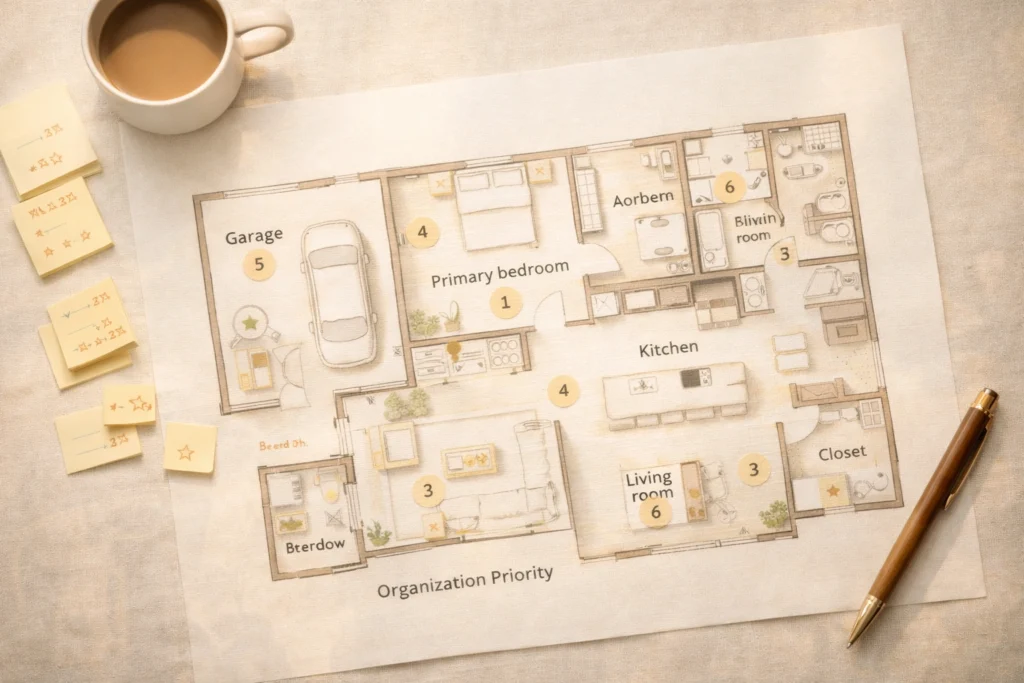
How to organize your home room by room effectively requires a consistent four-step framework applied to each space: declutter, categorize, designate, and contain. Declutter first — always. Remove everything that doesn’t belong in the room or doesn’t serve a clear function. Categorize what remains into logical groups. Designate a specific, logical home for each category — where it will live permanently. Then and only then do you contain — choosing storage products sized and shaped for exactly what you need to store. How to create a home organization system using this four-step sequence eliminates the most common and most expensive organizational mistake: buying storage before you know what you’re storing.
| Room | Daily Impact | Organization Priority | Time Needed |
|---|---|---|---|
| Kitchen | Very high | First | 3–4 hours |
| Bedroom | High | Second | 2–3 hours |
| Bathroom | High | Third | 1–2 hours |
| Entryway | High | Fourth | 1 hour |
| Living room | Medium | Fifth | 2 hours |
| Closet | Medium-high | Sixth | 2–3 hours |
| Garage/storage | Low | Last | 4–6 hours |
How To Organize Your Kitchen for Daily Calm and Effortless Function
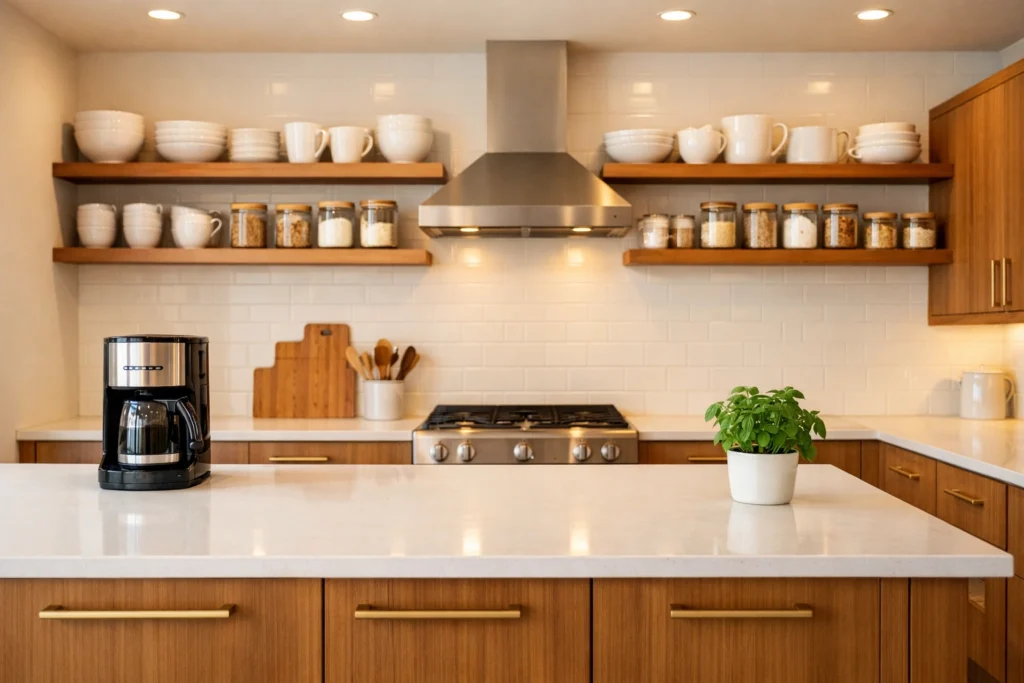
The kitchen is the most organizationally complex room in any home — and the one where disorganization causes the most daily friction. Kitchen organization ideas built around the work zone principle eliminate this friction systematically. Divide your kitchen into four functional zones: prep zone (cutting boards, knives, mixing bowls near the counter space), cooking zone (pots, pans, and utensils near the stove), cleaning zone (dish soap, scrubbers, and trash near the sink), and storage zone (pantry, refrigerator, and dry goods). How to organize a cluttered home fast in the kitchen means applying this zone logic and letting it dictate where everything lives.
Counter organization follows one non-negotiable rule: only daily-use items earn counter space. The coffee maker stays. The blender you use twice a year goes inside a cabinet. Pantry organization ideas that actually work use uniform clear containers for decanted dry goods — cereal, pasta, rice, flour — grouped by category with consistent labeling. Home organization aesthetic in the kitchen comes directly from this uniformity. When everything in the pantry looks the same and sits in the same style of container, the visual calm it creates is genuinely remarkable — and it takes about two hours and $40 in containers to achieve.
Bedroom Organization Ideas That Support Rest and Mental Clarity
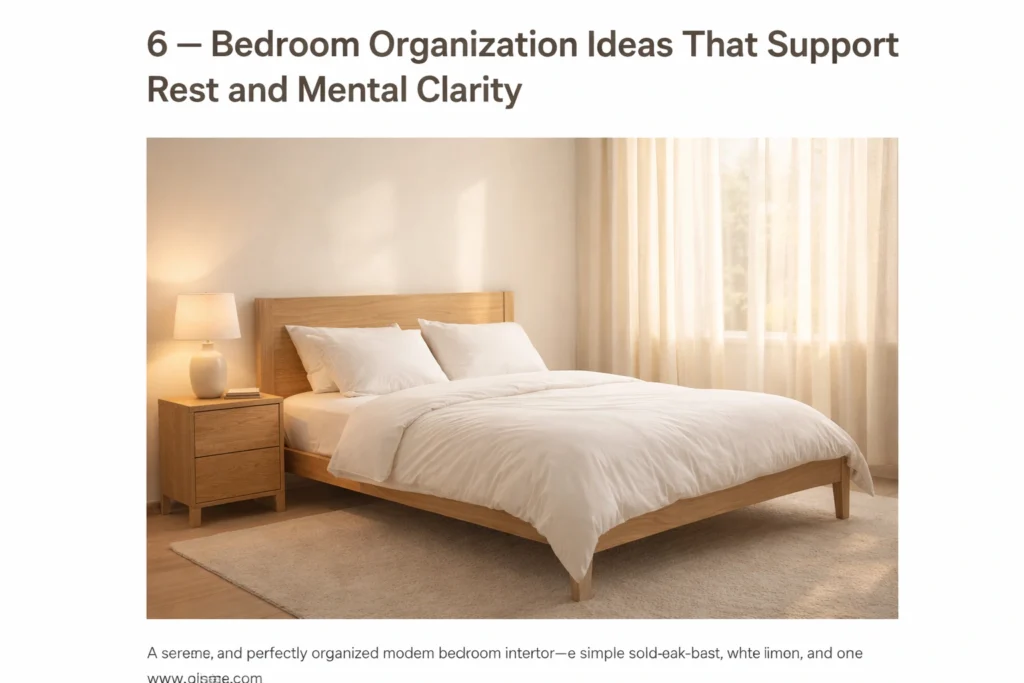
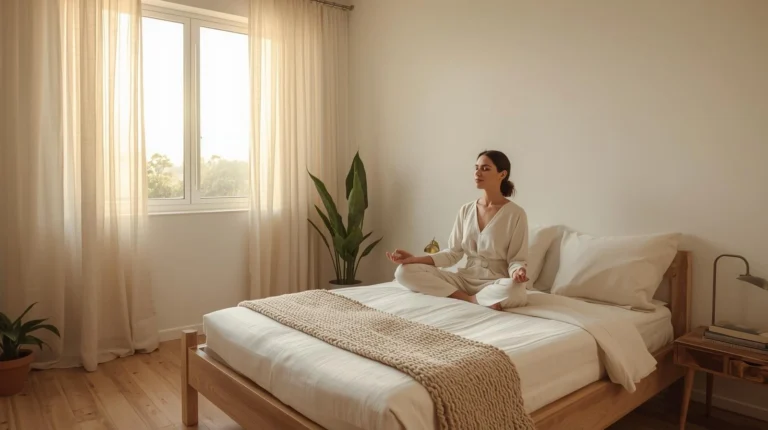
Visual clutter in the bedroom disrupts sleep quality before you’ve even closed your eyes. Research from the American Academy of Sleep Medicine links cluttered bedroom environments to higher rates of sleep difficulty and elevated morning cortisol. Bedroom organization ideas that genuinely support rest prioritize surface clarity above everything else. The nightstand rule is absolute: one lamp, one book or journal, one meaningful small object — nothing else. No charging cables draped across the surface. No water glasses from three nights ago. No stack of unread mail that somehow migrated from the kitchen.
How to organize your home in the bedroom also means addressing storage honestly. Under-bed storage drawers or flat bins handle off-season clothing, extra linens, and shoes beautifully — keeping them accessible without consuming closet space. Drawer dividers separate categories within each drawer so folded items don’t migrate into chaos. The one-in-one-out clothing rule — one item leaves for every one item that enters — prevents the gradual volume creep that fills every available storage space within months. Making the bed each morning takes 90 seconds and is the single highest-leverage bedroom organization habit available to anyone.
How To Organize Your Bathroom for a Clean and Clutter-Free Space
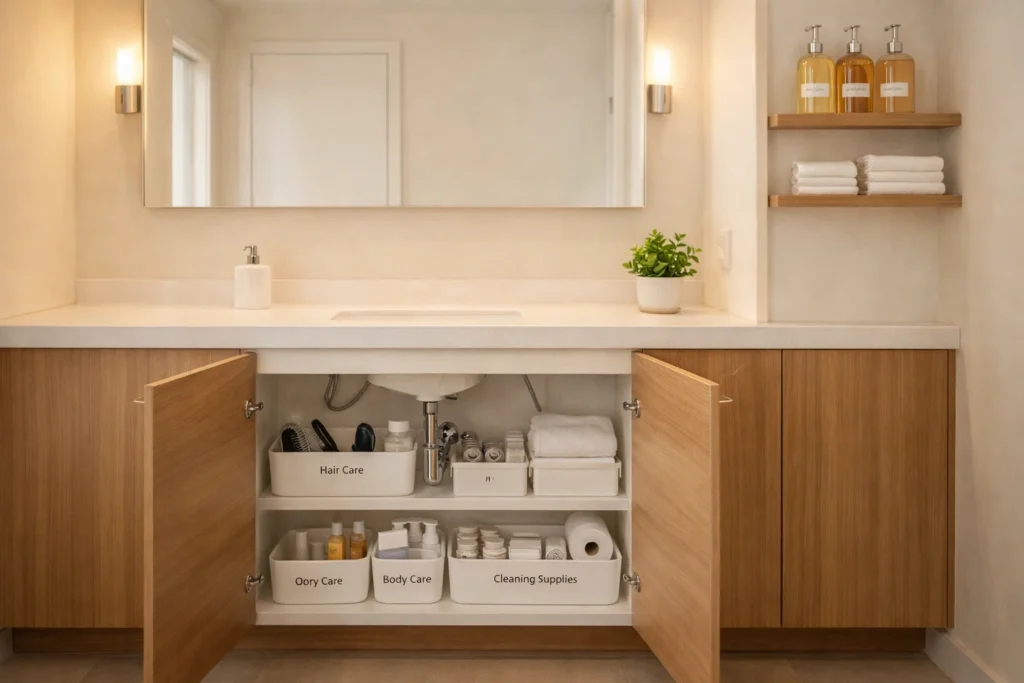
Bathrooms accumulate clutter faster than any other room in the home — and for completely understandable reasons. Expired medications, duplicate shampoo bottles, impulse purchases from the Target beauty aisle, samples collected from hotel stays. Bathroom organization ideas start with a complete clear-out before a single organizing decision is made. Pull everything out from under the sink, out of the medicine cabinet, and off the counter. Throw away anything expired, anything empty, and anything you genuinely don’t use. Most people discard 30–40% of their bathroom contents during this step alone.
House organization ideas for the bathroom that deliver lasting results use a few specific tools: drawer dividers for cosmetics and small items, wall-mounted shelving for frequently used products, clear over-door organizers for the cabinet under the sink, and decanted soap and shampoo in matching dispensers on the shower shelf. How to organize your home like a professional in the bathroom means treating every visible surface as intentional display space rather than default storage. A counter holding only a soap dispenser, a small plant, and one candle looks infinitely calmer — and is infinitely easier to wipe clean — than a counter buried under fifteen products.
Closet Organization Ideas That Save Space and Save Your Mornings
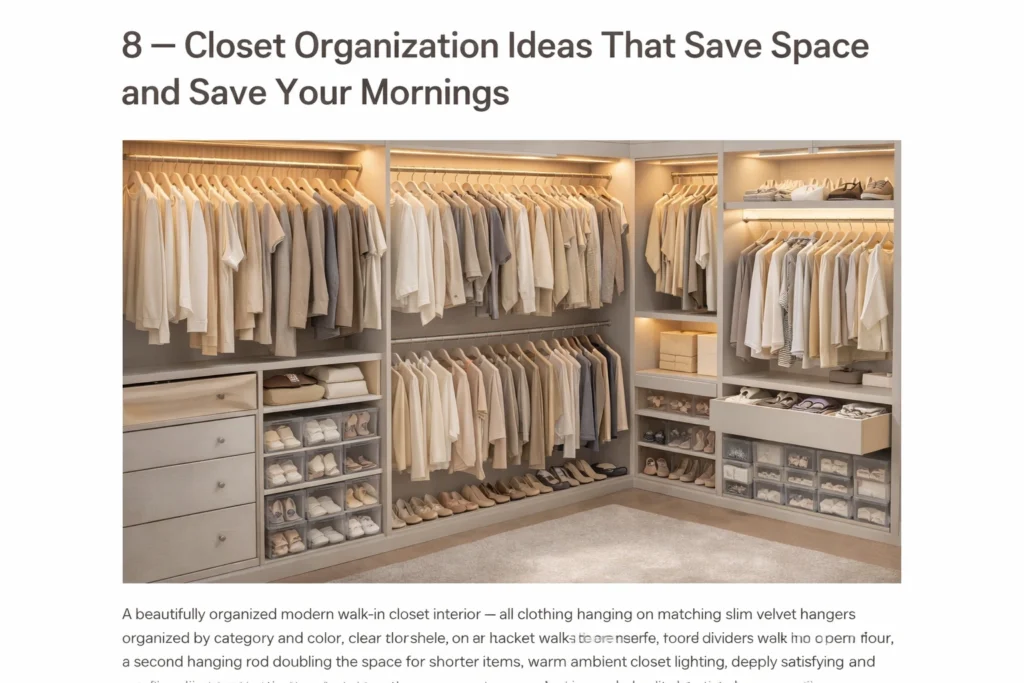
A well-organized closet saves between 15 and 20 minutes every single morning. That’s over 90 hours per year returned to your life from one organizational project. Closet organization ideas that actually deliver this time saving start with the backwards hanger method — turn every hanger backwards in your closet today. Over the next six months, turn hangers forward only when you wear that item. At the end of six months, anything still hanging backwards gets donated without deliberation. This method identifies unworn clothing with complete objectivity and zero emotional negotiation.
| Closet Tool | Cost Range | Space Saved | Best For |
|---|---|---|---|
| Velvet slim hangers | $15–$25 per 50 | Up to 60% more hanging space | All clothing |
| Second hanging rod | $10–$20 | Doubles short-item capacity | Shirts, jackets, skirts |
| Clear shoe boxes | $20–$40 per 12 | Floor space freed up | All footwear |
| Shelf dividers | $10–$20 per set | Prevents folded item collapse | Sweaters, jeans |
| Over-door organizer | $15–$30 | Uses unused door space | Accessories, bags, shoes |
How To Organize a Small Home Without Losing Your Mind or Your Style
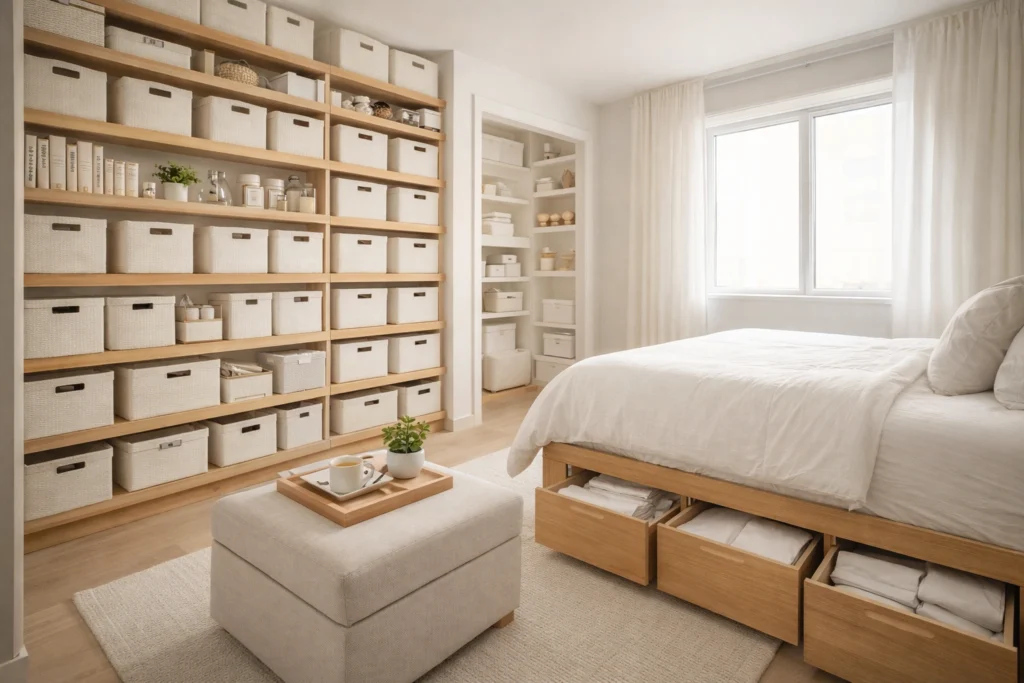
How to organize a small home requires thinking in three dimensions rather than two. Floor space is precious and finite. Wall space is abundant and largely unused. Vertical storage — floor-to-ceiling shelving, wall-mounted pegboards, over-door organizers, and lofted platforms — multiplies your usable storage without consuming a single additional square foot of floor. Small home organization ideas consistently prioritize multifunctional furniture: storage ottomans that serve as coffee tables, beds with built-in drawers, dining tables that fold against the wall, and sofas with under-cushion storage.
Best home organization ideas for small spaces also apply the one-in-one-out rule with strict consistency — in a small home, there’s no spare room for excess accumulation. Home organization hacks that genuinely transform small spaces include tension rods mounted inside kitchen cabinets to create vertical dividers for baking sheets and cutting boards, magnetic knife strips mounted on kitchen walls to free up drawer space, command hooks on the inside of cabinet doors for pot lids and cleaning supplies, and under-shelf baskets that clip onto existing shelves to double their storage capacity instantly and cheaply.
Best Storage Solutions That Make Home Organization Actually Stick
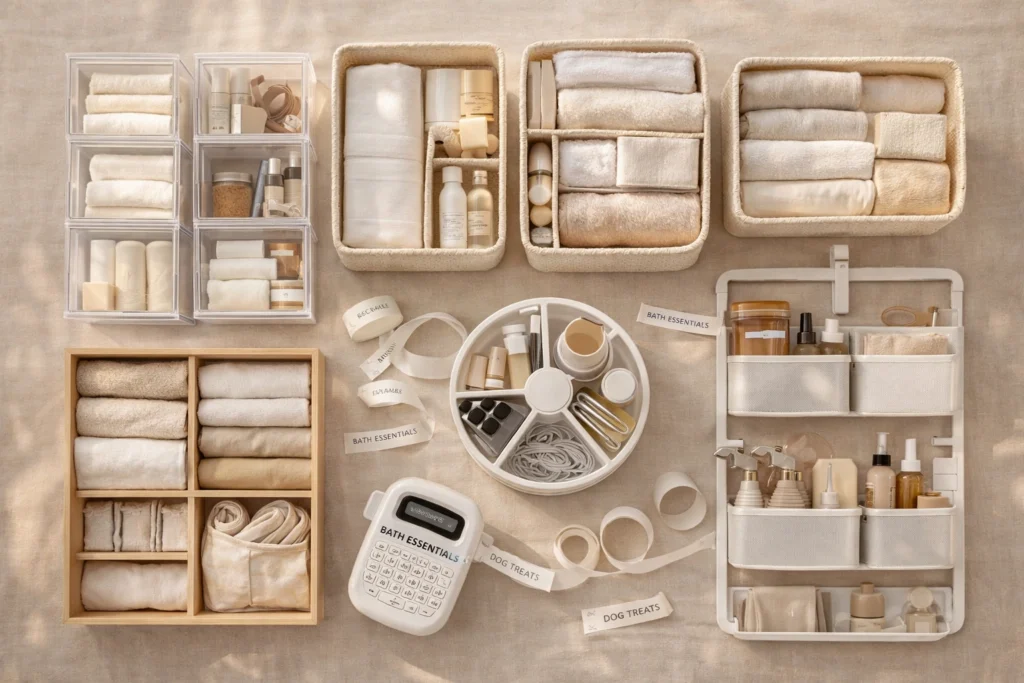
Best storage solutions for home organization share one quality: they’re bought after decluttering, not before. Buying storage products before you’ve reduced your volume is like buying a larger pair of pants instead of addressing what’s causing the weight gain. Measure your spaces before purchasing anything. Know exactly what you need to contain and in what quantities. What are the best home organization products? The ones sized precisely for your actual needs — not the attractive large bins that look great empty but overwhelm a drawer when full.
| Storage Product | Cost | Best Use | Where to Buy |
|---|---|---|---|
| Clear stackable bins | $3–$8 each | Pantry, bathroom, closet | IKEA, Amazon, Target |
| Drawer dividers | $5–$15 per set | Kitchen, bathroom, bedroom | Dollar store, Amazon |
| Lazy susan turntable | $8–$15 | Corner cabinets, pantry | Amazon, Target |
| Uniform basket set | $20–$40 | Open shelving, linen closet | IKEA, Amazon |
| Label maker | $15–$25 | Everything labeled | Amazon, office supply stores |
| Over-door organizer | $15–$30 | Bathroom, closet, pantry door | Amazon, Target |
How To Maintain Home Organization Without Burnout or Overwhelm
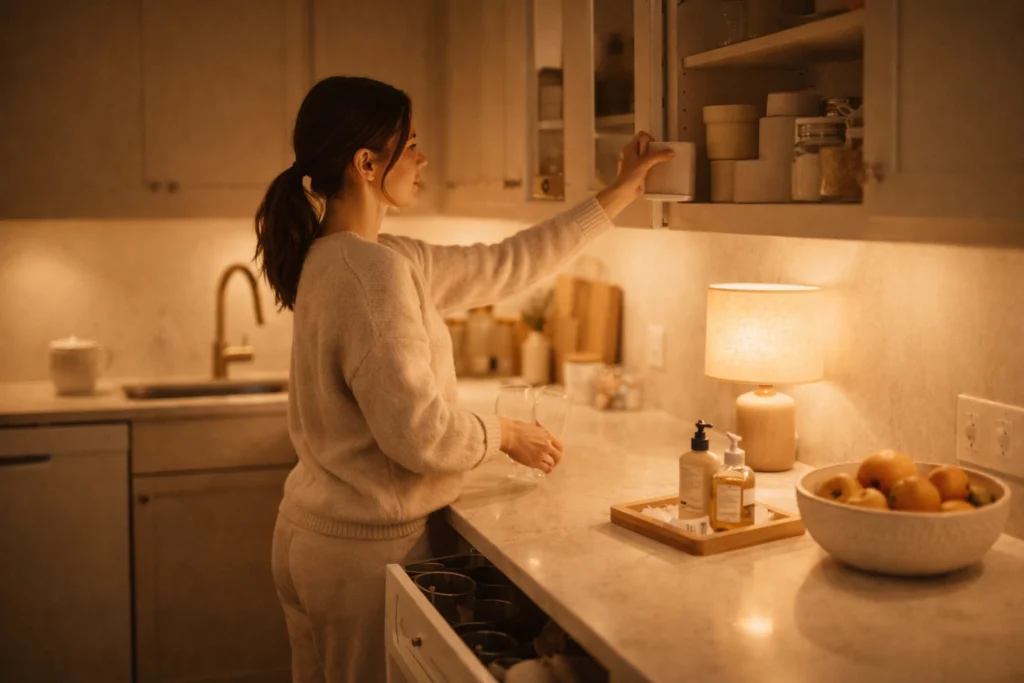
How to maintain home organization every day without burning out comes down to one daily practice — the 10-minute evening reset. Every surface returned to its baseline. Every object returned to its designated home. Dishes out of the sink. Clothes off the chair. Counters cleared. This single daily habit prevents the gradual accumulation of chaos that makes weekly and monthly cleaning feel overwhelming. How to keep your home organized long term is not a weekend project — it’s a ten-minute daily practice that anyone can sustain indefinitely.
Beyond the daily reset, a Sunday 30-minute tidy prevents weekly accumulation from becoming monthly chaos. Four seasonal declutters per year — one each quarter — keep the overall volume of possessions from outgrowing the organization system. Home organization tips for beginners on maintenance: never leave a room empty-handed. When you walk from the kitchen to the bedroom, take anything in the kitchen that belongs in the bedroom with you. This one simple habit reduces daily tidying time by approximately 30% by preventing objects from accumulating in the wrong rooms throughout the day.
Home Organization Mistakes That Quietly Undo All Your Hard Work
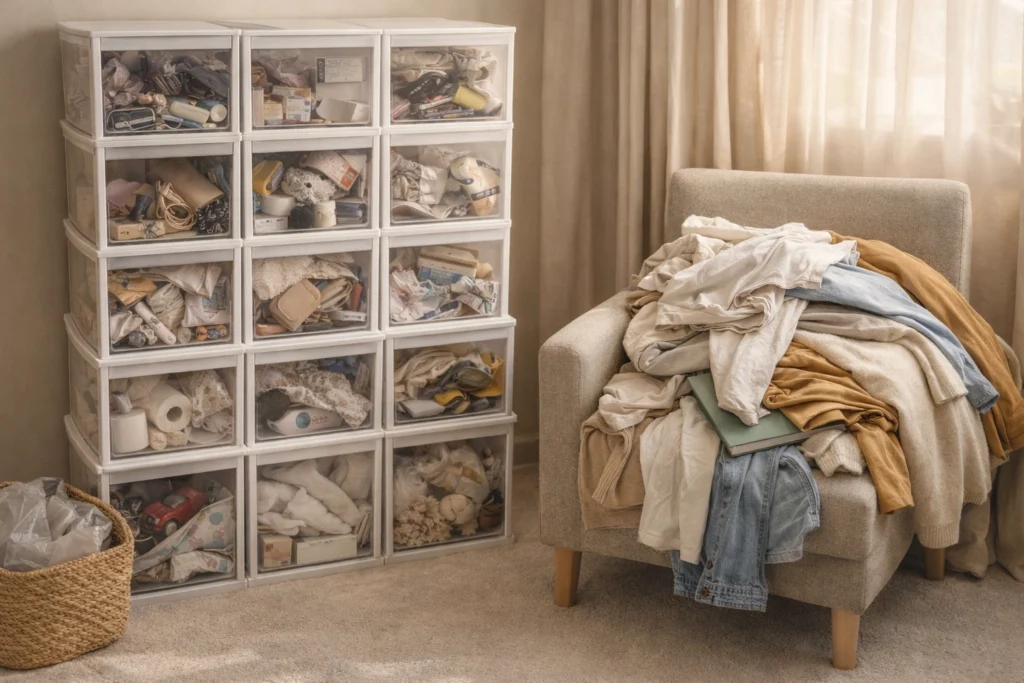
Home organization mistakes to avoid fall into three consistent categories: buying storage before decluttering, organizing by aesthetics rather than function, and creating systems too complicated to maintain on a tired Tuesday evening. All three mistakes share the same root cause — optimism about future behavior rather than honesty about current habits. An organization system designed for your most energetic, most motivated self will fail the moment your most tired, most overwhelmed self encounters it. How to organize your home like a professional means designing for your worst day, not your best one.
Additional organization mistakes that quietly undo good work include failing to label storage containers, ignoring the one-in-one-out rule after the initial organization, organizing in isolation without getting household buy-in, and treating organization as a one-time event rather than an ongoing practice. Home organization tips from professional organizers consistently emphasize one truth above all others: the most sustainable organization systems are always the simplest ones — the ones that any household member can follow correctly without reading a label or asking for help. Complexity is the enemy of consistency.
Final Thoughts — How To Build a Home Organization System That Lasts
Sustainable home organization rests on three foundations and three foundations only: own less, designate a home for everything you keep, and maintain daily through simple micro-habits. Everything else — the containers, the labels, the color coordination, the shelf risers — is just implementation detail. How to declutter and organize your home in a way that genuinely lasts means being ruthlessly honest about what you own, building systems simple enough to maintain on your most exhausted day, and treating organization as a daily act of self-care rather than a periodic punishment.
Start with one room today. Not the whole house. One room. One win. Clear one surface completely and keep it clear for seven days. Notice how that small change makes you feel — the visual calm, the reduced morning friction, the quiet satisfaction of knowing exactly where everything is. Home organization ideas that change lives always start this small. The framework scales naturally from one cleared surface to one organized room to one transformed home. Your stuff doesn’t have to run your life. You just have to decide — clearly and once — that it won’t.


One Comment