
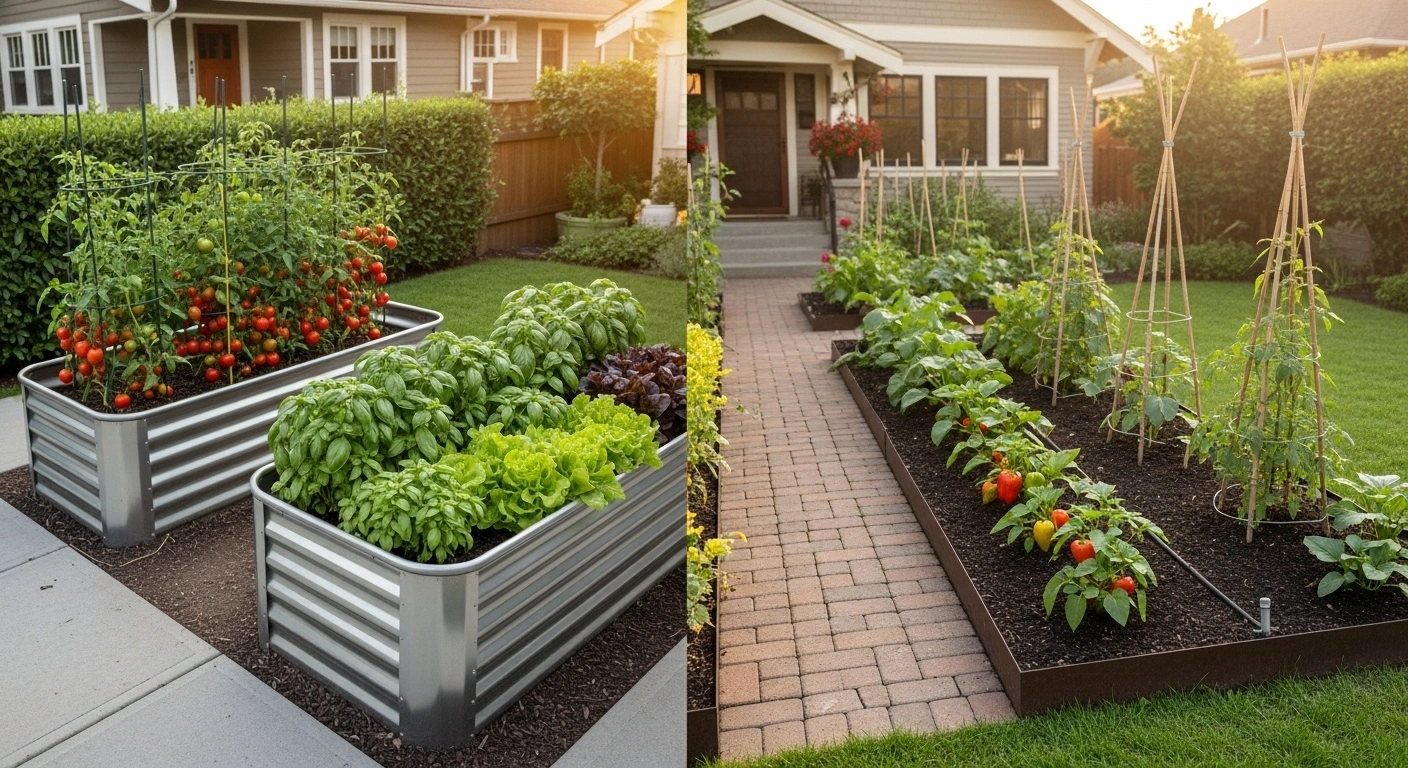
13 Raised Beds vs In-Ground Gardens in Small Front Yards: Which Works Better?
Gardening in a small front yard forces a decision that surprises most new gardeners with its complexity. It isn’t just about what to plant. It’s about how you plant, where you plant, and which system actually works within the real constraints of limited space, difficult soil, neighborhood aesthetics, and your own physical limitations. Raised beds vs in-ground gardens is one of the most genuinely consequential decisions any small-space gardener makes — and getting it wrong costs time, money, and a full growing season of frustration. This guide breaks down every comparison factor honestly so you can make the right choice for your specific situation.
Why Small Front Yards Need a Smarter Gardening Approach
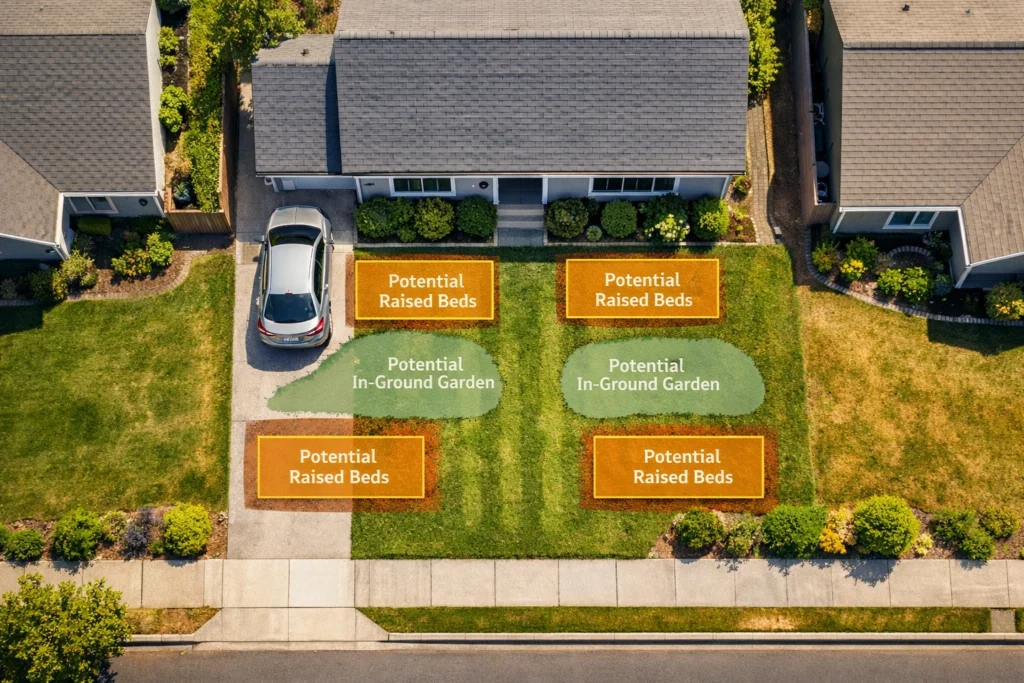
Small front yards punish lazy gardening decisions mercilessly. Every square foot matters. Every soil problem gets magnified. Every aesthetic misstep gets noticed by everyone who drives past. Raised bed gardening for beginners and experienced gardeners alike recognizes that small front yard spaces require a fundamentally different planning approach than large backyard gardens where mistakes can hide behind sheer acreage. The average American front yard measures approximately 1,500 to 2,000 square feet — a modest canvas that demands intentional, space-efficient gardening strategies rather than the sprawling informal approaches that work comfortably in larger spaces.
Front yard vegetable gardens specifically face an additional layer of complexity that backyard gardens don’t — they exist in the public visual space of your home’s exterior and must therefore balance genuine horticultural productivity with enough aesthetic organization to avoid HOA complaints, neighborhood friction, and the simple personal satisfaction of living in a beautiful space. Raised bed vs ground planting in a front yard context involves this aesthetic dimension as much as the purely horticultural one — a well-constructed raised bed system creates organized, intentional visual structure that most neighbors find genuinely attractive while an informal in-ground planting can look chaotic and unkempt if not maintained with considerable care and consistency.
What Is a Raised Bed Garden and How Does It Actually Work
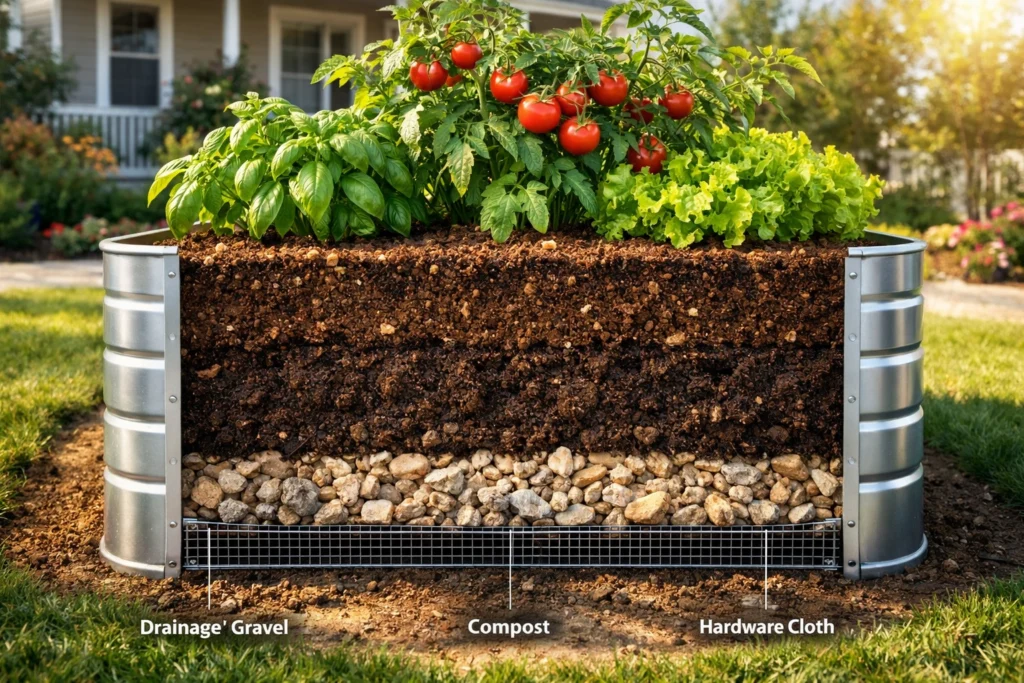
A raised bed garden is exactly what it sounds like — a defined planting area where the soil surface sits elevated above the surrounding grade, typically contained within a structural frame of wood, metal, stone, brick, or composite material that holds the growing medium in place and defines the bed’s boundaries. Raised bed gardening benefits derive from this simple structural principle — by controlling what goes into the raised frame you control the soil quality, drainage, depth, and composition completely independently of whatever native soil conditions exist beneath the bed. This soil independence is the fundamental advantage that makes raised beds so compelling for challenging sites and beginner gardeners who haven’t yet learned to work with difficult native soils.
Deep raised bed gardening — beds built to 12 inches or deeper — provides root depth adequate for virtually every common vegetable crop including deep-rooting tomatoes, carrots, parsnips, and squash that struggle in shallow or compacted native soils. Standard raised bed heights range from 6 inches for shallow-rooted crops like lettuce, herbs, and radishes to 24 inches for accessibility-focused builds designed for gardeners with mobility limitations who need to garden without bending. Raised bed vs ground planting depth analysis shows that a 12-inch deep raised bed filled with quality blended growing medium provides more effective rooting depth for most vegetables than 24 inches of typical compacted clay native soil because the raised bed’s loose, well-aerated structure allows roots to penetrate and expand far more efficiently than compacted native ground.
What Is an In-Ground Garden and When Does It Make Sense
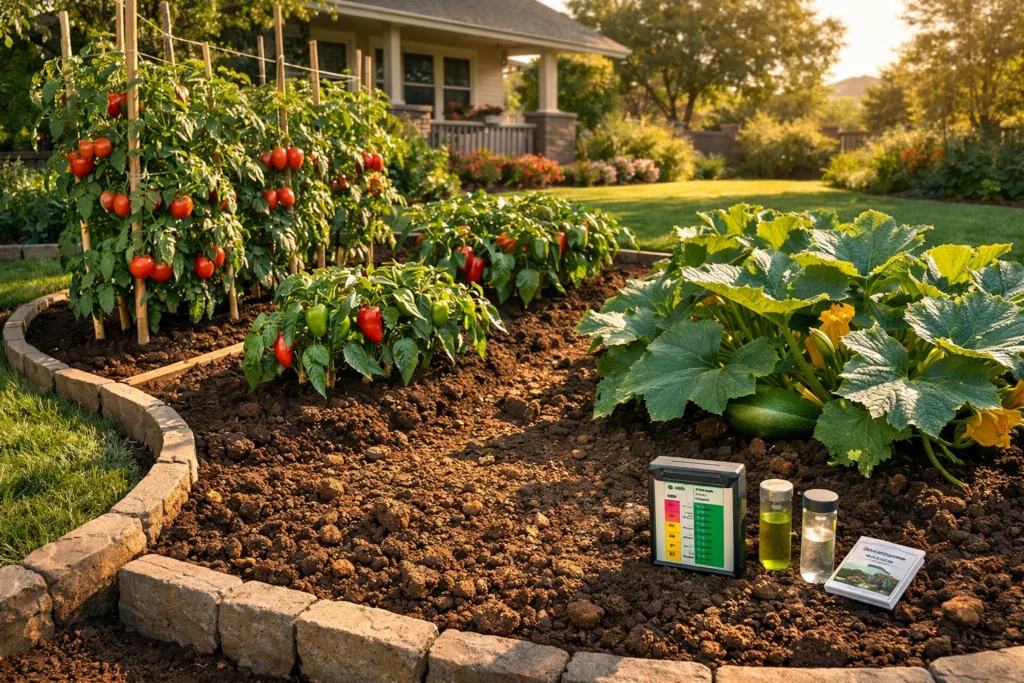
An in-ground garden uses the native soil of your yard as its growing medium — amended, improved, and prepared as needed but fundamentally relying on the existing soil profile rather than imported growing media confined in a structural container. In ground garden advantages are real and significant for homeowners fortunate enough to possess good native soil — deep, well-draining loam with a balanced pH and good organic matter content represents the most cost-effective growing medium imaginable since it already exists in place and requires only modest annual amendment to maintain productivity. In-ground gardens also provide unlimited rooting depth for perennial plants, trees, and large shrubs that would eventually become root-bound in even the deepest raised bed.
you may also like this:14 Front Porch Flower Combinations That Make Every Neighbor Stop and Stare
In ground vegetable garden pros and cons balance against each other differently depending entirely on your specific native soil conditions. Sandy, well-draining soil in good structural condition that requires only routine compost amendment represents the ideal scenario where in-ground gardening costs less, requires less material investment, and performs as well or better than raised bed alternatives. However — and this is the caveat that affects the majority of American homeowners — most urban and suburban front yard soils have been seriously degraded by construction activity, compaction from foot and vehicle traffic, contamination from building materials, and decades of conventional lawn care practices that prioritize grass health over general soil biology. In ground garden soil preparation for genuinely degraded urban soils requires significant investment in deep tilling, soil testing, amendment, and remediation that can approach or exceed the cost of simply building raised beds filled with quality imported growing media.
Raised Beds vs In-Ground Gardens: The True Cost Comparison
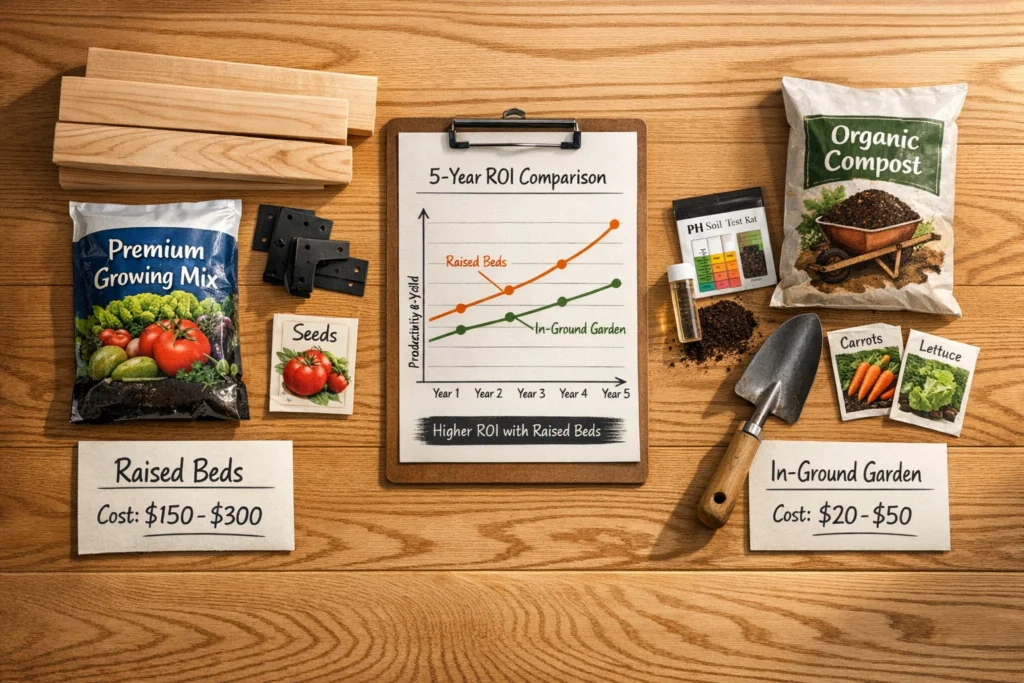
Money matters in gardening just as much as it matters everywhere else and cost of raised bed vs in ground garden comparisons reveal a nuanced picture that simple upfront cost analysis misses entirely. A basic 4-foot by 8-foot cedar raised bed with lumber, hardware, and quality soil fill costs approximately $150 to $300 depending on material choices and regional lumber prices — a meaningful upfront investment compared to the near-zero upfront cost of simply digging up a patch of existing lawn for in-ground planting. However this upfront cost comparison ignores the ongoing costs of both systems over multiple growing seasons that substantially change the long-term economic picture.
| Cost Factor | Raised Bed | In-Ground | Winner |
|---|---|---|---|
| Initial setup | $150–$300 per 4×8 | $20–$50 | In-ground |
| Soil quality | Excellent controlled | Variable | Raised bed |
| Annual amendment | $20–$50 | $30–$80 | Raised bed |
| 5-year total | $400–$600 | $170–$450 | Depends on soil |
| Productivity value | $600/year | $400/year | Raised bed |
Which Garden Type Gives You Better Soil Control and Drainage
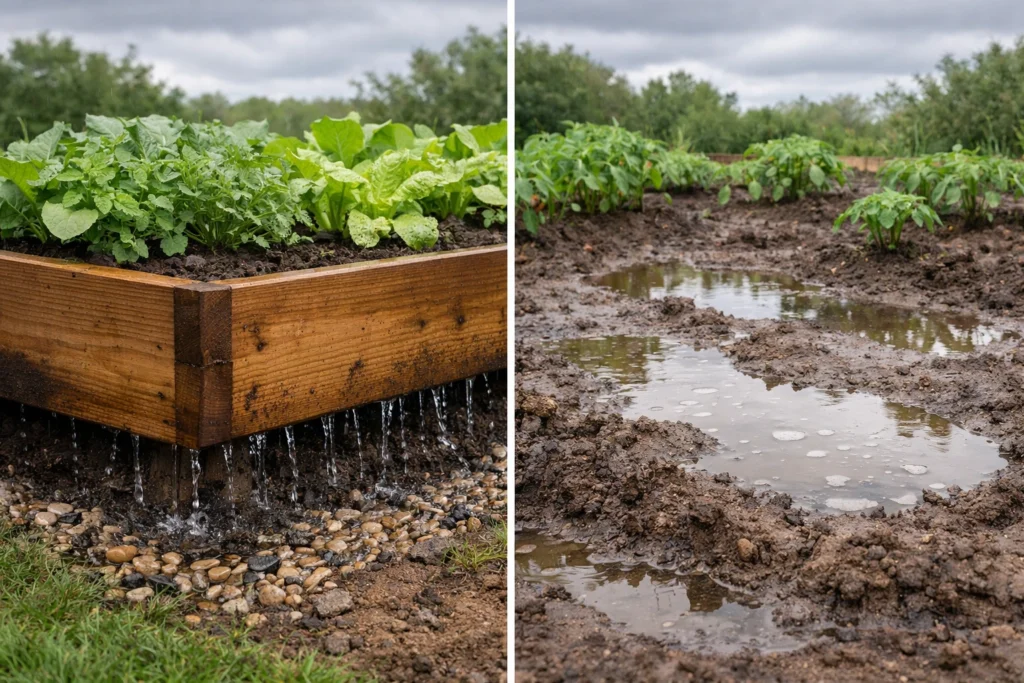
Soil control is where raised beds vs in-ground gardens comparison becomes least ambiguous — raised beds win this category comprehensively and by a significant margin in almost every realistic scenario. Raised bed soil vs garden soil comparison starts with the fundamental advantage of choosing exactly what goes into your raised bed growing medium rather than inheriting whatever your property’s soil history has produced. A quality raised bed soil blend — typically a combination of topsoil, compost, and perlite or coarse sand in proportions optimized for vegetable production — provides the loose, well-aerated, nutrient-rich growing environment that vegetable crops thrive in and that most native urban soils cannot provide without years of consistent amendment and improvement.
Raised bed drainage benefits address one of the most common and most damaging problems in small front yard vegetable gardening — waterlogged soil that drowns roots, promotes fungal diseases, and creates the anaerobic soil conditions that most vegetable crops find fatal. Do raised beds drain better than in ground gardens — the answer is unambiguously yes in the overwhelming majority of residential situations because the raised bed’s elevated position above grade creates a natural drainage gradient that moves excess water away from the root zone regardless of what the native soil drainage conditions are beneath the bed. Best soil for raised beds vs in ground garden for maximum drainage performance combines equal parts quality topsoil, mature compost, and coarse perlite — a blend that holds adequate moisture for plant needs while draining surplus water efficiently within hours of heavy rainfall.
Raised Beds vs In-Ground Gardens for Weed and Pest Control
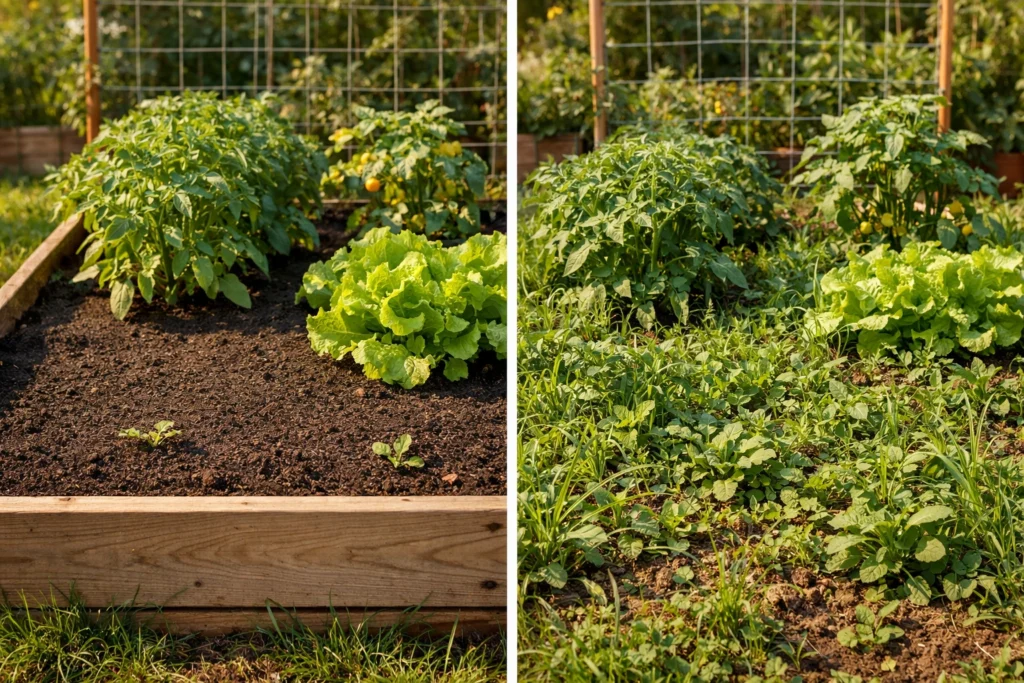
Weeds are the tax that gardeners pay for growing things and raised beds vs in ground for weed control comparison delivers one of raised beds’ most practically significant advantages for time-constrained American homeowners. Raised bed gardening weeds management starts from a position of significant advantage — a raised bed filled with quality imported growing medium contains essentially zero weed seeds in its initial installation, compared to native in-ground soil that contains a persistent weed seed bank built up over years or decades that germinates continuously throughout the growing season. University of California Cooperative Extension research found that raised beds require approximately 70% less weeding time than equivalent in-ground garden areas during the first three growing seasons — a time saving that many busy homeowners consider the single most compelling argument for raised bed adoption.
In ground garden pest control presents genuinely different challenges from raised bed pest management because in-ground gardens exist in continuous contact with the native soil ecosystem that hosts soil-dwelling pest populations — root-feeding beetle larvae, cutworms, voles, and gophers can all access in-ground garden roots directly through the soil profile. Raised beds vs in ground for pest and disease control shows raised beds holding a meaningful advantage for soil-dwelling pests because adding hardware cloth or fine mesh screening to the raised bed’s bottom during construction creates a complete physical barrier against burrowing pests at minimal additional cost. Above-ground pest pressure — aphids, caterpillars, whitefly — affects both garden types equally and requires the same management approaches regardless of whether plants grow in raised beds or in-ground beds.
Which Option Produces More Vegetables in a Small Front Yard
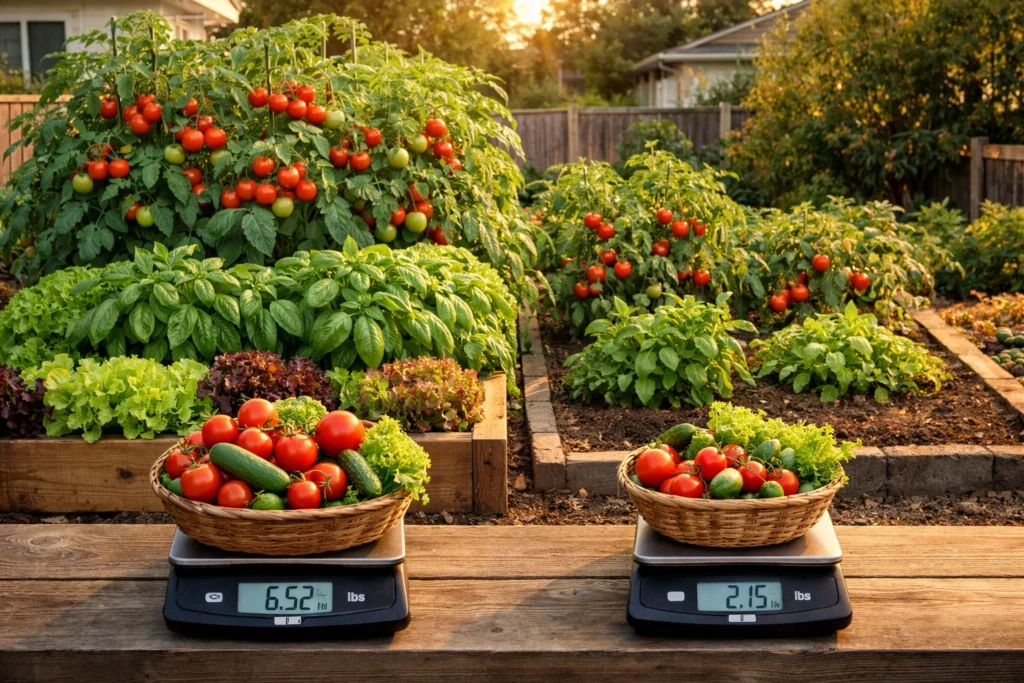
Productivity is ultimately the measure that matters most for vegetable gardeners and which garden type is more productive raised bed or in ground analysis produces a consistently clear answer across multiple research studies. Do raised beds produce more vegetables than in ground gardens — the answer is yes in most American residential contexts by a margin that surprises many gardeners. University of Vermont Extension research found that well-managed raised beds produce 1.4 to 2 times more vegetables per square foot than equivalent in-ground garden areas over a full growing season — a productivity advantage driven by better soil quality, improved drainage, earlier spring warming, and the higher planting density that raised bed’s defined boundaries and deep loose soil enable.
Raised bed vs ground garden yield differences are most dramatic for root vegetables — carrots, parsnips, beets, and radishes — that require the deep, loose, stone-free soil conditions that raised beds provide naturally but that in-ground gardens in typical urban soils rarely achieve without extensive preparation. Raised beds vs in ground gardens for tomatoes and vegetables specifically shows tomatoes performing 30 to 50% better in raised beds than in-ground in clay-heavy soils because tomatoes develop extensive root systems that require the loose, well-draining, warm soil conditions that raised beds provide and that clay soils fundamentally cannot replicate. Raised bed vs in ground tomatoes yield comparison from home gardener surveys consistently finds raised bed tomato growers harvesting larger plants, earlier fruit, and greater total yields than in-ground growers working with equivalent native soil conditions.
Raised Beds vs In-Ground Gardens for Curb Appeal and Aesthetics
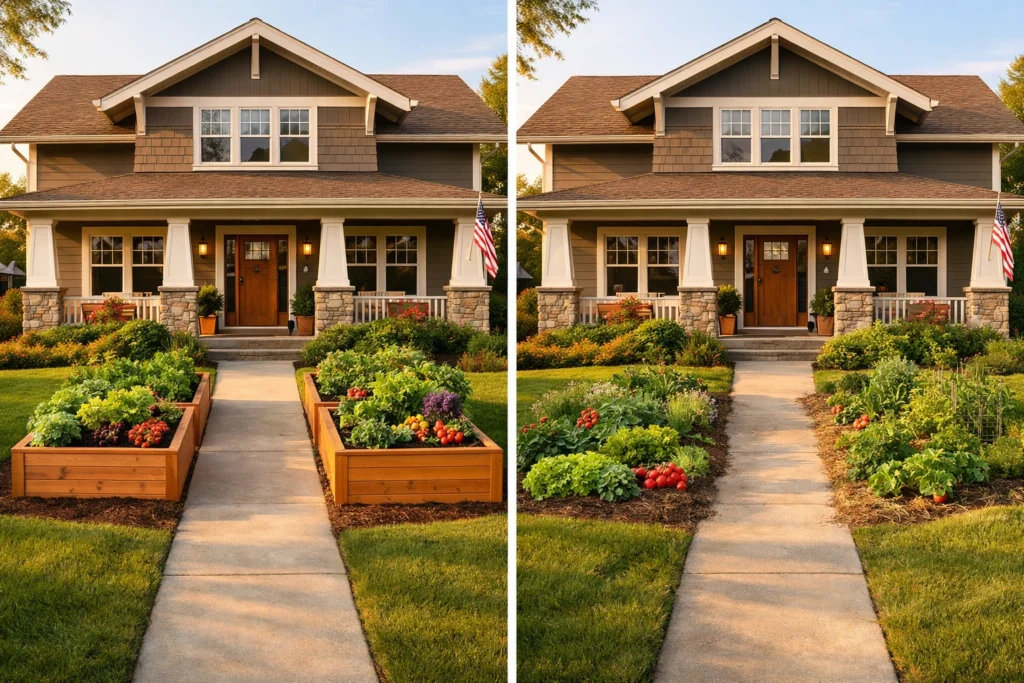
Front yard gardens exist in your home’s public visual space and aesthetics matter enormously in this location in ways that backyard gardens simply don’t face. Raised beds vs in-ground gardens from a curb appeal perspective heavily favor raised beds for most American neighborhoods because the defined structural boundaries of a raised bed system communicate intentionality, organization, and design thoughtfulness that in-ground plantings struggle to convey at equivalent maintenance levels. A cedar or galvanized steel raised bed system creates instant visual structure that reads as a deliberate design element rather than a random garden patch — an important distinction in front yard contexts where HOA regulations, neighbor relationships, and overall property aesthetics all factor into gardening decisions.
In ground garden bed ideas that achieve comparable aesthetic quality to raised beds require significantly more ongoing maintenance discipline — precise edging, consistent mulching, careful plant arrangement, and regular boundary maintenance all need to happen consistently to prevent an in-ground front yard garden from looking overgrown and unkempt. Raised bed gardening small spaces specifically delivers aesthetic advantages beyond simple organization — the vertical dimension of a raised bed frame adds three-dimensional visual interest to flat front yard spaces and creates a more sophisticated garden composition than flat in-ground planting achieves in the same area. Modern galvanized steel raised beds in particular have become genuine garden design statements that many homeowners install as much for their contemporary aesthetic appeal as for their horticultural benefits.
Which Garden Type Is Better for Beginners and Bad Backs
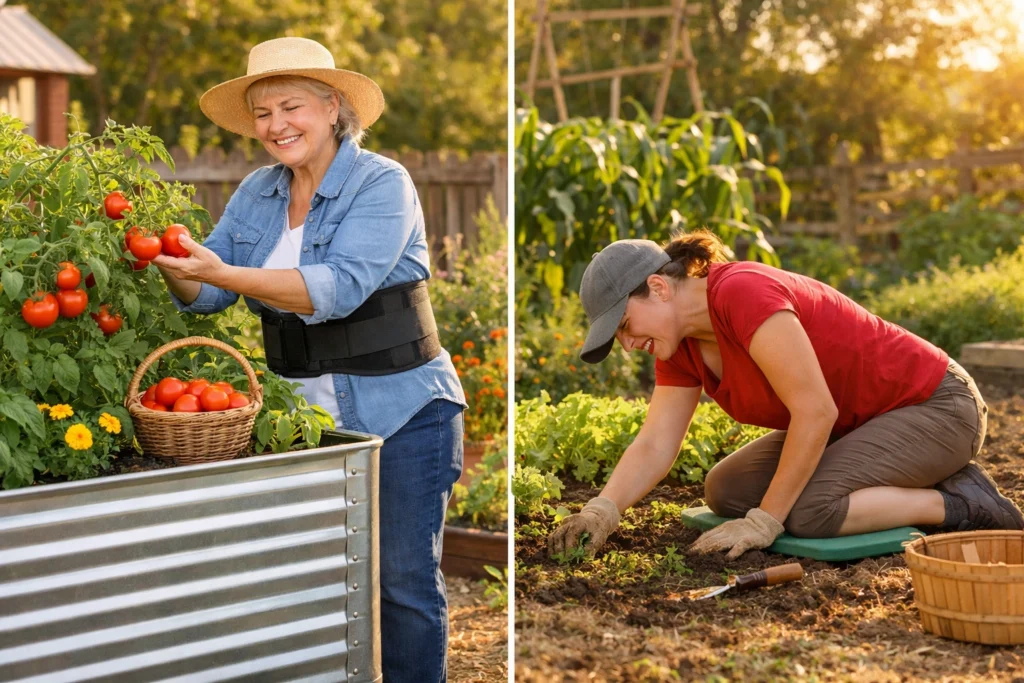
Accessibility transforms from a convenience consideration into a genuine necessity for a significant portion of American gardeners and raised beds vs in-ground gardens for back pain and mobility comparison shows raised beds winning this category unambiguously and by a margin that can genuinely determine whether someone continues gardening at all. Raised bed gardening back pain reduction begins immediately — a raised bed built to 24 to 30 inches in height eliminates all ground-level bending and kneeling during planting, weeding, harvesting, and maintenance tasks, reducing the lower back strain that makes in-ground gardening progressively more difficult and eventually impossible for many older gardeners and those with chronic back conditions.
Raised beds vs in ground gardens which is better for beginners analysis strongly favors raised beds because the controlled soil environment eliminates the most common beginner failures — poor drainage, soil compaction, and weed competition — that discourage new gardeners before they develop the skills and knowledge to manage these challenges in native in-ground conditions. Which is easier raised bed or in ground vegetable garden for someone planting their first vegetable garden — raised beds win decisively because they provide immediate success with minimal horticultural knowledge, while in-ground vegetable gardening in typical urban soils requires soil testing, amendment, drainage management, and weed control skills that take multiple growing seasons to develop. The early success that raised beds provide for beginner gardeners builds the confidence and enthusiasm that keeps people gardening long-term.
Raised Beds vs In-Ground for Clay Soil and Drainage Problems
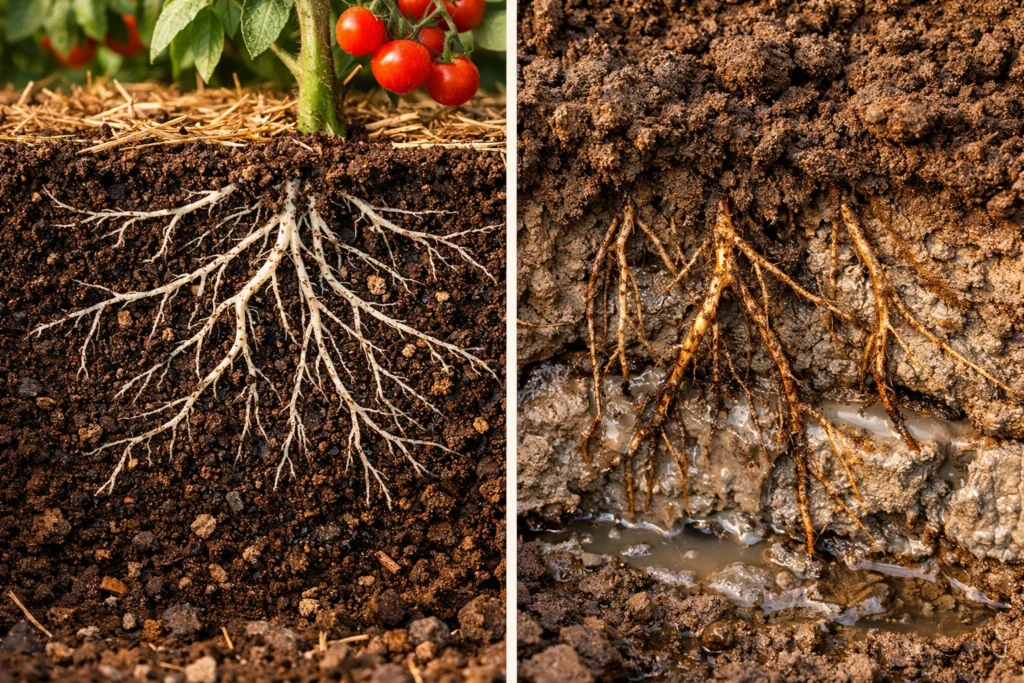
Clay soil is the most common and most challenging native soil condition facing American front yard gardeners and raised bed gardening vs in ground for clay soil comparison makes the case for raised beds more emphatically than almost any other comparison factor. Clay soils drain slowly — sometimes catastrophically slowly — holding water in the root zone long enough to drown vegetable crops that need free-draining soil for healthy root development. Are raised beds better for clay or sandy soil — the answer is that raised beds improve gardening outcomes dramatically over both clay and sandy native soils because they replace both soil types with a purpose-blended growing medium that avoids both clay’s drainage problems and sand’s moisture retention deficiencies.
Raised beds vs in ground gardens for drainage problems shows the raised bed advantage operating through multiple mechanisms simultaneously — the elevated position above grade creates passive drainage through gravity, the quality growing medium drains efficiently by design, and the defined bed boundaries prevent lateral water migration from surrounding poorly-draining native soil from saturating the root zone. How to convert in ground garden to raised beds over an existing clay soil problem involves placing the raised bed frame directly over the clay soil surface without any native soil removal — the raised bed’s weight and the growing medium’s depth simply overwhelm the clay’s influence on the root zone, allowing roots to develop entirely within the imported growing medium above the clay layer rather than struggling through it.
Water Usage Comparison: Raised Beds vs In-Ground Gardens
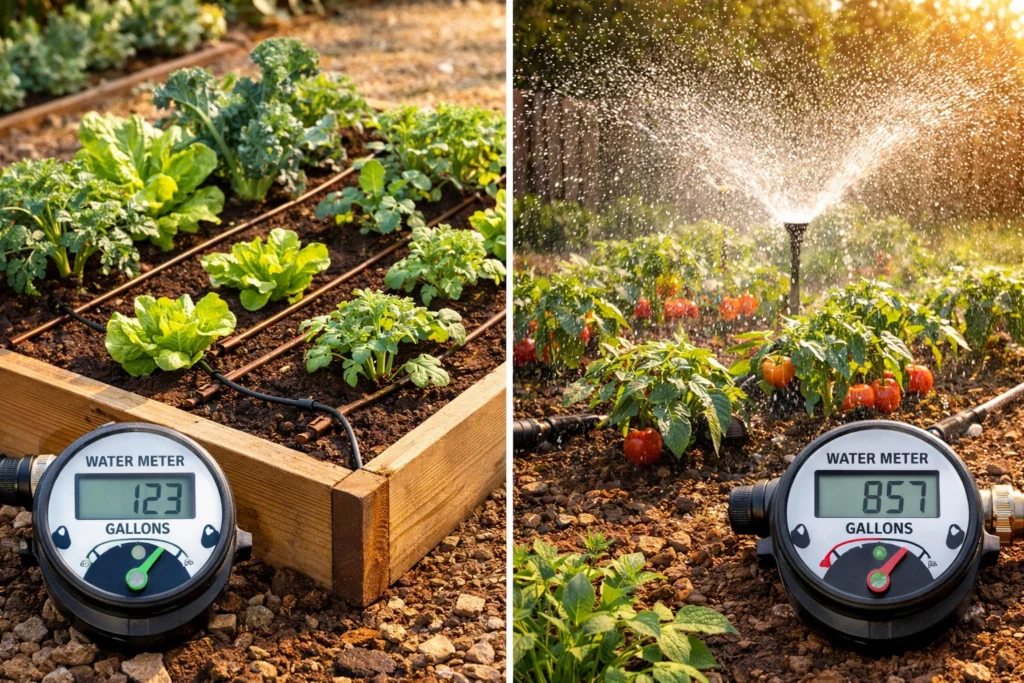
Water efficiency increasingly matters for American gardeners facing drought restrictions, rising water costs, and the environmental imperative to reduce residential water consumption wherever possible. Raised beds vs in ground gardens water usage comparison produces a nuanced result that depends significantly on local climate, native soil conditions, and irrigation system design. In general raised beds require more frequent irrigation than in-ground gardens because their smaller soil volume and superior drainage mean they dry out faster than large in-ground planting areas — a characteristic that makes drip irrigation virtually mandatory for raised bed systems rather than optional.
In ground garden watering tips for clay soils specifically recommend deep infrequent watering that allows the clay’s natural slow drainage to work beneficially — watering thoroughly and allowing soil to dry to appropriate depth between irrigations reduces total water use and actually improves plant health compared to frequent shallow watering that keeps clay soil perpetually saturated. Raised beds vs in ground gardens water usage comparison over a full growing season finds that raised beds with properly installed drip irrigation systems use approximately 30 to 50% less water than equivalent in-ground areas irrigated with sprinklers or overhead systems — because drip irrigation delivers water directly to the root zone with essentially zero evaporative loss while sprinkler irrigation loses 30 to 40% of applied water to evaporation before it reaches plant roots.
Which Garden Warms Up Faster and Extends Your Growing Season
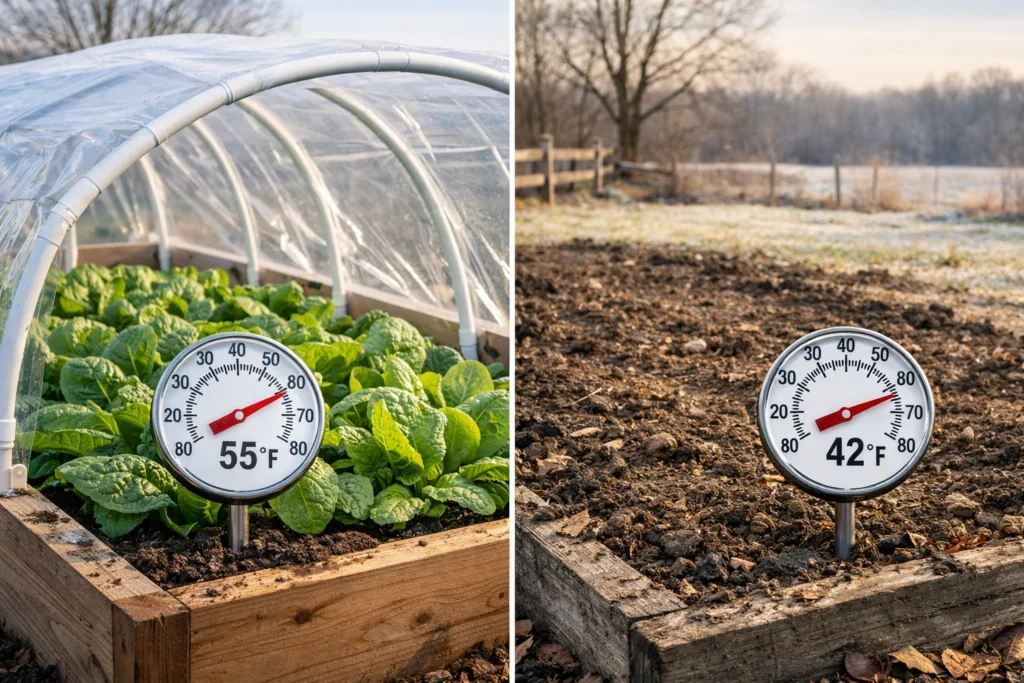
Season extension is one of raised bed gardening benefits most valuable practical advantages — particularly for American gardeners in northern states where the growing season’s brevity limits what can be grown and harvested before frost ends the year. Do raised beds warm up faster than in ground gardens in spring — yes, demonstrably and measurably. University of New Hampshire research found that raised bed soil reaches planting temperature (50°F) an average of two to three weeks earlier in spring than adjacent in-ground soil areas — a difference that translates directly into earlier planting dates, longer growing seasons, and the ability to grow crops that simply can’t mature within the standard frost-free period in many northern USA locations.
The spring warming advantage of raised beds operates through straightforward thermal physics — the raised bed’s above-grade position exposes all four of its sides to solar radiation and air warming rather than only the top surface, allowing the soil mass to absorb heat from multiple directions simultaneously. Raised bed vs ground planting season extension also works at the season’s opposite end — raised bed soil retains heat longer into autumn than in-ground soil, extending the growing season by an additional one to two weeks in fall and allowing later harvests of heat-loving crops like tomatoes, peppers, and basil that in-ground gardens must abandon earlier as soil temperatures drop. Adding cold frames or low tunnel row covers to raised beds amplifies this season extension advantage further — a simple PVC and plastic sheet cold frame fitted over a raised bed can extend the productive growing season by four to six weeks at both ends in USDA zones 5 through 7.
The Final Verdict: Which Works Better for Small Front Yards
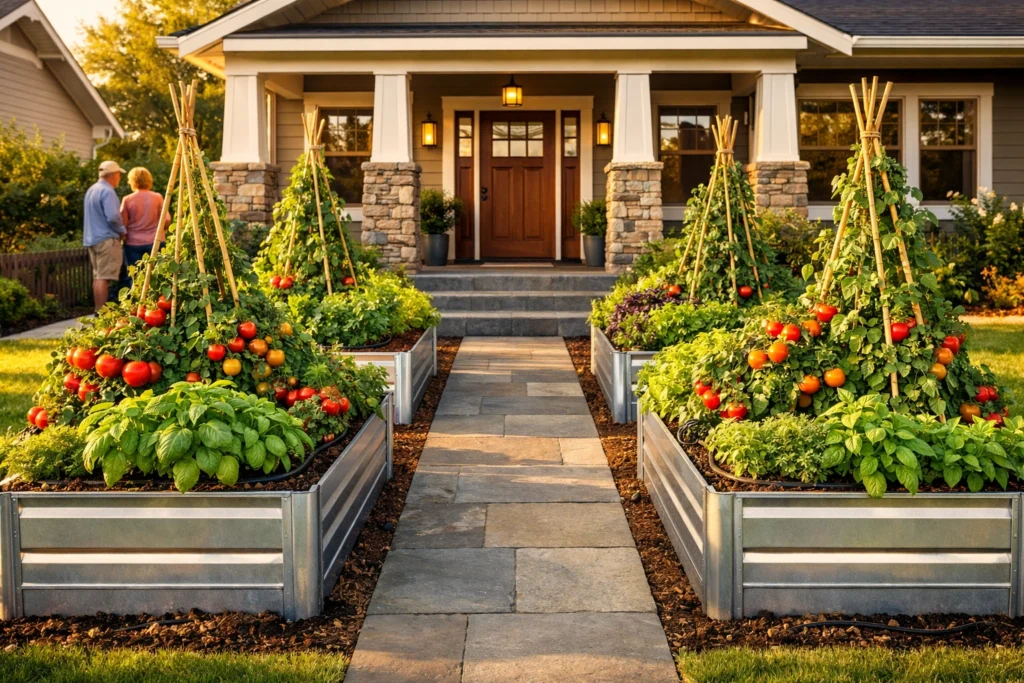
The honest answer to raised beds vs in-ground gardens for small front yards isn’t one-size-fits-all — it’s a contextual recommendation that depends on your specific soil conditions, budget, physical capabilities, aesthetic priorities, and long-term gardening goals. However the evidence across every comparison category examined in this guide points consistently toward raised beds as the superior choice for the overwhelming majority of American small front yard situations — particularly for gardeners dealing with degraded urban soils, clay drainage problems, limited time for intensive maintenance, physical limitations that make ground-level gardening difficult, or front yard aesthetic requirements that demand visual organization and intentional design.
| Comparison Category | Raised Beds | In-Ground | Winner |
|---|---|---|---|
| Soil control | Complete control | Limited | Raised beds |
| Drainage | Excellent | Variable | Raised beds |
| Weed control | 70% less weeding | High maintenance | Raised beds |
| Productivity | 1.4-2x yield | Standard | Raised beds |
| Upfront cost | $150-$300 per bed | $20-$50 | In-ground |
| Aesthetics | Organized, modern | Variable | Raised beds |
| Back pain | Fully accessible | Ground level | Raised beds |
| Clay soil | Excellent | Poor | Raised beds |
| Season extension | 2-3 weeks earlier | Standard | Raised beds |
| Water efficiency | 30-50% less with drip | Variable | Raised beds |
| Best for beginners | Yes | Harder | Raised beds |
| Perennials | Limited depth | Unlimited | In-ground |
Conclusion
Raised beds vs in-ground gardens in small front yards is a comparison that ultimately resolves in favor of raised beds for most American homeowners — not because in-ground gardening is without merit but because raised beds address the specific combination of challenges that small front yards present more completely and more reliably than any in-ground approach can match. Better soil, better drainage, less weeding, more productive yields, superior curb appeal, and genuine accessibility advantages combine to make raised beds the smarter investment for the vast majority of front yard vegetable gardening scenarios. Start with one 4-by-8-foot raised bed this season. The results will convince you more effectively than any comparison guide ever could.
Frequently Asked Questions
Q1: What are the benefits of raised beds over in ground gardens?
What are the benefits of raised beds over in ground gardens include complete soil control, superior drainage, significantly reduced weeding, earlier spring warming, better productivity, improved accessibility for gardeners with back problems, and stronger curb appeal — advantages that apply in virtually every American front yard gardening context.
Q2: How much does a raised bed garden cost vs in ground?
How much does a raised bed garden cost vs in ground — a basic 4-by-8-foot cedar raised bed costs $150 to $300 upfront versus essentially zero for in-ground planting, but raised beds typically recoup this investment within two growing seasons through increased vegetable productivity and reduced amendment costs.
Q3: Do raised beds produce more vegetables than in ground gardens?
Do raised beds produce more vegetables than in ground gardens — yes, research from University of Vermont Extension found raised beds produce 1.4 to 2 times more vegetables per square foot than equivalent in-ground areas, primarily due to better soil quality, improved drainage, and higher planting density.
Q4: Which is better for clay soil — raised beds or in ground?
Raised bed gardening vs in ground for clay soil strongly favors raised beds — clay soil’s poor drainage and compaction create conditions that damage vegetable root systems while raised beds filled with quality imported growing medium completely bypass clay soil problems by providing an independent well-draining root environment above the clay layer.
Q5: Are raised beds worth the cost compared to in ground gardens?
Are raised beds worth the cost compared to in ground gardens — yes for most American homeowners. A well-managed raised bed produces approximately $600 worth of vegetables annually against a five-year total ownership cost of $400 to $600, delivering positive ROI within two growing seasons while providing superior productivity, aesthetics, and accessibility throughout its lifespan.



One Comment