
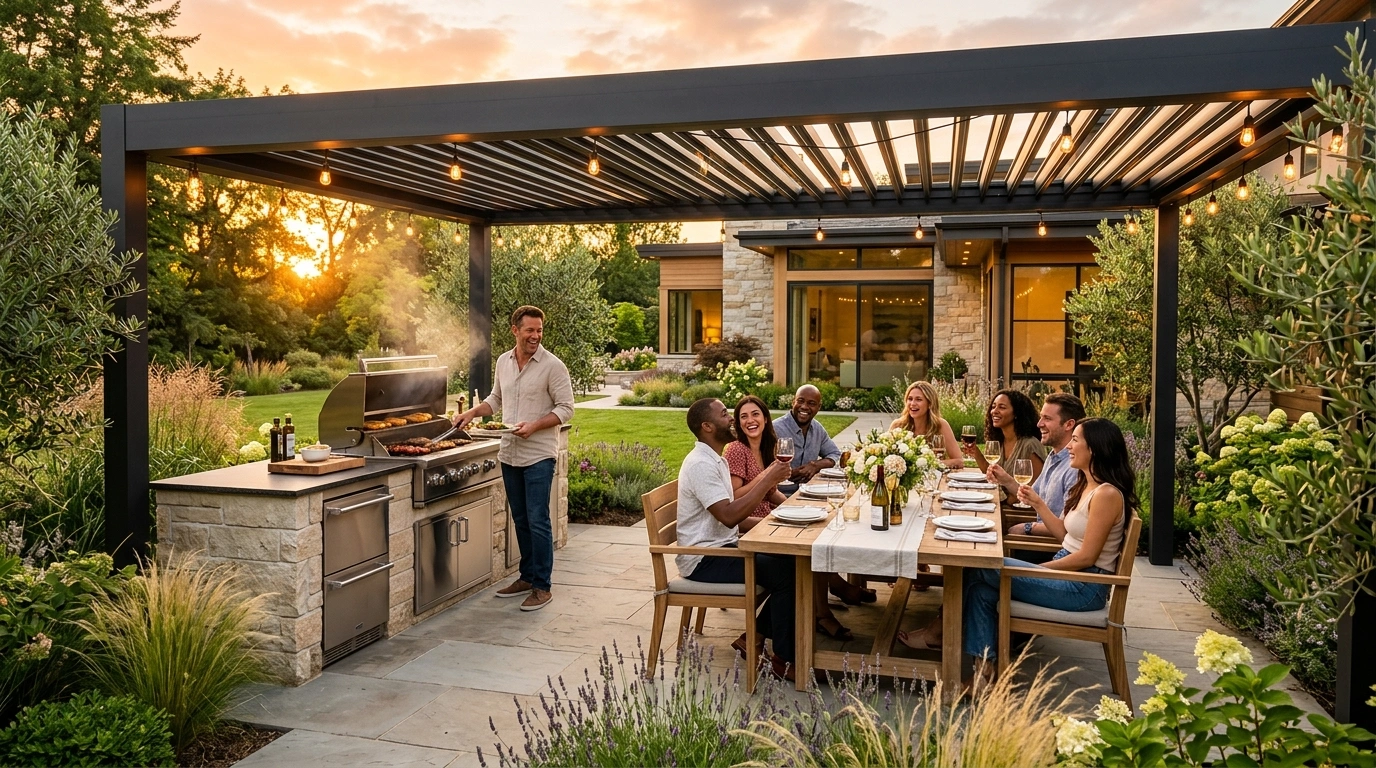
12 Garden Barbecue Area Ideas That Turn Every Cookout Into an Experience
A barbecue is never just about the food. It’s about the gathering. The laughter across a garden table. The smell of smoke drifting through warm summer air. The feeling that your backyard is the best place on earth right now. But here’s the honest truth — a poorly designed outdoor cooking space actively undermines all of that. A great garden barbecue area does the opposite. It creates the conditions for those perfect evenings that people talk about long after the plates are cleared. This guide gives you every idea, strategy, and design direction you need to build a garden barbecue space that genuinely delivers that experience every single time.
Why a Dedicated Garden Barbecue Area Changes How You Entertain
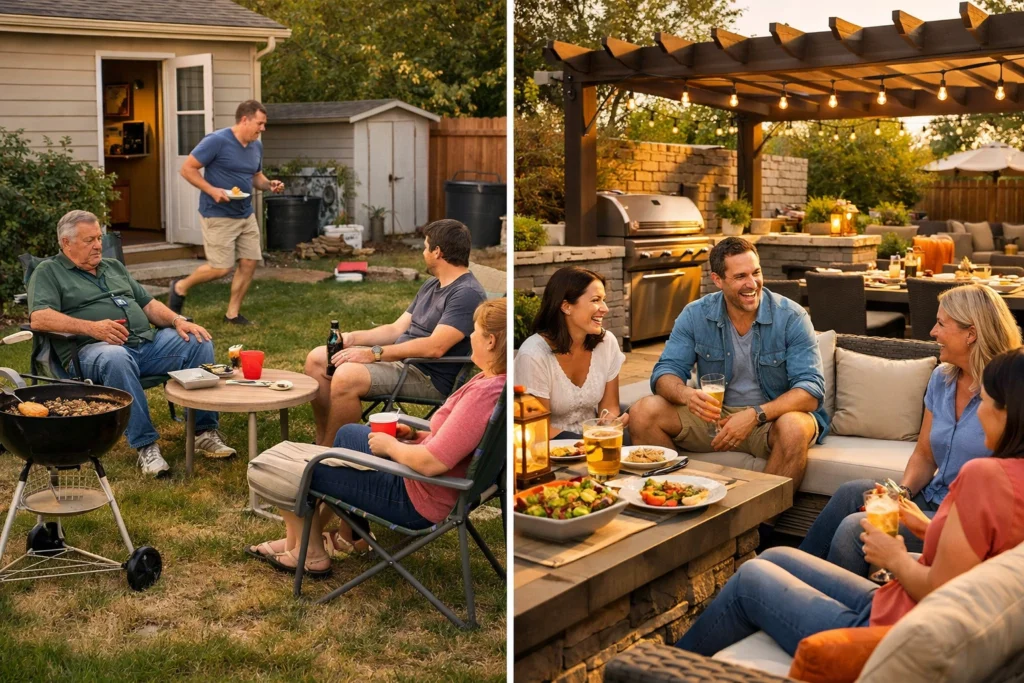
A dedicated garden barbecue area transforms the entire hosting experience — not just for your guests but for you as the cook. When your grill lives in a defined, purposefully designed space with proper work surfaces, seating nearby, and everything organized within arm’s reach, cooking outdoors stops feeling like a solo performance happening on the margins of the party and starts feeling like the centerpiece of a genuinely connected social experience. Outdoor barbecue area design research consistently shows that hosts who cook in dedicated outdoor spaces spend significantly more time engaging with guests because the spatial organization eliminates the constant back-and-forth between the grill and the indoor kitchen that poorly planned outdoor cooking setups demand.
The financial case for investing in a proper garden barbecue area is equally compelling. A well-designed outdoor cooking and entertaining space adds measurable property value — the National Association of Realtors reports that outdoor living space improvements deliver among the highest returns of any home improvement category, with well-designed outdoor kitchens and entertaining areas recouping 100% to 200% of their installation cost in property value appreciation. Garden barbecue area ideas for entertaining guests consistently perform better when the space is designed holistically — where cooking, dining, seating, lighting, and privacy work together as a unified outdoor room rather than a collection of unrelated elements scattered across an unplanned garden.
Choose the Perfect Location for Your Garden Barbecue Area
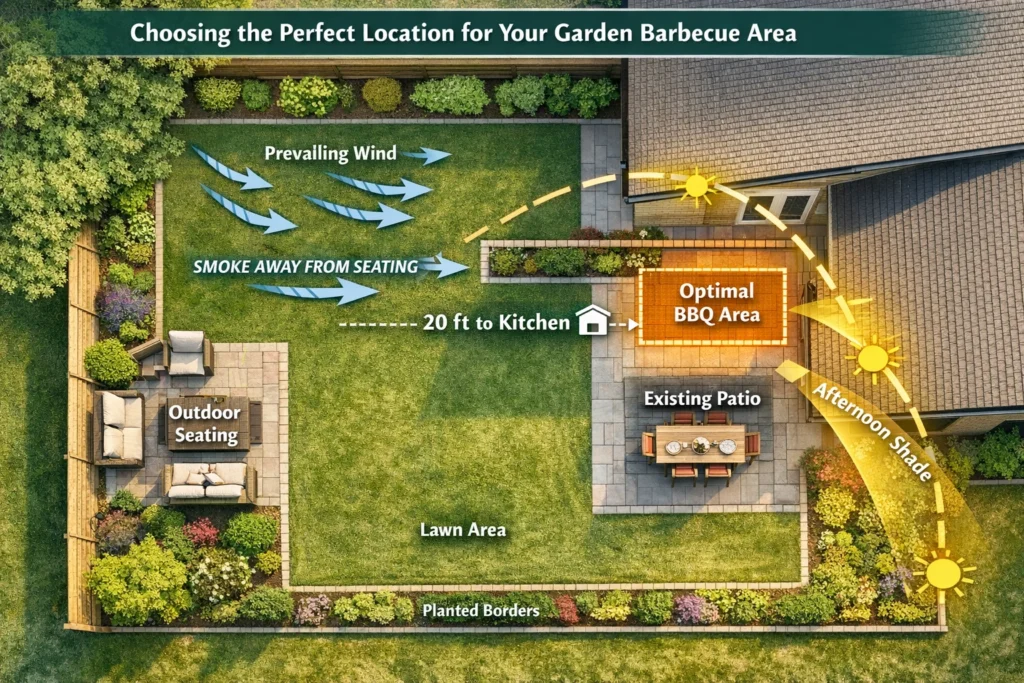
Location is the single most consequential decision in garden barbecue area planning — and getting it right before spending a dollar on materials or equipment prevents the expensive errors that plague poorly positioned outdoor cooking spaces. How to design a garden barbecue area location starts with four non-negotiable practical considerations. Proximity to the indoor kitchen matters enormously — a barbecue area positioned within easy serving distance of the house reduces the effort and interruption of every food service moment while maintaining a logical flow between indoor preparation and outdoor cooking. Wind direction assessment prevents smoke from consistently blowing toward the seating area or into the house — spending one afternoon observing your garden’s prevailing wind patterns before positioning the grill station prevents years of smoke-related discomfort.
Level ground or the ability to create level ground determines which surface materials work safely and which grill types operate correctly — a significantly sloped site requires either terracing or a raised platform construction that adds cost and complexity to the project. Sun exposure throughout the day determines how comfortable the space is during peak cooking hours — a barbecue area that receives direct western sun during late afternoon summer peak grilling hours becomes genuinely uncomfortable without adequate shade provision. Garden barbecue patio ideas that position the cooking area close to the house on the shaded northern or eastern side of the garden while orienting the dining area to receive afternoon warmth create the ideal functional layout that professional outdoor designers consistently recommend for American residential properties.
Best Paving and Flooring Ideas for a Garden Barbecue Area
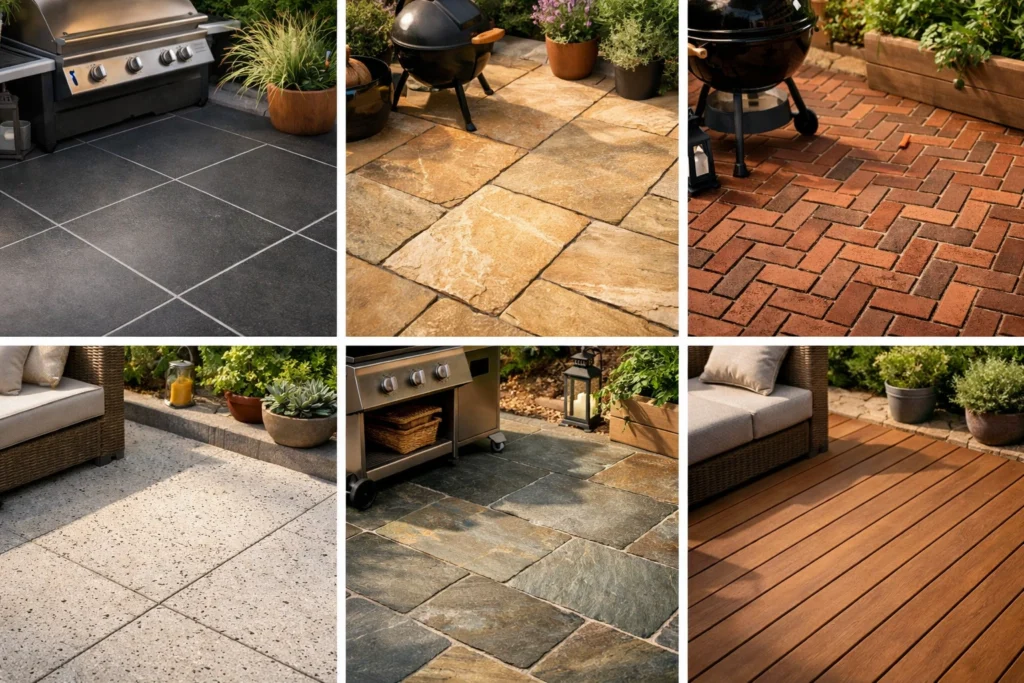
The ground beneath a garden barbecue area does more design work than most homeowners initially appreciate — it defines the space’s boundaries, determines its safety characteristics, sets the aesthetic register for everything above it, and directly affects the maintenance burden the space creates throughout its lifetime. BBQ area paving ideas that deliver the best combination of safety, durability, and visual quality in the immediate cooking zone favor hard, non-combustible materials — natural stone pavers in sandstone, slate, or limestone, large-format porcelain patio tiles, concrete pavers in various finishes, and brick in traditional running bond or herringbone patterns all provide the fire-safe surface that the immediate grill vicinity demands. Avoid timber decking in the grill’s immediate cooking zone — falling embers and grease spatters create genuine fire risk on timber surfaces regardless of their treatment or sealant status.
you may also like this: BBQ Patio Backyard Ideas: 14 Ways to Build the Ultimate Outdoor Cooking Space
| Flooring Material | Fire Safety | Durability | Maintenance | Cost Per Sq Ft |
|---|---|---|---|---|
| Natural stone pavers | Excellent | Excellent | Low | $10–$25 |
| Large format porcelain | Excellent | Excellent | Very low | $8–$20 |
| Concrete pavers | Excellent | Very good | Low | $5–$12 |
| Brick | Excellent | Very good | Low | $6–$15 |
| Composite decking | Good | Excellent | Very low | $5–$15 |
| Gravel | Good | Good | Medium | $2–$5 |
Design a Garden Barbecue Area With the Perfect Shelter and Shade
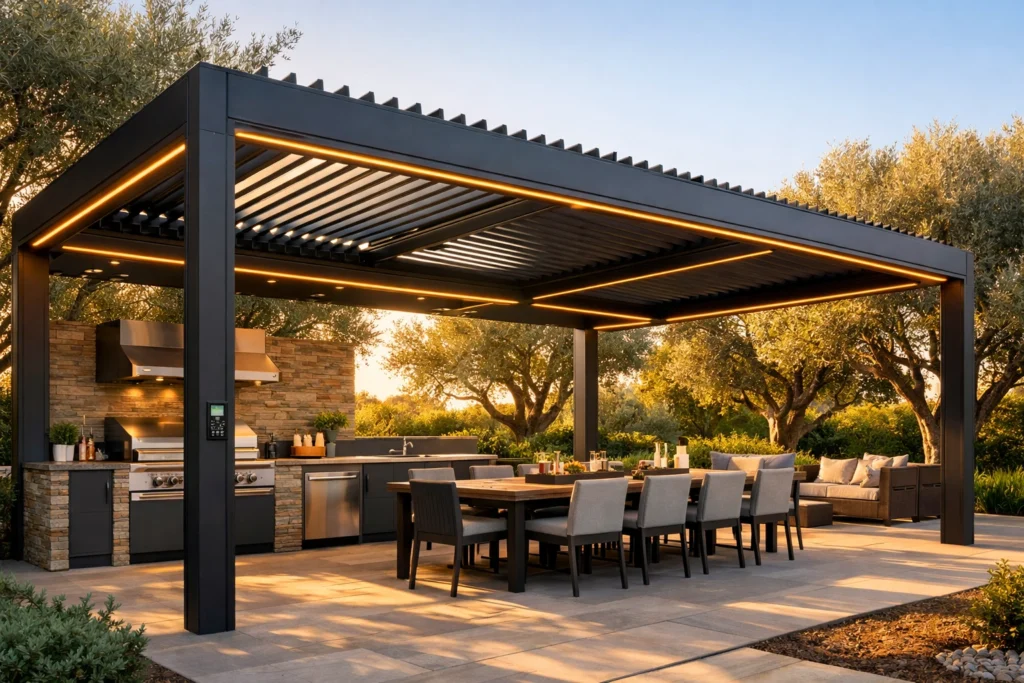
Shade and shelter are what transform a garden barbecue area from a fair-weather-only space into a genuinely year-round outdoor room that delivers value across twelve months rather than only during the narrow window of perfect summer weather. Garden barbecue area shelter ideas in 2025 centre on the motorised bio climatic pergola as the premium solution — aluminium louvred pergola structures with automated roof panels that open and close in response to weather conditions provide complete overhead weather protection while maintaining the open-air quality that distinguishes outdoor entertaining from simply eating inside. How to add a pergola to a garden barbecue area creates multiple simultaneous benefits — overhead weather protection, structural framework for lighting installation, visual enclosure that makes the space feel like a defined outdoor room, and a significant aesthetic upgrade that makes the entire garden look more intentionally designed.
Garden barbecue area shelter ideas across different budget levels offer excellent options that deliver genuine functional value without the premium pergola investment. A sail shade in high-density polyethylene fabric stretched between three or four anchor points costs $100 to $400 and provides 90% UV protection over a substantial area with installation achievable in a weekend afternoon. A timber pergola kit with poly carbonate roofing panels costs $800 to $2,500 installed and provides complete rain protection while maintaining the architectural character that metal pergola structures sometimes lack in traditional garden contexts. How to add shade to a garden barbecue area through mature tree positioning — planting fast-growing deciduous trees that provide dappled summer shade while allowing winter sun penetration — creates the most ecologically sophisticated and visually beautiful shade solution but requires the patience to wait for trees to reach useful size.
Best BBQ and Grill Setup Ideas for Your Garden Cooking Area
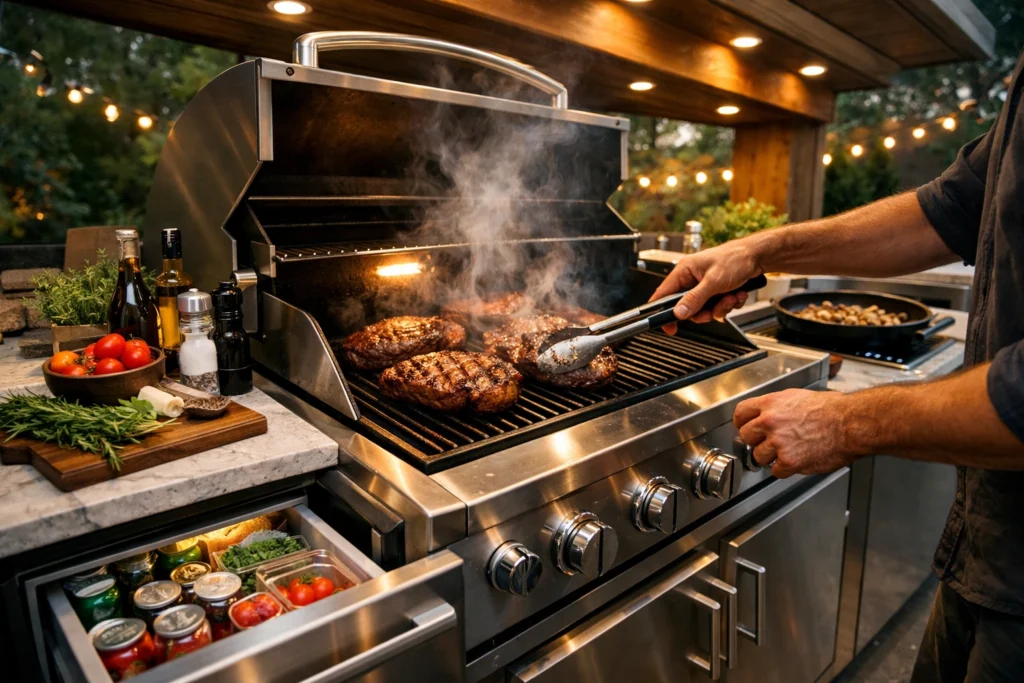
The grill is the heart of every garden barbecue area and choosing the right type, size, and configuration for your specific cooking style, guest numbers, and budget determines the entire cooking experience quality more directly than any other equipment decision. Garden grill area ideas in 2025 offer three primary grill technology directions that suit different cooking philosophies and usage patterns. Gas grills — propane or natural gas — provide instant heat, precise temperature control, easy ignition, and simple cleanup that makes them the most practical choice for frequent weeknight use and large-scale entertaining where consistent, controllable heat is more important than smoky flavor complexity. Charcoal grills — kettle grills, kamado ceramic grills, and barrel smokers — provide the authentic smoke-infused flavor that barbecue enthusiasts specifically seek and create the ritual quality of fire-building that many outdoor cooks find genuinely pleasurable.
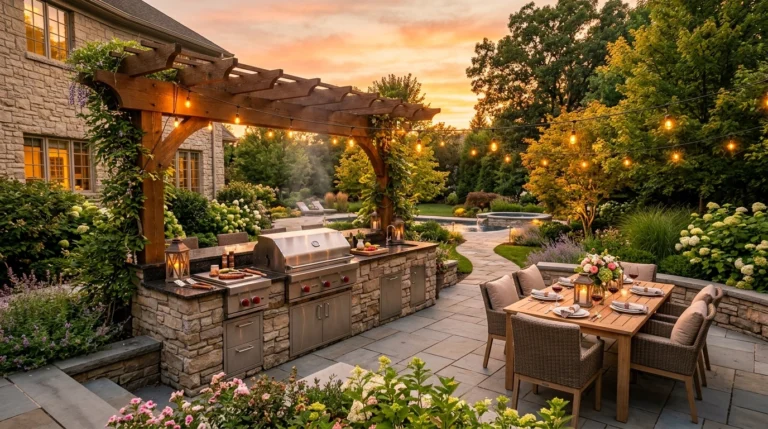
Outdoor BBQ kitchen ideas for the most functional and visually impressive garden barbecue area setups build around a dedicated grill station that integrates the grill into a counter-height structure with flanking work surfaces on both sides — a configuration that professional outdoor kitchen designers call the “working triangle” equivalent for outdoor cooking. A built-in gas grill centered in a stone, brick, or porcelain-clad counter island with 18 inches of prep surface on each side, a refrigerator drawer below on one end for ingredient storage, and a side burner on the opposite end for sauce preparation creates a complete outdoor cooking station that eliminates every trip back to the indoor kitchen during a serious outdoor cooking session. Outdoor BBQ area with bar configurations extend this concept further — adding a raised counter section on the seating-facing side of the outdoor kitchen island creates a bar ledge where guests can perch on counter-height stools, watch the cooking action, and maintain genuine social connection with the chef throughout the entire cooking process.
Create a Comfortable Garden Barbecue Seating and Dining Area
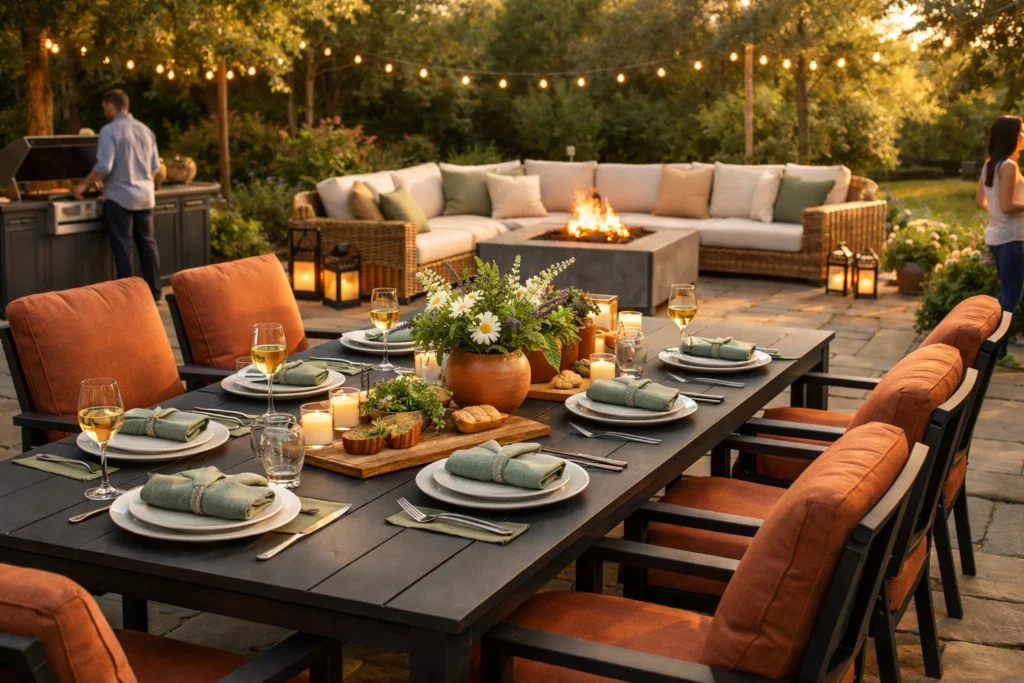
The dining and seating component of a garden barbecue area deserves equal design attention as the cooking zone — because the most perfectly grilled food loses significant enjoyment value when guests eat it balanced on inadequate seating at an undersized table in a poorly organized space. Garden barbecue seating area design starts with accurate guest number assessment — the most common outdoor dining mistake is purchasing a table sized for six people when your typical gatherings seat eight to twelve, creating a chronic space problem that no amount of supplementary seating elegantly resolves. Garden barbecue area ideas with seating and dining that work beautifully for variable guest numbers combine a fixed primary dining table sized for your maximum regular gathering with a secondary folding or stackable table that stores easily when not needed and deploys quickly when guest numbers exceed the primary table’s comfortable capacity.
| Furniture Material | Weight | Weather Resistance | Maintenance | Price Range | Style Range |
|---|---|---|---|---|---|
| Powder-coated aluminum | Light | Excellent | Very low | $200–$1,500 | Very wide |
| Natural teak | Heavy | Excellent | Annual oiling | $500–$3,000 | Traditional, coastal |
| All-weather wicker | Medium | Good | Low | $300–$1,500 | Casual, relaxed |
| Concrete | Very heavy | Excellent | Very low | $400–$2,000 | Modern, industrial |
| Recycled plastic | Medium | Excellent | Very low | $150–$800 | Casual |
Garden Barbecue Area Lighting Ideas for Magical Evening Entertaining
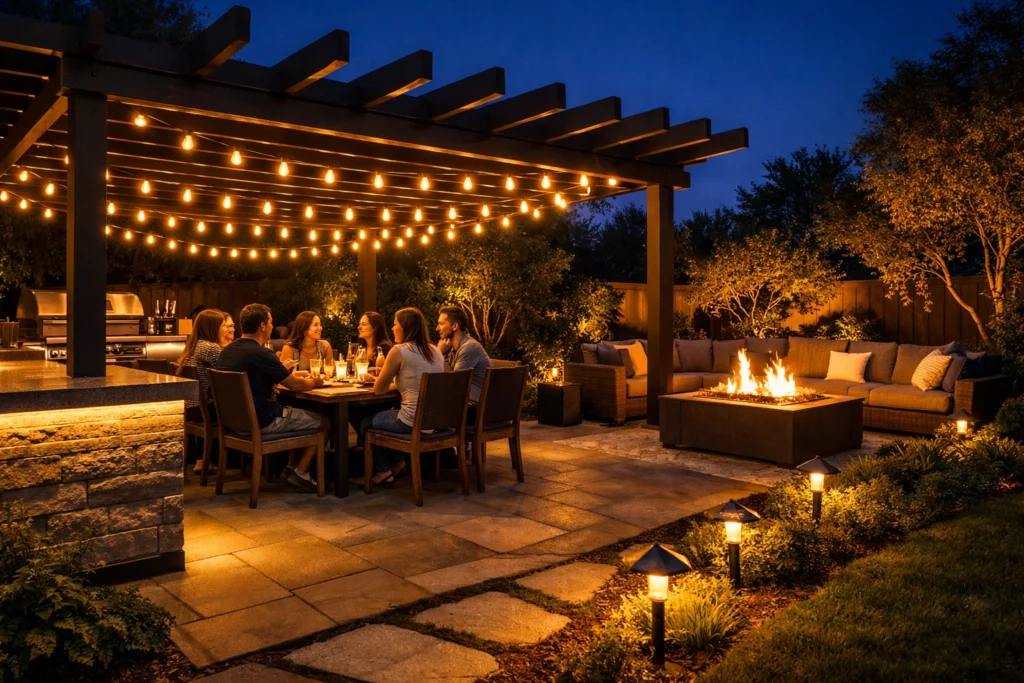
Lighting is what extends your garden barbecue area’s useful hours from sunset to midnight — and the difference between a well-lit outdoor entertaining space and a poorly lit one is the difference between a party that naturally winds down at dusk and one that hits its social peak after dark. Garden barbecue area lighting design follows the same layered approach that interior lighting design employs — combining ambient overhead light for general visibility, task lighting for the cooking zone where precision matters for food safety, and decorative atmospheric lighting that creates the warm, intimate, genuinely magical evening quality that transforms functional outdoor spaces into genuinely memorable entertainment venues. How to light a garden barbecue area at night starts with the task lighting requirement — the grill and food preparation surfaces need sufficient illumination to cook safely, which means either integrated LED strip lighting beneath overhead shelving, a dedicated grill light mounted to the grill’s handle, or a focused outdoor flood lamp positioned to illuminate the cooking surface without blinding the cook.
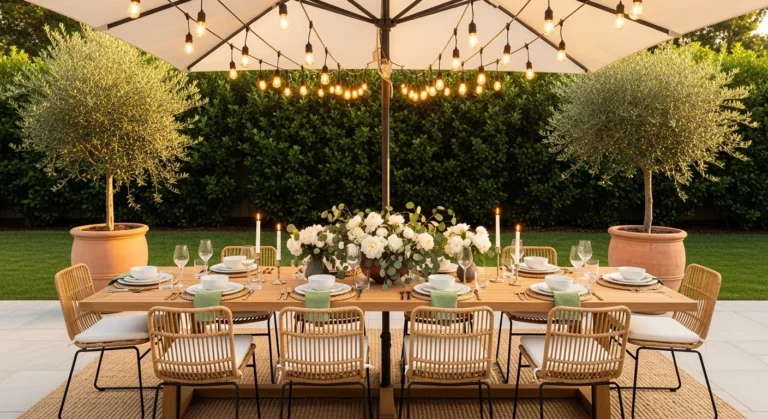
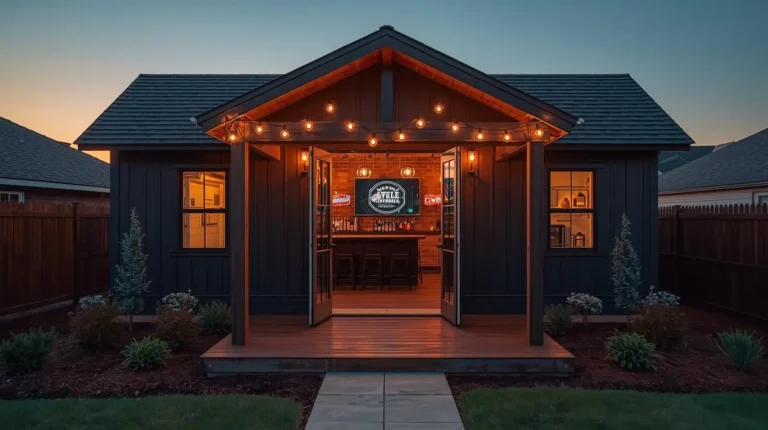
Garden barbecue area lighting at the ambient and atmospheric levels creates the room’s entire evening personality — and string lights remain the most universally loved outdoor ambient lighting choice for excellent functional reasons. Edison string lights draped between the pergola’s structural posts or suspended between garden posts create a warm overhead canopy of golden light at 2700K color temperature that flatters food, faces, and garden plantings simultaneously. How to light a garden barbecue area at night using smart lighting systems — app-controlled outdoor LED systems from brands like Govee or Philips Hue Outdoor — allows the lighting atmosphere to transition from bright task lighting during the cooking phase to warm ambient dining light during the meal to intimate atmospheric candlelight-equivalent settings as the evening progresses toward conversation and dessert. Candles or outdoor-rated LED candle alternatives on the dining table add the most intimate, most flattering, and most genuinely atmospheric light layer available at any price point.
Add Privacy to Your Garden Barbecue Area Without Losing Style
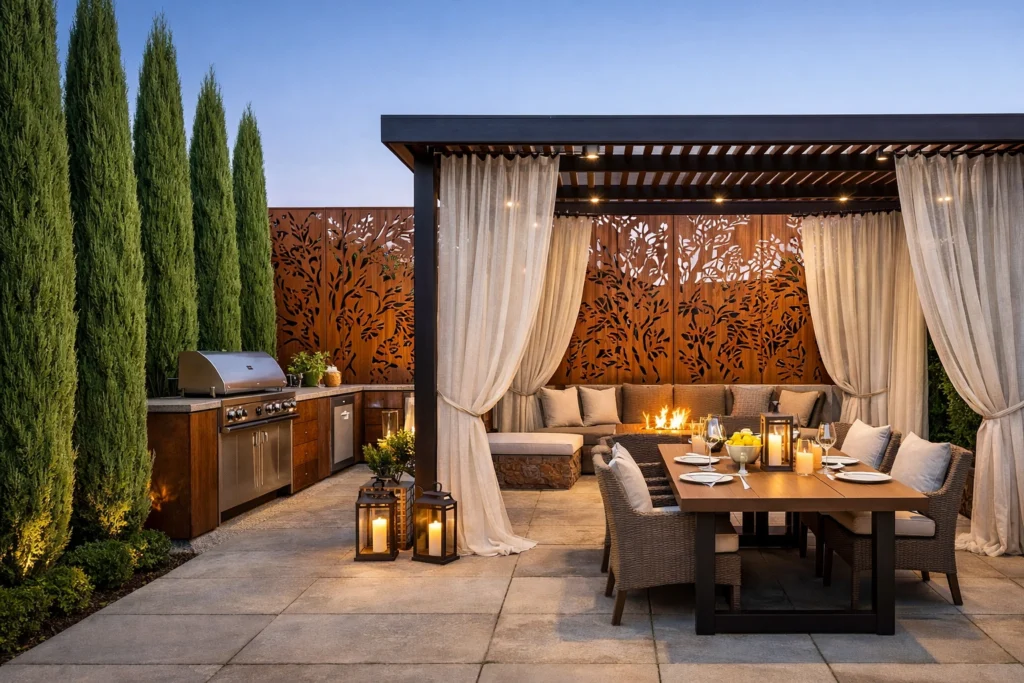
Privacy transforms a garden barbecue area from a space where you’re conscious of being observed into a genuine outdoor room where genuine relaxation and authentic social connection become possible — and the difference in entertainment quality between a private and an exposed outdoor entertaining space is immediately felt by everyone present. BBQ area privacy ideas in 2025 have moved decisively away from solid timber privacy fencing — which creates adequate privacy but contributes nothing aesthetically and can make garden spaces feel smaller and more enclosed than they actually are — toward layered privacy solutions that combine architectural screening elements with living plant components to create enclosure that feels like a garden room rather than a defensive barrier. How to create privacy in a garden barbecue area through architectural screens — laser-cut Corten steel panels, powder-coated aluminum slat screens, or hardwood privacy panels mounted on steel post frames — provides immediate full-height privacy with genuine design character that enhances rather than simply closes off the garden space.
Garden barbecue area plants used as living privacy elements create the most naturally beautiful and ecologically rich privacy solution — columnar evergreen trees like Italian cypress, hornbeam hedging, or bamboo in root barriers provide complete year-round screening that improves with age and contributes genuine garden beauty rather than simply blocking views. Garden barbecue area ideas for entertaining guests in exposed urban garden locations specifically benefit from the combination approach — a solid architectural screen element providing immediate guaranteed privacy on the most exposed boundary combined with softer living plant elements on the less critical boundaries creates complete enclosure with maximum visual variety and sophistication. Outdoor fabric panels — heavy linen or canvas curtains on weatherproof tension wire systems — create the most relaxed and most flexible privacy solution, easily opened to bring the garden into the space and closed when privacy is desired.
Best Plants and Landscaping Ideas Around Your Garden BBQ Area
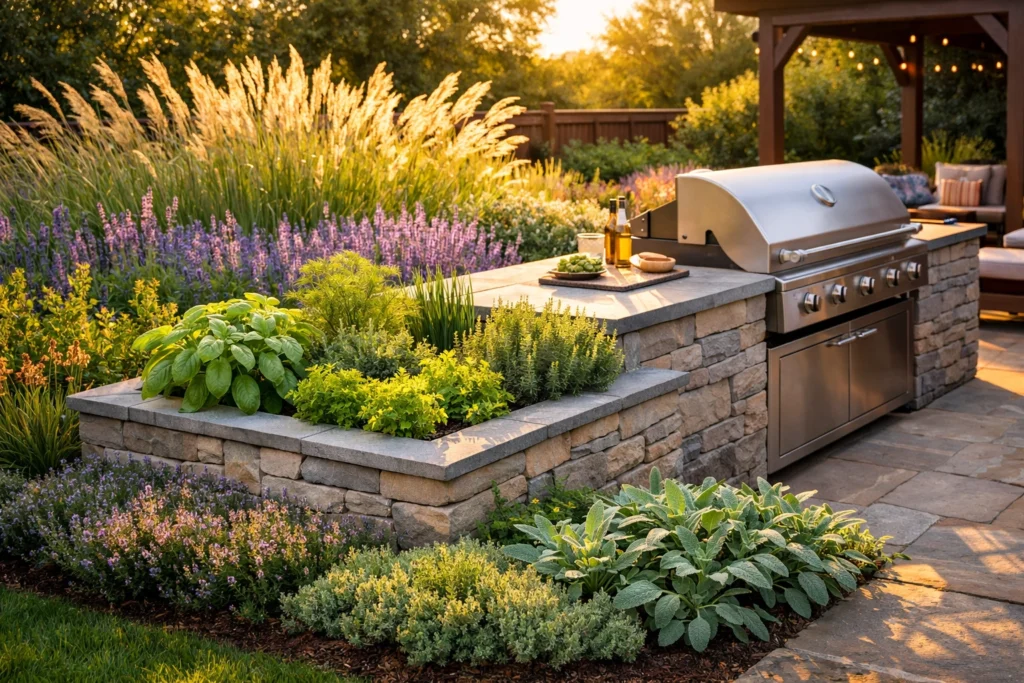
Plants transform a garden barbecue area from a hardscape installation surrounded by exposed garden into a genuinely integrated outdoor room that feels simultaneously designed and naturally grown — and the right planting choices around a barbecue area serve multiple simultaneous functions beyond pure aesthetics. Garden barbecue area plants in the immediate cooking zone should be carefully selected to avoid fire risk — drought-stressed or resinous plants positioned too close to an active grill create genuine hazard. BBQ area landscaping ideas that create the most beautiful and most functional results position generous planted beds on three sides of the barbecue area with a practical access pathway on the fourth side, using plant combinations that combine structural evergreen framework plants providing year-round form and privacy with seasonal flowering plants that create color across spring, summer, and autumn.
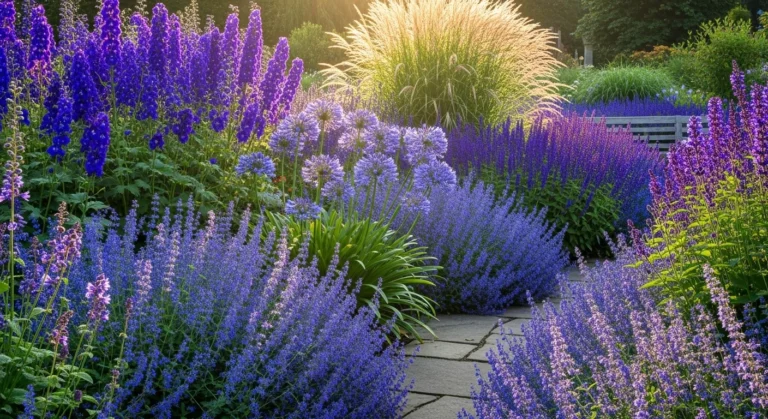
How to landscape around a garden barbecue area using culinary herbs directly adjacent to the cooking zone creates a functional beauty combination that professional garden designers increasingly recommend — lavender, rosemary, thyme, bay, and sage planted in a raised bed or container immediately beside the grill station put fresh aromatics within arm’s reach of the cook while contributing fragrance, structure, and year-round visual interest to the barbecue area’s planting design. Garden barbecue area plants for screening and structure in American gardens include evergreen varieties that perform across diverse climate zones — boxwood hedging for formal structure, ornamental grasses for naturalistic movement, and arborvitae for fast-growing evergreen height that creates privacy and windbreak function simultaneously. How to create a year round garden barbecue area through planting specifically ensures that the space has visual interest across all four seasons — combining spring-flowering bulbs beneath deciduous shrubs, summer-peaking perennials for peak season interest, autumn-coloring specimens for transitional beauty, and structural evergreens that maintain form and presence through winter.
Build a Budget Friendly Garden Barbecue Area That Looks Expensive
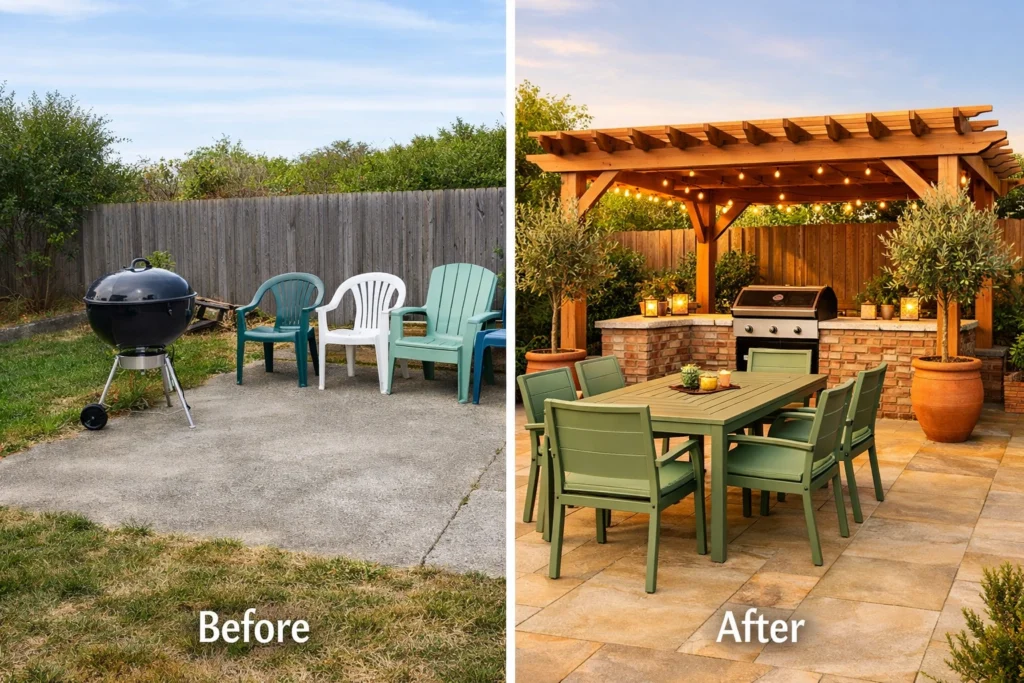
A stunning garden barbecue area and a significant budget are not the same requirement — and the most creatively designed budget barbecue areas frequently outperform expensive installations in the quality of their entertaining experience because their designers made intentional choices rather than simply spending money on premium materials. Garden barbecue area on a budget construction starts with the material selection principle that delivers the highest visual impact per dollar — porcelain paving tiles that realistically simulate natural stone at $3 to $8 per square foot rather than actual natural stone at $10 to $25 per square foot, powder-coated aluminum furniture that matches teak’s visual quality at half the price, and DIY-assembled pergola kits that deliver professional aesthetic results without professional installation costs.
How to create an outdoor BBQ area on a budget through the phased development approach — building the essential structural elements first and adding enhancement elements progressively over subsequent seasons — allows a complete, high-quality garden barbecue area to emerge within a modest annual garden improvement budget rather than requiring a single large upfront investment. Phase one establishes the paved surface and grill station — the non-negotiable functional foundation. Phase two adds the shelter structure and dining furniture. Phase three completes lighting, planting, and decorative elements. How to make a garden barbecue area look professional on a restricted budget specifically prioritizes three investments that have the highest visual impact — a quality paving surface that reads as expensive regardless of its actual cost, adequate shade provision that immediately signals intentional design, and consistent furniture that creates a coordinated rather than assembled-from-various-sources appearance.
Small Garden Barbecue Area Ideas That Maximize Every Square Foot
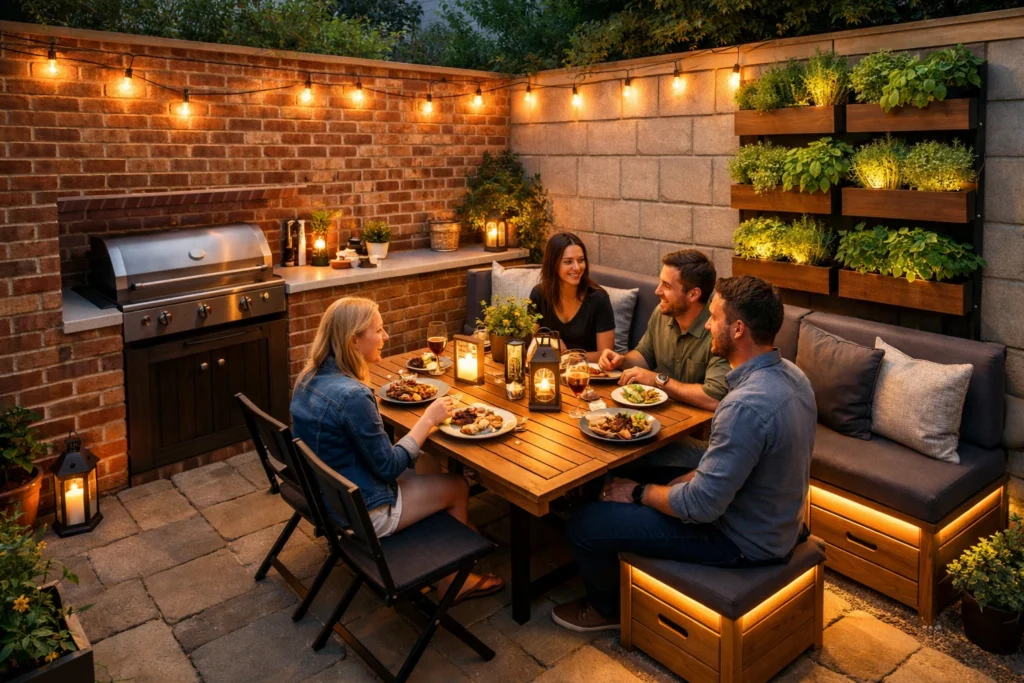
Small gardens demand barbecue area design thinking that is more precise, more multifunctional, and more spatially creative than large-space design requires — because every square foot must serve multiple purposes and every design decision has proportionally greater impact on the overall space quality. Small garden BBQ area ideas that consistently deliver outstanding results in compact outdoor spaces start with the built-in approach — a compact built-in barbecue station constructed from brick, stone, or concrete blocks against one garden boundary eliminates the footprint of a freestanding grill while creating a permanent cooking station with integrated work surfaces that use boundary space efficiently. Best BBQ area ideas for a small backyard garden combine this built-in cooking station with fold-down wall-mounted dining tables that deploy for entertaining and fold flat against the wall when not in use — a space-saving solution that accommodates six guests for dinner without consuming any permanent floor space.
Best garden barbecue area ideas for small gardens use vertical space aggressively to compensate for limited horizontal area — wall-mounted shelving for condiment and equipment storage, vertical herb gardens providing fresh cooking ingredients without consuming ground space, wall-mounted lighting fixtures that illuminate without requiring floor-standing lamp units, and climbing plants trained on boundary walls or trellises that create privacy and garden beauty without planting bed footprint. How to create a cozy garden barbecue seating area in a small garden specifically uses low-level seating — built-in bench seating with storage beneath positioned along one or two boundaries — that creates comfortable guest seating capacity while consuming less visual space than freestanding chair arrangements and maintaining the clear central floor area that makes small garden entertaining spaces feel genuinely open rather than uncomfortably cramped.
Modern Garden Barbecue Area Ideas That Impress Every Guest
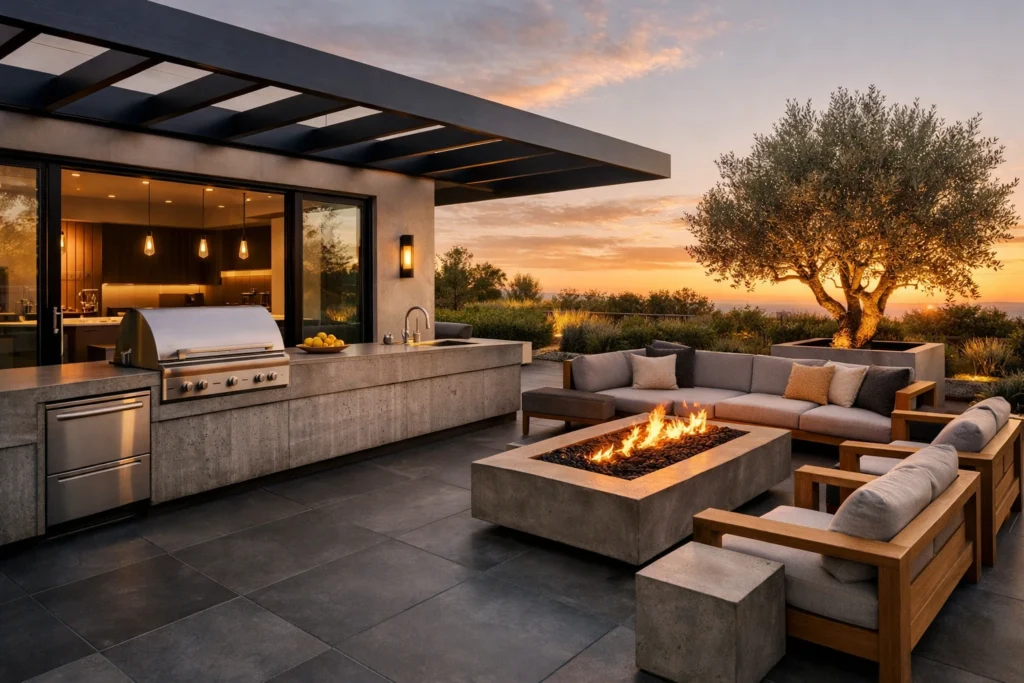
Modern garden BBQ area ideas represent the most design-forward expression of the garden barbecue category — applying contemporary landscape design principles of clean geometry, premium materials, architectural precision, and seamless indoor-outdoor continuity to create outdoor cooking and entertaining spaces that rival the sophistication of the finest residential interior designs. How to design a modern garden barbecue area starts with the fundamental modern design commitment to material honesty — using materials in their natural state rather than disguising them, allowing concrete to be concrete, allowing steel to develop its authentic surface character, and choosing plant varieties for their architectural form rather than their decorative prettiness. Garden barbecue area ideas that impress guests in the modern direction consistently feature one dramatic statement element — a spectacular built-in outdoor kitchen island in poured concrete with integrated appliances, a spectacular fire pit table as the seating area’s centerpiece, or a striking architectural pergola in powder-coated steel — that anchors the entire space around a single powerful design idea.
How to create a year round garden barbecue area in the modern direction incorporates the technical elements that extend outdoor entertaining beyond the summer months — infrared patio heaters mounted beneath the pergola structure that extend comfortable outdoor temperatures into autumn and early spring, automated LED lighting systems that maintain the space’s atmospheric quality as evenings arrive earlier in winter months, and weather-resistant outdoor audio systems that maintain the social energy of evening entertaining regardless of seasonal constraints. Garden barbecue area ideas using natural materials in the modern context favor the raw, unprocessed quality of materials like Corten weathering steel, riven natural slate, raw concrete, and weathered hardwood — materials that develop authentic character with age and exposure rather than deteriorating, creating a garden barbecue area that looks genuinely better five years after installation than it did on completion day.
Conclusion
A great garden barbecue area is genuinely one of the most transformative investments any homeowner can make in their property and their quality of life simultaneously. From choosing the perfect location and laying the right surface to designing the ideal shelter, seating, lighting, and planting — every decision in this guide builds toward the same outcome: an outdoor space where cooking is a genuine pleasure, entertaining feels effortless, and every guest leaves feeling that your garden is the best place they’ve spent an evening all summer. Start with one element this weekend. Your perfect garden barbecue area is closer than you think.
Frequently Asked Questions
Q1: How do I design a garden barbecue area from scratch?
How to build a garden barbecue area from scratch starts with location assessment — identify the most practical position relative to your house, assess prevailing wind direction, ensure level ground, and plan your surface area before purchasing any materials or equipment. Design the cooking zone, dining zone, and seating zone as separate but connected functional areas.
Q2: What is the best paving for a garden barbecue area?
Best paving ideas for a garden barbecue area show large-format porcelain pavers as the most practical all-around choice — combining excellent fire safety, superior stain resistance, frost tolerance, and sophisticated aesthetics at a competitive price point that natural stone alternatives typically cannot match.
Q3: How do I add privacy to my garden barbecue area?
How to create privacy in a garden barbecue area most effectively combines architectural screening elements — Corten steel panels, aluminum slat screens, or hardwood privacy panels — with living plant components like columnar evergreens, bamboo in root barriers, or climbing plants on trellises for layered, visually rich enclosure.
Q4: What plants work best around a garden BBQ area?
Best plants for a garden barbecue area include culinary herbs like rosemary, lavender, and bay for immediate cooking access, structural evergreens like boxwood and arborvitae for year-round privacy and form, and ornamental grasses for naturalistic movement and low-maintenance seasonal interest.
Q5: How do I create a garden barbecue area on a budget?
How to create an outdoor BBQ area on a budget uses the phased development approach — establishing the paved surface and grill station first, then adding shelter and furniture in phase two, and completing lighting and planting in phase three — spreading the investment across multiple seasons while building a complete, high-quality result.
One Comment