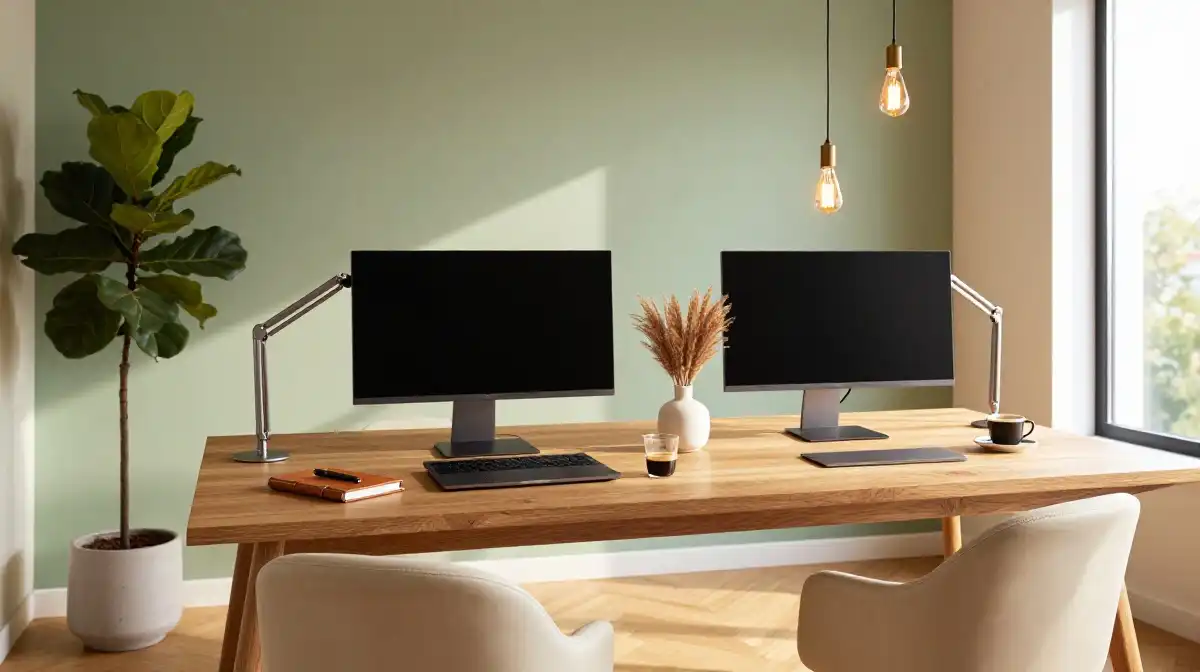
The Small Home Office Double Desk That Finally Makes Sharing a Space Work
Working from home with another person in the same room is genuinely hard. Space runs out fast. Tempers follow shortly after. A well-chosen small home office double desk solves the problem before it starts. This guide walks you through everything — dimensions, layouts, budgets, and the mistakes most people make before they even open the box.
Why a Small Home Office Double Desk Changes Everything About Working From Home
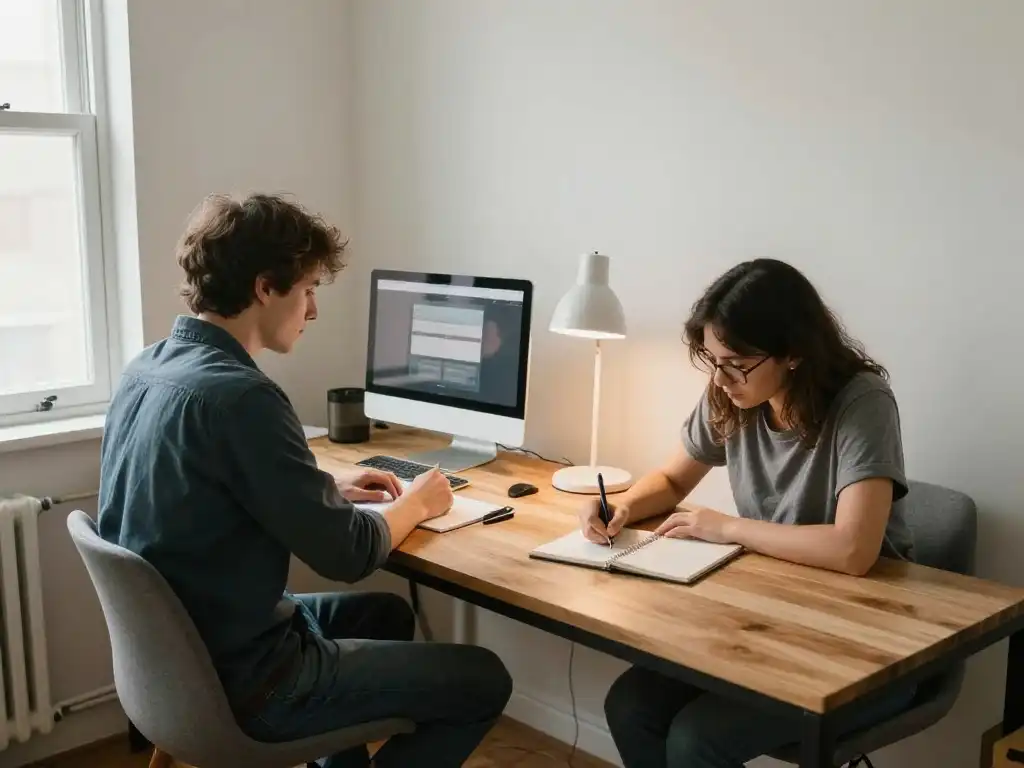
A double desk for small home office isn’t just a furniture purchase. It’s a decision about how two people will coexist, focus, and stay productive in the same limited square footage every single day. The right desk creates invisible boundaries. It gives each person a defined zone without requiring a renovation or a room divider.
Think of the small home office double desk as the anchor of your entire workspace. Everything else — lighting, storage, ergonomics — orbits around it. When couples, roommates, or siblings finally commit to a two person home office desk, they report feeling less distracted and more organized almost immediately. That’s not coincidence. That’s good furniture doing its job.
The Real Dimensions You Need Before Buying Any Double Desk for Small Spaces
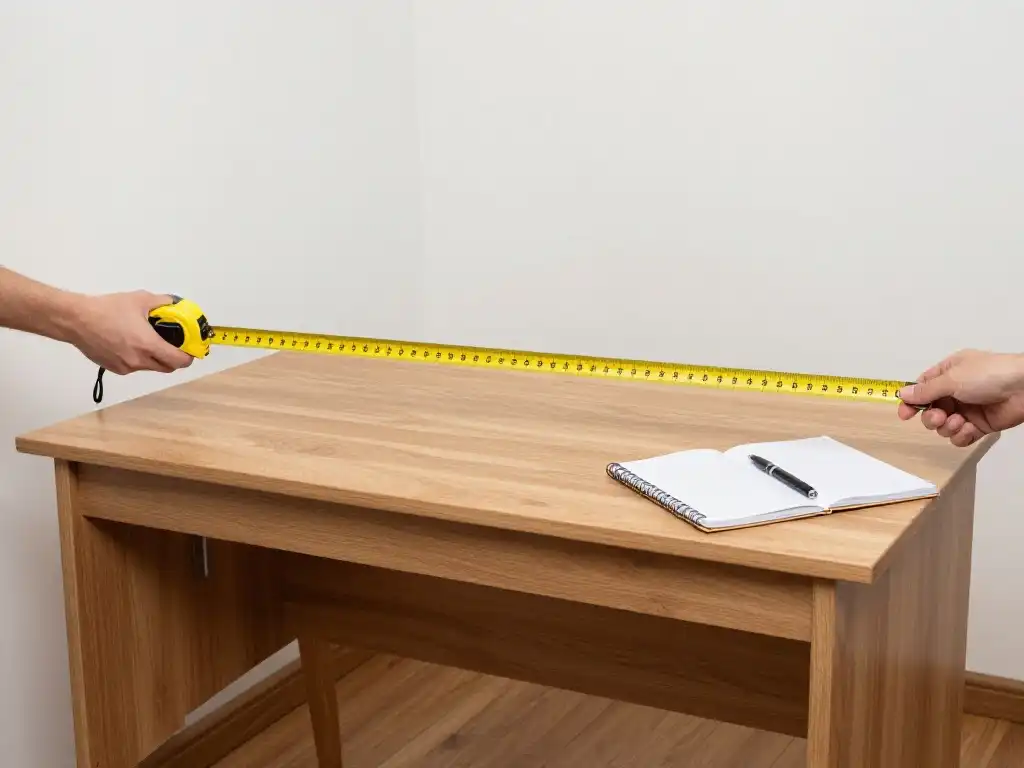
Most people measure their room once and buy the wrong desk anyway. Don’t do that. Before you look at a single product listing, measure your room’s length, width, and the distance between the door and every wall. Then subtract at least 36 inches for walkway clearance on every open side of the desk. That remaining number is your actual usable furniture zone.
A standard compact double desk setup typically runs between 55 and 72 inches wide. Each person needs a minimum of 24 inches of desk depth to work comfortably with a laptop and a notebook. If you’re running dual monitor double desk configurations, bump that depth to at least 30 inches per side. These aren’t suggestions — they’re the measurements that prevent buyer’s remorse.
| Desk Type | Typical Width | Depth Per Person | Best Room Size |
|---|---|---|---|
| Straight Double Desk | 55–72 inches | 24–30 inches | 10×10 ft or larger |
| L-Shaped Double Desk | 60–80 inches | 28–36 inches | 10×12 ft or larger |
| Corner Double Desk | 50–65 inches | 24–28 inches | 9×9 ft minimum |
| Floating Double Desk | 48–60 inches | 20–24 inches | Any size room |
L-Shaped vs Straight Double Desk — Which One Actually Fits Your Tiny Office
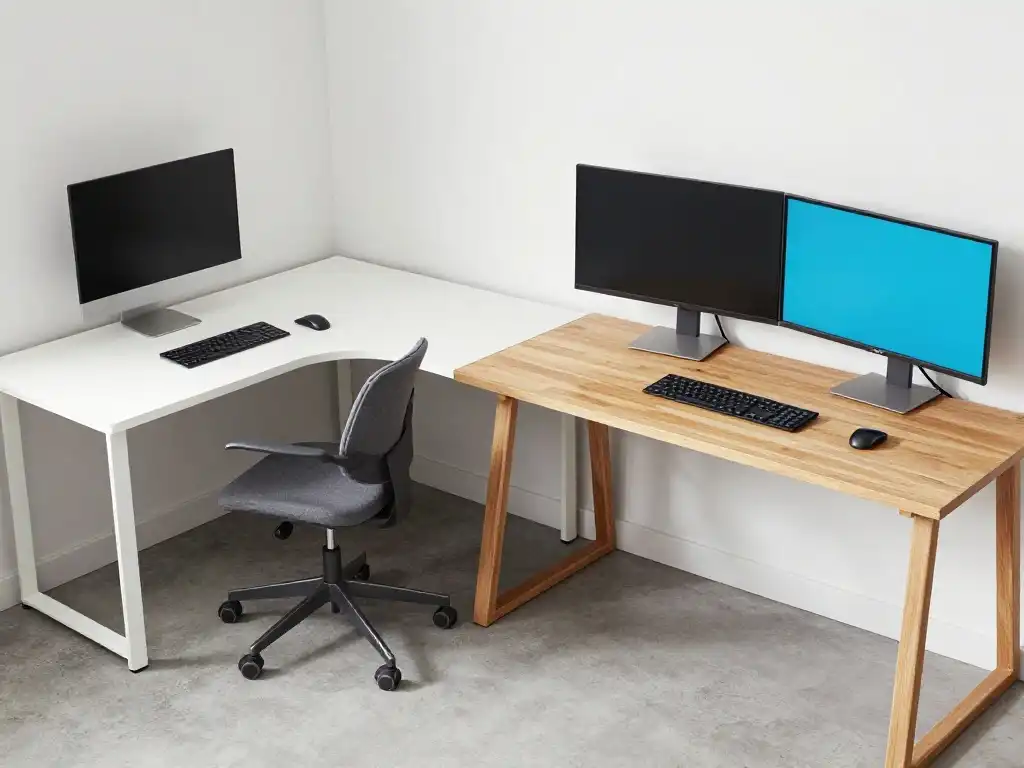
The L-shaped double desk looks impressive in showrooms but it demands corner space that many small rooms simply don’t have. It works brilliantly when your room has a usable corner that isn’t blocked by a window, door, or radiator. If those conditions are met, an L-shape gives each person a generous work surface and creates natural separation without any extra accessories.
A straight two sided desk home office configuration is leaner, cheaper, and more flexible. You can push it against a wall or float it in the center of the room. It’s the better pick for narrow rooms, galley-style spaces, or apartments where the layout doesn’t favor corners. The double desk small space debate between these two shapes almost always comes down to one thing — your room’s geometry, not your personal preference.
How a Corner Double Desk Unlocks Dead Space You Did Not Know You Had
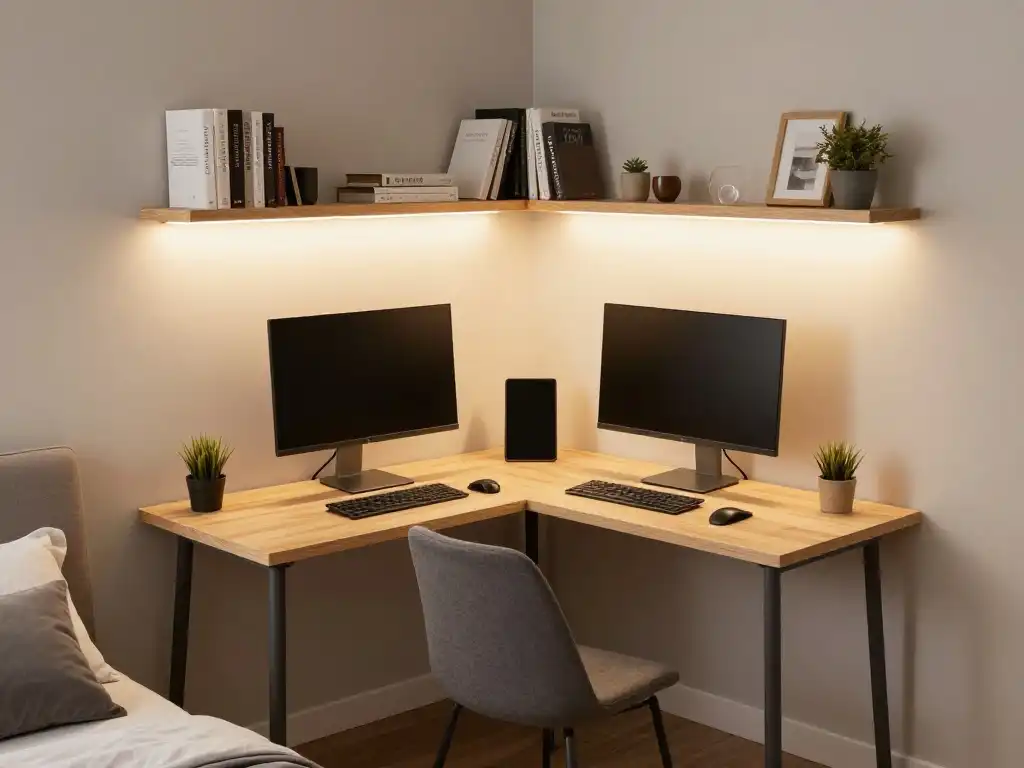
Corners are the most underused real estate in any small office space. Most people push a single desk against one wall and leave the corner completely empty. A corner double desk flips that logic entirely. It nests right into that neglected triangle of floor space and turns it into a fully functional two workstation home office without consuming the center of the room.
you may also like this: 14 Boho Camper Van Interior Ideas: How to Turn Four Wheels Into the Most Beautiful Home You Have Ever Lived In
The double desk corner unit also benefits acoustics and focus in a surprising way. When two people sit at angles to each other rather than face-to-face or side-by-side, they naturally block each other’s peripheral vision. That small architectural detail reduces distraction significantly. For a shared home office workspace where one person is on video calls and the other needs deep concentration, that angular separation isn’t a luxury — it’s a necessity.
The Hidden Storage Features That Separate a Good Double Desk From a Great One
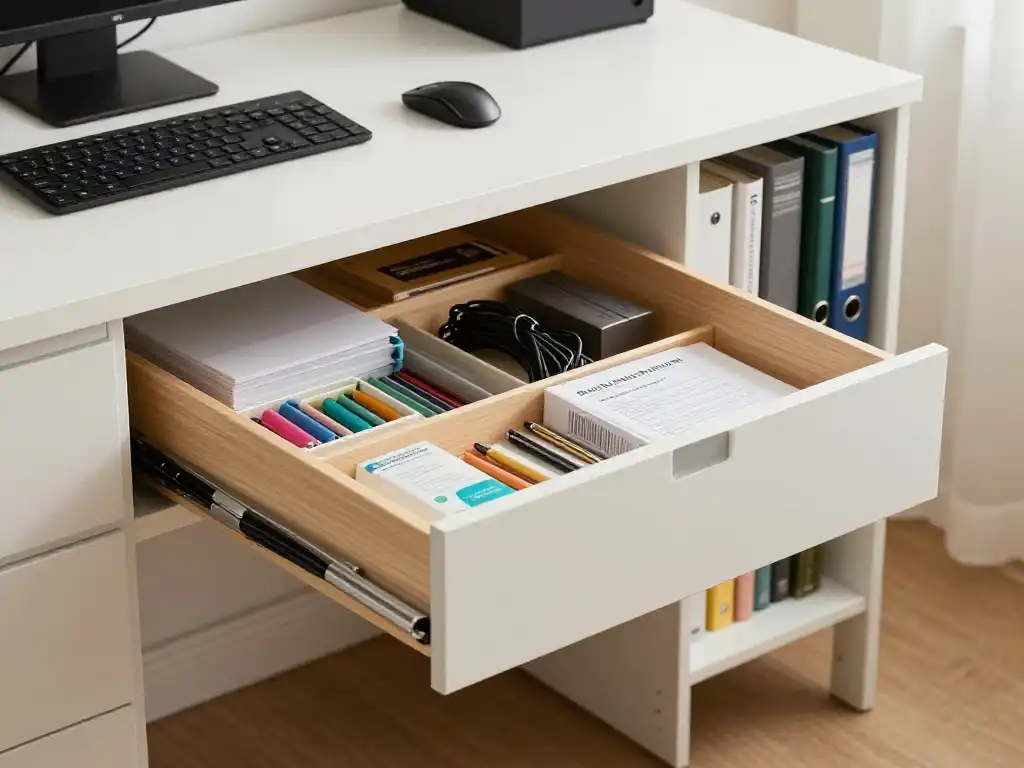
Surface space is visible. Storage is invisible until you desperately need it. A double desk with storage includes features like built-in drawer unit systems, overhead shelving rails, under-desk cable trays, and lockable compartments. Each of these features addresses a specific daily frustration that people only discover after they’ve been using the desk for two weeks.
The smart storage double desk becomes the difference between a workspace that stays organized and one that dissolves into chaos by Wednesday. Look for a bookshelf desk combo that adds vertical storage without consuming floor area. A home office double desk with shelves positioned above each workstation keeps reference materials, notebooks, and supplies within arm’s reach without cluttering the actual work surface below.
How to Pick the Right Double Desk When Two People Have Completely Different Work Styles
One person spreads papers everywhere. The other needs a completely clear surface to think. This is the most common tension in any collaborative home workspace and the desk you choose either manages it or makes it worse. A desk divider panel down the center of a shared surface does more psychological work than it appears to on paper.
The home office furniture for two people category now includes desks with asymmetric configurations — one side with deep drawers and file storage, the other with open shelving and a wider surface. These two person office furniture solution designs acknowledge that different work styles need different support structures. Don’t compromise by picking a desk that works perfectly for one person and merely tolerates the other.
The Cable Management Truth Nobody Tells You Before Setting Up a Dual Workstation
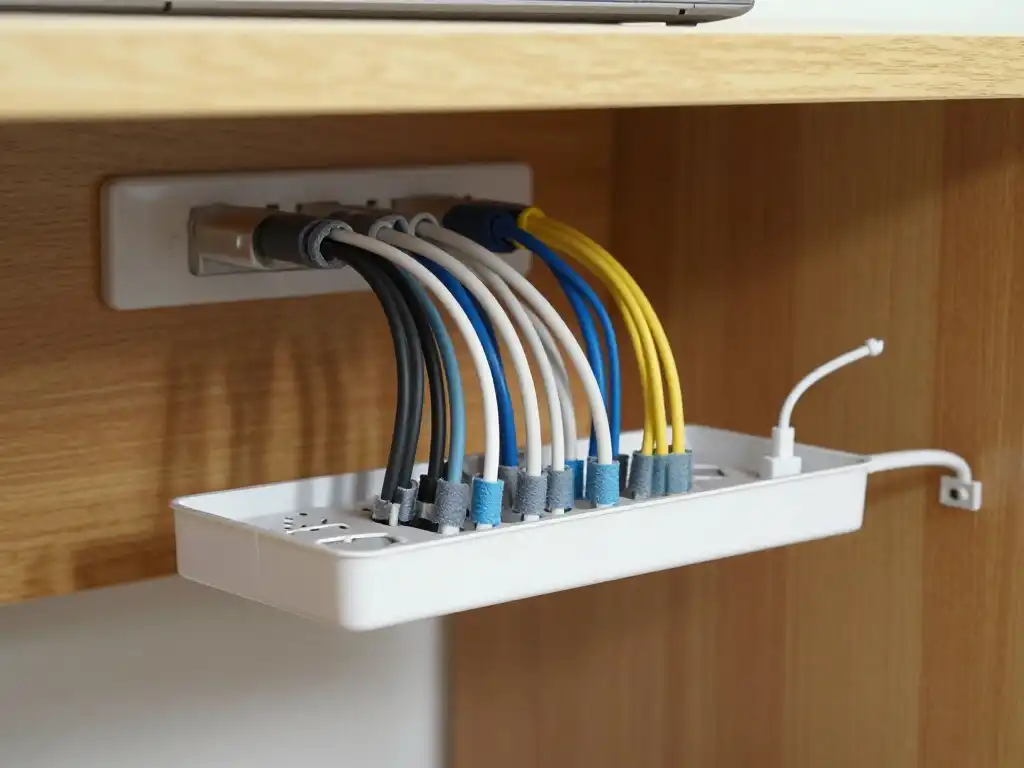
Two people means two computers, two monitors, two chargers, and potentially two sets of peripheral devices. That’s a cable situation that gets ugly fast. Good cable management on a dual workstation furniture setup isn’t something you retrofit after installation — it’s something you plan before you buy the desk.
Look for desks with built-in cable grommets, under-surface raceways, and back-panel routing channels. A compact shared workstation without these features will have cables draping across the desk surface within days. That’s not just an eyesore — it’s a tripping hazard and a dust magnet. A monitor stand with a built-in USB hub and cable routing channel on each side of the desk solves a significant portion of this problem before it starts.
How Floating Double Desks Give Small Offices a Bigger Look Without Costing More Room
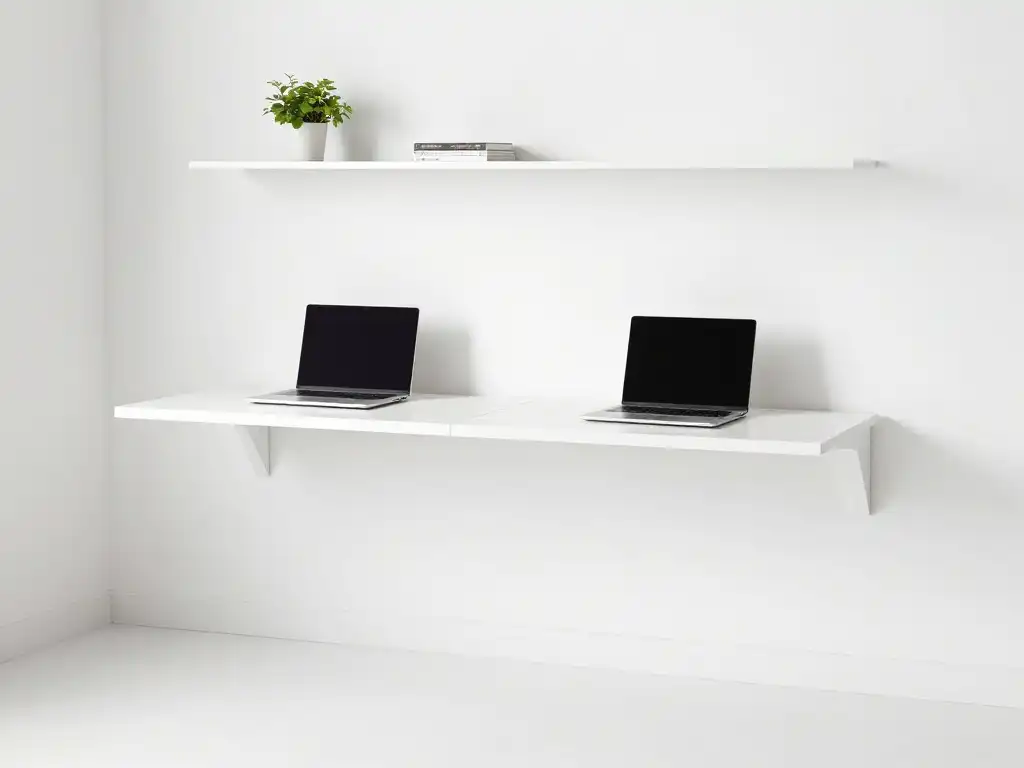
A floating double desk mounts directly to the wall and has no legs touching the floor. That exposed floor space beneath it makes any room look measurably larger. It’s a visual trick that interior designers use constantly in small office interior design projects. The eye reads open floor space as square footage even when the total area hasn’t changed.
The space saving desk home office argument for floating desks also extends to cleaning. Vacuuming and mopping under a floating surface takes seconds. Under a legged desk with two chairs, two cable boxes, and a drawer unit, it takes considerably longer. For a minimalist double desk setup in an apartment or condo where every square inch matters, the floating configuration is worth serious consideration.
The Lighting Setup That Makes a Shared Double Desk Feel Like Two Private Offices
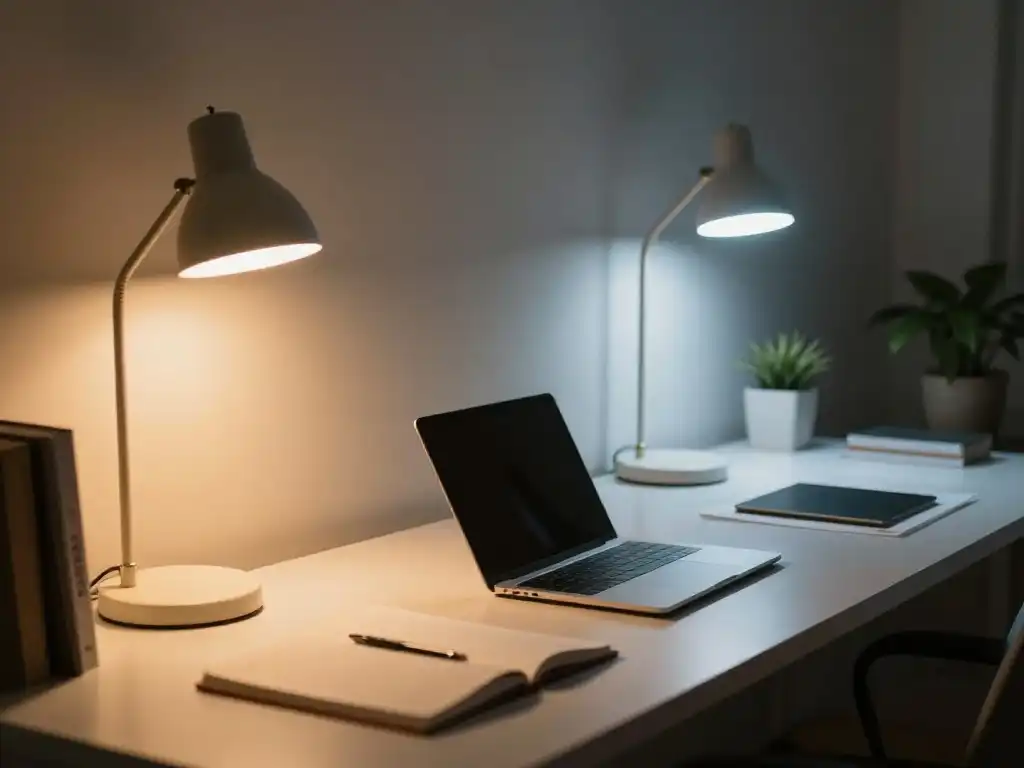
Shared lighting creates shared problems. One person needs bright task lighting for detailed work while the other is on a video call and needs soft, diffused illumination. A single overhead fixture serves neither person well. The solution is individual task lamps positioned at each workstation within the small double desk setup.
A productive small office design uses layered lighting — ambient ceiling light for general visibility, individual LED desk lamps for task focus, and bias lighting behind monitors to reduce eye strain during long sessions. Position each lamp so its light cone doesn’t spill onto the adjacent workstation. That single adjustment transforms a home office shared desk into two functionally independent zones without changing the physical furniture at all.
Budget Breakdown — What You Actually Get at Every Price Point for a Double Desk
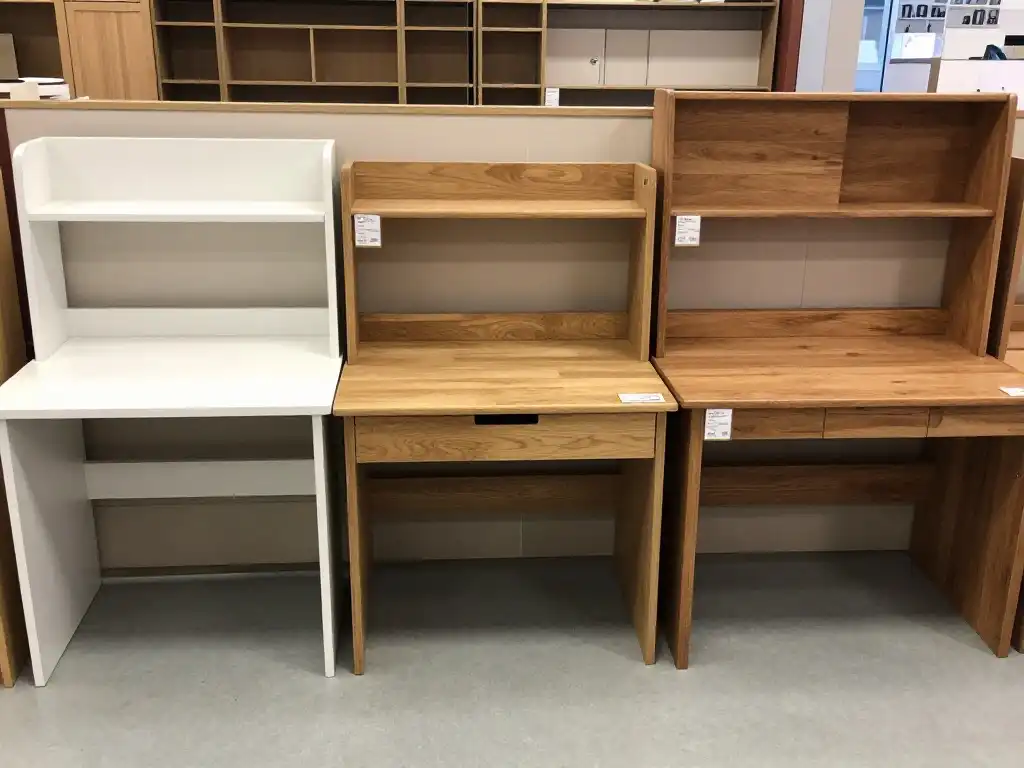
Not every budget buys the same experience. Here’s an honest breakdown of what the market actually delivers at each price tier for a budget friendly double desk in the USA.
| Budget Range | What You Get | Best For |
|---|---|---|
| Under $200 | Basic MDF surface, minimal storage, no cable management | Students, temporary setups |
| $200–$400 | Solid wood veneer, basic drawers, some cable grommets | Remote workers, home offices |
| $400–$700 | Real wood or metal frame, smart storage, divider panel option | Professionals, daily heavy use |
| $700–$1200 | Ergonomic height adjustment, premium materials, full cable system | Power users, long-term investment |
| $1200+ | Custom configurations, sit-stand options, premium aesthetics | Design-conscious, permanent setup |
The IKEA Double Desk Hacks That Turn Cheap Flat Pack Into a Custom Workstation
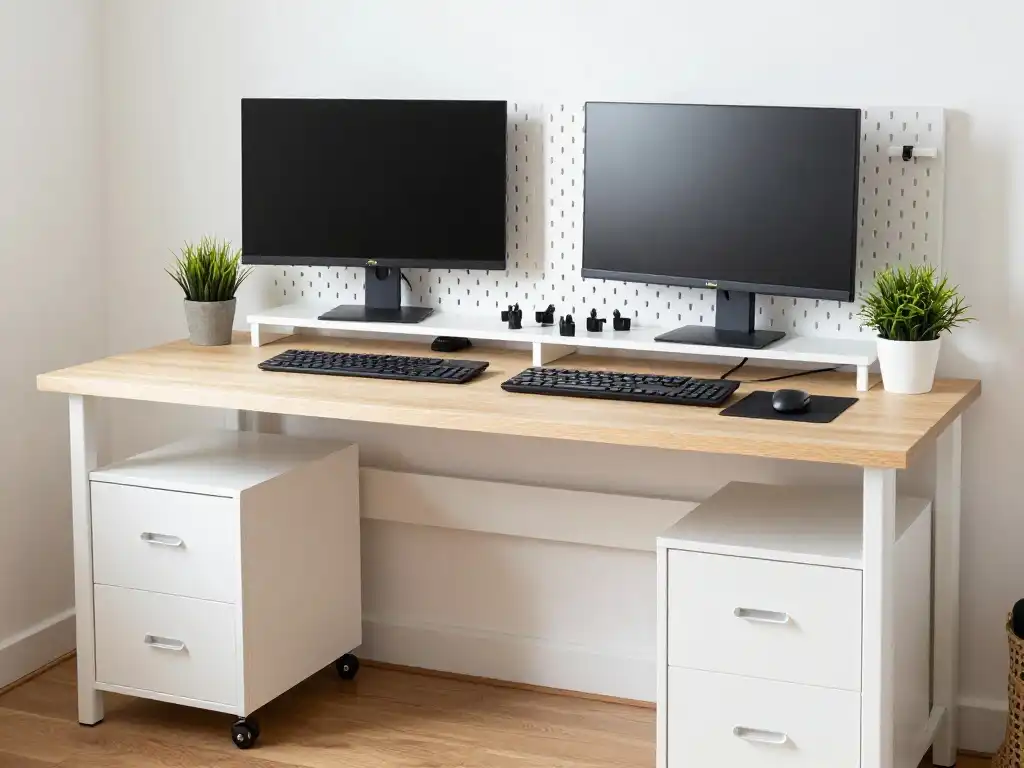
The IKEA double desk ecosystem — particularly the LAGKAPTEN and ALEX combination — has become the most popular small office double desk solution in North America for good reason. The modular system lets you build a compact double desk at a fraction of the cost of a purpose-built unit. Two LAGKAPTEN tabletops on four ALEX drawer units create a symmetric two person desk home office setup that rivals furniture costing three times as much.
The hack goes further. Add a monitor stand riser on each side. Install a pegboard panel between the two surfaces for vertical storage. Run cable management clips along the underside of both tabletops. What started as flat-pack components from a big blue warehouse becomes a functional small office furniture configuration that looks genuinely custom. This apartment home office desk setup approach works especially well in rentals where permanent modifications aren’t allowed.
How to Create Visual Separation on a Double Desk Without Building an Actual Wall
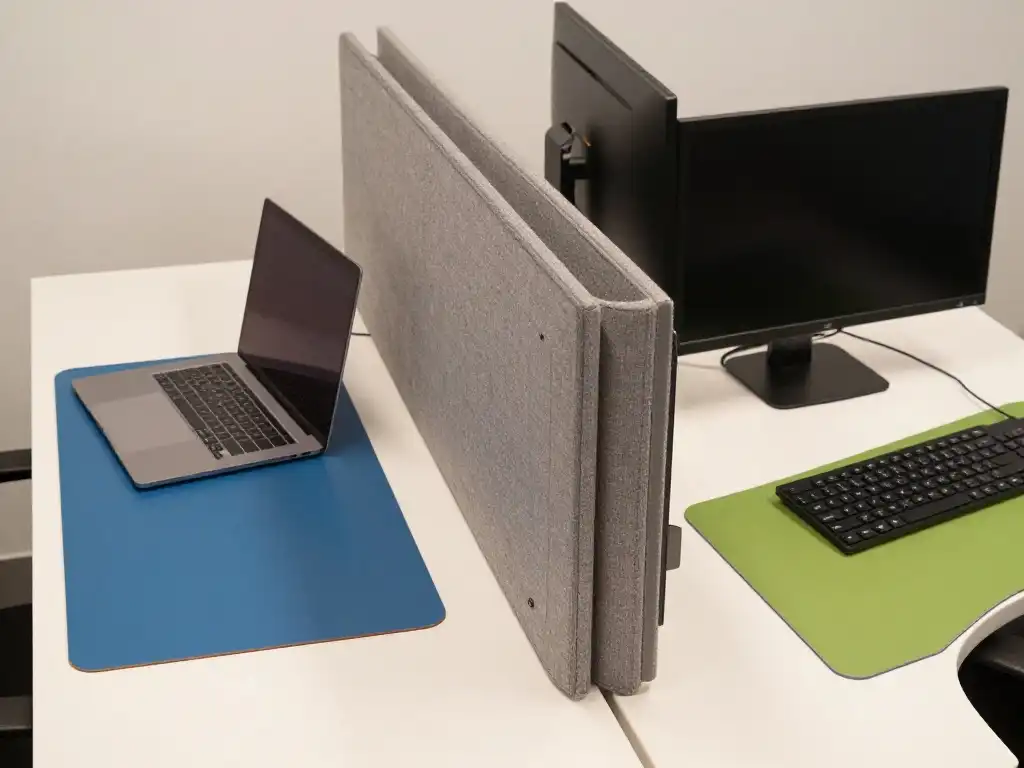
Shared surfaces blur into each other without visual boundaries. A desk divider panel is the most direct solution. These panels clip onto the desk surface and rise 12 to 18 inches above it. They block sightlines, muffle some ambient sound, and create a clear psychological border between two workstations on the same surface.
Beyond panels, color is a surprisingly powerful separator. Give each side its own desk mat in a different color. Use different lamp styles on each side. These small visual distinctions tell the brain that each zone belongs to a specific person. In a collaborative home workspace where shared ownership can lead to shared clutter, personal visual identity on each side of the desk prevents the inevitable territory creep that plagues most home office shared desk arrangements.
The Ergonomic Rules Every Shared Double Desk Setup Must Follow to Protect Your Body
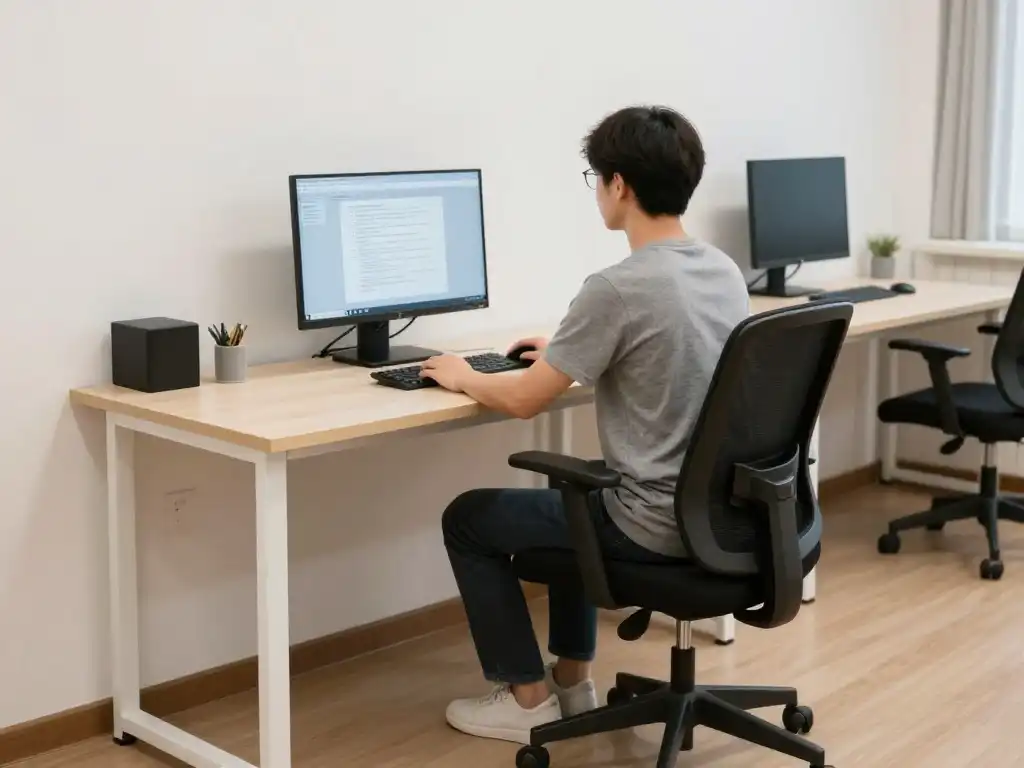
An ergonomic double desk small office setup starts with monitor height. The top of each screen should sit at or just below eye level when you’re seated upright. Most standard desks place monitors too low which forces the neck into a sustained forward tilt. Over months, that posture causes real damage to cervical vertebrae. A monitor stand raises each screen to the correct height without requiring a new desk.
Each ergonomic chair at the double desk should be independently adjustable. Two people rarely share the same ideal seat height. Foot placement matters too — both feet should rest flat on the floor or on a footrest with knees at a 90-degree angle. The two workstation home office that ignores these rules trades short-term convenience for long-term physiotherapy bills.
Best Double Desk Layouts for Square Rooms, Narrow Rooms, and Awkward Corners
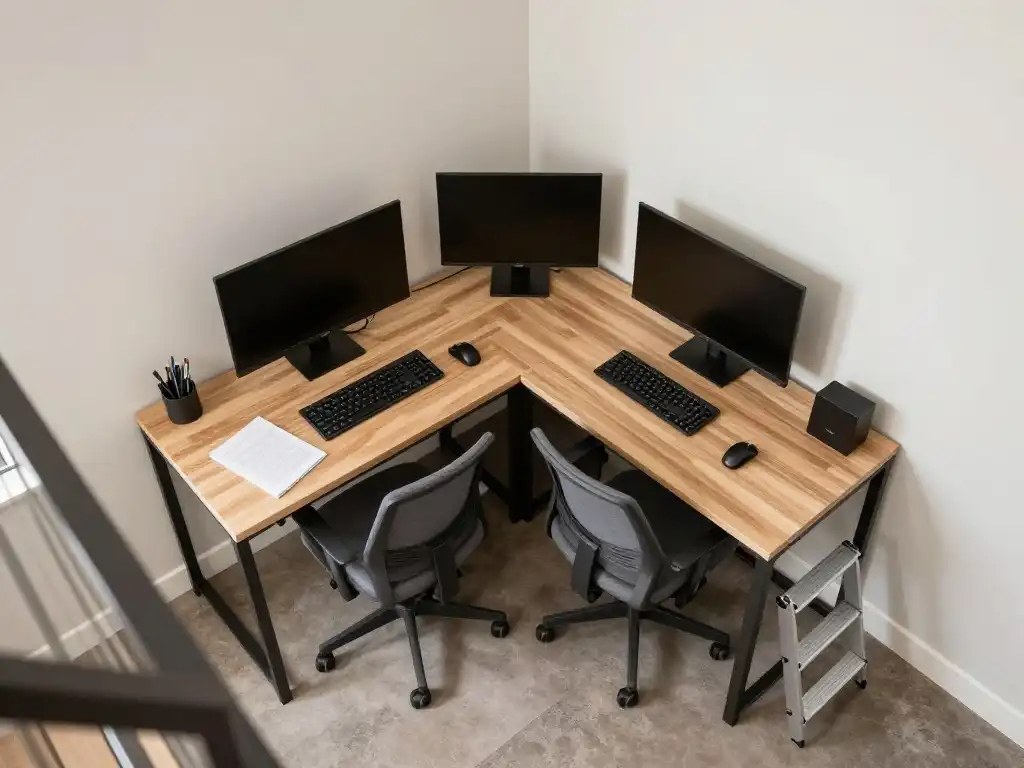
Square rooms offer the most flexibility. Place a corner double desk diagonally across one corner and you free up three walls for storage, whiteboards, or shelving. This double desk configuration small workspace maximizes both surface area and open floor space simultaneously.
Narrow rooms demand a different strategy. A double writing desk small room placed lengthwise along the longest wall with chairs positioned side by side works best. It keeps the narrow walkway clear and uses wall length rather than room width. For awkward corners with sloped ceilings, alcoves, or irregular angles, a floating double desk custom-cut to fit the wall dimensions is often the only solution that actually works without wasting space or looking forced.
How to Style a Small Home Office Double Desk So It Looks Intentional Not Cluttered
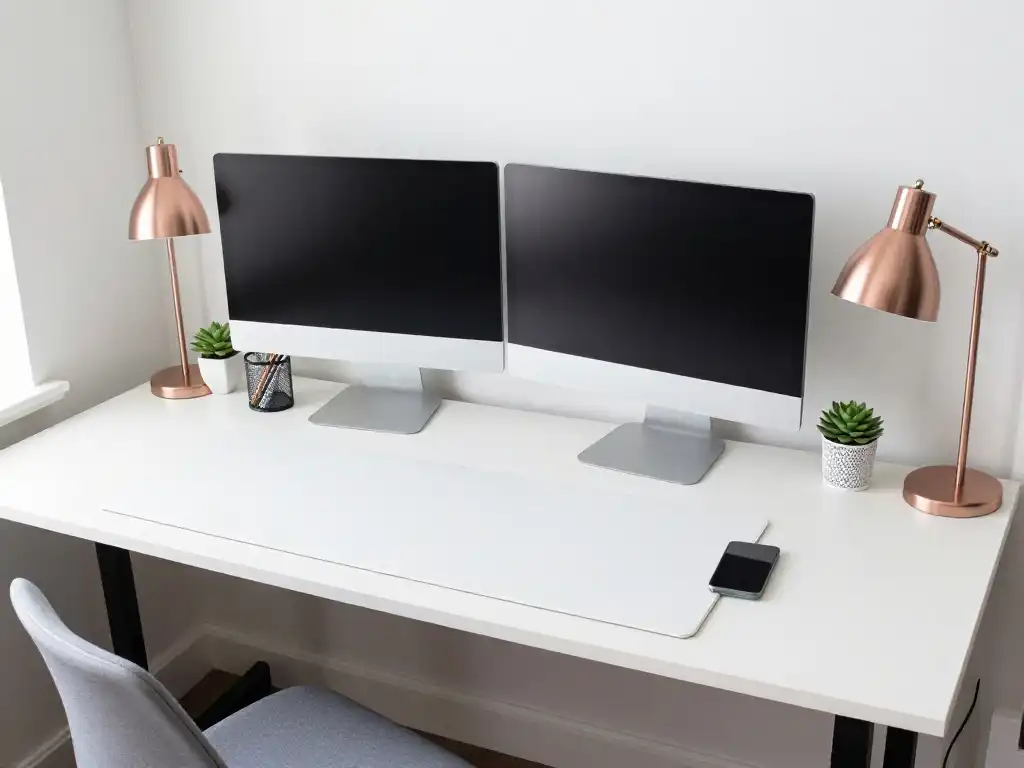
Styling a modern double desk home office is about restraint. Every item on the surface should earn its place. A plant, a small lamp, and a single framed photo on each side creates personality without chaos. Everything else belongs in a drawer, on a shelf, or in a cabinet. The desk surface is for working — not for storing.
Color coordination between both sides of the small home office furniture desk creates visual cohesion. Matching desk mats, coordinating pen holders, and consistent monitor configurations make a shared desk look like a deliberate design choice rather than two separate setups awkwardly sharing a surface. That visual intentionality is what separates a space efficient home office that looks polished from one that looks like a storage unit with chairs.
The Biggest Double Desk Buying Mistakes People Make and How to Avoid All of Them
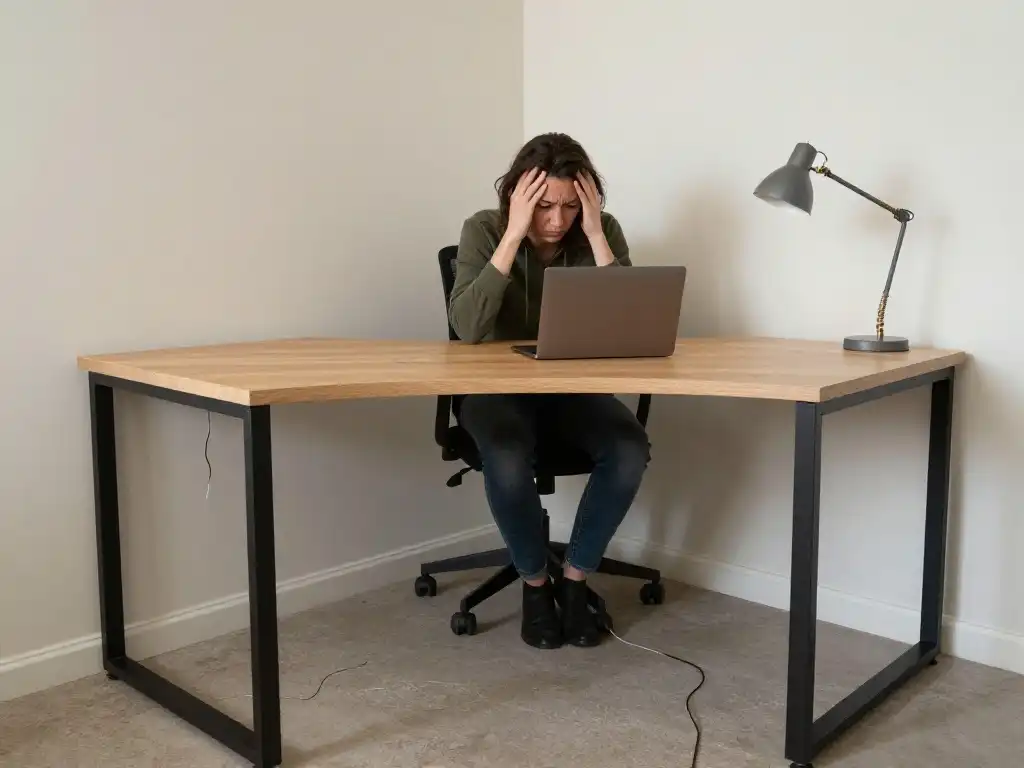
The first mistake is buying based on photos. Showroom photos are styled by professionals under perfect lighting with deliberately sparse accessories. Your real small home office double desk will carry two computers, two sets of speakers, a router, chargers, notebooks, and coffee cups. Always evaluate desk surface area against your actual daily work load not against a staged photo.
The second mistake is ignoring assembly complexity. A compact office desk with drawers that takes six hours to assemble and requires three people isn’t a bargain at any price. Read assembly reviews specifically — not product reviews. The third mistake is skipping the double desk small room ideas planning phase entirely and buying whatever ships fastest. A desk that doesn’t fit your room’s layout wastes money and creates the exact frustration you were trying to solve.
FAQ
Q1. What size double desk works best for a small home office?
For most small rooms in the USA, a desk between 55 and 63 inches wide works best. That gives each person roughly 27 to 30 inches of personal workspace — enough for a monitor, keyboard, and notebook without feeling squeezed. Always measure your room and subtract 36 inches for chair clearance before deciding on width.
Q2. Can two people comfortably share one double desk in a small room?
Yes — if the desk is properly sized and the room has at least 9×9 feet of usable floor space. A small space office desk for two with a divider panel and independent task lighting makes sharing genuinely comfortable. The key is defined personal zones, not just shared surface area.
Q3. What is the difference between an L-shaped and a straight double desk?
An L-shaped double desk uses a corner and gives each person more surface area but requires more room. A straight double desk is narrower, more flexible, and better for rooms without usable corners. Straight desks also cost less on average and are easier to assemble and reposition.
Q4. How do I manage cables on a shared double desk setup?
Use under-desk cable trays, cable clips along the desk legs, and a power strip mounted to the underside of the surface. A monitor stand with a built-in USB hub reduces the number of cables running to the computer entirely. Label each cable at both ends so troubleshooting later takes minutes instead of an hour.
Q5. Is a standing double desk worth it for a small home office?
A standing double desk with height adjustment is worth the investment if both people use it for more than six hours daily. The health benefits are well documented — reduced back pain, better circulation, and higher afternoon energy levels. However, motorized standing desks cost significantly more and add mechanical complexity that fixed desks don’t have.
Conclusion
The right small home office double desk does something remarkable. It takes a space that felt too small for one person’s chaos and makes it genuinely functional for two. Measure carefully. Choose your shape based on your room’s geometry. Plan your cable management before day one. Add individual lighting, smart storage, and a divider. Do all of that and a shared desk stops being a compromise and starts being a genuine productivity asset that both people actually enjoy using every day.