
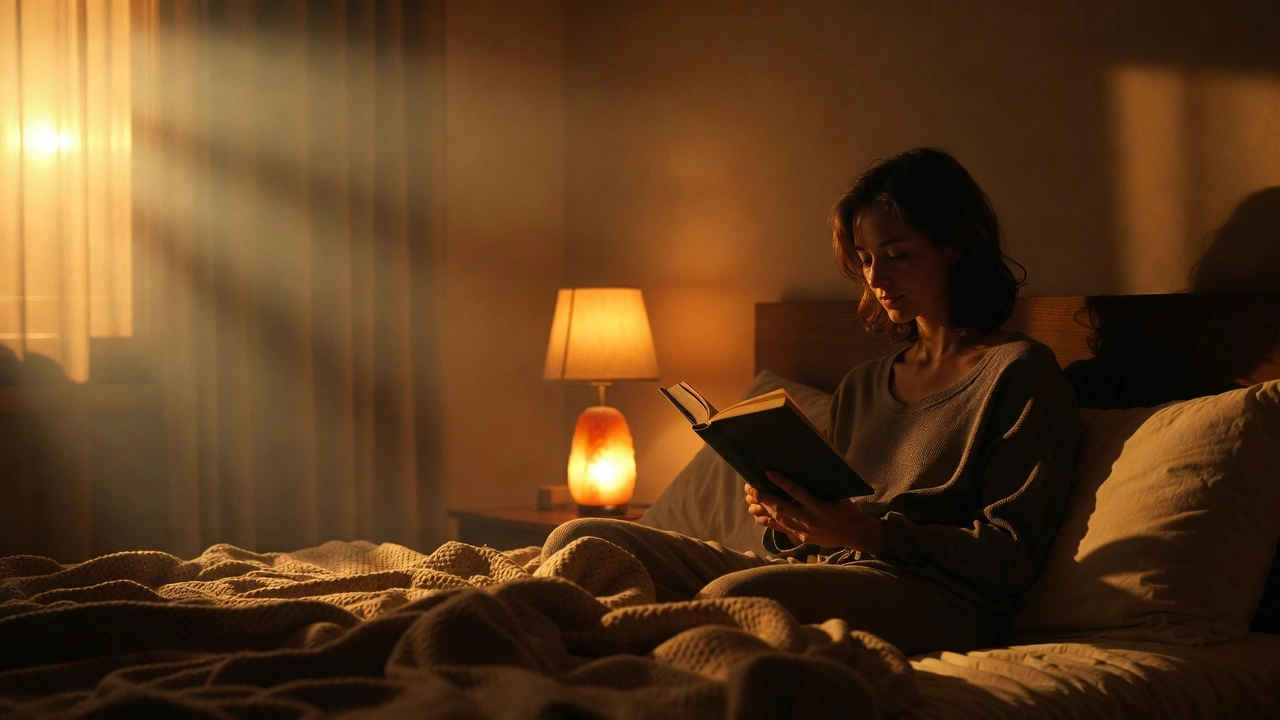
A Simple Slow Living Evening Routine That Tells Your Body It’s Time to Rest
Introduction
Your evenings set the stage for tomorrow. Most people rush through their nights, fighting sleep instead of inviting it. A simple slow living evening routine changes everything. It’s not complicated. It’s not another task to add to your list. Instead, it’s about doing less with intention so you can actually rest.
Think about your typical evening. You’re scrolling your phone. Your mind races. Your body feels tense. Then you wonder why sleep won’t come. The truth? Your body never got the signal that it’s time to rest. A slow living evening routine sends that signal clearly. It tells your nervous system, “You’re safe now. It’s time to slow down.”
This isn’t about perfection. It’s about creating a rhythm your body recognizes and trusts. When you practice a simple slow living evening routine consistently, something shifts. Your sleep deepens. Your stress drops. Your mornings improve. You wake up refreshed instead of exhausted. That’s the power of intentional, mindful evening practices.
What Is a Slow Living Evening Routine?

A slow living evening routine represents a deliberate shift away from hustle culture and constant stimulation. It’s fundamentally about creating intentional evening routine habits that signal safety to your nervous system. Unlike rushed bedtimes where you collapse into bed after scrolling through your phone, a simple slow living evening routine prioritizes calm transitions and mindful activities. This approach combines elements of minimalism, intentionality, and genuine self-care into structured but flexible evening rituals.
you may also like this:12 Easy Slow Living Bedroom Ideas for a Sleep Sanctuary
Think of it as preparing mind and body for sleep rather than simply trying to fall asleep faster. A slow living evening routine isn’t restrictive—it’s liberating. You’re not adding complicated tasks. You’re removing what doesn’t serve you and replacing it with what genuinely does. The goal is creating what experts call a relaxing evening routine at home where every element supports your natural desire to rest. Your calm night routine for adults becomes a sanctuary from the chaos of daytime living.
Why Your Evening Routine Matters More Than You Think
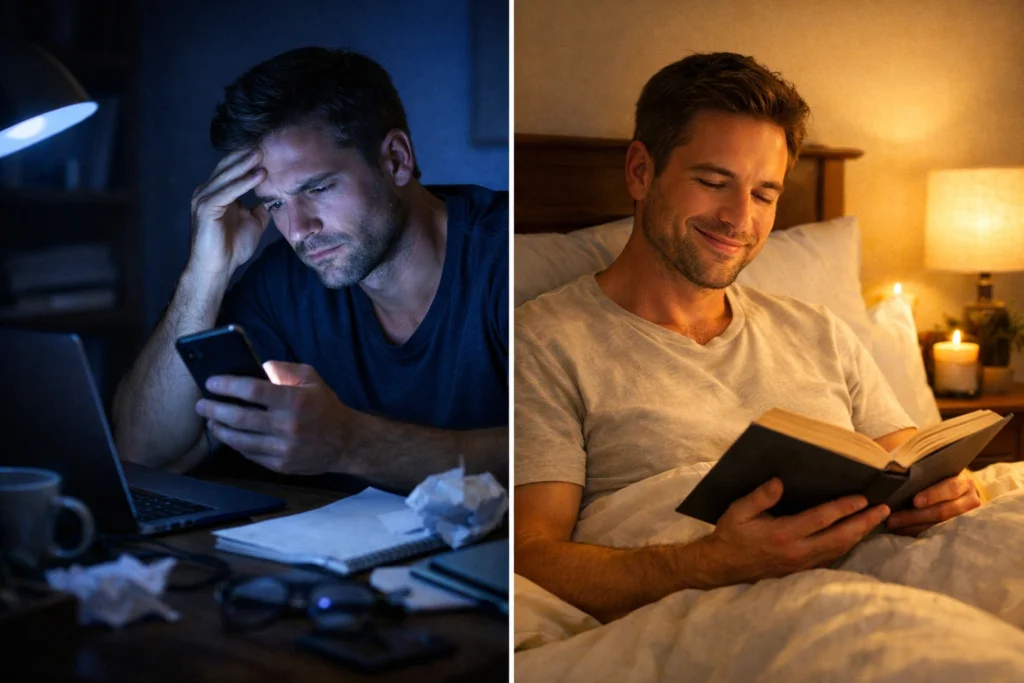
Your evening sets the trajectory for tomorrow. Most people underestimate how profoundly their nighttime habits impact everything from morning energy to emotional resilience. A slow living evening routine acts as the foundation for better sleep, clearer thinking, and reduced stress throughout your entire week. This is not exaggeration. This is neuroscience.
Consider this carefully: your body operates on circadian rhythms governed by light, temperature, and behavioral cues. When you ignore these natural signals and push through stimulation late into the night, you’re fighting biology itself. A simple slow living evening routine works with your body instead of against it. Research from the National Sleep Foundation shows that structured bedtime routines increase sleep quality by up to 40% compared to inconsistent patterns. Beyond better sleep, evening rituals reduce cortisol (your stress hormone), lower blood pressure, and improve emotional regulation throughout your entire life.
| Evening Routine Impact | Results After Consistent Practice |
|---|---|
| Sleep Quality | Increases by 40% |
| Stress Hormone (Cortisol) | Decreases significantly |
| Blood Pressure | Lowers naturally |
| Emotional Regulation | Improves noticeably |
| Circadian Rhythm | Strengthens and stabilizes |
| Mental Clarity (Morning) | Sharpens considerably |
| Anxiety Levels | Reduces by 30-50% |
Signs Your Body Is Asking You to Slow Down at Night

Your body communicates constantly. Most people just aren’t listening. If you’re experiencing persistent fatigue despite sleeping 7–8 hours, that’s a signal. Racing thoughts as soon as your head hits the pillow? Your nervous system is overstimulated. Waking multiple times during the night, difficulty falling asleep within 20 minutes, or feeling anxious as evening approaches—these aren’t quirks. They’re invitations to implement a slow living evening routine.
Physical signs matter too. Tension in your shoulders, jaw clenching, digestive issues in the evening, or restless energy suggest your body needs downregulation. Emotional indicators—irritability, overwhelm, or that “can’t shut off my brain” feeling—point toward insufficient wind-down time. If you’re eating mindlessly in the evening or moving through tasks on autopilot, your body’s telling you something needs to change. A simple slow living evening routine addresses these signals directly.
How Slow Living Helps Your Nervous System Relax

Your nervous system exists in two primary states: sympathetic (fight-or-flight) and parasympathetic (rest-and-digest). Modern life keeps most people trapped in sympathetic activation. Emails, news cycles, social media notifications, artificial lighting—they all keep your nervous system in high alert. A slow living evening routine deliberately activates your parasympathetic nervous system. This is the state where real healing happens.
Here’s how it works in your body: when you dim lights, you reduce blue light exposure, which suppresses melatonin production. When you slow your breathing through gentle activities, your vagus nerve (which controls parasympathetic activation) receives calm signals. When you disconnect from screens before bed, you eliminate constant dopamine hits that keep your brain in reward-seeking mode. Temperature drops, gentle movement, and sensory calm all communicate safety to your amygdala (your alarm system). Over time, your body learns that evening equals safety. This conditioning is powerful. It literally rewires your stress response.
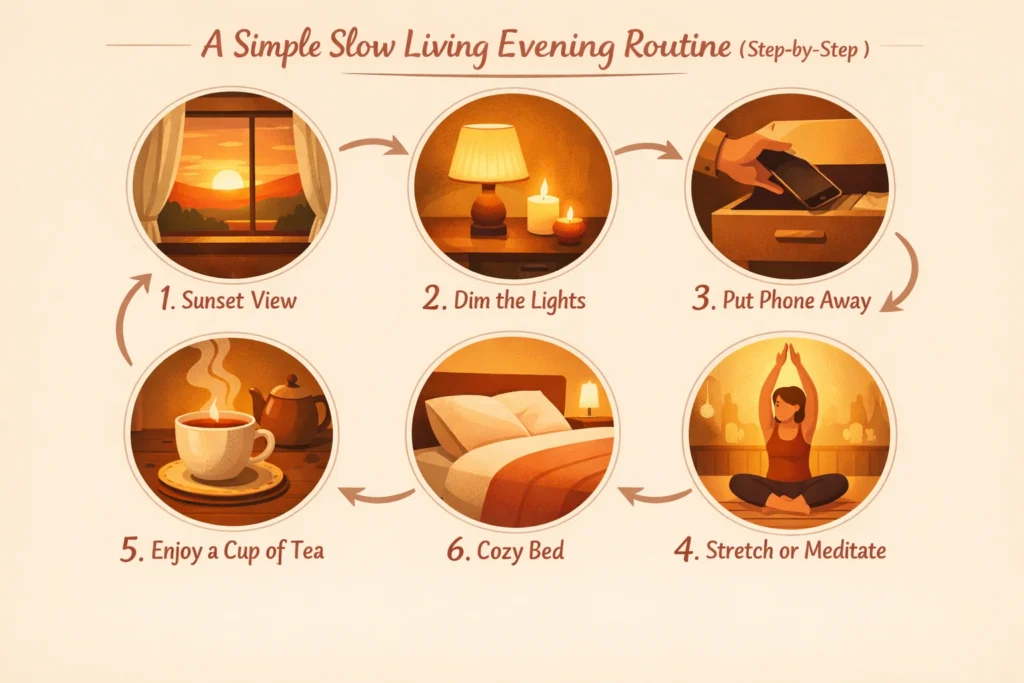
A Simple Slow Living Evening Routine (Step-by-Step)
H3: Step 1 – Start Winding Down Before Sunset
Timing matters enormously in a simple slow living evening routine. Begin your deceleration 2–3 hours before bed, ideally as natural light begins fading. This isn’t about being rigid—it’s about working with your circadian biology. When you start early, you’re not fighting resistance. You’re flowing with your body’s natural inclination to slow down.
During this initial phase, reduce work intensity. Finish demanding tasks by mid-afternoon when possible. Transition your environment gradually. Soften lighting. Lower your voice. Move more slowly. This early wind-down period prevents the frantic scramble many people experience trying to compress relaxation into 30 minutes. You’re essentially giving your nervous system a gentle heads-up that day mode is ending and night mode approaches. Your slow down routine before bed needs time to work. It’s not magic. It’s biology.
H3: Step 2 – Create a Calm and Cozy Environment
Your environment shapes your nervous system’s response more than willpower ever could. A slow living evening routine demands intentional space design. Lighting is non-negotiable. Switch to warm, dim lighting (2700K color temperature) at least two hours before bed. Consider amber-tinted bulbs or salt lamps that don’t trigger alertness. Blue light literally tells your brain it’s daytime. Warm light tells your brain it’s evening. Choose warm light.
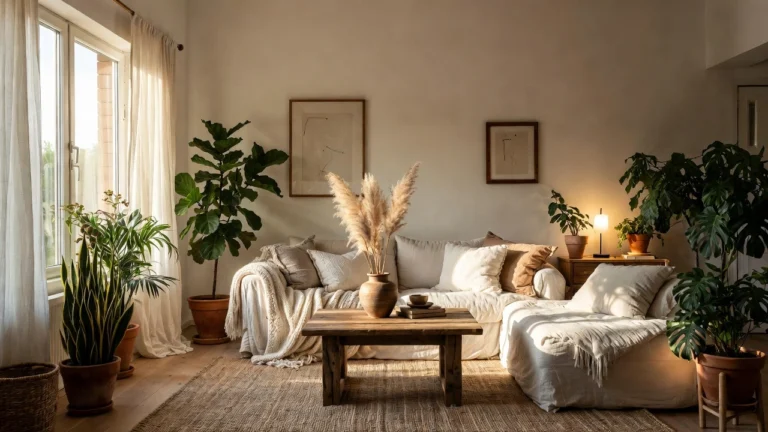
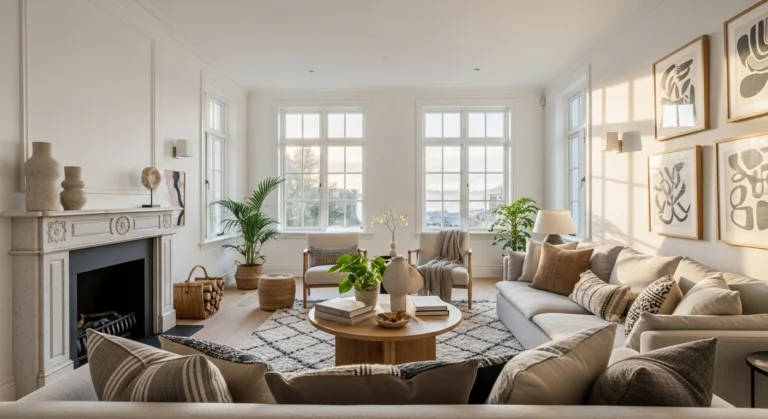
Temperature matters deeply. Your body sleeps better in cooler environments (around 65–68°F). Add textures that feel comforting—soft blankets, plush rugs, quality pillows. Reduce visual clutter. Tidy your bedroom so your eyes have nothing jarring to land on. Introduce calming scents through essential oils or plants like lavender, chamomile, or eucalyptus. Sound should be minimal or nature-based. Consider white noise, rain sounds, or gentle instrumental music. Every sensory input in your cozy evening routine ideas should whisper “it’s safe to rest,” not demand attention.
H3: Step 3 – Disconnect From Screens and Noise
This step separates those who truly benefit from a slow living evening routine from those who talk about it. Blue light from phones, tablets, and computers suppresses melatonin production, making sleep harder. Beyond biology, screens keep your mind engaged in external stimulation when it should be turning inward. Your evening routine to unwind cannot include screens. They are incompatible.
Establish a hard cutoff—ideally 60–90 minutes before bed, though even 30 minutes helps. This means no “quick email checks” or “just one more video.” Your simple slow living evening routine requires genuine disconnect from screens before bed. Also minimize environmental noise. Turn off notifications. Close doors if household chaos persists. Use earplugs if necessary. If you live in a noisy environment, white noise machines actually help by providing consistent, predictable sound that your nervous system doesn’t perceive as threatening.
H3: Step 4 – Practice Gentle, Mindful Activities
Replace screen time with activities that genuinely calm your mind. Reading physical books works beautifully. Choose fiction or gentle non-fiction, not work-related material that keeps your brain problem-solving. Journaling for 10–15 minutes helps externalize racing thoughts. Light stretching, yin yoga, or progressive muscle relaxation activates your parasympathetic nervous system. These aren’t optional add-ons. They’re the core of your simple slow living evening routine.
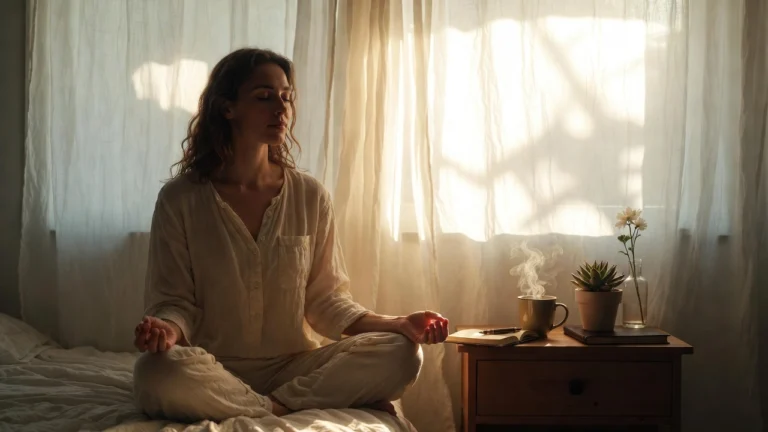
Meditation or breathing exercises prove remarkably effective. Even five minutes of box breathing (inhale 4, hold 4, exhale 4, hold 4) noticeably shifts your nervous system state. Many find that knitting, coloring, or other hands-on crafts provide gentle engagement without overstimulation. The key to a successful mindful evening routine ideas is choosing activities that feel nourishing rather than like obligations. Experiment to find what genuinely settles your mind. If something feels like work, it’s defeating the purpose.
H3: Step 5 – Nourish Your Body With a Light Evening Ritual
Food timing and choices significantly impact sleep quality. A slow living evening routine includes mindful nourishment—not restriction, but intentionality. Avoid large meals 3–4 hours before bed. They trigger digestion that interferes with sleep. Your digestive system should be winding down, not ramping up.
Instead, consider a light evening ritual. Herbal tea (chamomile, passionflower, or valerian root) works beautifully. Warm milk with a touch of honey provides comfort. A small snack combining complex carbs and protein helps. Think banana with almond butter, whole-grain toast with avocado, or Greek yogurt with berries. These combinations support serotonin and melatonin production naturally. Your cozy evening routine ideas should definitely include a warm beverage ritual.
Step 6 – Prepare Your Space for Restful Sleep
The final step of your slow living evening routine ensures your bedroom supports sleep. Make your bed inviting. Quality sheets matter more than you think. Appropriate blankets for your climate matter. Pillows that support good alignment matter. Remove work materials, exercise equipment, or anything associated with stress or productivity. Your bedroom should be a sanctuary, not a second office.
Check that your room is genuinely dark. Blackout curtains or an eye mask work well for this. Ensure your mattress still supports you well. Most mattresses last 7–10 years before they lose support. If you share your bed, agree on a consistent sleep schedule to minimize disruptions. Some people benefit from aromatherapy diffusers releasing lavender throughout the night. Others prefer complete silence. Others want white noise. Your slow living evening routine’s final act sets you up for success.
Common Mistakes That Ruin a Calm Evening Routine
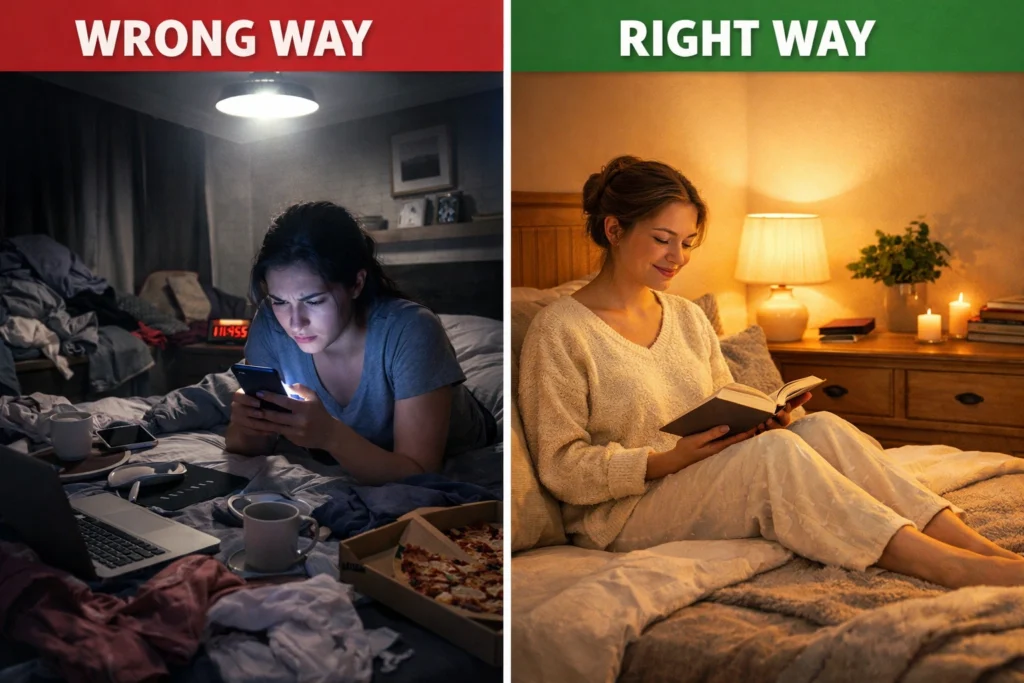
Even well-intentioned slow living evening routine attempts often fail due to preventable mistakes. The biggest? Inconsistency. Your nervous system requires regularity to rewire itself. Practicing your simple slow living evening routine three nights weekly won’t trigger the conditioning your body needs. Aim for six or seven nights. Your body learns patterns through repetition. One week of consistent practice teaches your nervous system nothing. Six weeks teaches it everything.
Another common mistake is checking your phone “just quickly” during your wind-down. That single notification floods your system with dopamine and cortisol, undoing 30 minutes of calm work. Similarly, many people maintain a rigid, perfectionist slow living evening routine that becomes stressful. If you miss a step or have an off night, that’s fine. Flexibility matters more than perfection. Underestimating preparation time also sabotages success. You can’t realistically decompress in 10 minutes after a chaotic day. Your nervous system needs time.
How Long It Takes for a Slow Evening Routine to Work
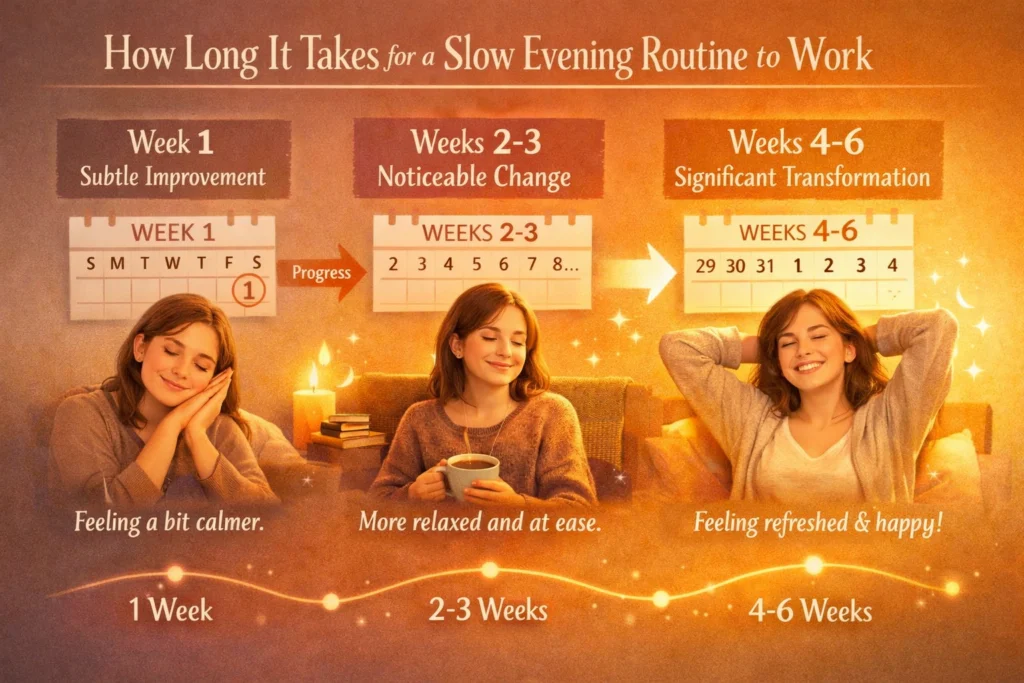
Patience separates lasting success from abandoned efforts. A simple slow living evening routine doesn’t typically produce transformation overnight. Most people notice subtle improvements within 3–5 days. Slightly easier sleep onset. Marginally better sleep quality. Fractionally less morning grogginess. These small shifts matter. They show you the direction you’re heading.
Real, measurable changes—consistently waking refreshed, noticeably reduced anxiety, deeper sleep—typically emerge within 2–4 weeks of dedicated practice. Your nervous system requires time to learn new patterns. Think of it like building a muscle. Consistency and repetition create neural pathways that eventually become automatic. By week six of a consistent slow living evening routine, many people report dramatic improvements. Better mood regulation. Improved focus during the day. Reduced overall stress.
| Timeline | Expected Changes | Key Indicator |
|---|---|---|
| Days 1-3 | Subtle improvement | Slightly easier falling asleep |
| Days 4-7 | Noticeable shift | Better morning alertness |
| Weeks 2-3 | Measurable improvement | Reduced nighttime waking |
| Weeks 4-6 | Significant change | Waking naturally refreshed |
| Weeks 6-12 | Major transformation | Dramatically improved mood and energy |
Tips to Stay Consistent With Slow Living at Night
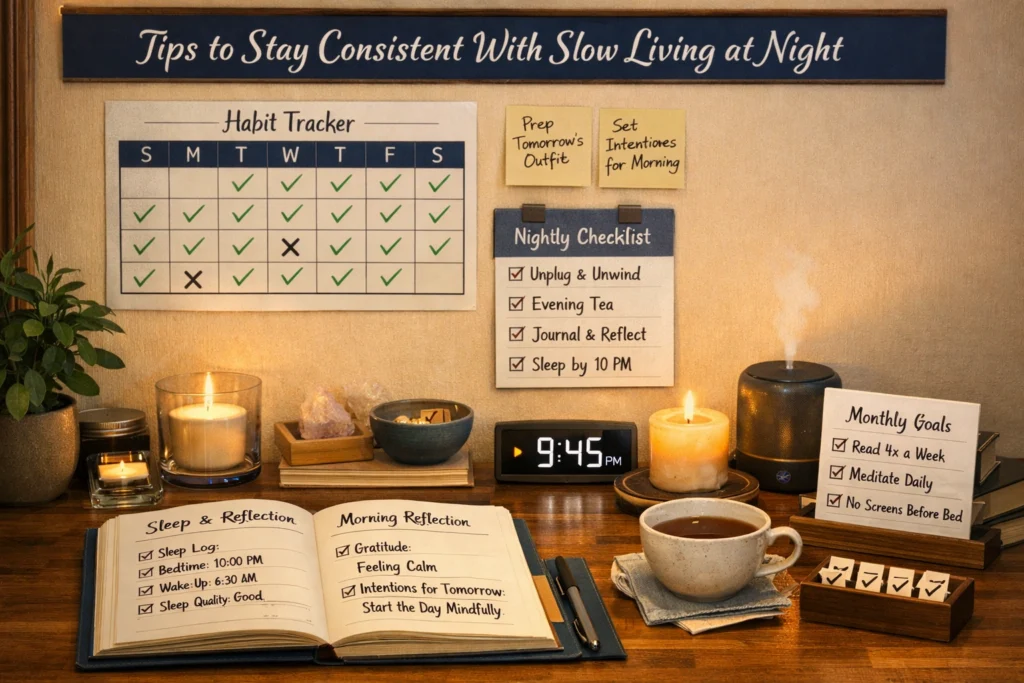
Consistency is where most ambitious routines collapse. A simple slow living evening routine only works if you actually practice it. Start small. Commit to three core elements rather than all six steps. Maybe that’s dimming lights, disconnecting from screens, and herbal tea. Master those first. Add elements gradually once consistency solidifies.
Create environmental cues that trigger your slow living evening routine automatically. When your lights dim at a certain time, your brain learns this signals routine start. Pin your routine to an existing anchor. Perhaps after dinner or after changing into comfortable clothes. Track your progress. Simple check marks on a calendar show momentum and motivation. Share your calm night routine for adults with someone. A partner, friend, or accountability buddy who can encourage consistency keeps you on track.
Case Study: How Sarah Transformed Her Sleep With a Simple Slow Living Evening Routine
Sarah, 38, was a marketing manager living in New York City. She worked long hours. She checked emails constantly. She couldn’t remember the last time she fell asleep before midnight. Her mornings were brutal. She’d wake exhausted, drag herself through the day, and crash at night only to repeat everything the next day. Sound familiar?
Sarah decided to try a simple slow living evening routine. She started small. She committed to three things: dimming her lights at 9 PM, putting her phone in another room at 9 PM, and drinking chamomile tea while reading. That was it. No meditation. No yoga. Just these three elements. She practiced for one week. Nothing dramatic happened. But on night seven, she noticed something. She fell asleep at 11:15 instead of midnight. Small shift. Big deal for Sarah.
Conclusion
A simple slow living evening routine is not about doing more—it’s about doing less with intention. By slowing down your nights, calming your environment, and creating gentle rituals, you tell your body it’s time to rest clearly. Over time, this mindful approach improves sleep quality, reduces stress, and helps you wake up feeling truly refreshed. A slow living evening routine is an investment in yourself that compounds nightly. You don’t need expensive tools. You don’t need hours. You need consistency. You need intention. You need to believe that your evening matters as much as your morning. When you commit to a simple slow living evening routine, everything shifts.
Your sleep improves. Your stress drops. Your mood stabilizes. Your focus sharpens. These aren’t small changes. These are life-changing transformations that come from something beautifully simple: intentionally creating a peaceful nighttime environment where your nervous system can finally relax. Start tonight. Choose three elements. Practice consistently. Trust the process. Your future self will thank you.
FAQs (Frequently Asked Questions)
What is a slow living evening routine?
A slow living evening routine is a set of calm, intentional habits designed to help your body and mind unwind after a long and busy day, reduce stress, and prepare naturally for sleep. It’s not complicated. It’s simply about creating a transition from the busy daytime to a peaceful evening where your nervous system can relax and your body can prepare for deep rest.
How long should an evening routine be?
A simple slow evening routine can be as short as 30–60 minutes, depending on your lifestyle and personal needs. Some people need 90 minutes to fully decompress. Others find 45 minutes sufficient. Consistency matters far more than length. A 30-minute routine practiced every night outperforms a 90-minute routine practiced occasionally.
Can a slow living routine improve sleep?
Yes, absolutely. Slow living habits help relax the nervous system, reduce screen stimulation, and create a peaceful environment that supports deeper, better sleep. Research shows that structured evening routines improve sleep quality by up to 40% compared to inconsistent patterns. Your calm night routine for adults directly impacts your sleep duration and quality.
What are the best activities for a slow evening routine?
Reading physical books works beautifully for a simple slow living evening routine. Journaling helps externalize racing thoughts. Light stretching, yin yoga, or progressive muscle relaxation activate relaxation naturally. Meditation or breathing exercises prove remarkably effective. Knitting, coloring, or other gentle crafts provide engagement without overstimulation. Herbal tea rituals provide comfort. The best activities are those that genuinely calm your mind and body.
Is slow living suitable for busy people?
Absolutely. Slow living focuses on simplifying, not adding tasks, making a simple slow living evening routine perfect even for busy schedules. You don’t need hours. You need 30–60 minutes. You don’t need complicated practices. You need simple, consistent habits. Busy people actually benefit most from evening routines because they need the stress reduction most. Your evening routine is self-care, not a luxury.
How do I know if I’m doing my evening routine correctly?
You’re doing it correctly if you’re practicing consistently (6-7 nights weekly), if you’re genuinely disconnecting from screens, if your environment supports calm, and if you’re noticing improvements in sleep or stress levels within 2-4 weeks. You don’t need to be perfect. You need to be consistent. Small improvements indicate you’re on the right track.

One Comment