
10 Easy Slow Living Home Swaps That Calm Your Nervous System
Your home is more than just a physical space. It’s a reflection of your mental state. It shapes how you feel every single day. The environment around you directly impacts your stress levels, sleep quality, and overall well-being. Most people don’t realize how much their home environment affects their nervous system. They live with harsh lighting, constant noise, endless clutter, and digital devices everywhere. This creates a state of perpetual stress in their bodies.
Slow living home swaps offer a different approach. Instead of overwhelming yourself with a complete home renovation, you make strategic exchanges. You swap stressful elements for calming alternatives. These aren’t expensive renovations. They’re simple, intentional changes you can implement gradually. Each swap targets a specific source of stress in your environment. Together, they create a foundation for genuine calm and restoration.
This comprehensive guide walks you through ten powerful slow living home swaps. You’ll learn exactly what to change, why it matters, and how to implement each swap affordably. Whether you’re struggling with anxiety, poor sleep, or constant overwhelm, these changes will help. Your nervous system will thank you.
What Are Slow Living Home Swaps?
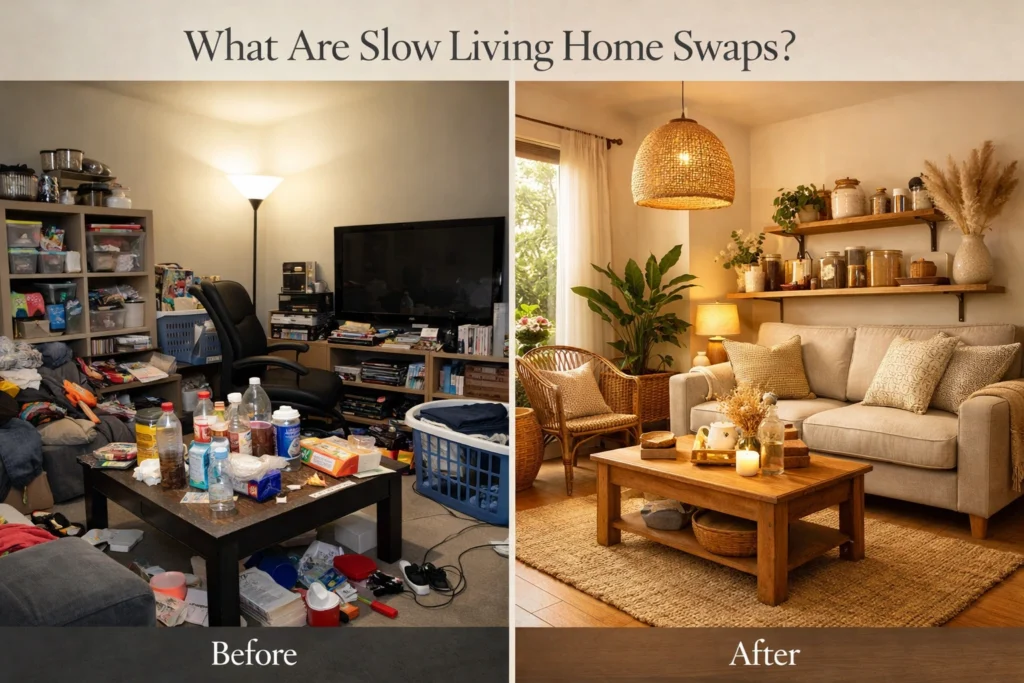
Slow living home swaps are deliberate exchanges that replace stressful environmental elements with calming alternatives. Instead of harsh fluorescent lighting, you install warm, dimmable bulbs. Instead of constant phone notifications, you create screen-free zones. Instead of artificial scents, you diffuse pure essential oils. The concept is simple: identify what triggers stress in your home, then swap it for something restorative.
you may also like this:A Simple Slow Living Evening Routine That Tells Your Body It’s Time to Rest
The term “slow living” comes from the broader slow living lifestyle at home movement. This philosophy rejects the modern obsession with speed, efficiency, and endless consumption. It embraces intentionality, presence, and purposeful choices. Slow living home ideas recognize that your physical environment either supports or sabotages your well-being. When your home is designed thoughtfully, everything becomes easier. Your nervous system relaxes. Your sleep improves. Your anxiety decreases. You don’t need a complete overhaul to experience these benefits. You need strategic, simple living home swaps that address your biggest stressors first.
| Swap Category | Old Element | New Alternative | Impact Area |
|---|---|---|---|
| Lighting | Harsh white bulbs | Warm dimmable LEDs | Sleep, relaxation |
| Digital | Constant phone use | Screen-free spaces | Anxiety, focus |
| Scent | Synthetic fragrances | Natural essential oils | Mood, calm |
| Space | Visual clutter | Open, organized areas | Mental clarity |
| Sound | Loud background noise | Gentle silence | Stress reduction |
| Routine | Rushed mornings | Intentional rituals | Daily activation |
| Storage | Plastic containers | Natural materials | Subconscious safety |
| Decor | Busy patterns | Neutral earth tones | Visual rest |
| Beverages | Evening caffeine | Herbal teas | Sleep quality |
| Energy | Chaotic environments | Daily reset rituals | Psychological closure |
How Slow Living Helps Calm the Nervous System
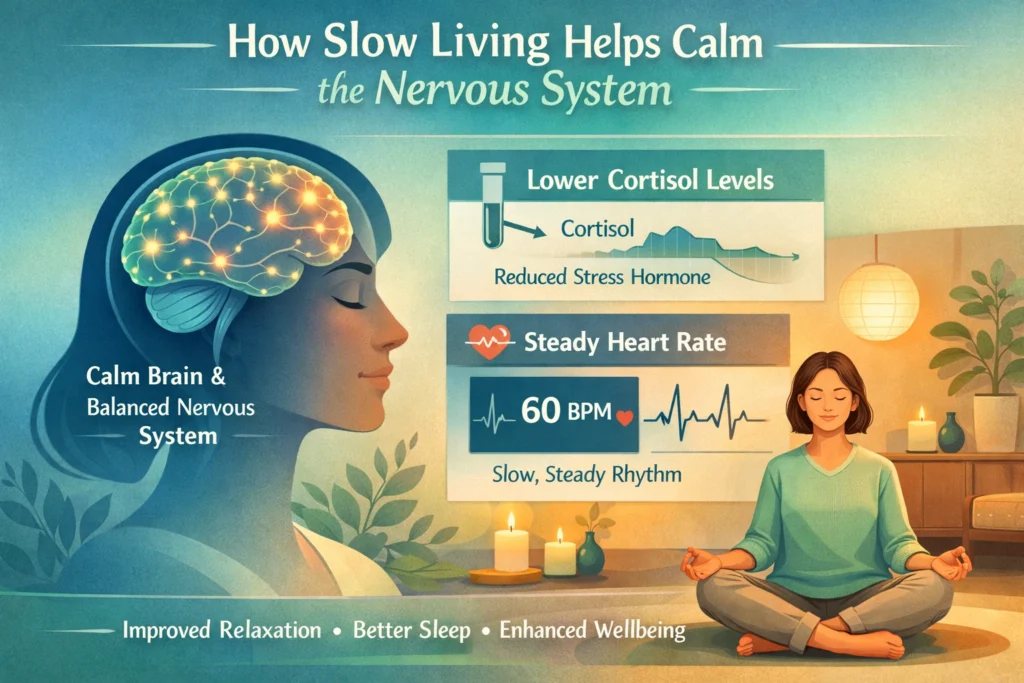
Your nervous system operates like a sophisticated alarm system. It constantly scans your environment for threats. When it detects danger signals—bright lights, loud noises, visual chaos, digital stimulation—it activates your sympathetic nervous system. This is your fight-or-flight response. Your heart rate increases. Your muscles tense. Stress hormones flood your bloodstream. In modern homes, this system stays activated almost constantly.
Nervous system regulation happens when your environment sends safety signals. Your parasympathetic nervous system—your “rest and digest” mode—only activates when your brain perceives genuine safety. Slow living home swaps create exactly these conditions. Warm lighting signals that it’s safe to relax. Quiet spaces allow your mind to settle. Open, organized rooms reduce cognitive load. Natural materials feel grounding. Together, these elements tell your nervous system: “You’re safe. You can rest now.” Research from environmental psychology confirms this isn’t just feeling better—it’s measurable neurobiological change. Studies show that intentional environments reduce cortisol production by up to 25% within weeks. Your heart rate drops. Your blood pressure decreases. Sleep quality improves dramatically. Anxiety and depression symptoms soften. This is why slow living home swaps work so powerfully. You’re not just redecorating. You’re literally rewiring your nervous system’s daily experience.
Why Your Home Environment Impacts Stress and Anxiety
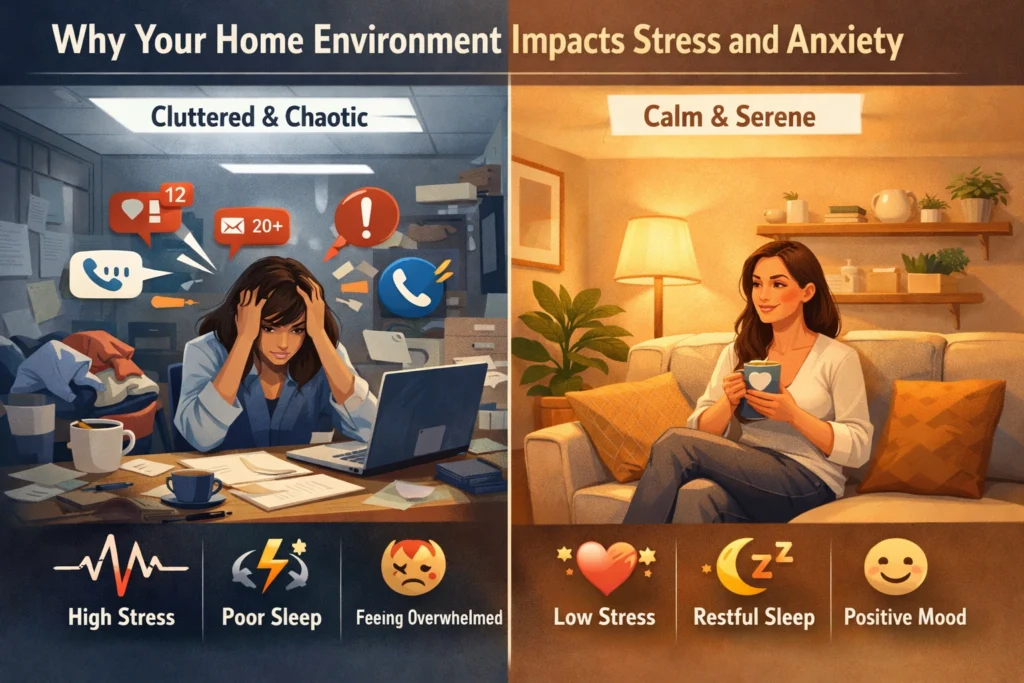
Most people vastly underestimate their home environment’s influence on their mental health. They assume their home is neutral space. It’s not. Every element—visual, auditory, olfactory, tactile—sends constant signals to your brain. These signals either escalate or de-escalate your stress response. Consider the sheer volume of time you spend at home. You’re there roughly 8,000 hours per year. That’s 8,000 hours where your environment is directly shaping your nervous system’s state. If your home sends stress signals for 8,000 hours annually, your body never fully relaxes.
Think about what happens in a typical modern home. Fluorescent overhead lights suppress melatonin production. Your phone buzzes constantly, triggering dopamine spikes and anxiety cycles. The television hums in the background. Visual clutter fragments your attention. Artificial scents irritate your olfactory system. The house smells faintly of plastic, chemicals, and synthetic materials. Your bedroom contains your work desk, so your brain never separates work from rest. You drink coffee at 6 PM and wonder why you can’t sleep. You scroll your phone in bed for an hour. Your nervous system stays locked in activation mode 24/7. This isn’t laziness or weakness. This is a home environment that hasn’t been designed for mental well-being at home. Slow living home swaps systematically remove these stress triggers. When you redesign your physical space intentionally, you’re redesigning your daily stress experience. That’s transformative power.
Swap #1: Harsh Lighting → Soft, Warm Ambient Lighting
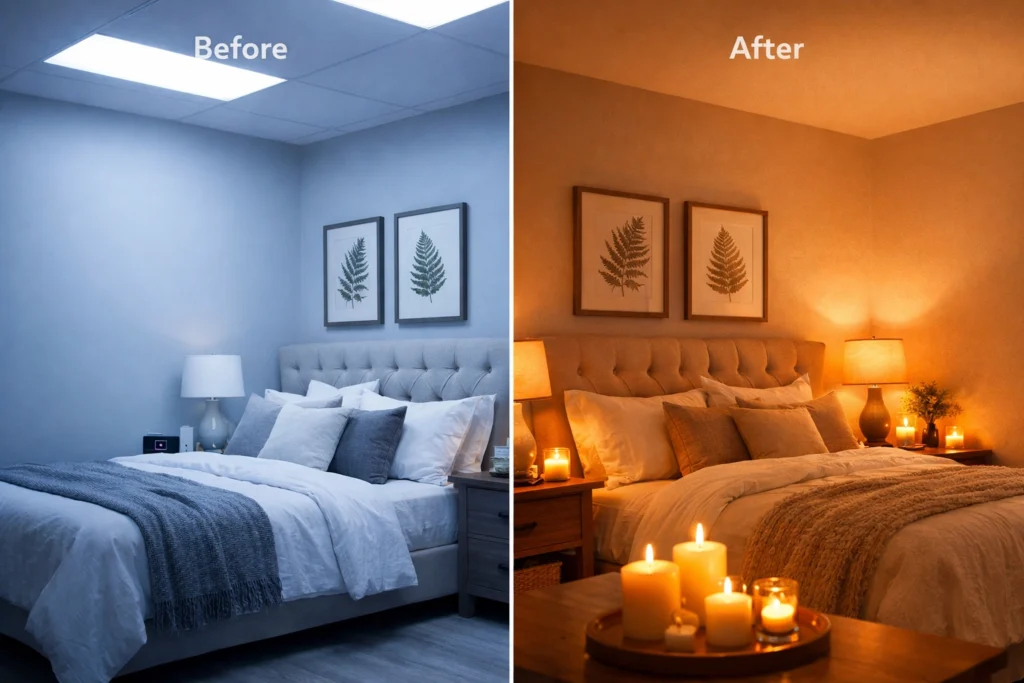
Lighting is perhaps the most powerful environmental variable affecting your nervous system. Most modern homes rely on fluorescent and bright white LED bulbs. These lights mimic midday sun. They’re useful for offices and task work. They’re terrible for homes. Fluorescent lighting suppresses melatonin production—the hormone that signals your body it’s time to sleep. This disrupts your circadian rhythm. It creates visual fatigue. It keeps your nervous system in daytime alertness mode even at night. Over months and years, this chronic disruption damages sleep quality and increases anxiety.
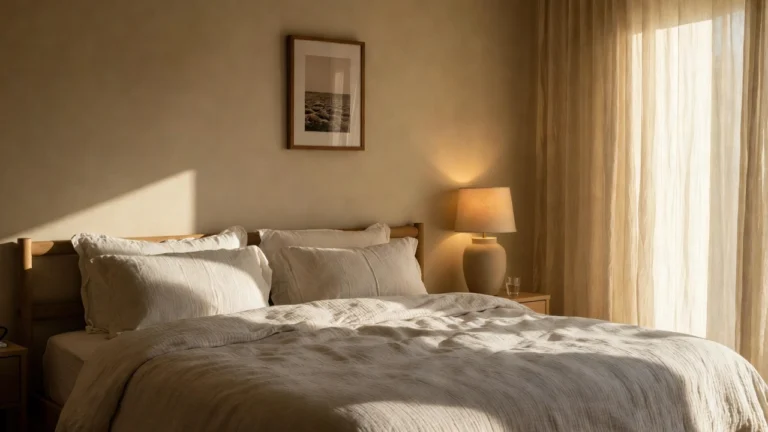
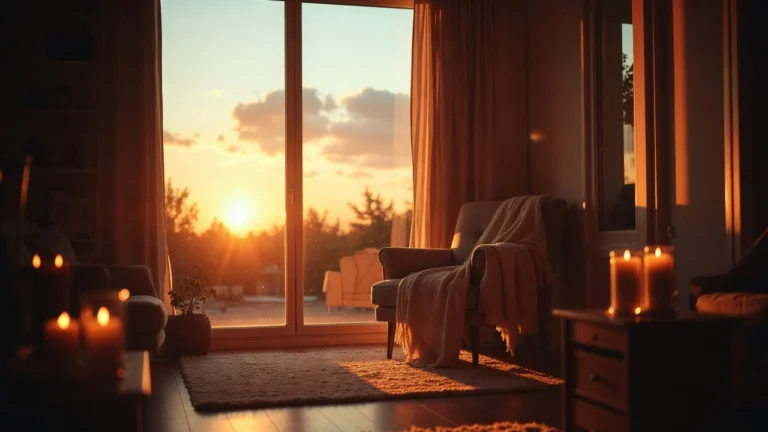
The swap is straightforward: replace harsh white bulbs (5000K+ color temperature) with warm, dimmable LEDs (2700K color temperature). This single change transforms your space instantly. Warm light signals your body that it’s safe to relax. Your pupils relax. Your nervous system downregulates. Within days, most people report better sleep. The implementation is simple and affordable. Basic warm LED bulbs cost $5–10 each. A dimmable system might run $50–150 for an entire room. You don’t need a contractor. Layer your lighting strategically: overhead fixtures for task work when needed, table lamps for evening, candles for wind-down hours. Keep overhead lights off after sunset. This single intentional living home idea costs minimal money but delivers massive returns on calm home environment ideas. Your bedroom becomes genuinely restorative. Your living room feels inviting. Your entire home supports rest instead of stress.
Swap #2: Constant Phone Use → Screen-Free Living Spaces
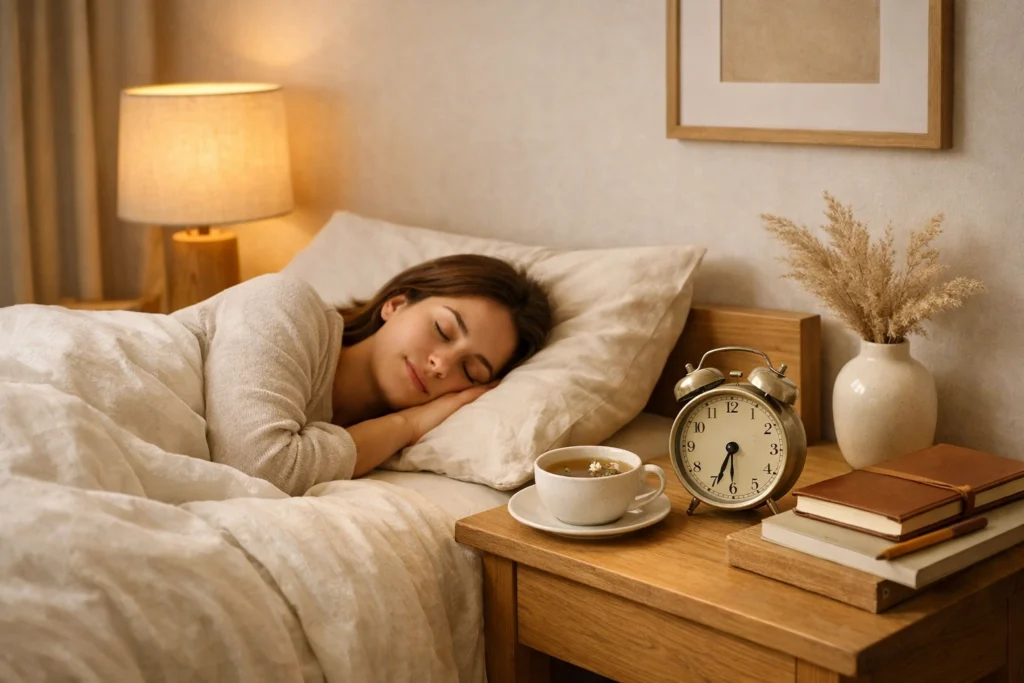
Digital devices are nervous system kryptonite. Your phone’s blue light suppresses melatonin production just like harsh fluorescent lighting. Every notification triggers a dopamine spike—a mini-stress response. Checking your phone creates habit loops that fragment your attention and escalate anxiety. The constant possibility of connection prevents genuine mental rest. Most people carry their phones everywhere, including bed. This means your brain never fully disengages from work, social comparison, and information overload.
The swap requires courage but delivers profound results: create completely screen-free zones in your home. Ideally, your entire bedroom becomes device-free. Remove WiFi-enabled devices. Create a charging station in a separate room—perhaps the kitchen or bathroom. Make this a firm boundary. No exceptions. This single mindful home swap addresses the root of modern anxiety: perpetual availability. Without phones present, your nervous system genuinely unwinds. You can’t check work emails. You can’t scroll social media. You can’t compare yourself to others. Your mind finally rests. Most people report sleep improvements within one week. Anxiety decreases noticeably. Relationships improve because you’re actually present with loved ones. The cost? Zero dollars. The benefit? Immeasurable. This is one of the most powerful slow living home ideas available. It requires no money, only intention.
Swap #3: Artificial Scents → Natural Essential Oils

Your sense of smell directly accesses your limbic system—the part of your brain governing emotions and memories. This is why scent is so powerful. Commercial air fresheners contain synthetic chemicals designed to mask odors rather than address them. These chemicals irritate your olfactory system subtly. They trigger low-level inflammation. They disrupt your endocrine system. Your body registers them as potential toxins. This creates subtle but continuous stress.
The swap is aromatic and affordable: replace commercial air fresheners with diffused essential oils. Lavender calms anxiety and improves sleep. Cedarwood grounds nervous energy. Frankincense supports meditation and presence. Chamomile soothes tension. Each oil costs $10–20 per bottle and lasts months. Use a ceramic diffuser if possible—they’re gentler than ultrasonic models. Alternatively, saturate cotton balls with pure essential oil and place them in small spaces. The scent difference is dramatic. Natural aromatics don’t assault your olfactory system; they gently support it. They feel authentic. Your body recognizes them as safe. This natural home products swaps addresses both emotional state and physical health. Your home smells genuinely pleasant rather than chemically masked. Your nervous system relaxes in response to authentic scent.
Swap #4: Cluttered Rooms → Clear and Open Spaces
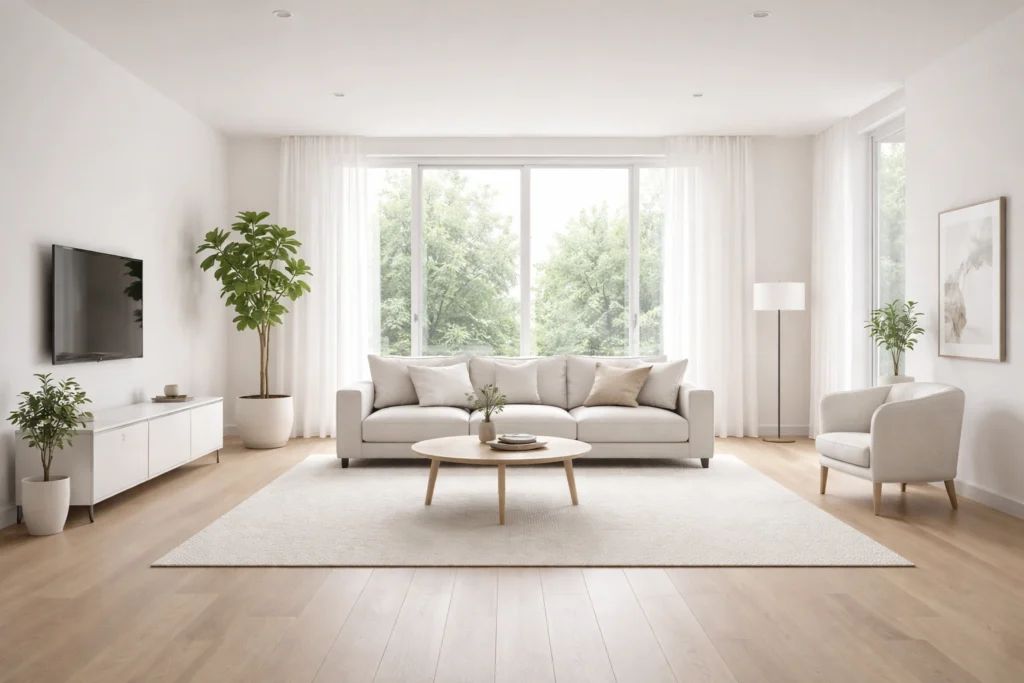
Visual clutter creates cognitive load. Each visible object demands unconscious processing. Your brain expends energy registering, categorizing, and responding to every item in your visual field. When your home contains hundreds of unnecessary objects, your mind stays partially occupied even when you’re trying to relax. This prevents genuine rest. It escalates background anxiety. Studies show that cluttered environments increase cortisol production and decrease focus. People in cluttered spaces report higher stress, lower productivity, and worse mood. Conversely, clutter-free living correlates with better mental health, improved sleep, and decreased anxiety.
The swap requires courage but delivers powerful results: declutter ruthlessly. Go through each room and ask one simple question: “Does this serve me?” If the answer is no, donate it, sell it, or discard it. Keep surfaces mostly bare. Organize remaining items in closed storage—drawers, cabinets, shelves with doors. Open space literally feels lighter. It allows your eye to rest. Your mind settles when your environment isn’t visually competing for attention. This is core to minimalist home swaps. You’re not aiming for sterile emptiness. You’re aiming for intentional curation. Every remaining item should be something you genuinely love or actively use. This low waste home swap also reduces consumption. You stop bringing unnecessary items home. You stop replacing things just to have them. You purchase less. Your wallet and the planet both benefit. Most people report surprising emotional relief once they declutter. Your mind becomes clearer. Your home becomes sanctuary rather than storage unit.
Swap #5: Loud Background Noise → Calm and Quiet Sounds

Modern homes contain constant auditory stimulation. The television hums in the background. Appliances whir and beep. Traffic noise penetrates walls. Neighbors’ sounds bleed through. This perpetual noise keeps your nervous system activated. Your brain never fully relaxes because it’s always processing auditory input. Silence becomes unfamiliar. Many people find genuine quiet uncomfortable initially because they’ve habituated to constant noise.
The swap is simple but transformative: replace constant background noise with silence or gentle soundscapes. If silence feels too uncomfortable initially, try nature sounds. Rainfall soothes many people. Forest ambience feels grounding. Ocean waves calm anxiety. These natural sounds activate your parasympathetic nervous system without demanding cognitive engagement. They provide gentle auditory input without stress. Implement this by creating “quiet hours” in your home. Perhaps mornings before 8 AM become device-free and silent. Perhaps evenings after 7 PM involve no screens or music. Perhaps your bedroom remains perpetually quiet. Start small—even one quiet hour daily makes a difference. This slow living lifestyle at home element costs nothing and requires only intention. Within days, you’ll notice your nervous system responding to genuine quiet. Your mind settles. Your anxiety decreases. You sleep better. This is sustainable home swaps at its most powerful—you’re not purchasing anything, just removing stress.
Swap #6: Rushed Mornings → Slow and Intentional Routines

Your morning sets your nervous system’s tone for the entire day. If you wake rushed, check your phone immediately, skip breakfast, and hurry out the door, your sympathetic nervous system activates before you’ve even left home. You’re already stressed. Your cortisol is already elevated. This shapes everything that follows. You’re more reactive, more anxious, more easily triggered throughout the day. Conversely, if you start with daily home routines that prioritize intentional living, your entire day transforms.
The swap requires earlier waking but delivers massive returns: create a slow morning ritual. Wake 30 minutes earlier than usual. Move slowly and deliberately. Avoid your phone for the first hour. Practice deep breathing—even five minutes. Stretch gently. Hydrate with water. Sip tea or coffee mindfully before checking messages. Journal three thoughts. Meditate if that resonates with you. These slow home routines establish parasympathetic activation before stress hits. You’re literally training your nervous system to start in rest mode. Within weeks, this becomes your baseline. You’re calmer throughout the day because you started calmly. You handle challenges more gracefully. You’re less reactive. This single mindful consumption practice—the conscious decision to begin your day intentionally—reshapes your entire stress response. It costs nothing. It requires only time. It delivers profound benefits.
Swap #7: Plastic Storage → Natural Wood or Glass Containers

Your home contains countless plastic items—storage bins, food containers, appliances, furniture components. Plastic carries multiple problems. It leaches chemicals into food and air. It feels cheap, artificial, inauthentic. Subconsciously, your nervous system registers plastic as lower-quality and less trustworthy. It doesn’t feel grounding. It doesn’t feel nourishing. Natural materials—wood, glass, ceramic—feel authentic. They feel safe. Your body recognizes them as genuinely nourishing.
The swap happens gradually over time: replace plastic storage and containers with natural alternatives. Store pantry items in glass jars instead of plastic containers. Use wooden shelving instead of plastic bins. Choose ceramic mugs instead of plastic cups. Switch to glass food storage containers. These eco-friendly home alternatives cost slightly more upfront but last longer and feel better. The payoff isn’t just aesthetic. It’s neurobiological. Your nervous system registers authentic materials as genuinely safe. This supports deeper relaxation. This is part of eco-conscious choices and sustainable habits that simultaneously support your well-being and planetary health. As you interact with these natural materials daily, your nervous system receives continuous signals of authenticity and safety. This supports calm and cozy home creation. You’re not just organizing differently; you’re literally changing the energetic quality of your space.
Swap #8: Busy Decor → Neutral and Earthy Tones
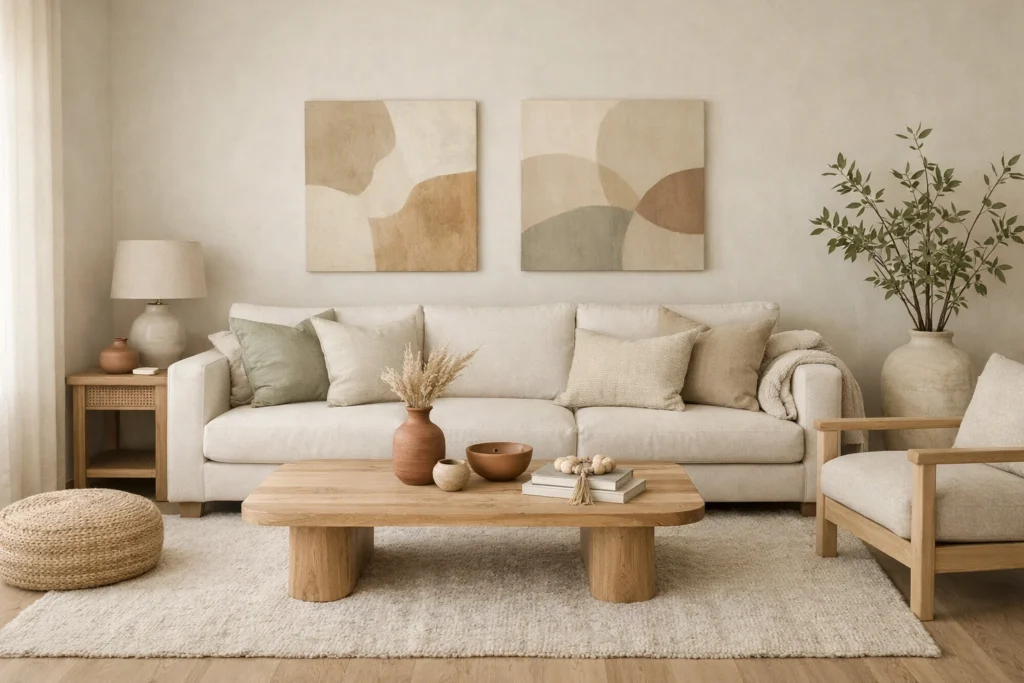
Your home’s color palette directly affects your emotional state. Busy patterns, bright colors, and visual complexity create subtle overstimulation. Your eye is constantly drawn to different areas. Your brain is constantly processing visual information. This prevents visual rest. It escalates low-level anxiety. Conversely, neutral and earthy tones create visual peace. Your eye can rest. Your mind can settle.
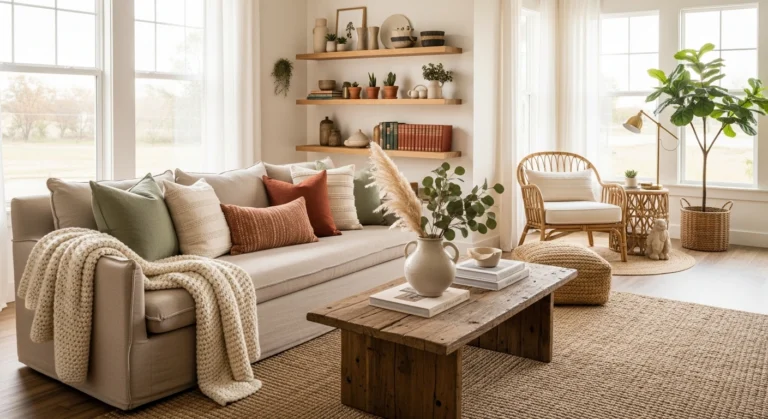
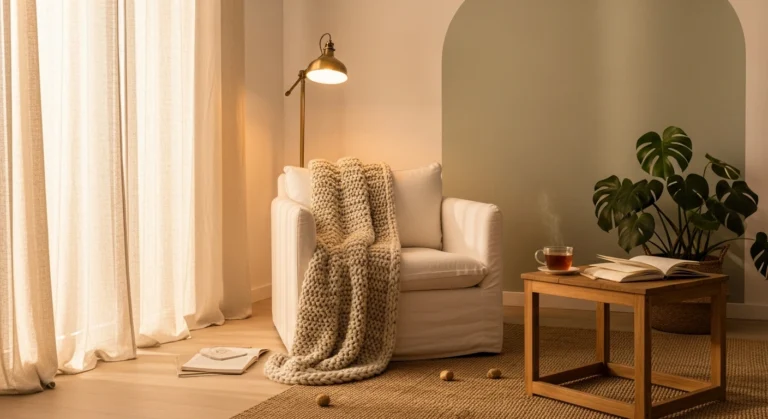
The swap involves gradually shifting your color palette: move toward neutrals—soft whites, warm creams, soft grays, warm beiges—and earthy tones like sage green, terracotta, warm browns, and muted blues. These colors create visual restfulness. Layer different textures for depth and interest without stimulation. Use linen, wool, natural wood, and stone. Keep walls 70–80% calm, reserving accent pieces for meaningful art. You don’t need to repaint everything. Start by swapping artwork, throw pillows, blankets, and textiles gradually. This intentional living home idea transforms your visual environment without major expense. Within weeks, you’ll notice your nervous system responding to the calmer palette. You feel more at ease. Your anxiety decreases. Your home feels genuinely restorative. This is calm home environment ideas in action. Your visual environment is literally supporting home energy balance and mental well-being at home.
Swap #9: Late-Night Caffeine → Calming Herbal Teas
Caffeine disrupts sleep by blocking adenosine receptors. Adenosine is the neurotransmitter that signals your body it’s tired. Caffeine after 2 PM interferes with sleep even if you don’t realize it. Many people struggle with insomnia not because they have insomnia, but because they’re consuming caffeine too late. Evening coffee creates artificial alertness that persists even after you stop drinking it. This prevents genuine sleep. This perpetuates anxiety and exhaustion.
The swap is delicious and supportive: replace evening caffeine with calming herbal alternatives. Chamomile relaxes tension and supports sleep. Passionflower reduces racing thoughts. Valerian root deepens sleep. Magnolia bark calms anxiety. Ashwagandha adaptogenic blend supports stress resilience. These herbs support nervous system regulation without the crash of caffeine. Ritual matters too—warm mug, both hands, intentional sipping. This becomes part of your evening wind-down routine. The sensory experience of warm liquid, aromatic steam, and gentle taste signals your body it’s time to rest. Herbal teas cost $0.50–1.50 per cup. They’re affordable and immediately accessible. This simple living home swaps directly improves sleep quality and daytime anxiety levels within one week. Most people report falling asleep easier, sleeping deeper, and waking more refreshed.
Swap #10: Chaotic Home Energy → Simple Daily Reset Rituals
Homes develop energetic momentum. If you end days chaotic—dishes piling up, laundry scattered, papers everywhere—that chaos persists into tomorrow. You wake into disorder. This prevents calm activation. Your nervous system starts the day already stressed. Conversely, if you end each day with a simple reset ritual, you wake into order and intentionality. This supports calm activation.
The swap is simple but powerful: create a 10–15 minute daily reset ritual. Tidy one space—perhaps the kitchen or bedroom. Light a candle. Journal three thoughts from your day. Stretch gently. Take three deep breaths. This ritual signals closure to your nervous system. It says “today is complete; tomorrow begins fresh.” Consistency matters more than duration. A 10-minute ritual performed daily is more powerful than a 60-minute ritual done once a week. This becomes part of your daily home routines and slow living home ideas. Within weeks, this ritual becomes non-negotiable. Your nervous system depends on it. Your sleep improves. Your mornings feel fresher. This is quality over quantity thinking applied to your home environment. You’re not trying to maintain a perfect house. You’re creating psychological structure through simple, consistent action. This supports home energy balance and conscious lifestyle changes that genuinely improve your daily experience.
Budget-Friendly Slow Living Home Swaps
You don’t need wealth to implement slow living home swaps. The most powerful changes cost nothing. They require intention, not money. Start with free shifts: decluttering (free), rearranging furniture (free), creating screen-free zones (free), establishing morning and evening rituals (free). These deliver profound results. Then gradually add affordable elements: LED bulbs ($5–10 each), essential oils ($10–20 per bottle, lasting months), herbal teas ($0.50–1.50 per cup).
The beauty of slow living home ideas is that effectiveness isn’t correlated with cost. Harsh lighting is expensive but stressful. Warm lighting is inexpensive and restorative. Fancy decluttering systems are expensive and often counterproductive. Simple decluttering is free and transformative. Prioritize based on your biggest stressors. If insomnia plagues you, prioritize bedroom lighting and phone removal. If anxiety peaks during work-from-home hours, tackle clutter and background noise first. If depression is your struggle, implement morning rituals and outdoor light exposure. This targeted approach maximizes impact per dollar spent. Most people implement sustainable home swaps for under $200 total and experience life-changing results. You don’t need to purchase everything at once. You don’t need expensive products. You need intention applied consistently.
How to Start Slow Living One Room at a Time
Attempting all ten slow living home swaps simultaneously overwhelms most people. Decision fatigue sets in. Implementation falters. Motivation fades. Instead, choose one room—typically bedroom or living room—as your test ground. Implement all ten swaps systematically over 2–3 weeks. Notice what shifts in your mood, sleep, anxiety, and overall calm. Once that room feels genuinely restorative, expand to other spaces.
This gradual approach prevents overwhelm. It allows you to adapt each swap to your specific preferences and needs. You’ll develop intuition about which changes matter most for your nervous system. Perhaps lighting matters most for you. Perhaps decluttering is most impactful. Perhaps phone removal transforms everything. This personalization makes changes sustainable. You’re not following generic advice. You’re discovering what genuinely supports your mental well-being at home. Within 4–6 weeks, you’ll have one completely transformed room. Your nervous system will have experienced genuine healing. This success makes expanding to other rooms feel natural rather than effortful. You want to extend this calm everywhere. This is how slow living lifestyle at home becomes integrated into your actual life rather than remaining an abstract concept.
Common Slow Living Mistakes to Avoid
Many people mistake slow living home swaps for aesthetic upgrades. They purchase expensive furniture instead of removing stimulation. They buy designer minimalist decor. They focus entirely on how their home looks rather than how it feels. This approach fails. A beautiful cluttered home is still stressful. An expensive but harsh-lit room still disrupts sleep. Aesthetics matter less than nervous system support.
Other common mistakes include implementing swaps inconsistently, then abandoning them after a week when results don’t appear magically. Some people expect rapid transformation from a single change. Others focus entirely on decor while ignoring behavioral changes—continuing phone use in bed, continuing caffeine late, continuing rushed mornings. They wonder why their environment change didn’t fix their anxiety. The answer: slow living home swaps work most powerfully when environmental design and behavioral changes work together. Your home isn’t a showroom to impress others. It’s a healing space to support your nervous system. When you approach it this way, every swap becomes meaningful. Consistency matters infinitely more than perfection. Small, consistent changes compound into major transformation. This is eco-conscious choices meeting mindful consumption in your daily life. You’re not buying more. You’re intentionally removing what doesn’t serve. You’re building habits that support calm and cozy home genuinely.
How Long It Takes to Feel the Calming Effects
Individual timelines vary based on starting point and implementation consistency. Someone sleeping in a harsh-lit bedroom with constant phone use will see faster results than someone with fewer stressors. However, general patterns emerge across most people implementing slow living home swaps.
Sleep improvements appear first—usually within 3–7 days. If you swap to warm bedroom lighting and remove your phone, you’ll likely sleep better almost immediately. Your nervous system responds rapidly to these fundamental shifts. Daytime anxiety typically softens within two weeks. You notice you’re less reactive. You handle frustrations more gracefully. You feel more baseline calm. Deeper psychological changes—genuine comfort, reduced background dread, improved mood—typically emerge within 4–6 weeks of consistent practice. You stop feeling like you need to escape your home. You actually enjoy being there. This is nervous system regulation deepening. This is mental well-being at home becoming reality rather than concept.
| Timeline | Expected Changes | What to Expect |
|---|---|---|
| Days 1-7 | Sleep quality improves | Falling asleep easier, sleeping deeper |
| Weeks 2-3 | Daytime anxiety decreases | Less reactivity, more patience, baseline calm |
| Weeks 4-6 | Deeper psychological shifts | Genuine comfort, mood improvement, genuine peace |
| Weeks 6-12 | Integration and expansion | Desire to extend changes throughout home |
| 3-6 months | Complete lifestyle shift | New baseline, comfort with stillness, reduced stimulation tolerance |
Frequently Asked Questions About Slow Living Home Swaps
What if I live with people who don’t want slow living changes?
Start with your personal space—your bedroom, your workspace corner. You don’t need household consensus to implement changes in your own room. Invite others to experience the differences rather than demanding compliance. Many resistance dissolves once people sleep better and feel calmer. You become living proof that these changes work. Within weeks, others often request similar changes for their spaces. Compromise when needed: screen-free bedrooms for everyone, quiet hours in evening, shared calm rituals. You can’t control others’ choices, but you can control your own environment.
Can slow living home swaps actually reduce anxiety?
Environmental design doesn’t replace therapy or medication if you need those. However, cumulative sensory shifts significantly reduce daily anxiety for most people. Your nervous system responds measurably to safety signals. Slow living home swaps literally deliver those signals continuously. Research shows that intentional environments reduce anxiety symptoms by 30–40% when implemented consistently. Many people reduce medication doses once their environment genuinely supports calm. Others skip therapy sessions less frequently because their baseline anxiety is lower. Your home becomes part of your treatment plan—not instead of professional help, but alongside it.
Should I swap everything simultaneously?
No. Gradual implementation prevents decision fatigue and allows sustainable integration. Pick your highest-stress room. Implement all ten swaps there over 3–4 weeks. The results justify expanding further. You’ll develop momentum. You’ll see proof that changes work. This motivates continued effort. Simultaneous implementation often backfires because you get overwhelmed, revert to old patterns, and conclude the approach doesn’t work. Slow, consistent change proves more sustainable and ultimately more transformative.
What if I can’t afford natural materials?
Start with free changes: decluttering, phone removal, lighting adjustments (affordable bulbs), establishing silence. Natural materials matter but intention matters infinitely more. Twenty dollars worth of thoughtful changes outperforms five hundred dollars in disconnected purchases. You can gradually shift to natural materials over months and years. Begin with inexpensive wood or glass items. Gradually upgrade as budget allows. Your nervous system benefits from the intention behind changes far more than from the cost of materials.
How do I maintain slow living home swaps long-term?
Treat them as lifestyle, not project. Your daily reset ritual becomes non-negotiable. Screen-free zones remain protected. Lighting stays warm. These shifts require minimal ongoing effort once established. They become baseline rather than special effort. The key is consistency. A slightly less perfect home maintained consistently beats a perfect home maintained through willpower. Build systems that make the right choice the easy choice. Keep your phone charging station outside your bedroom. Store tea in an obvious location. Keep your clutter bin visible. Make sustainable habits automatic rather than effortful.
Final Thoughts: Your Calm Awaits
The path toward genuine calm begins at home. These ten slow living home swaps aren’t trendy decorating tips. They’re nervous system medicine delivered through intentional environmental design. Your brain responds to safety signals. Your body craves genuine rest. Your nervous system hungers for slowness. When your home delivers these fundamental needs, everything shifts.
Your sleep deepens. Your anxiety decreases. Your relationships improve. Your productivity increases. Your mood stabilizes. You feel genuinely at home rather than constantly stressed. You stop needing to escape. You start choosing to be present. This is what genuine calm home environment ideas create. This is what slow living home ideas deliver. The transformation doesn’t happen through expense or perfection. It happens through intention applied consistently. Start small. Start now. Choose one room. Implement one swap. Notice what shifts. Your calm is waiting. Your nervous system is ready. Your home can become the healing sanctuary you deserve.


One Comment