
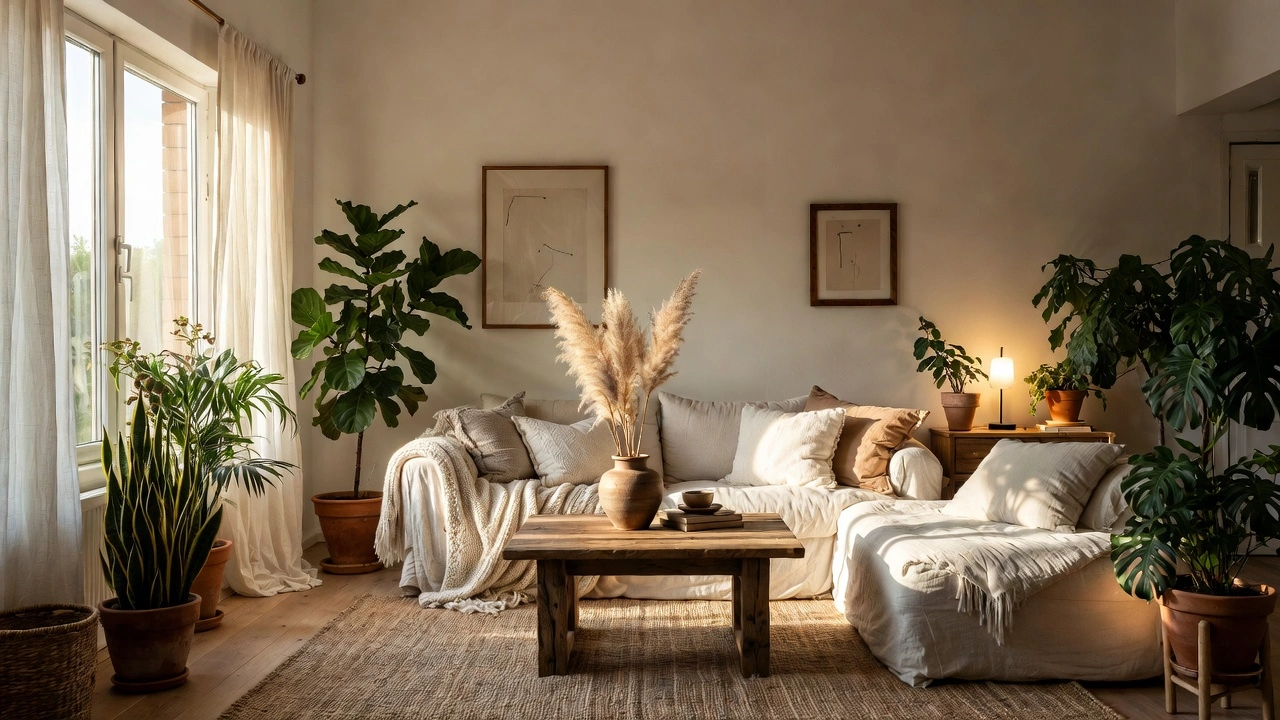
How To Start A Slow Living Home — One Room At A Time
Modern life moves at an exhausting pace. Your inbox overflows, notifications never stop, and the world demands constant attention. Yet your home should offer something fundamentally different—a sanctuary where time stretches and intentional lifestyle choices take root. Creating a slow living home isn’t about perfection or expensive renovations. It’s about designing spaces that encourage mindfulness at home and genuine connection with your surroundings. This transformation happens gradually, one thoughtful room at a time, building sustainable habits that align with your deepest values. You don’t need to overhaul everything overnight. Small, deliberate changes compound into profound shifts in how you experience daily life.
The beauty of starting a slow living home lies in its accessibility. You won’t need a designer’s budget or magazine-worthy aesthetic. Instead, you’ll cultivate spaces reflecting authentic needs and promoting wellness-focused design principles. This room-by-room approach prevents overwhelm while allowing financial flexibility. Each completed space builds momentum and confidence for the next transformation. Whether you’re exhausted by clutter, seeking more calming spaces, or simply craving a home sanctuary that truly feels restful, this comprehensive guide provides practical strategies. You’ll discover how to declutter with intention, create sensory comfort, and maintain your peaceful environment long-term without sacrificing functionality or personality.
What Does Slow Living at Home Really Mean?
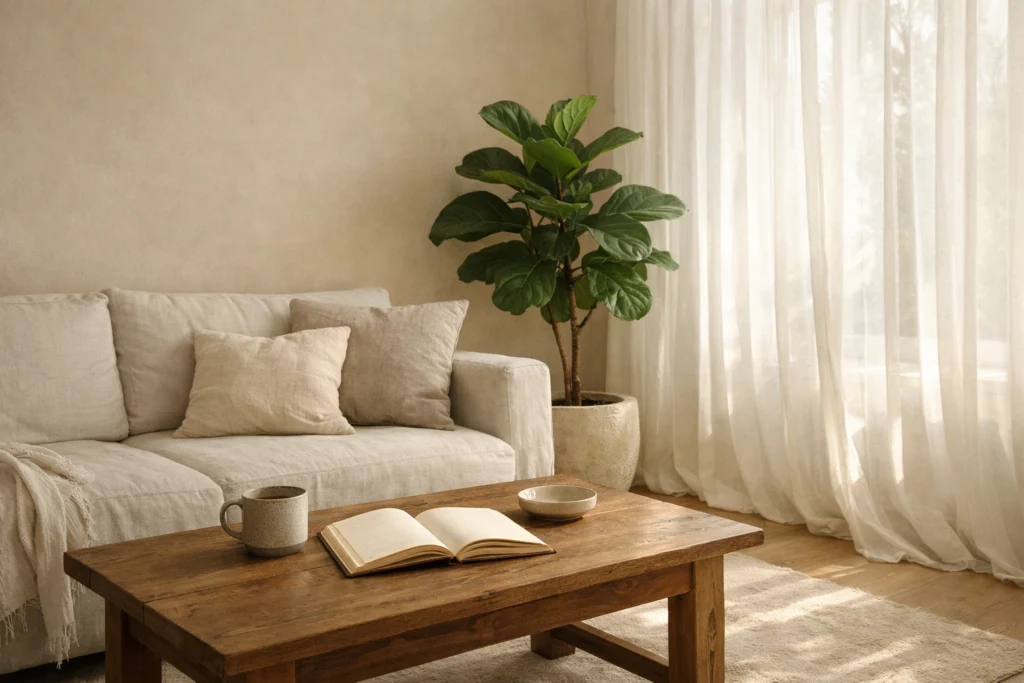
Slow living emerged as a cultural countermovement to relentless hustle culture. It prioritizes quality over quantity and presence over productivity. When applied to home environments, slow living home decor focuses on creating intentional living spaces that reduce sensory overload and foster genuine connection. Your surroundings should support rather than stress you. This philosophy rejects the constant acquisition of possessions and instead celebrates quality over quantity in everything from furniture to daily routines. A slow lifestyle interior encourages you to pause, breathe, and engage fully with the present moment rather than rushing through life on autopilot.
The principles extend beyond aesthetics into how you interact with your environment. Grounded living means choosing items with purpose and maintaining spaces that serve your well-being. It’s about decluttering habits that create breathing room and mindful home organization that makes maintenance effortless. Your slow living home becomes a tool for better living—a physical manifestation of your values. This isn’t minimalism for minimalism’s sake or following trends blindly. Instead, it’s a deeply personal journey toward creating nature-inspired interiors that feel authentic and nourishing. The philosophy recognizes that your environment actively shapes mood, energy levels, and overall mental health.
you may also like this:How to Create a Slow Morning Routine That Brings Peace and Clarity to Your Day
Why your home environment matters
Neuroscience confirms what you’ve probably sensed intuitively—environments profoundly impact emotional and cognitive states. Studies from Princeton University demonstrate that physical clutter competes for attention and decreases performance on cognitive tasks. Your brain processes every visible object in your peripheral vision, creating constant low-level stress even when you’re not consciously aware of the mess. Researchers found that participants showed decreased cortisol levels and improved focus in organized, clutter-free home ideas implemented spaces. This scientific validation explains why your calm home interior design directly influences mental clarity, sleep quality, and overall well-being. Environment isn’t passive backdrop—it’s an active participant shaping your daily experience.
The implications extend to emotional regulation and relationship quality too. Environmental psychologists note that chaotic spaces increase irritability and conflict between household members. Conversely, serene home design with natural home aesthetic elements promotes emotional stability and prosocial behavior. Your slow living home becomes protective factor against anxiety and depression. The natural light filtering through uncluttered windows regulates circadian rhythms and supports hormone balance. Indoor plants purify air while providing biophilic connection to nature that humans inherently crave. Even subtle changes like switching to warm lighting and incorporating tactile fabrics signal safety to your nervous system. These environmental factors accumulate into significant differences in how you feel moving through daily life.
Benefits of a slower, intentional space
Intentional living spaces reduce decision fatigue dramatically. When every item has a designated home and your environment flows logically, you spend less mental energy on trivial choices. This cognitive bandwidth becomes available for creativity, problem-solving, and meaningful activities. Research published in the Journal of Environmental Psychology found that people living in mindful home styling environments reported 32% less anxiety and 28% better sleep quality compared to those in cluttered spaces. The relaxed home atmosphere literally changes your brain chemistry by reducing stress hormones and increasing feel-good neurotransmitters like serotonin. You’ll notice improved mood stability and greater emotional resilience when external chaos doesn’t constantly trigger internal stress responses.
Financial benefits emerge naturally from slow living home principles too. When your space already feels complete and satisfying, impulse purchases decrease significantly. You stop seeking external fixes for internal dissatisfaction. The comfort-focused interior ideas you’ve implemented satisfy the nesting instinct that retailers exploit. Consumer psychology research shows that people living in cozy minimalist home environments spend 40% less on home goods annually because genuine contentment reduces the perceived need for constant acquisition. Your sustainable home decor ideas often involve repurposing existing items or choosing handmade decor that lasts decades rather than chasing fast-furniture trends. These spending shifts compound over years into substantial savings while simultaneously reducing environmental impact.
Why Transform Your Home One Room at a Time?
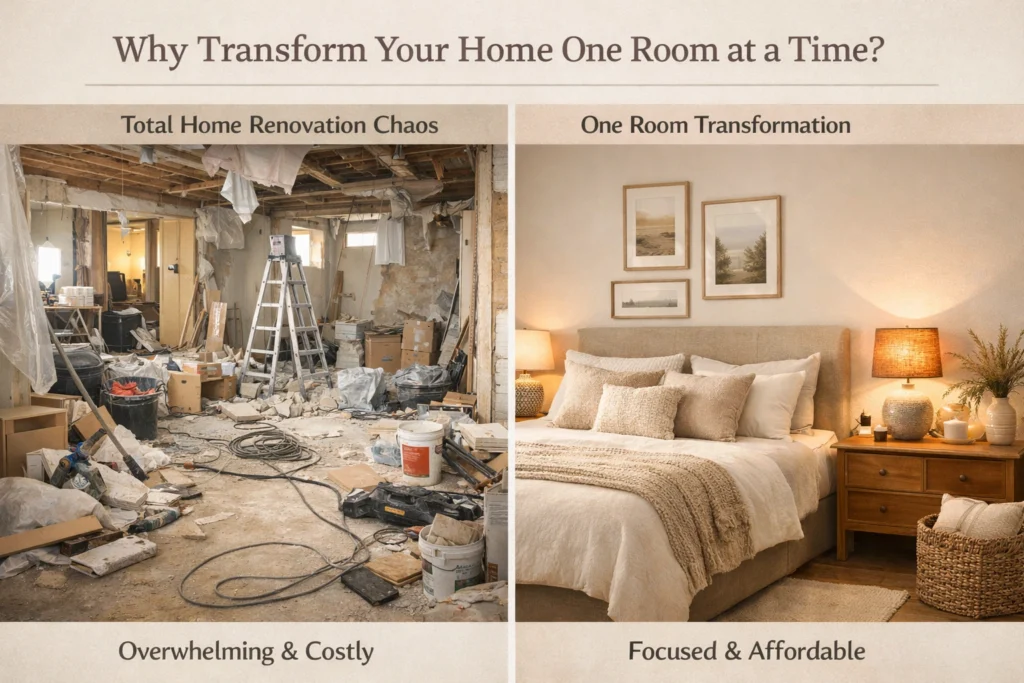
Whole-house renovation projects frequently stall midway through completion. The initial enthusiasm crashes against reality—escalating costs, decision fatigue, and the chaos of living in a construction zone. Magazine makeovers gloss over the exhausting process of simultaneous transformation. A room-by-room approach respects your energy, schedule, and budget constraints. You’ll experience immediate wins that build momentum rather than drowning in an endless project that never feels finished. This incremental strategy allows you to learn from each space before tackling the next. Maybe you discover that soft neutral home decor works beautifully in bedrooms but feels too sterile in living areas. Adjusting your approach becomes easier when you’re not committed to a single aesthetic throughout your entire home.
The psychological advantages prove equally important. Completing one room provides tangible accomplishment that fuels motivation for continued progress. You’ll actually use and enjoy each finished space rather than living in perpetual renovation limbo. This method also honors the reality that your vision evolves through the process. What you thought you wanted initially might shift after living with certain changes. Starting your slow living home transformation gradually allows organic evolution rather than forcing adherence to a rigid plan that may not ultimately suit your needs. Flexibility becomes asset rather than failure when you embrace room-by-room progression.
Budget-friendly approach
Financial stress contradicts every principle of slow living home philosophy. Going into debt to create a peaceful sanctuary makes zero sense when the resulting financial anxiety destroys that peace. A room-by-room transformation allows strategic budgeting without credit card dependence. You might allocate $500 for the bedroom this month, then save for three months before tackling the living room with a $1,200 budget. This spacing prevents the financial strain that derails many home improvement plans. You can shop sales and secondhand options without desperation purchases. The patience required actually reinforces intentional lifestyle values rather than working against them.
| Budget Comparison | Whole House | One Room at a Time |
|---|---|---|
| Initial Investment | $8,000-15,000 | $500-2,000 |
| Financing Needed | Usually | Rarely |
| Quality Per Item | Compromised | Higher |
| Stress Level | Extreme | Manageable |
| Completion Time | 6-18 months | 1-3 months per room |
Building sustainable habits
Behavioral psychology demonstrates that habits form through repetition in consistent contexts. When you transform your bedroom into a home sanctuary, that specific space becomes environmental cue for new behaviors. You practice slow mornings routine in that room until waking peacefully becomes automatic. The space itself triggers the desired behavior through association. Attempting this habit formation across multiple changing environments simultaneously dilutes the effect. Your brain struggles to establish clear context-behavior links when everything shifts at once. Sequential room transformation allows habit consolidation before introducing new environmental variables.
Step 1 — Start With a Vision for Your Slow Living Home
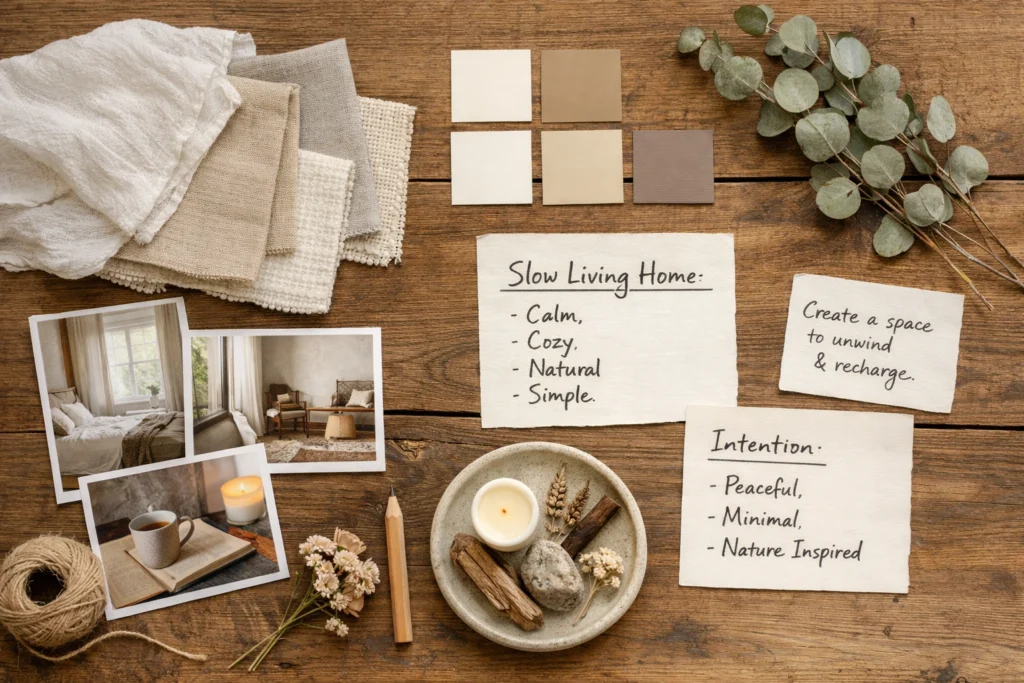
Jumping into purchases without clear vision leads to mismatched aesthetics and buyer’s remorse. You need a emotional compass guiding decisions before choosing paint colors or furniture. This visioning process doesn’t require artistic skills or design vocabulary. It’s deeply personal reflection on how you want to feel in your space. Close your eyes and imagine entering your ideal home after a long day. What sensations arise immediately? Do you feel tension releasing from your shoulders? Does warmth envelop you? Maybe you sense lightness and possibility. These emotional responses become your north star throughout the transformation process. Every subsequent decision should move you closer to that desired feeling.
Defining how you want your home to feel
Start by writing descriptive words capturing your ideal home atmosphere. Don’t edit yourself or worry about sophistication—if “snuggly” resonates, write it down. You might list peaceful, energizing, welcoming, sophisticated, playful, or grounded. These adjectives become filters for every choice ahead. A person choosing “peaceful” and “grounded” will gravitate toward nature-inspired interiors with eco-friendly decor elements. Someone selecting “energizing” and “playful” might incorporate brighter accents and eclectic vintage finds. Neither approach is wrong—they’re simply different authentic expressions. Your slow living home should reflect your personality and values, not someone else’s aesthetic preferences copied from social media.
Choosing calming colors and textures
Neutral color palette choices dominate slow living home decor for neurological reasons. Bright, saturated colors demand attention and processing power from your visual cortex. Your brain must constantly interpret these stimulating hues, creating low-level mental activity that prevents full relaxation. Soft, unsaturated tones like warm whites, gentle grays, dusty terracotta, and muted sage allow visual rest. These colors recede rather than advance, creating psychological space for your mind to settle. This doesn’t mean your home must feel sterile or boring. Layering multiple neutrals creates sophisticated depth—cream walls with taupe furniture and charcoal accents provide plenty of visual interest without overwhelming stimulation.
| Calming Color | Emotional Effect | Best Room |
|---|---|---|
| Warm White | Clean, peaceful | Any room |
| Soft Gray | Sophisticated, calm | Living room, bedroom |
| Terracotta | Grounding, warm | Kitchen, dining |
| Dusty Sage | Restorative, natural | Bedroom, bathroom |
| Cream | Cozy, welcoming | Any room |
Setting realistic expectations
Your slow living home won’t resemble curated Instagram feeds immediately—or possibly ever. That’s genuinely liberating once you accept it. Social media shows carefully styled moments, not the reality of daily living. Professional photographers spend hours staging single shots with perfect lighting. You’re creating a functional home for real life, not a set for photoshoots. Children’s art projects will accumulate on refrigerators. Mail piles will appear on counters. Books will stack bedside. These signs of life don’t contradict slow living home decor principles—they embody them. Embracing imperfection and grounded living means accepting that beauty exists within authentic living, not despite it.
Step 2 — Declutter With Intention

American households contain approximately 300,000 items on average according to consumer research studies. That staggering number represents years of accumulated possessions, many serving no functional or emotional purpose. Decluttering habits form the essential foundation for any slow living home transformation. You cannot create calming spaces when visual clutter competes for attention everywhere you look. This decluttering differs from aggressive minimalism that treats possessions as inherently problematic. Instead, it’s thoughtful curation keeping items that genuinely add value while releasing the excess that weighs you down. Each possession requires maintenance, storage, and mental accounting. Reducing sheer quantity frees energy and attention for things that truly matter.
Mindful organization tips
Organization systems fail when they contradict natural behavior patterns. You won’t maintain a complex scheme requiring perfect discipline regardless of how aesthetically pleasing it looks online. Design systems working with your habits rather than against them. If you always drop keys on the counter by the door, install an attractive bowl there rather than fighting to hang them on a hook across the room. If you read magazines in bed, add a bedside basket for them rather than insisting they live in another room. Your mindful home organization should make maintaining order easier, not harder.
Step 3 — Create Comfort Through Sensory Design
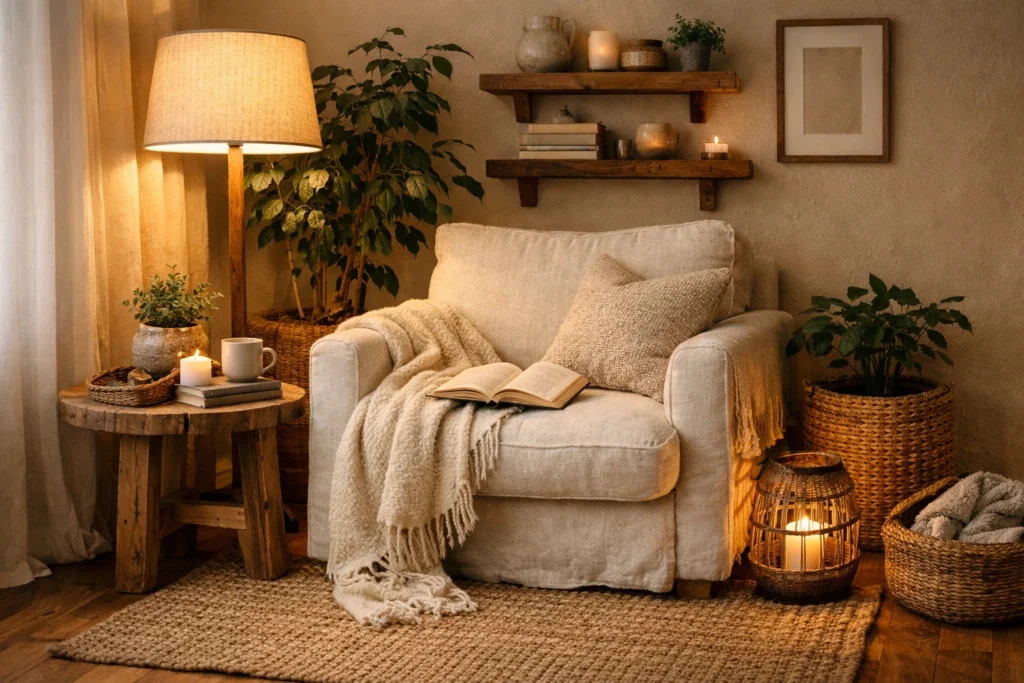
Visual aesthetics dominate most home design conversations, but humans experience environments through all five senses simultaneously. Your slow living home should engage smell, touch, sound, and even taste alongside sight. Sensory comfort comes from thoughtful multisensory design that many people overlook entirely. Consider how spaces smell—are you greeted by stale air or fresh linen scent? What sounds characterize each room—harsh echoes or soft absorption? Temperature matters enormously for comfort but rarely gets design attention. Layering sensory considerations creates peaceful home environments that feel noticeably different from typical spaces even if observers can’t articulate why.
Lighting that promotes calm
Overhead fluorescent lighting assaults your nervous system with harsh, flat illumination. Those fixtures belong in hospitals and offices, not homes designed for relaxation corner cultivation. Layer lighting instead through multiple sources at different heights and intensities. Floor lamps, table lamps, sconces, and candles create dimensional lighting resembling natural conditions. Humans evolved spending days outdoors where light comes from above, bounces off surfaces, and varies by time and weather. Replicating this complexity signals safety to your brain while single-source overhead lighting feels institutional and stress-inducing.
Natural materials and textures
Synthetic materials feel lifeless compared to their organic counterparts. There’s measurable physiological response to touching wood versus plastic even when visual appearance seems similar. Your nervous system recognizes and responds to natural materials at subconscious levels. These materials also age beautifully, developing patina and character over time rather than simply deteriorating. A wooden cutting board gains soul through years of use. Plastic just looks worn and shabby. This aging process aligns with sustainability values since you’re not discarding items as they show use signs—you’re cherishing them.
Cozy elements that invite relaxation
Comfort signals safety to your primitive brain. When environments feel physically comfortable, your nervous system downregulates stress responses allowing genuine relaxation. Add elements that invite lingering—plush throw pillows in seating areas, soft area rugs under bare feet, weighted blankets on beds. These cozy textures communicate that this space welcomes rest rather than demanding performance. Temperature control matters enormously too. Drafty rooms prevent relaxation regardless of aesthetic beauty. Add space heaters, ceiling fans, or improved window treatments maintaining ideal climate. Your home sanctuary should feel physically comfortable before aesthetic concerns.
Room-by-Room Slow Living Transformation Guide
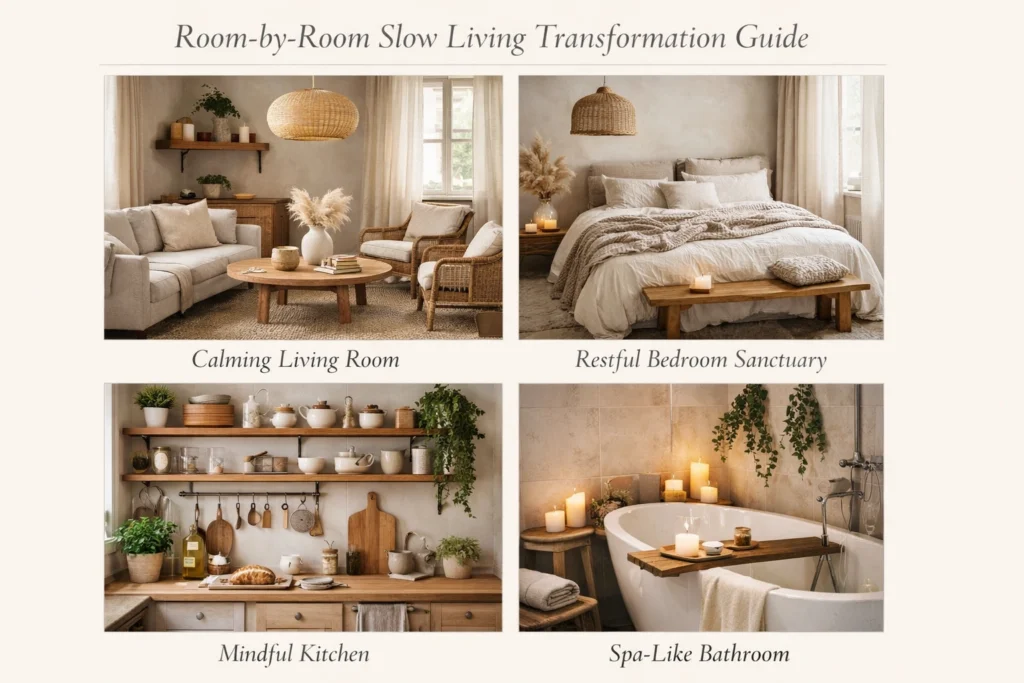
Each room in your home serves distinct functions and deserves tailored approaches. Your bedroom requirements differ dramatically from kitchen needs. This section provides specific guidance for major room types, helping you apply broad principles to particular spaces. Remember that your slow living home should reflect personal preferences rather than rigid rules. Adapt these suggestions to suit your actual lifestyle and household composition. A couple without children has different needs than a family of five. Someone working from home requires different workspace solutions than someone commuting daily. Let your real-life patterns inform decisions rather than forcing your life into idealized scenarios that don’t match reality.
Living Room — Designing a calm gathering space
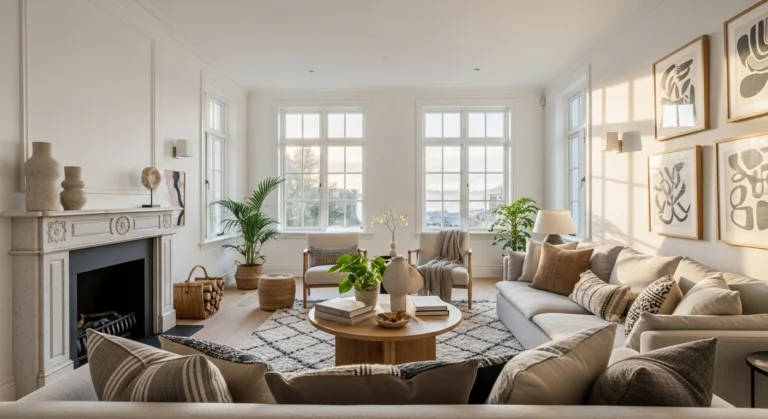
Living rooms anchor social connection within homes. These spaces deserve design prioritizing conversation and community over entertainment electronics. Arrange seating facing each other rather than all oriented toward television screens. This subtle shift transforms interaction patterns dramatically. People naturally converse more when physically facing each other versus side-by-side television viewing. Your simple living room design might include a sofa and loveseat facing each other across a coffee table, creating natural conversation circle. Add comfortable chairs completing the arrangement without television dominance.
Bedroom — Building a restful sanctuary
Sleep quality determines your entire day’s trajectory. Americans average just 6.8 hours nightly despite needing 7-9 for optimal function. Your bedroom transformation might prove the highest-impact room in your entire home. Invest in the best mattress you can possibly afford—you spend a third of your life here. Cheap mattresses create back problems and restless sleep that compound over years into significant health issues. Pair that quality mattress with breathable, natural materials bedding. Cotton, linen, or bamboo sheets regulate temperature better than synthetic fabrics that trap heat and moisture.
Bathroom — Creating a spa-like retreat
Bathrooms offer daily self-care opportunities that most people rush through mindlessly. These small spaces hold enormous potential for wellness-focused design when approached intentionally. Start with water quality—install a showerhead filter removing chlorine and heavy metals. Unfiltered water dries skin and hair while introducing chemicals you’re absorbing through your largest organ. Upgrade your showerhead itself for better pressure and spray patterns. This single $50 improvement dramatically elevates daily experience. Consider adding a rainfall showerhead or handheld wand for flexibility.
Workspace — Supporting focus and balance
Home offices blur work-life boundaries dangerously, particularly post-pandemic as remote work normalized. Without intentional design, work invades every hour and space, destroying the peaceful home environment you’re cultivating. Designate a specific work zone physically separated from relaxation areas whenever possible. A separate room works best, but even a defined desk area creates psychological boundary. Avoid working from bed or sofa—these spaces should remain associated with rest and leisure. Your brain creates context-dependent associations, and mixing work into relaxation zones confuses these signals, degrading both work focus and leisure quality.
Daily Rituals That Support Slow Living at Home
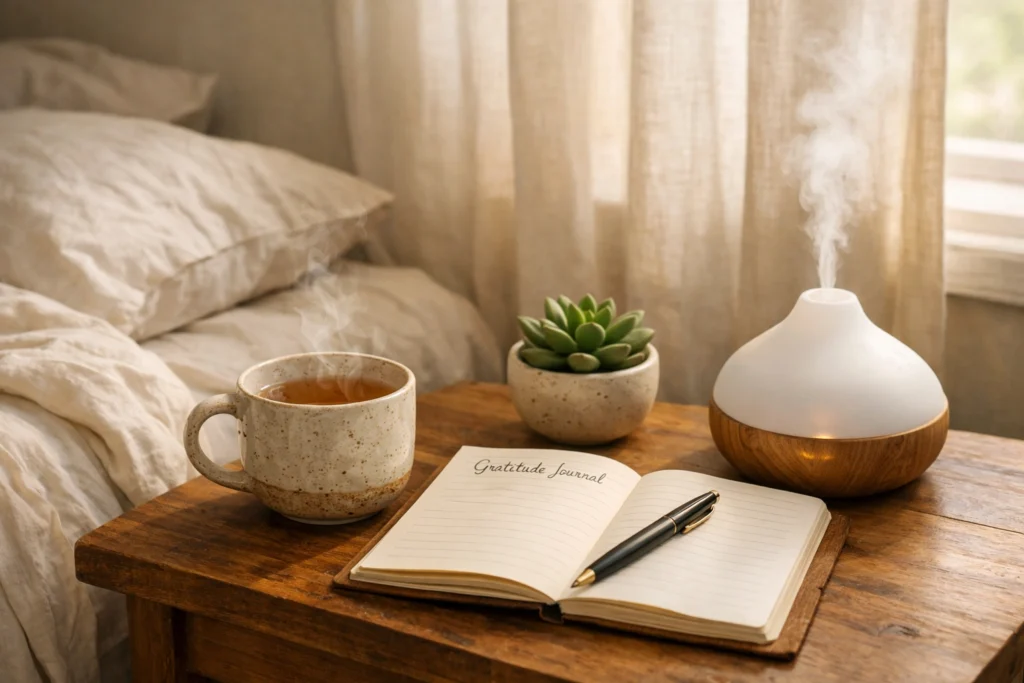
Physical space transformation alone won’t sustain slow living home practices long-term. Your intentional lifestyle requires behavioral habits anchoring new patterns. Daily rituals create structure and meaning within the beautiful spaces you’ve designed. These practices don’t demand hours—even five-minute rituals compound into significant impacts over time. The key is consistency rather than duration. Ritual differs from routine in that it carries intention and meaning beyond mere task completion. You’re not just making coffee; you’re beginning your day with mindfulness at home and gratitude for this warm, nourishing beverage.
Morning and evening routines
Bookend your days with grounding practices preparing you for the hours ahead and releasing accumulated stress before sleep. Slow mornings routine might begin by not immediately reaching for your phone. Instead, sit quietly for three minutes simply breathing and noticing how your body feels. Perhaps you practice gentle stretching, prepare tea mindfully, or write morning pages—three stream-of-consciousness pages clearing mental clutter. These practices establish calm baseline before external demands intrude. Your calm home interior design supports this routine by providing comfortable, clutter-free spaces where these practices feel natural rather than forced.
Creating moments of pause
Schedule emptiness deliberately throughout your day. Modern culture treats busyness as virtue and stillness as laziness. Your intentional lifestyle rejects this harmful narrative. Build pauses preventing burnout and reconnecting you with the present moment. This might be afternoon tea breaks without phone scrolling, enjoying your beverage while staring out windows. Maybe you create transition rituals between activities—lighting candles when sitting down to read, changing clothes after work hours, or taking three deep breaths before starting dinner preparation.
Budget-Friendly Slow Living Home Ideas
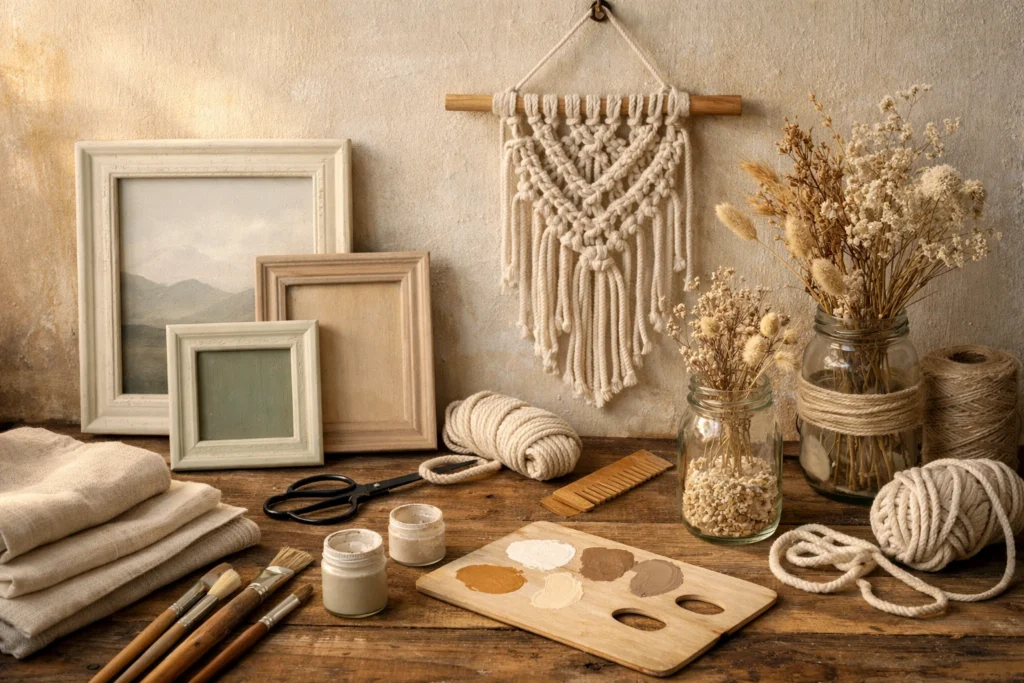
Creating your dream slow living home doesn’t require trust fund or unlimited budget. Slow lifestyle interior design often proves less expensive than conventional approaches because it rejects constant consumption and trend-chasing. The initial investment in quality pieces costs more than disposable fast-furniture, but these items last decades rather than years. You’re making fewer purchases total while each one provides better value and satisfaction. Many impactful improvements cost almost nothing—they require time and intention rather than money. Rearranging existing furniture into better configurations costs nothing but might transform room functionality completely.
Simple upgrades with big impact
Replace every light bulb in your home with warm-toned LED bulbs rated 2700K-3000K. This $30-50 investment dramatically improves ambiance by eliminating harsh, institutional lighting. Add secondhand linen curtains—check estate sales, thrift stores, or online marketplaces. You’ll find quality natural fabric curtains for $20-40 compared to $100+ retail. Invest in quality pillow inserts rather than cheap pillows. Good inserts make even budget pillowcases look expensive and feel comfortable. These $15-20 inserts last years while supporting various cover styles as your taste evolves.
| Budget Upgrade | Cost | Impact Level | Time Required |
|---|---|---|---|
| Warm LED bulbs | $30-50 | High | 30 minutes |
| Secondhand curtains | $20-40 | High | 1 hour |
| Quality pillow inserts | $15-20 each | Medium | Immediate |
| Accent wall paint | $25-40 | High | 2-3 hours |
| Furniture rearrangement | $0 | High | 1-2 hours |
Repurposing what you already own
Shop your entire home before buying anything new. You probably own items serving new purposes in different locations. Move that unused bookshelf from the basement into the bedroom as clothing storage. Repurpose glass jars as storage containers, vases, or candle holders rather than buying organizing products. Use scarves as throw pillow covers—simply wrap and tuck rather than sewing. Paint existing picture frames matching your new neutral color palette rather than purchasing new ones. Sand and refinish that scratched wooden table you’ve been meaning to replace.
Common Mistakes to Avoid When Creating a Slow Living Home
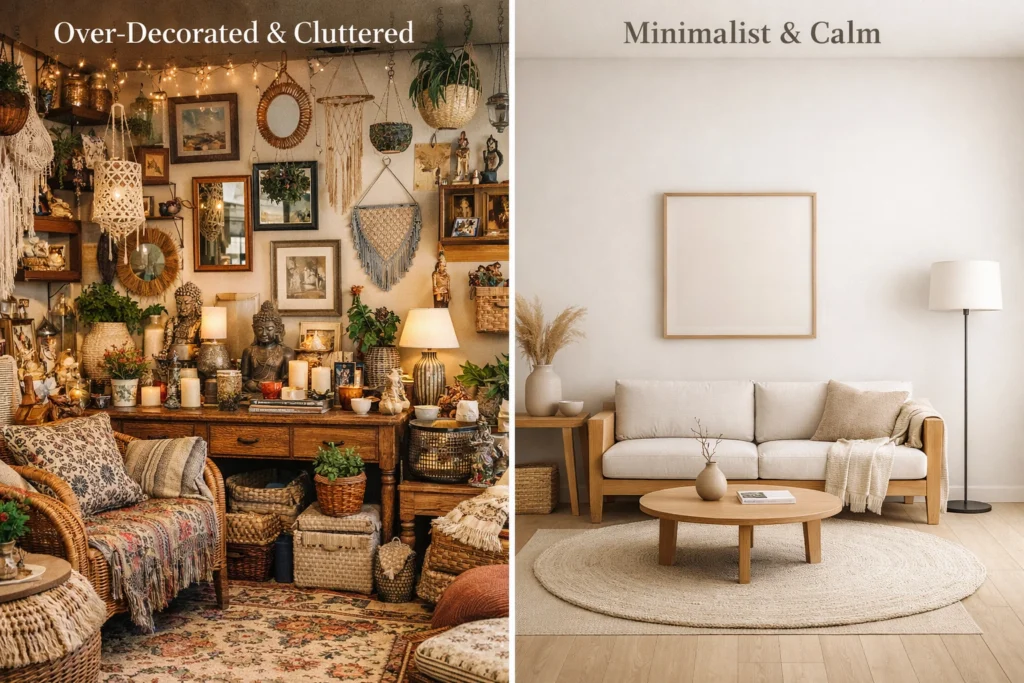
Even with best intentions, certain pitfalls derail slow living home transformations. Learning from others’ mistakes saves money and frustration. These errors often stem from copying aesthetics without understanding underlying principles. You create Instagram-worthy spaces that feel uncomfortable to actually inhabit. Or you invest heavily in trendy elements quickly feeling dated. Understanding common traps helps you navigate transformation more successfully while staying aligned with intentional lifestyle values rather than superficial appearances.
Overdecorating
More emphatically isn’t better in calm home interior design contexts. Every surface covered with objects creates visual noise contradicting peaceful intentions. Your eyes constantly scan and process each visible item, preventing the mental rest that slow living home decor should provide. Interior designers understand negative space as crucial design element—empty areas let eyes rest and highlight what is displayed. Many people feel compelled to fill every corner, cover every wall, and display every possession. This impulse usually stems from insecurity or exposure to maximalist aesthetics that don’t actually suit their personalities.
Ignoring functionality
Beautiful but impractical spaces frustrate daily life and ultimately fail. That delicate white sofa works in childless homes but creates constant stress with toddlers and pets. Glass coffee tables look sleek but chip easily and show every fingerprint. Open shelving photographs beautifully but requires daily styling maintaining that curated appearance. Prioritize durability and ease over pure aesthetics when conflicts arise. Your slow living home must function well first—beauty without functionality creates more problems than it solves. Form follows function always in successful design.
Final Thoughts — Embracing Slow Living as a Lifestyle
Creating your slow living home transcends passing interior design trends. It represents fundamental shift toward presence, intentional lifestyle choices, and deep contentment. This transformation won’t complete overnight and that’s genuinely perfect—rushing contradicts everything slow living represents. Each room finished builds confidence and clarity about your authentic preferences. Mistakes teach valuable lessons about what genuinely serves you versus what looked good in someone else’s space. The journey itself embodies the principles you’re cultivating, requiring patience, mindfulness at home, and self-compassion.
Remember that your slow living home serves you specifically, not theoretical visitors or social media followers. Authenticity outweighs aesthetic perfection every single time. Spaces should reflect genuine needs and personalities rather than borrowed visions never truly fitting your life. The peaceful home environment you’re creating protects mental health, supports physical well-being, and strengthens relationships. These benefits extend far beyond pretty rooms—they fundamentally improve daily experience in measurable ways. Sleep improves in your restful sanctuary bedroom. Stress reduces in your calming spaces designed for sensory comfort. Creativity flourishes when decision fatigue decreases and cognitive bandwidth opens up.
Your intentional living spaces also model different possibilities for everyone who enters. Friends and family witness that consumption-driven hustle culture isn’t the only option. They see beauty, comfort, and peace achieved through thoughtful choices rather than endless acquisition. This quiet demonstration might inspire their own transformations without any preaching required. Start today with one small action—it genuinely doesn’t matter which one. Clear that cluttered corner creating visual noise. Replace those harsh bulbs with warm lighting supporting better mood. Sit quietly in your space noticing how it currently feels and envisioning how you want it to feel. The journey toward your slow living home begins with single intentional lifestyle step, then another, then another, gradually building the sanctuary you deserve. Welcome home to yourself, to presence, and to the grounded living that nourishes rather than depletes. Your transformation starts now.
One Comment