
How to Style Natural Textures for a Cozy Minimalist Home
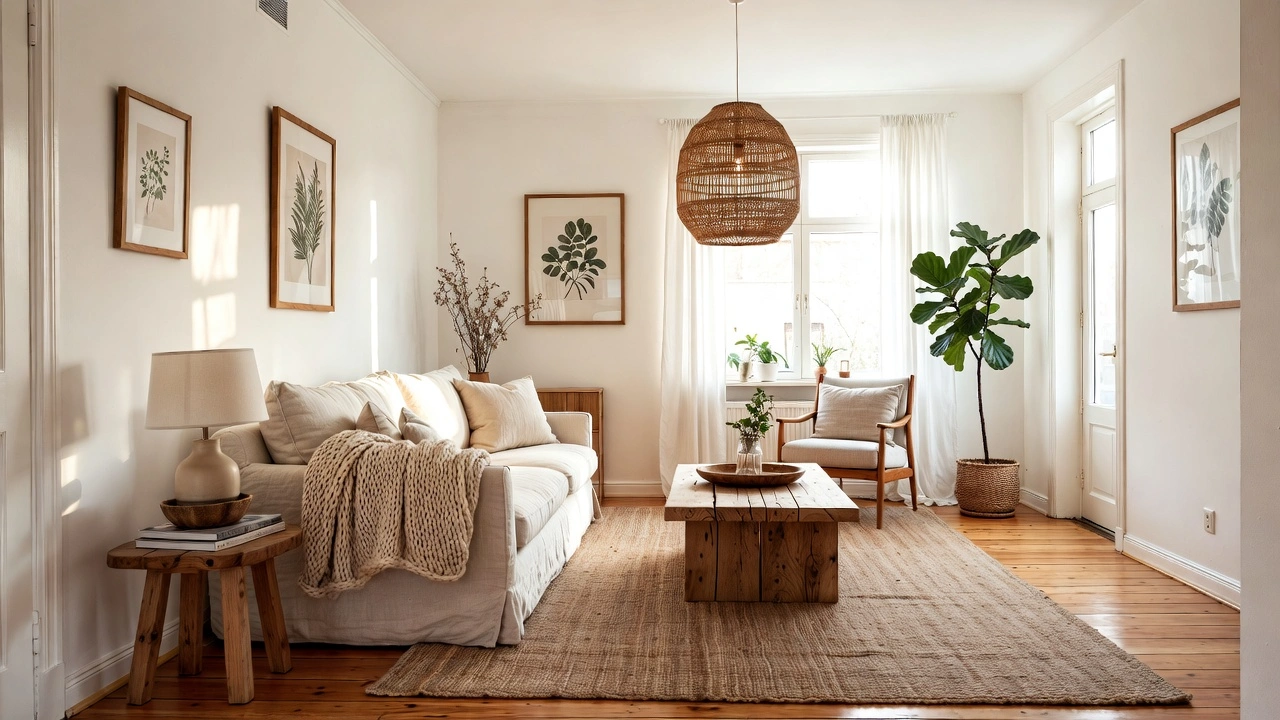
Imagine walking into a space where clean lines meet touchable warmth. That’s the magic of blending natural textures for a cozy minimalist home. Many people think minimalism means cold, stark rooms devoid of personality. Nothing could be further from the truth. The secret lies in thoughtfully incorporating organic home decor elements that bring sensory richness without visual clutter. A linen home textile draped over a streamlined sofa instantly softens the space. A jute decor accessory placed strategically adds earthy grounding. This approach transforms sterile minimalism into inviting sanctuaries where less truly becomes more. Throughout this guide, you’ll discover how to incorporate natural textures in home settings while maintaining the clarity minimalist design demands. We’ll explore material selection, layering natural materials techniques, room-specific applications, and budget-conscious strategies that prove you don’t need excess to create warmth.
The beauty of natural texture decor emerges from its inherent authenticity. These aren’t manufactured perfections but deliberate celebrations of organic imperfection. Wood grain accents showcase unique patterns no two pieces share identically. Handcrafted textiles reveal the human hand behind their creation through slight irregularities that machine production eliminates. This philosophy aligns perfectly with minimalist principles prioritizing quality over quantity and meaning over accumulation. You’re not filling spaces randomly but curating intentional environments where every texture serves purpose and evokes emotion. The tactile design elements you choose become conversation starters, comfort providers, and visual anchors that ground minimalist rooms in tangible reality. Ready to transform your space? Let’s dive into the fundamentals that make this transformation possible.
What is Natural Texture Decor in Minimalist Design?
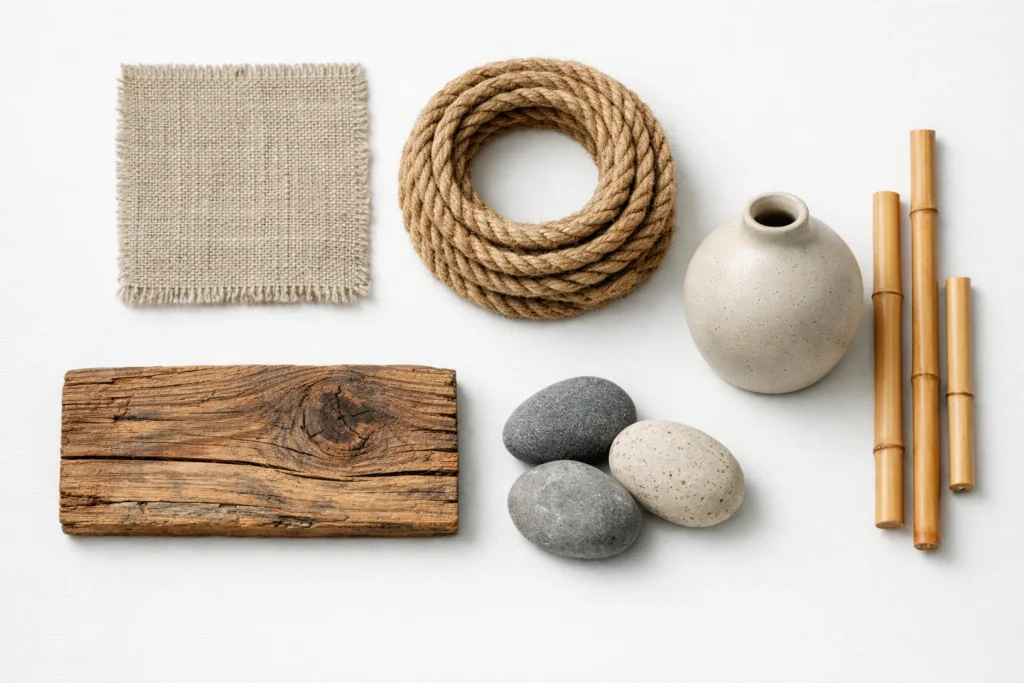
Natural texture decor represents the marriage between organic home decor philosophy and minimalist restraint. It’s about incorporating materials with inherent tactile surfaces into pared-down spaces. Think raw material decor like unfinished wood, rough-hewn stone, and loosely woven fabrics juxtaposed against smooth modern surfaces. The contrast creates visual interest without requiring clutter. Where traditional minimalism might feature a white room with sleek furniture, minimalist organic style adds dimension through a natural fiber rug, woven wall hangings, or stone texture elements. The philosophy draws from the Scandinavian concept of “less but better”—fewer items chosen with greater intentionality. Each piece earns its place not just through function but through sensory contribution. A ceramic pottery decor vessel doesn’t merely hold items; its handthrown surface invites touch and contemplation.
This design approach marries historical wisdom with contemporary sensibilities. Scandinavian hygge emphasizes cozy contentment through natural materials and soft textures. Japanese wabi-sabi celebrates imperfect, impermanent beauty found in organic elements. Rustic interior design brings these philosophies together, creating spaces that feel simultaneously modern and timeless. Examples abound: a linen throw casually draped reveals its natural wrinkles rather than crisp perfection. Bamboo decorative pieces showcase visible grain patterns and natural color variations. Reclaimed wood decor displays weathered patinas telling stories of previous lives. The earthy interior style emerging from these choices combats the clinical coldness minimalism sometimes projects. You’re not abandoning minimalist principles but enriching them with warmth that makes spaces livable rather than merely lookable.
Benefits of Adding Natural Textures to Minimalist Spaces
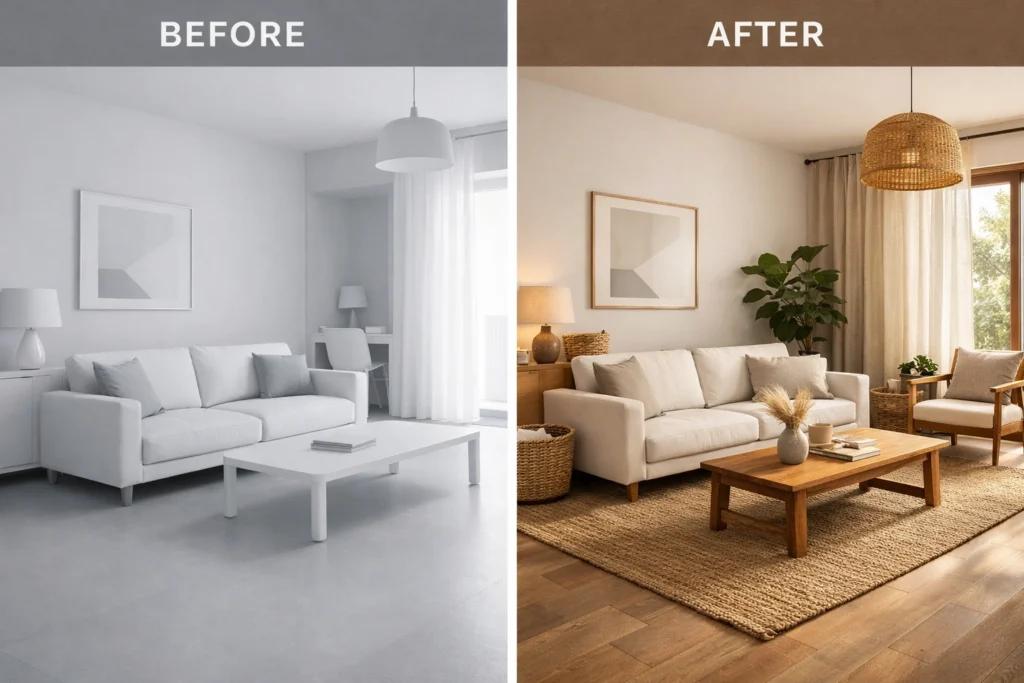
Introducing tactile design elements transforms minimalist rooms from visually appealing to multisensorially engaging. Your eyes appreciate clean lines, but your hands crave touchable surfaces. Best natural texture decor ideas satisfy both impulses simultaneously. Running fingers across a chunky knit throw provides tactile pleasure. Walking barefoot on a natural fiber rug grounds you physically. These sensory experiences trigger psychological responses—warmth, comfort, safety. Research in biophilic design demonstrates that natural materials reduce stress hormones and improve mental wellbeing. A room featuring wood grain accents, stone texture elements, and organic home decor literally makes you feel better than one filled with synthetic alternatives. The temperature warmth also matters; natural materials insulate differently than manufactured ones, creating physically cozier environments during colder months.
Beyond sensory benefits, sustainable texture choices align with conscious consumption values increasingly important to modern homeowners. Jute decor accessories, seagrass baskets, and reclaimed wood decor often come from renewable resources or repurposed materials. They’re durable investments outlasting trendy pieces by decades. A quality rattan furniture piece becomes a lifetime companion rather than disposable decor. The timeless appeal means you won’t tire of these elements the way you might with color trends or pattern fads. Natural texture living room decor transitions seamlessly across seasons too. The same linen curtains that diffuse summer sunlight provide winter insulation. Handcrafted textiles in neutral tones adapt to holiday decorating or seasonal color swaps without requiring storage or replacement. This versatility saves money and reduces environmental impact—practical advantages complementing aesthetic benefits.
you may also like this:7 Slow Living Evening Routines To Fall Asleep Quickly
Essential Natural Materials for Cozy Minimalist Homes
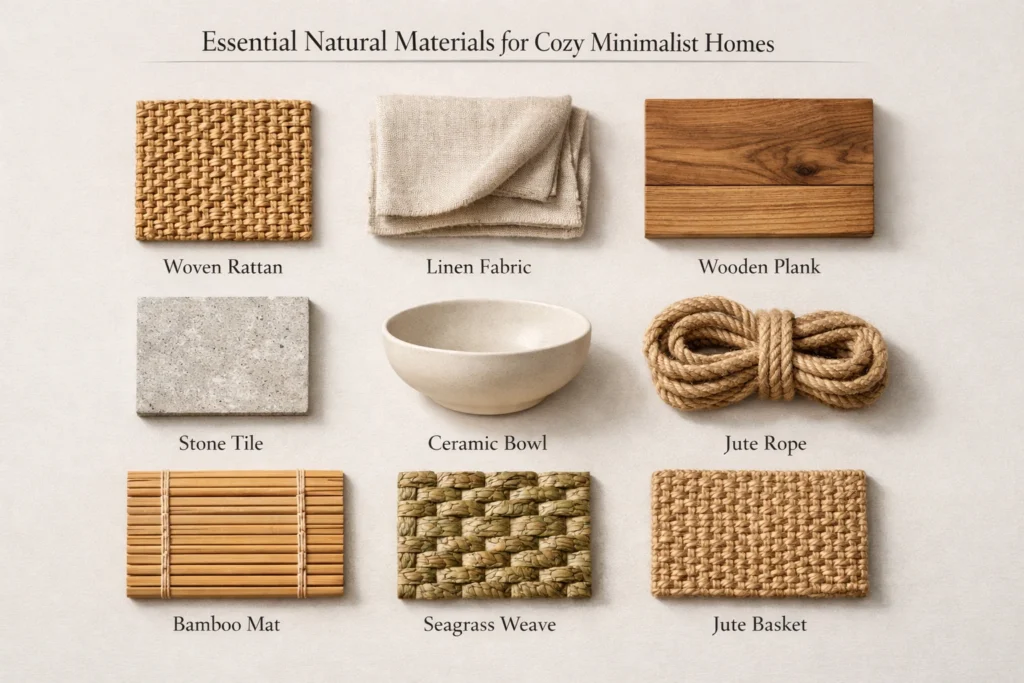
Wood varieties form the backbone of natural texture decor in minimalist settings. Reclaimed wood decor brings character through visible nail holes, saw marks, and weathered patinas that new lumber lacks. Teak’s natural oils make it ideal for surfaces experiencing moisture or heavy use. Walnut’s rich chocolate tones add sophistication without requiring ornamentation. Oak’s prominent grain creates visual interest on otherwise plain surfaces. You might incorporate wood through floating shelves displaying ceramic pottery decor, a live-edge dining table showcasing the tree’s natural shape, or simple wood grain accents framing doorways. Textiles provide the essential softness minimalist spaces desperately need. Linen home textiles offer slightly crisp texture that softens beautifully with use and washing. Cotton weaves range from smooth percale to nubby canvas, each providing different tactile experiences. Wool adds warmth through chunky knit throws or felted accessories. Jute and sisal work wonderfully as natural fiber rugs providing durability in high-traffic areas while contributing earthy texture underfoot.
| Material Category | Best Uses | Texture Quality | Maintenance Level |
|---|---|---|---|
| Wood | Furniture, accent walls, shelving | Warm, grainy, varied | Medium (occasional oiling) |
| Linen | Bedding, curtains, throws | Soft with slight crispness | Low (improves with washing) |
| Jute/Sisal | Area rugs, baskets, placemats | Rough, organic, durable | Low (vacuum regularly) |
| Rattan | Chairs, storage, lighting | Woven, tactile, flexible | Low (dust occasionally) |
| Stone | Counters, vessels, decorative objects | Cool, smooth or rough | High (requires sealing) |
| Ceramics | Vases, bowls, sculptural art | Varied, handmade character | Low (hand wash preferred) |
How to Layer Natural Textures Without Cluttering Your Space
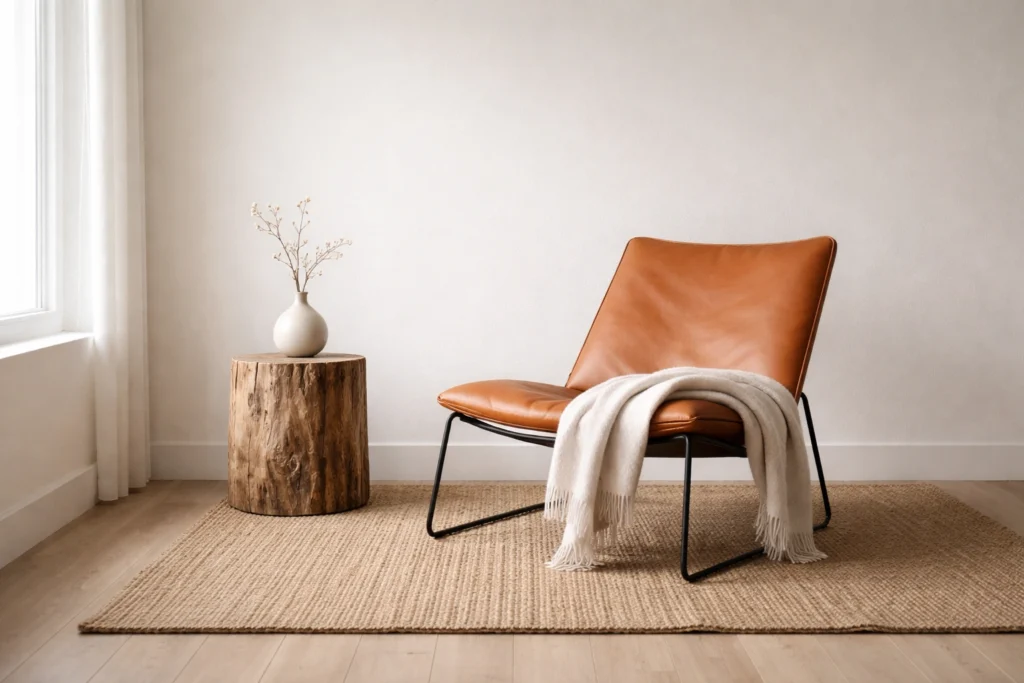
The “rule of three” proves invaluable when layering natural materials in minimalist environments. Select three distinct textures for any single space, ensuring they offer contrasting tactile experiences. A living room might combine smooth leather seating, a rough jute rug, and soft linen curtains. Each texture occupies different visual and physical territory, creating richness without competition. Combining rough with smooth generates the most striking effects. Position a chunky natural fiber rug beneath a sleek glass coffee table. Drape a nubby wool throw across a smooth leather sofa. Place a rustic reclaimed wood decor bowl on a polished stone countertop. This interplay highlights each material’s unique qualities rather than creating homogeneous blandness. Vertical and horizontal layering matters too. Textured wall art or woven wall hangings add dimension where walls meet ceilings. Floor-level textures through rugs anchor spaces. Mid-level textures via furniture upholstery create the room’s body.
Texture Layering Formula:
Start with a base layer using large foundational pieces. This might be a substantial natural fiber rug defining your seating area or a linen sofa establishing your room’s anchor point. The base layer occupies the most square footage and sets your textural tone. Next, add middle-layer items at medium scale. A wooden coffee table, ceramic pottery decor lamps, or rattan furniture accent chairs fit this category. These pieces interact with your base layer while introducing new textural dimensions. The accent layer incorporates smaller touchpoints—woven baskets holding throws, textured pillows in varying materials, or seagrass baskets containing magazines. These elements provide textural punctuation throughout the space. Finally, finish with a single statement piece that draws the eye. This might be dramatic textured wall art, an oversized macrame wall hanging, or a sculptural reclaimed wood decor installation. This finishing layer prevents the space from feeling too safe or predictable, adding that essential element of surprise.
Styling Natural Texture Decor in the Living Room
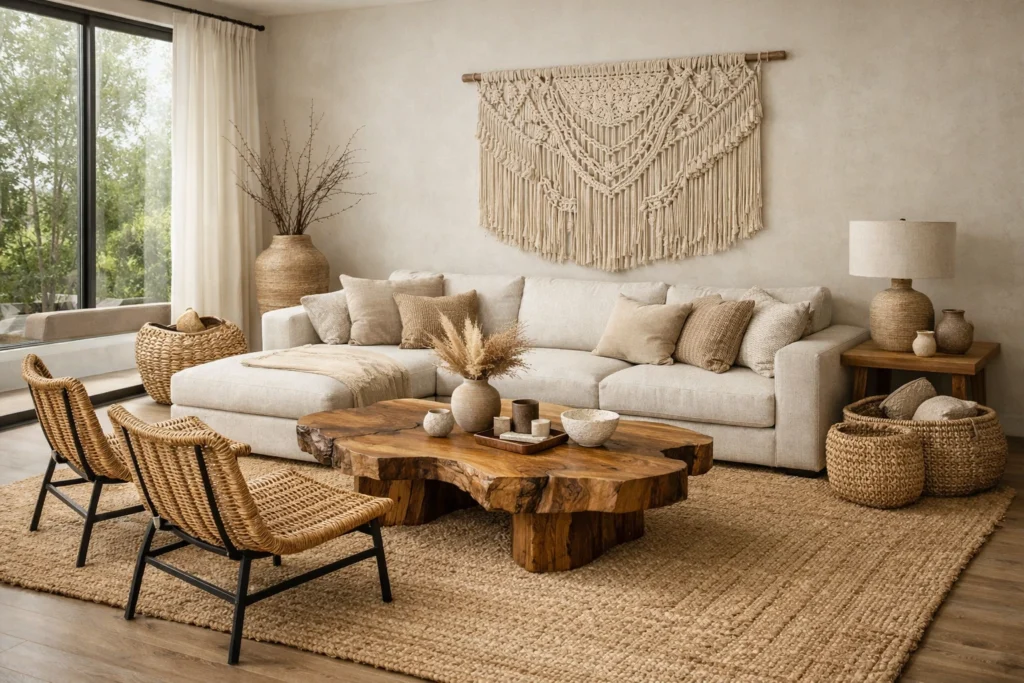
Foundation pieces establish your natural texture living room decor starting point. A substantial natural fiber rug—perhaps jute, sisal, or wool—anchors your seating arrangement while introducing organic texture underfoot. The rug’s rough weave contrasts beautifully with smooth flooring, immediately warming the space. Choose dimensions generously; undersized rugs make rooms feel disjointed. Next, consider your primary furniture. A solid wood coffee table showcases wood grain accents as functional art. Its surface invites styling with ceramic pottery decor vessels, books with interesting covers, or a single sculptural object. Rattan furniture accent chairs add personality without overwhelming. Their woven construction creates visual lightness despite being fully three-dimensional objects. Textile layering transforms stark seating into inviting nests. Linen curtains frame windows with soft, natural drape. Their slight texture catches light beautifully throughout the day. Chunky knit throws in wool or cotton provide cozy comfort during evening relaxation. Layer pillows in varied textures—one smooth linen, one nubby boucle, one with subtle pattern woven into natural fibers.
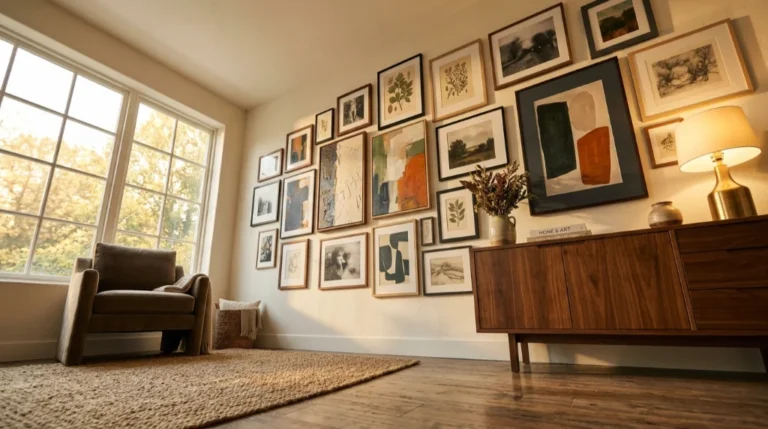
Wall treatments offer vertical texture opportunities often overlooked in minimalist spaces. Shiplap creates subtle horizontal lines and shadow play. Grasscloth wallpaper brings actual plant fibers to walls, offering touchable interest. Floating shelves in reclaimed wood display carefully curated items while contributing rustic texture. Limit shelf styling to 60% capacity, leaving generous negative space. Lighting choices significantly impact how textures read visually. Woven rattan pendant lamps cast intriguing shadow patterns while contributing their own textural presence. Ceramic table lamps with visible glaze variations or intentionally rough bases serve dual purposes. Position lighting to graze textured surfaces at angles, emphasizing their dimensional qualities. When accessorizing, employ discipline. Limit yourself to 3-5 textured accents per sightline. This might mean one macrame wall art piece, two ceramic pottery vessels, and a seagrass basket holding firewood. Each item should feel purposeful rather than arbitrary. Edit ruthlessly, removing anything that doesn’t actively contribute to your textural story.
Creating a Cozy Minimalist Bedroom with Organic Textures
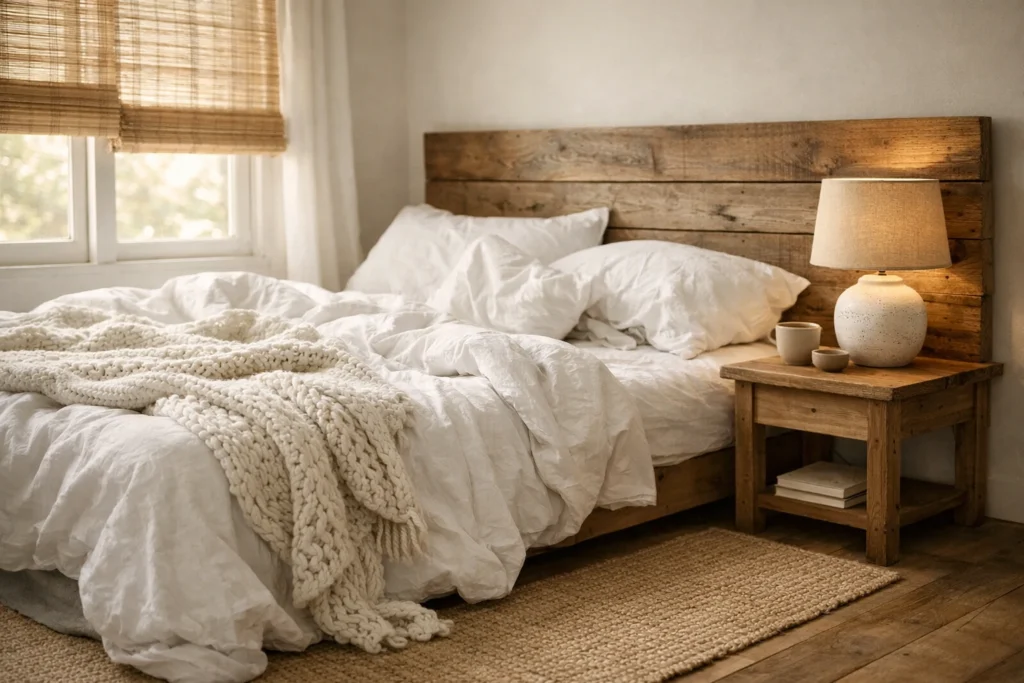
The bed naturally becomes your bedroom’s focal point when styling natural textures for a cozy minimalist home. Start with foundation layers directly touching your body. Linen sheets provide unparalleled sleeping comfort—temperature regulating, soft yet crisp, and beautifully rumpled. Top with a cotton or linen duvet in a neutral tone. The final layer adds visual and physical warmth through a wool throw in chunky knit or waffle weave draped across the foot. This three-layer approach offers natural texture bedroom ideas that feel luxurious without looking overdone. Your headboard presents another textural opportunity. Upholstered versions in natural linen or cotton create soft backdrops for reading. Alternatively, reclaimed wood planks arranged horizontally or vertically add rustic character while remaining minimalist in execution. Keep nightstand styling purposeful—a ceramic pottery lamp with visible glaze, a wooden tray corralling essentials, and perhaps one small textured element like a seagrass basket holding reading materials.
Window treatments deserve thoughtful consideration in bedrooms where light control impacts sleep quality. Simple linen curtains in natural tones filter light beautifully while contributing soft texture. Their casual drape feels relaxed rather than fussy. Bamboo shades offer another option, their horizontal slats creating linear texture while providing adjustable light filtering. Both choices avoid the heaviness of traditional drapes while maintaining minimalist organic style. Flooring warmth matters enormously in bedrooms where bare feet meet surfaces first thing each morning. A jute runner alongside the bed provides soft landing zones. Alternatively, wall-to-wall sisal carpeting offers warmth throughout while maintaining natural aesthetics. The key remains choosing quality over quantity—one excellent rug beats multiple mediocre ones. Minimal but meaningful accessories complete the space. An oversized woven basket becomes sculptural storage for extra blankets or pillows. A single piece of textured wall art above the headboard adds visual interest without competing for attention. Perhaps incorporate a small bench or stool upholstered in natural fabric, providing both seating and textural punctuation.
Natural Texture Ideas for Minimalist Kitchens and Dining Areas
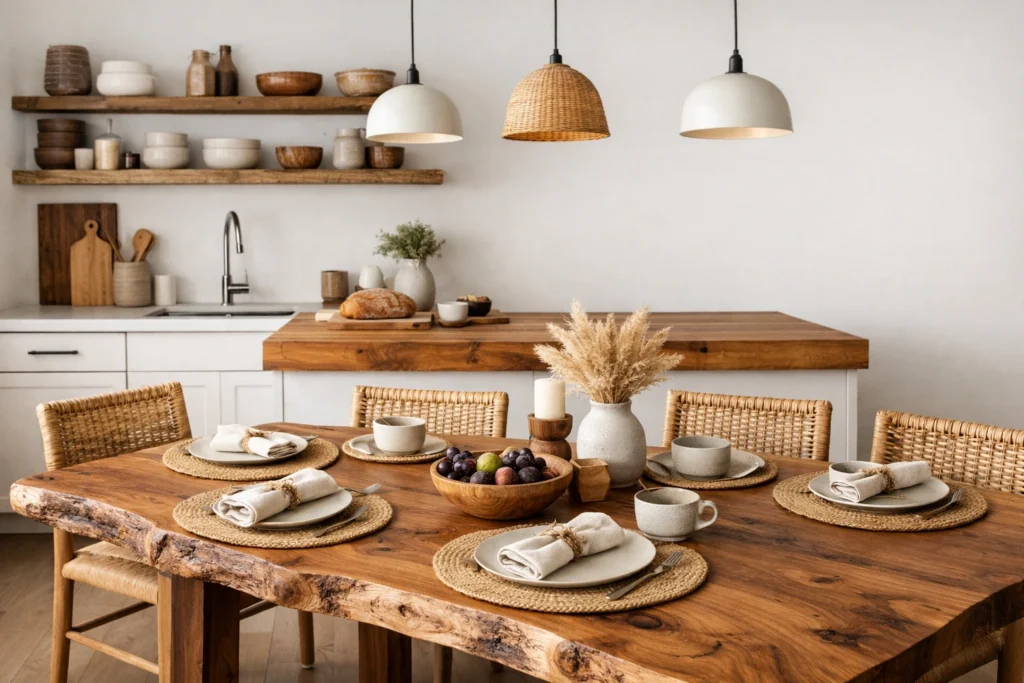
Kitchens benefit enormously from natural texture decor that serves dual functions. Butcher block countertop islands bring wood grain accents to the hardest-working room in your home. The wood’s warmth contrasts beautifully with stainless appliances and stone counters elsewhere. It also provides practical cutting surfaces and gentle knife edges. If full butcher block feels overwhelming, consider open shelving in reclaimed wood displaying your most beautiful dishes and ceramic pottery decor. This approach combines practical storage with aesthetic display. The dishes themselves contribute texture—handthrown bowls with visible wheel marks, wooden serving pieces showcasing grain patterns, and linen napkins folded casually. Dining furniture provides major textural opportunities. Live-edge tables celebrate wood’s natural form, each unique edge telling the tree’s growth story. Pair them with simple chairs featuring woven rattan seats or upholstered in natural linen. The combination feels collected rather than matched, adding character through intentional variety.
Textile touchpoints soften kitchens’ inherent hardness—all those stone, tile, and metal surfaces. Linen napkins at each place setting add elegant softness. Jute placemats protect tables while introducing organic texture. Cotton table runners in neutral tones define dining spaces without requiring full tablecloths. These textiles also offer easy seasonal updates; swap cream for charcoal gray when fall arrives. Functional decor should genuinely function while looking beautiful. Wooden cutting boards lean against backsplashes becoming sculptural when not in use. Stone mortar and pestles sit ready for crushing spices while adding tactile interest. Woven baskets corral fruit on counters, their organic forms contrasting with kitchen architecture’s straight lines. Lighting deserves special attention in dining areas where ambiance matters. Rattan pendant fixtures hung at varying heights create focal points above tables. Their woven shadows dance on walls during evening meals. Alternatively, simple wooden beam accents can support pendant lights, adding rustic texture overhead without occupying precious counter space.
Choosing the Right Color Palette for Natural Texture Decor
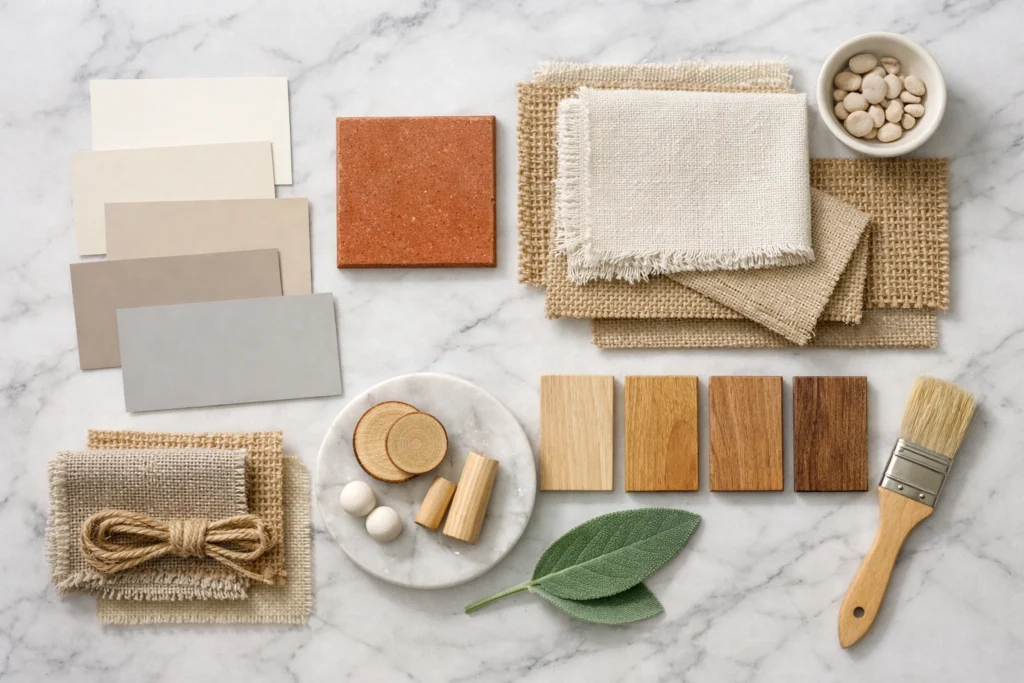
Foundation neutrals create the canvas allowing textures to shine rather than compete with bold colors. Warm whites like ivory, cream, and eggshell provide softness without the starkness of pure white. Soft grays ranging from dove to greige offer sophisticated backdrops. Creamy beiges and taupes ground spaces in comforting warmth. These earthy tone interiors let your natural fiber rugs, wood grain accents, and handcrafted textiles become the stars. The neutrals recede, allowing textures to advance visually. When you do introduce color, earth tones feel most harmonious. Terracotta brings sun-baked warmth in small doses—perhaps through a single ceramic pottery vessel or throw pillow. Sage green echoes plant life without requiring actual maintenance. Clay brown connects to soil and earth. These colors appear in nature alongside the materials you’re incorporating, creating instinctive harmony. Use them sparingly as accents rather than dominant features. A single sage pillow makes more impact than an entire sage sofa when surrounded by neutrals.
| Palette Type | Primary Colors | Accent Options | Best Room Applications |
|---|---|---|---|
| Warm Neutral | Cream, beige, taupe | Terracotta, rust, clay | Living rooms, family spaces |
| Cool Neutral | Gray, white, charcoal | Sage green, dusty blue | Bedrooms, bathrooms |
| Earthy Rich | Camel, chocolate, sand | Olive, burnt orange | Dining rooms, studies |
| Coastal Natural | White, driftwood gray | Seafoam, sand, navy | Bathrooms, sunrooms |
Budget-Friendly Natural Texture Styling Tips
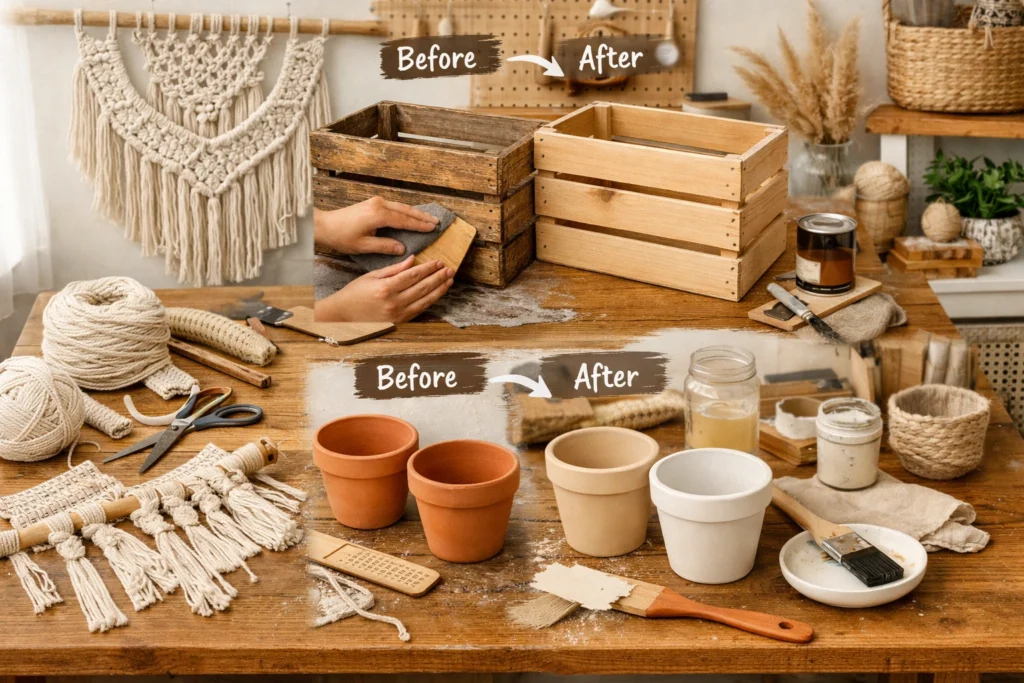
Affordable natural decor options abound when you know where to look. Thrift stores and estate sales overflow with solid wood furniture pieces needing minor restoration. That scratched dresser becomes stunning after sanding and oiling. Vintage woven baskets cost dollars rather than the fifty-plus retailers charge for new versions. You’re finding authentic patina and craftsmanship modern reproductions lack. Develop relationships with store staff; they’ll call when interesting pieces arrive. Online marketplaces like Facebook Marketplace and Craigslist offer local pickups eliminating shipping costs. DIY natural texture projects transform inexpensive materials into custom pieces. Create macrame wall hangings from cotton rope costing under twenty dollars. Paint terracotta pots in matte neutrals for designer looks at garden center prices. Stain plain wooden crates in varying tones, then stack them as modular shelving. These projects provide creative satisfaction while respecting budgets.
Strategic splurges maximize impact when funds are limited. Invest in one quality natural fiber rug rather than multiple cheap ones that wear quickly. That rug anchors your entire room and lasts decades with proper care. Similarly, splurge on foundational furniture—the sofa, bed frame, or dining table—in natural materials. These pieces provide long-term value and become the stage for budget accessories. Nature offers freebies if you’re willing to forage responsibly. Collect fallen branches for vase arrangements. Gather river rocks for bowl displays. Find driftwood along beaches (where permitted) for sculptural elements. These zero-cost finds bring authentic nature indoors while telling personal stories. Multi-purpose items stretch dollars further. A seagrass basket stores throws while looking beautiful. A wooden stool functions as seating, side table, and plant stand. Choose pieces earning their keep through multiple roles. Finally, embrace gradual accumulation. Build your textural collection over months or years rather than purchasing everything immediately. This approach prevents buyer’s remorse and allows you to discover exactly what you love through experimentation.
Common Mistakes to Avoid When Mixing Natural Textures
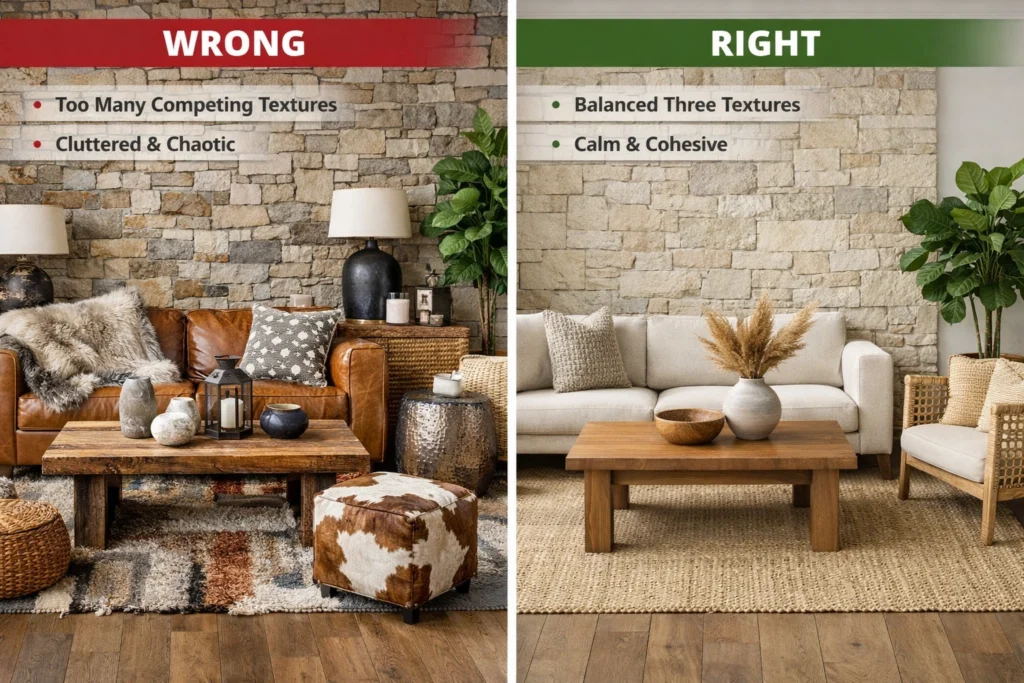
Over-accessorizing remains the most common pitfall when people discover natural texture decor. Enthusiasm leads them to incorporate every texture simultaneously—wood, stone, jute, linen, rattan, ceramic, wool—all competing for attention. The result contradicts minimalism entirely, creating visual chaos. Remember that minimalism prioritizes intentionality over abundance. Three well-chosen textures outperform seven mediocre ones every time. Ignoring scale creates another frequent problem. Rooms filled only with small items feel cluttered and insignificant. Conversely, only large pieces can feel heavy and monotonous. Vary scale deliberately—pair a large natural fiber rug with medium rattan furniture and small ceramic accessories. This size variation creates visual rhythm and prevents any single element from overwhelming. Texture without contrast means you’ve essentially created textured monotony. Three baskets of similar weave placed together blend into one blah basket. Instead, pair rough with smooth, chunky with fine, matte with slight sheen.
Forgetting maintenance requirements causes eventual disappointment. That gorgeous stone countertop seemed perfect until wine stains proved permanent because you skipped sealing. Linen curtains positioned in direct sunlight fade unless you specified fade-resistant fabric or accept graceful aging as part of their charm. Match materials to their usage intensity. High-traffic entryways need durable jute rugs rather than delicate handwoven versions. Kitchen surfaces demand sealed stone rather than porous marble. Trend chasing undermines minimalism’s timeless quality. If you’re adding textured elements because Instagram says they’re hot this season, you’re likely to tire of them quickly. Choose pieces you genuinely love based on tactile pleasure and aesthetic harmony rather than trend reports. Finally, neglecting proportion relative to room size causes problems. Oversized reclaimed wood decor overwhelms small apartments. Tiny accessories disappear in expansive great rooms. Scale your texture choices to your actual space dimensions, not the perfectly styled rooms in magazines shot with wide-angle lenses.
Maintaining Natural Texture Decor Elements
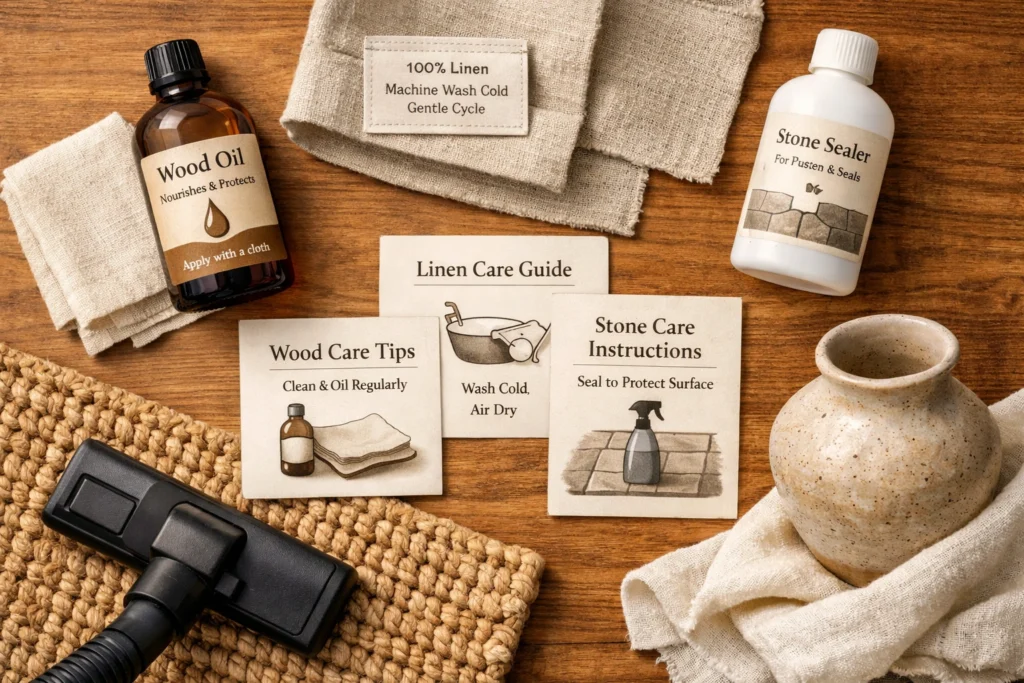
Wood care ensures your wood grain accents and reclaimed wood decor maintain their beauty across decades. Dust regularly using soft cloths; abrasive materials scratch surfaces over time. Oil wood annually using appropriate products—tung oil for raw wood, furniture polish for finished pieces. This prevents drying and cracking while enhancing natural color. Address spills immediately; water rings and stains become permanent when ignored. Use coasters religiously and wipe surfaces after use. For deeper cleaning, mix mild soap with water, wipe gently, then dry thoroughly. Never soak wood or leave it damp. Textile maintenance varies by fiber type but generally remains straightforward. Linen home textiles actually improve with washing, becoming softer while maintaining durability. Wash in cool water on gentle cycles, line dry when possible, and embrace natural wrinkles as part of linen’s charm. Natural fiber rugs require weekly vacuuming using attachments without beater bars that can damage fibers. Rotate rugs every few months to ensure even wear patterns. Spot clean spills immediately using club soda or mild detergent diluted in water.
Stone preservation starts with proper sealing, especially for porous varieties like marble and limestone. Seal annually following manufacturer instructions. Clean using pH-neutral cleaners specifically formulated for stone—acidic cleaners etch surfaces while alkaline ones discolor. Wipe spills promptly; stone stains easily from wine, coffee, and oils. Use cutting boards and trivets preventing scratches and heat damage. Basket and woven care keeps seagrass baskets, rattan furniture, and woven wall hangings looking fresh. Vacuum using brush attachments to remove dust from crevices. Occasionally wipe with damp cloths, then air dry completely preventing mold growth. Keep woven items away from direct heat sources that can dry and crack fibers. Ceramic pottery decor handling requires gentle attention. Hand-wash handmade pieces preserving their glazes and preventing chips. Dishwashers’ harsh detergents and high temperatures can damage finishes over time. Store carefully with padding between stacked pieces. Preventive measures protect all your textural investments. Rotate textiles seasonally preventing uneven fading. Implement no-shoe policies protecting floor surfaces. Use furniture pads under items preventing scratches. These small habits dramatically extend your natural texture decor lifespan, making your initial investment pay dividends for years.
Best Places to Buy Natural Texture Decor for Minimalist Homes
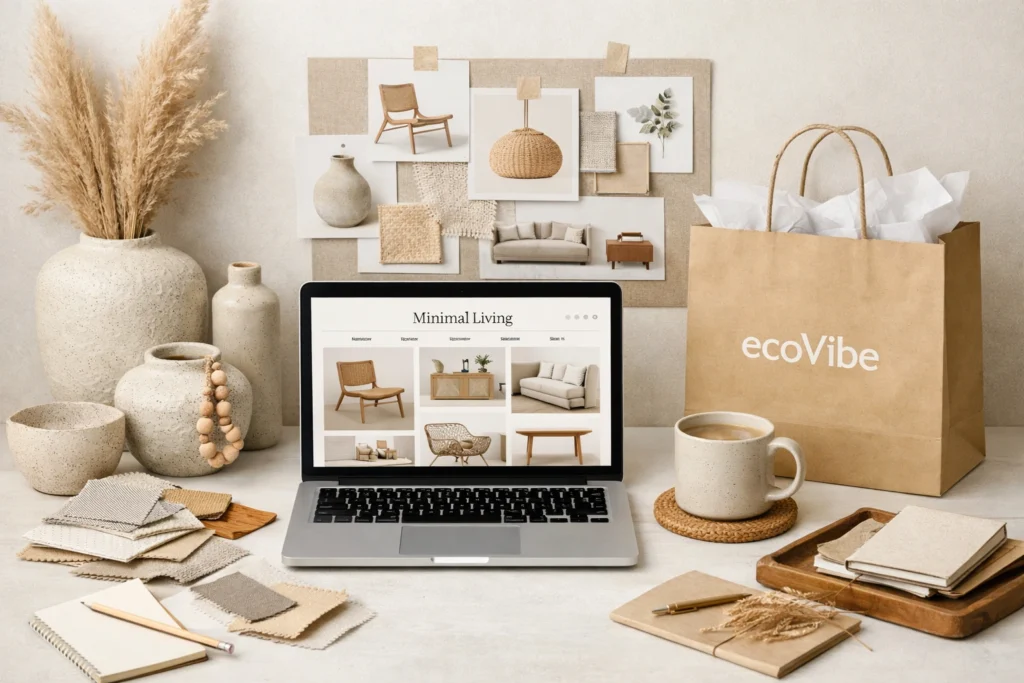
Online retailers specializing in modern natural texture trends offer curated selections matching minimalist aesthetics. West Elm consistently delivers organic home decor with clean lines—their jute rugs, linen bedding, and simple wood furniture balance quality with reasonable pricing. CB2 skews younger and more urban while maintaining natural material focus. Article provides mid-century inspired pieces in rattan, wood, and leather shipped directly from manufacturers, cutting costs. Their photography shows pieces in real homes rather than sterile studios, helping you visualize integration. Artisan marketplaces connect you directly with makers creating handcrafted textiles, ceramic pottery decor, and unique woven pieces. Etsy hosts thousands of artists handmaking macrame wall art, throwing pottery on wheels, and weaving natural fiber rugs. You’re supporting small businesses while obtaining one-of-a-kind pieces. The Citizenry partners with global artisan cooperatives producing ethically made woven baskets, textiles, and furniture. Their pieces carry stories about the makers and cultural traditions behind each item.
Sustainable brands prioritize environmental responsibility alongside aesthetics. Parachute specializes in linen home textiles—sheets, duvet covers, towels—using European flax and ethical manufacturing. Their pieces wash beautifully and genuinely improve over time. Coyuchi offers organic cotton and linen in sophisticated neutrals perfect for minimalist bedrooms. Local sources provide treasure hunting satisfaction plus environmental benefits from reduced shipping. Farmers markets host potters selling ceramic vessels, woodworkers offering cutting boards and furniture, and fiber artists creating woven goods. Estate sales in older neighborhoods often yield solid wood furniture built when quality mattered more than profit margins. You’ll pay fractions of retail while rescuing pieces from landfills. Big box alternatives make natural texture accessible to tight budgets. IKEA’s jute rugs, bamboo accessories, and simple wood furniture offer decent quality at remarkable prices. Target’s Threshold and Hearth & Hand lines include natural fiber options and wood accents mimicking pricier versions. These pieces work wonderfully as placeholders while you save for investment items. Specialty shops provide curated experiences when you want inspiration or unique statement pieces. Terrain blends garden center with home decor, offering reclaimed wood, stone elements, and botanical-inspired accessories. Anthropologie Home showcases quirky yet refined natural pieces—rattan mirrors, textured throws, and sculptural ceramic decor—perfect for adding personality to minimalist foundations.
Conclusion
Transforming your space through natural textures for a cozy minimalist home doesn’t require dramatic overhauls or excessive spending. It demands thoughtfulness instead. You’ve learned that minimalist organic style emerges from carefully layering natural materials—the roughness of jute against smooth leather, the warmth of wood grain accents balancing cool stone, the softness of linen textiles tempering hard architectural lines. These tactile design elements engage multiple senses simultaneously, creating environments that feel as welcoming as they look refined. The journey starts small. Perhaps you begin with a single natural fiber rug anchoring your living room. Maybe you swap synthetic pillows for handcrafted textile versions in varied textures. You might introduce ceramic pottery decor to bare shelves or drape a linen throw across your sofa. Each addition builds upon the last, gradually transforming sterile minimalism into warm, lived-in beauty.
Remember that sustainable texture choices benefit both your wellbeing and our planet. Reclaimed wood, organic textiles, and ethically sourced rattan pieces become lifetime companions rather than disposable trends. They age gracefully, developing patinas and softness that synthetic alternatives never achieve. The best natural texture decor ideas honor this long-term perspective, choosing quality over quantity and meaning over novelty. Start where you are with what you have. Assess your current space honestly, identifying one textural addition you can implement this week. That single change creates momentum. Soon you’ll find yourself naturally gravitating toward earthy interior style choices, recognizing affordable natural decor options everywhere, and understanding how to incorporate natural textures in home settings intuitively. Your minimalist home deserves the warmth only nature provides. Begin today, and watch transformation unfold one texture at a time.


One Comment