
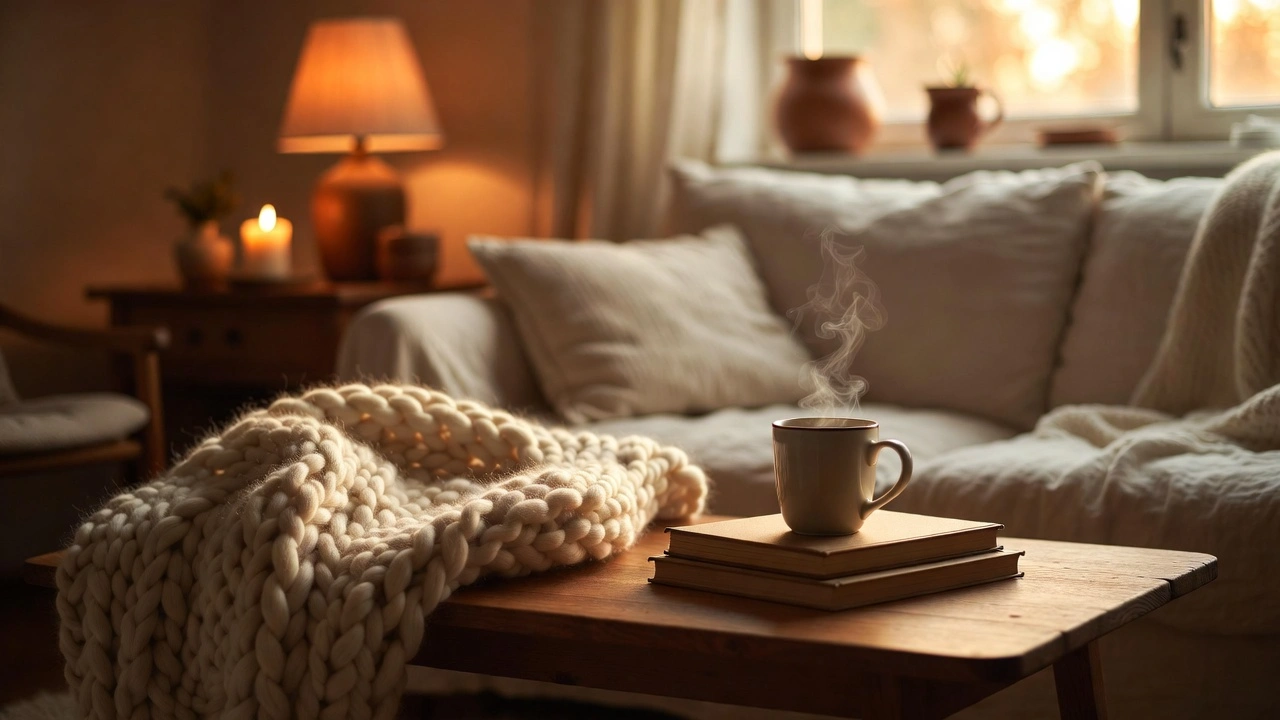
How to Start A Hygge Home This Year
Winter arrives with its particular brand of darkness and cold. You flip the light switch entering your home after another exhausting day. But something feels different tonight. Warm candlelight flickers from the mantel. A chunky knit blanket drapes invitingly over your favorite chair. The scent of tea mingles with the gentle glow of table lamps casting amber pools across the room. You exhale deeply, perhaps for the first time all day, feeling your shoulders drop and tension release. This isn’t magazine-perfect staging. This is hygge—the Danish art of cozy hygge living that transforms houses into genuine sanctuaries where soul nourishment happens naturally rather than requiring vacation or escape.
Americans are drowning in stress, connectivity, and the relentless message that more is always better. Meanwhile, Danes consistently rank among the world’s happiest people despite enduring brutal winters where darkness dominates months at a time. Their secret? The Danish hygge lifestyle that prioritizes comfort, connection, and simple pleasures over achievement, acquisition, and constant stimulation. Starting a hygge home this year isn’t about buying Scandinavian furniture or following trendy aesthetics. It’s about intentional choices that create warmth, foster contentment, and provide the psychological comfort modern life systematically strips away. The twelve practical elements ahead require minimal investment but deliver profound returns in daily wellbeing. Your home should restore you, not drain you. Hygge makes that possible starting tonight.
What is Hygge and Why Your Home Needs It

Hygge (pronounced “hoo-gah”) defies simple English translation because it encompasses feeling, practice, and philosophy simultaneously. The Danish use it as noun, verb, and adjective—something you have, something you do, something you are. At its core, hygge means cozy comfort and contentment found in simple moments: candlelight conversation with friends, solitary reading wrapped in soft wool, shared meals lingering past dessert. It’s the warm home ambiance on stormy evenings and the peaceful atmosphere of Sunday mornings moving slowly. Creating hygge atmosphere requires understanding it’s not about things you buy but rather how you inhabit space and time. Denmark’s consistent happiness rankings despite challenging climate aren’t accidental—the Danish hygge lifestyle cultivates wellbeing through everyday rituals that honor rest, connection, and presence.
Modern American culture needs hygge desperately right now. Over 70% of Americans report high stress levels daily, struggling with burnout, isolation, and the feeling that life moves too fast for genuine connection or rest. The simple hygge lifestyle offers radical counter-programming to hustle culture’s demands. Cozy Danish living isn’t luxury reserved for wealthy minimalists with perfectly curated homes. It’s accessible philosophy anyone can practice regardless of budget, space, or aesthetic preference. The hygge home feeling emerges from intentional choices about lighting, textiles, rituals, and how you treat your living space as home sanctuary rather than just functional shelter. Research shows comfortable hygge space design measurably reduces cortisol, improves sleep quality, and strengthens relationships. Your home becomes infrastructure supporting mental health rather than just protecting from weather.
Embrace Soft Lighting with Candles and Warm Lamps
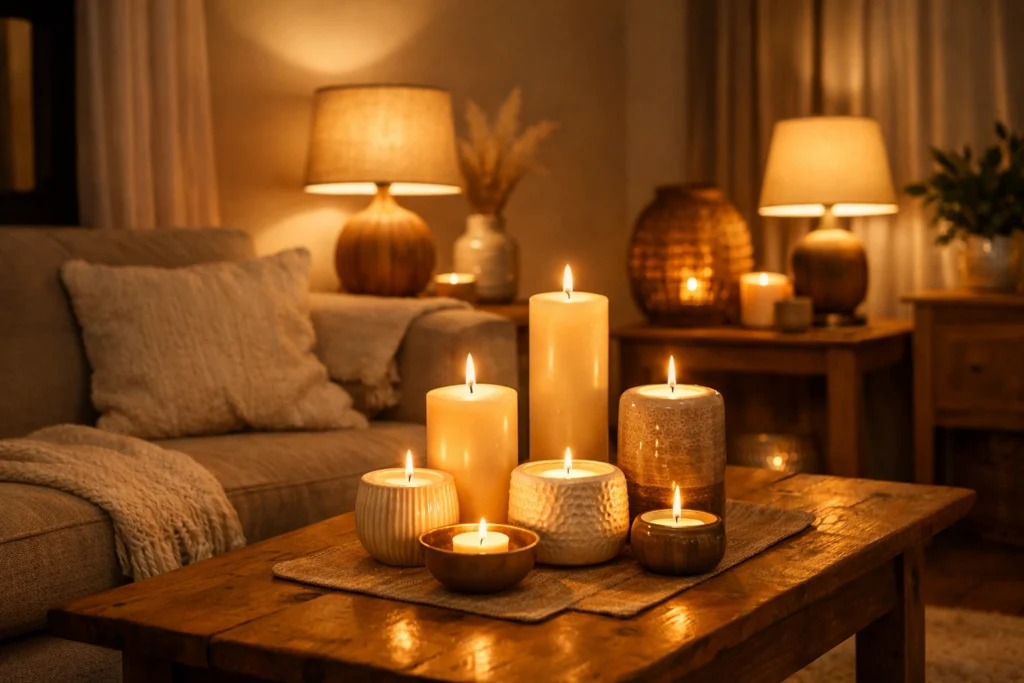
Harsh overhead lighting is hygge’s sworn enemy. Danes burn more candles per capita than any other nation, understanding that soft lighting fundamentally alters mood and atmosphere instantly. The psychology runs deep—humans evolved around firelight, our circadian rhythms responding to warm amber glows that signal evening rest time. Modern fluorescent or LED ceiling lights blast blue-spectrum wavelengths that keep bodies in daytime alert mode, preventing the transition to relaxation space evening requires. Hygge candle lighting isn’t about romance or special occasions. It’s daily practice, with Danes lighting candles every single evening regardless of whether guests visit. The flickering glow creates warmth both literally and emotionally, inviting you to slow down and savor moments rather than rushing through even pleasant activities at home.
Implementation starts tonight without requiring any purchases if you already own candles. Eliminate or dramatically reduce overhead lighting usage, relying instead on distributed light sources at varying heights throughout rooms. Place three to five candles of different heights in main living areas, establishing ritual of lighting candles at sunset marking transition from productive day to restorative evening. Add table lamps and floor lamps with warm bulbs measuring 2200K-2700K on the color temperature scale—anything higher reads harsh and cold. Install dimmer switches on existing fixtures providing flexibility to adjust brightness as evening progresses. For safety concerns in bedrooms or bathrooms, battery-operated LED candles provide flicker effect without fire risk. The warm home ambiance that emerges from this lighting strategy costs almost nothing but transforms how you experience your space profoundly, proving that creating cozy home environments starts with how you illuminate them.
Layer Your Space with Cozy Textiles and Blankets
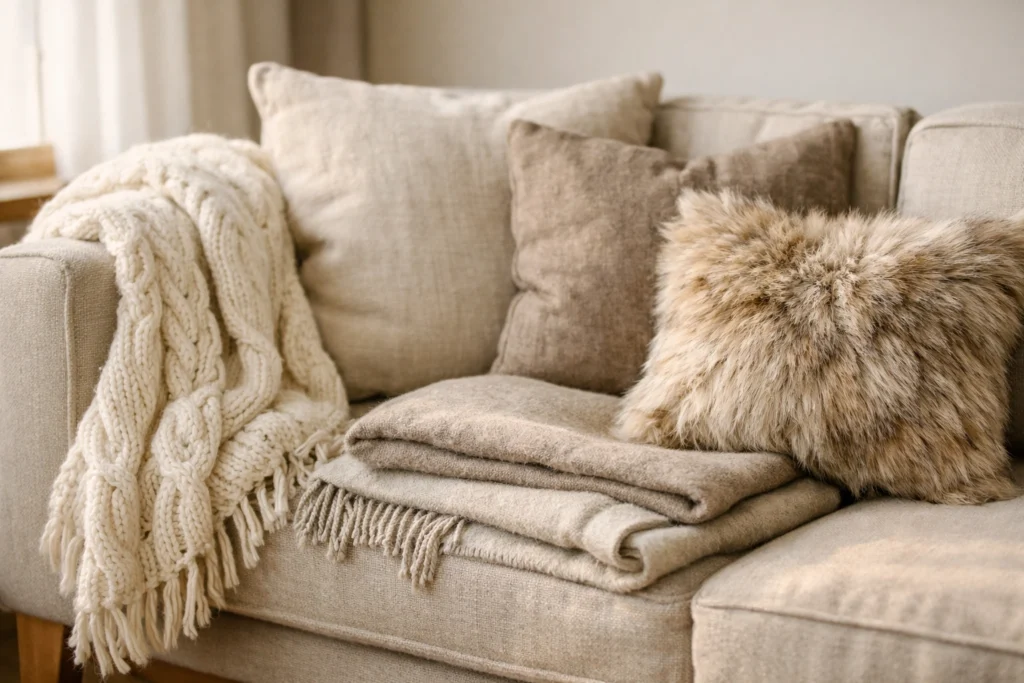
Hygge throw blankets aren’t optional decorative touches—they’re essential hygge home essentials that invite warmth both physical and emotional. The Danish comfort style embraces having too many blankets as impossible rather than excessive. Textiles create the tactile comfort that makes you want to stay put, wrap blankets around yourself, and settle into sustained presence rather than restlessly moving through spaces. Warm textured interiors emerge from layering varied fabrics: chunky knits, soft cotton, cozy wool, smooth linen all contributing different sensory experiences. The weight matters too—heavier blankets trigger deep pressure stimulation that calms nervous systems similarly to weighted blankets marketed for anxiety. Natural hygge materials like wool, cotton, and linen outperform synthetics in both tactile quality and how they age, developing character rather than merely deteriorating.
you may also like this:How to Style Natural Textures for a Cozy Minimalist Home
| Textile Type | Best Material | Ideal Placement | Hygge Impact |
|---|---|---|---|
| Chunky Knit Throw | Merino wool | Sofa arm, reading chair | High tactile cozy comfort |
| Flannel Blanket | 100% cotton | Bed, couch | Everyday rituals softness |
| Faux Fur Throw | High-quality synthetic | Accent chair, floor | Luxury inviting warmth |
| Linen Cushions | Natural linen | All seating areas | Breathable year-round |
| Sheepskin Rug | Real or faux | Floor, draped on chair | Instant winter comfort |
Choose Natural Materials for Authentic Hygge Feel
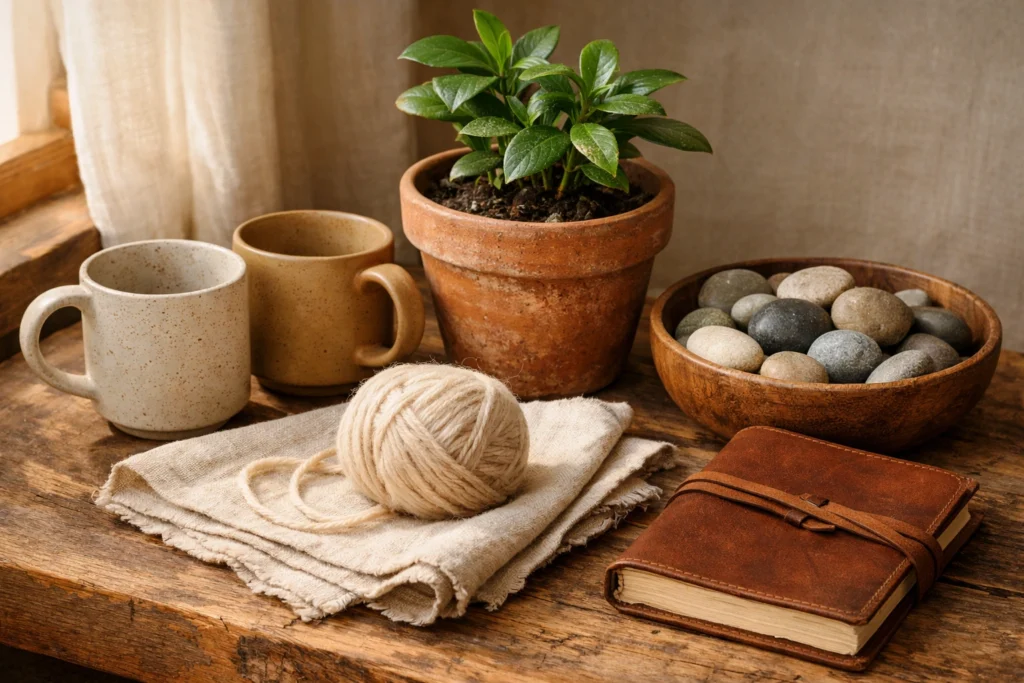
Natural hygge materials form the foundation of authentic living in hygge inspired interiors because synthetic alternatives simply cannot replicate the warmth and character natural substances provide. Wood, stone, wool, linen, leather, ceramic, terracotta—these materials connect Scandinavian cozy home design to the natural world even during brutal winters when venturing outside feels punishing. The Danish relationship with nature remains strong despite climate challenges, and bringing natural materials indoors maintains that crucial connection. These substances age beautifully, developing patina and character that increases rather than decreases value over time. A well-worn wooden cutting board tells stories. A smooth river stone held in your palm grounds you. Warm textured interiors built from natural elements provide both visual and tactile richness that plastic, acrylic, and other synthetics utterly lack.
Practical integration of natural materials into your hygge home starts with assessing what you already own and building from there. Wooden bowls, cutting boards, and serving trays function beautifully while displayed as hygge home accessories rather than hidden in cabinets. Ceramic mugs, stoneware dishes, and terracotta planters beat plastic or metal alternatives in both tactile quality and how they create warmth through their organic origins. Wool rugs anchor spaces while providing winter hygge home insulation. Linen curtains, cotton throws, and leather seating all contribute to the Nordic home comfort aesthetic without requiring Scandinavian price tags. Thrift stores and estate sales offer treasure troves of quality natural material items at fractions of retail costs. The imperfections in natural materials—wood grain variation, stone texture irregularities, handmade ceramic wobbles—add to hygge’s unpretentious beauty rather than detracting from it. Machine-perfect consistency reads cold, while natural variation reads genuine comfort and humanity.
Create Intimate Gathering Spaces for Connection
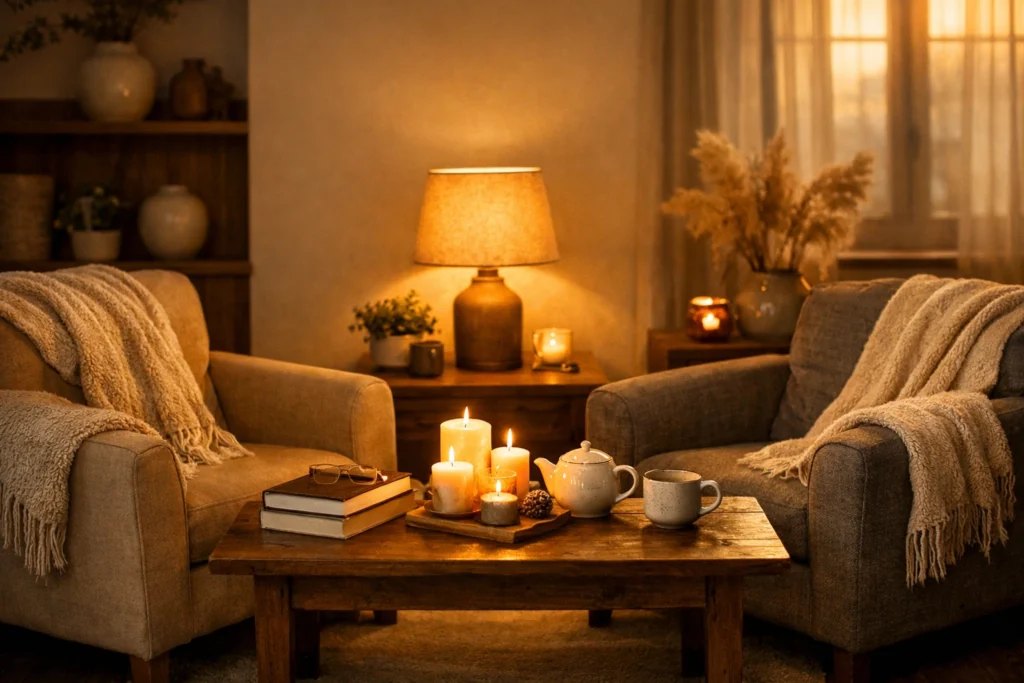
Hygge living room ideas center on togetherness and face-to-face conversation rather than passive entertainment consumption. The Danish hygge lifestyle values quality time with loved ones as core wellbeing practice, requiring homes designed to facilitate rather than hinder meaningful connections. American living rooms typically organize around televisions as focal points, with all seating facing screens and little thought given to whether people can actually see and engage each other comfortably. Creating hygge atmosphere demands rethinking spatial priorities, arranging comfortable seating to encourage eye contact, conversation, and the intimate gathering moments where genuine connection happens. This doesn’t mean eliminating technology entirely but rather refusing to let it dominate room design and dictate how you spend time together.
Furniture arrangement for intimate spaces starts with positioning seating pieces facing each other rather than all pointing the same direction. Create conversation groupings where people sit maximum eight feet apart, allowing comfortable dialogue without shouting across expansive rooms. Place coffee tables or ottomans centrally within reach of all seats, facilitating shared snacks and drinks that celebrate togetherness. If your space allows, gather together zones in larger rooms rather than floating all furniture against walls. Remove or dramatically minimize TV presence in main gathering spaces—move it to side walls if necessary, making it available but not central. Add floor cushions or poufs providing overflow seating during gatherings without permanent space consumption. The intimate home atmosphere that emerges from thoughtful spatial planning encourages actual conversation, board games, card playing, and the shared meals that build family togetherness far more effectively than parallel screen consumption ever could.
Add Warmth Through Natural Wood Furniture
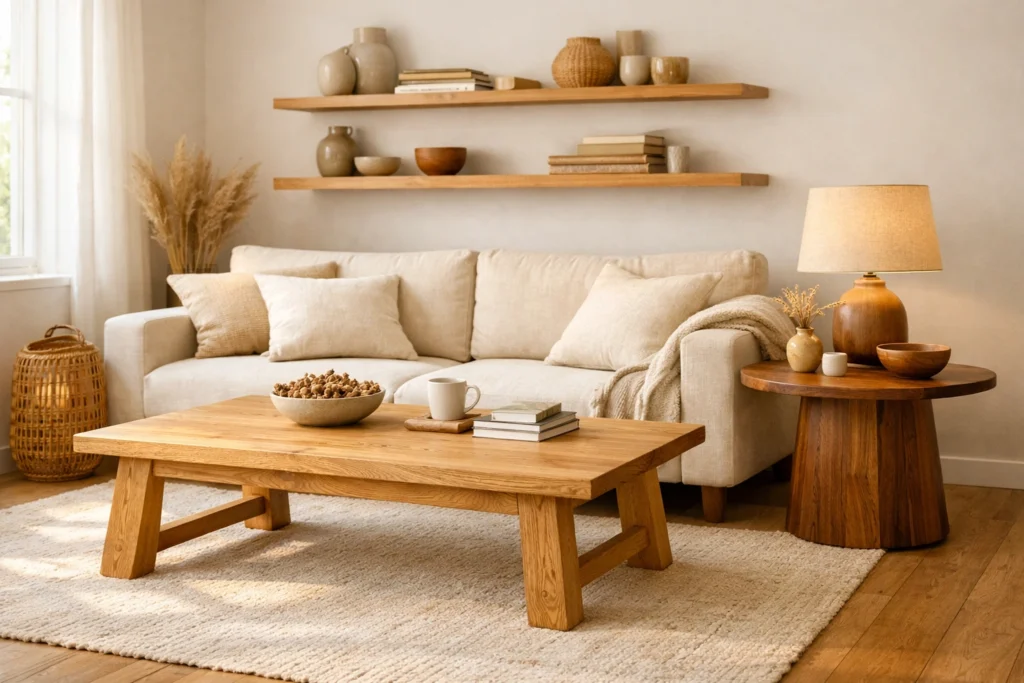
Natural wood furniture provides organic warmth that painted pieces or synthetic materials simply cannot match. Wood grain patterns, color variations, and tactile quality connect hygge home design to living trees and forests even in urban environments far removed from nature. The Scandinavian cozy home tradition embraces various wood tones from pale ash and blonde oak to rich walnut and warm teak, all working beautifully in hygge inspired interiors when kept within similar warmth families. Warm hygge decor celebrates wood’s imperfections—knots, color shifts, and grain irregularities add character rather than detracting from value. The pieces should feel substantial but not overly formal, with visible grain and natural finishes preferred over heavy staining or glossy lacquers that hide the material’s inherent beauty.
Selecting wood furniture for your hygge home means prioritizing pieces showing clear wood grain and natural finish over painted or heavily processed alternatives. Coffee tables, dining tables, shelving, and side tables in warm woods anchor spaces while contributing essential warm home ambiance. Mix wood tones confidently as long as you stay within warm families—honey oak with walnut works beautifully while cool ash with warm pine creates visual tension. Consider refinishing existing wood pieces rather than replacing them, sanding away old finish to reveal beautiful grain underneath. Wood furniture represents genuine investment lasting generations with proper care, embodying hygge’s simple living values over disposable fast furniture. The pieces acquire stories and lived-in feel over years, developing patina that increases character rather than requiring replacement. Budget-conscious hygge home transformation shoppers should explore secondhand options, often finding quality solid wood pieces at remarkable prices compared to new particleboard alternatives.
Design a Cozy Reading Nook for Quiet Moments
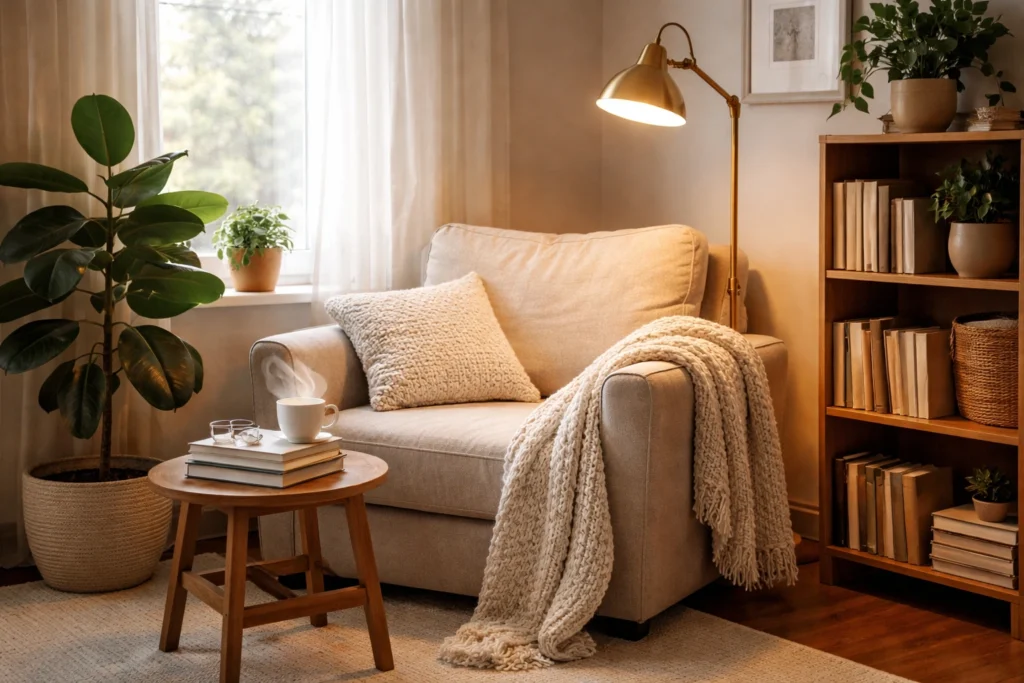
The hygge reading nook represents personal sanctuary where solitary restoration happens through authentic living practices like reading for pleasure. Hygge isn’t exclusively social—Danes value alone time for recharging and nurture wellbeing through solitary pursuits just as much as communal gatherings. The ideal cozy corner ideas include comfortable seating where you can settle for extended periods, excellent lighting positioned perfectly for reading without eyestrain, a small surface for tea or coffee placement, and immediate access to warm textiles. Location matters significantly—choose quiet corners away from household traffic patterns where you won’t be constantly interrupted. The space needn’t be large, just intentional and designed specifically for the present moment practice of losing yourself in books.
| Nook Element | Specific Need | Hygge Purpose |
|---|---|---|
| Seating | Deep armchair or chaise | Comfortable seating for long periods |
| Lighting | Adjustable lamp, warm bulb | Soft lighting without eyestrain |
| Blanket | Chunky knit wool | Instant winter comfort |
| Side Table | Small wood or ceramic | Sip tea, hold book, glasses |
| Cushions | Down-filled lumbar support | Cozy comfort for extended sitting |
| Footrest | Small ottoman or stool | Relaxation space ergonomics |
Use Neutral and Warm Color Palettes Throughout
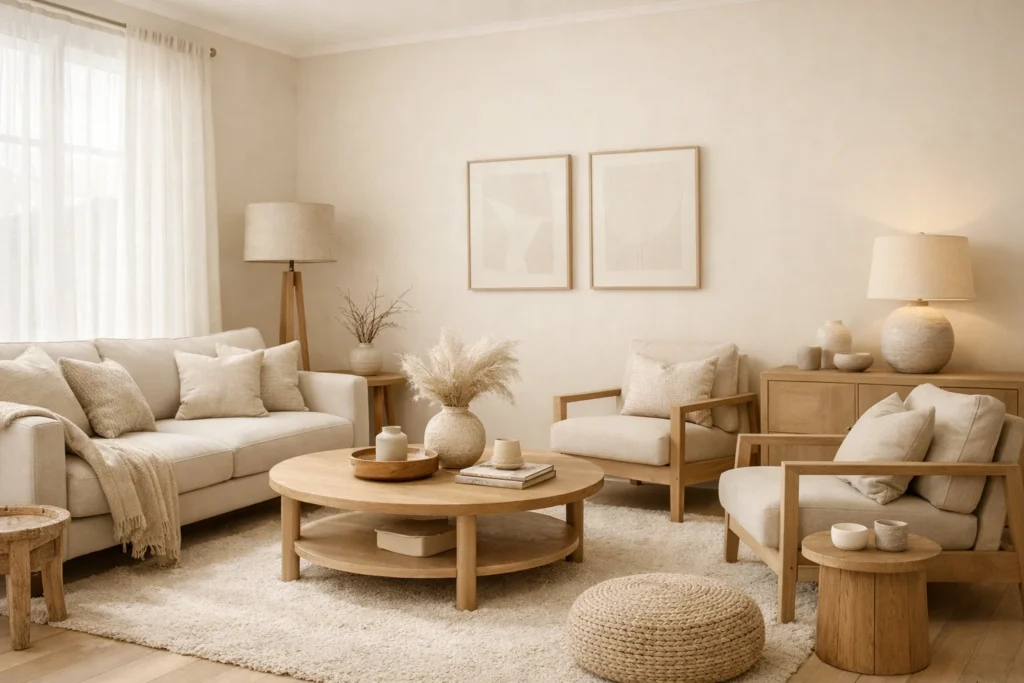
Color psychology plays crucial roles in creating hygge atmosphere through the emotional responses various hues trigger. The hygge decorating style gravitates toward neutral warm tones—creams, taupes, soft grays, warm whites, and muted earth colors that create sanctuary feeling rather than stimulating or agitating. These warm hygge decor colors provide visual calm allowing eyes and minds to rest rather than constantly processing competing chromatic information. Stark whites or cool grays with blue undertones read clinical and cold, undermining every other hygge element you add. Accent colors stay equally muted when introduced: dusty rose, sage green, rust orange, soft mustard. The restraint in cozy minimalist decor color application allows textiles, lighting, and natural materials to create atmosphere without competing visual noise.
Implementing warm neutral palettes throughout your hygge home begins with wall color as foundation. Paint main living areas in warm neutrals testing samples in actual room lighting at different times of day before committing to full gallons. Colors shift dramatically under various light conditions, and what looks perfect in morning sun might read entirely different in evening lamp light. Choose earth tones for textiles and hygge home accessories, allowing wood tones to count as color contribution toward overall palette. The cozy minimalist decor approach uses monochromatic schemes within warm families creating cohesive flow that feels more calming than rooms jumping between competing colors. This doesn’t mean boring—texture, pattern, and material variation provide ample visual interest without requiring bold color contrasts. The inviting home environment that emerges from restrained color choices allows you to actually find peace at home rather than feeling visually overstimulated by every surface demanding attention.
Incorporate Nature with Plants and Organic Elements
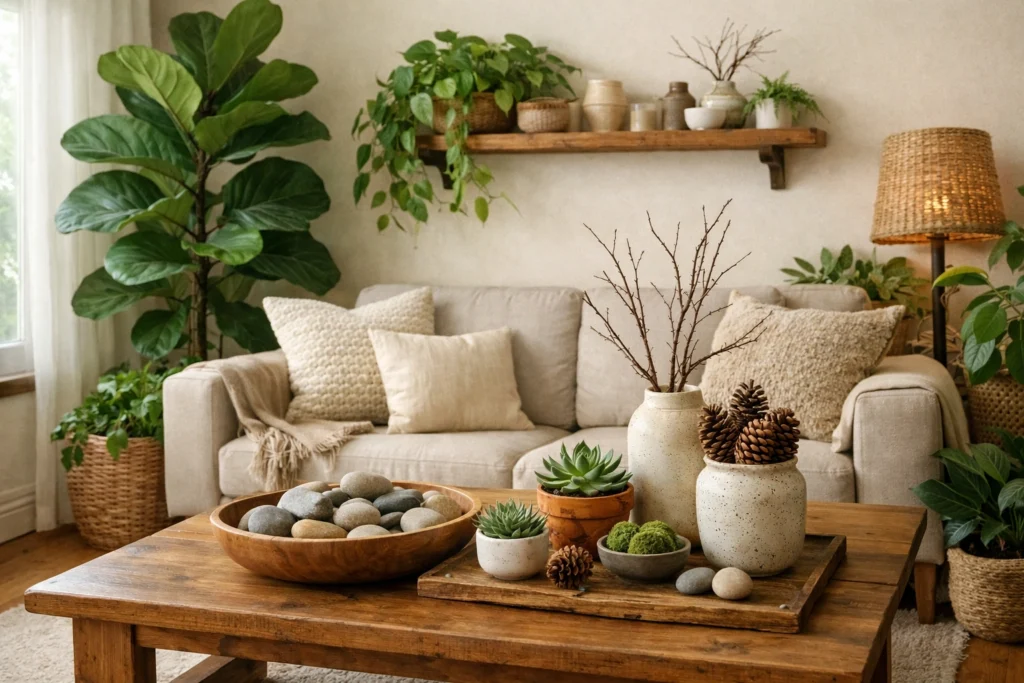
Biophilic design principles recognize humans’ innate need for nature connection, making plant presence essential in hygge inspired interiors especially during winter months when outdoor time drops dramatically. Houseplants provide living, changing elements that keep hygge home design feeling dynamic rather than static. They improve air quality, increase humidity in dry heated spaces, and offer tangible care rituals as you water and tend them. Beyond plants, natural materials like collected branches, smooth stones, pinecones, and dried flowers bring outdoor world inside without requiring ongoing care. Even small hygge home accessories from nature significantly impact warm home ambiance, reminding you that life exists beyond walls even when cold weather keeps you inside predominantly.
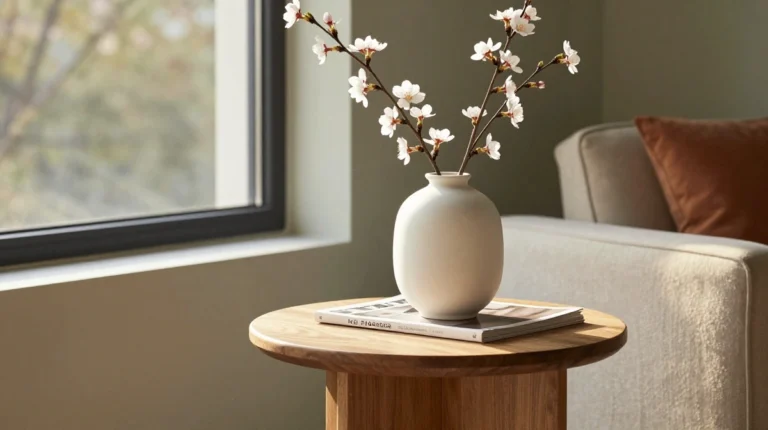
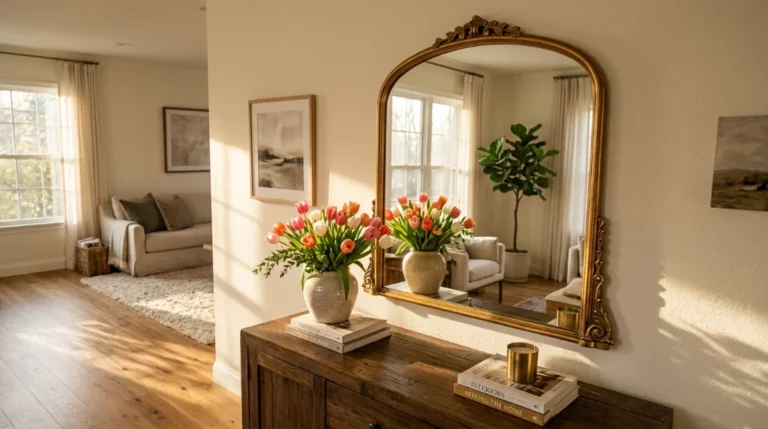
Integrating nature into your hygge home starts with selecting low-maintenance plants matching your skill level and available light. Pothos and snake plants tolerate neglect remarkably well, thriving in varied light conditions and forgiving occasional watering forgetfulness. Place larger floor plants in corners creating vertical interest and softening hard architectural angles. Add medium plants to shelves, console tables, and side tables distributing greenery throughout rather than clustering everything in single locations. Small succulents on coffee tables or windowsills require minimal care while providing close-up nature during daily life. Display collected natural objects—interesting branches arranged in tall vases, smooth river stones in wooden bowls, pinecones in ceramic dishes. Seasonal changes allow nature rotation: pinecones and evergreen branches winter, fresh spring flowers, summer grasses, autumn coziness through colorful leaves and dried seed heads. Even faux plants work acceptably in truly low-light spaces where nothing real survives, proving that hygge home transformation sometimes means accepting imperfect solutions for practical reasons.
Keep Spaces Clutter-Free for Peace and Calm
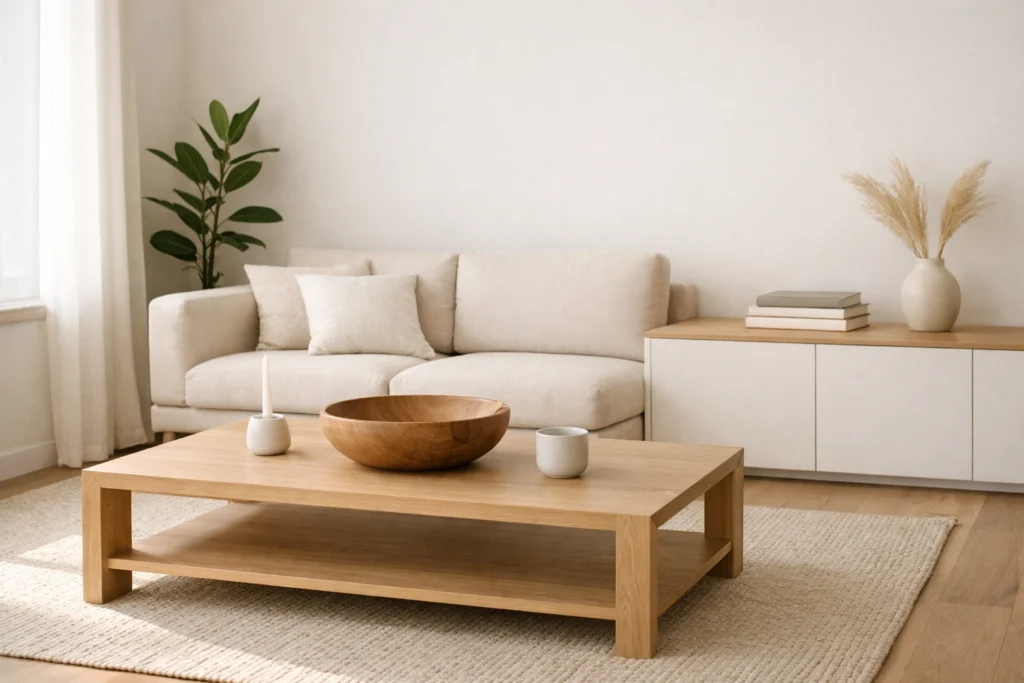
Hygge requires simultaneous presence of coziness and order—these qualities enhance rather than contradict each other. Visual clutter prevents relaxation space feeling regardless of how many candles burn or blankets drape. The peaceful hygge space emerges from curated rather than stuffed environments where every item present serves clear purpose or provides genuine joy. This aligns with the Swedish concept of “lagom” meaning “just right amount,” influencing hygge’s approach to possessions. Too little creates sterile coldness while too much generates chaotic noise. The Danish comfort style finds sweet spot where sufficient comfort exists without tipping into overwhelming accumulation. Clutter creates mental noise incompatible with hygge’s fundamental goal of calming environment supporting stress-free living and genuine rest.
Decluttering for hygge home purposes means keeping only items used regularly or loved deeply, releasing everything else regardless of money spent or guilt felt. This isn’t minimalism demanding stark emptiness—it’s intentional choices about what earns presence in your limited space. Implement closed storage solutions maintaining visual peace even while owning necessary items. Edit possessions regularly, recognizing that what served you once might not serve you now. Assign everything a designated home preventing random accumulation on surfaces. The cozy minimalist decor approach embraces displaying beautiful functional items rather than hiding everything in closets. A wooden cutting board leaning against kitchen wall, ceramic bowls stacked on open shelving, or wool blankets in woven baskets all provide functional comfort while contributing to overall aesthetic. The key involves intentional choices about what stays visible versus what gets stored, maintaining the peaceful atmosphere that allows you to genuinely find peace rather than feeling visually assaulted by chaos every time you walk through rooms.
Establish Hygge Rituals Like Tea Time and Fireside Chats

Everyday rituals form hygge’s beating heart, transforming routine activities into intentional practices that savor moments rather than rushing through them. Hygge tea rituals exemplify this perfectly—brewing tea isn’t just caffeine delivery but ceremony requiring full attention and providing genuine pause in demanding days. The Danish hygge lifestyle builds around small daily traditions that celebrate togetherness when shared and provide restoration when solitary. Americans tend to multitask even pleasant activities, checking phones while eating or watching TV while supposedly relaxing. Hygge demands different approach where you practice mindfulness during rituals, giving full attention to sensory experience and present moment rather than mentally dwelling on past or future.
Specific hygge tea rituals and similar practices you can implement immediately include morning coffee or tea served in beautiful mug you love, sitting rather than standing, savoring first sip before checking devices. Establish evening candlelight ceremony where you light candles at same time daily marking transition from productive mode to restorative evening. Designate one morning weekly for leisurely breakfast—Sunday pancakes, fresh bread, whatever appeals—using real plates and lingering over conversation or newspaper. Create game nights, puzzle building sessions, or communal cooking events that require full participation without screens dividing attention. If you have fireplace, hygge fireplace setting gatherings become natural ritual as you gather together around flames telling stories or simply sitting quietly in shared space. The intimate gathering moments these rituals facilitate build meaningful connections far more effectively than expensive vacations or elaborate events, proving that simple pleasures consistently deliver more satisfaction than complicated productions.
Hygge Rituals to Start This Year:
Morning coffee ceremony requires using favorite mug, sitting at table rather than standing at counter, and taking first sip mindfully before checking phone or planning day ahead. Evening candle lighting happens at sunset every single day regardless of season, marking boundary between productive daytime and restorative evening hours. Weekly baking designates one specific day for bread, cookies, or other treats where process and aroma matter as much as final product. Sunday breakfast becomes leisurely weekend ritual prepared without rushing, served on actual plates, and extending past typical eating duration through conversation. Fireside reading dedicates thirty minutes before bed to physical books with no screens allowed, sitting by lamp or fireplace if available. Afternoon tea time establishes proper pause using favorite cup and taking full fifteen minutes even when alone, treating break as essential rather than indulgent.
Make Your Bedroom a Cozy Hygge Sanctuary
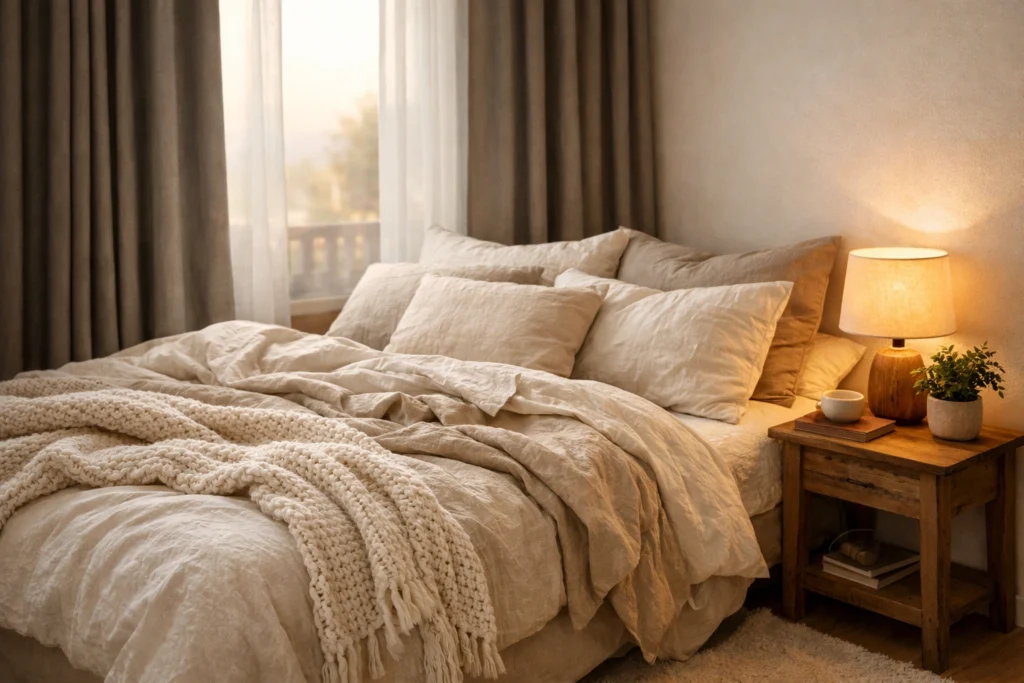
The hygge bedroom design priorities differ from other rooms because bedroom serves as most important home sanctuary in entire house. Quality sleep and genuine rest form hygge foundations—everything else becomes harder when exhaustion dominates. The comfortable hygge space you create in bedroom directly impacts daily wellbeing more than any other room. Multiple pillows allowing customization, heavy blankets providing weight and warmth, soft natural fiber sheets, blackout capability blocking light pollution, and temperature control maintaining cool sleeping conditions all qualify as necessities not luxuries. Soft hygge furnishings matter enormously here since you spend roughly one-third of life unconscious in this space, making quality bedding arguably your most important furniture investment.
| Bedroom Element | Hygge Specification | Impact on Wellbeing |
|---|---|---|
| Bedding | Natural fiber sheets, down duvet | Sleep quality foundation |
| Pillows | Multiple types, various firmness | Comfortable seating and sleeping |
| Blankets | Layered: sheet, blanket, duvet | Temperature intentional choices |
| Lighting | Bedside lamps, dimmable, warm | Evening soft lighting wind-down |
| Window Treatment | Heavy curtains, blackout | Darkness for restful environment |
| Textiles | Throw blanket, floor rug | Winter comfort morning and night |
| Atmosphere | Candles, plants, minimal decor | Peaceful retreat feeling |
How These Hygge Elements Transform Your Home and Life

The cumulative impact of hygge home transformation exceeds individual element effects because changes work synergistically supporting overall wellbeing. Physical environment shapes mental and emotional states more than most people realize, with research consistently linking home environments to stress levels, sleep quality, relationship satisfaction, and general happiness. Creating cozy home infrastructure isn’t frivolous self-indulgence—it’s foundational self-care that makes every other aspect of life more manageable. The hygge home feeling that emerges from implementing these elements provides consistent emotional warmth and psychological comfort rather than requiring vacation or escape to experience restoration. Your comfortable living spaces become active participants in stress-free living rather than neutral backdrops to life happening elsewhere.
Specific life improvements from adopting cozy hygge living practices manifest across multiple domains. Sleep quality improves measurably as bedroom becomes true peaceful retreat optimized for rest. Relationships deepen through conversation-friendly gathering spaces and established shared meals or tea time rituals that prioritize face-to-face connection over parallel screen consumption. Overall stress levels drop as calming environment provides consistent restoration rather than adding to daily demands. Home time becomes genuinely enjoyable rather than something tolerated between external activities, reducing need for constant entertainment seeking. The comfortable hygge space functions as safe haven from demanding world, offering genuine comfort and soul nourishment that helps you handle inevitable challenges with greater resilience. This isn’t abstract philosophy—it’s measurable wellbeing improvement that starts with lighting candles, adding blankets, and making intentional choices about how you inhabit your space.
Transformation Timeline:
Week 1 brings immediate comfort increase from lighting changes and textile additions. You’ll notice yourself lingering at home more willingly, feeling less driven to escape to external entertainment. Week 2-4 delivers sleep quality improvements as bedroom hygge home transformation takes effect. Evening wind-down becomes easier with established lighting and ritual routines signaling body to transition toward rest. Month 2-3 shows relationship deepening through regular gathering space use and established rituals like tea time or game nights. Notice genuine conversations increasing while screen time decreases without conscious effort. Month 4-6 demonstrates measurably lower overall stress as hygge home provides consistent restoration. Mental health improvements become visible through better mood regulation and resilience facing challenges. Ongoing practice makes hygge second nature rather than conscious effort, where home sanctuary truly functions as refuge supporting wellbeing rather than just shelter providing weather protection.
Conclusion
Starting your hygge home this year doesn’t demand perfection, major expense, or complete lifestyle overhaul. Small consistent changes accumulate into profound transformation when sustained over weeks and months. Remember that hygge is feeling not aesthetic, accessible to everyone regardless of budget, space limitations, or design skill. The creating hygge atmosphere process begins with whichever single element resonates most strongly—perhaps candlelight tonight, adding blankets tomorrow, establishing tea time ritual next week. American culture particularly benefits from hygge’s counter-cultural emphasis on slow down, enjoy simplicity, and prioritize comfort over constant achievement and acquisition. The practices directly address modern life’s most damaging aspects: overstimulation, disconnection, rest deprivation, and pressure to perform rather than simply be.
Take action tonight by lighting candles at sunset marking your first conscious hygge step. Remember that successful hygge home transformation serves genuine wellbeing not Instagram aesthetics or impressing others. The inviting home environment you’re creating exists for you and people you love, providing emotional warmth and psychological comfort that supports rather than depletes. Cozy hygge living becomes more relevant each year as modern life accelerates and demands increase. Your home should restore not drain, comfort not stress, connect not isolate. Hygge makes this possible through simple living choices honoring your fundamental human needs for cozy comfort, meaningful connections, and peaceful atmosphere. The journey starts tonight. Light candles. Wrap blankets. Sip tea. Welcome warmth. Your hygge home transformation has begun.
Frequently Asked Questions
Is hygge just a trend or does it actually improve wellbeing?
Hygge represents centuries-old Danish cultural practice, not modern trend despite recent American popularity surge. The philosophy dates back generations in Scandinavian countries where harsh winters necessitated finding comfort and connection indoors for extended periods. Research strongly correlates cozy hygge living practices with Denmark’s consistent ranking among world’s happiest nations despite challenging climate. Studies on cozy environments, social connection rituals, and mindfulness all support hygge’s measurable psychological benefits. The practices address fundamental human needs—warmth, safety, connection, rest—often neglected in modern American life. The “trend” simply represents Americans discovering what Danes have practiced for generations as essential wellbeing strategy. Creating hygge atmosphere through soft lighting, warm textures, and everyday rituals demonstrably reduces cortisol levels, improves sleep quality, and strengthens relationships according to environmental psychology research.
How much does it cost to create a hygge home?
Hygge home transformation costs as little or much as you choose, with essential elements available at minimal expense. Basic implementation including candles, thrifted blankets, and furniture rearrangement runs under $100 total. Many core practices—turning off overhead lights, establishing tea time rituals, decluttering for peaceful atmosphere—cost absolutely nothing. Major investments like quality bedding or solid wood furniture remain completely optional rather than required. The Danish hygge lifestyle explicitly rejects materialism and expensive consumption in favor of simple pleasures and meaningful connections. Start with candlelight and sip tea rituals before considering any purchases. Budget-conscious hygge home transformation succeeds beautifully through thrift store textile finds, nature-gathered elements like branches and stones, and repurposing items you already own. The philosophy emphasizes functional comfort and genuine comfort over impressive aesthetics, making expensive designer pieces unnecessary for authentic practice.
Can you practice hygge in warm climates like California or Florida?
Absolutely! While hygge originated in cold Denmark, the core principles transcend climate completely. Cozy hygge living in warm areas adapts materials and practices while maintaining underlying philosophy. Lightweight linen replaces heavy wool. Indoor-outdoor comfortable living spaces replace closed rooms. Ceiling fans substitute for fireplaces. Iced tea time rituals work beautifully as warm climate alternatives to hot beverages. The essential elements—soft lighting, natural materials, intimate spaces, everyday rituals, meaningful connections, peaceful atmosphere—apply universally regardless of temperature. Creating hygge atmosphere in warm climates might emphasize morning and evening coolness, shaded outdoor gathering spaces, and lighter textiles while maintaining the slow down and celebrate togetherness emphasis. Californian hygge looks different from Danish hygge materially while remaining identical philosophically. Warm hygge decor translates across climates through intentional choices honoring comfort, simplicity, and presence.
Do I need to buy Danish furniture and decor for authentic hygge?
Not remotely. Hygge is philosophy not aesthetic, achievable with furniture from anywhere in any style. Hygge inspired interiors can look Scandinavian, farmhouse, traditional, bohemian, or eclectic depending entirely on personal preference and existing possessions. The key elements—natural materials, soft lighting, warm textures, comfortable seating, clutter-free calming environment—work in any aesthetic context. Danish modern design happens to embody hygge principles through clean lines, natural materials, and functional beauty, but Mexican wool blankets, American quilts, Japanese ceramics, or vintage French finds work equally well if they provide genuine comfort and meaning. Hygge home design succeeds through how items make you feel rather than where they originated. Focus on cozy comfort, warm home ambiance, and inviting warmth rather than specific brands or national origins. The most hygge approach often involves using what you already own more intentionally rather than purchasing anything new.
Is hygge appropriate for minimalists or does it require lots of cozy stuff?
Hygge and minimalism share significant overlap through decluttering emphasis and intentional choices about possessions. The difference lies in minimalism focusing on visual restraint while hygge prioritizes comfort and coziness. You can absolutely practice cozy minimalist decor combining both philosophies—carefully curated textiles, quality over quantity, everything serving clear comfort or connection purpose. Hygge opposes clutter but embraces necessary comfort items like multiple blankets, cushions, and hygge throw blankets. It’s about “just enough” (the Swedish lagom concept) not “as little as possible” or “as much as fits.” The Danish comfort style maintains simple living through careful curation while ensuring sufficient soft hygge furnishings for genuine comfort. Nordic home comfort achieves warm minimalist home aesthetic through restrained color palettes, natural materials, and functional comfort without excessive accumulation. Both philosophies appreciate simple pleasures and reject meaningless consumption, making them highly compatible when properly understood.


One Comment