
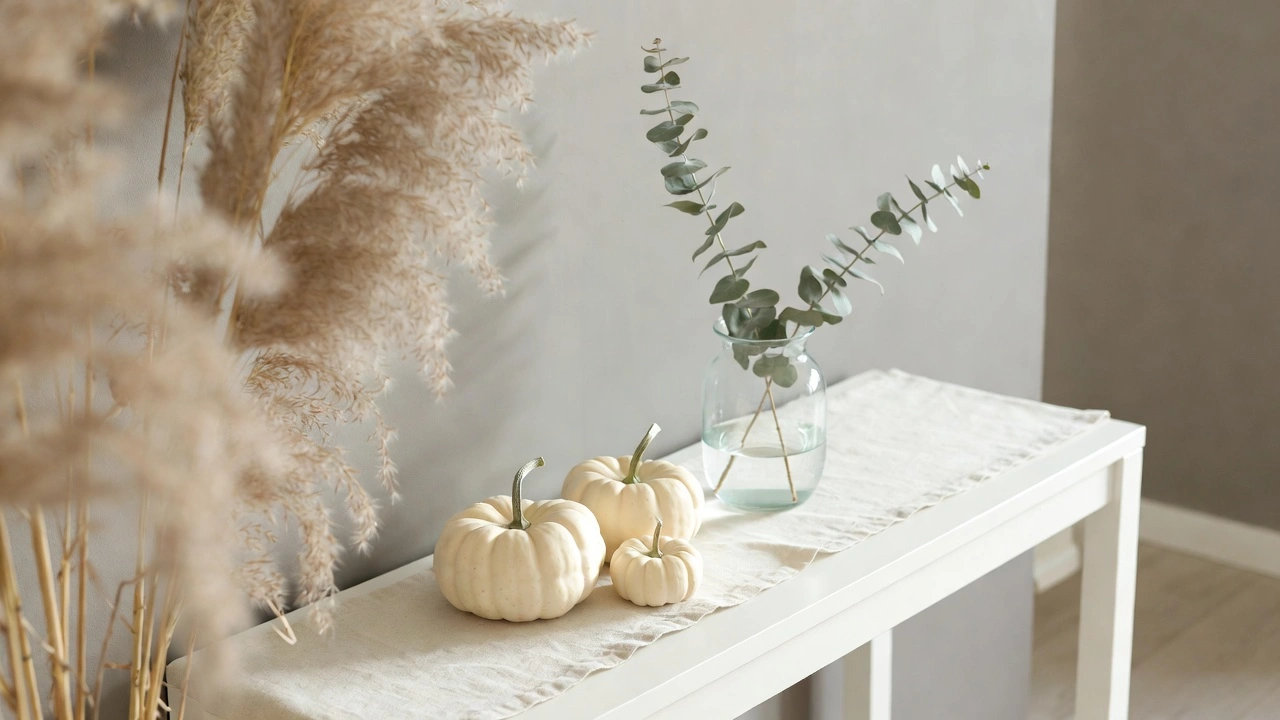
How To Create Minimalist Fall Entryway Table Decor With Natural Materials
Walking into homes drowned in orange pumpkins, cornstalks, and plastic leaves feels overwhelming. The visual assault begins at the front door where every surface groans under mountains of seasonal clutter. Traditional fall foyer table ideas often translate to chaos rather than celebration, especially when entryway decorating fall approaches mimic store displays more than actual living spaces. Your carefully curated modern home suddenly looks like a harvest festival exploded inside. The mismatch between your usual minimalist aesthetic and these maximalist autumn expectations creates genuine design distress every September.
Why Minimalist Fall Entryway Table Decor Works for Modern Homes
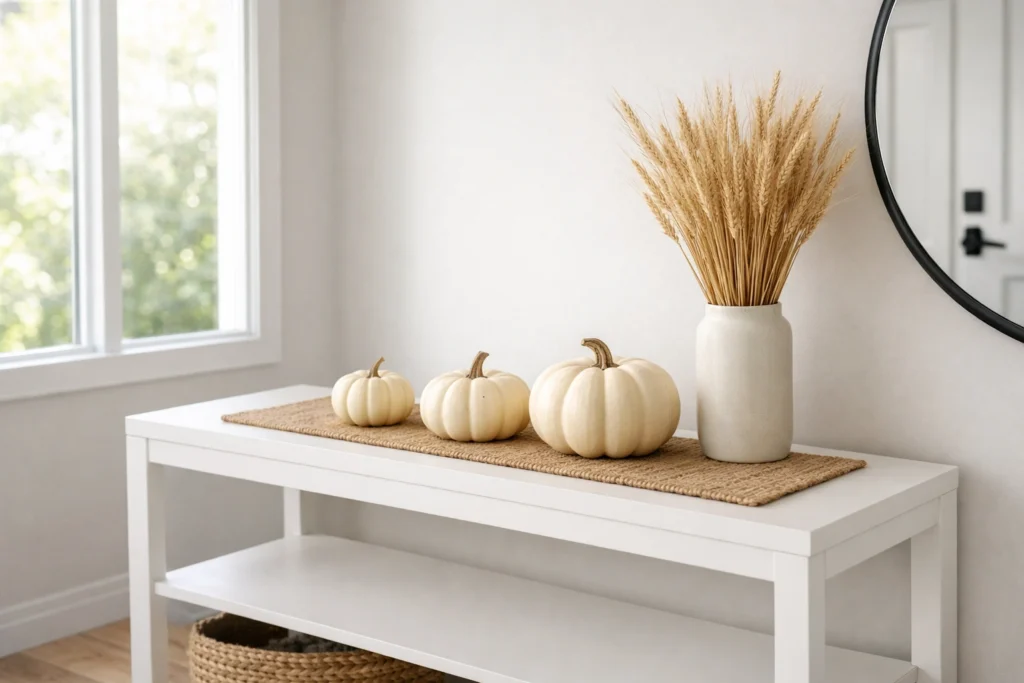
Minimalism in seasonal entry table decor succeeds where traditional approaches fail by respecting visual breathing room and psychological calm. Modern fall entryway design demands restraint because contemporary homes already feature clean lines, neutral palettes, and uncluttered horizontal surfaces that seasonal chaos disrupts violently. The elegant fall foyer created through minimalist principles makes first impressions that feel intentional rather than desperate or trying too hard. Each carefully selected piece serves clear purpose rather than simply filling space because stores told you October required orange everywhere. The cozy entry table fall aesthetic emerges from quality over quantity, proving that three perfect pumpkins create focal points more effectively than fifteen mediocre ones scattered chaotically.
Practical advantages extend beyond mere aesthetics into genuine functional benefits worth considering carefully when planning your fall entry table display. Maintain functionality remains possible when displays occupy only 60% of available surface area leaving room to organize daily essentials like keys, mail, and phones. Fewer items mean dramatically less time spent dusting, adjusting, and worrying about toddlers or pets knocking things over constantly. The farmhouse entryway fall look costs significantly less when buying three high-quality elements versus twenty cheap ones that break or look dated immediately. Transition seasons easily happens through simple swaps—exchange pumpkins for pinecones, wheat for evergreen—rather than storing elaborate coordinated sets. The thanksgiving entryway decor you create in September works beautifully through November without requiring mid-season overhauls or additional purchases eating into holiday budgets.
Choose the Right Natural Materials for Your Entry Table
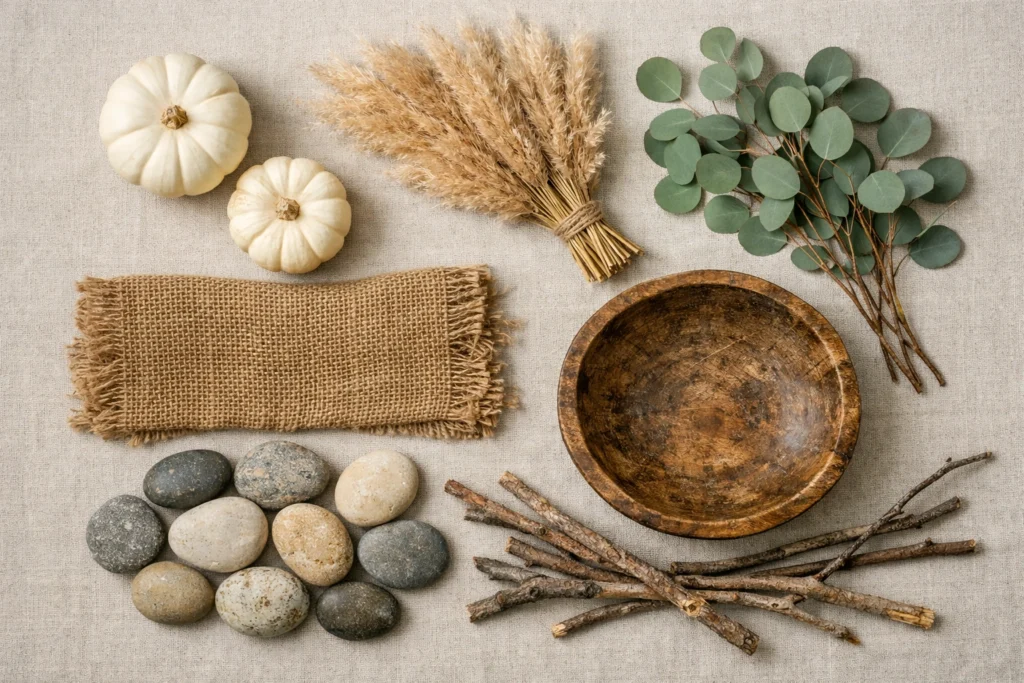
Material selection forms the foundation determining whether your harvest entryway display succeeds or fails at demonstrating good taste through organic authenticity. Natural materials sourced directly from nature—wood, stone, dried botanicals, organic fibers—possess inherent texture and character that manufactured items simply cannot replicate no matter how skillfully designed. The rustic fall entry aesthetic specifically benefits from materials showing age, weathering, and imperfection since these qualities communicate authenticity versus sterile perfection. Incorporate natural elements that align with eco-conscious values increasingly important to American consumers seeking sustainable seasonal decorating options. Quality natural pieces become investment items used annually across decades rather than disposable décor landfill-bound after single seasons.
you may also like this:7 Ways to Use White Pumpkins in Neutral Fall Decor
| Material Category | Specific Examples | Best Budget Sources | Typical Cost | Seasonal Longevity |
|---|---|---|---|---|
| Organic Pumpkins/Gourds | White pumpkins, small gourds, decorative squash | Grocery stores, farmers markets, roadside stands | $2-8 each | 2-3 months fresh indoors |
| Dried Botanicals | Pampas grass, wheat, dried rye, fountain grass | Craft stores, online bulk, forage outdoors | Free-$12 bundle | Multiple years stored properly |
| Wood Elements | Dough bowls, cutting boards, branches, slices | Thrift stores, HomeGoods, nature collection | $10-40 pieces | Lifetime with minimal care |
| Natural Fiber Textiles | Jute runners, linen, burlap, cotton | Fabric stores, Target, Amazon | $8-30 items | Years with washing |
| Stone/Mineral Accents | River rocks, geodes, decorative stones | Nature collection, garden centers, dollar stores | Free-$15 sets | Permanent, never degrades |
Start with a Simple Base: Neutral Table Runner or Tray
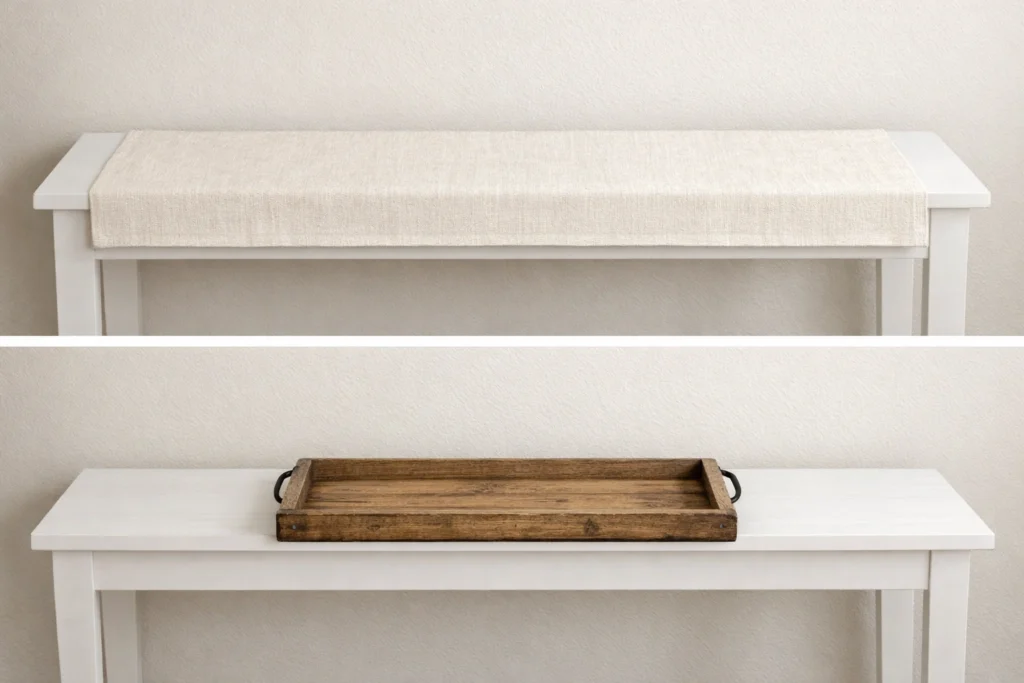
Foundation layers anchor entire displays preventing that awkward floating appearance where random items sit directly on bare table surfaces looking disconnected and temporary. The entryway table runner fall choice defines your display area boundaries while protecting table finishes from pumpkin moisture, candle wax, or accidental scratches during seasonal styling adventures. Natural fiber options like linen, cotton, jute, or burlap in cream, beige, tan, or warm gray tones complement wall color beautifully while providing neutral backdrop allowing colorful elements like greenery or orange-stemmed pumpkins to pop visually. Size matters enormously—runners should extend approximately two-thirds of table length leaving some bare wood visible at ends preventing that tablecloth effect where everything disappears beneath fabric.
Alternative foundation approaches using trays maximize small entry spaces or utilize narrow tables where traditional runners hang awkwardly or drag on floors creating tripping hazards. Wooden serving trays, metal decorative trays, or woven basket trays create contained displays that feel intentionally curated rather than randomly assembled across horizontal surfaces. Tray sizing requires careful consideration—choose largest tray leaving minimum 6-inch clearance on all sides avoiding cluttered look while ensuring adequate breathing room around the entire seasonal console styling arrangement. The texture question deserves attention too since nubby linen adds visual interest through subtle weave patterns while smooth cotton reads cleaner and more contemporary. Blend beauty with function by selecting washable fabrics beating dry-clean-only options that discourage regular cleaning leading to dusty, neglected seasonal displays nobody enjoys maintaining through the season.
Add Organic Elements: Pumpkins, Gourds, and Branches
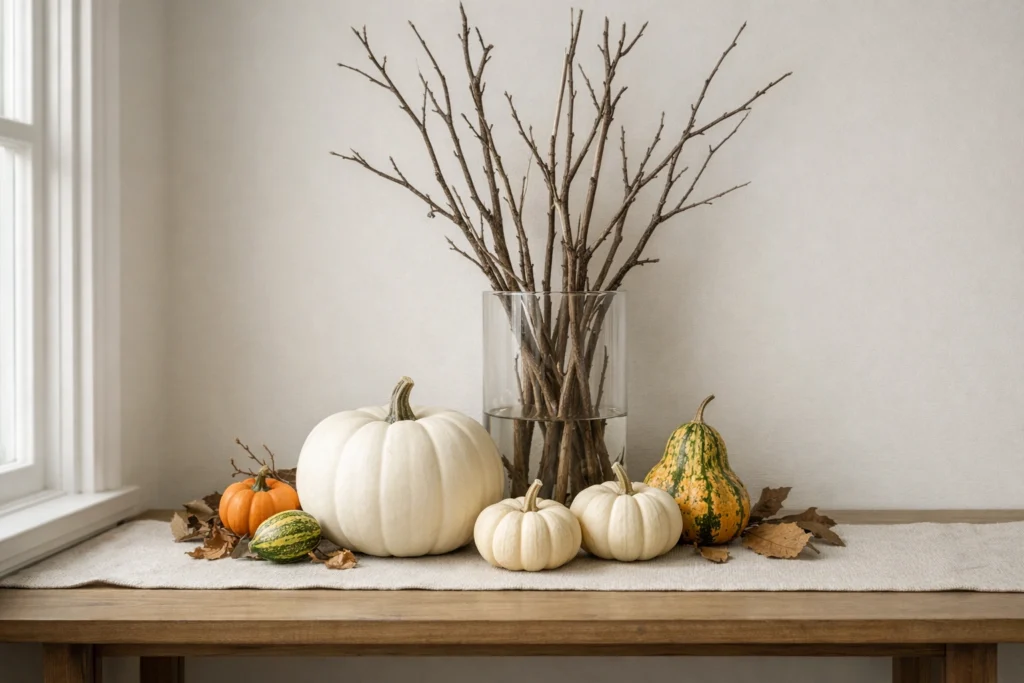
Pumpkins on console table fall serve as quintessential seasonal representatives instantly communicating autumn without requiring interpretation or explanation from viewers. The minimalist approach demands restraint here—select 1-3 specimens maximum avoiding overwhelming spaces with pumpkin abundance that reads as trying too hard or lacking editing skills. Display pumpkins creatively by choosing white, cream, or gray varieties over traditional bright orange since neutral tones match home style more easily while creating magazine-worthy sophistication that photographs beautifully for social media documentation. Size variation matters critically—pair one medium 8-10 inch pumpkin with one small 4-6 inch specimen creating visual rhythm through scale contrast that single-size groupings never achieve successfully.
Branches entry table fall displays add seasonal touches through vertical interest drawing eyes upward while varying height levels that prevent flat, one-dimensional arrangements feeling uninspired and boring. Forage interesting branches showing character through curves, multiple offshoots, or lichen growth adding natural texture impossible to purchase affordably from craft stores. Place branches in simple tall vases—clear glass cylinders or neutral ceramic vessels—positioned behind pumpkins creating layered depth where foreground, middle ground, and background elements interact visually. Decorative gourds supplement pumpkin displays beautifully when used sparingly—add 1-2 mini warty gourds in complementary neutral tones tucking them beside larger pumpkins filling visual gaps while balancing visual weight across the entire autumn entry vignette composition. The rustic fall entry aesthetic particularly benefits from this natural element combination since organic imperfection reads as intentional authenticity rather than design failure.
Incorporate Dried Grasses and Wheat for Texture
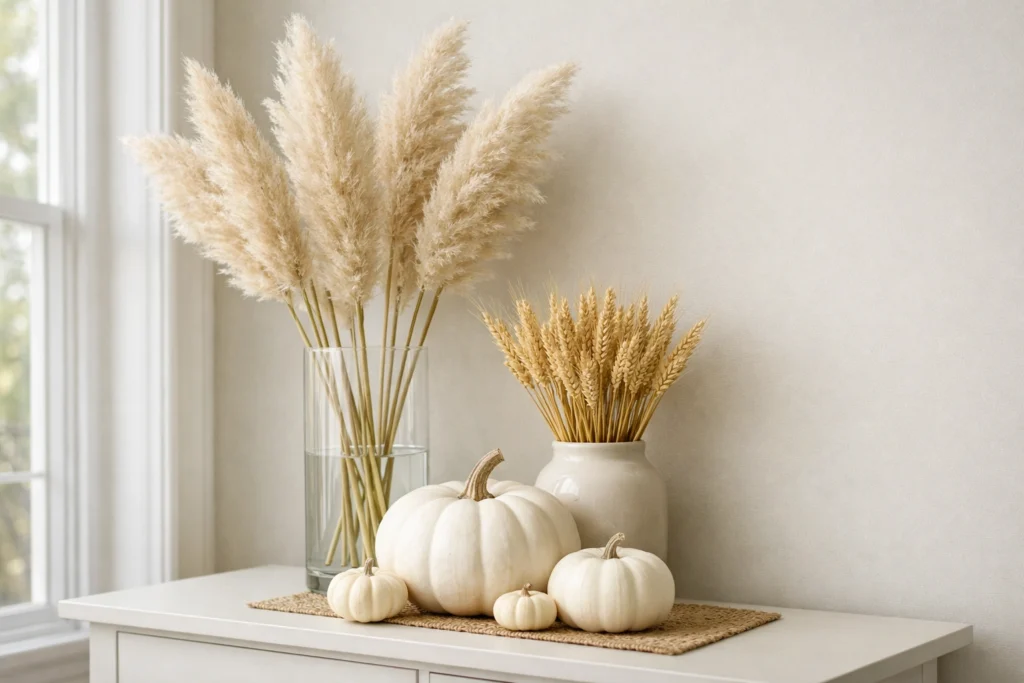
Dried grasses function as essential texture providers in monochromatic fall door table styling where color variation remains minimal by design necessity. The textural necessity emerges from basic design principles—schemes limited to neutral palettes require texture creating visual interest that color would normally supply in more vibrant approaches. Pampas grass, wheat stalks, dried rye, and fountain grass all bring warmth indoors through organic movement and dimensional quality that static pumpkins or rigid wood cannot provide alone. These dried botanicals naturally complement minimalist aesthetics since their neutral tones of cream, tan, and warm beige coordinate with rug colors and existing neutral palettes throughout modern homes seeking cohesive design flow.
Arrange fall foliage and dried grasses using specific placement techniques maximizing their visual contribution without overwhelming delicate balance minimalist displays require constantly. Cluster 5-7 stems together in simple vessels creating fuller appearance than sparse single stems that read as forgotten or neglected rather than intentionally minimal. Height proportion matters enormously—grasses should reach approximately 1.5 times pumpkin height creating pleasing vertical interest without dwarfing horizontal elements or blocking sightlines across entry spaces. Position grass arrangements behind pumpkins rather than beside them creating dimensional layering where each element occupies distinct spatial zone preventing muddy, cluttered appearance. Craft stores sell dried grass bundles for $5-12 typically, though patient shoppers find better deals at discount stores or through bulk online orders. The seasonal hallway decor you create using these dried elements lasts indefinitely unlike fresh flowers requiring weekly replacement and constant maintenance throughout autumn months.
Use Wood Accents and Natural Fibers for Warmth
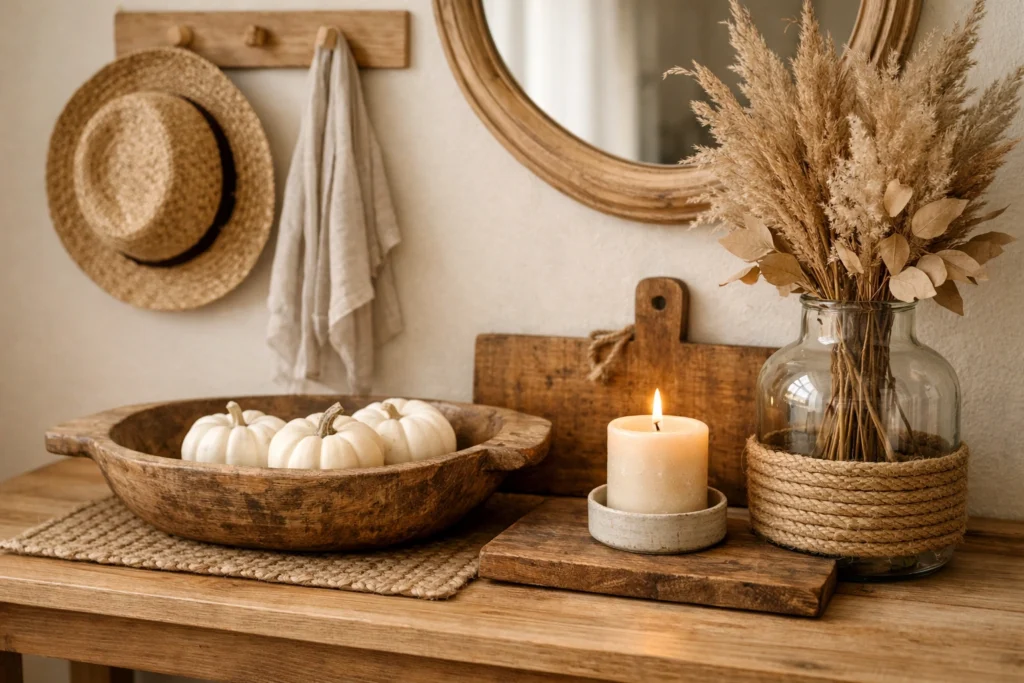
Wood elements bring warmth indoors serving as emotional and visual temperature regulators in neutral color schemes that risk feeling cold or sterile without organic material intervention. Vintage dough bowls, reclaimed cutting boards, and interesting weathered branches introduce rich brown tones and natural grain patterns creating tactile appeal that invites touching unlike smooth ceramics or cold metals. The aged patina on secondhand wood pieces tells stories and communicates authenticity impossible to fake through new purchases or artificial distressing techniques. Natural fiber additions including jute rope, woven baskets, and cotton stems further enhance the organic quality while demonstrating good taste through material choices reflecting environmental consciousness and appreciation for traditional craftsmanship.
Enhance hallway area aesthetics by integrating wood and fiber elements strategically throughout your fall entryway arrangement rather than clustering them awkwardly in single zones. Use vintage dough bowl as pumpkin vessel creating rustic charm while elevating specimens slightly above table surface creating focal points through dimensional height variation. Place small wooden cutting board underneath candle groupings providing stable, heat-resistant base while adding warm wood tone to candle displays. Wrap jute rope around plain glass vase bases adding textural detail and rustic character to otherwise ordinary vessels. The traditional autumn entry particularly benefits from these natural material combinations since wood and fiber represent time-honored harvest season associations deeply embedded in American fall tradition. Thrift stores offer remarkable bargains on quality wood items—$5-15 typically buys substantial pieces that retail stores price at $40-80—making this cozy entry table fall approach surprisingly budget-friendly when shopping secondhand sources consistently.
Style with Candles and Soft Lighting for Ambiance
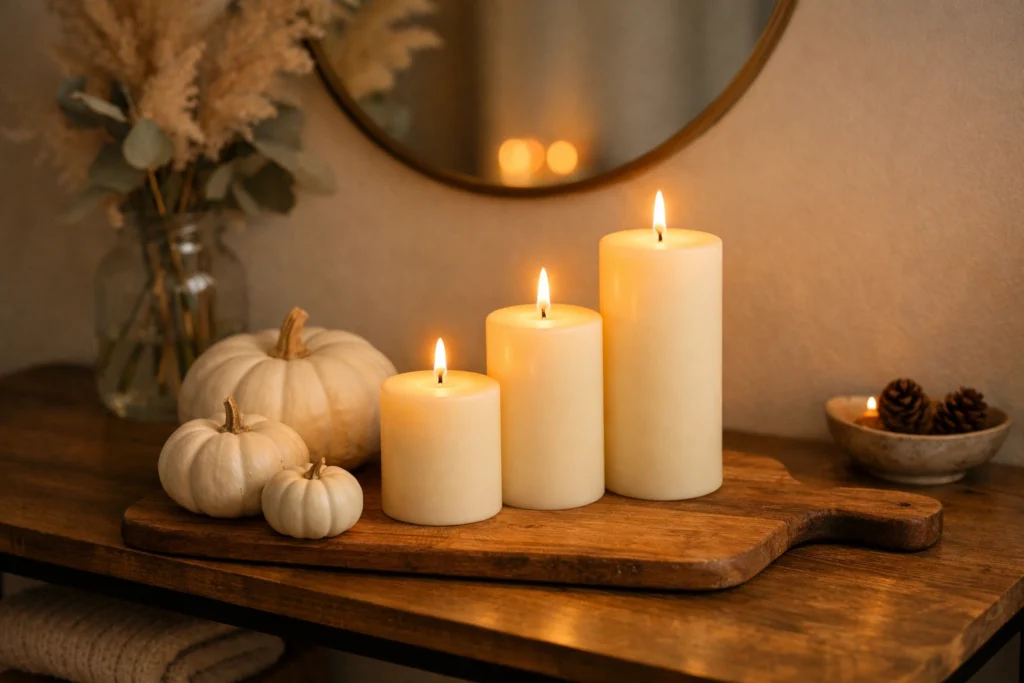
Lighting transforms fall front entry table displays from daytime arrangements into evening focal points that greet guests warmly through flickering glow mimicking fireplace comfort. Candles entry table fall styling provides warm illumination while adding vertical interest through varying candle heights creating visual rhythm across horizontal surfaces. The minimalist candle approach demands restraint—select 1-3 candles maximum practicing restraint rather than the five-to-seven groupings traditional décor promotes enthusiastically. Cream, ivory, or natural beeswax colors reflect personal taste more successfully than bright colors or heavily scented varieties overwhelming small entry spaces with fragrance that feels aggressive rather than welcoming to visitors entering homes.
Place candles safely by positioning them away from traffic paths where bags, coats, or careless arms might knock them over creating fire hazards or wax disasters on floors and furniture. Pillar candles in graduated heights (4-inch, 6-inch, 8-inch) clustered together create pleasing visual pyramid that draws eyes naturally while establishing inviting atmosphere through dimensional composition. Battery-operated LED candles offer practical alternative for families with small children, curious pets, or anyone uncomfortable leaving open flames unattended in high-traffic entry zones. Simple holders in brass, natural wood, or clear glass work with existing furniture far better than ornate designs competing for attention with seasonal elements you’ve carefully curated. The lanterns entryway fall trend offers another lighting option—small lanterns with LED candles provide charming glow while protecting flames from drafts that extinguish traditional candles in entries where doors open frequently throughout evenings.
Layer in Greenery: Eucalyptus and Olive Branches
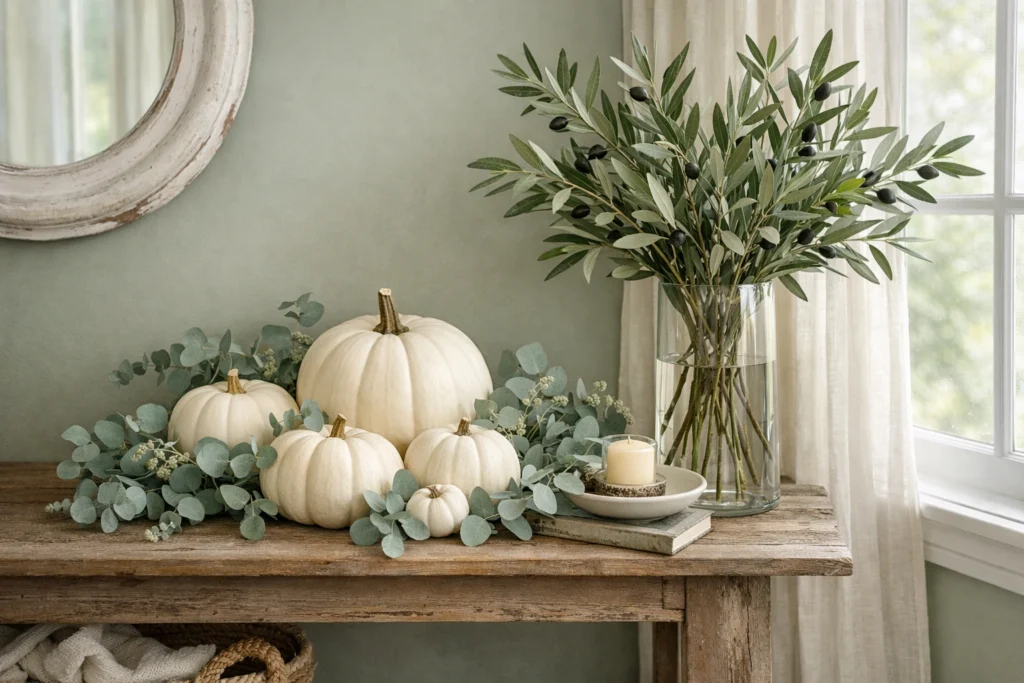
Greenery prevents monochromatic autumn foyer vignette displays from reading as lifeless or monotonous by introducing living color that bridges summer’s vibrant greens into fall’s earthier palette. Fall greenery entryway elements specifically should lean toward muted sage, silver-green, or gray-green tones rather than bright emerald shades that fight autumn’s natural color story violently. Eucalyptus stands out as minimalist favorite due to silvery-blue leaves, graceful draping habit, and remarkable longevity—fresh eucalyptus lasts 2-3 weeks in water then transitions to dried eucalyptus maintaining appearance for months without additional care required. Olive branches offer Mediterranean elegance through slender leaves and architectural branching patterns that photograph beautifully in styled entry displays.
Incorporate natural elements like eucalyptus and olive branches using restraint that honors minimalist principles rather than abundant fullness traditional arrangements favor enthusiastically. Tuck 3-5 eucalyptus stems among pumpkins allowing leaves to drape naturally across table surfaces creating organic flow connecting discrete elements into cohesive composition. Place olive branches in simple tall vessels alongside pumpkin groupings providing vertical interest while introducing subtle greenery without overwhelming neutral palette. Trader Joe’s sells fresh eucalyptus bunches for $3-5 representing remarkable value compared to florists charging $15-25 for similar quantities. Extend through November by hanging eucalyptus upside down to dry once fresh greenery begins fading, transforming temporary fresh elements into permanent seasonal décor used across multiple years. The french country fall entry aesthetic particularly benefits from eucalyptus and olive combinations since these plants carry strong European associations evoking Provençal countryside rather than American farmhouse traditions.
Keep It Functional: Balance Beauty with Daily Use
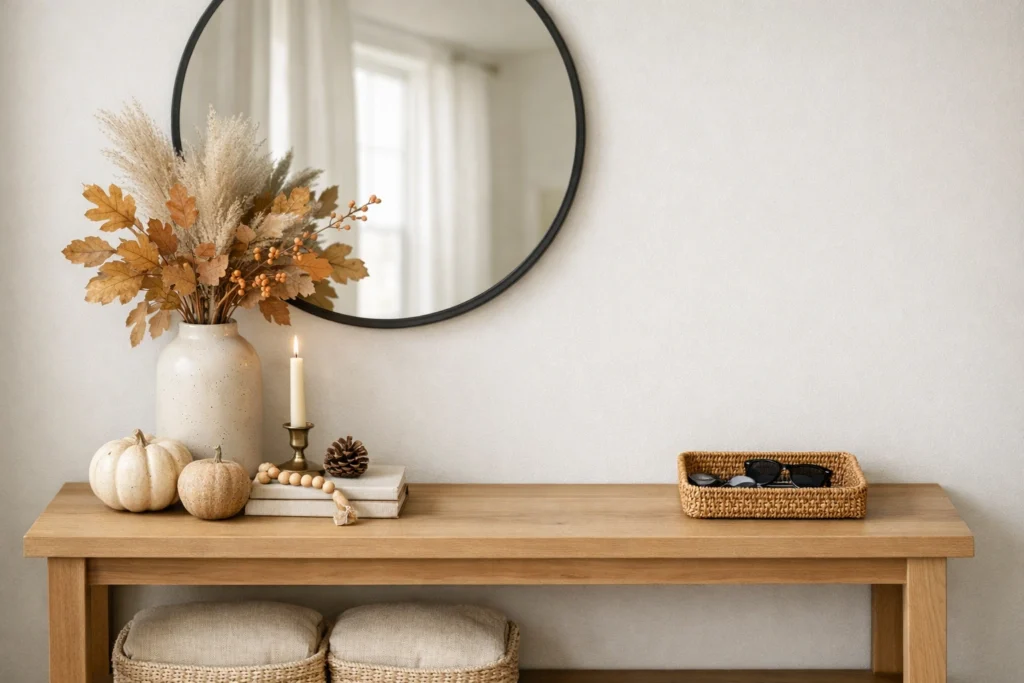
Functionality represents the most commonly overlooked aspect in entryway table centerpiece fall planning, yet it determines whether displays survive the season or get dismantled within weeks due to daily frustration. Entries serve critical household purposes beyond decoration—they function as landing zones where families organize daily essentials like keys, mail, phones, sunglasses, and dog leashes requiring immediate access upon entering homes. Blend beauty with function by reserving approximately 40% of table surface completely clear for these practical necessities allowing room for keys and other items that must land somewhere immediately when hands are full of grocery bags or fussy toddlers demanding attention.
Functional Entryway Balance Strategy:
Divide your console table into designated zones maintaining both aesthetic appeal and daily utility effectively. Reserve the left two-thirds spanning approximately 32 inches on standard 48-inch console table for your minimalist fall display including runner, pumpkins, branches, and candles arranged according to design principles discussed throughout this guide. Keep the right one-third measuring approximately 16 inches completely bare providing landing zone for keys, mail, phones, and other items family members need grabbing immediately upon entering or leaving home. Place attractive woven basket measuring roughly 10×8 inches at table’s far right corner offering storage for frequently accessed items like sunglasses, dog leashes, hand sanitizer, or face masks that should remain near door for convenient access. Ensure all decorative elements remain under 18 inches height allowing clear sightlines across entry preventing displays from making narrow halls feel claustrophobic or blocked. Leave minimum 12-inch clearance between table back edge and wall preventing anyone from squeezing uncomfortably past displays when retrieving coats from nearby closets or navigating tight entry spaces common in older homes or apartments.
Maintain Your Minimalist Fall Entryway Throughout the Season
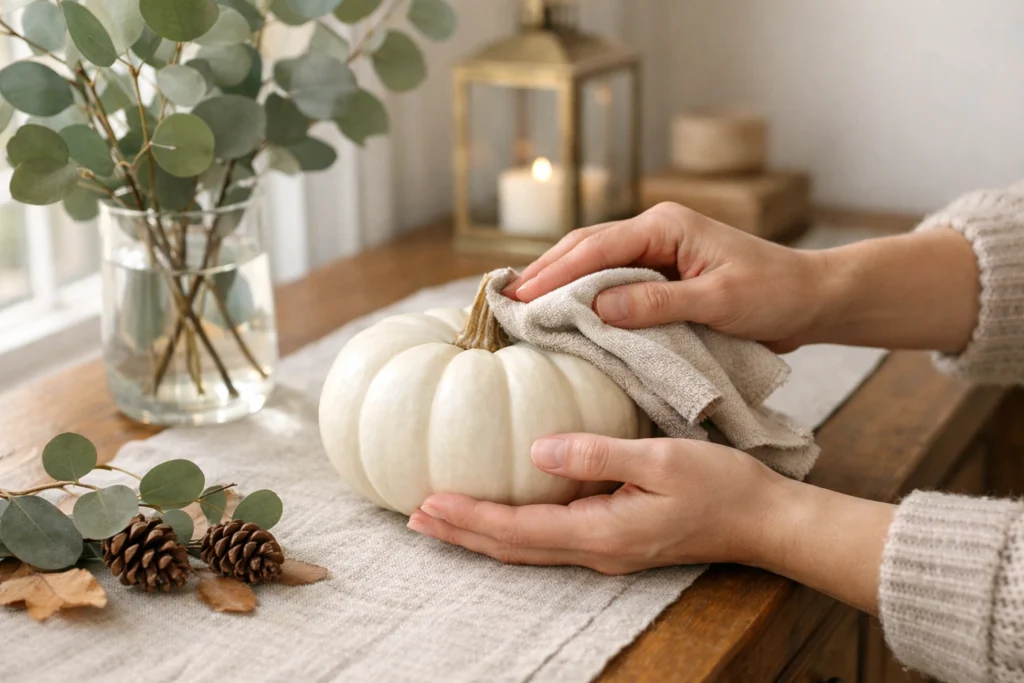
Maintenance determines whether your fall welcome table decor remains fresh and intentional-looking from September installation through November removal or deteriorates into dusty, neglected display signaling poor housekeeping rather than seasonal celebration. Entries accumulate dust faster than interior rooms due to constant door opening introducing outdoor particles, foot traffic stirring up settled dust, and air circulation patterns depositing debris on horizontal surfaces. Fresh pumpkins require weekly inspection checking for soft spots indicating rot beginning internally before external symptoms become obvious through smell or visible mold growth. Dried elements prove remarkably low-maintenance but benefit from occasional gentle dusting preventing accumulation that dulls natural colors and textures over time.
Update for Thanksgiving by making subtle monthly refreshments keeping displays feeling current rather than static or forgotten throughout autumn’s progression. September displays can emphasize wheat and early harvest imagery while October shifts toward pumpkins and autumn leaves then November transitions to thanksgiving through adding small cornucopia, dried corn, or harvest-themed elements. Change decor monthly through swapping just one or two elements rather than complete display overhauls—replace cream pumpkins with orange ones October first, exchange wheat for colorful fall leaves mid-month, add small turkey figurine or “grateful” sign early November. Photograph your display upon initial installation creating reference for next year’s styling when you’ve forgotten exactly how elements were positioned or what made composition work successfully. Remove by December first or immediately after Thanksgiving dinner when fall transitions to winter and holiday season demands different aesthetic entirely. Proper storage using labeled plastic bins and tissue paper wrapping delicate items extends natural materials’ lifespan across multiple seasons making this investment approach rather than annual expense.
Conclusion
Minimalist fall entryway table decor created with natural materials offers sophisticated seasonal alternative to traditional decorating’s overwhelming abundance and visual chaos. The autumn entrance styling approach outlined here proves that practice restraint and curate thoughtfully produce more impressive results than simply buying everything fall-themed stores offer enthusiastically each September. Natural materials including pumpkins, branches, dried grasses, wood accents, and greenery bring warmth indoors while maintaining the clean, uncluttered aesthetic modern homes demand consistently. Each element serves intentional purpose rather than simply filling space because calendar indicates autumn arrival requires seasonal acknowledgment at every entry point.
Start small this weekend by gathering essential foundation pieces: neutral runner or tray, 2-3 small white pumpkins, eucalyptus bunch from Trader Joe’s, and simple glass vase you probably already own buried in kitchen cabinets. Arrange artfully following the layering and height variation principles discussed throughout this guide achieving designer look without professional help or unlimited budgets. Remember that minimalist approach actually costs less than traditional abundant decorating since quality matters more than quantity when each piece must earn its presence through beauty and function combined. Your elegant fall foyer can absolutely celebrate harvest season while maintaining the sophisticated aesthetic you’ve worked hard achieving throughout your home. Style effortlessly. Express autumn spirit. Welcome visitors home to an entry that inspires peaceful feelings rather than overwhelming them with seasonal excess.
Frequently Asked Questions
How many items should I put on my entryway table for minimalist fall decor?
Aim for 5-9 total items maximum including your base runner or wooden tray providing foundation. This typically breaks down practically as one runner or tray, two to three pumpkins or decorative gourds in complementary sizes, one to two vertical elements like branches or dried grasses arranged in vases, one to three candles in simple holders, and three to five greenery stems tucked throughout composition. The critical principle involves odd numbers and intentional spacing where each piece needs visual breathing room. Empty areas provide essential visual rest that defines minimalism versus simple reduction. If your narrow console table fall measures under 36 inches length, reduce quantities proportionally while maintaining odd-number principle throughout arrangement.
What’s the difference between minimalist and boring fall entryway decor?
Minimalist displays succeed through intentional curation and quality piece selection, not mere absence of quantity or style. Boring fall mudroom table decor lacks textural variety, proper scale consideration, or thoughtful arrangement making spaces feel empty rather than restfully minimal. Minimalism deliberately incorporates varied textures through smooth pumpkins contrasting with rough wood and soft textiles, different heights creating visual rhythm preventing flatness, and carefully chosen colors within neutral palette preventing monotony. Each element serves clear compositional purpose versus random reduction. Boring happens when simply removing items without considering resulting composition, while minimalism thoughtfully selects appropriate sizes and arranges fewer perfect pieces creating intentional beauty.
Can I use faux pumpkins and materials instead of real natural items?
Absolutely, especially for elements you’ll reuse annually across multiple seasons. High-quality faux pumpkins, realistic dried grasses, and preserved greenery work beautifully in modern fall entryway displays offering consistency, longevity, and often looking indistinguishable from real materials when selected carefully. They represent smart investment since quality pieces last decades rather than single seasons. However, incorporate natural elements by mixing some genuine items—real foraged branches, actual river stones, authentic jute textiles—adding irreplaceable organic imperfection that creates authenticity. The combination of quality faux and genuinely natural materials provides best attributes from both worlds delivering durability plus authentic character. Avoid obviously fake items like plastic leaves or glittery pumpkins that disrupt minimalist aesthetic immediately.
How do I keep my entryway table functional while decorated for fall?
Designate specific zones through strategic placement where approximately 60% serves display purposes while 40% remains completely clear for daily functional use. Maximize small entry utility by positioning fall entry table display elements clustered on one side or toward table back leaving front or opposite side completely empty where family members can deposit keys, mail, phones, and bags without disturbing seasonal arrangements you’ve carefully composed. Include storage baskets becoming both functional and decorative—beautiful wooden bowl holding keys integrates into design while serving genuine household purpose. Maintain all elements under 18 inches height preserving clear sightlines rather than blocking views making already tight spaces feel even more cramped and difficult navigating. Leave minimum 12-inch clearance on all sides ensuring adequate traffic flow preventing anyone from knocking displays accidentally while moving through entries carrying groceries, packages, or squirmy children.
When should I put up fall entryway decor and when should I take it down?
Install harvest entryway display elements early to mid-September when weather shifts noticeably and fall items appear abundantly in stores offering best selection and quality before inventory depletes. This timing allows maximum enjoyment spanning three full months before season concludes naturally. Maintain throughout season continuing through Thanksgiving dinner providing consistent seasonal atmosphere family and guests appreciate during autumn’s busiest entertaining period. Transition seasons easily late November or early December by removing by december first when winter and holiday décor demands completely different aesthetic vocabulary. The minimalist approach makes transitioning simpler than elaborate themed displays—simply swap pumpkins for pinecones, replace wheat with evergreen branches, exchange fall candles for winter scents. Natural material bases like wood bowls and neutral runners work year-round accepting seasonal element changes rather than requiring complete storage between holidays.
What if my entryway table is really small or narrow?
Small or narrow console table fall surfaces actually work better for minimalist displays since they naturally enforce restraint preventing over-decoration that undermines simplicity goals. For narrow consoles measuring under 12 inches depth, use runner lengthwise and keep display linear rather than clustered creating depth that narrow tables simply cannot accommodate successfully. Choose appropriate sizes by selecting smaller pumpkins measuring 4-6 inches diameter rather than standard 8-10 inch specimens that overwhelm petite furniture pieces. Reduce quantities to one to two pumpkins instead of three, and select vertical elements like tall slim vases holding single dramatic branch rather than fuller arrangements demanding horizontal space. Embrace your table’s limitations as design opportunities rather than problems—forced simplicity often creates more sophisticated results than larger tables tempting over-decoration through abundant available surface area inviting clutter accumulation.


One Comment