13 Blue Flowers Garden: The Complete Guide to Growing a Stunning Blue Bloom Paradise
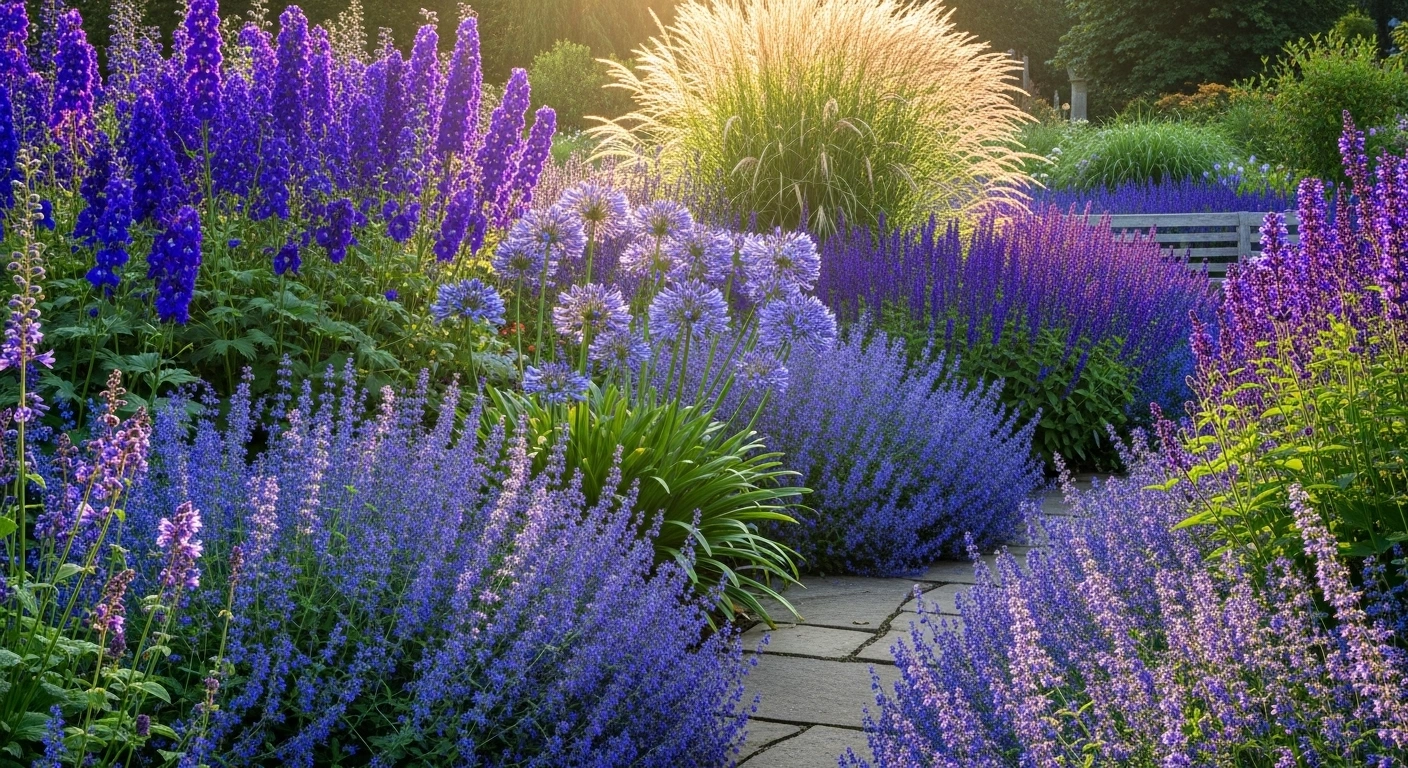
There’s something almost magical about a garden filled with blue flowers. Blue stops you in your tracks. It calms your nervous system, expands your sense of space, and creates a visual coolness that no other color delivers quite so effortlessly. A blue flowers garden feels like a painting that grows, changes, and surprises you with something new every single week throughout the growing season. No wonder American gardeners are increasingly obsessed with building their own blue bloom paradise from the ground up.
What Makes Blue Flowers Garden So Special and Unique in Nature
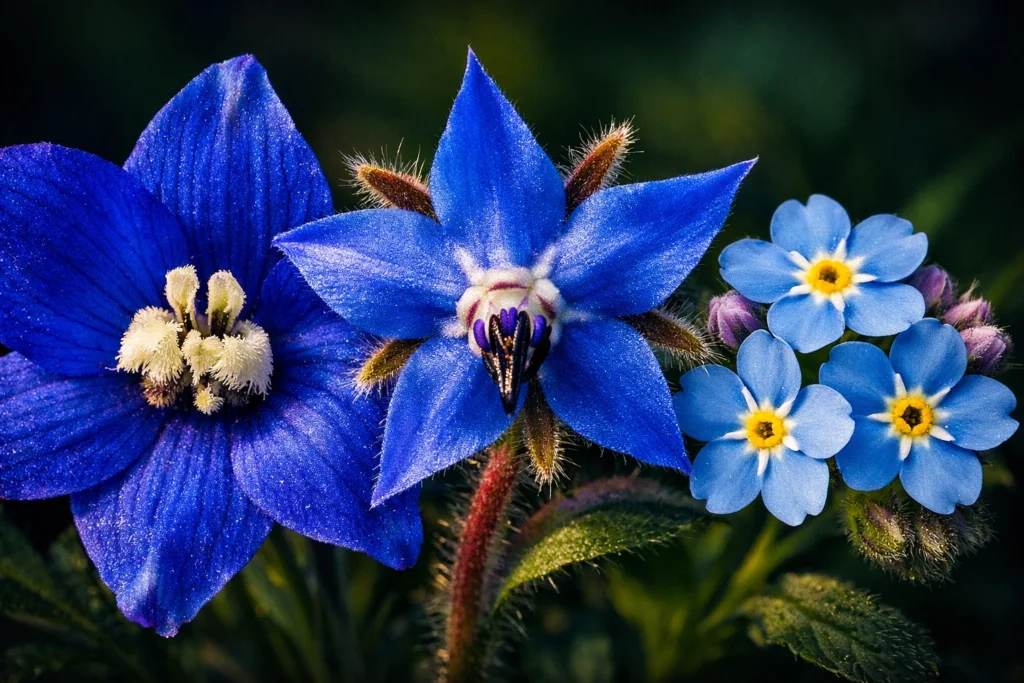
Are blue flowers rare in nature? Genuinely yes — and the science behind that rarity is fascinating. Less than 10% of all flowering plant species on Earth produce true blue blooms. Most flowers that appear blue to casual observers actually produce purple, violet, or blue-purple pigments rather than genuine optical blue. True blue coloration requires a specific and complex interaction between anthocyanin pigments and precise cellular pH levels that most plant species simply never evolved the biochemical machinery to achieve. That botanical rarity makes every authentic blue flowering plants specimen in your garden a genuine natural wonder worth celebrating and protecting carefully.
The emotional and psychological impact of blue flowers in garden spaces goes far beyond simple visual appeal. Environmental psychology research consistently demonstrates that blue dominated landscapes reduce cortisol levels, lower heart rate, and promote a state of calm focused awareness that gardeners describe as genuinely restorative. Blue garden flowers create what landscape architects call a “recessive visual field” — the color appears to move away from the viewer rather than advancing toward them like red and yellow do — creating a perception of expanded space and peaceful depth that transforms even modest suburban garden plots into seemingly boundless tranquil retreats worth spending hours in every single day.
Best Blue Flowers for Garden That Bloom All Summer Long
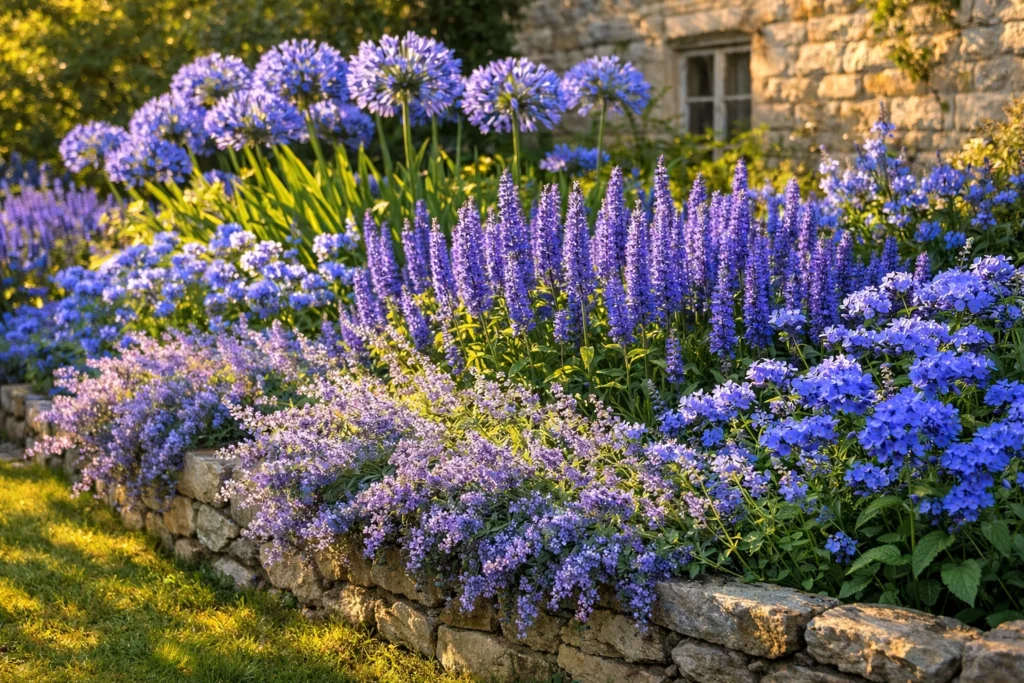
What blue flowers bloom all summer is the practical question every gardener asks before planning a blue-themed garden bed and the answer features several spectacular reliable performers. Salvia nemorosa produces dense upright spikes of rich violet-blue from late May through September when deadheaded consistently. Agapanthus delivers gorgeous globe-shaped blue flower clusters on tall architectural stems throughout July and August. Catmint spills over garden edges in a cloud of lavender-blue from June through frost making it arguably the most continuous-blooming blue blooming plants option available to American gardeners across virtually every climate zone nationwide.
| Blue Summer Flower | Bloom Period | Height | Sun Requirement | USDA Zones |
|---|---|---|---|---|
| Salvia Nemorosa | May to September | 18-24 inches | Full Sun | 4-8 |
| Agapanthus | July to August | 24-36 inches | Full Sun | 7-11 |
| Catmint | June to Frost | 12-18 inches | Full Sun | 3-8 |
| Veronica Spicata | June to August | 12-24 inches | Full Sun | 3-8 |
| Balloon Flower | June to September | 18-24 inches | Full to Part Sun | 3-9 |
| Lobelia | June to Frost | 4-6 inches | Part Sun | Annual |
Easy to Grow Blue Flowers for Beginner Gardeners at Home
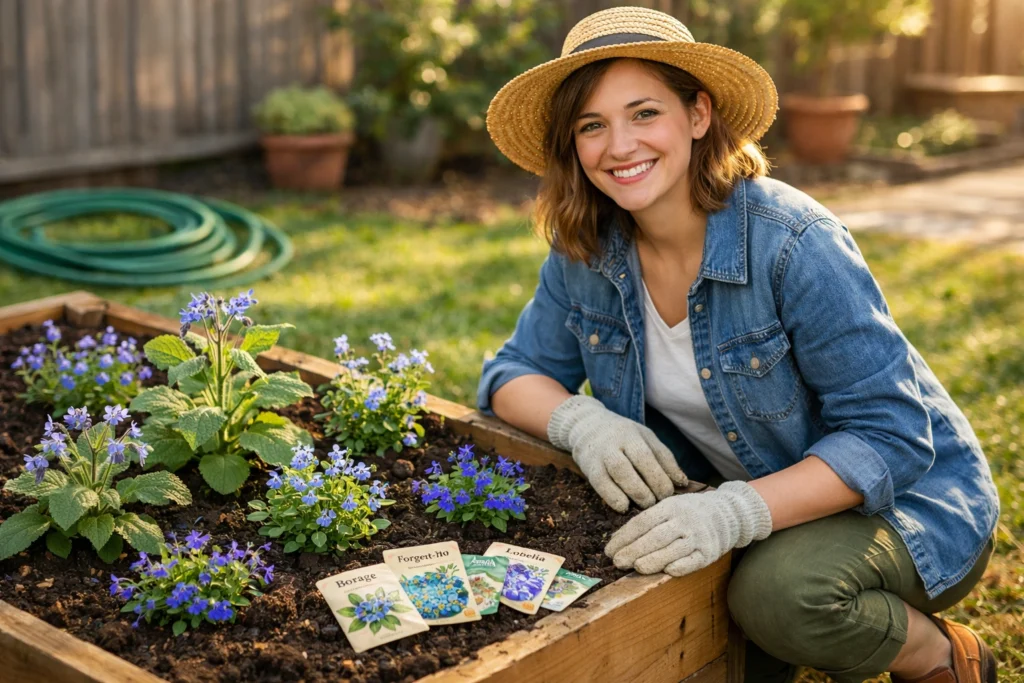
What are easy blue flowers to grow for first-time gardeners who want guaranteed success without years of accumulated horticultural expertise? The gardening world offers several wonderfully forgiving blue flowering species that practically grow themselves with minimal intervention. Forget-me-nots self-seed prolifically once established creating expanding colonies of delicate sky-blue blooms that return faithfully each spring without any replanting effort required from you whatsoever. Borage germinates within days of direct sowing, grows vigorously in virtually any soil condition, and produces cheerful star-shaped blue flowers within six weeks of planting making it the ultimate confidence-building beginner’s blue flower plants outdoor choice.
you may also like this:12 Front Yard Flower Garden Ideas That Instantly Boost Curb Appeal
How to grow blue flowers in a garden successfully as a beginner requires understanding three fundamental principles that experienced gardeners eventually learn through expensive trial and error. First, drainage matters enormously — most blue flowering species absolutely despise waterlogged roots and will decline rapidly in poorly drained heavy clay soils regardless of how perfectly you manage everything else. Second, deadheading spent blooms dramatically extends flowering duration for virtually every blue annual and many perennial species. Third, starting with blue wildflowers garden natives like phacelia and spiderwort gives beginners a built-in advantage because native species evolved specifically for local American growing conditions requiring far less supplemental care than exotic imported varieties that struggle to adapt to unfamiliar climate and soil environments.
Best Blue Perennial Flowers That Come Back Every Year
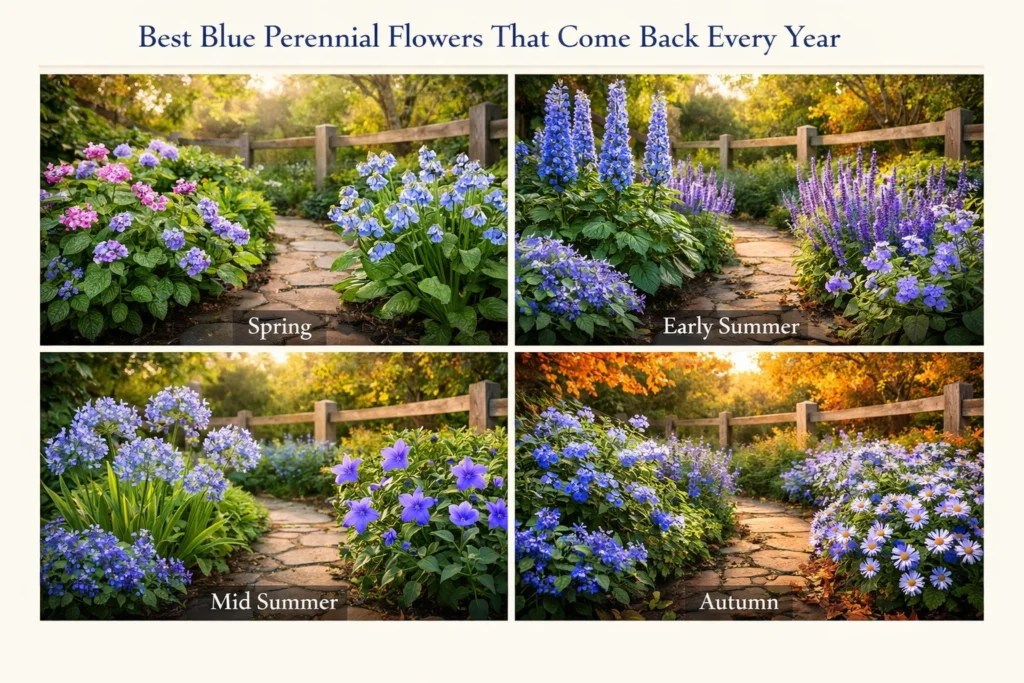
What blue perennial flowers come back every year is the question smart gardeners ask before investing in their garden because perennials deliver compounding returns — each year they return larger, stronger, and more floriferous than the year before. Blue perennial flowers represent the best long-term value available in the entire garden plant marketplace. A single baptisia australis — false blue indigo — purchased for fifteen dollars in year one develops into an impressive three-foot wide shrub-like specimen by year five producing hundreds of lupine-like blue flower spikes annually without any division, replacement, or significant maintenance investment required from you.
| Blue Perennial | Bloom Season | Lifespan | Growth Rate | Special Feature |
|---|---|---|---|---|
| Baptisia | Late Spring | 20+ years | Slow | Drought tolerant |
| Delphinium | Early Summer | 3-5 years | Medium | Tall dramatic spikes |
| Agapanthus | Midsummer | 10+ years | Medium | Architectural form |
| Plumbago | Late Summer-Fall | 10+ years | Fast | Spreads readily |
| Pulmonaria | Early Spring | 10+ years | Slow | Silver spotted foliage |
| Salvia Nemorosa | Summer | 10+ years | Medium | Reblooms reliably |
Best Blue Annual Flowers to Fill Your Garden With Color
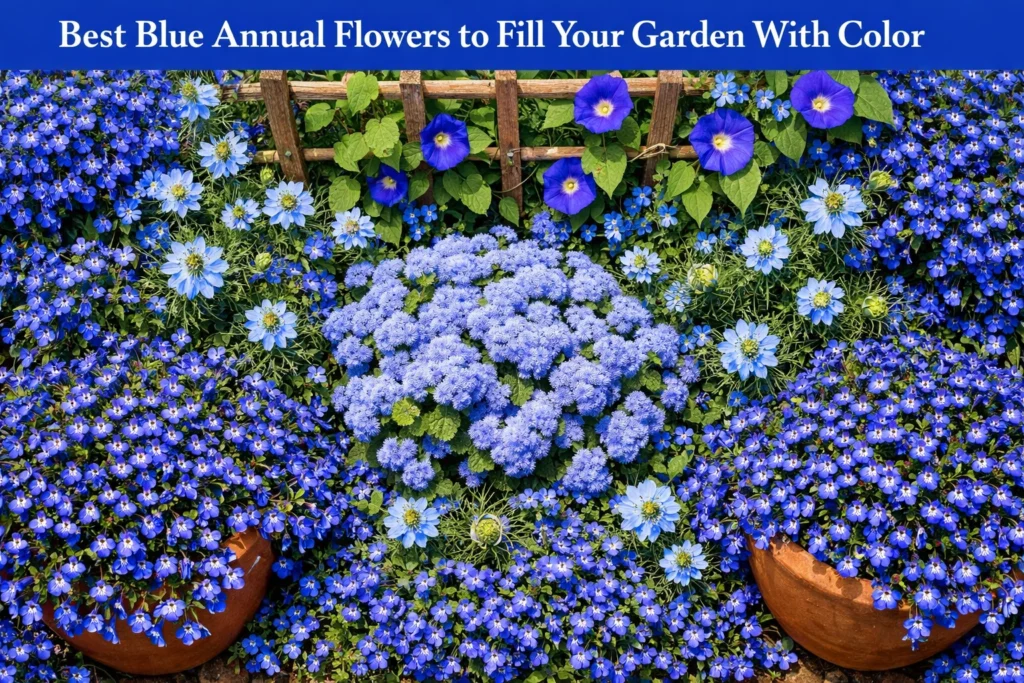
Blue annual flowers solve one of the most frustrating problems in perennial garden design — the inevitable color gaps that appear between different perennial bloom periods throughout the growing season. Annuals fill those gaps generously, bloom continuously from planting through frost, and offer complete creative freedom to reinvent your garden color scheme entirely every single year without any long-term commitment. Blue flower bed ideas using annuals as seasonal infill between established perennials create consistently spectacular results that would be impossible to achieve with perennials alone regardless of how carefully you plan sequential blooming.
Lobelia erinus deserves its status as America’s most popular blue annual by a significant margin. Its cascading mounds of electric blue flowers perform equally magnificently in hanging baskets, container arrangements, and garden border edging throughout the entire warm season. Ageratum produces distinctive fuzzy powder-blue flower clusters that maintain their color intensity from planting through first frost without fading in summer heat the way many other blue annuals disappointingly do. Blue annual flowers like nigella love-in-a-mist add extraordinary delicate beauty with their sky-blue blooms surrounded by intricate feathery foliage that creates a dreamy cottage garden aesthetic impossible to replicate with any other plant species currently available to American gardeners.
Top Blue Flowers for Full Sun Garden Beds and Borders
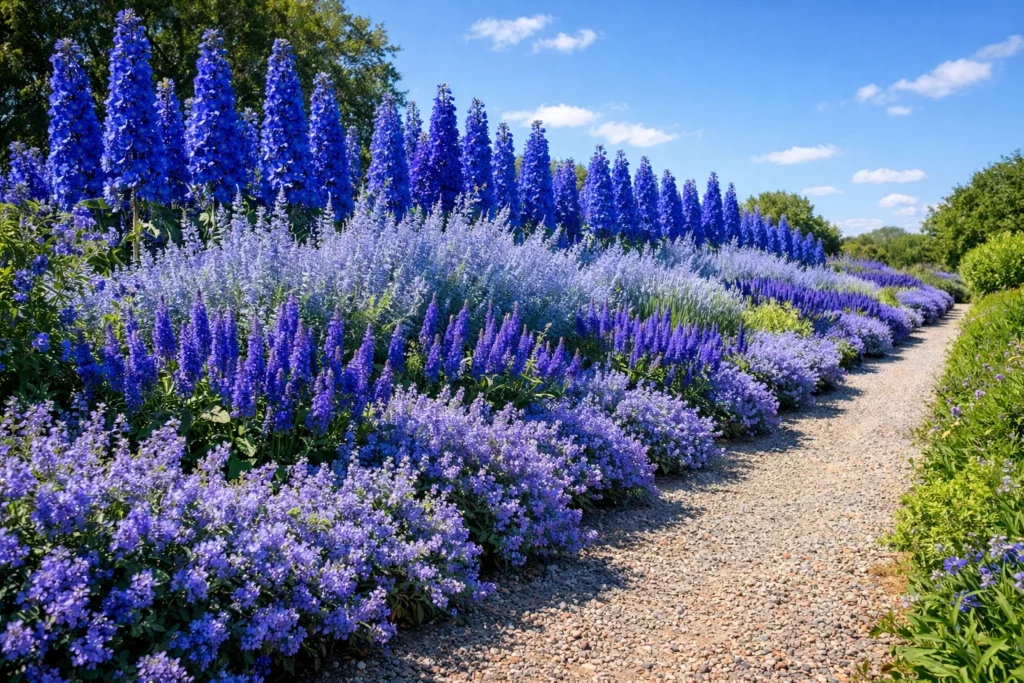
What blue flowers grow in full sun and actually thrive rather than merely tolerate intense solar exposure throughout long hot American summers? Several exceptional species not only survive full sun conditions but genuinely intensify their blue coloration under strong direct sunlight creating more vivid saturated hues than they produce in partially shaded locations. Blue flowers full sun absolute champions include Russian sage with its hazy silver-blue cloud effect, salvia guaranitica with its deep cobalt-blue tubular flowers, agapanthus with its globe-shaped cerulean blue clusters, and veronica spicata with its elegant tapering blue spikes — all plants that look progressively better as sun exposure increases throughout the growing season.
What tall blue flowers are best for garden borders specifically for the back row positions where height creates essential vertical structure? Delphinium elatum produces spectacular six-foot spires of pure blue that stop garden visitors completely in their tracks — nothing in the horticultural world quite matches the dramatic visual impact of mature delphinium in full bloom against a garden background. Tall blue garden flowers like Russian sage reaching four feet of billowing silver-blue provide a softer more romantic alternative to delphinium’s vertical formality. How to plant blue flowers for curb appeal in front border positions calls for lower-growing small blue garden flowers like catmint, lobelia, and ageratum that create a welcoming blue-edged pathway effect visible from the street.
Best Blue Flowers for Shade Gardens and Low Light Areas
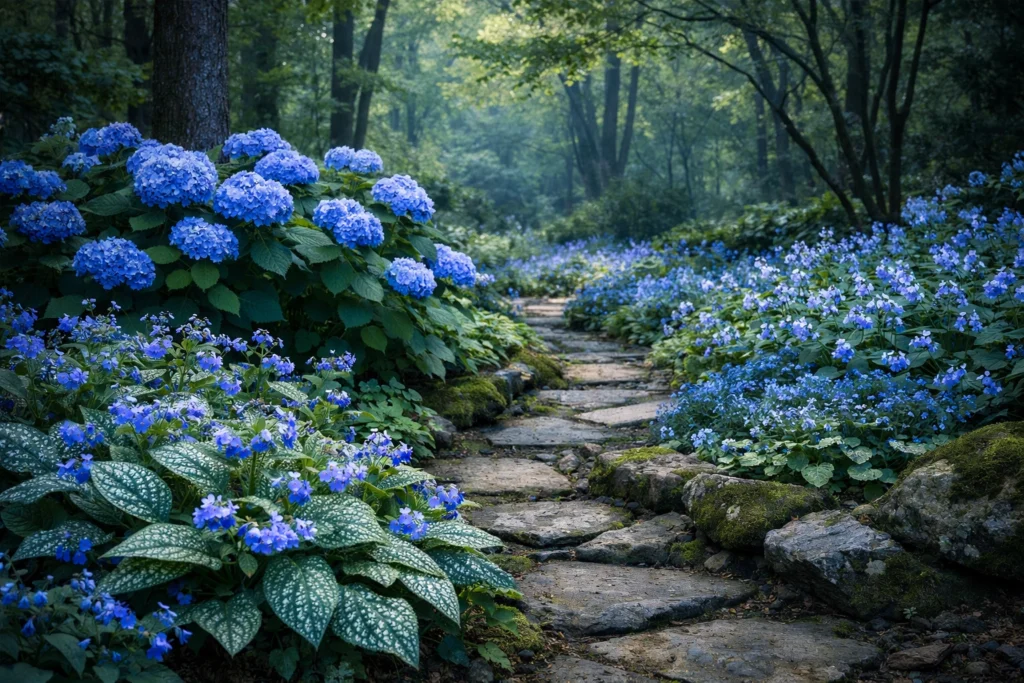
What blue flowers grow in shade conditions where most sun-loving blue performers simply refuse to flower adequately? The shade-tolerant blue flower world is smaller than its full-sun counterpart but contains some genuinely extraordinary species worth discovering and celebrating enthusiastically. Blue flowers shade garden standout brunnera macrophylla — Siberian bugloss — produces clouds of tiny forget-me-not blue flowers above dramatically beautiful silvery heart-shaped foliage throughout spring in dappled woodland shade conditions. Its variegated forms with silver-frosted leaves create stunning foliage interest that remains attractive and garden-worthy long after the blue flowers have finished their spring performance completely.
Blue shade garden flowers selection should always consider bloom season, foliage interest, and moisture requirements simultaneously because shade gardens typically have different soil moisture profiles than open sunny beds. Pulmonaria thrives in moist woodland shade producing spotted silver foliage alongside early spring blue flowers that represent some of the first garden color after winter’s long gray absence. Virginia bluebells create breathtaking temporary blue carpets under deciduous trees in spring before going gracefully dormant in summer heat — a beautiful ephemeral performance that rewards patient gardeners who accept and appreciate their seasonal nature. Blue flowering shrubs like hydrangea macrophylla perform magnificently in bright filtered shade providing the largest blue flower clusters of any shade-tolerant species available to American gardeners today.
How to Design a Beautiful Blue Flowers Garden From Scratch
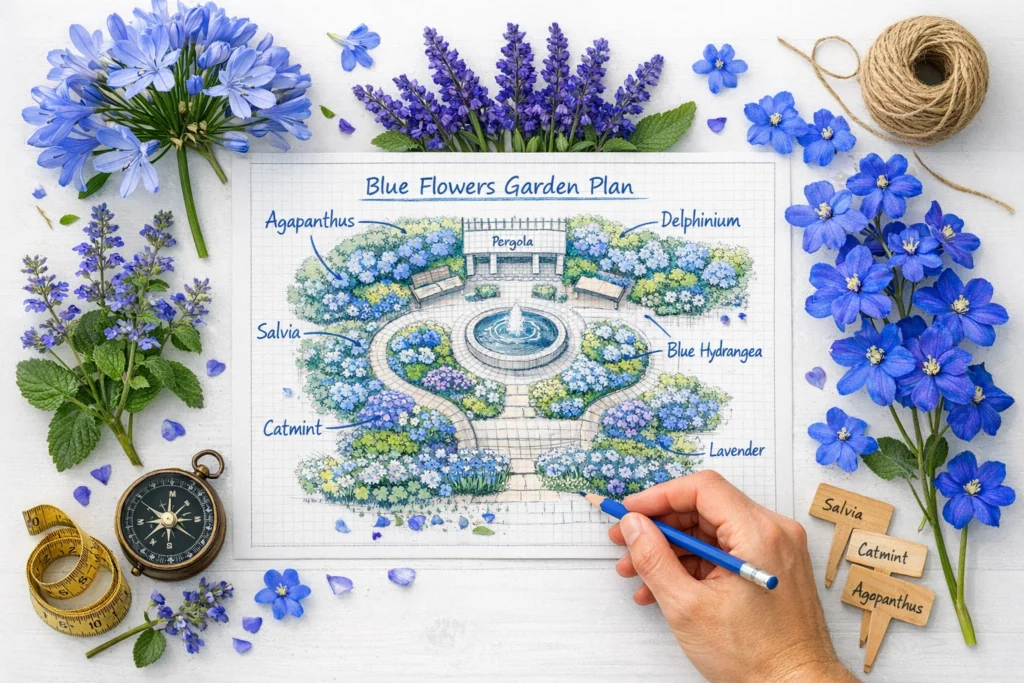
How to create a blue flower garden from a blank canvas requires strategic planning that considers bloom season sequencing, height layering, texture variation, and companion planting simultaneously before a single plant enters the ground. Begin by mapping your space on paper noting precise sun exposure at different times of day, existing soil conditions, drainage characteristics, and the primary viewing angles from which the garden will most frequently be observed. Blue flower garden ideas that succeed beautifully in real life almost always begin with thorough planning on paper — the gardens that disappoint are almost always the ones that began impulsively at the garden center without any prior design consideration whatsoever.
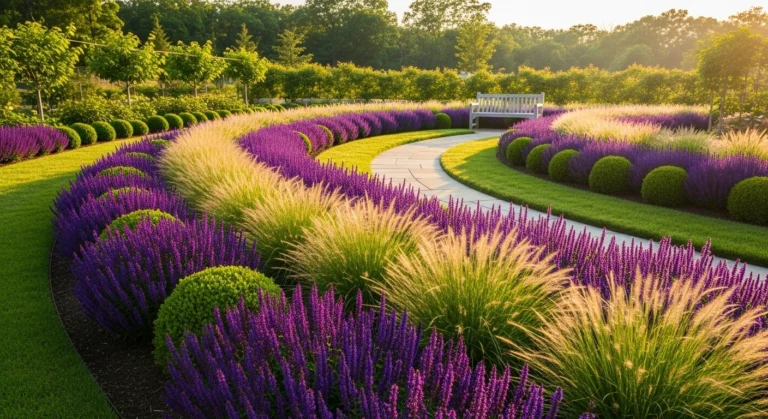
Blue flower garden design principles that professional landscape designers apply consistently include the rule of repetition — using the same two or three key blue plant varieties multiple times throughout the garden rather than using fifteen different species once each. Repetition creates visual rhythm and intentional cohesion that makes gardens feel designed rather than accidentally accumulated. Intersperse silver and gray foliage plants like artemisia, stachys byzantina lamb’s ears, and Russian sage’s silvery stems between your blue bloomers to optically amplify blue color intensity through sophisticated contrast. Blue flowers landscaping designs also benefit enormously from adding a white flowering accent plant — white alyssum, white cosmos, or white gaura — at regular intervals to create visual breathing space and prevent the blue from becoming visually monotonous over large planting areas.
Best Blue Flower and Color Combinations for a Stunning Garden
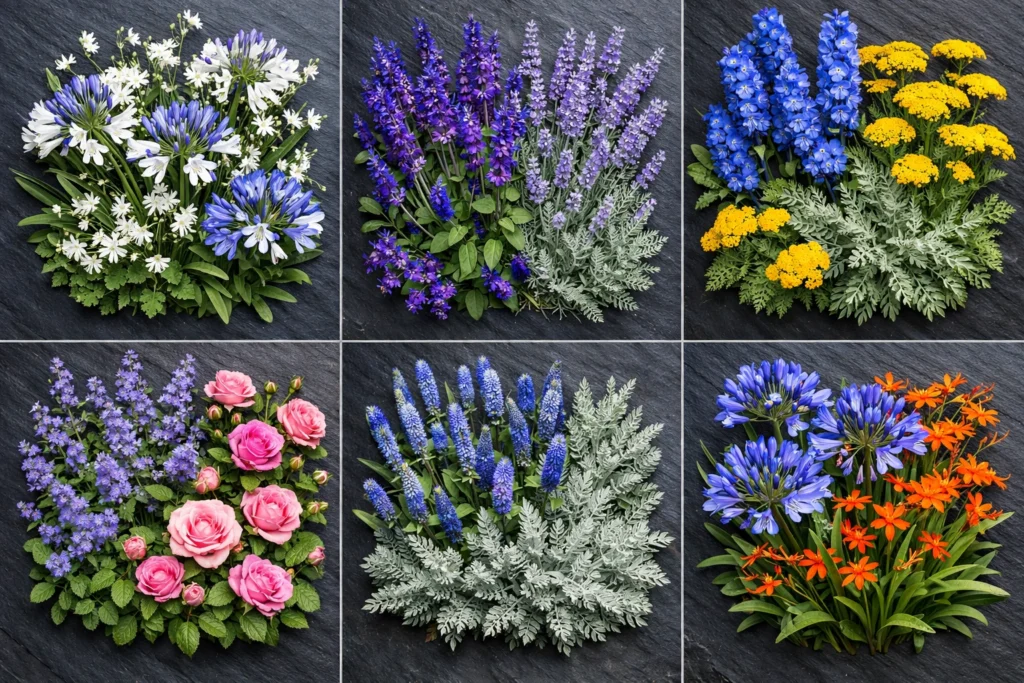
How to combine blue flowers with other colors in ways that create genuinely spectacular rather than merely pleasant garden compositions requires understanding the fundamental color relationships that professional artists and designers rely upon. Blue and white garden flowers create the most universally beloved and enduringly popular garden color combination in all of horticultural design history — fresh, elegant, sophisticated, and perpetually appealing across every garden style from formal to cottage to contemporary. White flowers reflect ambient light onto adjacent blue blooms making the blue appear more saturated and vibrant than it would appear growing in isolation surrounded by green foliage alone.
| Color Combination | Blue Flower | Partner Plant | Garden Mood |
|---|---|---|---|
| Blue and White | Agapanthus | White Gaura | Fresh Elegant |
| Blue and Purple | Salvia | Lavender | Rich Sophisticated |
| Blue and Yellow | Delphinium | Achillea | Bold Vibrant |
| Blue and Pink | Catmint | Roses | Romantic Cottage |
| Blue and Silver | Veronica | Artemisia | Cool Modern |
| Blue and Orange | Agapanthus | Crocosmia | Dynamic Exciting |
How to Grow Blue Hydrangeas and Keep Them Brilliantly Blue
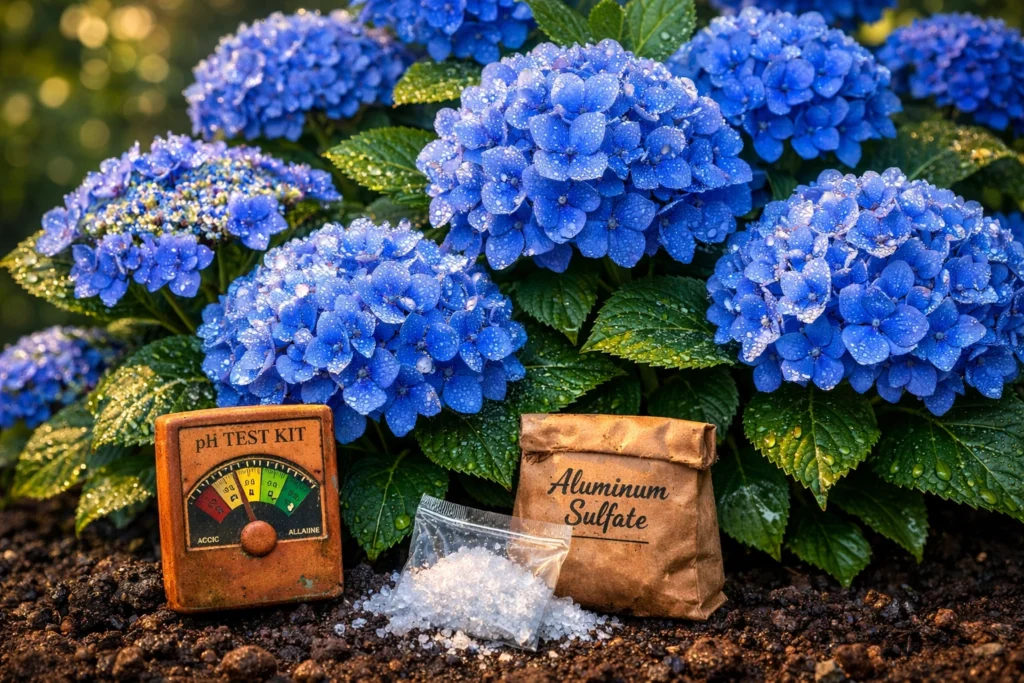
How to grow blue hydrangeas in a garden and maintain their stunning blue coloration year after year requires understanding the genuinely fascinating soil chemistry that controls their flower color in ways that most gardeners find surprisingly counterintuitive when they first encounter it. Hydrangea macrophylla produces blue flowers in acidic soil with pH between 5.2 and 5.5 where aluminum ions remain soluble and bioavailable for uptake through the plant’s root system into developing flower buds. The same variety growing in alkaline soil with pH above 6.5 produces pink flowers because aluminum becomes chemically locked in an unavailable form that the plant’s roots cannot access regardless of how much aluminum actually exists in the surrounding soil.
Maintaining brilliant blue hydrangea coloration requires consistent ongoing soil management rather than a single one-time amendment application. Test your soil pH every spring before growth begins using an inexpensive digital pH meter available at any garden center. Apply aluminum sulfate or garden sulfur to lower pH and maintain it within the 5.2 to 5.5 range that blue color requires. Water with collected rainwater whenever practically possible — municipal tap water in many American cities contains measurable alkalinity that gradually raises soil pH over multiple seasons slowly shifting your gorgeous blue blooms toward unwanted pink tones despite your best amendment efforts. Blue flowering shrubs like hydrangea also benefit from organic mulch applications of pine bark or pine needle mulch that naturally acidify soil as they decompose creating a slow-release pH management system that supplements your annual amendment applications beautifully.
Blue Flowers That Attract Butterflies Bees and Pollinators
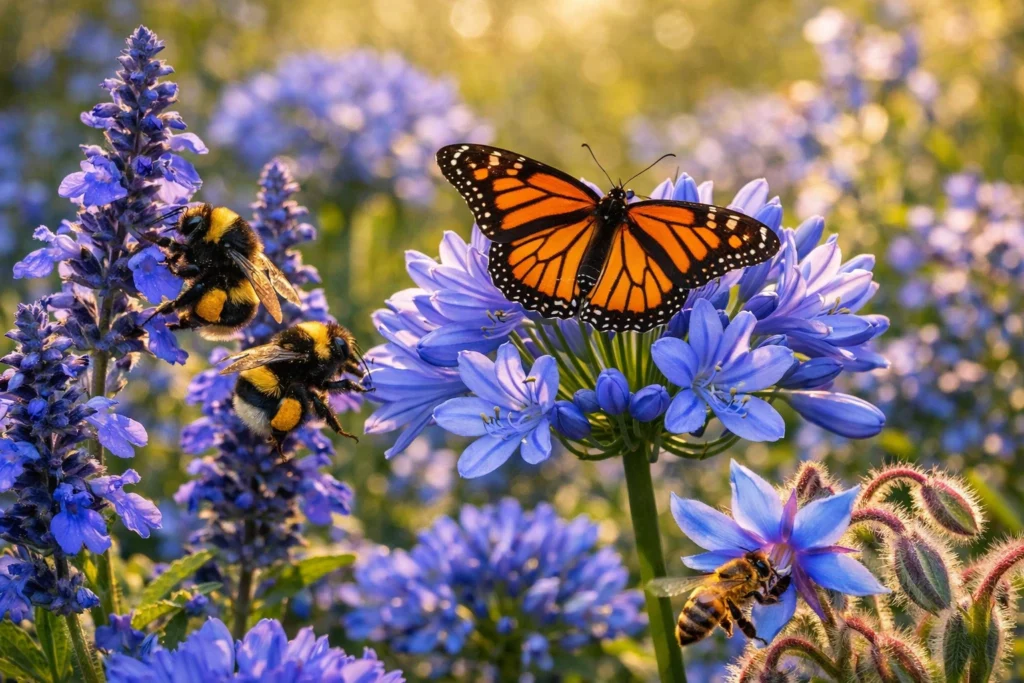
Do blue flowers attract butterflies and bees more effectively than flowers of other colors? The scientific evidence strongly suggests yes — and the explanation lies in the remarkable visual system that bees evolved over millions of years of co-evolution with flowering plants. Bees perceive blue and violet wavelengths of light with exceptional clarity and sensitivity — far greater than their ability to perceive red wavelengths which they essentially cannot see at all. Blue garden flowers appear as intensely bright beacon-like signals to approaching bees making them extraordinarily effective at attracting pollinator attention from considerable distances compared to red and orange flowering plants that appear dull and nearly invisible to bee vision systems.
What blue flowers are good for pollinators specifically in American garden contexts? Native bees, honeybees, and butterfly species all show strong preferences for several key blue flowering species that provide exceptional nectar and pollen resources. Borage produces nectar so abundantly and so continuously that beekeepers actively plant it near their hives as a premium forage source. Salvia species support an extraordinary diversity of native bee species including specialist bees that forage almost exclusively on salvia flowers throughout their entire adult lives. Blue wildflowers garden natives like phacelia tanacetifolia — scorpion weed — are documented in university entomology research as among the single most bee-attractive plants available to American gardeners producing documented bee visit rates that exceed virtually every other flowering plant species tested in controlled scientific comparison studies conducted across multiple American university extension research programs.
Low Maintenance Blue Flowers That Grow With Minimal Care
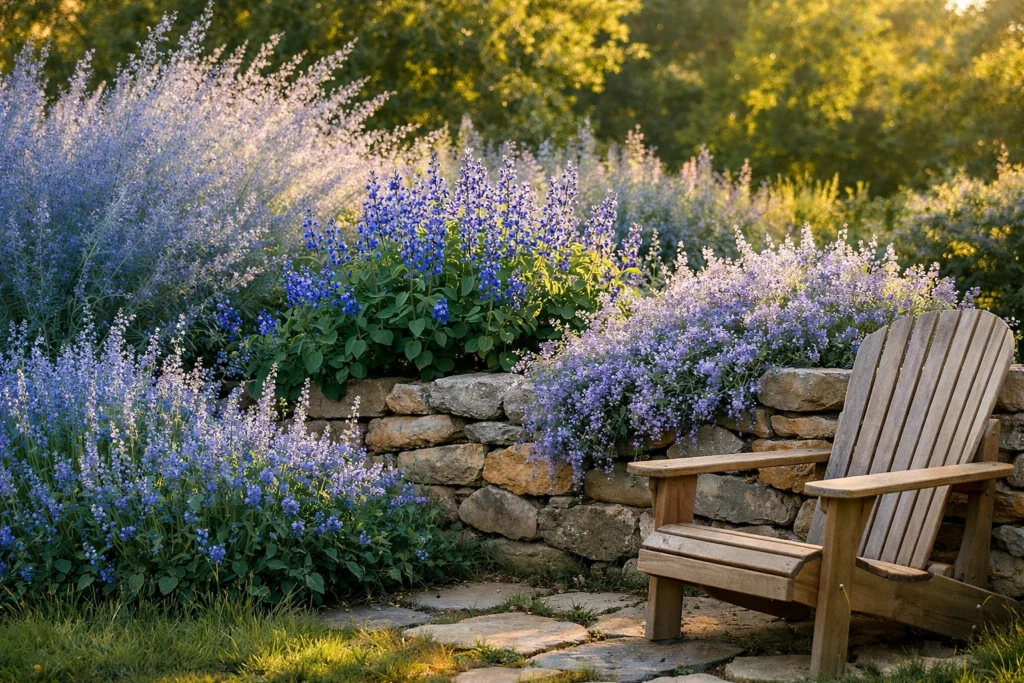
What blue flowers are low maintenance enough for busy gardeners who love beautiful gardens but have limited time available for regular intensive care and maintenance? Several exceptional blue flowering species thrive on deliberate neglect once properly established requiring minimal watering, fertilization, or intervention to perform beautifully season after season. Blue flower ground cover performers like creeping phlox and ajuga reptans spread reliably across difficult garden areas while requiring virtually zero ongoing attention after their critical establishment period during the first growing season following planting.
What blue flowers are deer resistant — a practically critical question for millions of American gardeners living in suburban and rural areas with significant deer pressure? Several blue flowering species contain compounds or textures that deer consistently avoid making them invaluable for gardens in deer-populated regions. Russian sage tops virtually every deer-resistant plant list due to its strongly aromatic silvery foliage that deer find unpalatable. Salvia, catmint, and baptisia all demonstrate reliable deer resistance in documented garden trials conducted across deer-impacted American growing regions. Blue flowers landscaping choices in deer-heavy areas should prioritize these naturally resistant species as the backbone of the planting design with more vulnerable species reserved for protected courtyard spaces where physical barriers prevent deer access entirely throughout the growing season.
How to Keep Your Blue Flowers Garden Blooming Longer Every Season
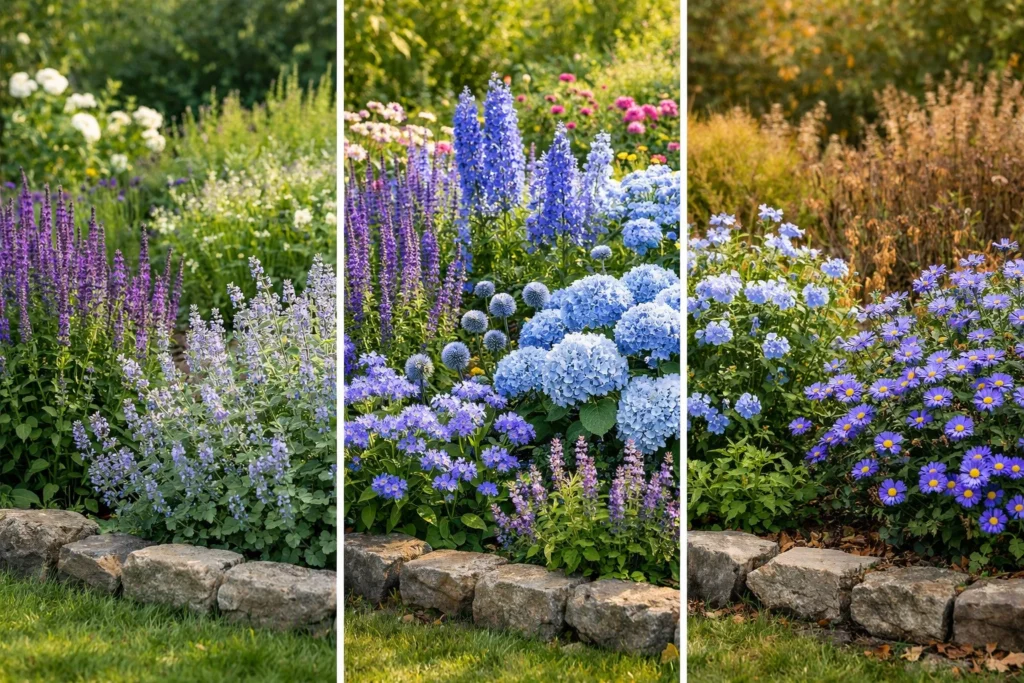
How to keep blue flowers blooming longer is the practical question that separates good blue gardens from truly spectacular ones that maintain their color impact across the full growing season rather than peaking briefly and then declining into a green foliage display for the remainder of summer. Deadheading — removing spent flower heads before they set seed — is the single most powerful technique for extending bloom duration available to any gardener regardless of experience level or plant knowledge. Seasonal blue garden flowers like salvia, catmint, and delphinium respond to consistent deadheading by producing second and sometimes third flowering flushes that can double or even triple the total blooming duration compared to undeadheaded plants left to complete their natural seed production cycle undisturbed.
How to plant blue flowers for curb appeal that maintains visual impact across the entire growing season from spring through fall requires deliberate succession planting using species chosen for overlapping bloom periods that seamlessly transition without creating embarrassing color gaps in your garden display. Begin the season with spring blooming blue flowers shade garden performers like pulmonaria and forget-me-nots. Transition into early summer with salvia and catmint taking center stage. Hand the display to agapanthus and platycodon for midsummer. Finish the season with plumbago and blue mist spirea carrying beautiful blue color deep into October when most other flowering plants have surrendered entirely to the advancing autumn season. Feed your blue flower plants outdoor with balanced slow release fertilizer in early spring and again in midsummer to sustain the vigorous growth and continuous flowering that makes a truly great blue flowers garden look spectacular from the street every single day throughout the entire growing season.