10 Easy Ways to Refresh Your Living Room Into a Nervous System Sanctuary
You walk through the front door after a long, draining day. Your shoulders are tight. Your mind is racing. And then — your living room either catches you or it doesn’t. A calming living room doesn’t just look beautiful. It actively helps your body shift from stressed to restored. That’s not interior design fluff. That’s neuroscience.
What Is a Nervous System Sanctuary and Why Your Living Room Matters
A nervous system sanctuary is a physical space deliberately designed to calm your body’s stress response. Your environment speaks directly to your nervous system — constantly, silently, and powerfully. Calming living room interior design works because it reduces sensory overload, lowers cortisol, and activates the parasympathetic nervous system — the part of your body responsible for rest, digestion, and genuine recovery. Environmental psychology has studied this for decades and the findings are clear: your space shapes your state.
Peaceful living room decor goes far beyond aesthetics. Research consistently shows that well-designed personal spaces reduce perceived stress significantly. The living room matters most because it’s where you decompress after work, connect with family, and transition from the demands of the outside world into the safety of home. What makes a living room feel calming isn’t one single thing — it’s a collection of intentional sensory choices that tell your nervous system it’s finally safe to relax.
Choose a Calming Color Palette That Soothes Your Senses
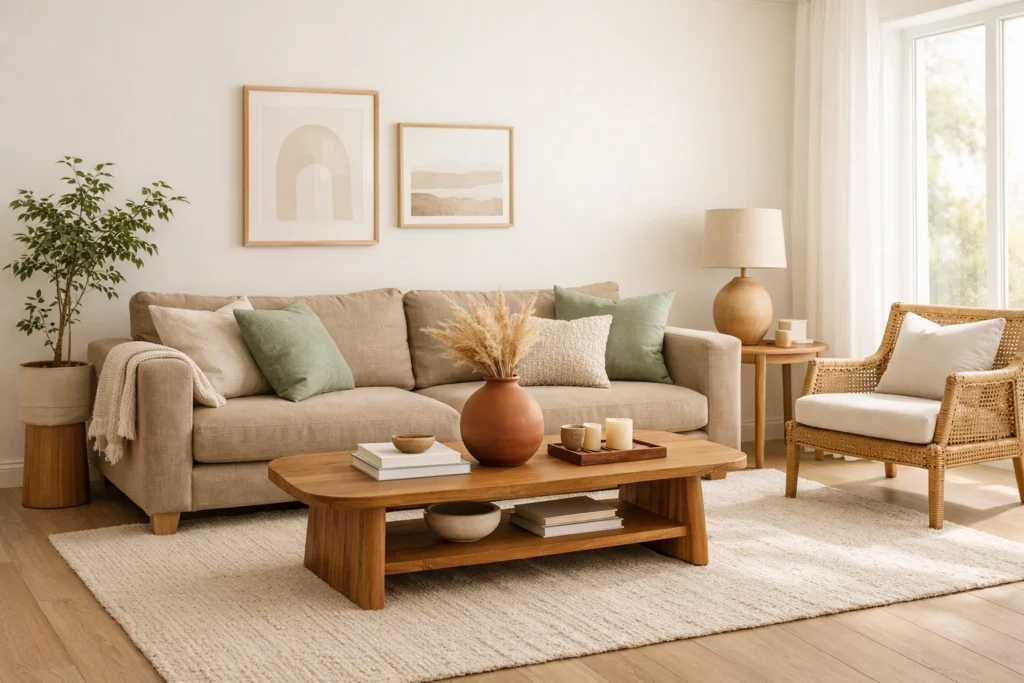
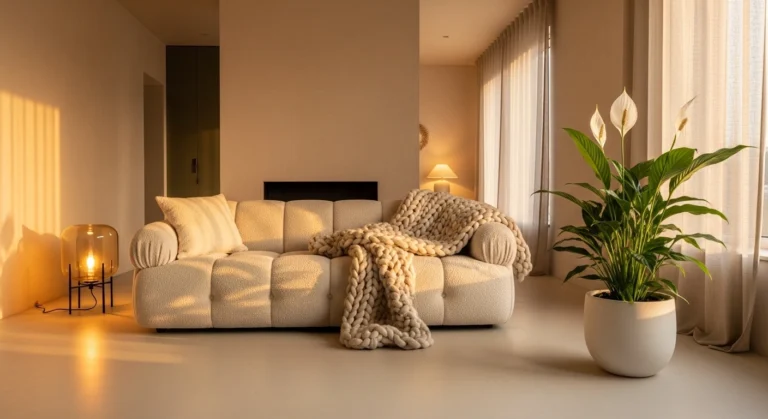
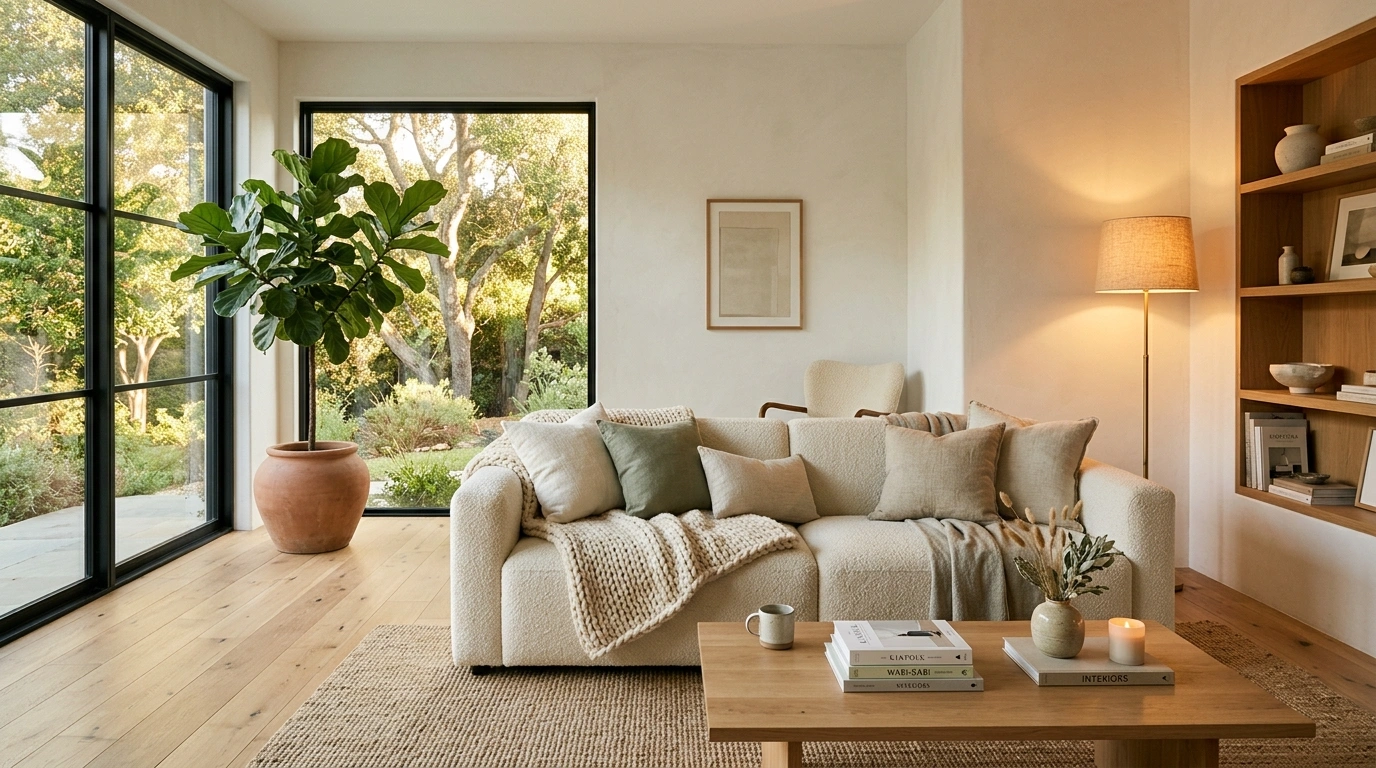
Color speaks directly to the nervous system before your conscious mind processes a single thought. Best colors for a calming living room always lean warm, soft, and low-contrast. Warm whites, sandy beiges, dusty sage greens, and muted terracottas form the most soothing foundations. These tones mimic the natural world — sand, stone, bark, moss — and trigger an instinctive sense of safety and ease. Calming living room color palette ideas that work consistently avoid high contrast, saturated hues, and competing color stories.
| Color Role | Best Calming Choices | Always Avoid |
|---|---|---|
| Walls | Warm white, soft cream, dusty sage | Bright white, cool grey, bold colors |
| Large furniture | Sandy taupe, warm oat, soft greige | Black, navy, high contrast tones |
| Textiles | Warm beige, muted terracotta, blush | Neon, jewel tones, busy patterns |
| Accents | Dusty blue, muted olive, warm camel | Bright red, orange, high saturation |
Switch to Warm Soft Lighting That Melts Away Daily Stress
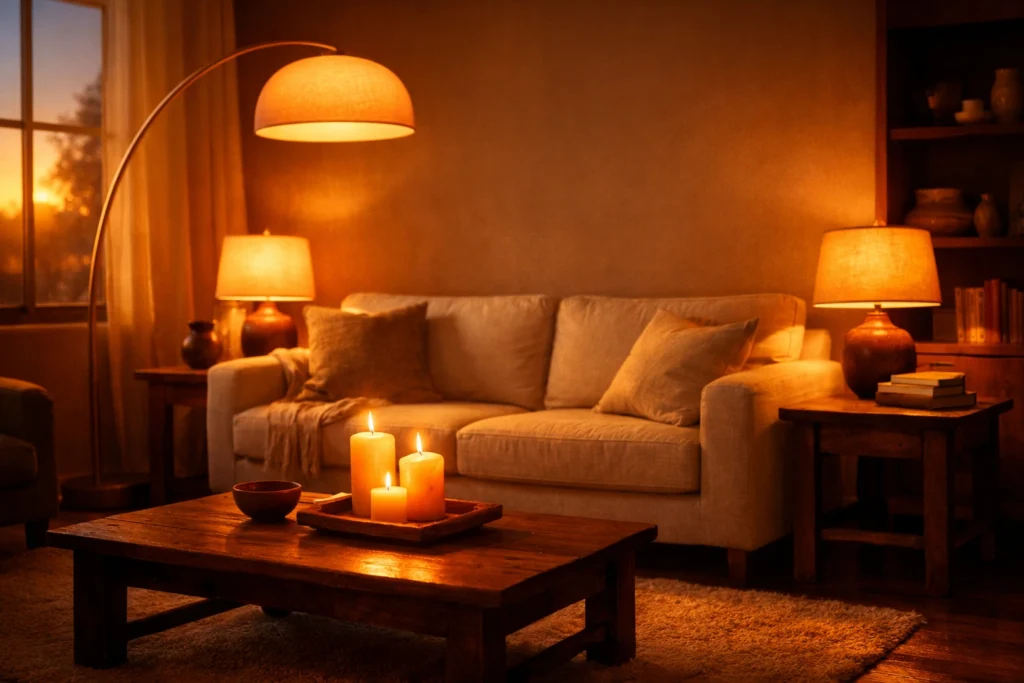
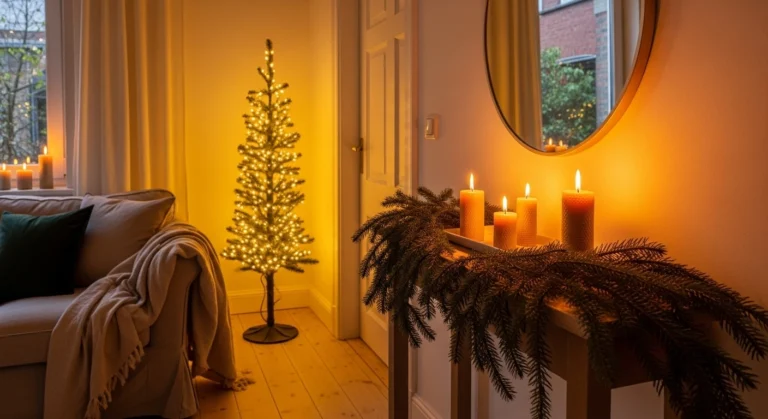
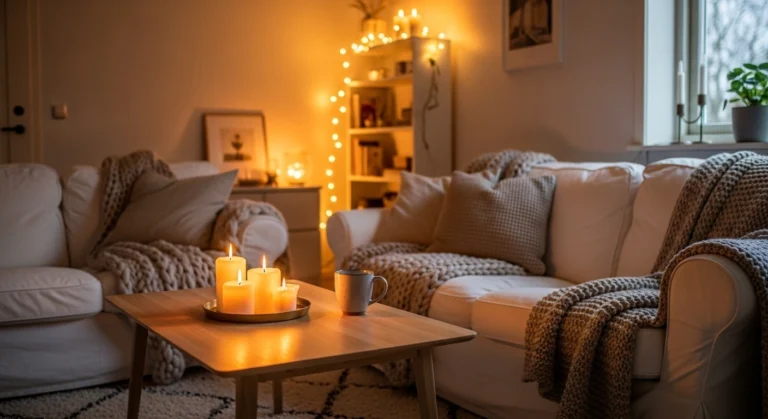
Harsh overhead lighting is one of the most underestimated stressors in American homes. Bright, cool-toned ceiling lights activate the sympathetic nervous system — the same system that governs fight-or-flight responses. What lighting is best for a relaxing living room is the opposite of that. Warm, layered, low-level light tells your brain the threat is gone and it’s safe to wind down. How to use lighting to create a calming living room starts with one simple swap — replace every bulb with a warm 2700K alternative tonight.
you may also like this:12 Peaceful Home Refresh Ideas That Help You Feel Calm
| Lighting Type | Best Fixture | Color Temp | Mood Created |
|---|---|---|---|
| Ambient | Dimmable ceiling fixture | 2700K warm white | General relaxed warmth |
| Floor lamp | Arc or tripod floor lamp | 2700K | Corner softness, reading |
| Table lamp | Ceramic or wood base lamp | 2700K | Intimate, grounding glow |
| Candles | Beeswax pillar or soy jar | Flame warmth | Deep calm, sensory comfort |
Bring in Natural Materials That Ground and Comfort You
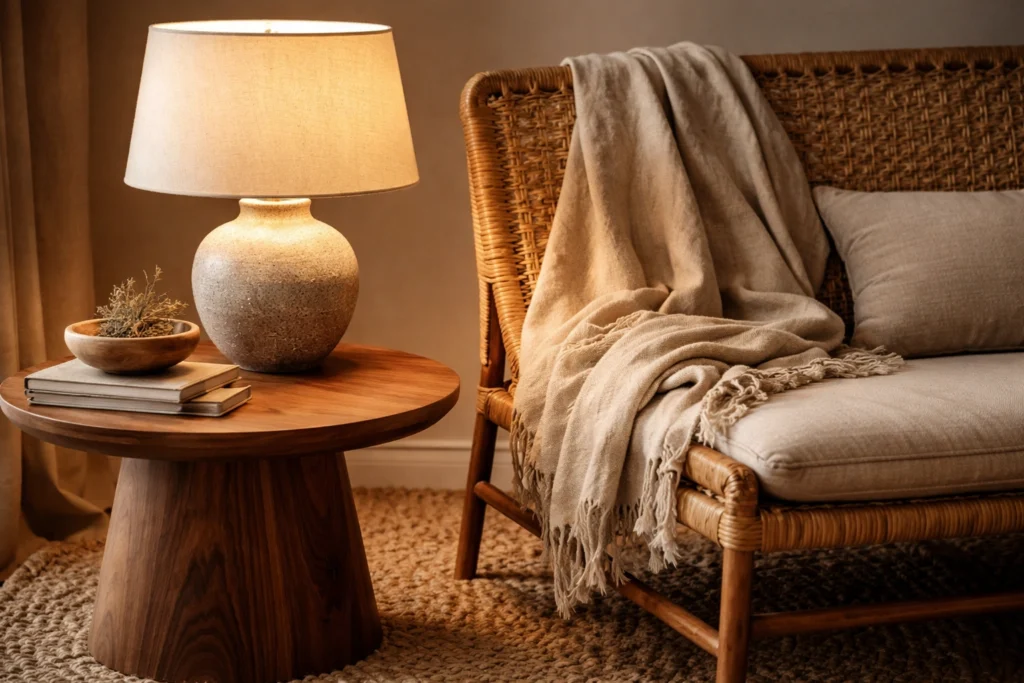
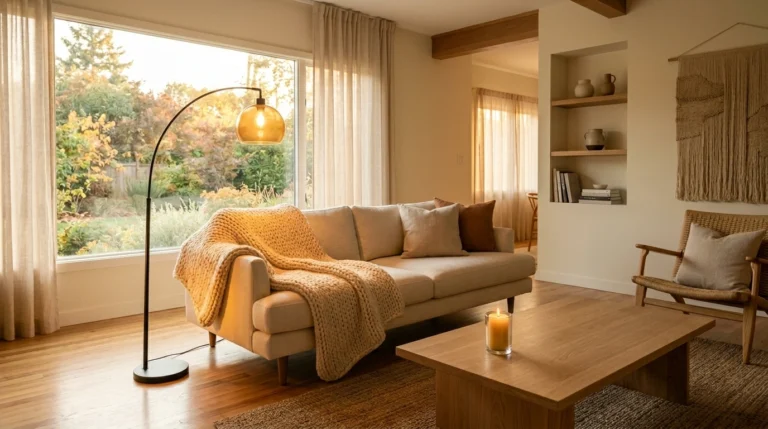
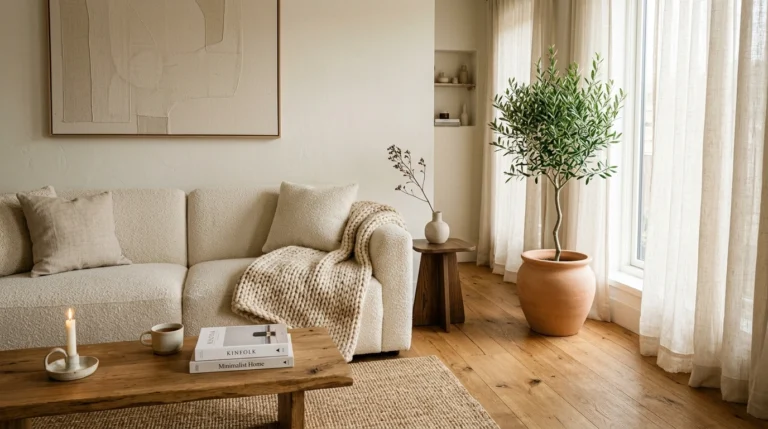
Natural materials do something synthetic ones simply cannot — they ground you. Physically and neurologically. How to style a calming living room with natural materials taps into what researchers call biophilic response — the deep, instinctive comfort humans feel when surrounded by elements from the natural world. Solid wood, linen, wool, rattan, jute, ceramic, and stone all carry this quality. They feel different under your hands. They age beautifully. And they make a room feel genuinely alive.
Earthy calming living room design works because natural materials engage the senses gently rather than aggressively. Tactile contact with wool or raw wood has been shown to activate the parasympathetic nervous system — the rest-and-digest state your body craves after a stressful day. Nature inspired living room decor doesn’t require a full renovation. Start by replacing one synthetic item — a plastic vase, a polyester throw, a laminate shelf — with a natural alternative. Do it slowly. The difference compounds beautifully over time.
Declutter Intentionally To Give Your Mind Room To Breathe
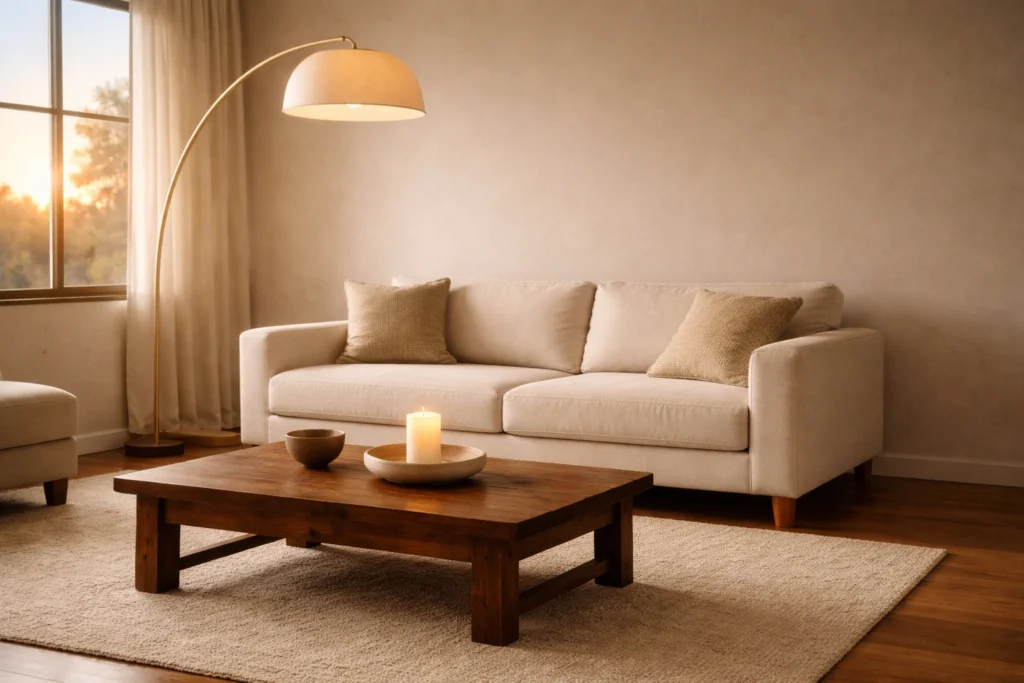
Visual clutter is a silent nervous system saboteur. Princeton University Neuroscience Institute research confirms that visual clutter directly competes for cognitive attention — keeping your brain in a constant low-grade state of alertness even when you’re trying to rest. Simple calming home decor starts not with buying more things but with removing the wrong ones. Every unnecessary object in your living room is asking your brain for a tiny slice of attention. Multiply that by fifty objects and you understand why a cluttered room is exhausting.
Minimalist calming living room philosophy offers the solution — keep only what is beautiful or genuinely functional. Everything else goes. This isn’t about creating a sterile, empty space. It’s about creating breathing room. How to make a living room feel more relaxing through decluttering means editing surfaces down to 2–3 intentional objects maximum, clearing the floor of anything that doesn’t belong, and resisting the urge to fill every empty corner. Negative space isn’t wasted space. It’s where your nervous system finally exhales.
Layer Soft Textures That Make Your Body Feel Safe and Relaxed
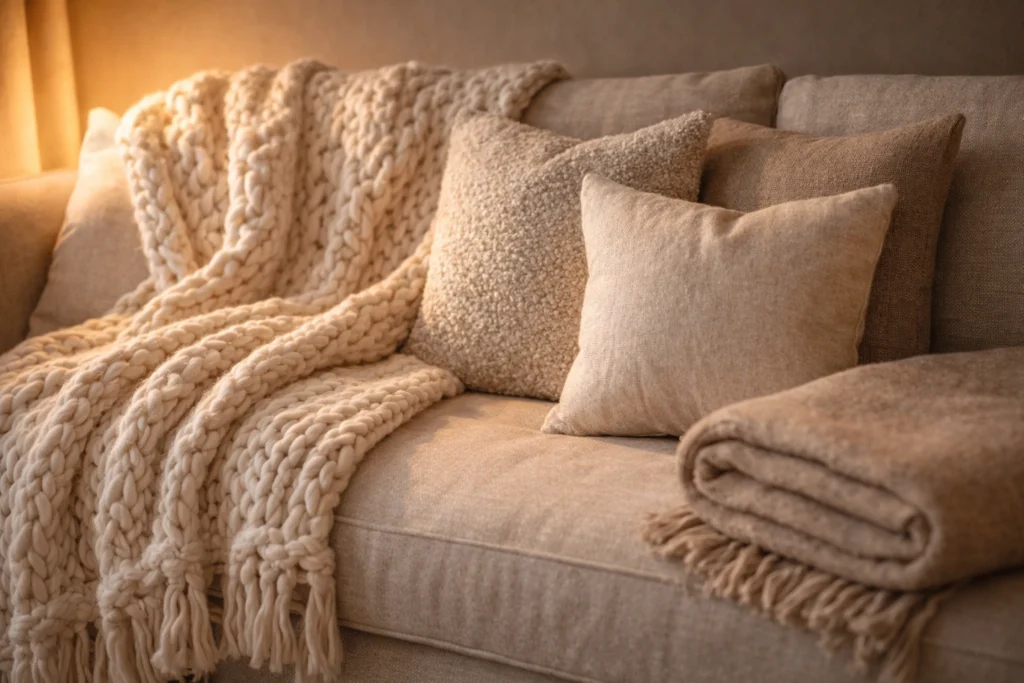
Soft textures activate sensory receptors in your skin that send direct safety signals to your nervous system. This is why wrapping yourself in a chunky knit blanket feels so instinctively comforting — it’s not just psychological warmth. It’s physiological. What textures make a living room feel calm and cozy are always natural and soft: chunky knit throws, bouclé cushion covers, a plush wool area rug, velvet accent pillows, and linen upholstery that gets softer with every wash. Soft textured living room styling is one of the highest-impact calming upgrades you can make on any budget.
How to mix soft textures in a calming living room follows one simple rule — vary the texture but keep the color tonal. A chunky cream knit throw, a sandy linen pillow, a warm wool rug, and a bouclé armchair all feel different under your hands but share the same warm, earthy color story. Calm and cozy living room design layers these textures in 3–4 complementary combinations per room. A large wool rug underfoot is the single most powerful calming addition you can make — it literally softens the ground beneath you.
Add Living Plants That Purify the Air and Calm the Mind
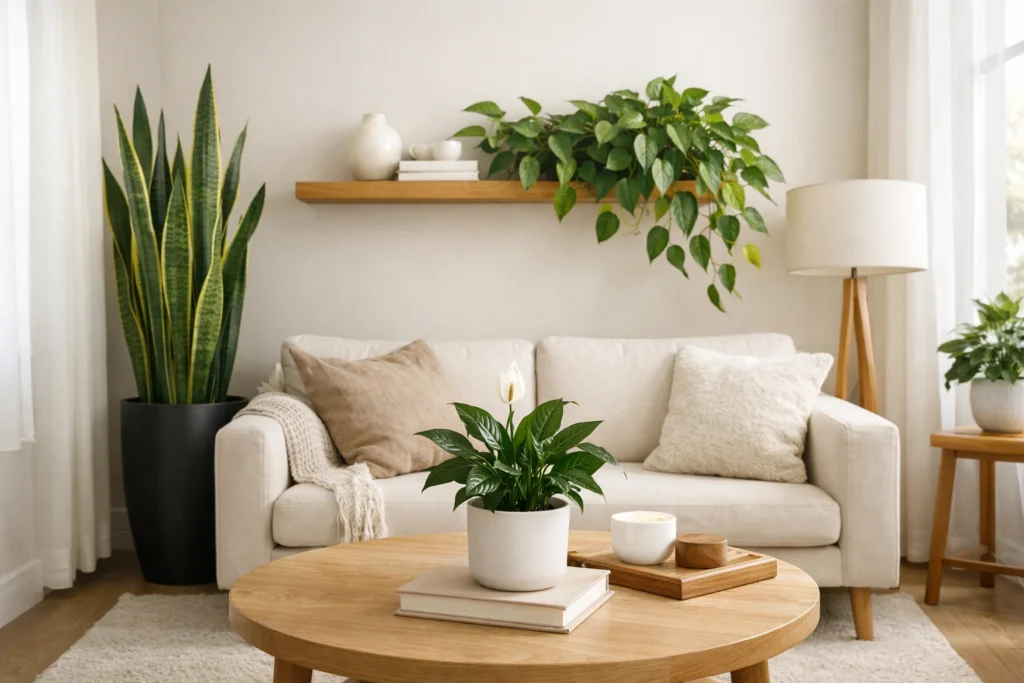
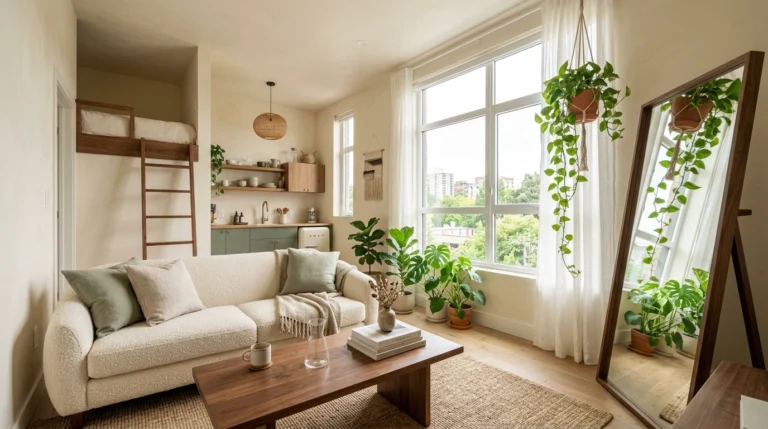
Plants do two things simultaneously that no decor object can replicate — they clean your air and calm your nervous system. NASA’s landmark Clean Air Study found that certain indoor plants reduce airborne toxins by up to 87% within 24 hours. Best plants for a calming living room include Peace Lily, Snake Plant, Golden Pothos, Aloe Vera, and Lavender. Each one thrives indoors with minimal care and delivers genuine air quality benefits alongside its visual beauty. How to decorate a calming living room with plants starts with one large statement plant and builds from there.
The deeper benefit is biophilic. Zen living room design consistently features living plants because human beings are neurologically wired to feel safer in the presence of living greenery. It’s an evolutionary response — greenery historically signaled safety, water, and abundance. Cozy serene living room styling uses plants strategically: one tall statement plant in a corner, trailing Pothos on a floating shelf, a small potted herb on the coffee table. Keep the pots natural — terracotta, ceramic, or woven rattan — and the effect is deeply grounding.
Create a Dedicated Quiet Corner Just for Rest and Stillness
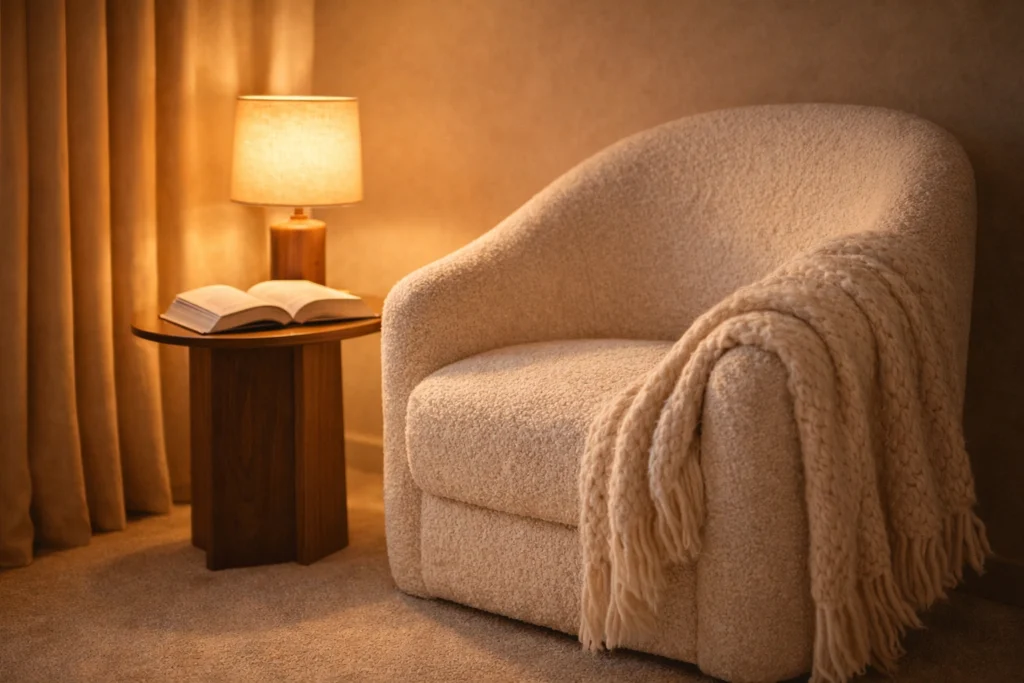
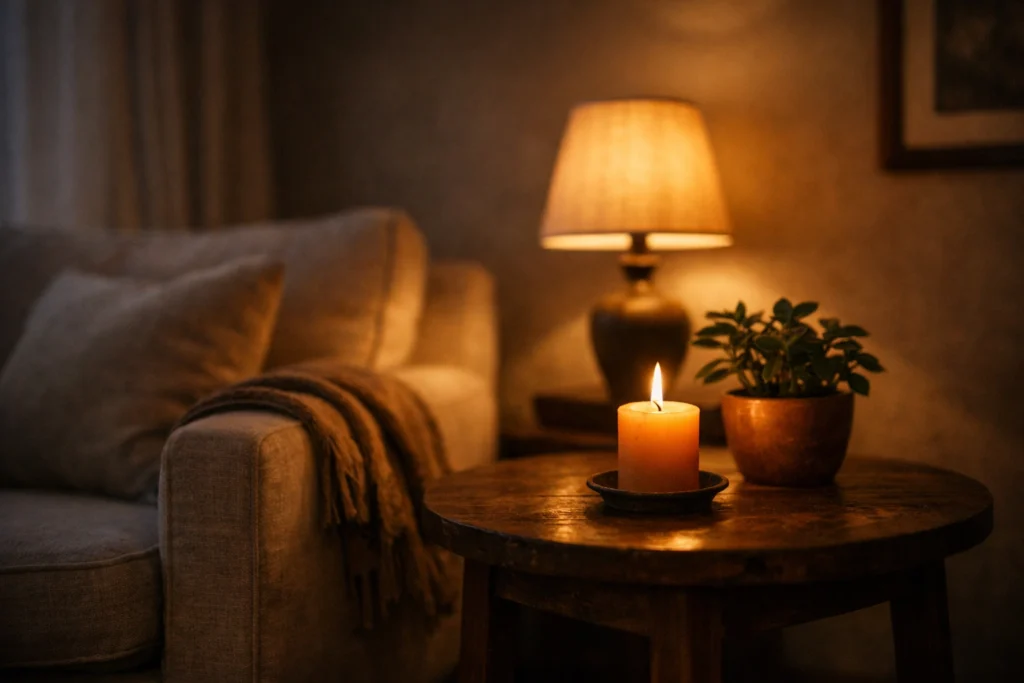
A quiet corner is a micro-sanctuary within your living room — a dedicated physical spot that your nervous system learns to associate with rest and safety. Hygge living room styling almost always features one. The formula is simple: a comfortable armchair with soft upholstery, a warm throw draped over one arm, a small wooden side table, and a gentle warm lamp beside it. That’s the whole setup. It doesn’t need to be elaborate. It needs to be consistent and intentional.
Calm modern living room ideas for a quiet corner include one non-negotiable rule — no screens. No phone charging station, no laptop corner, no TV within direct sightline. The quiet corner is purely for reading, breathing, resting, or sitting with a warm drink. Research from the American Psychological Association shows that even 10 minutes daily in a designated rest space measurably reduces cortisol levels over time. Quiet living room interior design understands that the body needs a physical cue to shift states — and a well-designed quiet corner provides exactly that.
Use Calming Scents To Trigger Instant Nervous System Relief
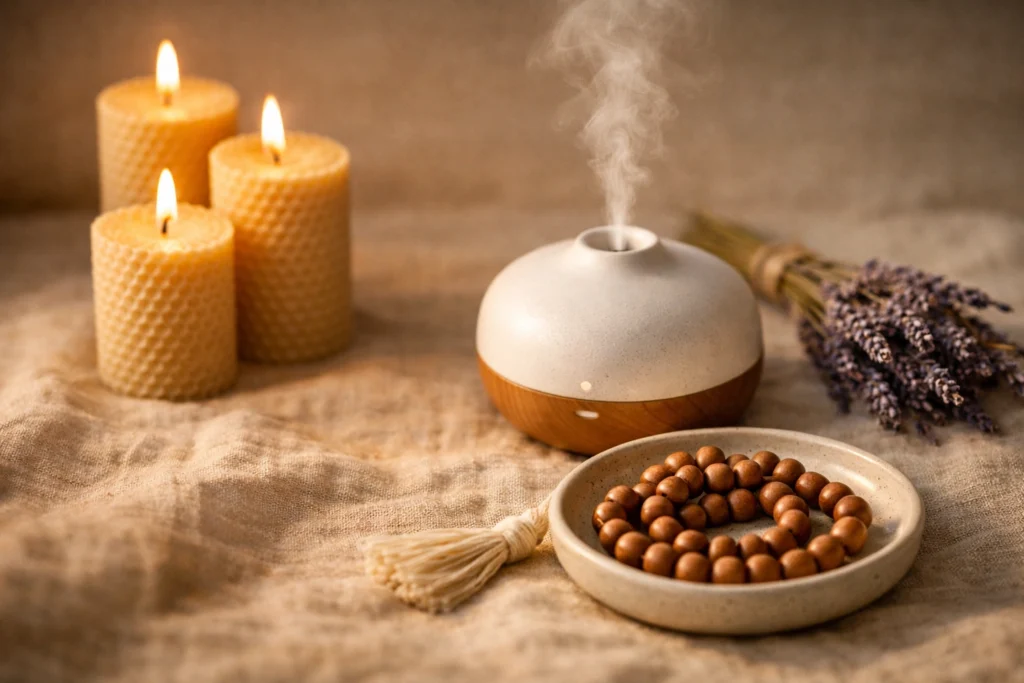
Scent is the fastest pathway to calm the nervous system has. Unlike sight or sound, olfactory signals bypass the rational prefrontal cortex entirely and travel directly to the limbic system — the brain’s emotional and survival center. How to use candles in a calming living room taps directly into this pathway. Lavender reduces anxiety and heart rate. Cedarwood promotes deep relaxation. Bergamot lifts mood while calming the nervous system simultaneously. Vanilla and sandalwood create warmth and psychological safety. Calming living room ideas on a budget almost always start here — a $12 beeswax candle changes a room’s entire emotional atmosphere instantly.
Mindful living room decor incorporates scent as a deliberate sensory layer — not an afterthought. Choose one signature scent for your living room and use it consistently. Over time, your nervous system develops a Pavlovian response — the moment that scent reaches you, your body begins to relax before you’ve even sat down. Use natural beeswax or soy candles, an essential oil diffuser with pure oils, dried lavender bunches, or linen sprays on cushions and throws. Relaxed living room atmosphere is as much about what you smell as what you see.
Choose Furniture That Invites Rest Over Performance
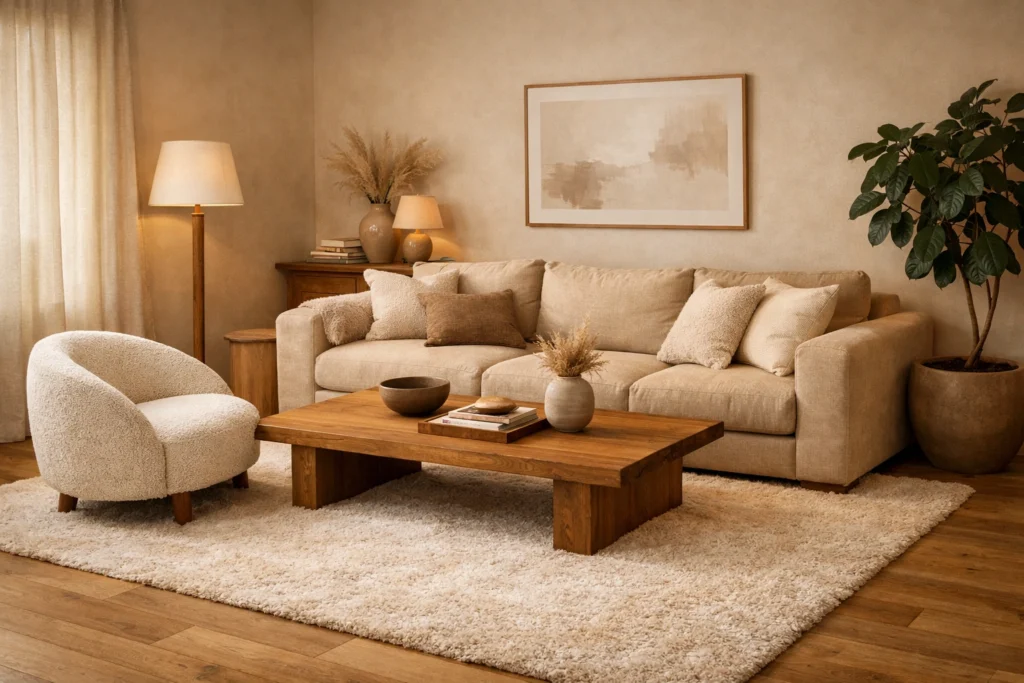
Some furniture looks beautiful but punishes your body for sitting in it too long. A calming living room needs furniture that actively invites rest. What furniture works best in a calming living room prioritizes deep seats, soft upholstery, low profiles, and rounded edges over rigid, formal silhouettes. A deep linen sofa you can genuinely sink into. A bouclé armchair with wide, enveloping arms. A low wooden coffee table at a height that doesn’t demand you sit upright. Best sofa colors for a calming living room are always warm neutrals — oat, cream, warm taupe, or soft sage.
Arrangement matters as much as selection. Airy calming living room design positions furniture in an inward-facing configuration — sofas and chairs angled toward each other rather than all facing the television. This arrangement subconsciously signals community and enclosure — two things the nervous system finds deeply reassuring. Understated living room aesthetic furniture also avoids sharp corners, shiny surfaces, and heavy visual contrast. Every piece should feel like it’s inviting you to stay rather than performing for an audience that never arrives.
Control Sound in Your Living Room for Deeper Daily Calm
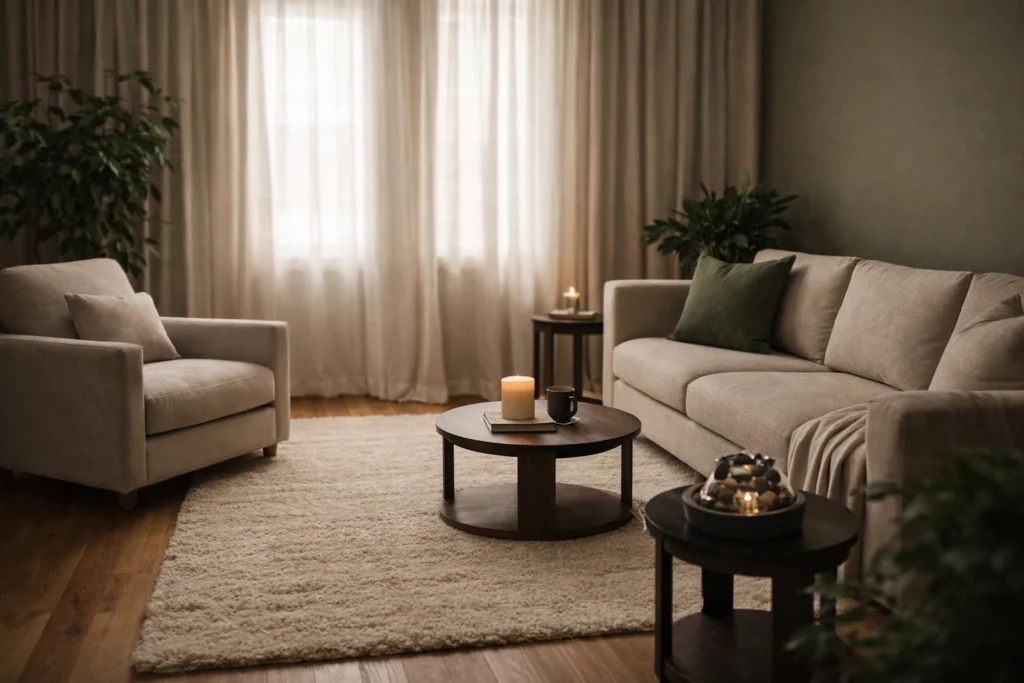
Sound pollution is one of the most overlooked stressors in modern American homes. Traffic noise, appliance hum, thin walls, hard floors — all of these keep the nervous system in a subtle but constant state of alertness. Serene living room design addresses acoustics with the same intentionality it brings to color and light. Soft furnishings absorb sound naturally and dramatically. A large wool rug reduces floor reflection. Heavy linen curtains dampen window noise. Upholstered furniture absorbs mid-range frequencies. Tranquil living room styling treats every soft surface as both a tactile and acoustic tool.
Soothing living room aesthetic also considers intentional sound additions. A small tabletop water fountain introduces a gentle, rhythmic sound that research consistently identifies as deeply calming — running water signals safety and abundance at a primal level. Soft instrumental music at low volume, birdsong recordings, or simple intentional silence all serve the same purpose. For apartment dwellers dealing with unavoidable external noise, a white noise machine placed near the window is one of the most effective and affordable nervous system tools available. Warm calming living room ideas always consider what the room sounds like — not just what it looks like.
Final Thoughts — How To Maintain Your Living Room Sanctuary Long Term
A calming living room isn’t built in a single weekend and then forgotten. It’s maintained through small, consistent daily rituals that reinforce the sanctuary feeling over time. Tidy surfaces every evening before bed. Light a candle at the start of your wind-down routine. Keep the lighting warm after sunset. Refresh your throw and cushions. These micro-habits take less than five minutes daily and they compound into a living room that genuinely supports your nervous system every single day. How to create a calming living room long-term is less about decorating and more about tending.
Start with one change today. Just one. Swap a harsh bulb for a warm one. Add a soft wool throw to your sofa. Place one plant in an empty corner. Calming living room ideas for apartments and large homes alike begin with this same quiet, single step. Your living room should work for you — actively, daily, and without requiring a renovation budget. Calming living room design inspiration for modern homes always comes back to the same truth: the most restorative spaces aren’t the most expensive ones. They’re the most intentional ones. And intention costs nothing at all.