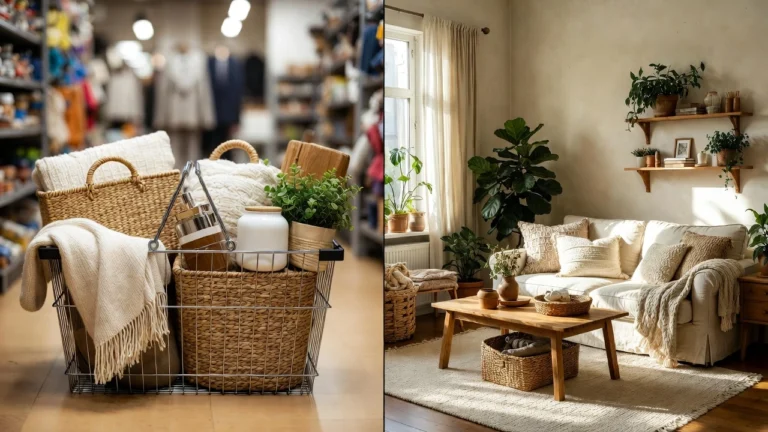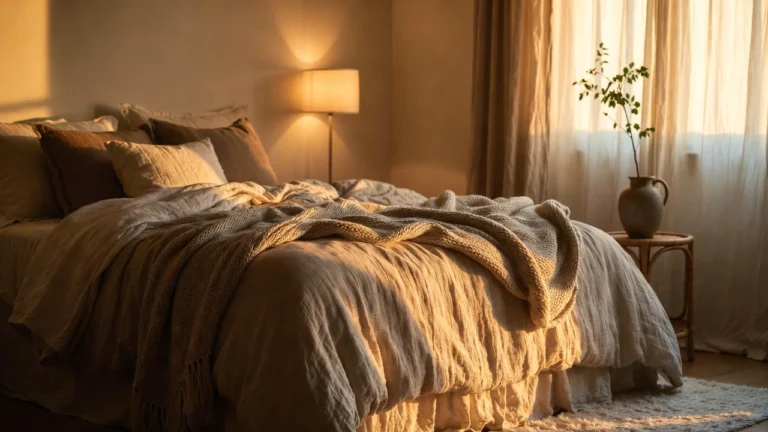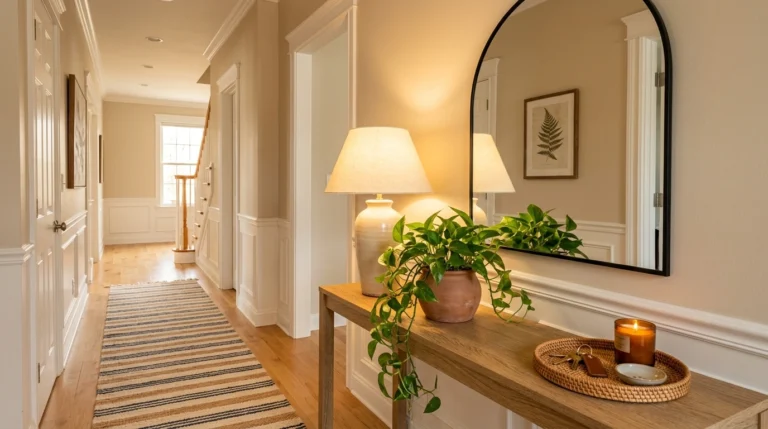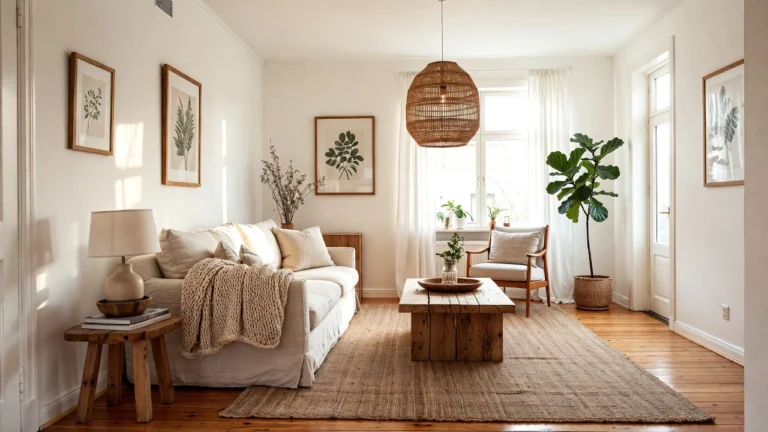
9 Home Decor Styles That Help You Slow Down
Your home either speeds you up or slows you down. Most Americans never realize which one theirs is doing until burnout arrives uninvited. The home decor styles you choose shape far more than aesthetics. They directly influence your nervous system, stress levels and daily pace of life.
Decorating your home in different styles isn’t just about following trends. It’s about creating a welcoming home atmosphere that supports the life you actually want to live. In a culture obsessed with hustle, certain interior design styles offer something radically different: permission to pause, breathe and simply exist without rushing.
This guide covers 9 specific home decor styles that naturally encourage slower, more intentional living. From minimalist interior design to Japandi home style, each aesthetic prioritizes calm over chaos. Whether you’re renovating with a specific style in mind or just seeking home styling tips for beginners, these approaches will help you transform your space into a genuine sanctuary.
Why Your Home Decor Style Affects How Fast or Slow You Live
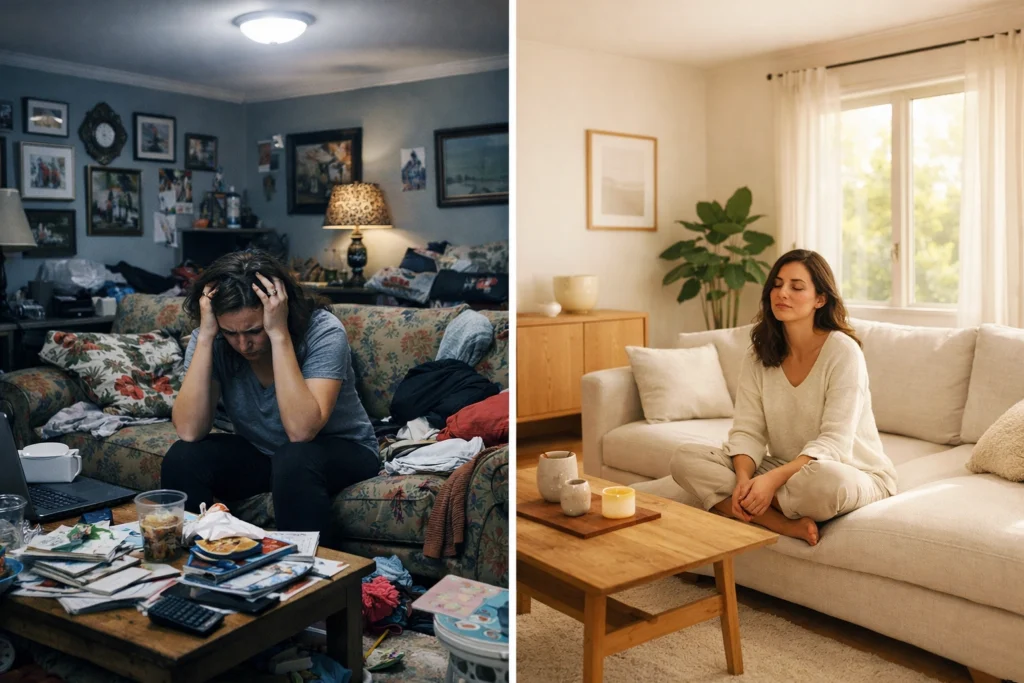
Visual clutter activates your brain’s threat detection system. When your eyes scan a busy room, your cortisol spikes subtly but measurably. Environmental psychology research confirms that cluttered spaces keep the sympathetic nervous system in low-grade activation mode constantly. That’s your body staying alert to perceived chaos even when you’re supposedly relaxing at home.
Most American homes accidentally speed life up through design choices nobody questioned. Open shelving packed with mismatched items, walls covered in competing artwork, furniture crammed into every corner and harsh overhead lighting all contribute to mental overstimulation. Choosing the right decor style for your space means recognizing how your environment either soothes or agitates your nervous system. Timeless interior design styles that prioritize simplicity, natural materials and negative space allow your brain to rest rather than constantly process visual information.
What Does It Mean to Design a Home That Helps You Slow Down
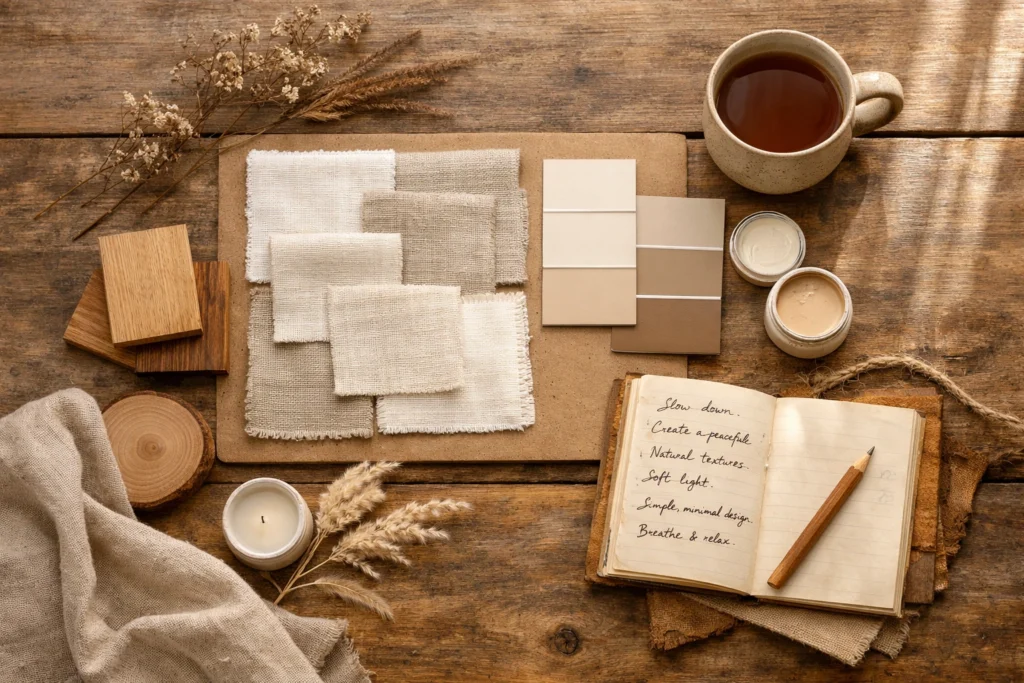
Slow living design is an intentional approach to creating a cohesive interior design look that supports rest over productivity. It draws from multiple home decorating ideas rooted in simplicity, functionality and connection to natural rhythms. Unlike typical American homes designed for entertaining or showcasing status, slow living spaces prioritize how the home feels to inhabit daily.
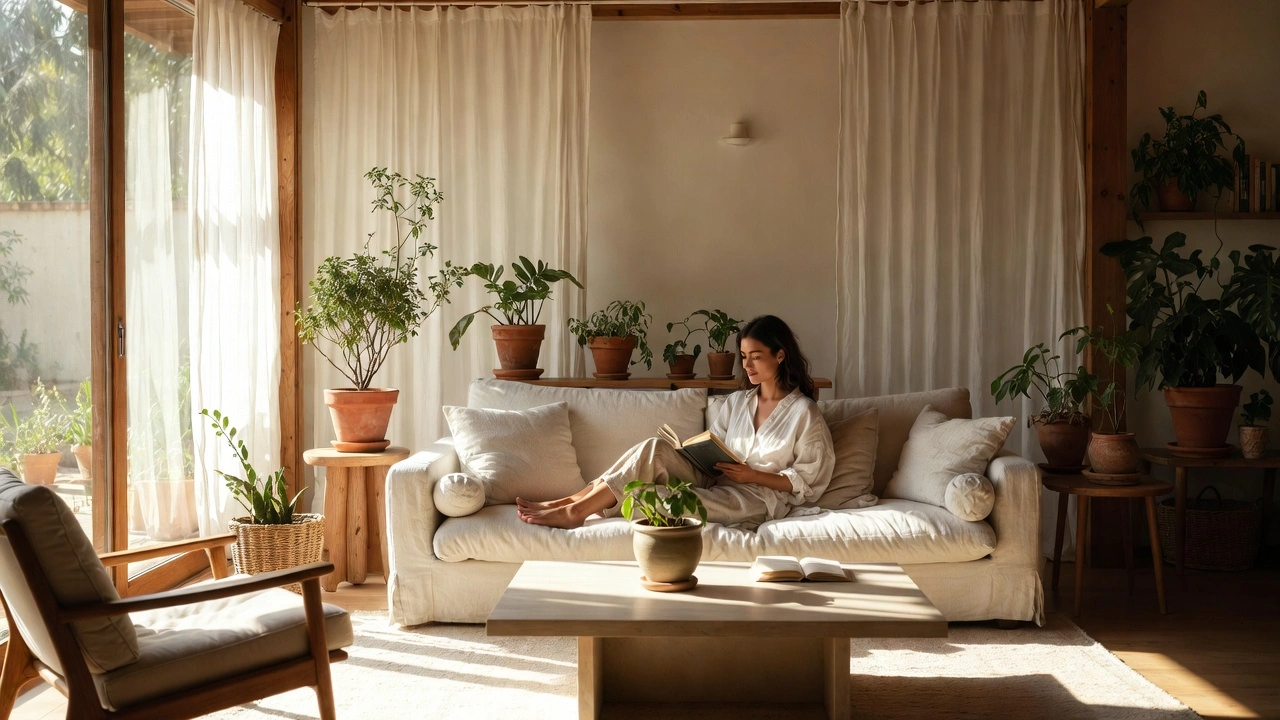
Key elements include generous negative space, natural materials like wood and linen, subdued color palettes and furniture chosen for genuine comfort rather than visual impact alone. Finding your personal home aesthetic within slow living principles means identifying which specific home decor styles resonate most authentically with your temperament. The goal isn’t perfection. It’s making your house feel like home in a way that invites you to linger rather than rush through.
Minimalist Home Decor: Less Clutter, More Calm
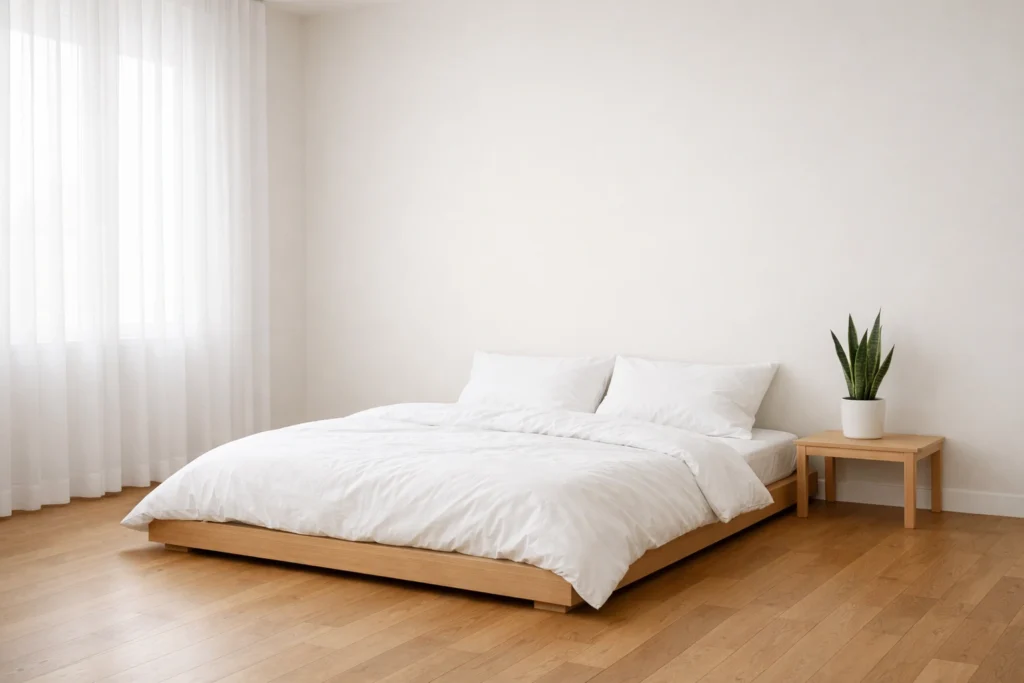
Minimalist interior design strips away everything nonessential to reveal what truly matters. This isn’t about cold empty rooms or deprivation aesthetics. It’s about curating your space so intentionally that every remaining object serves a clear purpose or brings genuine joy. When visual noise decreases, mental noise follows suit naturally.
you may also like this:12 Easy Ideas for Neutral Decor that Bring Warmth to Small Living Rooms
Minimalist home decor works through subtraction rather than addition. Neutral color palettes in warm whites, soft grays and natural beige create visual continuity between rooms. Furniture with clean simple lines replaces ornate pieces that demand attention. Surfaces stay clear of decorative clutter. Decorating small spaces with style becomes significantly easier when minimalism guides your choices because the style inherently maximizes perceived space through strategic emptiness.
| Minimalist Design Element | Slow Living Benefit |
|---|---|
| Clear surfaces | Reduces visual processing load |
| Neutral color palette | Calms nervous system activation |
| Functional furniture only | Eliminates decision fatigue |
| Generous negative space | Allows mental rest and clarity |
| Natural light emphasis | Supports circadian rhythm regulation |
Japandi Style: The Perfect Blend of Japanese and Scandinavian Serenity
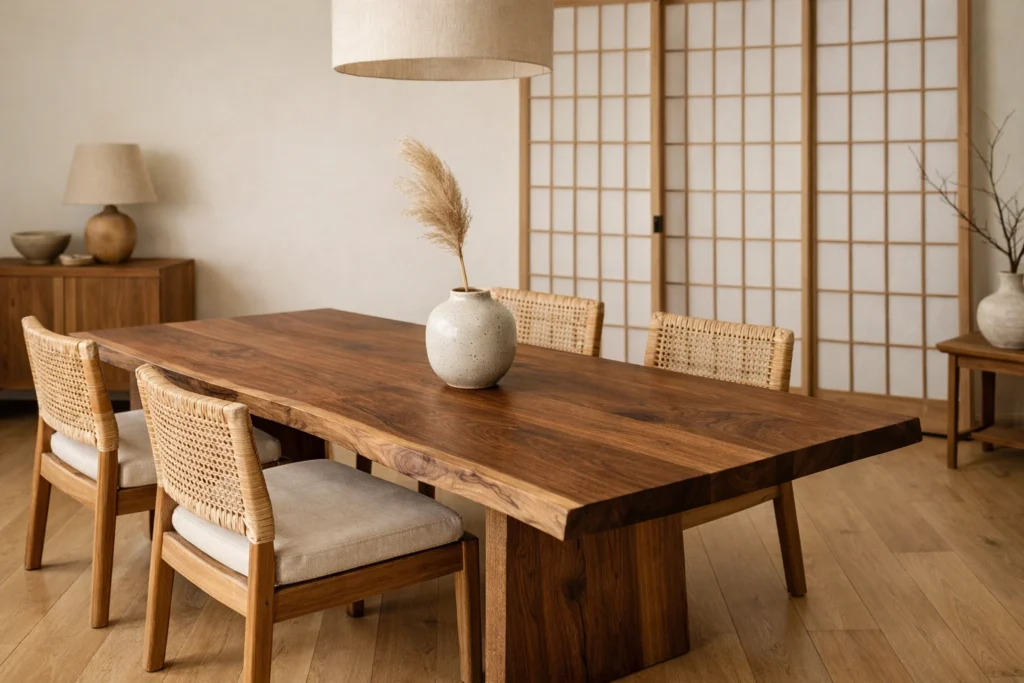
Japandi home style marries Japanese wabi-sabi philosophy with Scandinavian hygge warmth. The result is one of the most naturally calming home decor styles available to modern Americans. Japanese aesthetics contribute acceptance of imperfection, asymmetry and natural materials in their raw state. Scandinavian design adds cozy textiles, functional simplicity and lived-in comfort.
This fusion creates spaces that feel both serene and genuinely livable. Japandi style emphasizes low furniture, neutral tones with occasional muted earth colors, handcrafted ceramics and textiles with subtle texture. Wood appears in its natural state rather than painted or heavily finished. Blending modern and traditional elements happens effortlessly in Japandi design because both parent aesthetics share reverence for craftsmanship and functional beauty. Transforming your home with style updates often starts most successfully with a single Japandi-inspired room that immediately demonstrates how calmness feels physically different.
Scandinavian Interior Design: Clean Lines and Cozy Simplicity
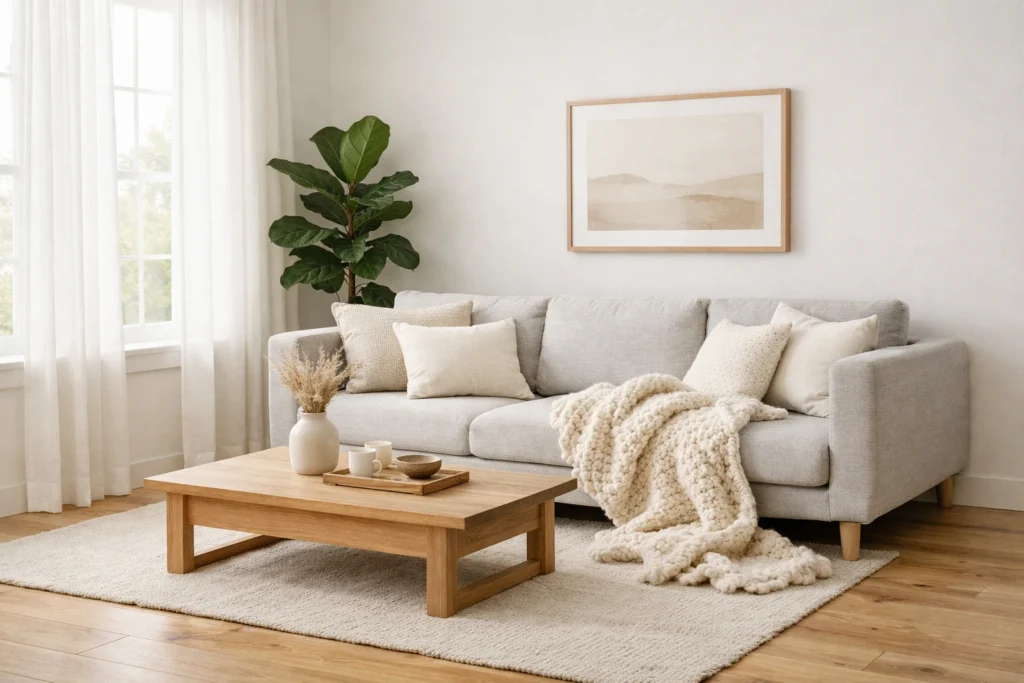
Scandinavian interior style evolved in Northern Europe where long dark winters demanded homes that maximize light and warmth. The result is one of the most globally influential interior design styles of the past decade. Clean architectural lines meet soft textiles, creating spaces that feel organized yet deeply comfortable simultaneously.
Key elements include white or light gray walls that reflect precious natural light, blonde wood flooring, functional furniture with organic shapes and layered textiles in wool, linen and sheepskin. Color palettes for different decor styles vary widely but Scandinavian design stays firmly rooted in neutrals with occasional muted accent colors like dusty blue or sage green. Layering textures in home decor becomes essential in this style since visual interest comes from material variation rather than color or pattern. Americans adapting Scandinavian design often add slightly warmer tones than traditional Nordic palettes to suit sunnier climates and personal preference.
Coastal Grandmother Aesthetic: Timeless Comfort and Effortless Elegance
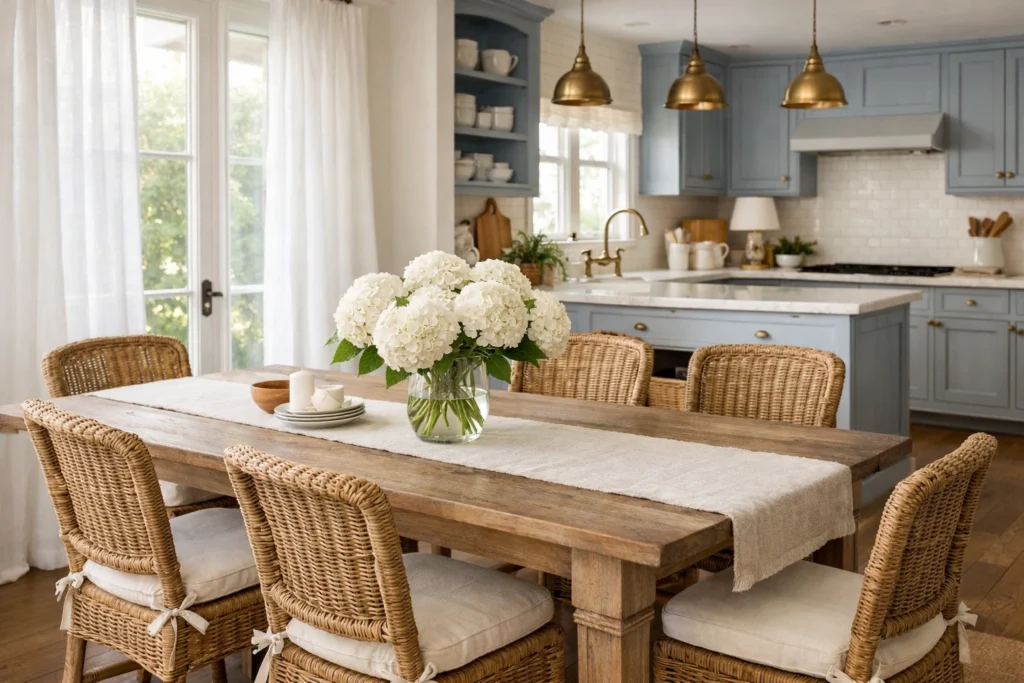
The coastal grandmother aesthetic exploded across American social media in recent years because it captures something deeper than trend. It embodies a slower, more gracious approach to domestic life that feels increasingly rare. This style channels Nancy Meyers movie interiors, classic New England beach houses and European seaside elegance without the fussiness of traditional coastal decor ideas.
Linen in natural tones dominates this aesthetic. Wicker and rattan furniture adds organic texture. Vintage finds mix with quality basics. Fresh flowers appear regularly in simple glass vases. Coastal grandmother aesthetic works anywhere in America, not just coastal regions, because it’s about cultivating a mindset of ease and hospitality rather than literal beach house decoration. Achieving a designer look on a budget becomes possible with this style since thrifted vintage pieces and simple natural materials form its foundation rather than expensive statement furniture.
Organic Modern Decor: Natural Materials That Ground Your Space
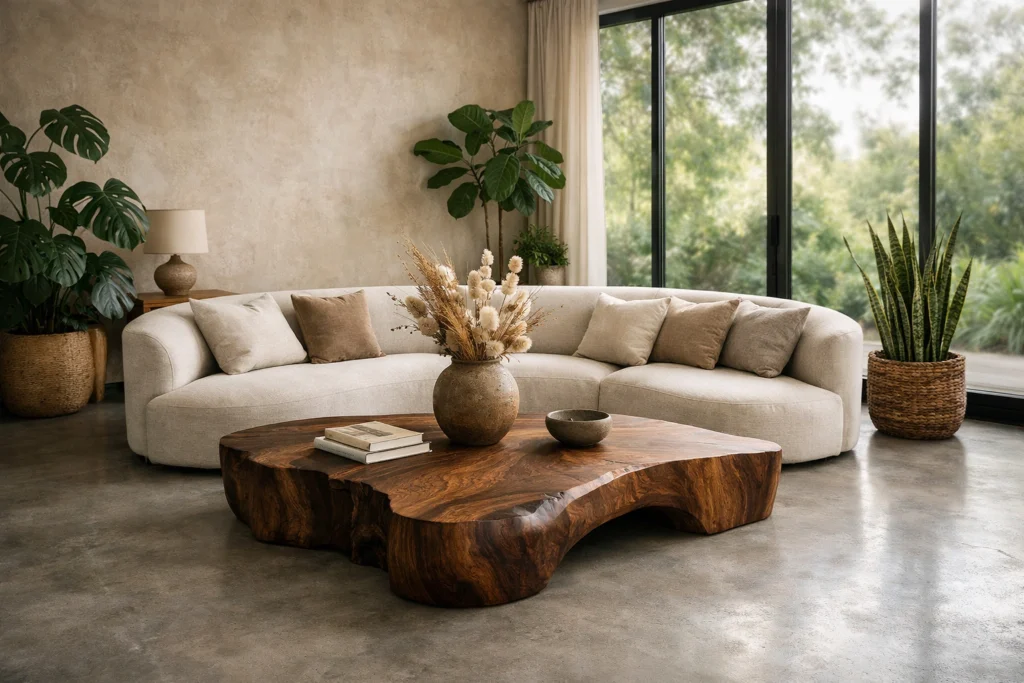
Organic modern decor bridges contemporary design with biophilic principles that humans instinctively crave. Clean modern lines combine with raw natural materials like live-edge wood, stone, clay and undyed textiles. The result is sophisticated yet deeply grounding, appealing to Americans who want modern home decor without cold minimalism.
This style emphasizes furniture choices that define your style through material rather than ornamentation. A dining table in solid walnut with natural edges makes a stronger statement than any amount of decorative accessories. Curved organic shapes balance geometric modern elements. Organic modern decor incorporates abundant plants not as afterthoughts but as integral design elements. Stone or concrete floors add thermal mass and textural weight. Balancing comfort and aesthetics happens naturally because organic materials inherently feel good to inhabit rather than just look at from a distance.
Cottage Core Style: Bringing Slow Living into Every Room
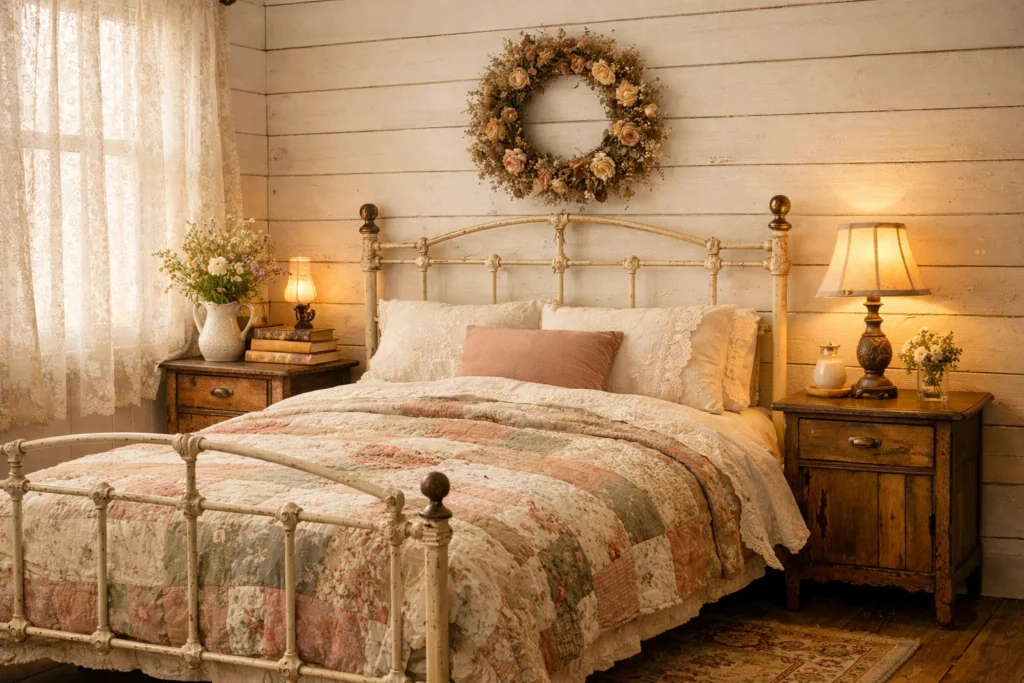
Cottage core aesthetic romanticizes countryside living through floral patterns, vintage finds, handmade textiles and garden-inspired elements. While often associated with maximalism, cottage core done well for slow living actually requires careful curation to avoid overwhelming visual clutter. The key is intentional coziness rather than chaotic accumulation.
Think mismatched vintage china displayed thoughtfully, dried flowers in simple arrangements, handmade quilts and needlework, and wooden furniture with visible age and character. Country cottage style works particularly well in older American homes with original architectural details that reward emphasis rather than concealment. Accessorizing your home beautifully in cottage core style means choosing pieces with stories and handmade character over mass-produced perfection. This approach naturally slows consumption patterns because you’re seeking specific treasured items rather than filling space quickly with whatever’s available.
Wabi-Sabi Home Design: Embracing Imperfection and Mindful Beauty
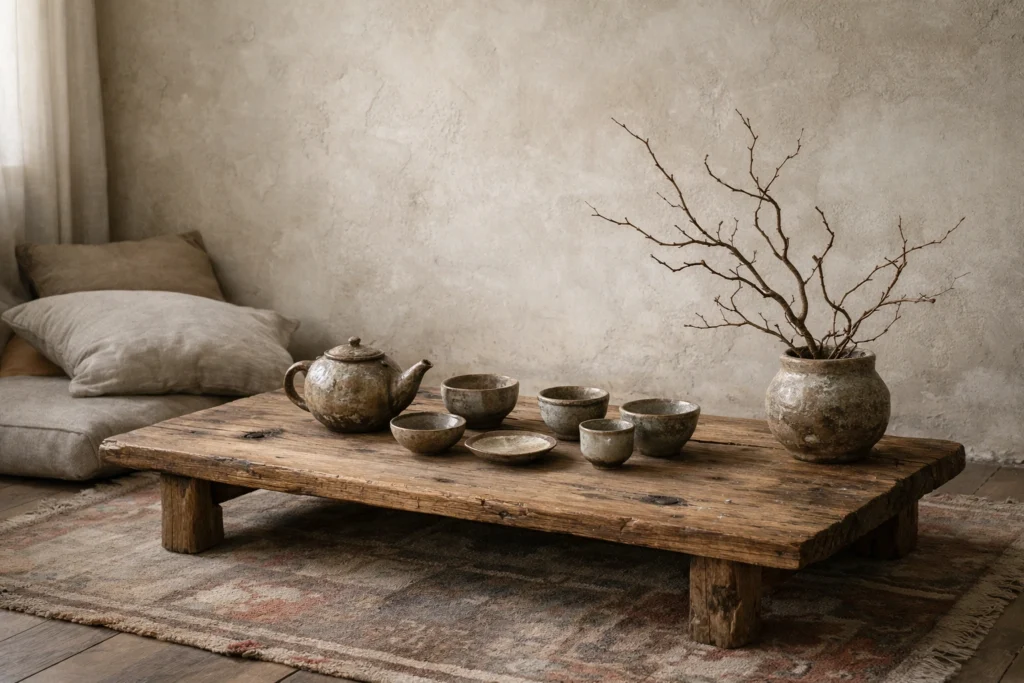
Wabi-sabi is a Japanese aesthetic philosophy celebrating imperfection, impermanence and the beauty of natural aging. Applied to home decor styles, it creates spaces that feel lived-in and authentic rather than staged for social media. Wabi-sabi directly counters the perfectionism that keeps many Americans stressed about their homes constantly.
Deliberately choosing furniture with visible wear, displaying handmade ceramics with irregular glazing, leaving wood unfinished to show grain and knots, and embracing asymmetry in arrangements all embody wabi-sabi principles. Vintage home decor fits naturally into this aesthetic because age and patina are celebrated rather than hidden. Showcasing your personality through decor becomes easier when perfection isn’t the goal. A chipped vintage vase holding wildflowers tells a richer story than flawless factory-fresh decor ever could. This mindset shift profoundly impacts how you experience your home daily.
Rustic Farmhouse Decor: Warmth, Simplicity and Intention
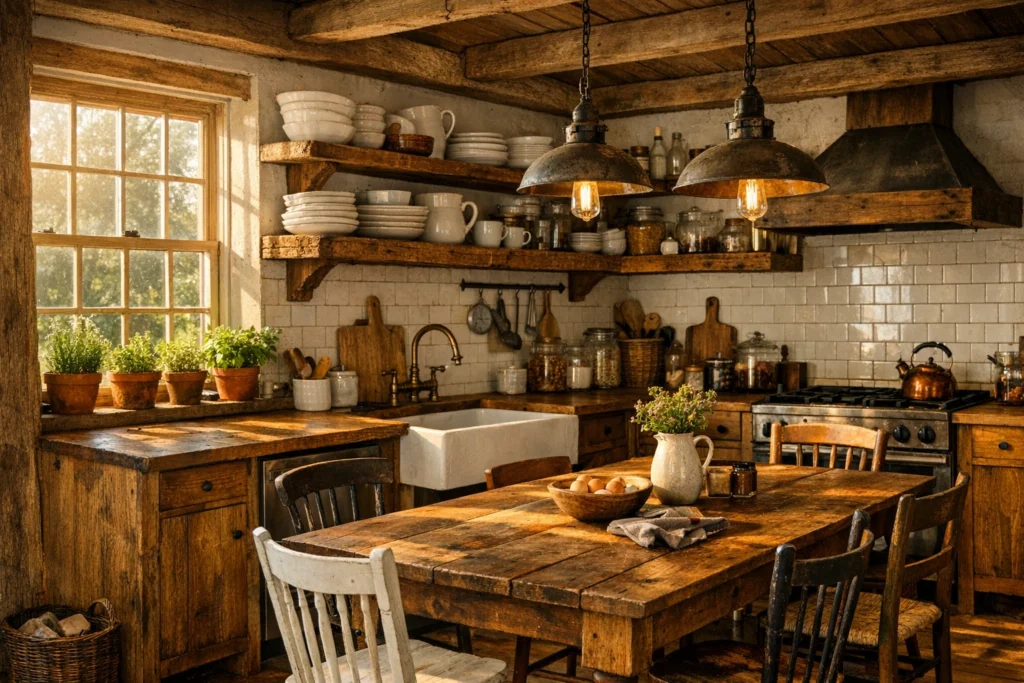
Rustic home decor and farmhouse decor style have saturated American design trends for years, but authentic rustic design predates the mass-market versions by centuries. True farmhouse chic design emphasizes functionality, durability and honest materials rather than artificial distressing and mass-produced “farmhouse” signs.
Reclaimed barn wood, vintage industrial lighting, apron-front sinks, open shelving with genuinely used items and large communal tables all characterize authentic rustic style. Rustic home decor grounds spaces through visual and physical weight. Thick wood beams, stone fireplaces and cast iron fixtures create substance that feels permanent in a culture obsessed with disposability. Creating a cohesive interior design look in rustic style requires restraint. Too many rustic elements create visual heaviness. Balance is everything. Mixing and matching decor styles often works beautifully when rustic provides the foundation and lighter Scandinavian interior style or minimalist interior design keeps it from feeling oppressive.
Zen-Inspired Interior Style: Creating Peaceful Spaces for Rest
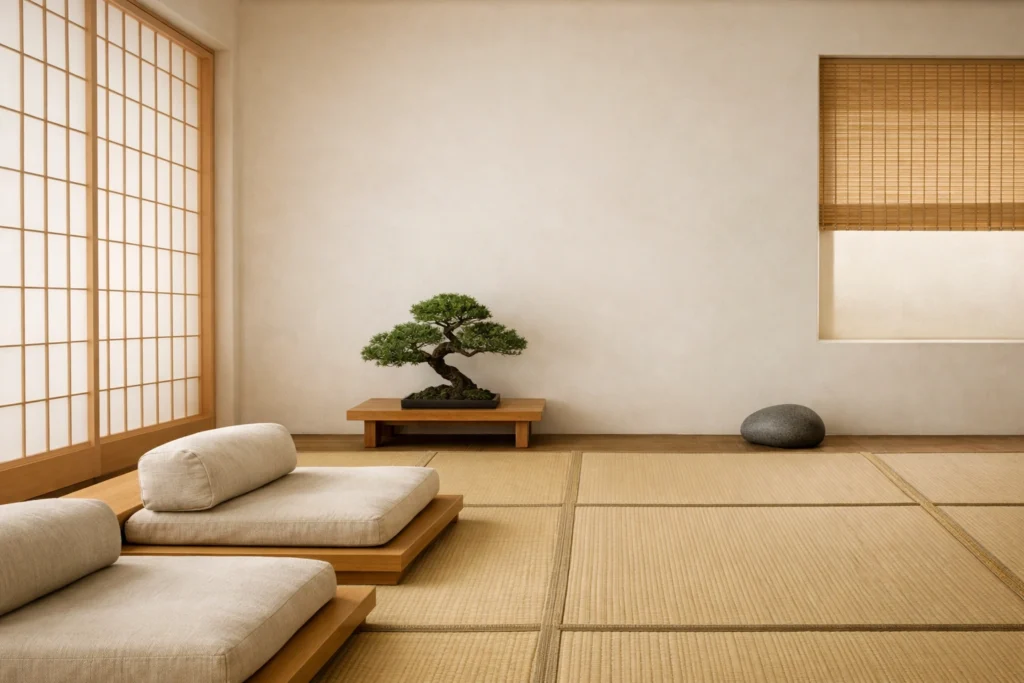
Zen design principles create the most overtly calm interior design styles available. Rooted in Buddhist meditation practices, Zen spaces eliminate visual distraction ruthlessly to support mental stillness. This doesn’t mean sterile emptiness. It means every element present serves the intention of peace.
Low platform beds, floor cushions for seating, shoji screens as room dividers, natural fiber tatami mats, minimal color palettes in neutrals and earth tones, and strategically placed natural elements like bamboo or river stones all characterize Zen design. Designing a functional yet stylish home with Zen principles means questioning every object’s necessity before it enters your space. Statement pieces for each design style in Zen design are typically singular sculptural objects, a perfectly placed bonsai tree or a single scroll of calligraphy. Negative space itself becomes the primary design element. Americans adapting Zen style often create dedicated meditation corners or bedrooms following these principles while keeping other rooms slightly less austere.
Conclusion: Designing a Home That Invites You to Breathe
The 9 home decor styles covered here share one essential quality. They all prioritize how a space feels over how it photographs. Curating a picture-perfect interior for social media and making your house feel like home for actual living are not the same endeavor. Slow living design chooses the latter without apology.
Transforming your home with style updates doesn’t require gutting every room simultaneously. Start with one space that matters most to your daily well-being. Apply the principles from whichever style resonates most authentically. Notice how your nervous system responds to increased simplicity, natural materials or intentional coziness. That physical response of calm is your body telling you which direction serves you best.
Your home should be the place where you breathe deepest. Home decor styles that support that goal are not luxury. They are necessity in a culture that rarely stops demanding more speed, more productivity and more perpetual motion. Choose design that invites you to pause. Your mind and body will thank you.
Frequently Asked Questions About Slow Living Home Decor Styles
What home decor style is best for a calming atmosphere?
No single best style exists for everyone. Minimalist interior design, Japandi home style and Scandinavian interior style are universally calming for most people because they share principles of visual simplicity, natural materials and abundant negative space. However finding your personal home aesthetic matters more than following prescribed rules. If cottage core aesthetic feels calming to you despite being busier visually, trust that response over design dogma.
How do I make my home feel more relaxing and less busy?
Start by removing visual clutter from surfaces and walls. Choose neutral color palettes for different decor styles in soft earth tones, warm whites or muted grays. Incorporate natural materials like wood, linen and clay that inherently calm the nervous system. Add generous negative space rather than filling every corner. Dim harsh overhead lighting in favor of layered ambient lighting. These changes work regardless of which specific home decor styles you prefer.
What is the difference between minimalist and Japandi decor styles?
Minimalist interior design focuses primarily on removing excess and creating visual simplicity through elimination. Japandi home style builds on that foundation but adds Japanese wabi-sabi warmth, natural imperfection and Scandinavian hygge coziness. Japandi includes more texture, softer materials and acceptance of visible wear that pure minimalism often avoids. Japandi feels lived-in while minimalism can sometimes feel aspirational but impractical for actual daily life.
Can I mix multiple slow living decor styles in one home?
Absolutely yes. Mixing and matching decor styles works beautifully when they share underlying principles. Scandinavian interior style and Japandi home style blend seamlessly because both value simplicity and natural materials. Organic modern decor pairs well with minimalist interior design or wabi-sabi. Coastal grandmother aesthetic and cottage core aesthetic overlap significantly. Maintain cohesion through consistent color palettes, repeated materials and overall tonal consistency while varying specific style elements from room to room.
What colors promote a slow living lifestyle in home decor?
Neutral earth tones dominate slow living color palettes for different decor styles. Warm whites, soft beiges, warm grays, natural linen tones, muted sage green, dusty blue and terracotta all calm the nervous system. These colors reflect natural environments that humans evolved in over millennia. Avoid highly saturated bright colors that stimulate rather than soothe. Timeless interior design styles almost universally favor subdued palettes that age well and support rest over excitement.