

How to Relearn Rest When You’ve Forgotten How to Slow Down
In today’s world, the concept of rest has become almost foreign to many people. We live in a society that glorifies hustle culture, where working long hours is celebrated and taking time to relax is seen as laziness. The pressure to constantly be productive has created a generation of exhausted individuals who have literally forgotten how to relearn rest. This article explores the profound importance of learning to rest again and provides practical strategies to help you reclaim this essential human need.
Rest is not a luxury. It’s a biological necessity. Your body and mind require downtime to function properly. Yet millions of people worldwide struggle with the concept of slowing down. They feel guilty when they’re not working. They experience anxiety when their hands aren’t busy. They’ve lost the ability to simply be without doing. This disconnection from rest has severe consequences for physical health, mental well-being, and overall life quality. Understanding why this happened and how to fix it is the first step toward reclaiming your life.
Why So Many People Have Forgotten How to Rest

The reasons behind our collective rest deficit are complex and deeply rooted in modern culture. Society has conditioned us to believe that our worth is determined by our productivity. From childhood, we’re taught that idle time is wasted time. Schools reward busy schedules. Workplaces demand constant availability. Social media showcases highlight-reels of achievement. This relentless messaging creates neural pathways in our brains that associate rest with failure and work with success.
you may also like this:Romantic Home Ideas That Turn Everyday Spaces Into Love-Filled Retreats
The digital revolution has amplified this problem exponentially. Our phones never sleep, and neither do we. Email notifications interrupt our evenings. Work messages ping throughout weekends. Social media feeds demand constant scrolling and engagement. This always-on mentality has rewired how our nervous systems function. We’ve forgotten what genuine downtime feels like because true disconnection has become nearly impossible. Why resting feels hard isn’t just a psychological issue—it’s become a systemic one embedded in every aspect of modern life.
The Hidden Cost of Constant Busyness

The price of constant busyness extends far beyond feeling tired. When you chronically neglect rest and intentional rest, the costs accumulate across every dimension of your life. Your health deteriorates in measurable ways. Your relationships suffer. Your work performance paradoxically declines despite more hours invested. The financial burden of stress-related illness becomes staggering. Yet many people don’t connect their health problems, relationship struggles, and career stagnation back to their lack of rest.
Physical health decline from chronic busyness is well-documented by medical research. Your immune system weakens under sustained stress. Sleep quality deteriorates even when you spend more hours in bed. Inflammation markers increase throughout your body. Your cardiovascular system remains in a state of strain. Digestion and metabolism suffer. Chronic pain conditions develop or worsen. Yet many people attribute these symptoms to aging or genetics rather than recognizing them as signals that their body desperately needs rest and recovery. The connection between busyness and health decline is direct and measurable.
Signs You Need to Relearn Rest

Recognizing that you need more rest is the crucial first step toward healing from exhaustion. Many people have become so accustomed to exhaustion that they no longer recognize it as abnormal. They assume their persistent fatigue is just part of being an adult. They normalize their irritability and anxiety. They accept that they can’t remember things or focus. These are warning signs that your body and mind desperately need how to rest your mind and body to function properly again.
The signs that you need to relearn rest appear across multiple dimensions of your life. Physical symptoms include persistent tiredness despite adequate sleep time. You get frequent colds or infections because your immune system is compromised. You experience headaches, muscle tension, or chronic pain. Your appetite or digestion changes. You feel shortness of breath or heart palpitations without exertion. These are your body’s ways of signaling distress. Emotionally and behaviorally, you notice irritability over minor things, difficulty concentrating, cynicism about work you once enjoyed, withdrawal from activities you loved, and compulsive checking of work messages even during personal time.
Why Rest Feels Uncomfortable in a Hustle Culture
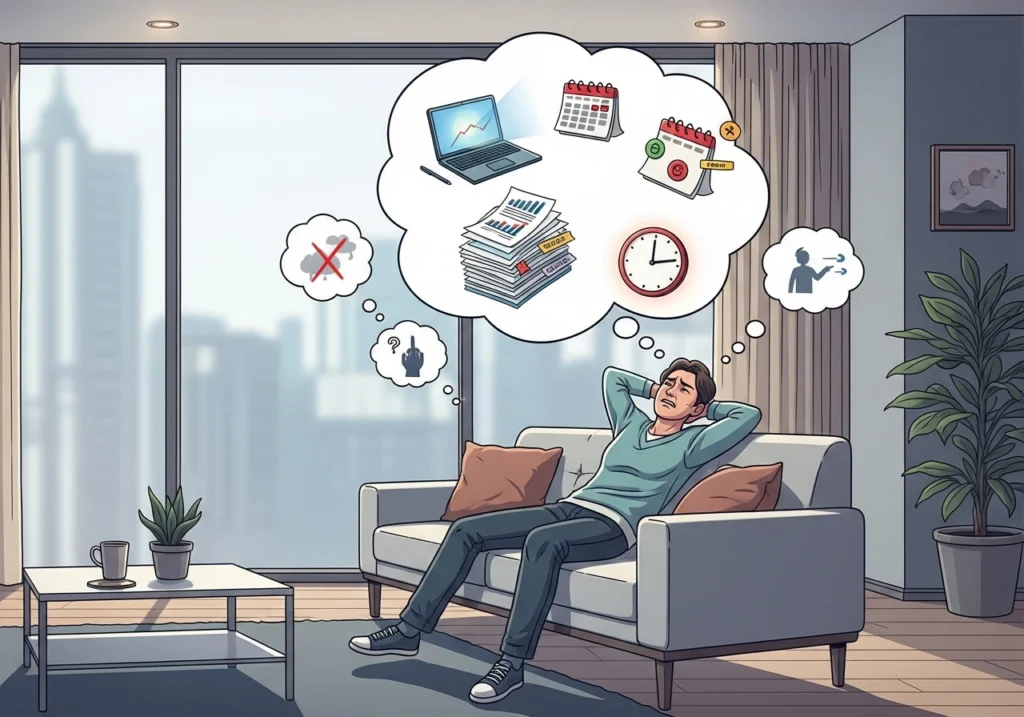
Understanding why rest feels uncomfortable requires examining how modern culture and our own neurobiology work against restoration. Rest in a hustle culture creates internal conflict. Part of you desperately wants to slow down. Another part feels guilty and undeserving of downtime. This internal conflict prevents genuine rest even when you have time available. The discomfort you feel isn’t weakness. It’s a predictable response to living in a system that devalues rest while your body desperately needs it.
The neurobiology of rest resistance is fascinating and important to understand. Your brain has been conditioned through repeated reinforcement to associate achievement with dopamine and worth. When you’re not achieving, your brain feels deprived. Sitting quietly feels empty because nothing is being accomplished. This isn’t motivational—it’s chemical. Additionally, why resting feels hard is partly because your nervous system has genuinely forgotten how to access its relaxation response. After months or years in stress mode, the parasympathetic nervous system becomes underdeveloped. Your body literally doesn’t know how to relax anymore.
What Rest Actually Means (And What It Doesn’t)

Before you can properly engage in rest, you need to understand what rest actually is. Rest is not laziness. Rest is not avoidance. Rest is not wasting time. Rest is a physiological necessity that allows your body and mind to rebuild depleted resources. Yet many people have such distorted understandings of rest that they can’t distinguish between genuine rest and unhealthy avoidance or between rest and mindless escapism.
Mindful rest involves conscious, intentional restoration rather than numbed-out distraction. Rest is strategic and purposeful. It addresses the specific type of fatigue you’re experiencing. It leaves you feeling genuinely restored rather than temporarily distracted. Understanding the different types of rest is crucial because not all downtime provides equivalent restoration. Some rest rebuilds physical energy. Some heals emotional wounds. Some quiets mental chatter. True rest addresses whatever is most depleted in your system at that moment.
| Type of Rest | What It Involves | Signs You Need It |
|---|---|---|
| Physical | Sleep, napping, gentle movement, recovery | Persistent tiredness, muscle tension, frequent illness |
| Mental | Limiting decisions, reducing stimulation, simplicity | Difficulty concentrating, cognitive fog, decision fatigue |
| Emotional | Processing feelings, setting boundaries, vulnerable connection | Irritability, emotional numbness, difficulty with relationships |
| Sensory | Reduced input, quiet environments, minimal notifications | Overstimulation, jumpiness, sensory sensitivity |
| Social | Selective company, solitude, authentic connection | Feeling drained by people, needing alone time, superficial interactions |
How to Relearn Rest Without Feeling Lazy or Guilty

This is perhaps the most practically important section of this article. How to rest without feeling lazy requires both behavioral changes and cognitive reframing. You need to actually practice rest while simultaneously challenging the guilt and shame that arise. This dual approach addresses both the external behavior and internal experience.
The first step is reframing rest as essential maintenance rather than earned luxury. This cognitive shift is profound. Rest isn’t something you do after you’ve been productive enough. Rest is something you do because you’re human and humans require rest. Your body requires sleep. Your mind requires downtime. Your emotions require processing. These aren’t optional or something to feel guilty about. They’re basic biological necessities. Once you genuinely internalize this, the guilt begins to lose its power. Think of rest the way you think about maintaining a car. You don’t drive a car until it’s completely broken before taking it for service. You perform regular maintenance to keep it functioning optimally. Your body and mind require the same approach. You don’t wait until complete breakdown to rest. You build rest into your regular routine as essential maintenance.
Simple Daily Practices to Slow Down Naturally
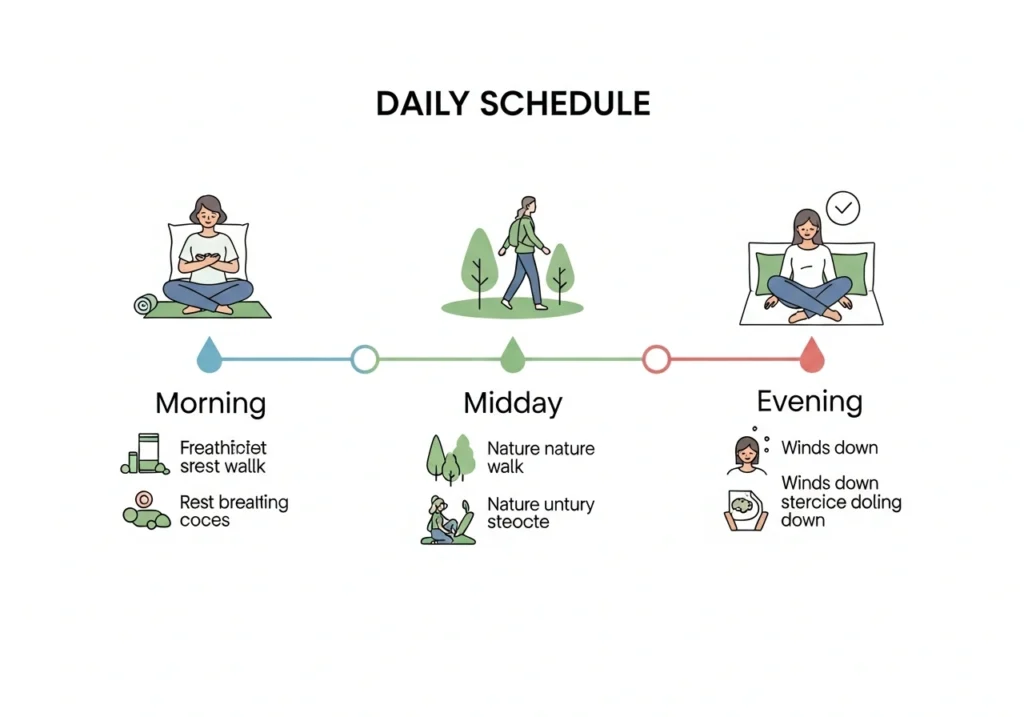
Understanding rest intellectually is different from practicing it experientially. The following daily practices provide concrete ways to cultivate rest and learning to slow down again into your life. Start with one or two practices that resonate with you. Don’t try to implement everything simultaneously. Choose practices aligned with your lifestyle and preferences. The best practice is one you’ll actually do consistently.
These practices work because they interrupt stress accumulation before it reaches crisis levels. Small regular resets throughout your day prevent the deep exhaustion that makes recovery so difficult. They also train your nervous system to access relaxation states, rebuilding capacity that chronic stress has depleted. Consistency matters more than intensity. A brief daily practice beats occasional intensive recovery attempts.
Mental and Emotional Rest vs Physical Rest
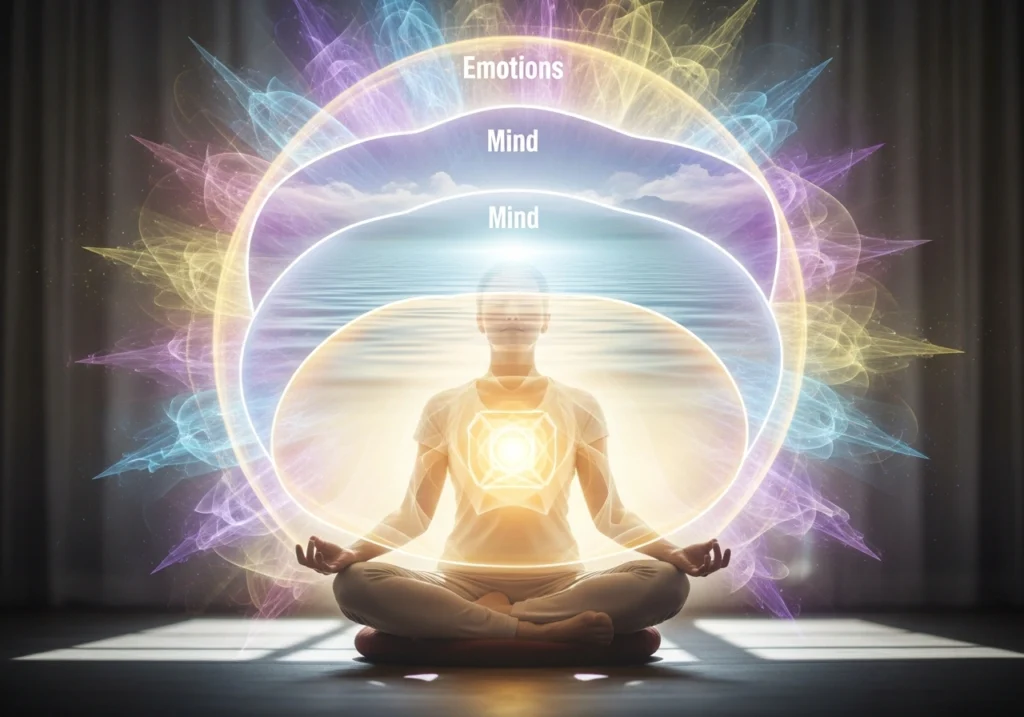
Many people focus solely on physical rest—sleep—while neglecting equally important mental and emotional rest. Mental and physical rest are not interchangeable. You can sleep eight hours and still feel mentally exhausted. You can be physically rested but emotionally depleted. Understanding these distinctions allows you to target rest to your actual deficiencies.
Physical rest involves sleep, napping, and gentle movement. Your body cannot repair tissues, consolidate memories, produce hormones, or strengthen immunity without adequate sleep. Yet sleep alone doesn’t address mental and emotional exhaustion. Mental rest involves quieting the constant mental activity that occupies most people’s waking hours. Emotional rest involves processing and healing emotional experiences. Each type of rest requires different practices and addresses different depletion. Physical rest includes adequate sleep, typically seven to nine hours nightly for most adults. During sleep, your body performs critical maintenance. Growth hormone increases, facilitating tissue repair and healing. Your immune system produces antibodies and eliminates invading organisms. Memories consolidate from short-term to long-term storage. Glucose metabolism improves. Your nervous system rebalances. Without adequate sleep, every system in your body functions suboptimally.
How Slowing Down Helps Heal Burnout and Stress
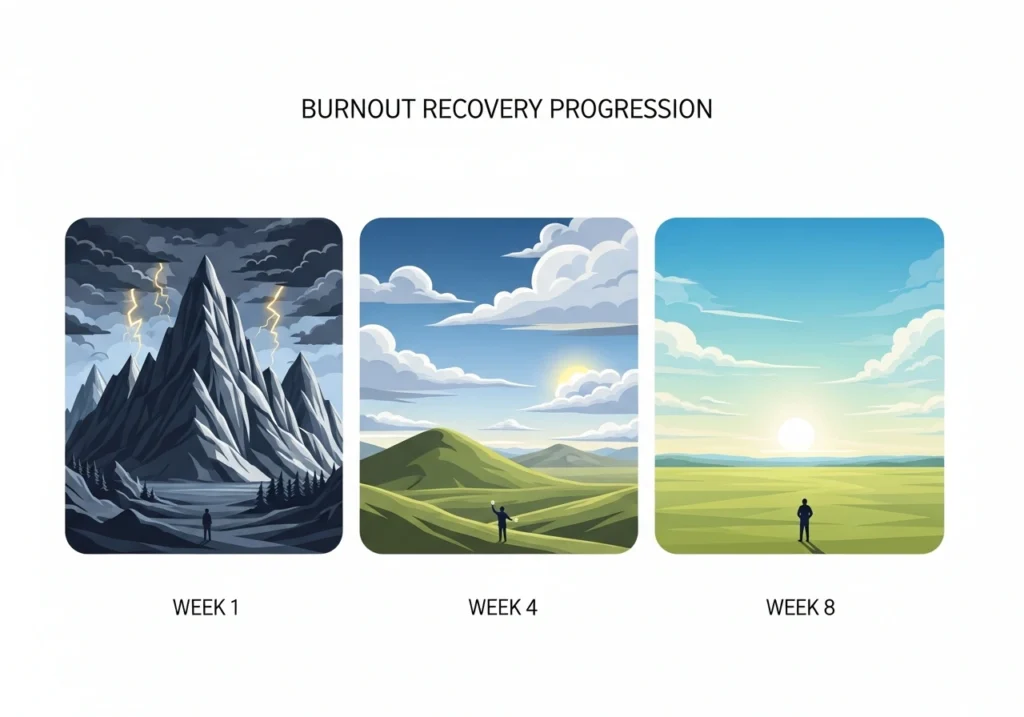
The relationship between slowing down and healing from burnout is direct and biological. Your nervous system has two primary states: sympathetic (fight-or-flight) and parasympathetic (rest-and-digest). Burnout results from prolonged sympathetic activation without adequate parasympathetic recovery. Healing burnout requires deliberately activating the parasympathetic system through sustained rest and learning to slow down again.
The nervous system operates like a pendulum. It swings between activation and recovery. In healthy functioning, the pendulum swings regularly. You activate during work, then genuinely recover during rest. In burnout, the pendulum gets stuck on activation. Even during supposed rest, your nervous system remains in sympathetic mode. Your heart rate stays elevated. Your muscles stay tense. Your mind keeps working. Genuine healing requires physically recalibrating this pendulum back toward balance. Nervous system reset begins with understanding how parasympathetic activation works. The parasympathetic nervous system activates through the vagus nerve, a major cranial nerve running from your brain to your gut. Several practices activate this nerve and shift you into parasympathetic state. Slow breathing—particularly exhales longer than inhales—activates parasympathetic response. Humming or singing stimulates the vagus nerve. Cold water exposure on your face activates the dive response, immediately shifting toward parasympathetic state.
Creating a Sustainable Rest Routine That Lasts
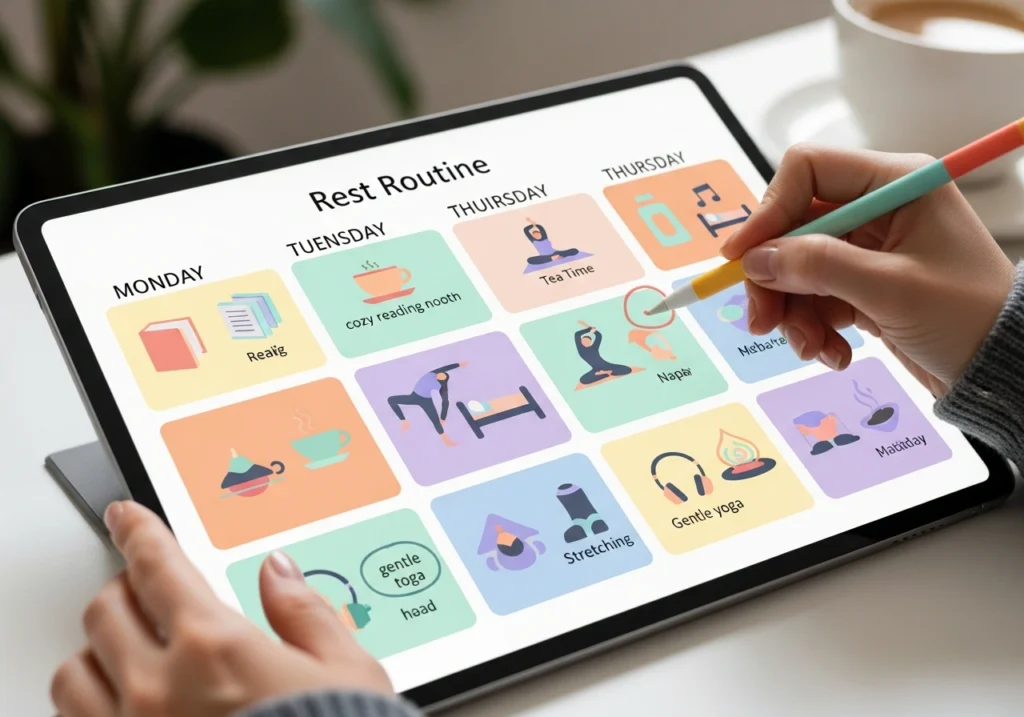
The difference between temporary rest and lasting change is sustainability. Anyone can rest during a vacation or crisis. The challenge is integrating rest into your regular life so it becomes self-sustaining. Creating a personalized rest routine aligned with your actual preferences and life circumstances dramatically increases the likelihood you’ll maintain it long-term.
Your rest routine should feel enjoyable, not like another obligation. If meditation feels forced, it won’t sustain. If yoga feels punishing, you won’t continue. The goal is creating practices that you genuinely look forward to because they feel good. This requires experimentation and willingness to discard practices that don’t resonate with you personally. A good rest routine is personalized, flexible, and genuinely sustainable long-term.
H2: Final Thoughts: Learning to Rest Is a Form of Self-Respect
Relearning rest when you’ve forgotten how to slow down isn’t about indulgence. It’s about self-respect. It’s about honoring your body’s needs, respecting your mind’s limits, and acknowledging your essential humanity. Rest is what happens when you decide that you matter enough to take care of yourself. That your well-being deserves attention. That your peace is worth protecting.
Our culture has taught us that rest is earned through productivity. This is backward. Rest enables productivity. Rest makes you more effective, more creative, more capable. The most successful people often prioritize rest precisely because they understand this. Yet we don’t hear about their rest. We hear about their impressive accomplishments, which wouldn’t be possible without the restoration that made those accomplishments sustainable.
Rest without guilt becomes possible when you fundamentally shift your beliefs about worth. You are worthy of rest not because of what you’ve accomplished. You’re worthy of rest because you exist. Your body needs sleep. Your mind needs downtime. Your emotions need processing. These needs aren’t character flaws. They’re biological facts. Meeting biological needs is self-respect, not laziness.
Key Takeaways
Learning to relearn rest requires understanding that rest and recovery is a biological necessity, not an earned luxury. Start with small practices like breathing breaks and mindful eating. Reframe rest as essential maintenance, not laziness. Address guilt through cognitive work challenging underlying beliefs. Practice consistent rest daily to rebuild your nervous system’s capacity. Understand that mental and physical rest address different depletion types. Create a personalized routine aligned with your preferences. Remember that sustainable productivity requires integrated rest. Finally, recognize that choosing rest is an act of self-respect that honors your fundamental human needs.