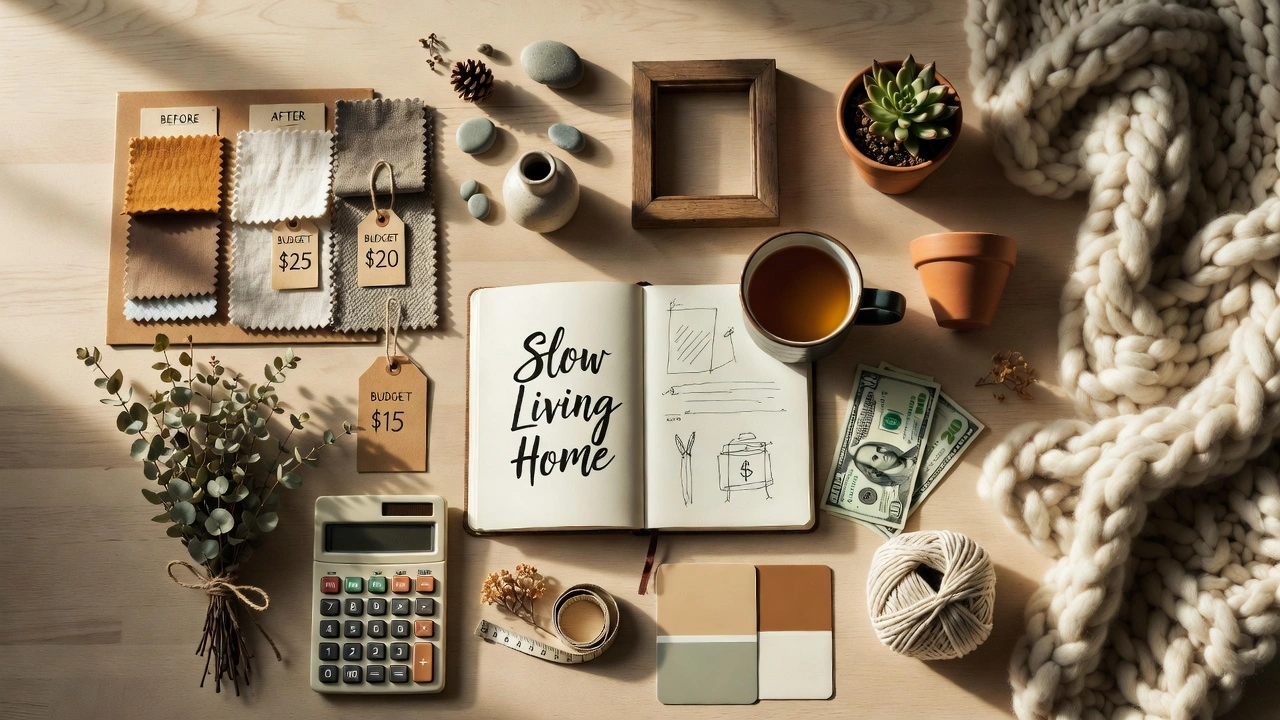
Slow Living Decor Swaps on a Budget: Transform Your Home Mindfully and Affordably
The modern American home often feels chaotic, cluttered, and overwhelming. You walk through your door after a long day, and instead of peace, you’re greeted by visual noise and disorganization. This disconnect between your living space and your need for tranquility doesn’t require thousands of dollars to fix. Slow living decor swaps on a budget offer a refreshing alternative to expensive makeovers, proving that mindful home decorating creates deeper satisfaction than any shopping spree ever could. The slow living movement encourages intentionality, quality over quantity, and creating a calm and peaceful home without overspending—principles that naturally align with budget-conscious decorating.
This comprehensive guide reveals how to decorate your home slowly and mindfully without draining your savings account. You’ll discover simple decor changes that transform entire rooms, learn sustainable decorating ideas for every room, and explore DIY home decor projects for slow living that cost less than your monthly coffee budget. Whether you’re working with $50 or $500, these strategies prove that affordable slow living home decor isn’t just possible—it’s often more authentic than its expensive counterpart. The journey toward a more intentional home begins not with your wallet, but with your mindset.
Why Slow Living Home Decor Matters Even on a Budget
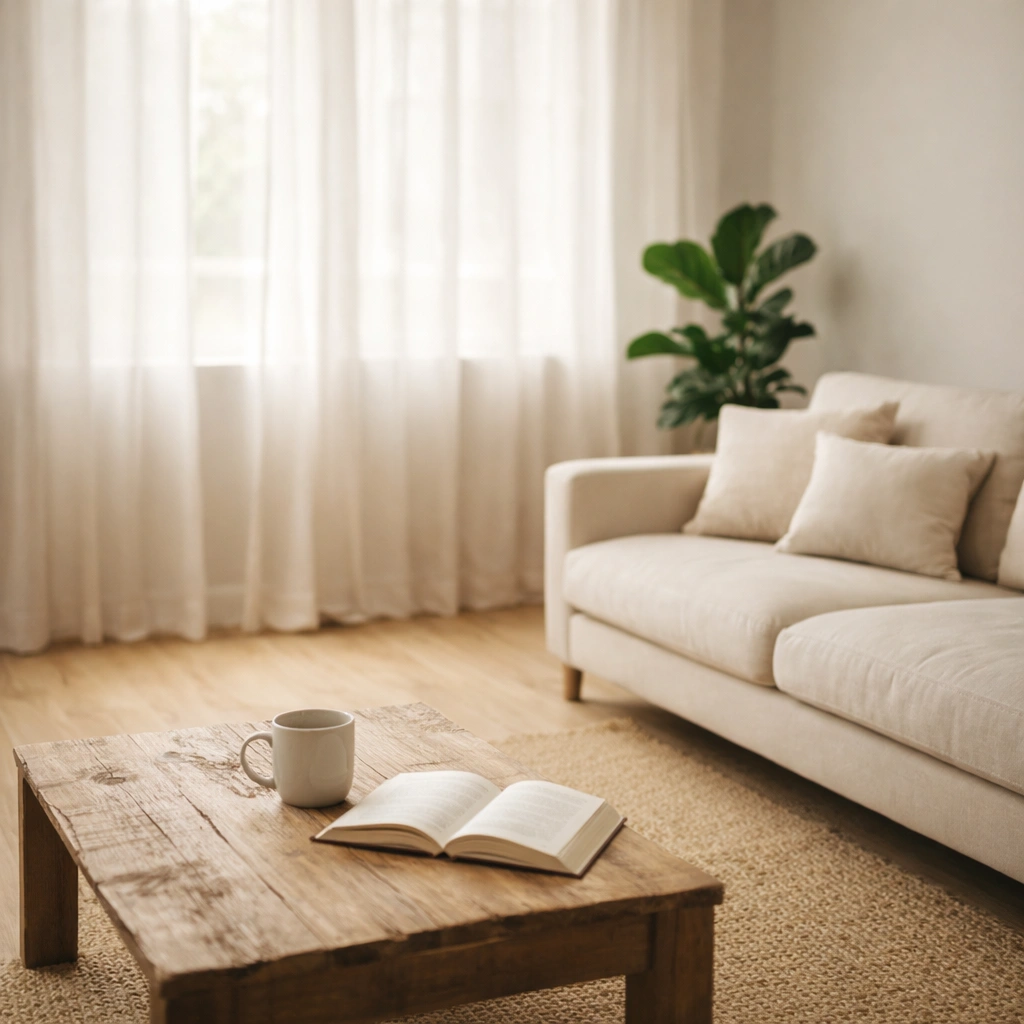
The psychology behind our living environments runs deeper than aesthetics alone. Research from Princeton University’s Neuroscience Institute demonstrates that cluttered spaces actually restrict your brain’s ability to process information and focus effectively. When your surroundings overwhelm your visual cortex, your stress hormones elevate measurably. Minimalist home decor ideas combat this neurological chaos by creating visual breathing room that allows your mind to rest. The beauty of this science lies in its democratic nature—a decluttered space costs nothing yet delivers profound mental health dividends. Transforming your home on a budget with slow living principles means recognizing that the most valuable changes often require subtraction rather than addition.
you may also like this:Slow and Peaceful Holiday Season: How to Celebrate Mindfully and Stress-Free
American consumer culture pushes a relentless upgrade cycle that leaves homes feeling like showrooms rather than sanctuaries. The average U.S. household spends approximately $1,700 annually on home furnishings and equipment, yet satisfaction surveys reveal growing disconnection from our living spaces. Slow living decor swaps on a budget flip this script entirely by emphasizing durability, timelessness, and genuine utility over trend-following. When you invest in one quality linen throw blanket instead of five synthetic alternatives, you’re practicing sustainable home styling that saves money over years while reducing environmental impact. This philosophy doesn’t demand sacrifice—it offers liberation from the exhausting treadmill of constant consumption and perpetual dissatisfaction with what you already own.
Simple and Affordable Decor Swaps to Refresh Your Home
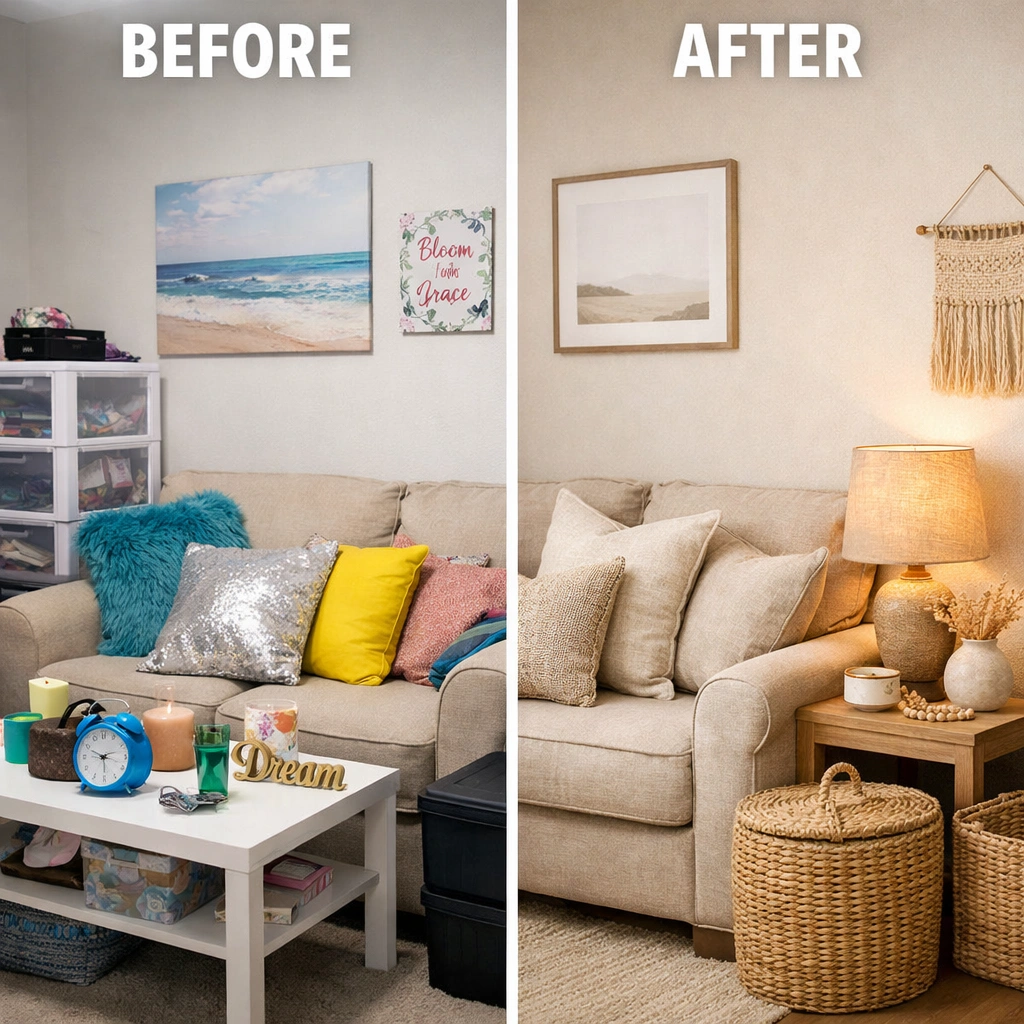
The concept of strategic swapping eliminates the need for complete room overhauls that strain budgets and create waste. Instead of discarding everything and starting fresh, budget-friendly interior swaps target high-impact elements that dramatically shift a room’s entire atmosphere. Consider five essential categories: textiles, lighting fixtures, natural material integration, storage solutions, and color palette adjustments. These categories offer maximum transformation potential per dollar invested. A $30 linen curtain panel filters light differently than synthetic alternatives, softening harsh afternoon sun into gentle ambient glow. Easy home decor swaps without spending much succeed by understanding leverage points—places where small investments yield disproportionate returns in comfort and visual appeal.
Textile transformations represent perhaps the most accessible entry point for slow living decor swaps on a budget. The tactile difference between a polyester throw pillow and one made from organic cotton or linen registers immediately, both to your fingers and your subconscious comfort assessment. Target, IKEA, and HomeGoods regularly stock natural fiber options at price points barely exceeding synthetic alternatives—often $15-25 for cotton pillow covers versus $12-18 for polyester versions. Thrift stores reveal even better treasures, with vintage linen napkins, wool blankets, and cotton quilts selling for $5-15. These secondhand textiles often feature superior construction and materials compared to new fast-fashion home goods. Thrifty home decorating tips include washing thrifted fabrics in hot water with oxygen bleach to refresh them completely, transforming someone else’s castoff into your cozy treasure.
Swapping Synthetic for Natural Materials
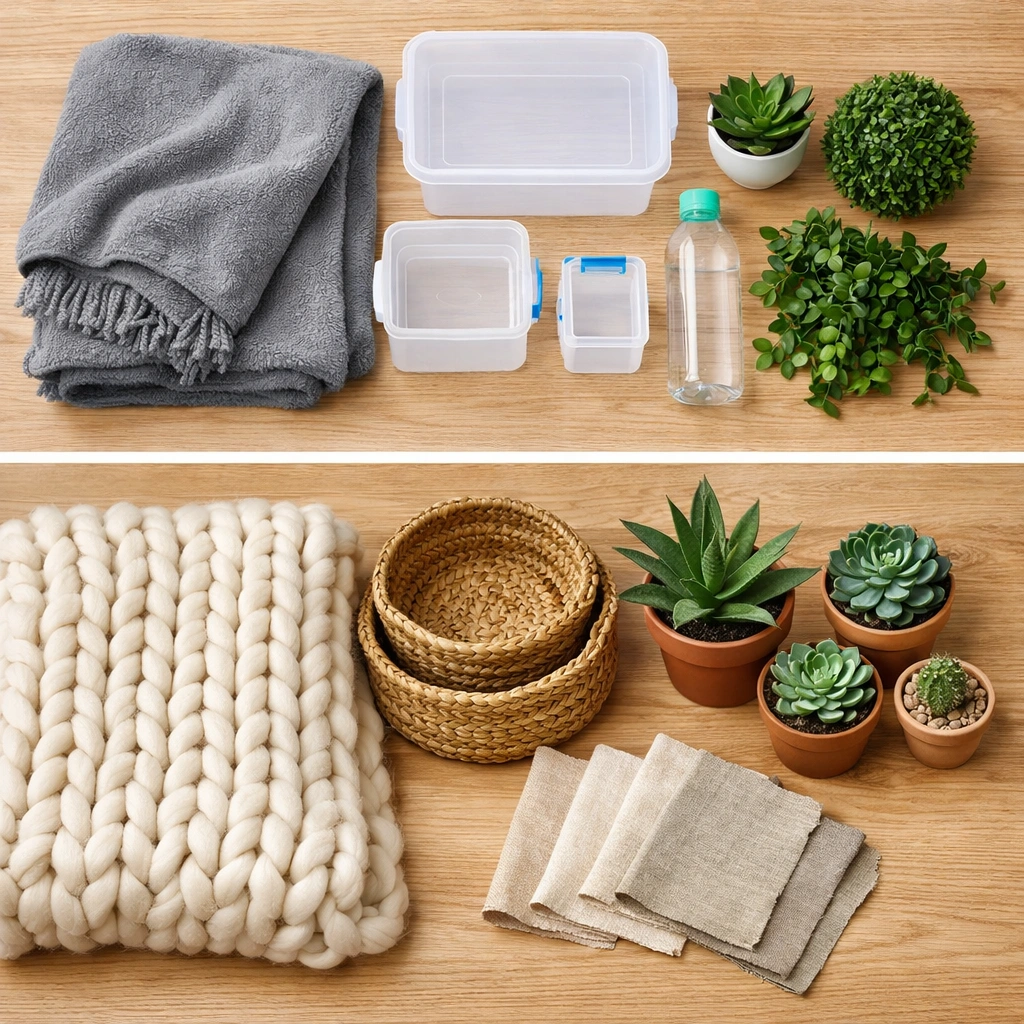
Natural materials communicate unconscious messages of quality and permanence that synthetic alternatives cannot replicate. Jute rugs, bamboo cutting boards, cotton canvas storage bins, and linen window treatments share an organic irregularity that feels inherently calming. The imperfections in natural fibers—subtle color variations, texture inconsistencies, and wear patterns—tell stories that machine-perfect synthetics lack. Eco-friendly decor swaps toward natural materials cost surprisingly little when sourced strategically. A 5×7 jute rug runs $40-80 new but appears regularly at estate sales for $10-20. Cotton canvas storage cubes retail for $12-15 at HomeGoods versus $8-12 for polyester mesh alternatives—a negligible difference for significantly improved aesthetics and longevity.
Cozy Minimalist Ideas for a Calm Living Space
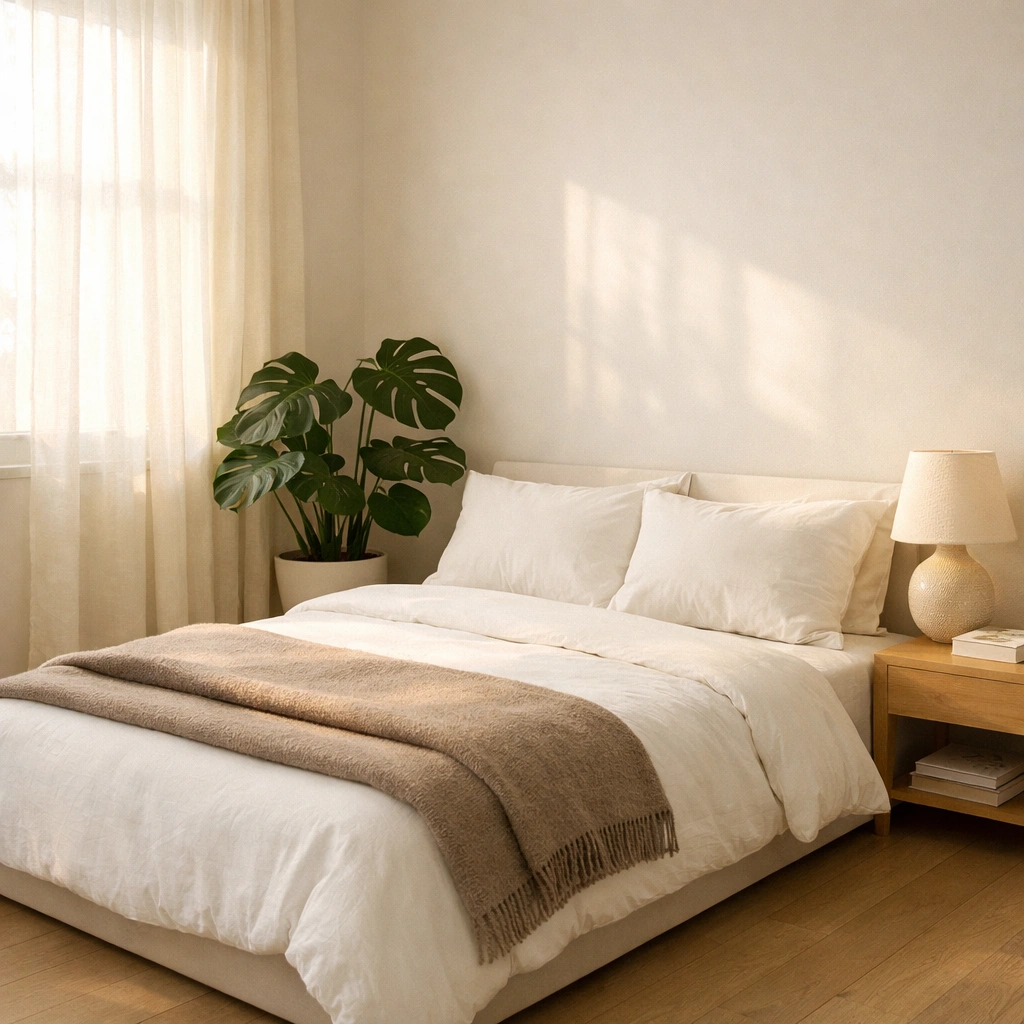
Cozy minimalism walks a thoughtful middle path between stark emptiness and overwhelming abundance. This approach rejects the cold, institutional feeling that poorly executed minimalism can create while avoiding the visual chaos of unchecked maximalism. Minimalist home decor ideas within this framework prioritize pieces that serve multiple functions, bring genuine joy, or contribute meaningfully to daily life. A beautiful ceramic bowl that holds your keys, displays seasonal fruit, or serves dinner guests earns its place through versatility and beauty. Contrast this with single-purpose decorative objects that collect dust without contributing utility. Slow living interior ideas for tight budgets naturally embrace this edited approach because financial constraints force the beneficial discipline of selectivity.
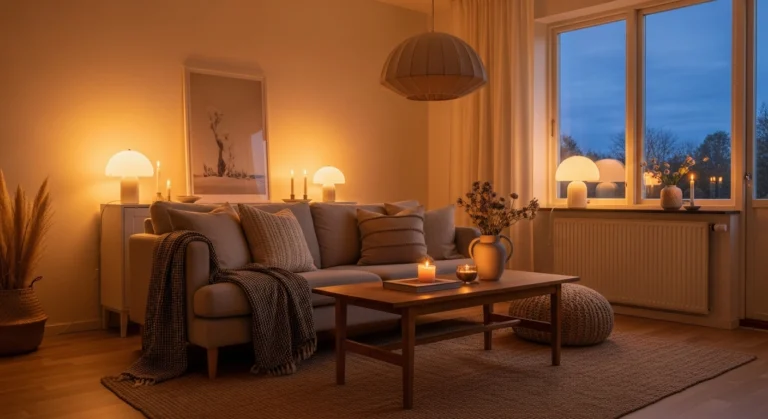
Cozy home decor on a budget emerges from layering rather than spending. Three affordable throw pillows in complementary neutral tones create more visual interest and comfort than fifteen mismatched cushions. A single substantial houseplant in a terracotta pot provides more impact than five struggling specimens in plastic containers. Quality concentration defeats quantity dispersion every time. The mathematical beauty of this principle proves remarkably budget-friendly—spending $50 on one excellent linen duvet cover instead of $50 on five mediocre throw pillows yields both better aesthetics and superior longevity. Simple ways to refresh your home decor affordably often involve removing rather than adding, rearranging rather than replacing, and editing toward coherence rather than accumulating toward abundance.
Budget-Friendly Tips for a Sustainable Home Makeover
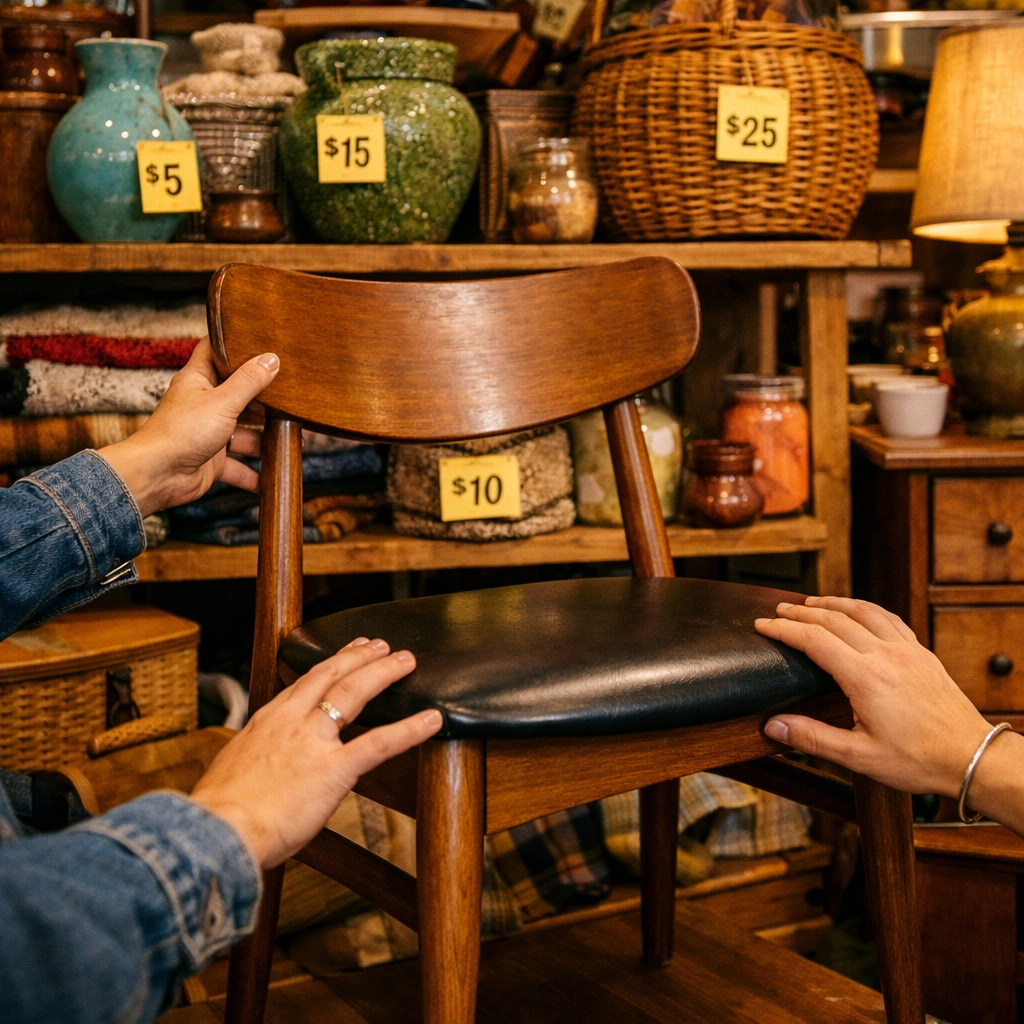
Sustainability and budget consciousness form natural allies rather than opposing forces. The circular economy approach—buying secondhand, repurposing existing items, and selling what no longer serves you—simultaneously reduces environmental impact and stretches your decorating dollars remarkably far. Sustainable home styling recognizes that the greenest product is the one already manufactured, sitting in someone’s garage or consignment shop waiting for rediscovery. Every thrifted side table represents resources already expended, materials already extracted, and emissions already generated—purchasing it secondhand adds zero additional environmental burden while costing 70-90% less than buying new. Slow living decor swaps on a budget naturally embrace this circular model because both environmental and financial motivations point toward identical purchasing decisions.
| Secondhand Source | Price Range | Best For | Pro Tips |
|---|---|---|---|
| Estate Sales | 50-80% off retail | Furniture, vintage textiles, quality housewares | Shop final day for half-price deals |
| Thrift Stores | 70-95% off retail | Baskets, frames, vases, books, small furniture | Visit wealthy neighborhood locations weekly |
| Facebook Marketplace | 60-90% off retail | Furniture, rugs, lighting | Search daily, respond immediately, negotiate politely |
| Consignment Shops | 40-70% off retail | Curated furniture, decor accessories | Build relationships with staff for first dibs |
| Garage Sales | 80-95% off retail | Textiles, dishware, small decor items | Arrive early with cash, bundle for discounts |
DIY Slow Living Decor Projects You Can Try Today
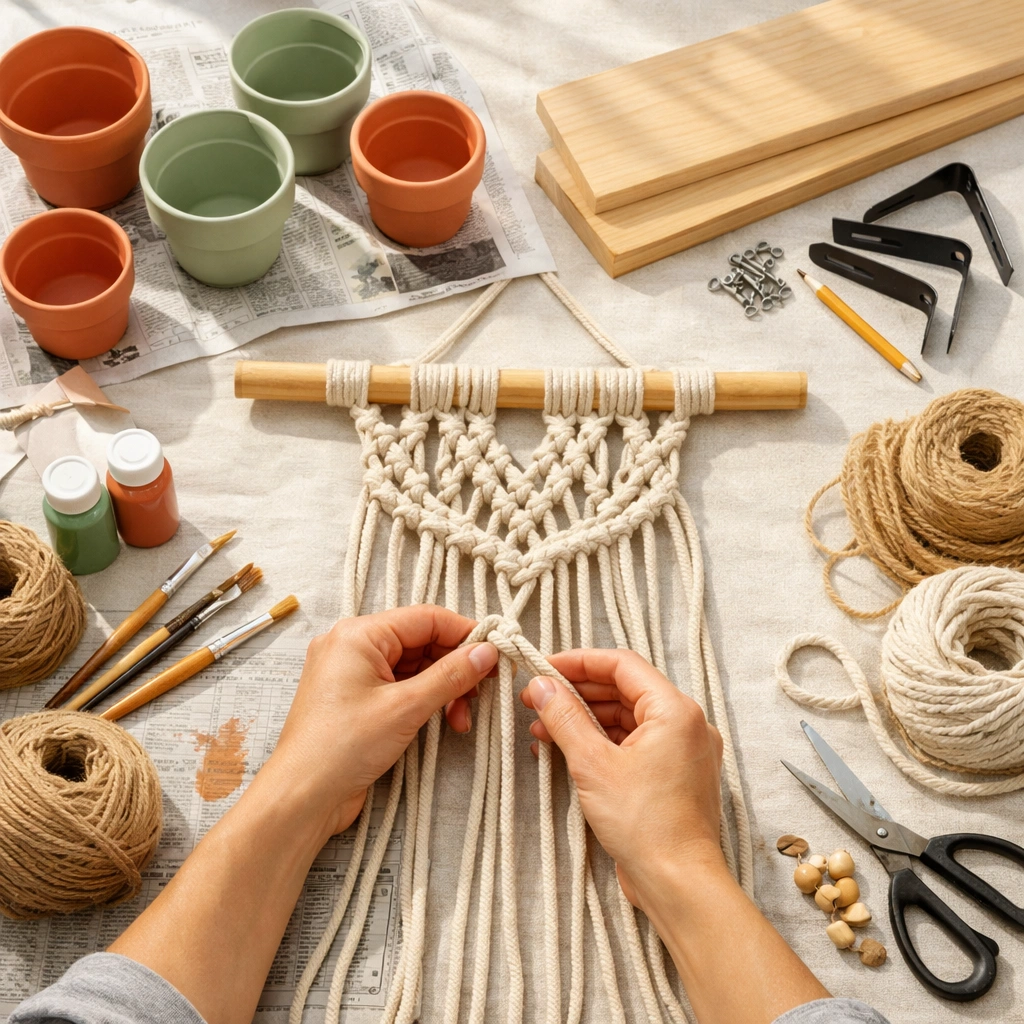
Creating decor with your own hands adds layers of meaning and satisfaction that purchased items rarely achieve. The meditative quality of crafting—whether knotting macramé, painting furniture, or arranging botanical displays—aligns perfectly with slow living philosophy. DIY home decor projects for slow living cost substantially less than buying finished products while offering creative expression and skill development. A macramé plant hanger requires $8 of cotton cord and two hours of peaceful knotting. Simple wooden floating shelves need $15 of lumber, $8 of brackets, and an afternoon of light woodworking. These projects yield both functional results and the intangible satisfaction of making rather than merely consuming.
Three beginner-friendly projects offer particularly high impact for minimal investment and skill requirements. Macramé plant hangers use basic knots repeated in meditative patterns—the cotton cord costs $8-12 for enough to create three hangers, with free tutorials abundant on YouTube. Painted terra cotta pots transform plain $2-4 pots into custom art pieces with $6 acrylic craft paint and simple geometric or organic patterns. Basic wooden shelves cut from pine boards ($8-12 for six feet of 1×8 lumber) and mounted with simple brackets ($6-10 per pair) provide both storage and display space that looks intentionally rustic rather than builder-grade basic. Cozy corners and minimalist swaps on a budget often feature these handmade elements that communicate care and intentionality impossible to purchase ready-made.
Natural Element Displays
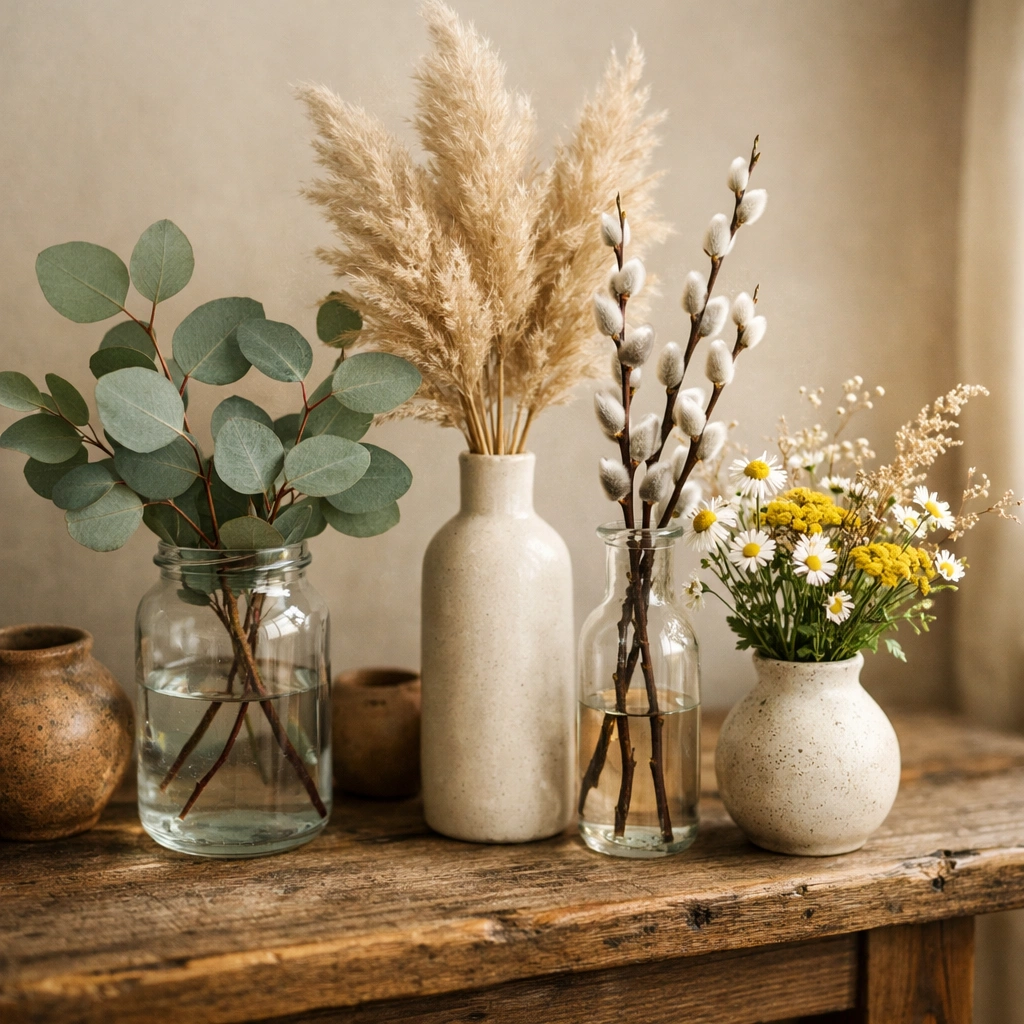
Nature provides free, renewable decor materials that shift seasonally, keeping your home feeling fresh without any financial investment. Spring branches with blossoms, summer wildflowers, autumn leaves and seed pods, winter evergreen clippings—each season offers abundant beauty for the gathering. A simple walk through your neighborhood or nearby park yields armfuls of botanical treasures that bring organic shapes and natural color into your home. Sustainable decorating ideas for every room include maintaining a collection of simple glass bottles or ceramic vessels that display these rotating natural elements. The arrangement process itself becomes a mindful practice, encouraging you to slow down and notice subtle beauty in bark texture, leaf variation, and stem curvature.
How to Create Hygge-Inspired Corners Without Overspending
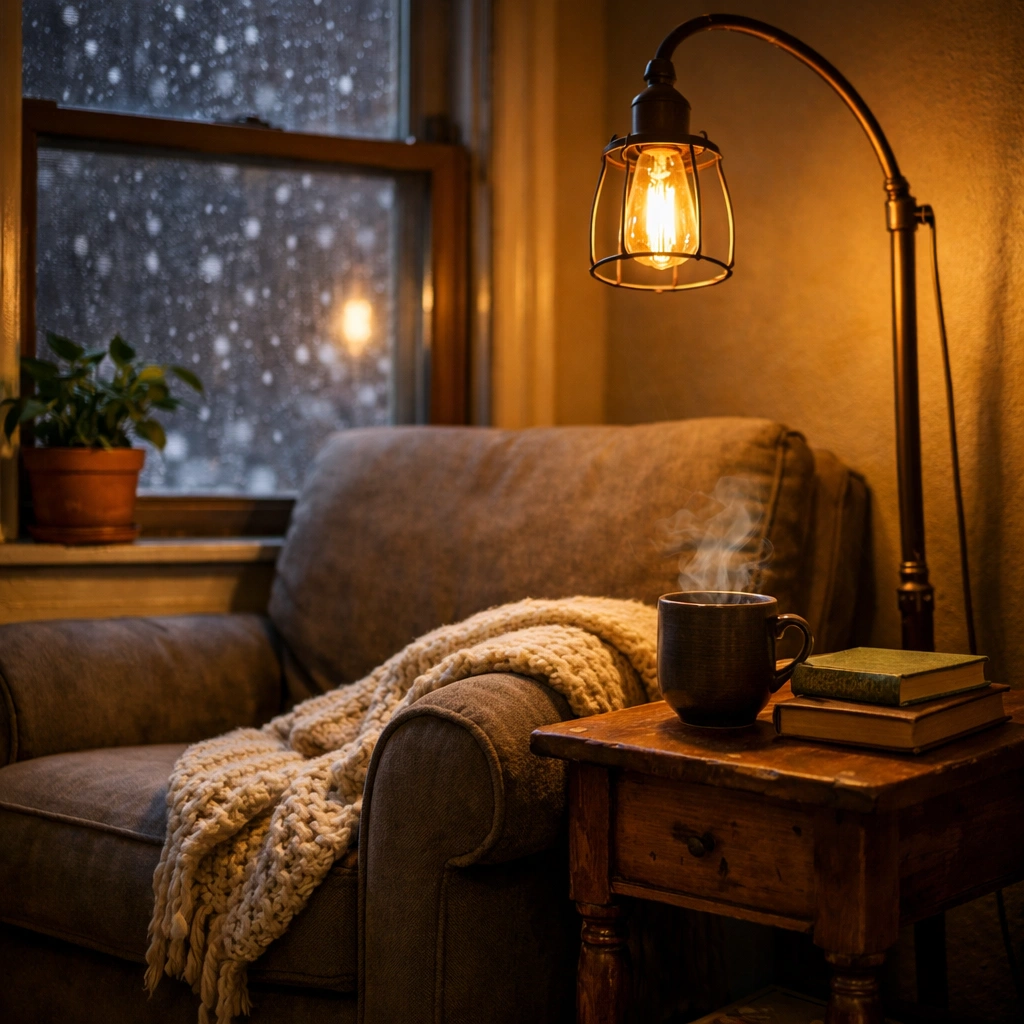
Hygge, the Danish concept of cozy contentment, has captured American imagination precisely because it offers an antidote to achievement-focused, consumption-driven culture. This philosophy centers on simple pleasures: candlelight, warm drinks, soft textures, good books, and comfortable seating that invites lingering. Hygge-inspired home decor requires remarkably little financial investment because it prioritizes experience over appearance and atmosphere over acquisition. The Danish practice hygge in social housing and modest apartments, proving that square footage and budget bear little relationship to coziness achieved. Cozy home decor on a budget and hygge principles align perfectly because both reject expensive luxury in favor of simple, sensory comfort.
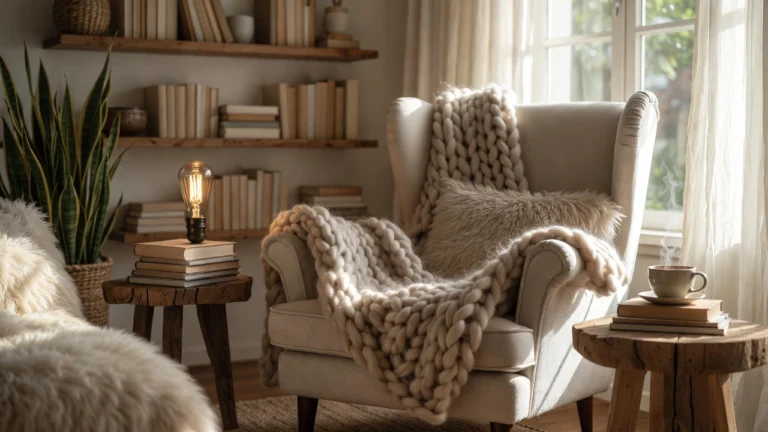
Creating a hygge corner requires only a comfortable seating spot, soft lighting, warm textiles, and perhaps something beautiful to look at. A secondhand armchair ($30-60 from Facebook Marketplace), a thrifted floor lamp with warm LED bulb ($15-25), a fuzzy throw blanket ($18-30 from HomeGoods or Marshalls), and a small side table for your tea or coffee mug ($10-20 thrifted) comprise the complete essential elements. Total investment ranges from $75-135, less than a single new accent chair from mainstream retailers. Slow living decor swaps on a budget include designating underutilized corners—that awkward space beside the window, the empty area near the bookshelf—as intentional cozy zones that invite you to pause, read, or simply gaze outside while sipping something warm.
Small Changes That Make a Big Impact on Your Home Atmosphere

High-impact modifications often cost less than low-impact purchases because they address fundamental atmospheric elements rather than surface decoration. Sound, scent, tactile experience, and spatial flow shape how you actually experience living in your home versus how it photographs. Small budget home refresh strategies targeting these sensory elements transform daily life more profoundly than visual updates alone. A white noise machine or small water fountain masks urban noise pollution, creating peaceful background ambiance for $20-40. Essential oil diffusers with calming scents like lavender, eucalyptus, or cedarwood cost $15-30 and fundamentally alter how your home feels upon entry. These sensory investments compound with visual changes to create holistic environmental transformation.
| Sensory Element | Budget Solution | Cost | Impact Level |
|---|---|---|---|
| Sound | White noise machine or small fountain | $20-40 | Immediate, ongoing |
| Scent | Essential oil diffuser with quality oils | $25-40 | Immediate, daily |
| Touch | Natural fiber textiles (cotton, linen, wool) | $30-60 | Immediate, constant |
| Sight | Warm LED bulbs throughout home | $40-60 | Immediate, transformative |
| Spatial Flow | Furniture rearrangement (free) | $0 | Moderate, lasting |
Thrifty Home Decorating Tips for Every Room in Your Home
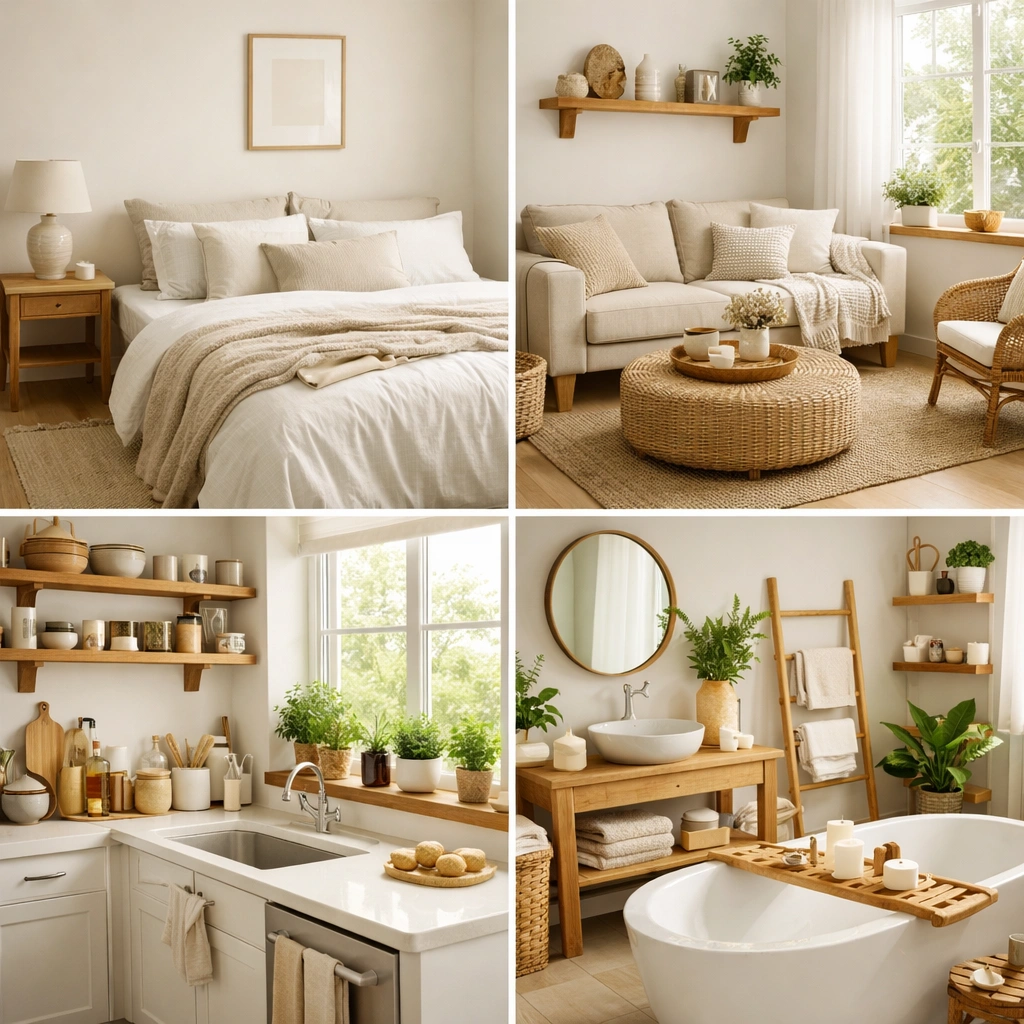
Different rooms serve distinct functions requiring tailored approaches to budget-friendly interior swaps. Bedrooms prioritize rest and relaxation, suggesting soft textures, dim lighting, and minimal visual stimulation. Living rooms facilitate both social gathering and solo relaxation, benefiting from flexible seating arrangements and warm ambient lighting. Kitchens and dining spaces center on nourishment and connection, enhanced by displays of beautiful functional objects and herb gardens. Bathrooms offer opportunities for spa-like self-care rituals on modest budgets. Thrifty home decorating tips respect these functional differences while maintaining cohesive aesthetic threads throughout your home.
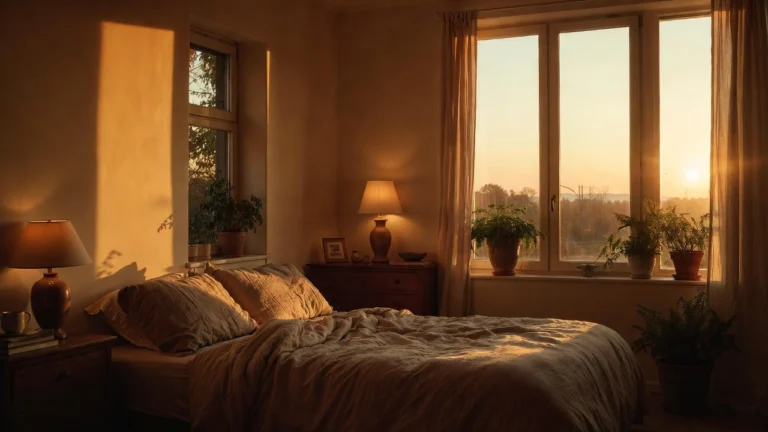
Bedroom sanctuaries transform on surprisingly small budgets when focusing on sleep quality fundamentals rather than decorative excess. Quality sheets matter more than decorative pillows—invest in one excellent set of cotton or linen sheets ($50-80 on sale) rather than three mediocre sets. Blackout curtains dramatically improve sleep quality for $25-40 per window panel. A small bedside lamp with warm bulb creates reading-friendly task lighting and bedtime ambiance for $15-30 secondhand. Remove visual clutter and storage from view using under-bed storage boxes or a simple curtain on tension rod to hide open shelving. Relaxed living room makeover principles apply equally to bedrooms—edited, intentional, focused on comfort and function rather than impressive appearance.
Kitchen and Dining Spaces
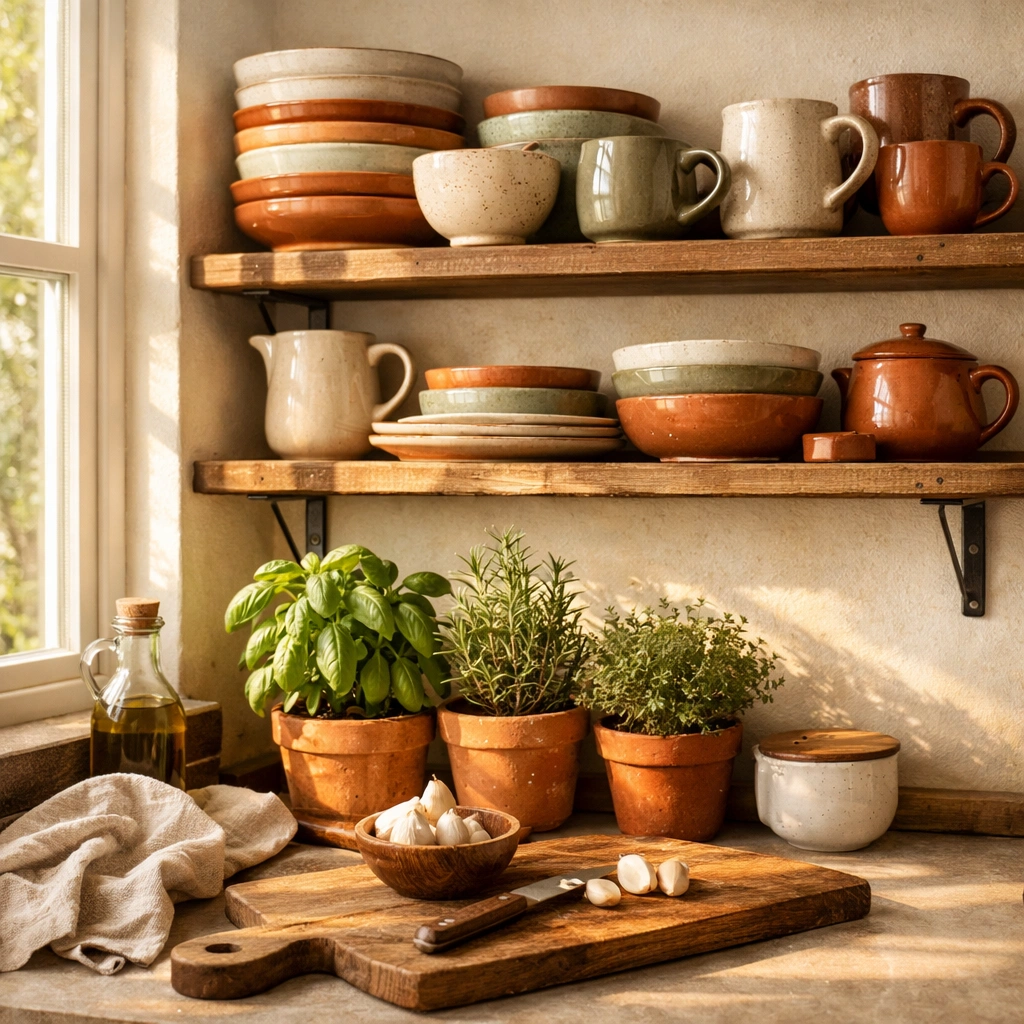
Kitchens benefit enormously from open shelving that displays beautiful functional objects while forcing you to maintain tidier organization. Removing just upper cabinet doors creates instant open shelving at zero cost, though paint or lining the backs with wallpaper samples ($5-10) adds polish. Display your most attractive dishes, bowls, and glassware while storing mismatched items in remaining closed cabinets. Windowsill herb gardens using simple terra cotta pots ($2-4 each) and herb starts ($3-5 each) provide fresh culinary herbs, living decor, and pleasant aromas simultaneously. Sustainable decorating ideas for every room include these functional-beautiful hybrid solutions that serve multiple purposes while maintaining minimal aesthetic.
Maintaining a Slow Living Home on a Tight Budget
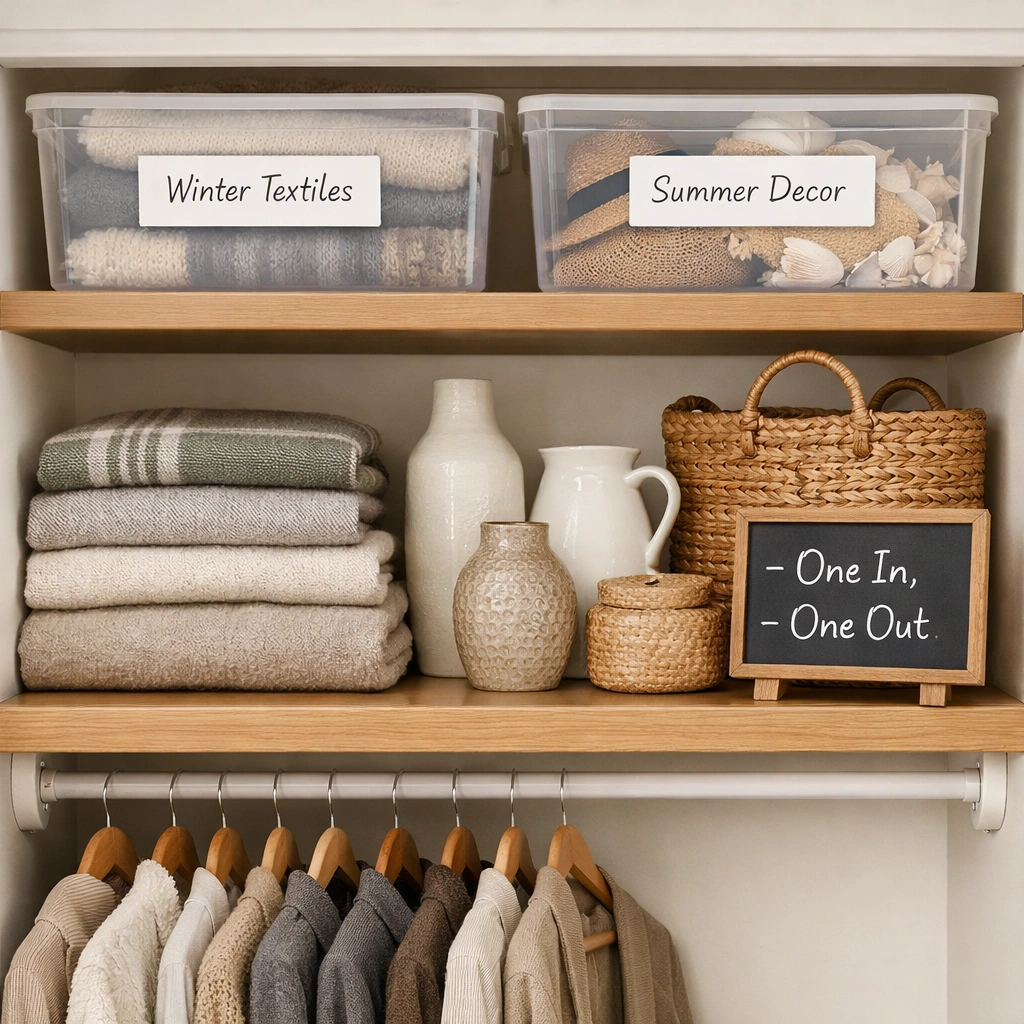
Initial transformation represents only the first phase of slow living decor swaps on a budget—maintaining your intentional space long-term requires ongoing mindful practices. The one-in-one-out rule prevents clutter creep by requiring that every new item entering your home displaces something existing. This practice forces genuine evaluation of whether new purchases meaningfully improve upon what you already own. Mindful home decorating extends beyond initial design choices into daily habits that preserve the peaceful, edited environment you’ve created. Quarterly home audits walk through each room asking whether every item still serves its purpose or brings joy, removing those that fail this test.
Reselling items that no longer serve you recaptures some of their initial cost while benefiting someone else. Facebook Marketplace, Poshmark (for textiles and decorative items), and consignment shops accept gently used home goods, often recovering 30-50% of what you paid originally. This reverse cash flow funds future purchases while preventing waste and clutter accumulation. Sustainable home styling operates as a closed loop—buying secondhand, using mindfully, and reselling when done—that minimizes both financial outflow and environmental impact. The American tendency toward disposable consumption costs families thousands annually while creating landfill waste and home chaos simultaneously.
Conclusion
Slow living decor swaps on a budget prove definitively that luxury resides in simplicity, quality, and intention rather than expense or quantity. Every strategy explored—from strategic thrifting to DIY textile projects, from sensory enhancements to furniture rearrangement—demonstrates how transforming your home on a budget with slow living principles succeeds by working with human psychology rather than against it. Our brains crave edited, coherent, comfortable environments. Our nervous systems relax in spaces featuring natural materials, warm lighting, and minimal visual chaos. These biological facts democratize beautiful living because they don’t require wealth, only awareness and intention.
Starting your slow home transformation in a single room or even one thoughtfully designed corner builds confidence and demonstrates immediate benefits before you invest significant money or energy elsewhere. The journey matters more than the destination because slow living rejects the finish-line mentality that fuels consumption culture. Your home will continue evolving as your needs and tastes develop—this natural progression becomes joyful rather than stressful when you’ve built a foundation of intentional, budget-conscious choices. Financial constraints enhance creativity rather than limiting possibilities by forcing the beneficial discipline of careful selection and genuine appreciation for what you already possess.
Begin tomorrow by removing three items that don’t serve you, adding one thoughtfully chosen natural element, and committing to creating a calm and peaceful home without overspending. Share your transformation photos on social media to inspire others and hold yourself accountable. Comment below with your favorite low-cost slow living idea or question about implementing these principles. Remember that peaceful homes create peaceful lives—an equation where the investment remains modest but the returns compound infinitely across years of daily living in spaces that truly support your wellbeing and reflect your authentic values.
Frequently Asked Questions
What exactly are slow living decor swaps?
Slow living decor swaps represent intentional exchanges replacing items chosen hastily or following trends with carefully selected pieces that genuinely serve your needs and aesthetic vision. These swaps prioritize natural materials over synthetics, quality over quantity, and timeless design over temporary fashion. For example, swapping five cheap polyester throw pillows for two excellent linen ones demonstrates this principle—you’re reducing quantity while improving quality and longevity. Another common swap replaces harsh overhead lighting with layered lamps featuring warm bulbs, transforming your room’s entire atmosphere. Budget-friendly interior swaps work because they target high-impact elements requiring modest financial investment but delivering disproportionate improvements in comfort and visual appeal.
How much should I budget for slow living home transformation?
Realistic budgets for slow living decor swaps on a budget range from $100-500 depending on your home’s size, current condition, and how quickly you want to see changes. Starting with $100-150 for a single room allows meaningful transformation through strategic textile swaps, lighting updates, and one significant secondhand furniture piece. A living room might allocate $40 for new warm LED bulbs and two table lamps from thrift stores, $50 for quality throw blankets and pillow covers, and $30 for a jute rug from an estate sale. Bedrooms transform beautifully with $60 invested in quality sheets, $25 in blackout curtains, and $15 in a secondhand bedside lamp.
Can I create slow living aesthetics in rental properties?
Rental properties absolutely accommodate slow living decor swaps on a budget through damage-free, reversible modifications that transform spaces without risking security deposits. The most impactful renter-friendly decor strategies include furniture-based changes, removable adhesive products, and textile updates—all completely reversible upon move-out. Command strips and hooks hold artwork, mirrors, and lightweight shelving without nail holes. Removable wallpaper or contact paper refreshes accent walls, cabinet fronts, or shelving backs, peeling away cleanly when you leave. Tension rods install curtains without drilling. Area rugs cover unfortunate flooring. These solutions cost comparable amounts to permanent alternatives while maintaining full flexibility.
Where should I start with slow living decor on limited funds?
Begin your slow living decor swaps on a budget journey with free decluttering throughout your home, removing items that don’t serve clear purposes or bring genuine joy. This zero-cost starting point immediately improves visual clarity, makes cleaning easier, and reveals what you actually need versus what you’ve accumulated mindlessly. Walk through each room with donation bags and trash bags, editing ruthlessly until only items you use regularly or truly love remain. This process often feels emotionally challenging but proves incredibly liberating once completed. You’ll discover surfaces, storage space, and mental clarity you’d forgotten existed beneath accumulated clutter.
How do slow living decor principles save money long-term?
Slow living decor swaps on a budget generate substantial long-term savings by fundamentally shifting your relationship with consumption from constant replacement to durable investment. When you purchase one $80 solid wood side table secondhand instead of three $40 particleboard versions over five years, you save $40 while owning significantly better furniture. Natural fiber textiles like linen and wool last 5-10 times longer than polyester alternatives at only 20-40% higher initial cost—the mathematics clearly favor quality. This quality investment approach extends across all home categories, from LED bulbs lasting 15-25 years to cast iron cookware serving multiple generations.