7 Slow Living Evening Routines To Fall Asleep Quickly
Picture this: it’s 2 AM and you’re staring at the ceiling, mind racing despite bone-deep exhaustion. Your body screams for rest yet sleep remains frustratingly elusive. Sound familiar? You’re not alone in this nightly struggle. Over 70 million Americans battle sleep disorders, tossing and turning while precious recovery hours slip away. The problem isn’t willpower or discipline—it’s that modern life hijacks the natural circadian rhythm your body desperately needs. We’ve traded sunset for screen glow, quiet for constant stimulation, and gentle pace for relentless hustle right up until we collapse into bed.
But here’s the truth most sleep advice misses: you can’t force sleep to happen. You can only create ritual and conditions that invite it naturally. That’s where slow living evening routines transform everything. These aren’t generic “sleep hygiene” tips you’ve heard a thousand times. They’re intentional practices rooted in how human biology actually works, honoring the peaceful transition your nervous system requires between waking chaos and restorative practice. The seven rituals ahead don’t fight against your nature—they work with it, building sustainable habits that compound into profound sleep quality improvements. Ready to reclaim your nights? Let’s begin.
Why Slow Living Evening Routines Improve Sleep Quality
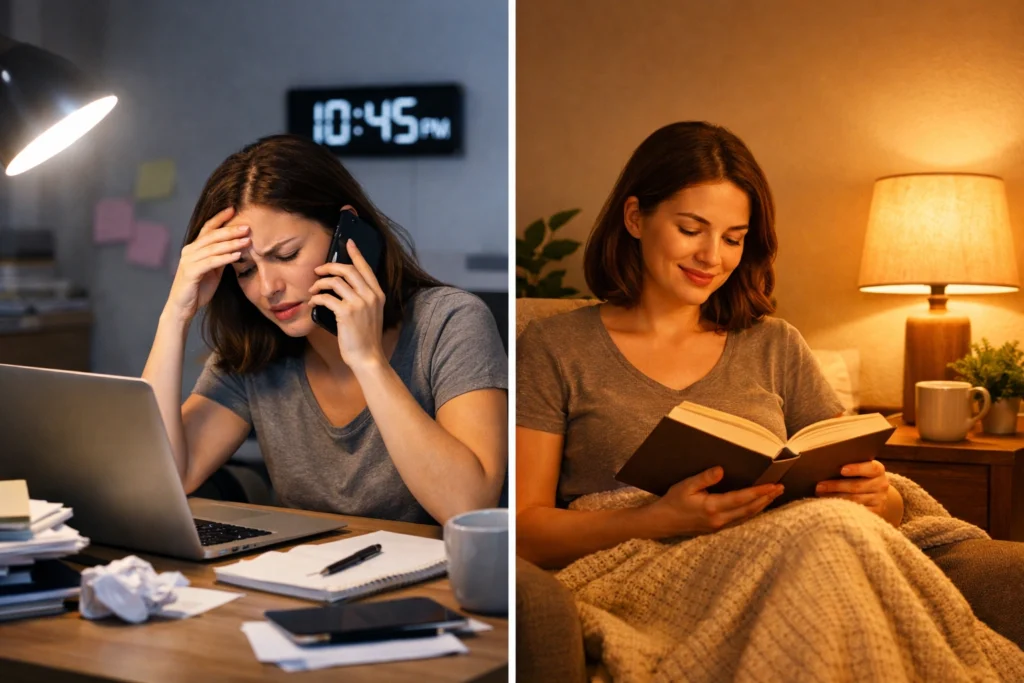
Modern hustle culture treats evenings like extended workdays. We cram productivity into every waking moment, ignoring the natural rhythm that governed human life for millennia. Your ancestors didn’t have emails pinging at 9 PM or social media feeds delivering cortisol spikes before bed. They followed the sun’s cycle, allowing bodies to gradually wind down as darkness fell. This biological programming didn’t disappear just because we invented electricity. Your brain still expects transition time—a sacred buffer between daytime demands and nighttime rituals for relaxation. When you eliminate this buffer, constantly stimulating your nervous system until the moment your head hits the pillow, you’re essentially slamming on the brakes while your engine’s still revving at highway speeds. It doesn’t work.
Here’s the neuroscience: your autonomic nervous system has two modes. Sympathetic activation handles fight-or-flight responses, pumping cortisol and adrenaline when you’re dodging deadlines or scrolling outrage-inducing content. Parasympathetic activation does the opposite, triggering cortisol reduction and melatonin production that prepare for sleep. The problem? You can’t flip a switch between these states. Transitioning from sympathetic to parasympathetic requires deliberate intentional evening routine practices that signal safety to your primitive brain. Research shows people who establish routine with consistent peaceful bedtime habits fall asleep 20-30% faster than those who don’t. The seven slow living evening routines ahead work synergistically, each addressing different barriers between you and the deep restoration your body craves.
Digital Detox: Turn Off Screens 2 Hours Before Bed
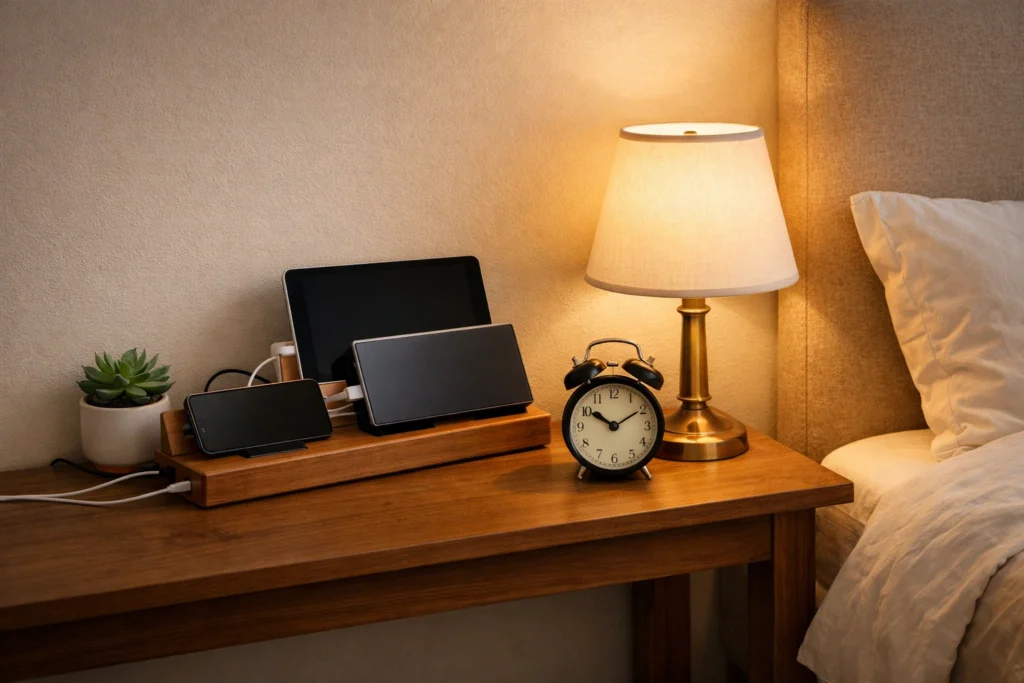
Your smartphone is a sleep-destruction device masquerading as convenience. That sounds harsh but consider the evidence: blue light wavelengths emitted by screens suppress melatonin production for up to three hours after exposure. Scrolling Instagram at 10 PM doesn’t just keep you up until 10:15—it sabotages your body’s ability to generate sleep hormones until well past midnight. But the damage runs deeper than light exposure. Every notification, every infinite scroll, every doom-scroll news article triggers micro-doses of dopamine and cortisol. Your brain interprets this novelty-seeking behavior as important survival information, keeping your nervous system regulation stuck in alert mode. The evening digital detox isn’t about willpower or discipline—it’s about understanding that asking your brain to unwind naturally while feeding it stimulation is like trying to meditate in a nightclub.
you may also like this:5 Grounding Techniques That Help Slow Your Life Down
Implementation requires strategy because screens have infiltrated every corner of modern life. Start by creating a charging station outside your bedroom, making phone access require deliberate effort rather than mindless reaching. Replace bedside scrolling with evening reading time using physical books whose pages don’t emit sleep-disrupting wavelengths. Address the inevitable objection: “But I need my phone alarm!” No, you need an actual alarm clock, available for under twenty dollars and infinitely better for sleep hygiene than keeping your entire digital world within arm’s reach. If cold turkey feels impossible, begin with one hour of evening screen time limits and gradually extend. Switch your phone to grayscale mode after 7 PM, which reduces dopamine appeal by eliminating the colorful visual rewards apps are designed to trigger. Use app blockers like Freedom or Opal for automatic enforcement, removing decision fatigue from the equation. The nighttime phone free zone you create becomes sacred space where mental peace can actually emerge.
Create a Calming Tea Ritual for Nighttime Relaxation

Imagine holding a warm mug in both hands, aromatic steam rising as tension melts from your shoulders. This sensory experience isn’t incidental—it’s deeply therapeutic when approached with intentional slowness. The bedtime tea ritual transforms a simple beverage into a powerful sleep cue through ceremonial consistency. Your brain learns: warm mug equals wind down time, building Pavlovian associations that trigger relaxation before you’ve taken a single sip. But chemistry matters too. Chamomile contains apigenin, a compound that binds to benzodiazepine receptors in your brain, producing mild sedative effects similar to anti-anxiety medications. Valerian root increases GABA (gamma-aminobutyric acid), the neurotransmitter responsible for quieting mental chatter. Passionflower works through flavonoids that reduce anxiety and racing thoughts. These aren’t placebo effects—they’re measurable neurochemical changes.
The ritual matters as much as the ingredients. Use the same special mug every night, creating visual consistency your subconscious recognizes. Brew tea 45-60 minutes before bed, avoiding the midnight bathroom trips that plague people who chug liquids right before sleep. Temperature is crucial: warm but not scalding promotes relaxation without shocking your system. As you sip, practice box breathing—inhale four counts, hold four, exhale four, hold four. This combination of warmth, chemistry, and breathwork creates a soothing ritual that addresses stress relief from multiple angles simultaneously. Skip the evening herbal tea bags and invest in loose-leaf quality, where flavor and potency haven’t been degraded by processing. The act of measuring, steeping, and waiting becomes meditation itself, forcing you to slow down in a world that rewards rushing.
| Tea Type | Active Compound | Primary Benefit | Brewing Time | Best For |
|---|---|---|---|---|
| Chamomile | Apigenin | Reduces anxiety, mild sedative effect | 5-7 minutes | Racing thoughts, general tension |
| Valerian Root | Valerenic acid | Increases GABA, promotes deeper sleep | 10 minutes | Difficulty falling asleep |
| Passionflower | Flavonoids | Calms mental chatter, emotional balance | 7-10 minutes | Anxiety-driven insomnia |
| Lavender | Linalool | Lowers heart rate, promotes calmness | 5 minutes | Physical restlessness |
| Lemon Balm | Rosmarinic acid | Eases worry, mental clarity | 5-7 minutes | Overthinking, stress |
Gentle Evening Stretching to Release Daily Tension

Your body stores stress physically. Hours hunched over keyboards create knots in shoulders and neck. Anxiety lives in tight hips and clenched jaws. This accumulated tension doesn’t magically dissolve when you lie down—it keeps muscles contracted and nervous system regulation stuck in alert mode. The nighttime stretching routine addresses this through deliberate movement that tells your body: danger has passed, it’s safe to release tension and restore energy. But timing and intensity matter enormously. Vigorous evening exercise spikes cortisol, sabotaging the cortisol reduction you need for sleep. Gentle stretching does the opposite, activating your parasympathetic nervous system and signaling that survival mode can stand down for the night.
Yin yoga principles guide effective evening stretches: hold poses for three to five minutes, allowing connective tissue to gradually release rather than forcing flexibility. Start with child’s pose, forehead resting on the floor while you focus on deep belly breathing that massages internal organs and activates your vagus nerve. Move into seated forward fold, letting gravity decompress your spine from the day’s gravitational stress rather than pulling aggressively. The legs-up-wall pose reverses blood flow, reducing lower body inflammation while signaling rest mode to your brain. Finish with supine spinal twist, holding each side for a full minute to release tension stored in your lower back. These aren’t athletic achievements—they’re acts of body unwinding performed in dim lighting with soft music creating cozy ambiance. The practice becomes meditation through movement, where mindful presence replaces the mental planning that typically dominates your thoughts.
Practice Mindful Journaling to Clear Your Mind

Ever notice how brilliant solutions or nagging worries surface precisely when you’re trying to sleep? This isn’t coincidence—it’s your brain finally getting quiet space to process the day’s unresolved thoughts. The problem is timing. You need that mental processing to happen before bed, not during it. The evening journaling habit provides structured time to externalize the mental clutter that would otherwise resurface at 3 AM. Psychologists call it the Zeigarnik effect: unfinished tasks occupy mental bandwidth until you record or complete them. Writing worries down literally tells your brain “I’ve got this handled” allowing it to release tension it was holding onto.
Three formats work beautifully, each serving different needs. The gratitude reset asks you to record three specific moments from today that brought joy, however small. Instead of generic “family,” describe your daughter’s laugh when she saw the neighbor’s dog. Specificity anchors positive neural pathways, training your brain toward appreciation rather than rumination. The worry parking lot lists every nagging thought, then assigns each a specific “handle tomorrow” time. This contracts with your subconscious—you’re not ignoring concerns but scheduling their resolution, which satisfies your mind’s need for closure. The tomorrow top-three identifies your most important tasks for the next day, eliminating morning decision fatigue and nighttime anxiety about forgetting something crucial. Limit sessions to ten minutes maximum using a timer, preventing journaling from becoming bedtime procrastination. Journal thoughts by hand rather than typing, as kinesthetic processing engages your brain differently. Close with a statement like “I release this day” that signals completion, creating peaceful transition into sleep mode.
Dim the Lights and Light Candles for Peaceful Ambiance
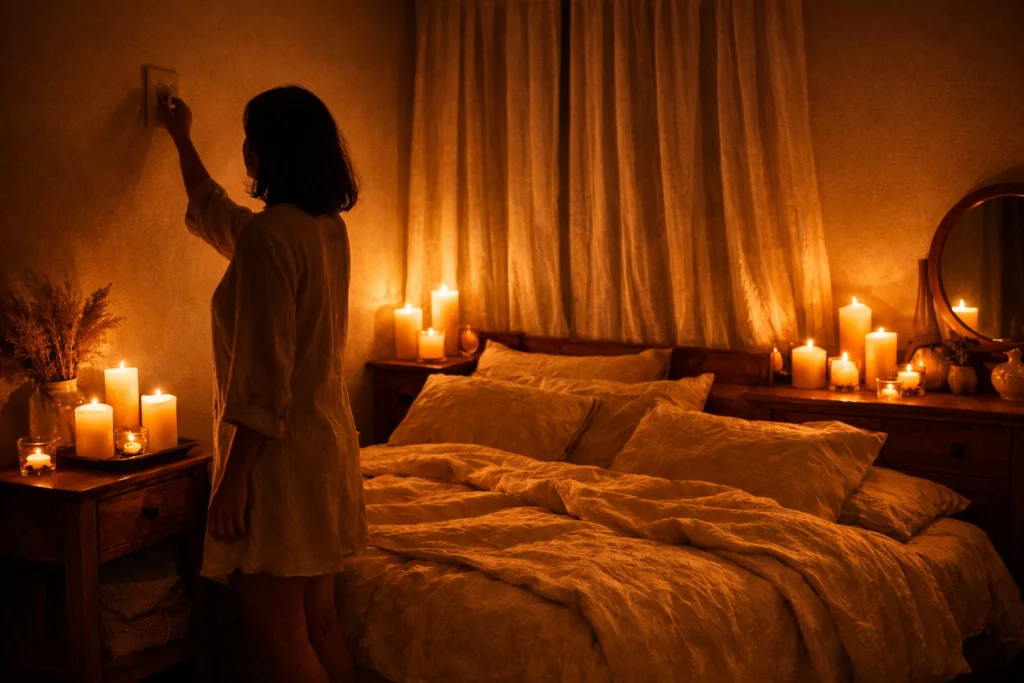
Light is the most powerful circadian rhythm regulator your body possesses. Specialized cells in your retinas called melanopsin receptors detect light levels and communicate directly with your brain’s master clock. Bright light screams “daytime!” triggering alertness hormones. Darkness whispers “nighttime” allowing melatonin production to rise. The candlelit evening routine works because it mimics the evolutionary lighting your biology expects—firelight averaging 1500K on the color temperature scale versus modern LED bulbs at 5000K. Your ancestors gathered around fires as darkness fell, and your genes remember this pattern. When you flood your home with blue-toned overhead lighting until the moment you flip the switch, you’re fighting millions of years of biological programming.
Progressive dimming starting at sunset honors this programming. At 6 PM, turn off overhead lights in main living areas, switching to floor and table lamps with warm 2700K bulbs that create ritual through soft lighting. By 7:30 PM, dim lights in your bedroom to 50% using dimmer switches or limiting to bedside lamps only, signaling that active day is concluding. At 8:30 PM, light candles—two or three in your bedroom while turning off remaining electric sources. The gentle flicker mimics ancestral evening experiences, creating tranquil evening atmosphere that feels instinctively calming. For safety-conscious folks, battery-powered flameless candles provide the same visual cues without fire worry. Layer in scent through lavender or vanilla candles, doubling your sensory sleep signals. By 9 PM, extinguish candles and use only amber nightlight in bathrooms for navigation, maintaining the darkness that supports melatonin production throughout sleep. This intentional living approach to lighting costs almost nothing but delivers profound mood enhancement that pharmaceutical sleep aids can’t match.
Take a Warm Bath with Essential Oils for Deep Relaxation

Your body temperature follows a daily rhythm, rising throughout the day and dropping at night to facilitate sleep. The evening bath ritual exploits this thermoregulation beautifully: soaking in warm water raises your core temperature, and the subsequent cooling as you exit triggers drowsiness that prepares for sleep naturally. But timing matters. Bathing 90 minutes before bed allows your temperature to regulate properly, hitting its lowest point right as you’re settling into sheets. Too close to bedtime and you’re still warm; too early and the effect dissipates before you need it. This isn’t just comfort—it’s manipulating physiology through temperature science.
Fill your tub to 102-104°F, testing with a thermometer rather than guessing, as water too hot produces counterproductive stress responses. Add two cups Epsom salt (magnesium sulfate), which absorbs through skin to relax muscles and calm your nervous system regulation. Incorporate 8-10 drops lavender essential oil mixed with carrier oil first, never dumped directly into water where it won’t properly disperse. Dim lights completely, using a single candle for gentle illumination that maintains your melatonin production rather than disrupting it with bright bathroom bulbs. Soak for exactly 20 minutes while practicing box breathing: inhale four counts, hold four, exhale four, hold four. This breathwork combined with warmth and aromatherapy creates complete relaxation addressing stress relief from multiple angles. Exit, pat dry gently without vigorous rubbing that raises heart rate, and move immediately to a cool bedroom (65-68°F optimal) where the temperature differential signals sleep initiation. For small-space dwellers, a deep foot bath with the same ingredients provides similar benefits without requiring a full tub.
Establish a Consistent Bedtime Routine for Better Sleep
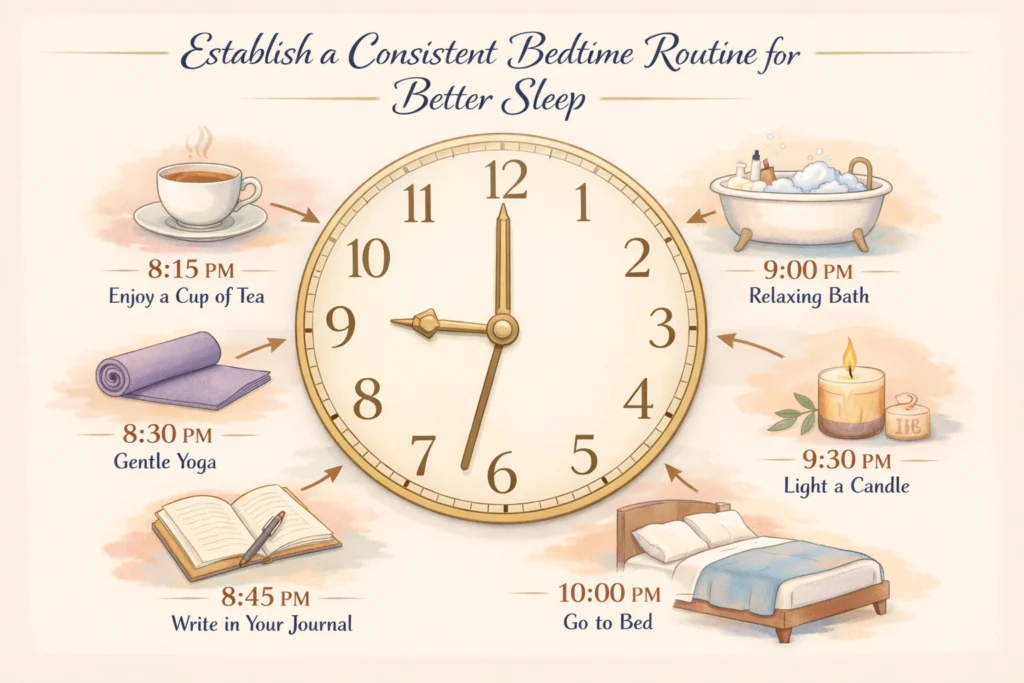
Consistency trumps perfection when building sleep habits. Your brain craves pattern recognition, using repeated sequences to anticipate what comes next. When you establish routine with the same activities in the same order at the same time nightly, you’re essentially programming a Pavlovian sleep trigger. After 21 days of repetition, neural pathways form that make these peaceful bedtime habits feel automatic rather than requiring willpower. This temporal regularity entrains your circadian rhythm, training your body to expect sleep at specific times. The routine becomes more powerful than any individual element within it.
| Time | Activity | Duration | Sleep Science Benefit | Key Element |
|---|---|---|---|---|
| 8:00 PM | Evening digital detox begins | Ongoing | Stops blue light melatonin suppression | Disconnect screens completely |
| 8:15 PM | Brew tea and sip slowly | 15 min | Warmth plus herbal compounds promote calmness | Use same mug for consistency |
| 8:30 PM | Gentle stretching sequence | 10 min | Releases tension, activates parasympathetic | Breathe deeply through holds |
| 8:45 PM | Mindful journaling practice | 10 min | Externalizes worries, processes day | Journal thoughts by hand |
| 9:00 PM | Warm bath with salts and oils | 20 min | Temperature regulation triggers drowsiness | Exactly 90 min before sleep |
| 9:30 PM | Progressive light dimming | Ongoing | Supports natural melatonin production | Dim lights and light candles |
| 9:45 PM | Final preparations in low light | 15 min | Maintains dark environment | Avoid bright lights completely |
| 10:00 PM | Lights out, sleep onset | – | Consistent timing entrains circadian rhythm | Same time nightly builds habit |
How These Evening Rituals Transform Your Sleep Patterns

Each ritual addresses a different barrier preventing quality sleep. The evening digital detox stops blue light interference. The bedtime tea ritual provides neurochemical support through compounds that reduce anxiety. The nighttime stretching routine addresses physical tension storage. Mindful journaling clears mental clutter. Candlelit evening routine honors light-based circadian rhythm programming. The evening bath ritual manipulates thermoregulation. Consistent timing entrains biological rhythms. Together, they create redundancy—if one element fails tonight, five others still support your sleep. This comprehensive approach improves sleep architecture itself, increasing time spent in deep restorative stages and REM cycles where emotional balance processing occurs.
Realistic timelines matter because expecting instant results sets you up for disappointment. Week one feels different—you’ll notice the slow living evening routines themselves becoming enjoyable rather than chores, something you crave as the day’s reward. Week two brings noticeable changes in sleep onset latency, the clinical term for time it takes to fall asleep. Maybe you drop from 45 minutes to 20. Those 3 AM anxiety sessions become occasional instead of nightly. By week four, measurable shifts appear if you track with wearables: deep restoration percentages increase, indicating higher-quality sleep. Month three, the routines become automatic, requiring minimal willpower because neural pathways have solidified. You’ve created sustainable rhythm supporting long-term health rather than fighting your biology. Daytime benefits compound: sharper focus, stable energy, improved stress resilience, stronger immune function. The slow living lifestyle habits you’ve built become the foundation supporting every other aspect of wellbeing.
Conclusion
The slow living evening routines outlined here work because they honor human biology rather than fighting it. You can’t hack sleep through willpower or force your way into rest through discipline. You can only create ritual and conditions that invite natural rhythm to emerge. These seven practices aren’t quick fixes promising instant results—they’re sustainable habits that compound into transformation when practiced consistently. Start small rather than overwhelming yourself. Pick two or three restful night habits that resonate most strongly and implement those first. Build gradually as initial routines become automatic.
Tonight, before you wind down, choose one practice to begin. Maybe it’s turning off screens at 8 PM. Perhaps it’s brewing chamomile tea with intentional slowness. Whatever you select, approach it with mindful presence rather than perfection. Track your progress through journal thoughts, noting how you feel each morning. The peaceful transition from exhausting nights to restorative sleep doesn’t require expensive solutions or complicated protocols. It requires honoring the simple pleasures and intentional living your body has been requesting all along. Your sleep isn’t a luxury to chase when everything else is handled—it’s the foundation supporting everything else. Reclaim your nights. Your days will transform in response.
Frequently Asked Questions
How long before I see results from slow living evening routines?
Most people notice easier sleep onset within 3-7 days of consistent practice when they establish routine properly. Your body responds quickly to repeated signals, especially when multiple peaceful bedtime habits work together. However, full transformation of sleep architecture—the deeper, more restorative stages where rejuvenation time occurs—typically emerges after 3-4 weeks. This timeline isn’t arbitrary. Research on habit formation shows neural pathways require roughly 21 days of repetition to solidify. The key word is consistent. Doing the evening wind down routine Monday through Thursday then abandoning it for the weekend confuses your circadian rhythm rather than entraining it. Your nervous system regulation needs predictable patterns to cultivate peace effectively.
Can I do these routines if I work night shifts?
Absolutely, but you’ll adapt the timing to match your personal sleep window rather than clock time. If you sleep 8 AM to 4 PM because you work overnight, start your intentional evening routine at 6 AM. The rituals work because they signal peaceful transition to your body, regardless of when that transition occurs. Your physiology doesn’t care whether it’s morning or night on the clock—it responds to the consistency of your signals. Apply the same principles: disconnect screens two hours before your bedtime, dim lights progressively, brew tea with evening herbal tea blends, stretch gently, and journal thoughts. The slow living lifestyle habits supporting quality sleep transcend traditional schedules, honoring your unique natural rhythm instead of fighting it.
What if I can’t fit all seven routines into my evening?
Start with three that resonate most powerfully and ignore the rest until those become automatic. You’re building sustainable habits, not adding stress through impossible expectations. Two well-executed simple evening rituals beat seven rushed ones that create pressure rather than peace. Perhaps you choose the evening digital detox, bedtime tea ritual, and progressive light dimming. Practice those consistently for three weeks, allowing them to become second nature before layering additional mindful evening practices. The beauty of this approach is flexibility—you’re not following rigid rules but discovering which restful night habits serve your specific needs. Add the nighttime stretching routine when the initial three feel effortless. Incorporate the evening bath ritual once you’ve established everything else. This gradual building prevents overwhelm while honoring the gentle pace that defines slow living itself.
Do I need to do these in a specific order?
The sequence matters less than consistency, though logical flow helps effectiveness. Obviously, disconnect screens early in your timeline since blue light’s melatonin suppression lasts hours. Place physical activities like the nighttime stretching routine and evening bath ritual before sedentary quiet evening activities like the bedtime tea ritual and evening journaling habit. End with progressive dimming that continues throughout your routine rather than saving it for the last moment. Beyond these loose guidelines, find your rhythm and commit to it. Your brain learns through repetition, so performing peaceful bedtime habits in the same order nightly creates stronger Pavlovian triggers than varying the sequence. The pre sleep rituals become a familiar path your body walks automatically, each step priming the next in a cascade toward sleep readiness.
Can these routines help with insomnia or should I see a doctor?
If you’ve struggled with chronic insomnia for months despite trying various approaches, absolutely consult a healthcare provider first. Clinical insomnia often requires professional intervention, whether through cognitive behavioral therapy for insomnia (CBT-I), medical evaluation for underlying conditions, or other treatments. These slow living evening routines complement medical care beautifully and work wonderfully for general sleep difficulties, but they’re not replacements for clinical treatment when needed. That said, many people diagnosed with insomnia discover their sleep problems stem from sleep hygiene rather than pathology. The evening wellness routine outlined here addresses the most common sleep barriers: excessive stimulation, poor light management, physical tension, mental rumination, and irregular timing. Give these practices three weeks of consistent effort. If you see no improvement, seek professional guidance rather than continuing to struggle alone.