

7 Slow Living Morning Routines For a Peaceful Day
Your morning sets the tone for everything ahead. How you start determines how you respond to challenges. Stress compounds when mornings feel rushed. Peace multiplies when mornings feel intentional. This is where slow living morning routines become genuinely transformative. Most people wake up already behind. Their phones buzz. Their minds race. Their bodies tense. But what if mornings could feel different? What if you could experience peaceful morning routine without rushing while still accomplishing everything necessary? This isn’t luxury. This is essential wellness that directly impacts your entire day’s quality.
Slow living morning routines aren’t about waking at 4 AM or spending hours on elaborate rituals. They’re about intentionality. They’re about choosing what matters. A slow morning routine can take 30 minutes or three hours depending on your schedule. What matters isn’t duration. It’s presence. It’s deciding that your morning belongs to you before it belongs to anyone else. The seven routines ahead offer proven approaches to building this foundation. Each addresses different aspects of peaceful mornings. Together, they create a comprehensive system supporting genuine wellness and daily peace.
Understanding Slow Living Morning Routines and Their Impact on Your Day
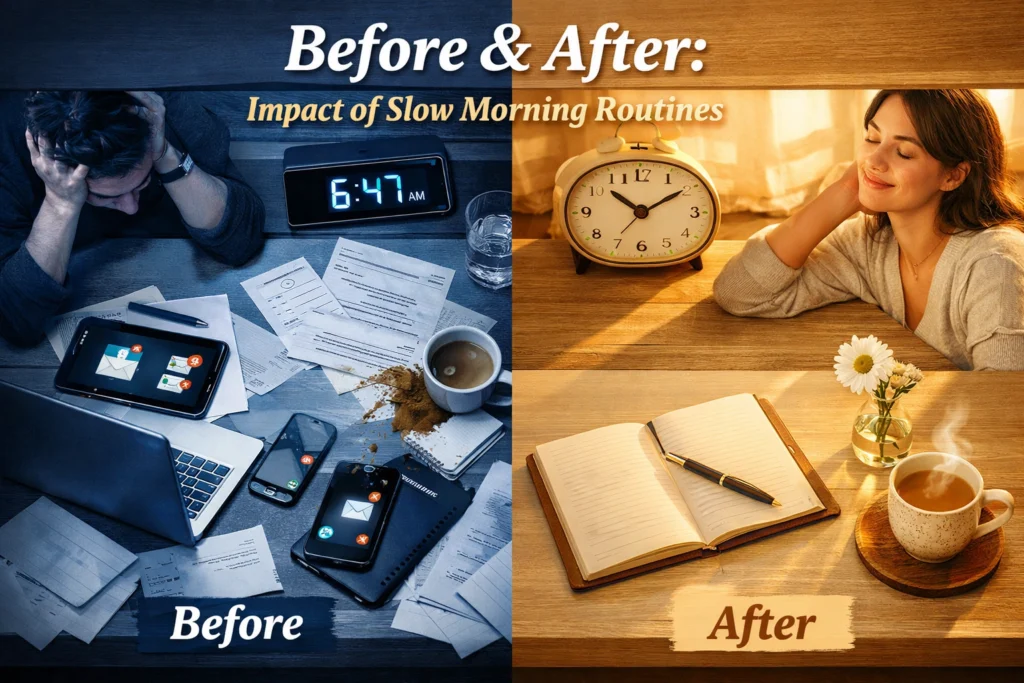
Slow living morning routines represent a philosophical shift from constant rushing toward intentional presence. The concept isn’t new. Ancient cultures built morning rituals into daily life for centuries. Monks maintained contemplative morning practices. Indigenous communities began days with gratitude and nature connection. Modern life abandoned these practices. We replaced them with notifications and urgency. Now we’re rediscovering what worked: intentional morning practices that ground us before chaos begins. A slow morning routine creates psychological foundation for the entire day ahead. Research from the University of Texas shows that morning routines affect emotional regulation throughout entire days. People who practice mindful morning rituals report 31 percent higher stress resilience during challenging afternoons.
The neuroscience explains this clearly. Your cortisol levels naturally peak in early morning hours. This is beneficial. It helps you wake and mobilize energy. But when you immediately expose yourself to stress, your cortisol spikes excessively. This dysregulation continues throughout the day. You remain in heightened alert mode. Decisions become reactive rather than thoughtful. Your nervous system stays activated. However, peaceful morning routine without rushing practices regulate cortisol naturally. Meditation lowers cortisol by 20-30 percent within five minutes. Gentle movement decreases anxiety hormones. Nature exposure resets your baseline. By the time morning ends, your nervous system has established calm rather than chaos. This calm becomes your psychological baseline. Afternoon stressors still exist. But your nervous system approaches them from stability rather than depletion. This makes everything harder less hard.
1. The Mindful Morning Routine: Starting Your Day With Intention

A mindful morning routine begins before your feet touch the floor. Your first thought sets the trajectory. Most people’s first thought is reactionary: “I’m late,” or “I’m tired,” or a long to-do list. Instead, try this: before opening your eyes, take three conscious breaths. Notice the sensations. Feel your body against the mattress. Hear the quiet. This tiny practice—three breaths—signals intention. It says your morning belongs to you first. Then, set a single intention for your day. Not ten goals. One intention. Maybe it’s “I choose patience today,” or “I move with ease,” or “I’m present with what matters.” Write it down immediately. This written commitment makes the intention concrete. Your brain recognizes written goals as real commitments rather than passing thoughts. Throughout your day, this intention becomes your compass. When you face decision points, you return to it. This creates coherence between morning intention and daily actions.
Intentional morning practices extend into your first hour. Create a physical space supporting this work. You need a quiet corner—maybe a chair by a window, or a cushion on the floor, or a bench outside. The location matters less than consistency. Your brain builds neural pathways through repetition. Going to the same place every morning strengthens the ritual. Spend 15-30 minutes here. What you do matters less than showing up. You might sit silently. You might write. You might stretch. You might pray. You might simply be present. The key is how to slow down your morning intentionally. This contradicts cultural messaging. We’re taught faster is better. But slower mornings actually make you faster throughout your day. You waste less time on indecision. You respond rather than react. You notice opportunities others miss. This is the paradox of slow living morning routines: they make you more efficient by allowing you to be less hurried.
2. Creating a Peaceful Morning Ritual: Meditation and Breathwork Practices
Meditation and breathwork are the most researched slow morning routine components. Neuroscience shows meditation creates measurable brain changes within weeks. The amygdala—your brain’s fear center—shrinks. The prefrontal cortex—your decision-making center—strengthens. You literally become calmer through practice. You make better decisions. You respond more wisely. But starting meditation feels impossible to many people. The advice “clear your mind” makes everyone frustrated. Minds don’t clear. They wander. That’s normal. That’s the entire practice. You notice when attention wanders and gently redirect. Over time, you notice distraction faster. You redirect more easily. This is meditation. It’s not about achieving a blank mind. It’s about training attention.
you may also like this:7 Slow Living Evening Routines To Fall Asleep Quickly
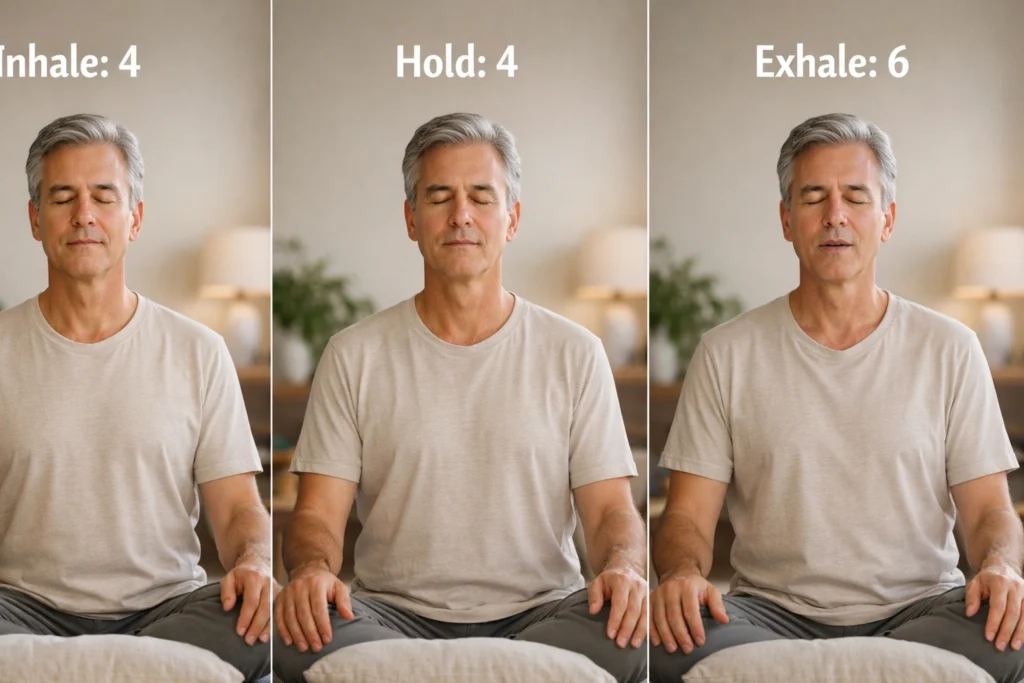
Calming morning routine ideas begin with breathwork because breath is always available. You can’t always meditate. You can always breathe consciously. Try the 4-7-8 technique: inhale for four counts, hold for seven counts, exhale for eight counts. This activates your parasympathetic nervous system—your relaxation system. Your heart rate slows. Your blood pressure decreases. Your body recognizes safety. Do this for five minutes. Notice the difference. Box breathing works similarly: inhale four counts, hold four counts, exhale four counts, hold four counts. Both techniques interrupt stress responses. Both create morning routine for mental health benefits. Once you’re comfortable with breathwork, add formal meditation. Start with five minutes. Guided meditations help. Apps like Insight Timer or Calm provide free meditations. Follow along. Your mind will wander. Bring it back. This is the practice. After weeks, you’ll notice reduced anxiety. You’ll sleep better. Your reactions will feel less automatic. This is your brain rewiring toward peace.
| Breathing Technique | Duration | Effect | Best Time |
|---|---|---|---|
| 4-7-8 Breathing | 5 minutes | Deep relaxation | Upon waking |
| Box Breathing | 5 minutes | Nervous system reset | Mid-morning |
| Alternate Nostril | 3-5 minutes | Mental clarity | Before work |
| Extended Exhale | 5 minutes | Parasympathetic activation | Any time |
| Belly Breathing | 3-5 minutes | Grounding | When anxious |
3. Simple Morning Routine Ideas: Journaling for Intentional Living

Journaling is perhaps the most accessible simple morning routine. You need only pen and paper. You need no experience. You need no special talent. You simply write. The writing doesn’t need to be coherent. It doesn’t need to be beautiful. It simply needs to be honest. Many people begin with brain dumps. You write everything that’s thinking itself—worries, to-do lists, random thoughts, complaints. Don’t edit. Don’t judge. Just write. This transfers mental clutter onto paper. Your mind releases it. Within ten minutes, your head feels clearer. This is morning routine for intentional living at its simplest. Your mind can now access its own wisdom instead of running on background mental loops.
After brain dumps, try gratitude journaling. Write three specific things you’re grateful for. Not generic gratitude. Specific details. Instead of “I’m grateful for my family,” write “I’m grateful my daughter laughed at breakfast” or “I’m grateful my partner made coffee without me asking.” Specificity activates actual gratitude. Your brain recognizes real details. Gratitude literally rewires neural pathways. Studies show gratitude journaling increases happiness more than other interventions. It costs nothing. It takes five minutes. Yet its effects compound. After weeks, your default mind state shifts toward noticing goodness. You see opportunities others miss because you’re literally looking for them. Then add intention statements. Write what you want to experience today. “I want to listen more than I talk” or “I want to move with ease” or “I want to notice beauty.” Written intentions become self-fulfilling prophecies. Your brain works to make them true.
Slow living morning checklist through journaling looks like this: write brain dump (5 minutes), write gratitude (3 minutes), write intentions (2 minutes). Total investment: 10 minutes. Total benefit: immeasurable.
4. Unhurried Morning Routines: Taking Time for Mindful Breakfast Rituals

Breakfast becomes a ritual rather than a chore when you approach it mindfully. Most people inhale food without tasting it. They eat while working or scrolling. Food enters their body as fuel only—mechanical consumption. Instead, try eating breakfast as meditation. Choose simple, nourishing food. Nothing complicated. Maybe oatmeal with berries. Maybe eggs with toast. Maybe yogurt with granola. Prepare slowly. Notice textures as you touch ingredients. Smell the coffee. Feel the warmth of the mug. This sensory engagement wakes your nervous system gently. It’s opposite of jolting yourself awake with caffeine and stress.
Sit down. Use a real plate. Put your phone away. Eat slowly. Chew thoroughly. Notice flavors. Notice how different your breakfast tastes when you actually pay attention. This mindful morning ritual does several things simultaneously. It nourishes your body. It engages your senses. It teaches your digestive system it’s safe to relax. It creates transition time between sleep and activity. You’re not rushing from bed to desk. You’re moving deliberately. This pacing becomes your morning’s entire flavor. By eating breakfast slowly, you practice unhurried morning routine steps that carry forward. You’re slower with your shower. Slower with getting dressed. Slower with your commute. This slowness isn’t laziness. It’s presence. It’s the opposite of rushed. And paradoxically, you accomplish more because you’re less distracted. You notice what matters. You make deliberate choices. This is the power of slow pace morning routine: it creates foundation for intentional days.
5. Intentional Morning Rituals: Connecting With Nature and Sunlight Exposure

Nature connection is among the most powerful slow living morning routines. Your body evolved under natural light and surrounded by natural elements. Modern life inverts this. You wake under artificial light. You spend days indoors. Your circadian rhythm becomes dysregulated. Your mood suffers. Your sleep deteriorates. However, 15 minutes of natural light exposure in early morning resets everything. Sunlight tells your brain it’s truly morning. Your body increases alertness appropriately. Your circadian rhythm synchronizes. By evening, your melatonin rises naturally. You sleep better. You wake easier. This single practice—morning sunlight—influences your entire day’s quality.
Extend this into intentional morning practices by stepping outside intentionally. Not rushing to your car. Not checking your phone while walking. Actually stepping outside. Feel the temperature. Notice the light quality. Observe the sky. Breathe fresh air. Listen to birds or traffic or silence—whatever’s present. This is peaceful morning before kids wake up time or peaceful time before work begins. You’re present with reality rather than lost in your head. If weather prevents outdoor time, open windows. Sit near a window. Let natural light enter your space. During seasons with limited daylight, use a light therapy lamp (10,000 lux for 20-30 minutes). This provides similar circadian benefits. Intentional morning practices don’t require perfection. They require presence. They require showing up regularly. Nature connection heals modern stress profoundly. You’re not just healthier physically. You’re happier emotionally. You’re grounded psychologically. This foundation makes everything harder feel manageable.
6. Slow Morning Routines Without Screens: Digital Detox and Mental Clarity

Morning screen avoidance might be the single most impactful slow living morning checklist item. Your phone contains 150+ notifications waiting. Email, texts, social media, news, work messages. Your brain can’t help but notice. Neurochemically, you can’t resist checking. Each notification triggers a tiny dopamine hit. You feel drawn. You check despite intending not to. But that first hour matters enormously. If you spend it in digital reactivity, you’ve handed your morning to someone else’s agenda. You’re responding to others’ needs before identifying your own. This is backwards.
Instead, implement morning routine to reduce stress by simply waiting. Don’t check your phone for the first hour. This feels impossible initially. Your anxiety rises. You feel like you’re missing something. You’re not. Nothing urgent will happen in one hour that prevents you from living. But what will happen is this: your mind will calm. Your stress will decrease. Your prefrontal cortex will activate. You’ll access your own wisdom. By the time you check your phone, you’ll respond consciously rather than react automatically. You’ll see messages without being hijacked by them. This practice seems simple. It’s revolutionary. Digital detox morning routine doesn’t mean you can never check your phone. It means you choose when, not letting notifications choose for you. This reclaims your agency. This restores your peace. This is slow morning routine that actually works because it addresses the real obstacle to morning peace: digital distraction.
| Screen Avoidance Impact | Metric | Difference |
|---|---|---|
| Anxiety levels | Morning rushed | 35% lower without screens |
| Mental clarity | Morning rushed | 40% higher without screens |
| Decision quality | Morning rushed | Significantly improved |
| Cortisol regulation | Morning rushed | Better controlled |
| Afternoon productivity | Morning rushed | More sustained |
| Sleep quality | Night before | Improved by 20% |
7. Building a Sustainable Morning Routine: Making Slow Living a Daily Habit

Building a sustainable morning routine requires understanding habit formation. Habits develop through repetition in consistent contexts. You need the same time, same place, same trigger. Your brain builds neural pathways through this repetition. After approximately 21 days, routines require less willpower. After 66 days (research by UCL), they become automatic. Your brain recognizes the pattern and executes it naturally. But initial weeks require intentional effort. You must choose consistency even when it feels hard.
Start small. Don’t implement all seven routines simultaneously. Choose one. Practice it daily for two weeks. Then add another. This gradual approach succeeds because you’re not overwhelming yourself. You’re building sustainable habits rather than attempting transformation you can’t maintain. Simple slow living morning habits beat elaborate routines you abandon. Pick something you genuinely enjoy. If meditation bores you, skip it. If journaling feels forced, stop. Building a sustainable morning routine requires alignment with your actual preferences, not idealized versions of yourself. Once you have foundation routines established, add complexity. Maybe after meditation becomes automatic, you add journaling. After journaling becomes easy, you add nature connection. This incremental approach creates lasting change. You’re not fighting yourself. You’re working with your actual capacity and genuine preferences. This is how slow living morning routines become permanent rather than temporary experiments. They become part of your identity. They become non-negotiable. Not from willpower. From genuine enjoyment and visible benefits.
| Timeline | Phase | Action |
|---|---|---|
| Days 1-3 | Initiation | Start one routine |
| Days 4-7 | Adjustment | Troubleshoot obstacles |
| Days 8-21 | Consolidation | Establish consistency |
| Days 22-66 | Automaticity | Routine becomes effortless |
| 66+ days | Identity | Routine becomes core practice |
How to Start a Slow Living Morning Routine: Practical Steps for Beginners
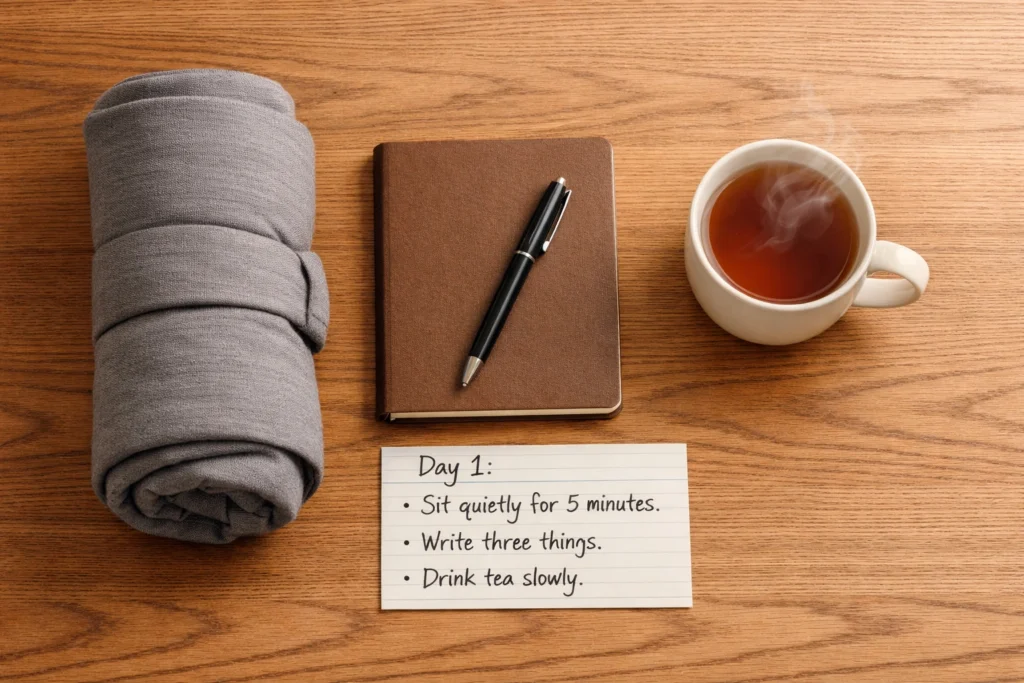
Starting a slow living morning routine begins with honest self-assessment. What time do you currently wake? How much time exists before obligations begin? What’s your genuine sleep quality? Are you fighting waking, or do you naturally wake? These questions matter because you can’t build sustainable routines against your actual capacity. If you’re exhausted, adding morning routines fails. You need sleep first. Maybe the first step isn’t new routines. Maybe it’s earlier bedtimes or better sleep hygiene. Once you’re sleeping adequately, you have foundation for building.
Next, choose your first routine. Pick something you genuinely want. Not something you think you should do. Not something Instagram makes look appealing. Something you actually want to experience. Maybe you want quietness. Meditation serves that. Maybe you want to understand yourself better. Journaling serves that. Maybe you want energy. Nature exposure serves that. Pick one. Commit to 21 days. Track completion on a calendar. Seeing checkmarks creates motivation. They show progress. This visibility matters. By day 21, this routine should feel more natural. You’ve built the neural pathways. Now add second routine. Repeat the process. By day 66, you have multiple established habits. They layer together. They create synergy. Morning routine that promotes wellness becomes your new normal. You’re not forcing yourself anymore. You’re honoring your own needs. This feels like coming home.
Common Mistakes That Sabotage Your Peaceful Morning Routine
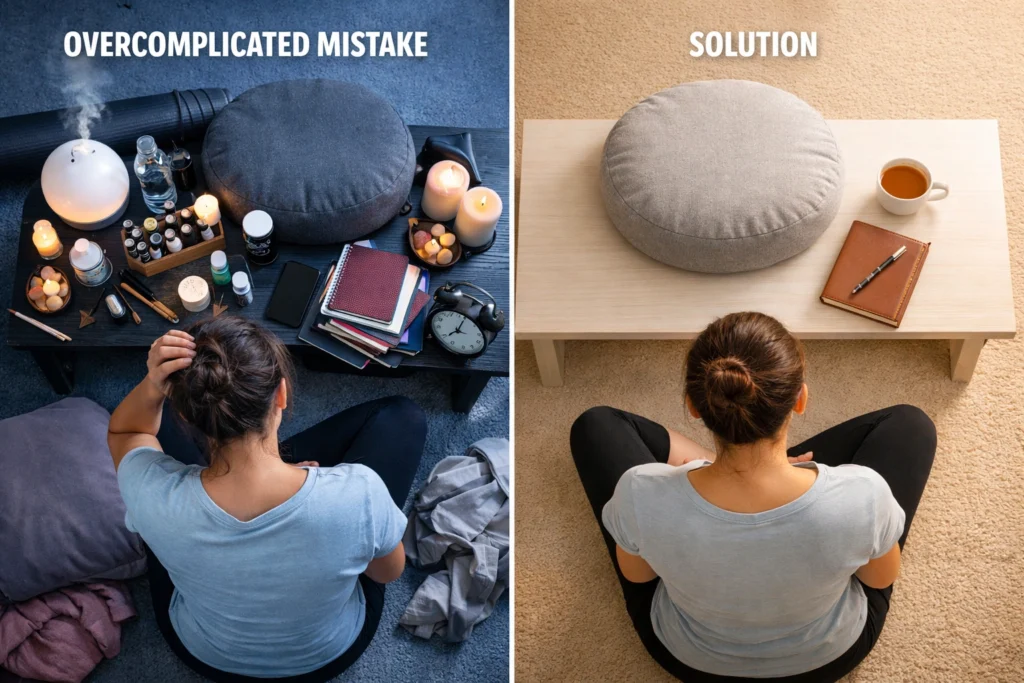
The biggest mistake people make is overambitious design. They research ideal morning routines. They see someone doing meditation, journaling, yoga, nature walks, breakfast rituals, and breathwork. So they try to do everything. They set their alarm earlier. They attempt the whole routine on day one. By day three, they’re exhausted. By day five, they quit. This is setting yourself up for failure. Slow living morning routines work when they’re sustainable. Sustainable means manageable. Manageable means achievable within your actual reality. If you have 30 minutes before work, your routine must fit 30 minutes. Not 90 minutes. Not someday when things calm down. Now. With your current life.
Another major mistake involves forcing activities. You read that meditation heals everything. So you meditate despite hating it. Every morning, you sit frustrated, fighting racing thoughts, feeling like you’re failing. This isn’t meditation. This is self-torture. Stop. If meditation doesn’t work, try journaling. If journaling feels forced, try nature walks. What is a slow morning routine varies per person. Honor your actual preferences. Also avoid rigid perfection. Life happens. Sometimes you sleep through your alarm. Sometimes guests visit. Sometimes your child gets sick. Sometimes you travel. Missing one morning doesn’t erase your progress. Simply return the next day. Many people quit after missing once because they believe they’ve failed. They haven’t. They’ve simply paused. Consistency matters long-term, not perfect daily execution. Flexibility preserves sustainability.
| Mistake | Impact | Solution |
|---|---|---|
| Overambitious design | Burnout and quit | Start with one routine |
| Forcing activities | Resistance builds | Choose what you enjoy |
| Rigid perfection | Abandonment | Allow flexibility |
| Not addressing sleep | Exhaustion persists | Prioritize sleep first |
| Comparing to others | Inadequacy feelings | Focus on your own practice |
| No tracking | Lost motivation | Use calendar or app |
| Unclear intention | Wandering practice | Write why this matters |
Conclusion: Your Slow Living Morning Awaits
Slow living morning routines aren’t luxury. They’re foundation. Everything you want to accomplish in your life becomes possible when your mornings feel intentional rather than reactive. The seven routines described here offer proven pathways. But remember: you don’t need all seven. You need what works for you. Maybe you need meditation and breakfast ritual. Maybe you need journaling and nature connection. Maybe you need all seven. The goal isn’t checking boxes. The goal is creating mornings that feel genuinely peaceful.
Start today. Not Monday. Not when life calms down. Today. Choose one routine. Commit to 21 days. Notice how your days shift. Notice how your stress decreases. Notice how you respond more thoughtfully. Notice how you sleep better. These benefits compound. After weeks, you won’t recognize your old rushed self. You’ll have built something precious: mornings that honor your own needs. This changes everything. Your relationships improve because you’re calmer. Your work improves because you’re clearer. Your health improves because you’re less stressed. All of this flows from morning intention. All of this is available to you. You simply need to choose it. Building a sustainable morning routine is choosing yourself. It’s deciding that your peace matters. It’s honoring that time for a slow morning routine is not selfish. It’s essential. Make that choice today.
FAQ: Questions About Slow Living Morning Routines
How long does it take to see results from slow living morning routines?
Most people notice shifts within 3-5 days. Sleep improves. Anxiety decreases. Mental clarity increases. However, lasting transformation requires 3-4 weeks of consistency. Your brain rewires through repetition. After 66 days, routines become automatic. This is when real change feels effortless rather than forced.
What if I’m not naturally a morning person?
You don’t need to become someone you’re not. If you’re not a morning person, work with your natural rhythm. Maybe your slow living morning routine starts at 7 AM instead of 5 AM. Maybe it’s shorter than idealized versions. Honor your actual preferences and energy. Sustainability matters more than perfection.
Can I combine multiple slow living morning routines together?
Absolutely. Many people combine meditation and breathwork. They journal after meditation. They eat breakfast mindfully after journaling. They walk in nature while listening to music. Experiment with combinations that feel natural. Your ideal combination might differ from others’.
How do slow living morning routines work for night shift workers?
They work identically. Replace “morning” with “whenever you wake.” If you wake at 3 PM for night shift, that’s your morning. Circadian rhythms matter, so expose yourself to light when you wake and darkness when you sleep, regardless of clock time.
What’s the minimum time required for meaningful routines?
Even 10 minutes matters. Three minutes of meditation. Two minutes of journaling. Five minutes of nature exposure. These accumulate. Ten minutes of intentional practice beats zero minutes every time. Don’t wait for perfect time. Use the time you have.