10 Easy Slow Living Home Swaps That Calm Your Nervous System
Your nervous system is exhausted. Not lazy. Not dramatic. Genuinely, physiologically exhausted from the relentless pace of modern American life. The average US adult checks their phone 96 times daily, sleeps under seven hours, eats on the go, and fills every quiet moment with noise. That’s not living — that’s surviving on autopilot. Slow living swaps offer something radical in the gentlest possible way. They don’t ask you to quit your job, move to a cabin, or spend a fortune on wellness products. They ask you to make one small, intentional change at a time — and let the calm follow naturally.
Why Slow Living Home Swaps Are the Gentlest Form of Self Care

Slow living isn’t a trend. It’s a deliberate philosophical response to a culture that glorifies busyness as a badge of honor. The intentional living lifestyle centers on presence, simplicity, and conscious choice — the exact opposite of the default modern setting most Americans are running on. According to the American Psychological Association, 77% of Americans regularly experience physical symptoms caused by stress. That number isn’t a personal failure — it’s a systemic one. And slow living swaps for self care address the root environment where stress either grows or dissolves — your home.
Swap 1 — Replace Overhead Lights With Warm Layered Lighting
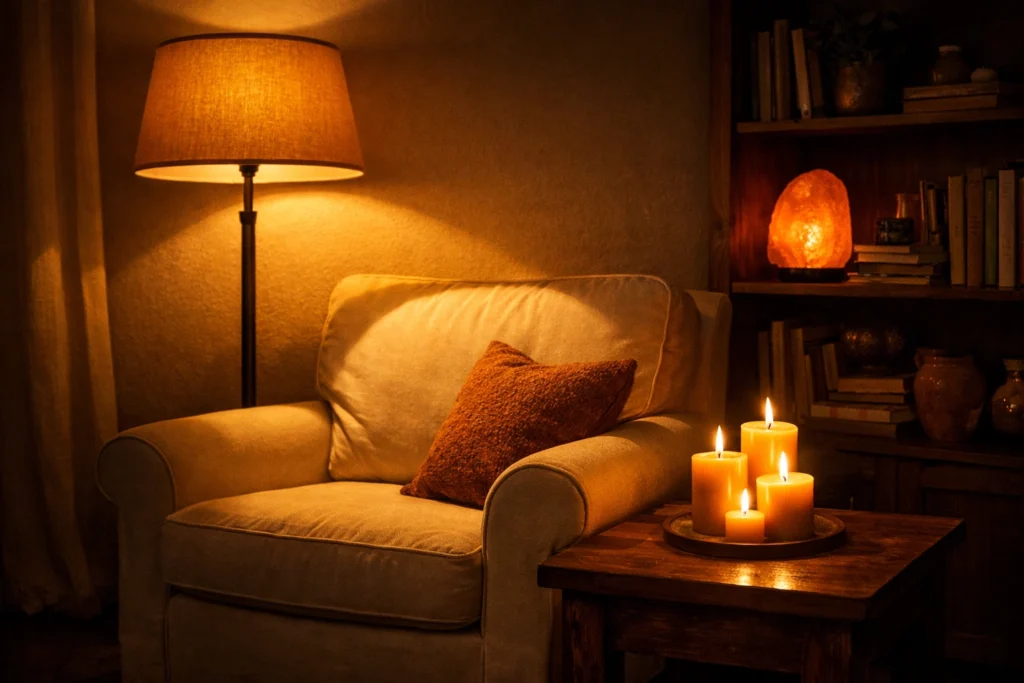
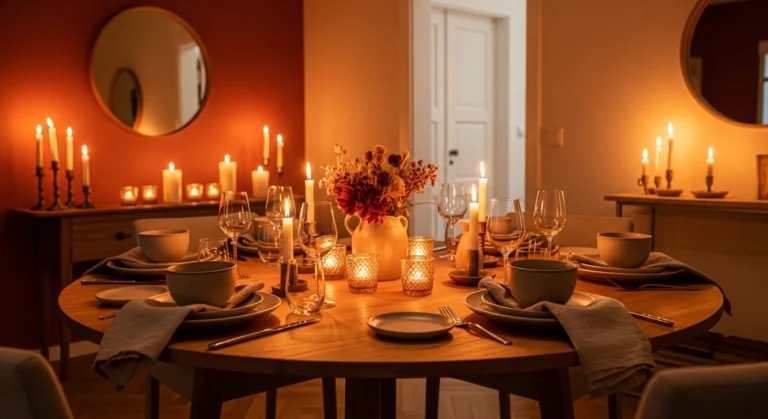
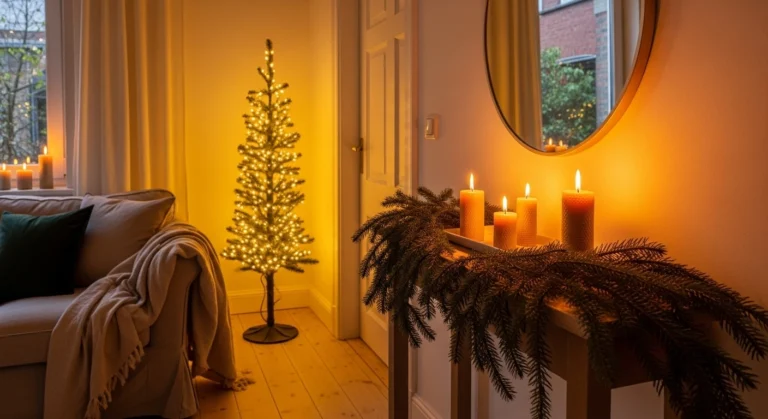
Overhead lighting is a nervous system villain dressed in practical clothing. Bright white ceiling lights emit blue-spectrum wavelengths that suppress melatonin production and trigger cortisol release — the same biological response your body uses to prepare for threat or danger. Slow living bedroom swaps start here because lighting is the single environmental factor most people never think to question. Warm lighting below 3000K tells your brain a completely different story — one of safety, rest, and the end of the day’s demands. A $15 dimmer switch installed on your existing overhead fixture gives you complete control over that story every evening.
| Lighting Type | Color Temp | Nervous System Effect | Cost |
|---|---|---|---|
| Harsh overhead LED | 5000–6500K | Triggers alertness and cortisol | $3–$8/bulb |
| Warm LED bulb | 2700–3000K | Signals rest and safety | $3–$8/bulb |
| Beeswax candle | Warm amber | Deep calm, natural flicker | $8–$20 |
| Salt lamp | Warm orange | Soothing ambient glow | $15–$30 |
| String fairy lights | Warm white | Gentle atmospheric warmth | $10–$18 |
Swap 2 — Trade Your Phone Alarm for a Gentle Sunrise Clock
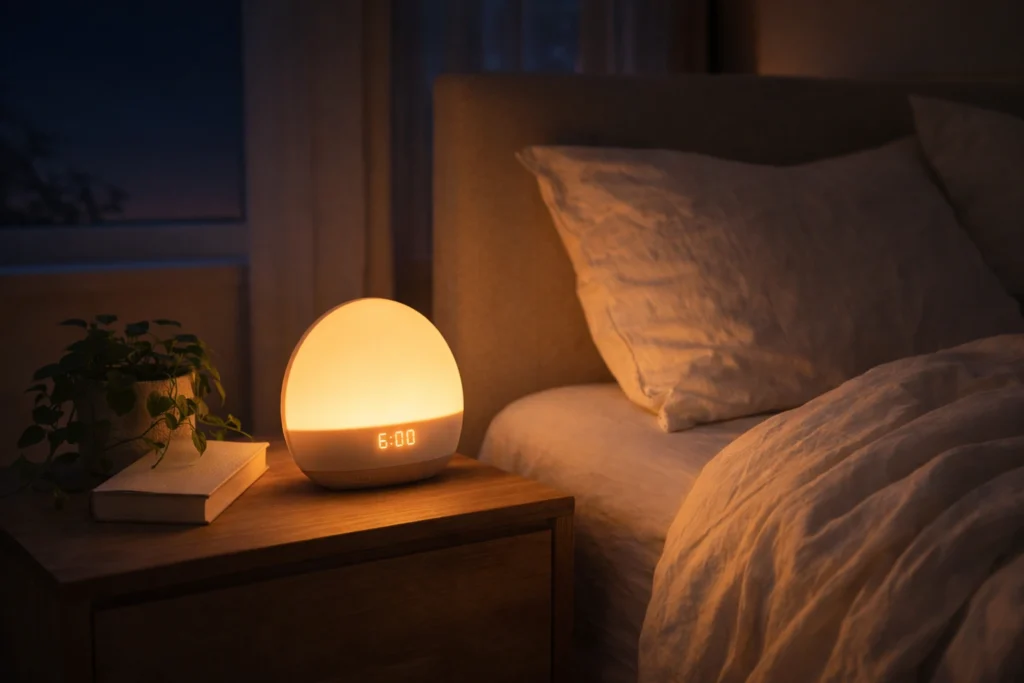
The phone alarm is one of the most physiologically brutal ways to start a human day. A sudden loud sound during deep sleep triggers an immediate cortisol surge — your body’s emergency wake-up protocol — before your brain has formed a single conscious thought. Slow living morning routine swaps that begin with a sunrise clock change this completely. A sunrise alarm clock simulates natural dawn by slowly brightening over 20 to 30 minutes before your set wake time. Your body rises gradually with the light exactly as humans evolved to do for 300,000 years before electric alarm clocks existed. The Hatch Restore at $130 and the Philips SmartSleep at $60 are the two most recommended options for simple morning rituals that genuinely feel different from the first morning.
you may also like this:10 Easy Ways to Refresh Your Living Room Into a Nervous System Sanctuary
Swap 3 — Switch Synthetic Fragrances for Natural Calming Scents

Synthetic air fresheners, plug-in scent diffusers, and artificially fragranced candles contain volatile organic compounds — VOCs — that the Environmental Protection Agency links to headaches, respiratory irritation, and nervous system disruption. You’re trying to make your home smell pleasant and inadvertently stressing your biology in the process. Slow living swaps for better health replace synthetic fragrance sources with natural alternatives that work with your nervous system rather than against it. Lavender essential oil reduces anxiety symptoms by up to 45% according to peer-reviewed research published in Phytomedicine — a remarkable result from something that costs $8 a bottle.
Swap 4 — Replace Fast Scrolling With a Morning Journaling Ritual

Morning phone scrolling is the mental equivalent of eating junk food for breakfast. It floods your brain with external stimulation, other people’s opinions, breaking news, and social comparison before your prefrontal cortex — your calm rational brain — has fully come online for the day. Slow living swaps for mental health that replace this habit with a gratitude journaling practice activate the brain’s executive function centers within minutes of waking. Research from UC Davis demonstrates that people who write three specific gratitude statements each morning show measurably lower cortisol levels and higher reported life satisfaction within four weeks of consistent practice.
Swap 5 — Trade Clutter for Intentional Minimalist Spaces
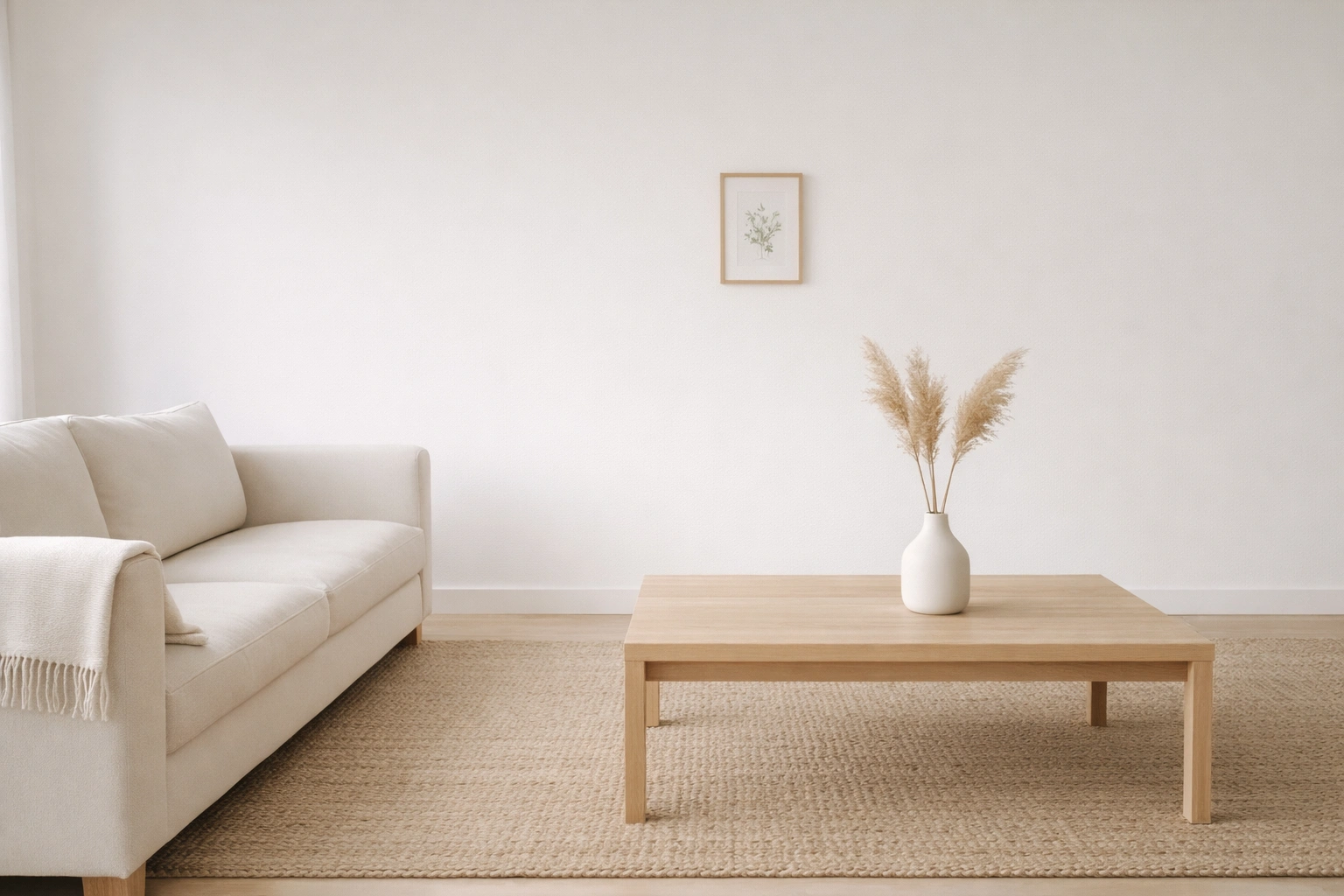
Clutter isn’t just an aesthetic problem. It’s a neurological one. Princeton University’s Neuroscience Institute published research demonstrating that physical objects in your visual field actively compete for your brain’s attention and processing resources — even when you’re not consciously looking at them. Every cluttered surface in your home costs your nervous system a micro-dose of cognitive energy all day long. Slow living swaps for minimalists address this by creating visual silence — surfaces so clear and intentional that your eyes land on them and your brain exhales. Declutter and simplify spaces one surface at a time using 15-minute daily sessions rather than exhausting weekend overhauls.
Swap 6 — Switch Processed Convenience Food for Simple Whole Meals

Ultra-processed food — the packaged, shelf-stable, ingredient-list-of-twenty-things category — spikes blood sugar rapidly and crashes it equally fast producing mood instability, irritability, and fatigue that directly translate into nervous system stress. The slow food movement has documented this relationship extensively and its solution is elegantly simple — whole, seasonal, minimally processed ingredients prepared with care and eaten without screens. Slow living kitchen swaps don’t require culinary training or expensive equipment. They require three reliable simple recipes, a weekly shopping rhythm, and the willingness to spend 30 intentional minutes in the kitchen on a Sunday evening.
| Processed Swap | Whole Food Alternative | Prep Time | Cost Comparison |
|---|---|---|---|
| Boxed cereal | Overnight oats with fruit | 3 min prep night before | Similar |
| Frozen meals | Batch-cooked grain bowls | 45 min Sunday | 40% cheaper |
| Packaged snacks | Apple with almond butter | 1 minute | Similar |
| Flavored yogurt | Plain yogurt with honey | 2 minutes | 30% cheaper |
| Takeout coffee | Home brewed pour over | 8 minutes | 75% cheaper |
Swap 7 — Replace Background TV Noise With Calming Natural Sounds

Background television is the most normalized nervous system stressor in American homes. Millions of people run the TV constantly — during meals, while working, during family time, through the evening — not to watch it but simply to fill silence. The brain processes background audio even without conscious attention and the unpredictable sounds, conflict narratives, and advertising noise of background TV keep the nervous system in a low-level alert state continuously. Slow living swaps for stress relief that address this habit start simply — turn the TV off and replace it with nature connection daily through natural soundscapes instead.
Screen free activities become naturally easier when the TV isn’t filling the room’s atmosphere by default. Rain sounds, birdsong, forest ambience, and flowing water recordings actively calm the nervous system by activating the parasympathetic response — the body’s rest-and-digest mode. NASA research on sensory environments confirms that natural soundscapes reduce stress hormone levels measurably within seven minutes of exposure. Free resources abound — YouTube’s lofi nature channels, the Calm app, Spotify’s nature playlists, and dedicated rain sound apps all deliver this effect at zero cost. Slow living swaps for mental health rarely get easier than this one — turn off the TV, open a window, or press play on a forest rain recording and feel the shift happen in real time.
Swap 8 — Trade Synthetic Bedding for Natural Linen and Cotton Layers
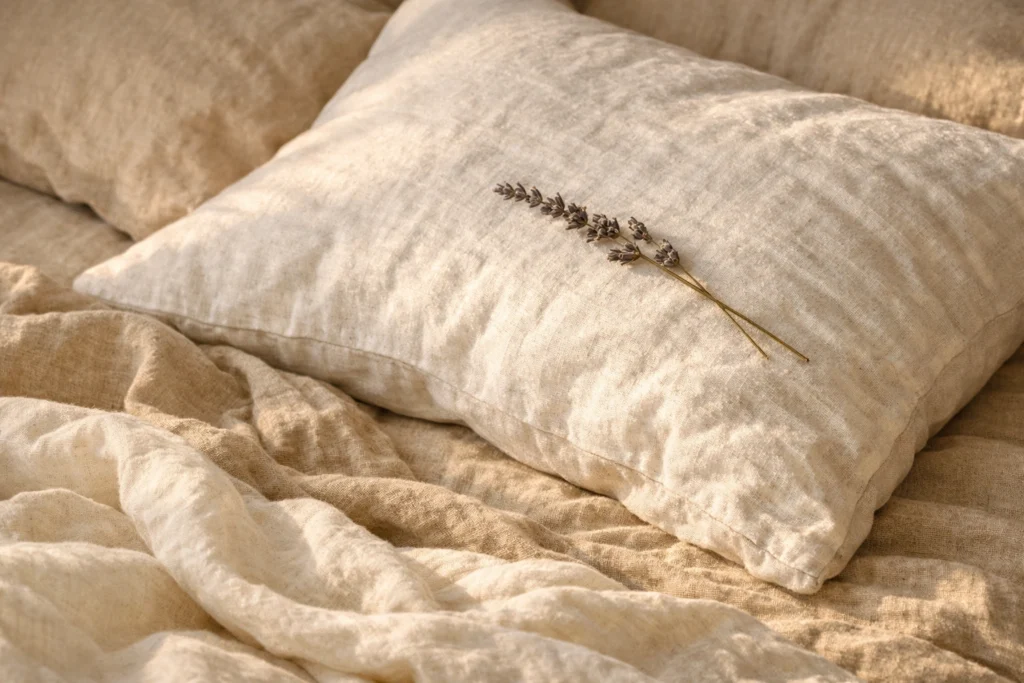
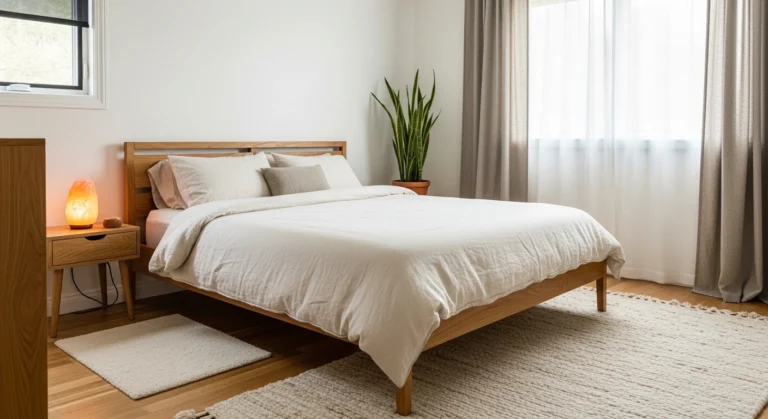
Your bedding touches your body for six to nine hours every night and synthetic polyester fabrics spend that entire time trapping heat, restricting airflow, and off-gassing chemical residues from manufacturing and fabric treatments. Slow living bedroom swaps that address bedding deliver some of the most measurable results of any change on this list because sleep quality is the foundation of every other nervous system metric. Natural linen and cotton breathe passively — they regulate your body temperature without effort, wick moisture naturally, and soften with every wash rather than degrading like synthetics do. Sustainable home living through natural bedding is also an environmental choice — linen is one of the lowest-impact textiles produced anywhere in the world.
The thread count myth needs addressing directly. A 300-thread-count organic cotton sheet outperforms a 1000-thread-count polyester blend in breathability, temperature regulation, and chemical safety — every single time. Slow living swaps for better health in the bedroom also extend to washing — unscented natural laundry detergent removes synthetic fragrance chemicals from your sleep environment that conventional detergents deposit with every wash cycle. Affordable natural bedding options include Quince organic cotton sets starting at $50 and Amazon linen sets under $65 that genuinely transform the sleep experience within the first three nights. Restful evening routines built around a naturally breathable sleep environment create the kind of deep restorative rest that no supplement can replicate.
Swap 9 — Switch Rushed Evenings for a Slow Intentional Wind Down Routine

Rushed chaotic evenings are a nervous system ambush disguised as productivity. When you push hard until 10pm, scroll through your phone until midnight, and then expect your body to shift immediately into restorative sleep — you’re asking your biology to do something it genuinely cannot do. The parasympathetic nervous system needs 60 to 90 minutes of consistent wind-down signals before sleep can genuinely restore the body. Slow living swaps for self care that create an intentional evening ritual begin with one structural decision — dim all lights in your home at 8pm. That single action starts a biological cascade that prepares your entire system for sleep.
Restful evening routines built around the slow living philosophy look different for every person but share consistent elements. A warm bath or shower 90 minutes before bed drops core body temperature in a way that dramatically accelerates sleep onset. Herbal tea — chamomile, passionflower, or valerian root — provides gentle nervous system support without the dependency risk of sleep medication. Gentle movement practice in the form of 10 minutes of restorative yoga or light stretching before bed releases physical tension accumulated throughout the day. Deep breathing techniques like box breathing — four counts in, four counts hold, four counts out, four counts hold — activate the vagus nerve and shift the nervous system from sympathetic to parasympathetic mode within minutes. Slow living weekend swaps that establish this routine consistently transform not just sleep but the entire quality of the following day.
Swap 10 — Replace Digital Overload With Analog Hobbies and Crafts

The average American adult now spends over seven hours daily interacting with screens. Seven hours. That’s nearly half of every waking day spent in a state of passive consumption, reactive scrolling, and blue-light exposure — none of which allows the nervous system to genuinely recover. Slow living digital swaps that replace even 30 minutes of daily screen time with an analog lifestyle habits activity produce measurable drops in anxiety, improved sleep quality, and increased feelings of meaning and satisfaction. The mechanism is well understood — handmade and crafted goods produced through activities like knitting, watercolor painting, bread baking, pottery, or jigsaw puzzles engage both the hands and the focused mind simultaneously creating what psychologists call a flow state.
Flow states produce some of the lowest cortisol and highest dopamine readings in human neurochemistry research. Slow living swaps for introverts particularly benefit from analog hobbies because they provide deep engagement without the social energy expenditure that many digital entertainment platforms demand. Starting costs are genuinely minimal — a beginner watercolor set costs $18 on Amazon, a loaf of sourdough requires flour water and salt, a simple knitting project from a craft store runs under $20. Screen free activities that engage your hands give your eyes a genuine rest from blue light and your mind a genuine rest from the infinite scroll. Present moment awareness emerges naturally when your hands are occupied with something physical and your attention has nowhere to wander.
How to Start Your Slow Living Journey One Swap at a Time
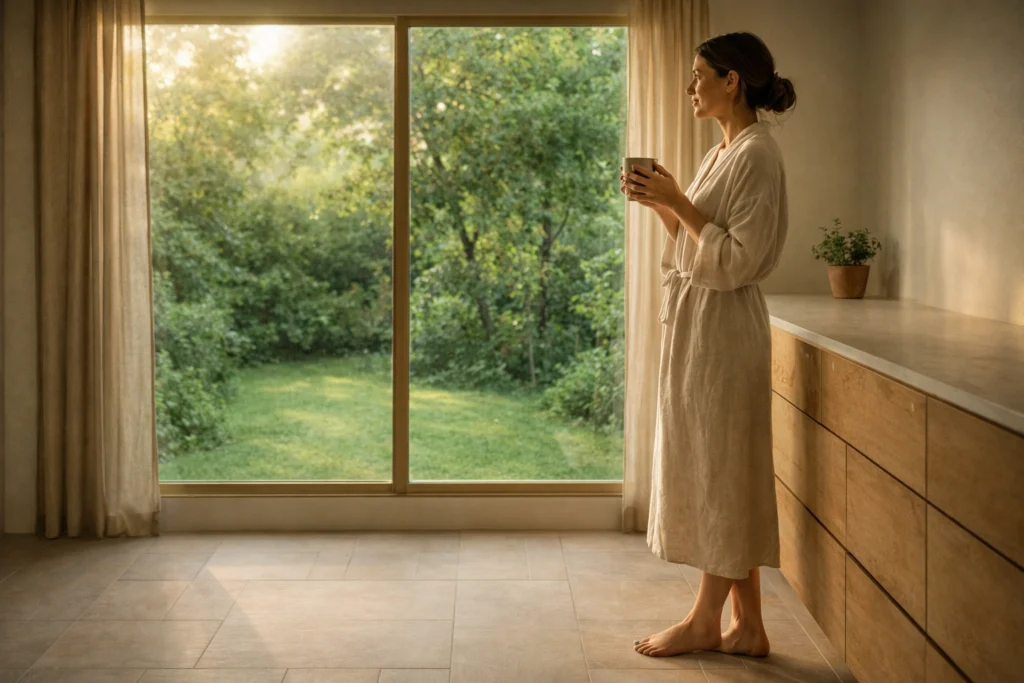
Overwhelm is the fastest route to abandoning any new habit and it’s particularly antithetical to a slow living philosophy. Slow living swaps for beginners work best with a single focused starting point rather than a wholesale lifestyle overhaul attempted in one motivated weekend. The two-week rule provides a clean framework — commit fully to one swap for 14 consecutive days before considering adding the next. This timeline allows the new habit to move from effortful conscious choice to automatic comfortable default. Easy slow living lifestyle changes that stick are built one at a time with patience and without the pressure of perfection driving the process.
The fastest-impact starting swaps for most people are lighting and the phone alarm — both deliver noticeable nervous system results within 48 hours and neither requires significant behavior change beyond the initial setup. Track your response through brief daily journal entries noting sleep quality, morning mood, and afternoon energy levels. Slow living swaps for working moms and busy professionals benefit most from choosing swaps that integrate into existing routines rather than adding new time requirements. Mindful daily habits compound beautifully — after six months of consistent slow living swaps at home, most people report that their relationship with time, stress, and their own home environment has fundamentally transformed in ways they couldn’t have predicted from swap number one.
Final Thoughts on Slow Living Swaps That Truly Calm Your Nervous System
Ten swaps. Each one small. Each one affordable. Each one backed by genuine science and real human experience. Together they build something that no single wellness product or retreat can manufacture — a home environment that actively supports your nervous system instead of constantly challenging it. Slow living swaps aren’t about achieving a Pinterest-perfect aesthetic or performing a lifestyle for social media. They’re about making your actual daily life feel genuinely better — calmer, more intentional, more nourishing, and more yours.
Choose one swap this weekend. Just one. The lighting swap takes 20 minutes and costs under $20. The phone alarm swap takes five minutes and costs under $65. The journaling swap costs $3 and starts tomorrow morning. Slow living swaps for happiness don’t require a perfect moment or a complete life overhaul to begin — they require only the willingness to try one thing differently and see what shifts. Your nervous system has been asking for this kind of environment for years. Simple slow living ideas applied one at a time give it exactly that. Start today. Start small. Start exactly where you are.