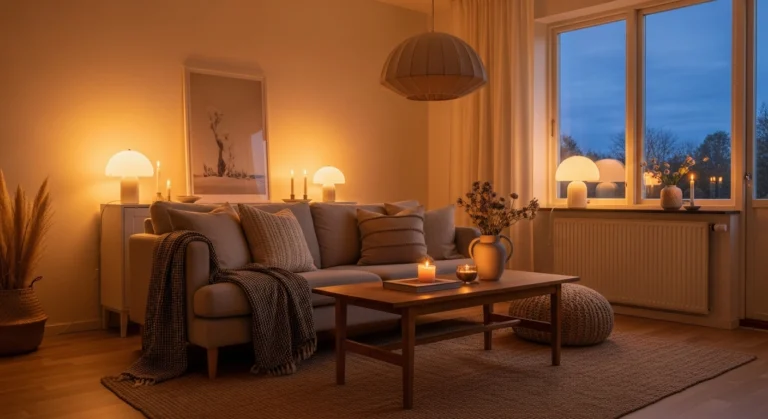

How To Start a Slow Living Home When Life Feels Overwhelming
Your phone won’t stop buzzing. The to-do list keeps growing. And somehow, the one place that’s supposed to feel like home just feels like another thing to manage. Sound familiar? You’re not alone.
Millions of Americans are burnt out. Not just from work — but from the relentless pace of modern life itself. And here’s what nobody talks about enough: your home environment either fuels that chaos or calms it. There’s no neutral ground.
A slow living home isn’t about doing nothing. It’s about doing things with more intention. It’s a space designed around presence, not productivity. Around rest, not performance. If you’re ready to start a slow living home — even when life feels completely overwhelming — this guide walks you through every single step.
What Is a Slow Living Home and Why It Matters Today
The Definition in Simple Words
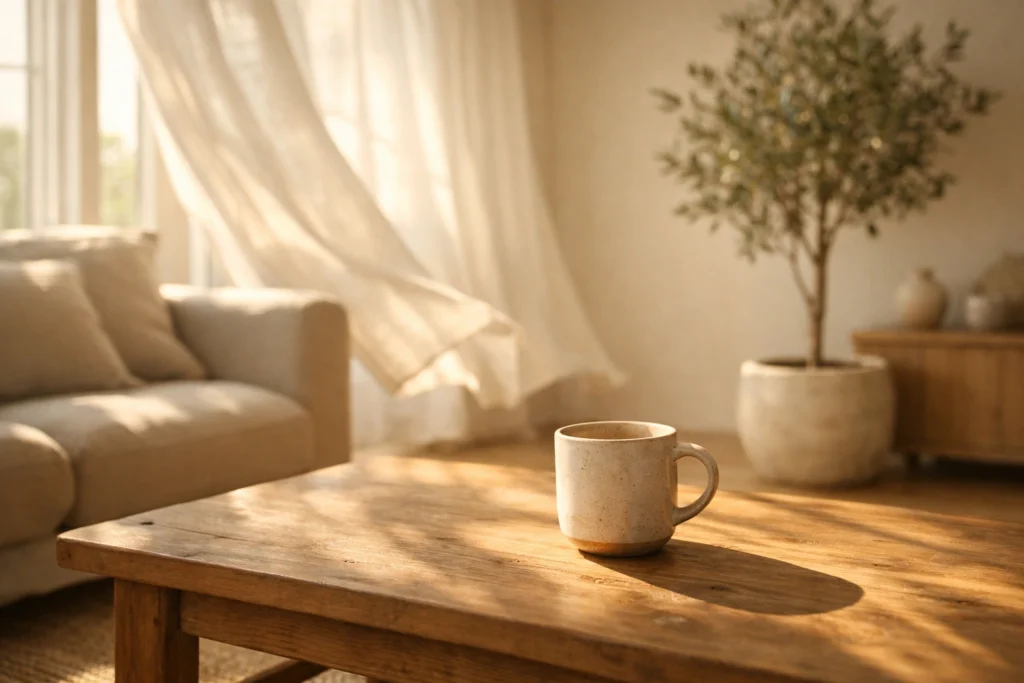
Think of a slow living home as the physical expression of a calmer mindset. It’s a space stripped of unnecessary noise — visual, digital, and emotional. You walk in and your nervous system exhales. That’s the goal.
It doesn’t mean your home looks empty or cold. It means every item, every routine, and every corner serves a real purpose. The slow living lifestyle isn’t a design trend. It’s a deliberate choice about how you want to feel inside your own four walls.
Why It’s More Relevant in 2025
America is exhausted. According to the American Psychological Association, chronic stress affects over 75% of adults in the US. Work bleeds into home life. Screens are everywhere. Rest feels unproductive. The mindful home movement is growing precisely because people are desperate for somewhere to land at the end of the day.
Slow Living vs. Minimalism — What’s the Difference?
Here’s a quick way to think about it. Minimalism asks: how little can I own? Slow living asks: how fully can I live? They overlap but they aren’t the same. A minimalist might own fifty items but still rush through life. A slow liver might own plenty — but every object, every meal, every moment gets their full attention. Intentional living is the bridge between the two.
Signs That Your Home Is Adding to Your Overwhelm
Visual Clutter and Mental Fatigue
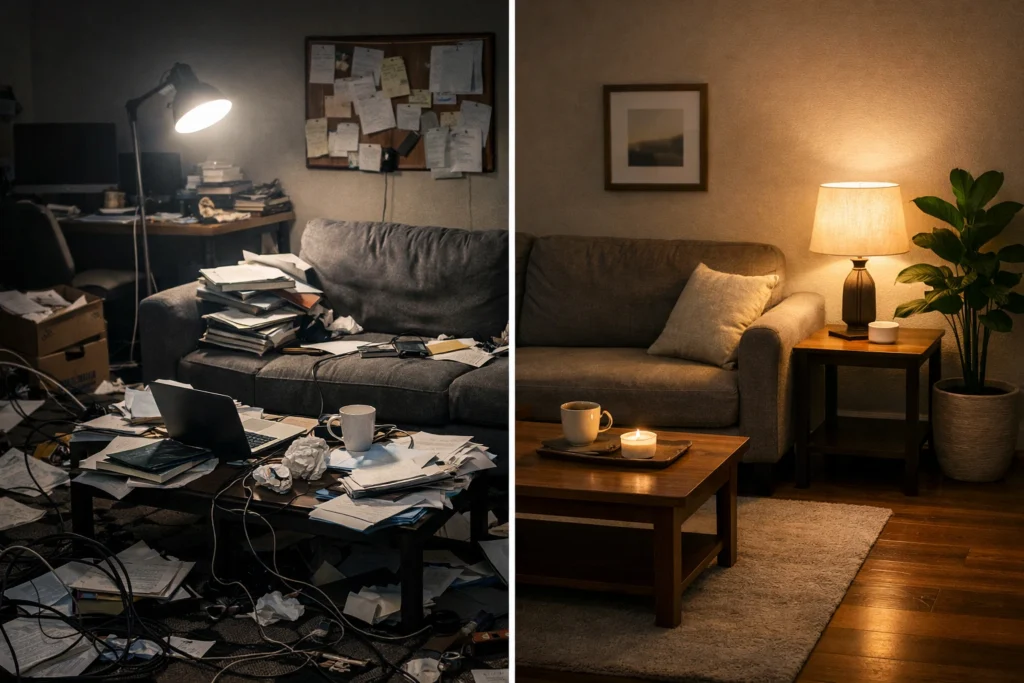
Your home is supposed to be your escape. But if your counters are covered, your bedroom feels like a storage unit, and your living room has quietly become a second office — your home is working against you. Visual clutter creates real mental fatigue. It’s not in your head. It’s neuroscience.
you may also like this:7 Fall Reset Routines That Calm Your Nervous System
When Your Home Feels Like a To-Do List
Researchers at Princeton University found that physical clutter competes for your attention and impairs your ability to focus and process information. Every pile of stuff you walk past is a tiny drain on your mental energy. Here’s what science actually says: a calm home isn’t a luxury. It’s a cognitive necessity. Source: Princeton Neuroscience Institute
The Core Principles of a Slow Living Home
Less But Better — The Quality Mindset
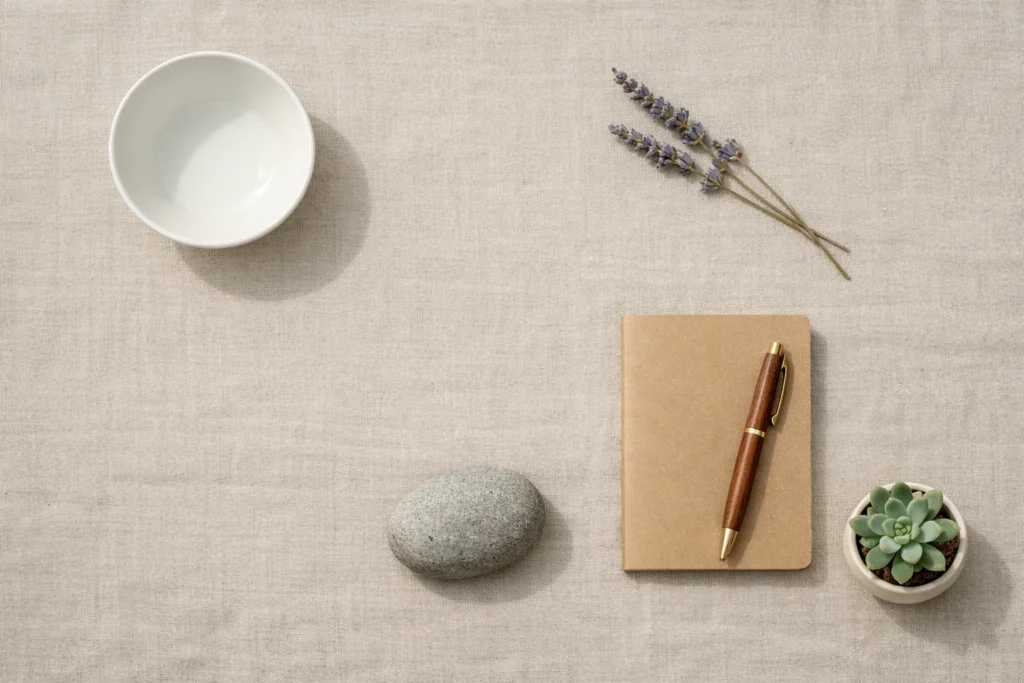
Three pillars hold up every slow living home: intentionality, quality, and rhythm. You don’t need to overhaul your life overnight. You just need to start asking better questions. Does this add calm or chaos? Does this serve me or stress me?
Quality over quantity isn’t just a saying — it’s a practical filter. One really good cast iron pan beats a drawer full of flimsy gadgets. One cozy reading chair beats three uncomfortable sofas nobody actually uses. Less clutter. More meaning.
Intentional Purchasing and Mindful Consumption
Mindful consumption means buying less but choosing better. It means pausing before a purchase and asking: does this align with the kind of home I want to live in? And that changes everything. Because when you stop filling your space with impulse buys, you start filling it with things that actually matter.
How To Start a Slow Living Home From Scratch

Start With One Room, Not the Whole House
The easiest way to start a slow living home is to begin with one single room. Not the whole house. Not a weekend-long overhaul. Just one room — ideally the space where you start or end your day.
Pick your bedroom or your kitchen. Create what slow living practitioners call a “Slow Zone” — one designated area that feels peaceful, intentional, and free from clutter. That one corner becomes your anchor. Everything else grows from there.
The 3-Step Slow Living Starter Plan
Getting started doesn’t need to be complicated. Here’s a tight three-step framework:
Step 1 — Audit: Walk through your chosen room and notice what drains you. Clutter, noise, screens, things that don’t belong.
Step 2 — Remove: Take out anything that adds chaos. Be honest. You don’t have to be ruthless — just intentional.
Step 3 — Replace With Intention: Only bring back what genuinely serves a calm living space. A plant. A good lamp. A book you actually want to read.
Simple Ways To Declutter Your Home for a Calmer Life

The 20-Minute Daily Declutter Method
Set a timer. Pick one surface. Go. The 20-Minute Daily Declutter Method works because it’s not overwhelming. It’s a ritual, not a project. You’re not trying to Marie Kondo your entire house in a weekend. You’re building a daily habit of simplify your home, one small win at a time.
Start with your kitchen counter. Then your nightstand. Then your bathroom sink. Small surfaces, big psychological payoff. Minimalist home living isn’t achieved in one big purge — it’s maintained through small, consistent choices every single day.
Digital Declutter — Don’t Forget Screens
Here’s something most slow living articles completely skip: your phone is part of your home environment too. The notifications, the apps, the endless scroll — they create mental clutter just as real as physical mess. Delete the apps you open out of habit, not joy. Turn off non-essential notifications. Your mindful home includes your digital life. Don’t let screens undo the calm you’ve built everywhere else.
How To Create a Mindful Morning Routine at Home

The First 30 Minutes Set Your Whole Day
The first 30 minutes of your morning shape the entire day. That’s not motivational fluff — that’s behavioral science. When you reach for your phone before you’ve even sat up, you’ve already handed your nervous system over to someone else’s agenda.
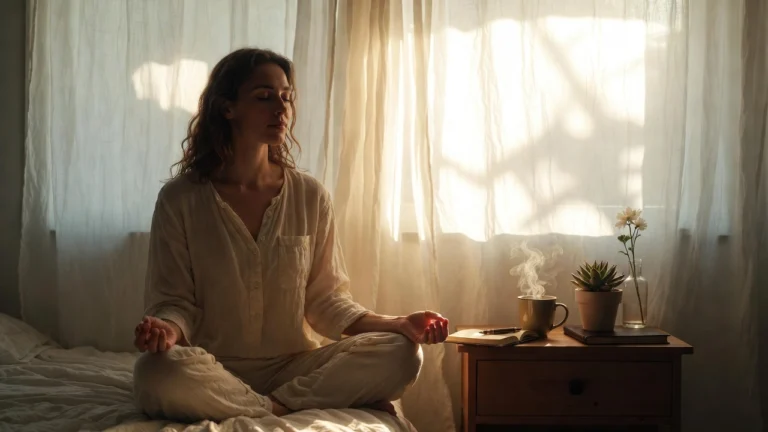
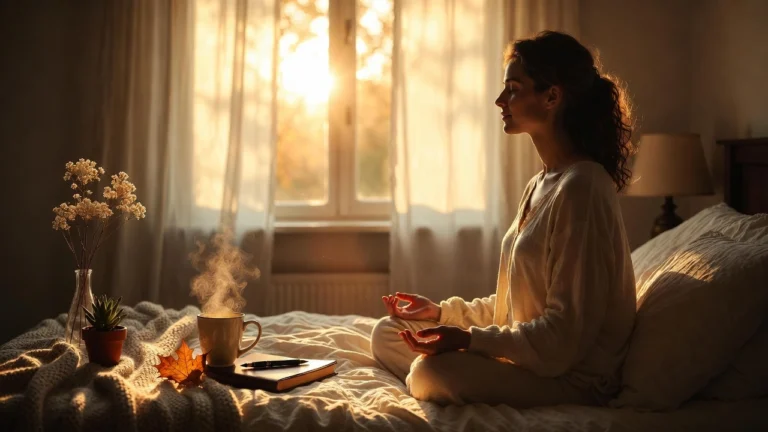
Try this instead: no phone for the first 20 minutes. That’s it. That one swap is the foundation of a mindful morning routine. Make coffee slowly. Sit somewhere quiet. Let your brain wake up on its own terms. A slow morning at home doesn’t require extra time. It requires different choices.
Slow Breakfast Rituals That Ground You
Pour-over coffee. Oatmeal on the stove. Eggs without a podcast blaring in the background. It doesn’t have to take long. It just has to be yours. Use sensory details to anchor yourself — the warmth of the mug, the smell of toast, the quiet before the day begins. These rituals cost nothing. But they give your nervous system something it desperately needs: a gentle, unhurried start.
Slow Living Home Decor Ideas That Feel Peaceful and Grounded

Natural Materials and Earthy Textures
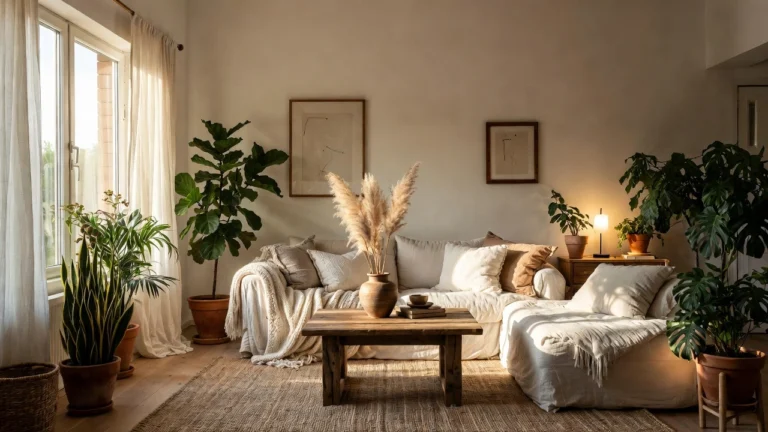
The slow living aesthetic isn’t about following a trend. It’s about timelessness. Linen curtains that soften harsh light. A wood cutting board worn smooth with use. Terracotta pots on a windowsill. These aren’t expensive — they’re intentional. You don’t need a decorator. You need a different lens when you walk through a store.
Reference point: interior designers like those featured on Remodelista consistently highlight natural, low-maintenance materials as the foundation of calming home spaces.
Soft Lighting and the Power of Ambiance
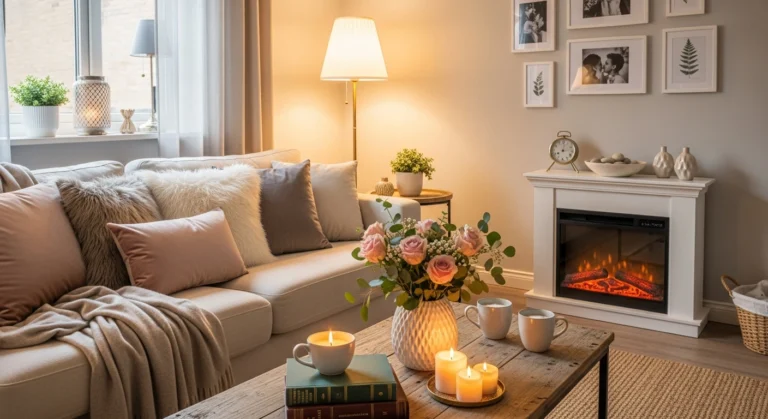
Light changes everything. Swap out one harsh overhead light for a warm lamp and notice the difference tonight. Peaceful home atmosphere is built as much through light as through furniture. Candles, salt lamps, soft Edison bulbs — none of these cost much. But they transform how a room feels. And feeling is everything in a slow living home.
How To Embrace Intentional Living in Every Room
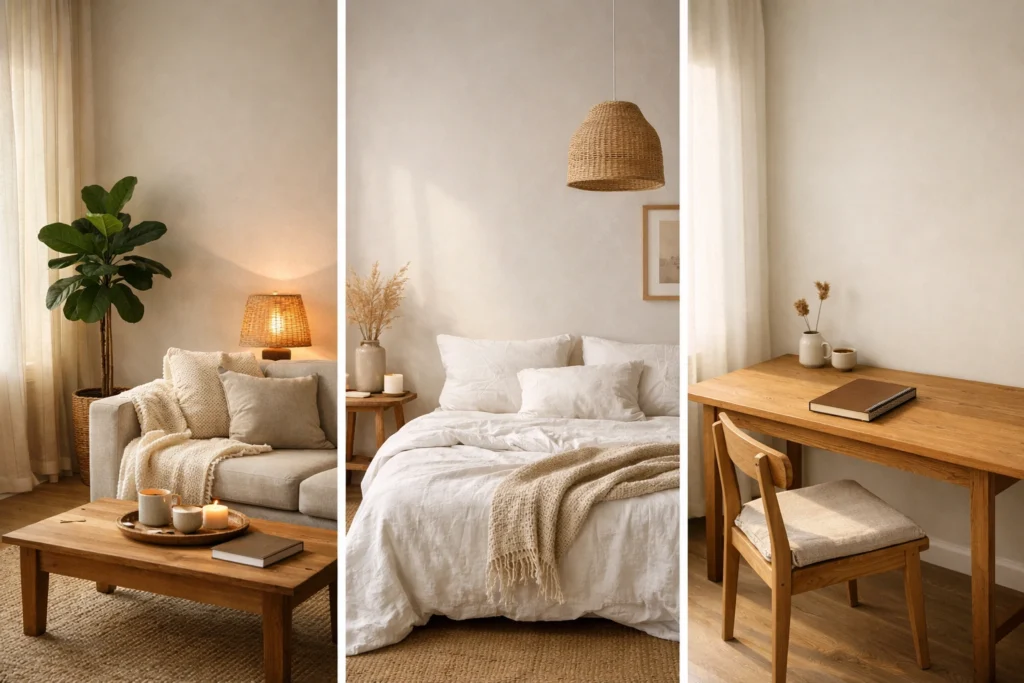
The Living Room, Bedroom, and Home Office
Intentional living looks different in every room. In your living room — remove the extra throw pillows nobody uses, silence the TV during meals, make space for actual conversation. In your bedroom — no phones after 9pm, blackout curtains, a book on the nightstand instead of a charger. In your home office — set a hard stop time, close the laptop, and physically leave the space.
The Bedroom: Rest Without Guilt
Sleeping well isn’t lazy. It’s the foundation of a slow living home. Your bedroom should do one thing above all else: help you rest. That means a mindful home environment in your most intimate space — dark, cool, quiet, and free from the ambient anxiety of screens and clutter. Rest is not a reward for productivity. It’s the fuel for everything else.
Slow Living in the Kitchen — Nourish Without the Rush

Cook From Scratch — Even Just Once a Week
Mindful cooking isn’t about being a chef. It’s about showing up. There’s something grounding about chopping vegetables, stirring a pot, smelling garlic hit a warm pan. You don’t need to cook from scratch every night. Start with once a week. That one slow meal becomes an anchor point for your whole week.
The kitchen is one of the most underrated spaces in a slow living home. It’s where nourishment happens — not just of the body, but of the soul. Treat it like the sacred space it actually is.
The Ritual of a Slow Sunday Meal
Plan three meals for the week, not twenty-one. Light a candle at the table. Eat without a screen. These aren’t grand gestures — they’re tiny rituals that reclaim the kitchen from chaos. Intentional meal prep means you’re cooking with purpose, not anxiety. Sunday slow meals are a deeply American tradition worth reviving — minus the rush.
How To Disconnect From Hustle Culture and Enjoy Your Home

Set Boundaries With Work at Home
Hustle culture is a particularly American pressure. The glorification of busyness. The guilt of rest. The anxiety of stillness. Your home can’t heal you if you’re always performing in it. Use your home as a sanctuary — not a second office, not a content creation studio, not a place to squeeze in one more email.
Set one boundary this week. A hard stop time. A phone-free dinner. A no-work Sunday. Small acts of resistance against the relentless pace. That’s the unhurried lifestyle in practice.
The Art of Doing Nothing
Here’s the truth: productive rest is still rest. Reading, walking, gardening, sitting on your porch — these aren’t lazy. They’re how humans were designed to recharge. That’s what it truly means to start a slow living home — creating a space and a rhythm that makes rest feel not just allowed, but necessary. Disconnect from hustle culture not as an act of defeat, but as an act of radical self-respect.
Common Mistakes To Avoid When Starting a Slow Living Home
Trying to Change Everything at Once
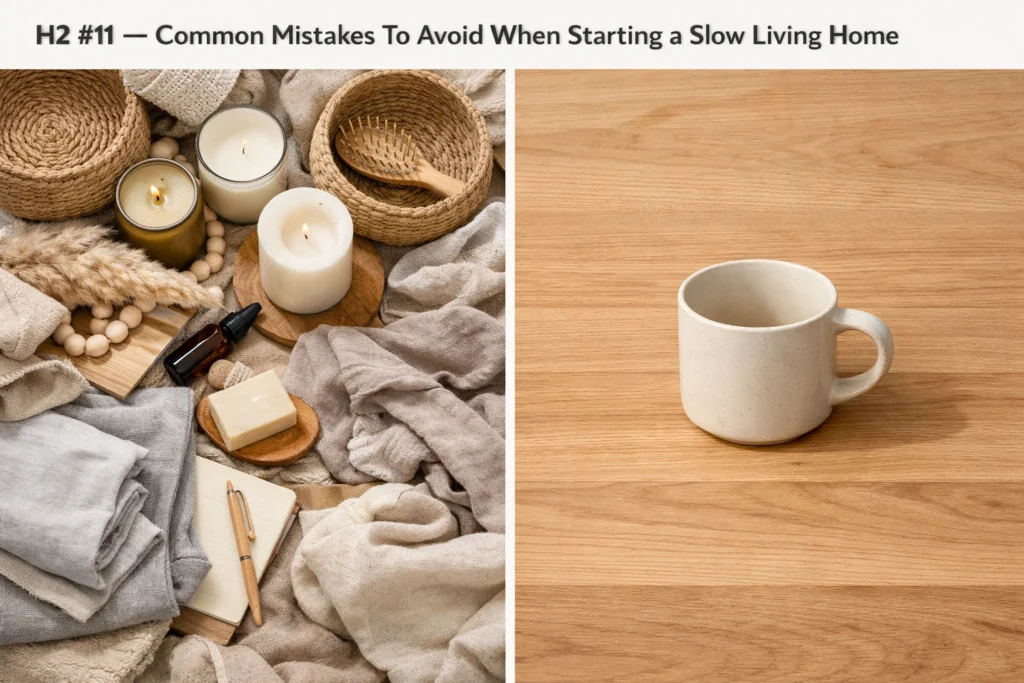
Here’s the irony: trying to overhaul your entire home in one weekend creates more overwhelm, not less. Slow living starts slowly. Pick one room. One habit. One surface. Give it two weeks. Then expand. This is about more intentional lifestyle choices — not less ambition. The pace of change should match the philosophy you’re trying to build.
Buying More “Slow Living” Products
Here’s the most common — and most ironic — mistake: shopping your way into simplicity. The algorithm will serve you beautiful linen sets, artisan candles, and aesthetic kitchen tools. Resist. You don’t need to buy anything to slow living home your space. In fact, buying less is the whole point. Slow living mistakes almost always involve consumption disguised as transformation.
Conclusion
You started reading this because something in your life feels like too much. That’s not a personal failing. It’s the natural result of living in a culture that never asks you to slow down.
Starting a slow living home doesn’t require perfection. It doesn’t require a renovation, a bigger budget, or a total lifestyle overhaul. It requires one intentional step. One surface cleared. One morning without your phone. One slow meal at a table with no screens.
Your home is already waiting to become your sanctuary. The only thing missing is your permission.
Frequently Asked Questions-About Slow Living at Home
Q: What does a slow living home look like?
A slow living home feels calm, uncluttered, and intentional. Think natural materials, soft lighting, fewer but more meaningful belongings, and spaces designed for rest and genuine connection — not productivity or performance.
Q: How do I start a slow living home on a budget?
You don’t need to spend a single dollar. Start by removing things rather than buying new ones. Declutter one surface, silence unnecessary notifications, and create one quiet corner in your home. That’s enough to begin.
Q: Is slow living possible with kids?
Absolutely — and children actually thrive with it. Fewer toys, slower routines, and more present parents create calmer, more secure kids. Start with one shared ritual: a slow breakfast, a no-screen evening, or a bedtime story with no rushing.
Q: How long does it take to feel the difference?
Most people notice a genuine shift in mood and energy within one to two weeks of making small, consistent changes. The key is consistency over perfection. You don’t need to get it right — you just need to keep going.