
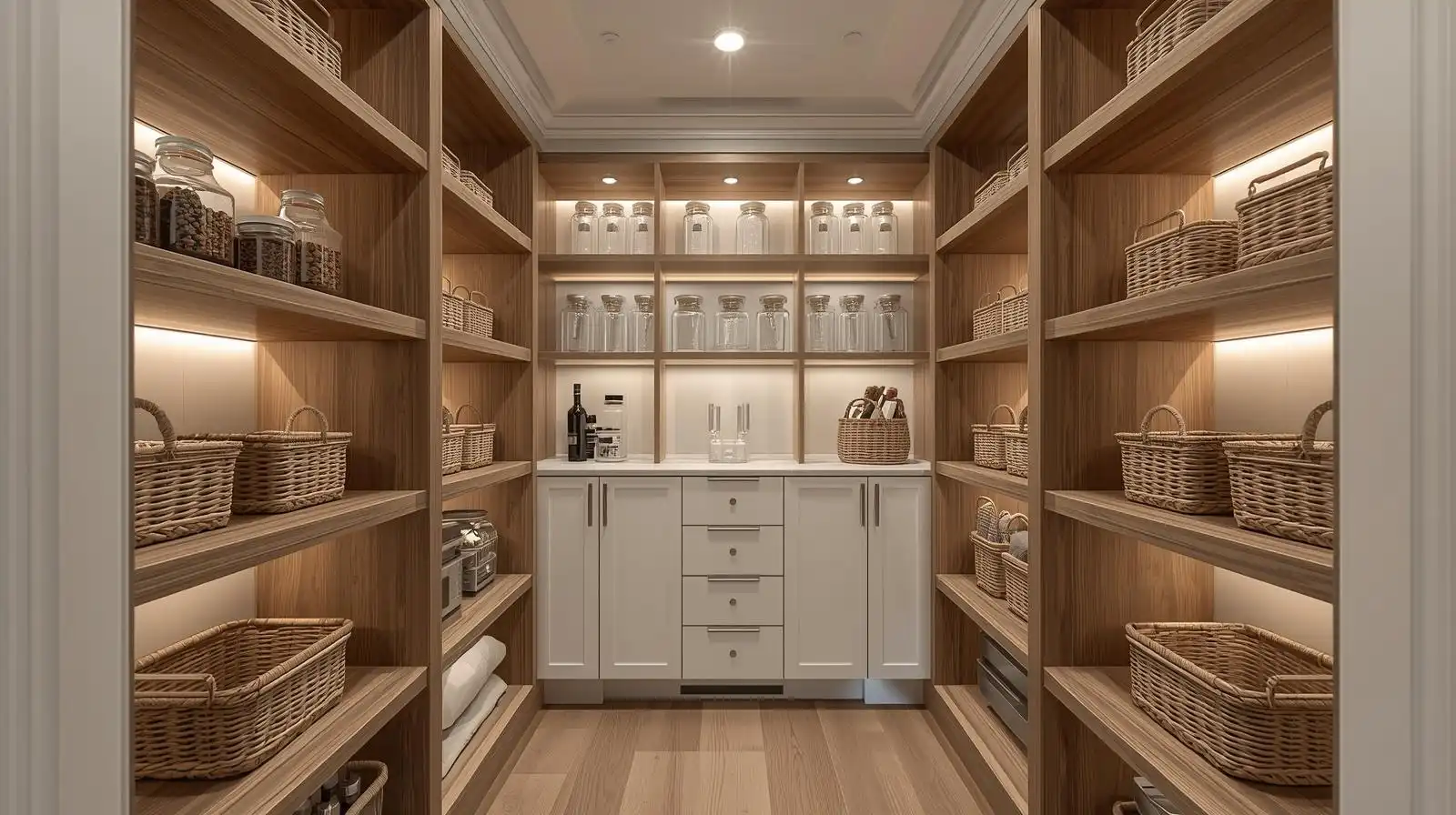
16 Small Walk In Pantry DIY: Smart Ideas to Build Your Dream Storage Space
Every kitchen tells a story. And for most American homeowners, that story includes a chaotic, overstuffed pantry that never has enough space. A small walk in pantry DIY project changes that story permanently. You don’t need a massive budget or a contractor. You need a smart plan, the right materials and the confidence that a genuinely beautiful, functional pantry is completely within reach — even in a tight space. This guide gives you all three.
Why a Small Walk In Pantry DIY Is the Best Home Upgrade You Can Make
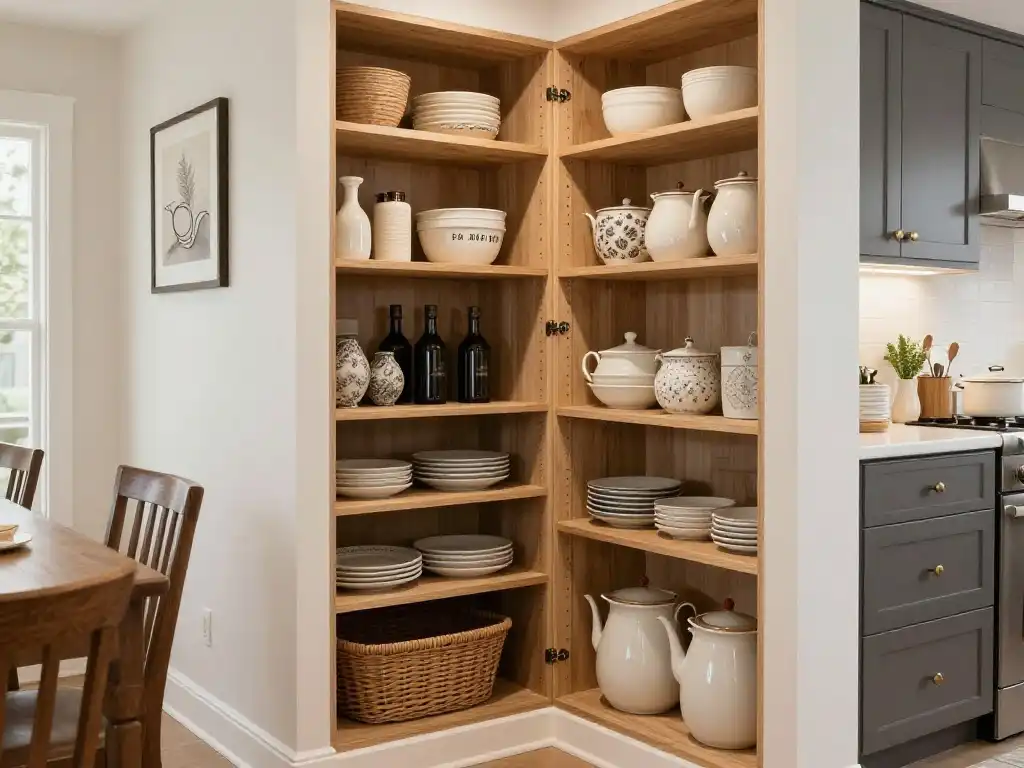
Kitchen storage is the number one complaint of American homeowners according to home improvement surveys. Cabinets fill up fast. Counter space disappears. Groceries pile up in corners. A small walk in pantry solves all of these problems in one dedicated space that keeps your kitchen clear, your groceries organized and your cooking life genuinely easier every single day.
The return on investment is remarkable. Real estate professionals consistently report that a well-designed walk-in pantry adds perceived value to a home far beyond what it costs to build. A DIY walk in pantry design completed for five hundred dollars can add two to three thousand dollars in perceived home value. More importantly it adds something money can’t measure — the daily satisfaction of a kitchen that actually works the way you need it to.
How to Plan Your Small Walk In Pantry DIY Layout Like a Professional
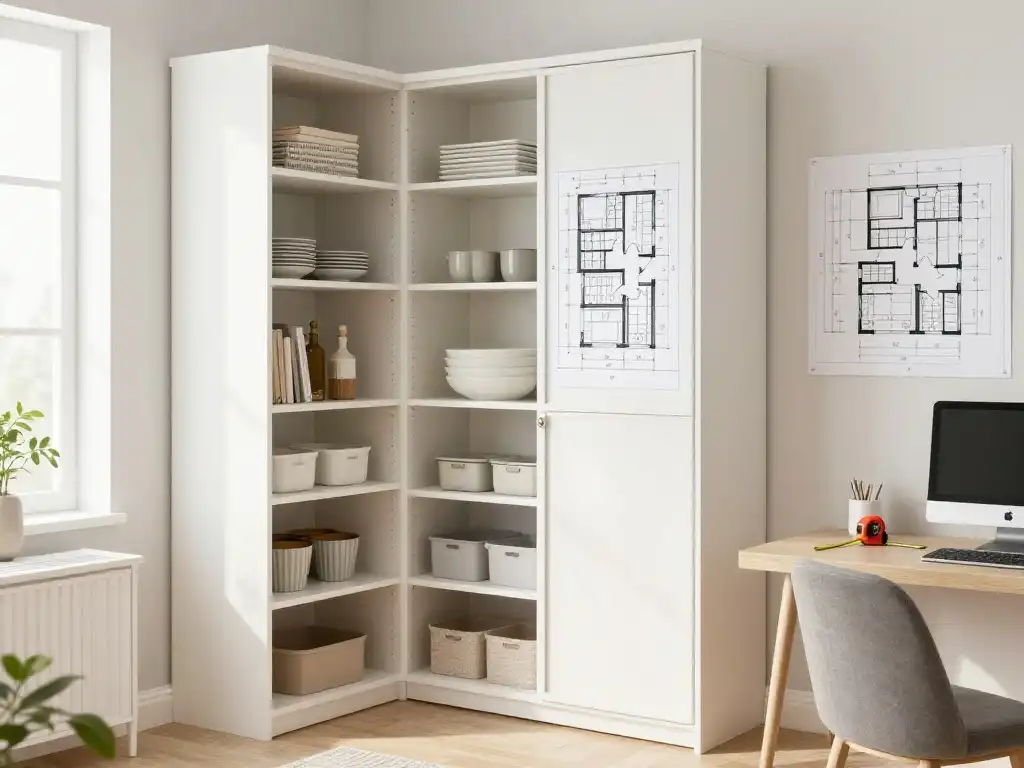
Planning is where most DIY pantry projects either succeed brilliantly or fail expensively. How to design a small walk in pantry layout starts with a full measurement audit of the available space. Measure the width, depth and ceiling height and sketch the space on graph paper before purchasing a single shelf bracket. Professional kitchen designers plan on paper first and build second — and so should you.
Walk in pantry layout ideas generally follow three configurations depending on the shape of the available space. A single-wall layout lines shelving along one wall only — ideal for very narrow spaces. An L-shaped layout uses two adjacent walls and works in square or slightly rectangular spaces. A U-shaped layout wraps shelving around three walls and maximizes storage in spaces large enough to allow a center aisle of at least 36 inches. Identify which configuration your space supports before any other decision is made.
Pantry Layout Comparison
| Layout Type | Space Required | Storage Capacity | Best For |
|---|---|---|---|
| Single Wall | 3–4 ft wide | Moderate | Narrow closets |
| L-Shaped | 5–6 ft square | Good | Converted closets |
| U-Shaped | 6+ ft with 36 in aisle | Maximum | Dedicated pantry rooms |
Minimum Size and Dimensions Your Small Walk In Pantry Actually Needs
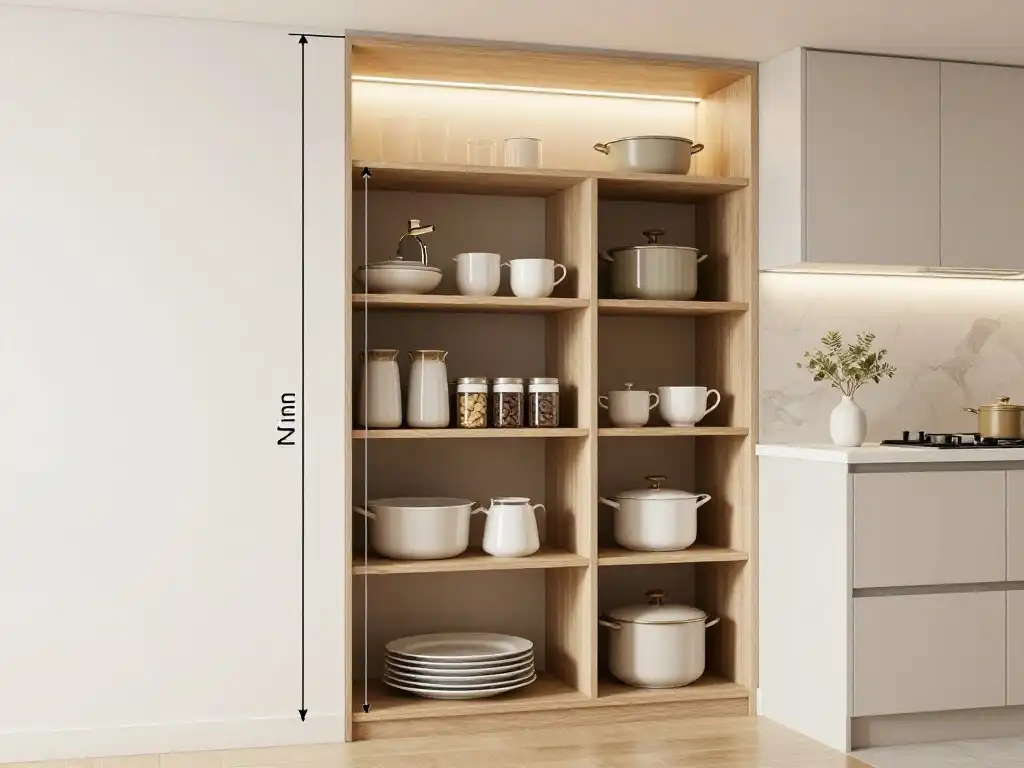
Size anxiety stops many homeowners from attempting a small walk in pantry DIY at all. The truth is that a genuinely functional walk-in pantry can be built in a space as small as four feet by four feet. That’s 16 square feet — smaller than most bathroom vanity areas. What width does a walk in pantry need to be depends entirely on the layout, but a minimum aisle width of 36 inches is the industry standard for comfortable access.
Shelf depth is equally important. Standard pantry shelves run 12 to 16 inches deep — deep enough to hold two rows of standard-sized cans without items disappearing behind each other. Upper shelves used for bulk storage or rarely accessed items can go as deep as 20 inches. Shelves positioned at eye level — roughly 48 to 72 inches from the floor — should stay at 12 inches deep so nothing gets hidden at the back. Walk in pantry ideas for small spaces consistently show that shallower, better-organized shelving outperforms deep shelving that simply swallows items whole.
How to Convert a Closet Into a Beautiful Walk In Pantry on Any Budget
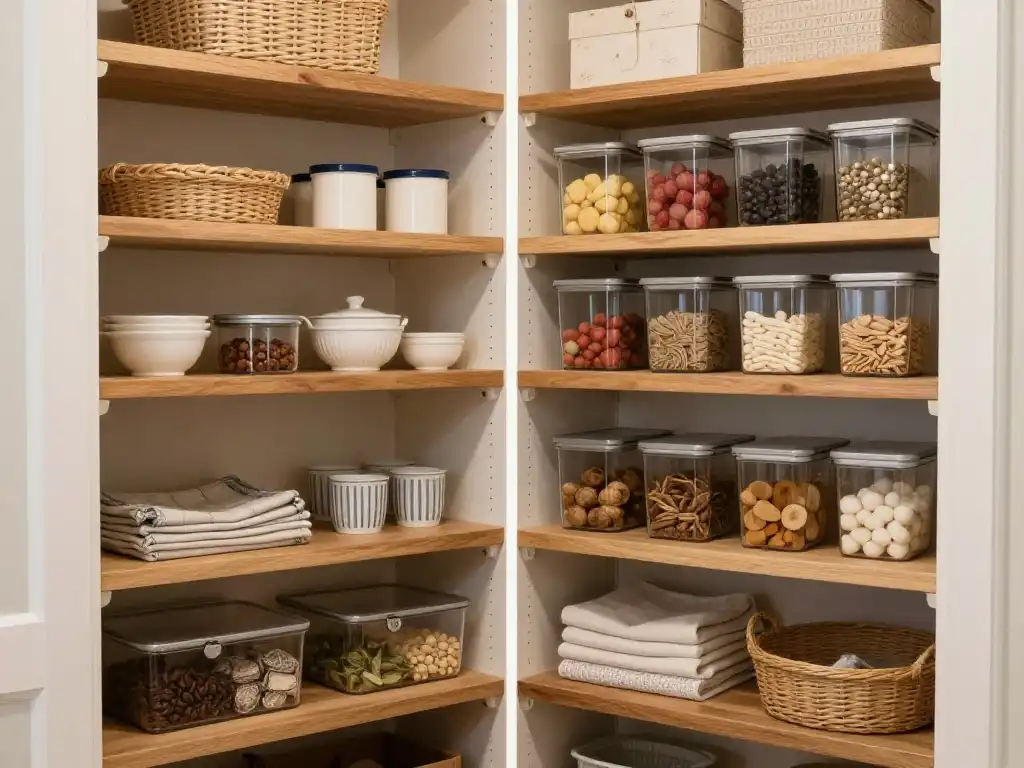
A DIY walk in pantry closet conversion is the most accessible entry point for most homeowners. Linen closets, coat closets, small bedroom closets and even large bathroom closets all convert beautifully into functional pantry spaces with the right approach. How to convert a closet into a walk in pantry starts with a complete emptying and assessment — measure every dimension, check for electrical outlets and note the lighting situation before planning any shelving.
you may also like this:14 Summer Dining Table Centerpiece Ideas: The Ultimate Guide to a Stunning Table
The conversion process follows a logical sequence. Remove existing shelving and closet rods completely. Patch any wall holes from the old hardware. Prime and paint the interior — this single step transforms the space from a dark closet into something that feels intentional and designed. Install new shelving system starting from the top and working down. Add lighting. Add the door treatment of your choice. A small pantry makeover DIY executed in this sequence typically takes one weekend and costs between two hundred and six hundred dollars depending on shelving choice and finishes.
Best DIY Shelving Ideas That Maximize Every Inch of a Small Walk In Pantry
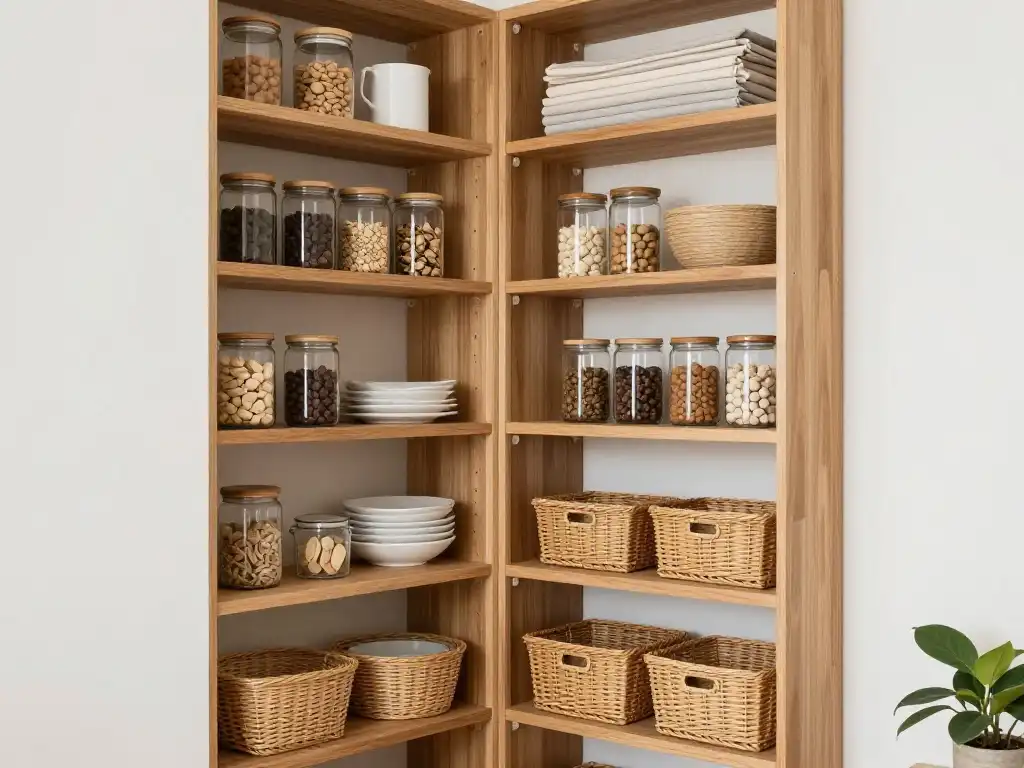
Shelving is the backbone of any DIY pantry storage solutions project. The right shelving system determines how much you can store, how easily you can access it and how the finished pantry looks overall. What shelving is best for a walk in pantry depends on your budget, aesthetic preference and the weight of items you plan to store.
Walk in pantry shelving ideas fall into four main categories. Wire shelving is the most affordable and ventilated option — it allows air circulation that prevents moisture buildup and costs as little as fifteen dollars per linear foot. Melamine board shelves offer a clean, furniture-like appearance and cost slightly more. Solid wood shelves look the most premium and handle the heaviest loads but require more precise installation. Adjustable bracket systems — whether wire or solid — offer the most flexibility for changing storage needs over time. Small walk in pantry with open shelves looks beautiful, stays accessible and is significantly cheaper than installing cabinet doors on every shelf position.
How to Build Open Wall Shelves for Your Walk In Pantry Step by Step
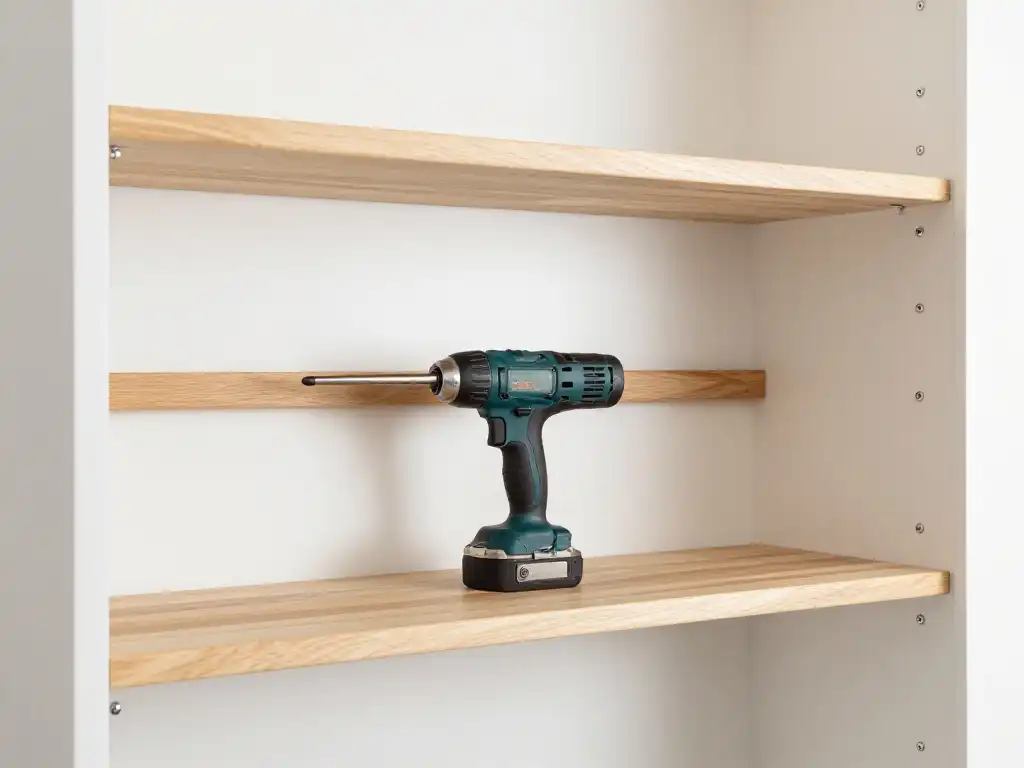
How to make open shelves for a walk in pantry is a genuinely achievable weekend project even for first-time DIYers. The process requires basic tools — a drill, a level, a stud finder and a saw if cutting shelves to custom dimensions. Measure and mark shelf positions on the wall using a level for absolute accuracy. A shelf that’s even slightly off-level will look visually wrong every time you look at it.
DIY pantry wall shelves installation follows this sequence: locate wall studs using a stud finder and mark them lightly with pencil. Mount shelf brackets directly into studs — never into drywall alone for heavy pantry shelves. Space brackets no more than 24 inches apart for melamine or wood shelves to prevent sagging under load. Cut shelves to precise width if needed. Set shelves onto brackets and check level once more before loading with any weight. Sand cut edges smooth and apply a thin coat of wood conditioner or sealer on raw wood shelves before filling them. DIY walk in pantry shelves built this way hold hundreds of pounds of pantry goods safely and look genuinely professional.
Best Small Walk In Pantry Lighting Ideas That Make the Space Feel Bigger
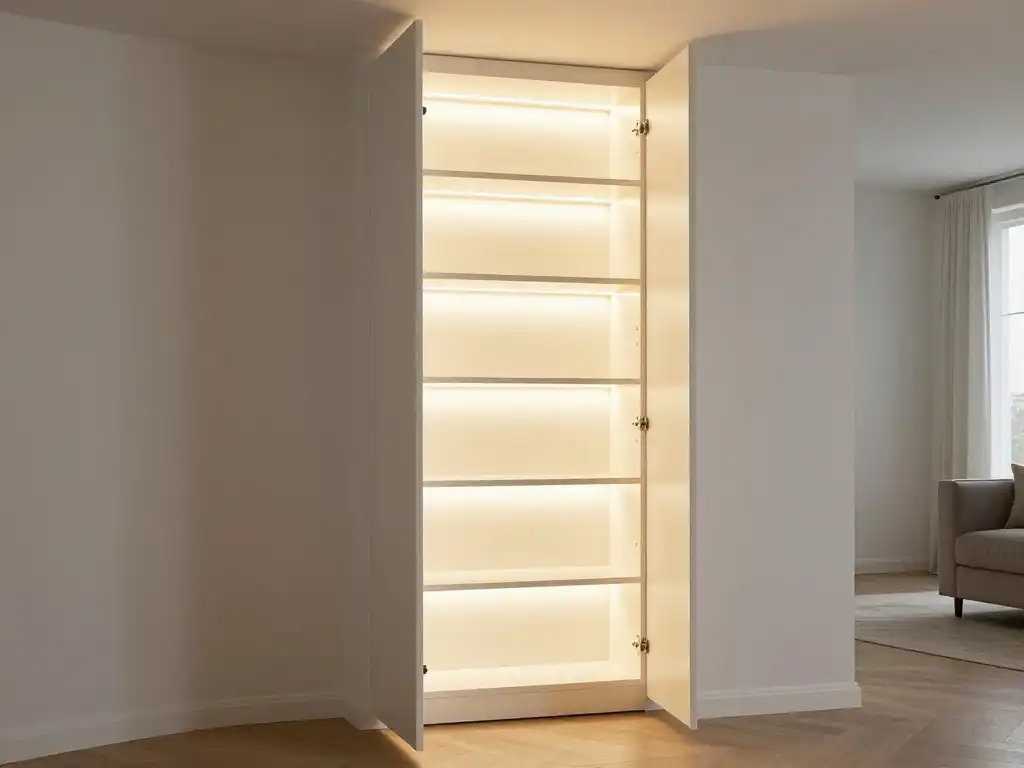
Lighting is the most underestimated element in a small walk in pantry lighting ideas conversation. A dark pantry feels cramped, makes items hard to find and genuinely discourages organization maintenance over time. Proper lighting transforms the same physical space into something that feels twice as large and infinitely more inviting. How to add lighting to a small walk in pantry doesn’t require an electrician in most cases.
Battery-operated LED strip lights installed under each shelf provide brilliant, shadow-free illumination of every shelf surface below. These require no wiring — they simply adhere under the shelf lip and turn on with a touch or a remote. For a more permanent solution, a single hardwired overhead fixture centered in the ceiling provides general illumination. Combining overhead light with under-shelf LED strips — layered lighting — is the approach used in professionally designed pantries and makes a small walk in pantry feel genuinely luxurious. How to make a small walk in pantry look bigger with lighting means choosing warm white LEDs in the 2700K to 3000K range which expand the perceived space far better than cool blue-white light.
How to Add a Countertop to Your Small Walk In Pantry for More Function
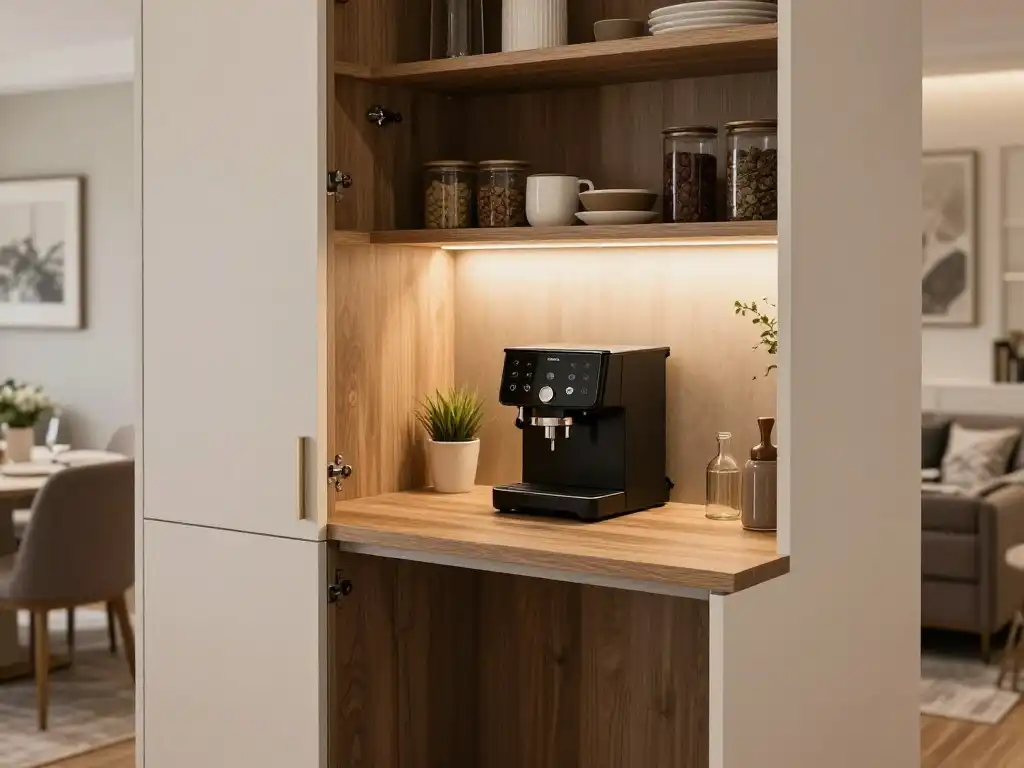
A walk in pantry with countertop elevates the entire pantry from a storage closet to a functional workspace. Having a surface inside the pantry means you can unpack groceries directly inside the space, prep small items, use a bread machine or mixer without taking up kitchen counter space and create a dedicated coffee or beverage station that removes significant clutter from the main kitchen.
How to add a countertop to a walk in pantry requires one base cabinet or a simple support frame built from two-by-fours at standard counter height — 36 inches from the floor. A butcher block countertop cut to size is the most popular DIY-friendly option — it’s warm, attractive and much easier to cut to custom dimensions than stone or laminate. IKEA base cabinets with a butcher block top represent the most cost-effective route to a walk in pantry with countertop installation that looks genuinely furniture-quality. Mount the countertop securely to the base, sand and oil the butcher block thoroughly and you have a beautiful functional workspace that also provides hidden storage in the cabinet below.
Best Flooring Ideas for a Small Walk In Pantry That Look Beautiful and Last
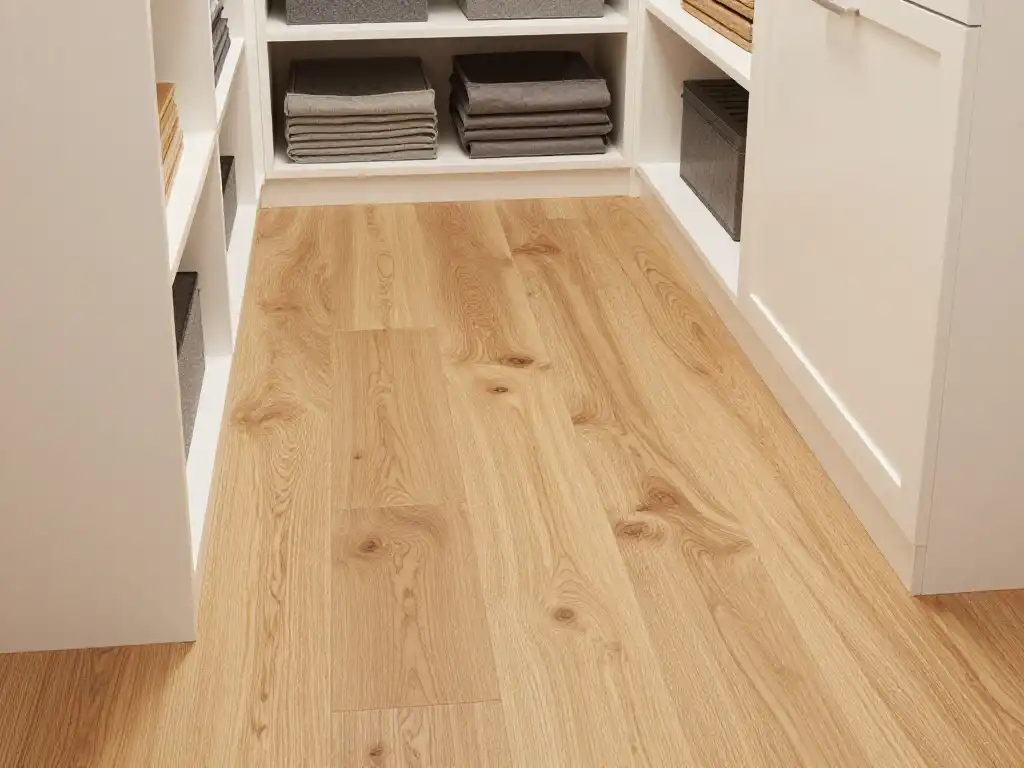
Small walk in pantry flooring ideas often get treated as an afterthought. Most people simply leave whatever flooring was already in the closet or room they’re converting. However the right flooring makes a significant visual impact — it completes the space, makes it feel finished and affects how easy the pantry is to clean over years of heavy use.
What is the best flooring for a walk in pantry depends on the subfloor situation and budget. Luxury vinyl plank flooring is the most practical all-around choice — it’s waterproof, durable, easy to clean and available in beautiful wood-look patterns that give the pantry a warm, intentional feel. Peel-and-stick tile squares are the most budget-friendly option and require no adhesive, special tools or subfloor preparation beyond cleaning. For a farmhouse or country aesthetic, black and white checkerboard vinyl tile creates a classic look that photographs beautifully and never goes out of style. Whatever flooring you choose, ensure it’s rated for moisture-prone areas since pantries experience fluctuating humidity from stored foods.
How to Paint and Decorate a Small Walk In Pantry That Feels Like a Room
Paint is the cheapest and most impactful transformation available in any small walk in pantry decor project. A freshly painted pantry interior feels clean, intentional and designed rather than improvised. How to paint a walk in pantry starts with thorough cleaning of all surfaces, light sanding of any rough patches and a quality primer coat before the finish color goes on.
Small walk in pantry decor trends consistently favor white and off-white interiors — they maximize reflected light, make the space feel larger and provide the cleanest visual backdrop for colorful food packaging and storage containers. However a walk in pantry with chalkboard wall on one interior wall adds a functional and visually interesting element — use it for grocery lists, meal planning notes or family communication. Sage green, soft navy and warm cream are popular alternatives to white that add personality without making the space feel smaller. DIY pantry room ideas that incorporate a distinctive paint color on just one wall — a painted accent wall — create a focal point that makes even a tiny pantry feel thoughtfully designed.
Best Door Ideas for a Small Walk In Pantry That Save Space and Look Great
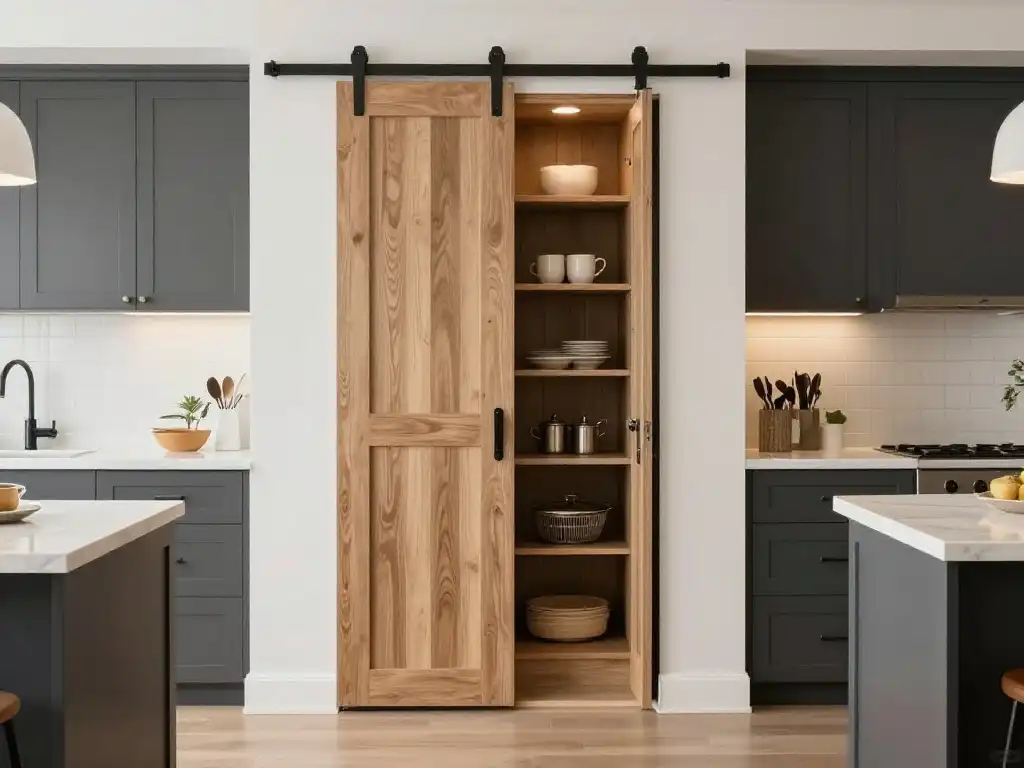
The door you choose affects both the function and the perceived size of a small walk in pantry. Standard hinged doors require clearance space to swing open — in a tight kitchen, that swing often conflicts with island edges, refrigerator doors or foot traffic. Walk in pantry door ideas that eliminate the swing problem transform how the pantry integrates into the kitchen layout.
What door works best for a small walk in pantry in a tight space is almost always a barn door or a pocket door. Barn doors slide along a track mounted above the opening and require zero swing clearance — the door simply slides to the side. They also add significant visual character and are available in styles from rustic wood to modern glass-panel designs. Pocket doors slide into the wall itself, disappearing completely when open and making the pantry feel seamless with the kitchen. DIY pantry cabinet ideas for the door opening itself include a frosted glass panel door that allows light to pass through, or a solid wood door with surface-mounted architectural molding that makes the pantry entrance look like a built-in cabinetry feature rather than a converted closet.
How to Organize a Small Walk In Pantry by Zone for Maximum Efficiency
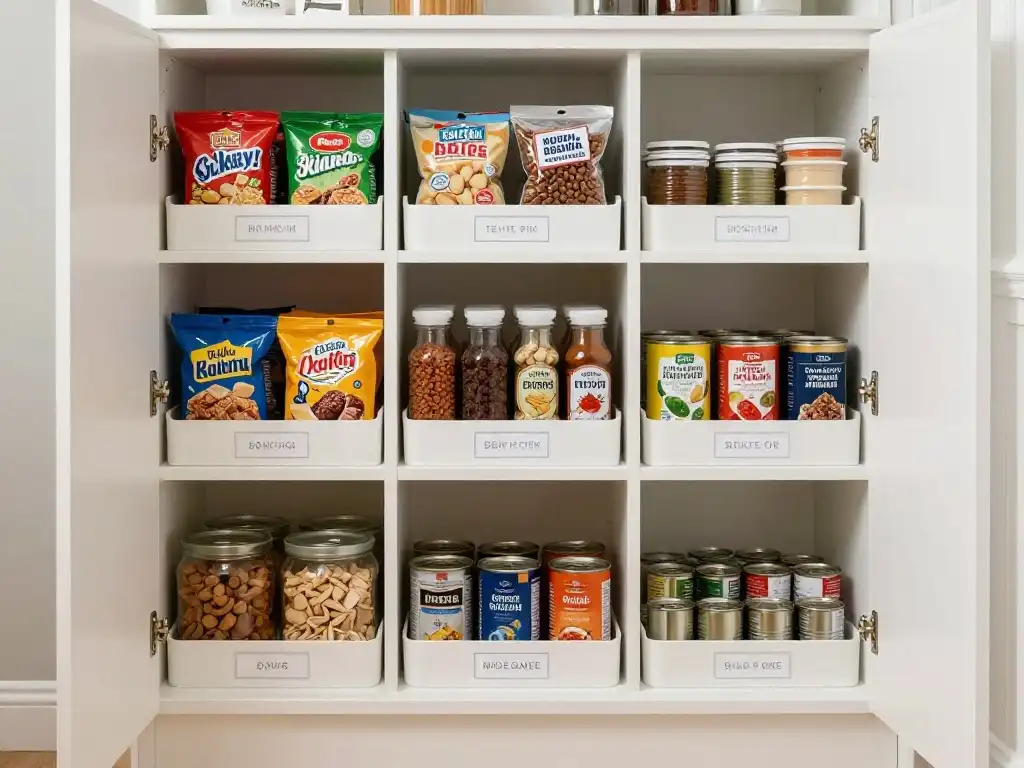
How to organize a walk in pantry by category is the professional organizer’s foundational principle and it’s what separates a pantry that stays organized from one that descends into chaos within three weeks. Walk in pantry organization ideas built around zones assign every category of food and household item a specific, permanent location. Once everything has a dedicated zone, putting items away and finding them again becomes effortless and intuitive.
Small walk in pantry organization zones typically follow this logic: eye-level zones at 48 to 60 inches from the floor hold the most frequently accessed items — everyday snacks, oils and cooking staples. Below eye level down to knee height holds heavier items — canned goods, large containers, small appliances. Upper shelves above eye level hold bulk quantities, backstock and seasonal items accessed less frequently. Counter height if available becomes the beverage and prep zone. Lower floor space accommodates large bulk bags, dog food containers or water bottles. How to maximize storage in a small walk in pantry is essentially the art of matching item weight and access frequency to shelf position within these zones.
Best Baskets Bins and Containers for Your Small Walk In Pantry Organization
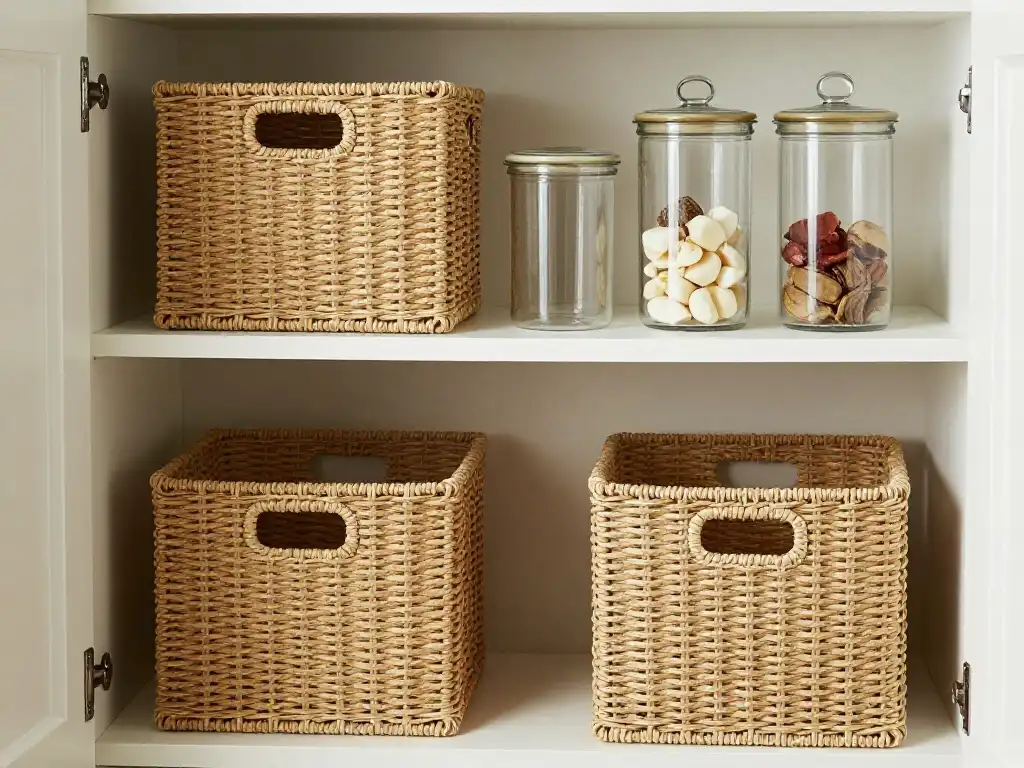
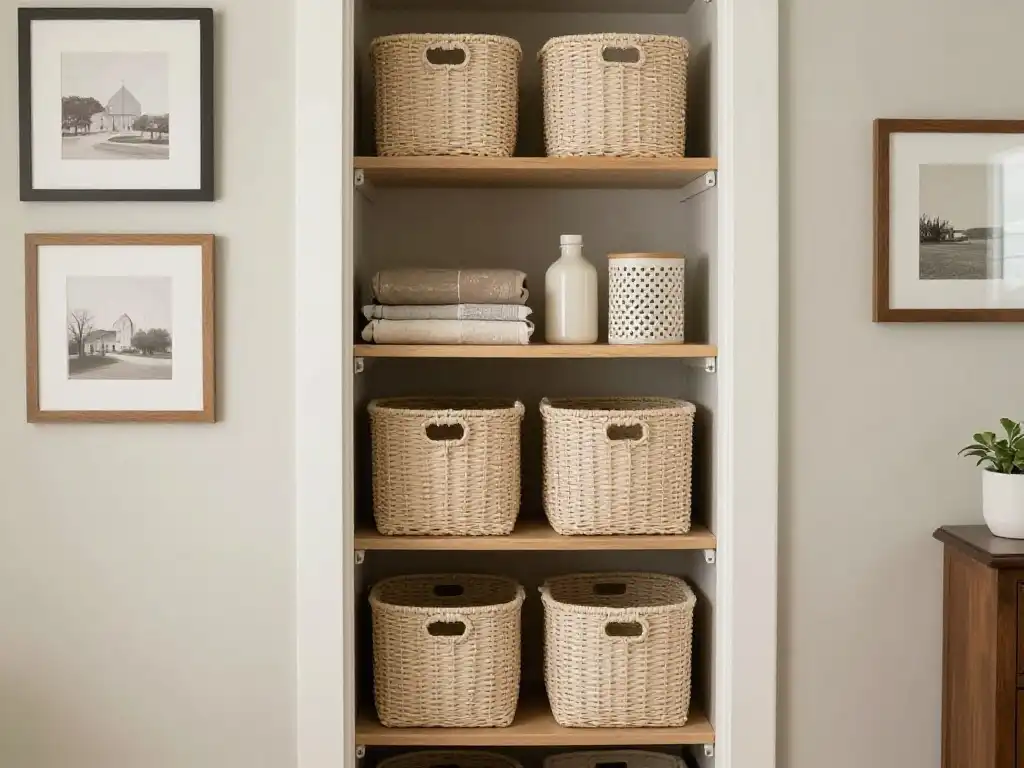
Walk in pantry with baskets is one of the most aesthetically pleasing and practically effective organization strategies available. Baskets and bins group loose items — packets, bags, small boxes — into contained, visually unified categories that look intentional on open shelving rather than chaotic. What baskets work best in a walk in pantry depends on shelf depth and the types of items being stored.
What containers are best for walk in pantry organization follows a few important principles. Clear containers for dry goods like pasta, rice, flour, sugar and cereals allow you to see exactly what’s inside and how much remains without moving anything. Labeled wicker or rattan baskets work beautifully for snack collections, on-the-go items, tea and coffee varieties or baking supplies. Deep rectangular bins suit bulky items like chip bags, bread and baked goods. Turntables — lazy susans — work brilliantly on deeper shelves where items at the back would otherwise disappear. Uniform container sizing — using the same brand and size across the pantry — creates the cohesive, magazine-worthy look that makes a small walk in pantry look like a professionally designed space.
How to Label Your Walk In Pantry Like a Professional Organizer
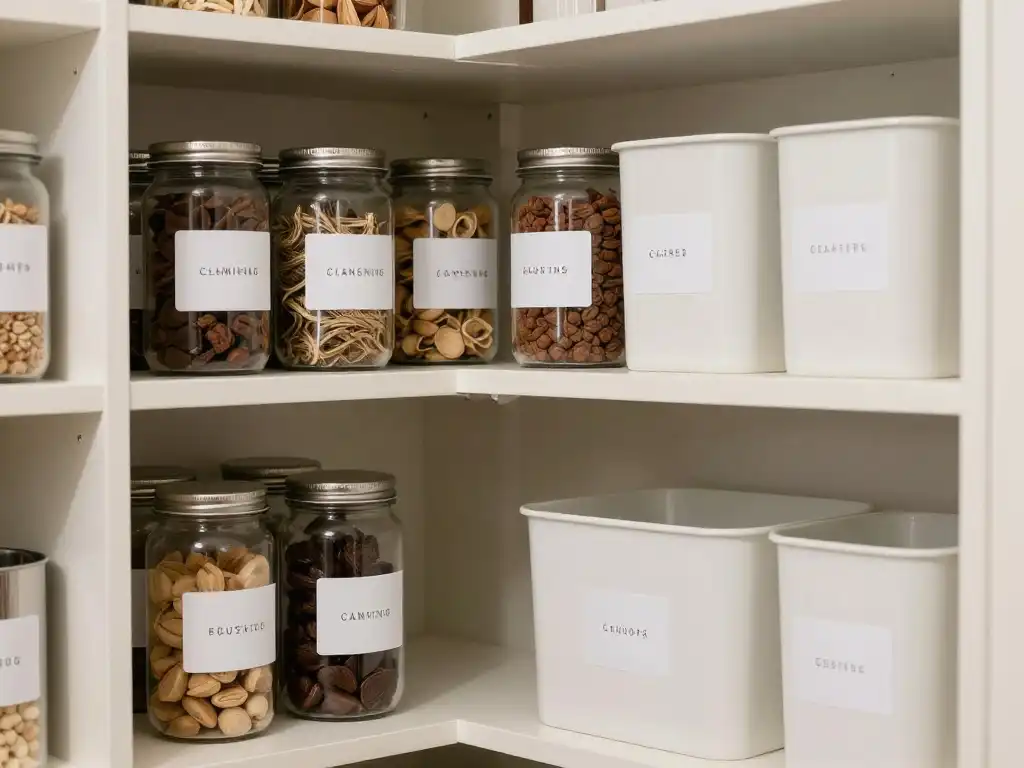
Walk in pantry with labels is the finishing detail that transforms good organization into great organization. Labels eliminate the guesswork of finding items and — more importantly — of putting them back correctly. When every container and every basket has a clear, permanent label, other household members can maintain the system without constant guidance. How to label a walk in pantry correctly means labeling every container, every basket and every shelf zone.
Label styles range from practical to beautiful. A simple label maker produces clean, legible black-on-white labels that work for any style of pantry and cost almost nothing. Chalkboard labels — small black sticker tags written with a chalk marker — suit farmhouse and vintage aesthetics beautifully and can be wiped clean and rewritten when contents change. Printed labels in matching fonts and styles, adhered uniformly across all containers, create the polished cohesive look seen in professional organizer before-and-after photos. Whatever style you choose, consistency is the key — a mix of label styles looks as chaotic as no labels at all.
Budget Breakdown — How to Build a Small Walk In Pantry DIY for Less
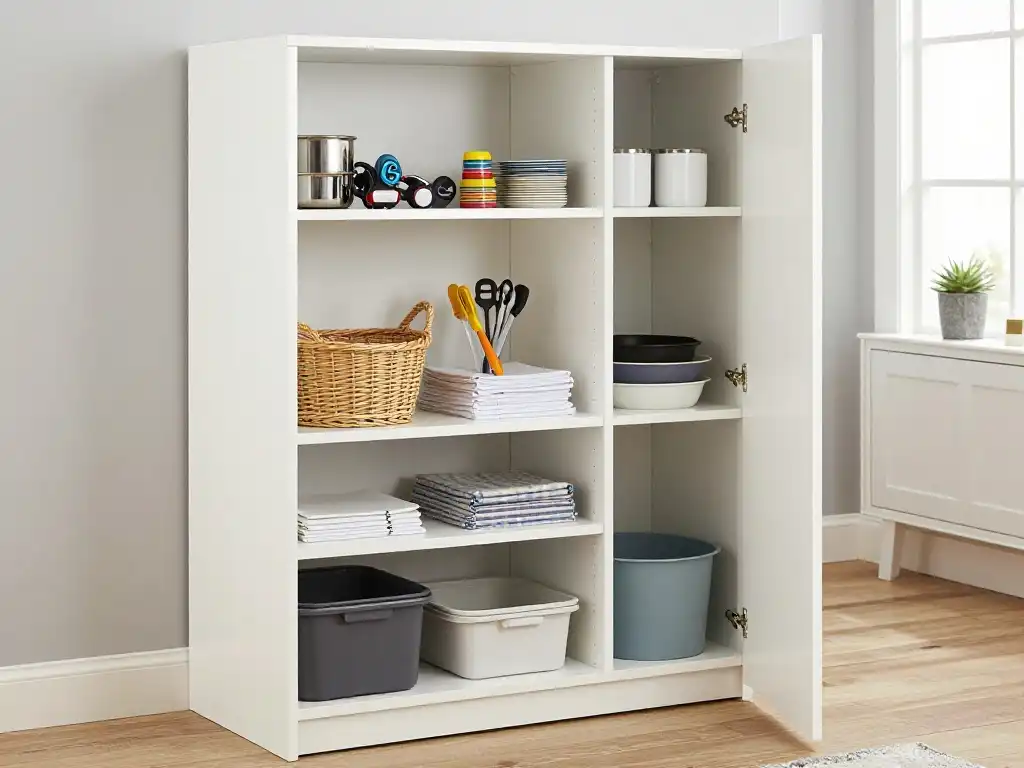
Small walk in pantry on a budget is entirely achievable when material choices are made strategically. The biggest cost variable in any DIY walk in pantry design is shelving — and this is where the gap between a two-hundred-dollar pantry and a two-thousand-dollar pantry lives. How to build a walk in pantry on a budget means choosing one area to invest in quality and cutting costs intelligently everywhere else.
How to build a small walk in pantry for the lowest possible cost prioritizes: wire shelving over wood, LED strip lights over hardwired fixtures, peel-and-stick tile over engineered flooring and a barn door kit over a custom millwork door. This combination produces a fully functional, attractive pantry for around two to three hundred dollars in materials. Mid-range builds using melamine shelving, a proper light fixture and luxury vinyl flooring typically land between five hundred and eight hundred dollars. Premium builds with solid wood shelves, quartz countertop and custom millwork details run twelve hundred to twenty-five hundred dollars — still a fraction of what a contractor would charge.
Complete Budget Guide
| Build Level | Estimated Cost | Key Materials | Ideal For |
|---|---|---|---|
| Ultra Budget | $150–$300 | Wire shelving, LED strips, peel tile | First-time DIYers |
| Mid Range | $400–$800 | Melamine shelves, vinyl floor, barn door | Most homeowners |
| Premium DIY | $900–$1500 | Wood shelves, countertop, custom door | Confident builders |
| Contractor Built | $2000–$5000+ | Full custom build | Maximum investment |
Final Thoughts — Your Small Walk In Pantry DIY Starts With One Smart Decision
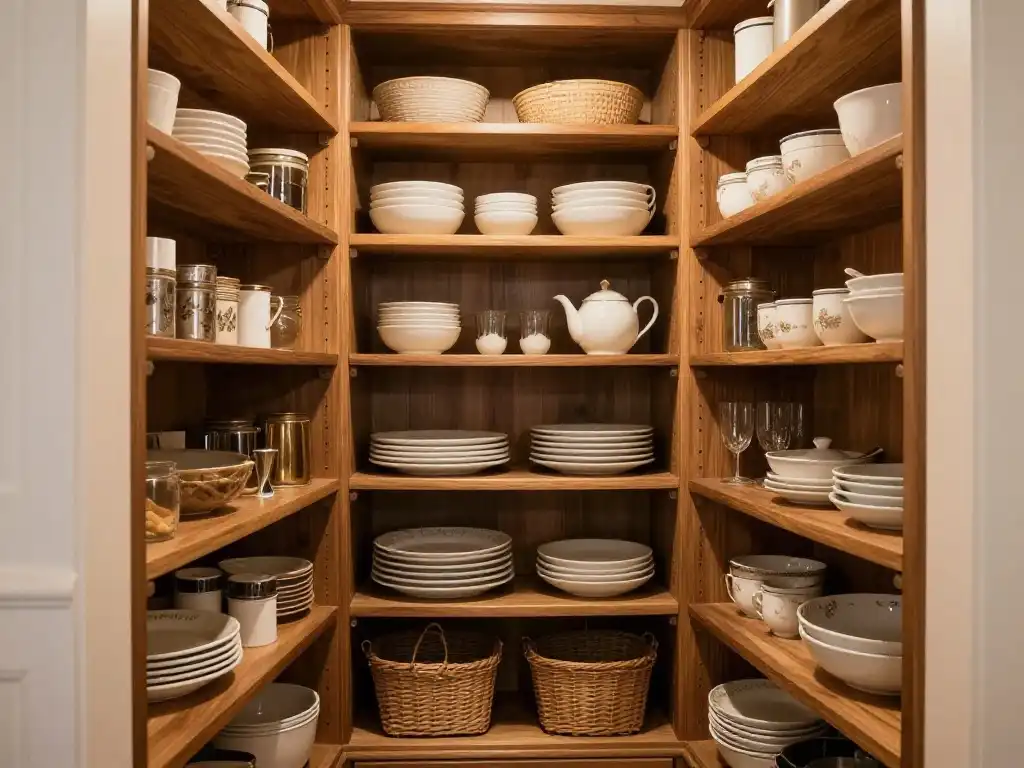
Every remarkable pantry started with one decision — the decision to stop accepting disorganized kitchen storage as an unavoidable fact of home life. A small walk in pantry DIY project is more accessible, more affordable and more achievable than most homeowners initially believe. The tools are basic. The skills are learnable. The materials are available at any home improvement store. What it requires above all is a plan and the willingness to start.
What to put in a small walk in pantry is ultimately a personal question — your pantry should reflect how your household actually shops, cooks and eats. But the structural principles that make a DIY walk in pantry design successful are universal: plan before you build, choose the right shelving for your weight requirements, light the space properly, zone the organization intentionally and finish the details with labels and containers that make the system genuinely maintainable long-term. Do those things and your small walk-in pantry will be the best kitchen upgrade you’ve ever made — used every day and appreciated every time you open the door.


2 Comments