
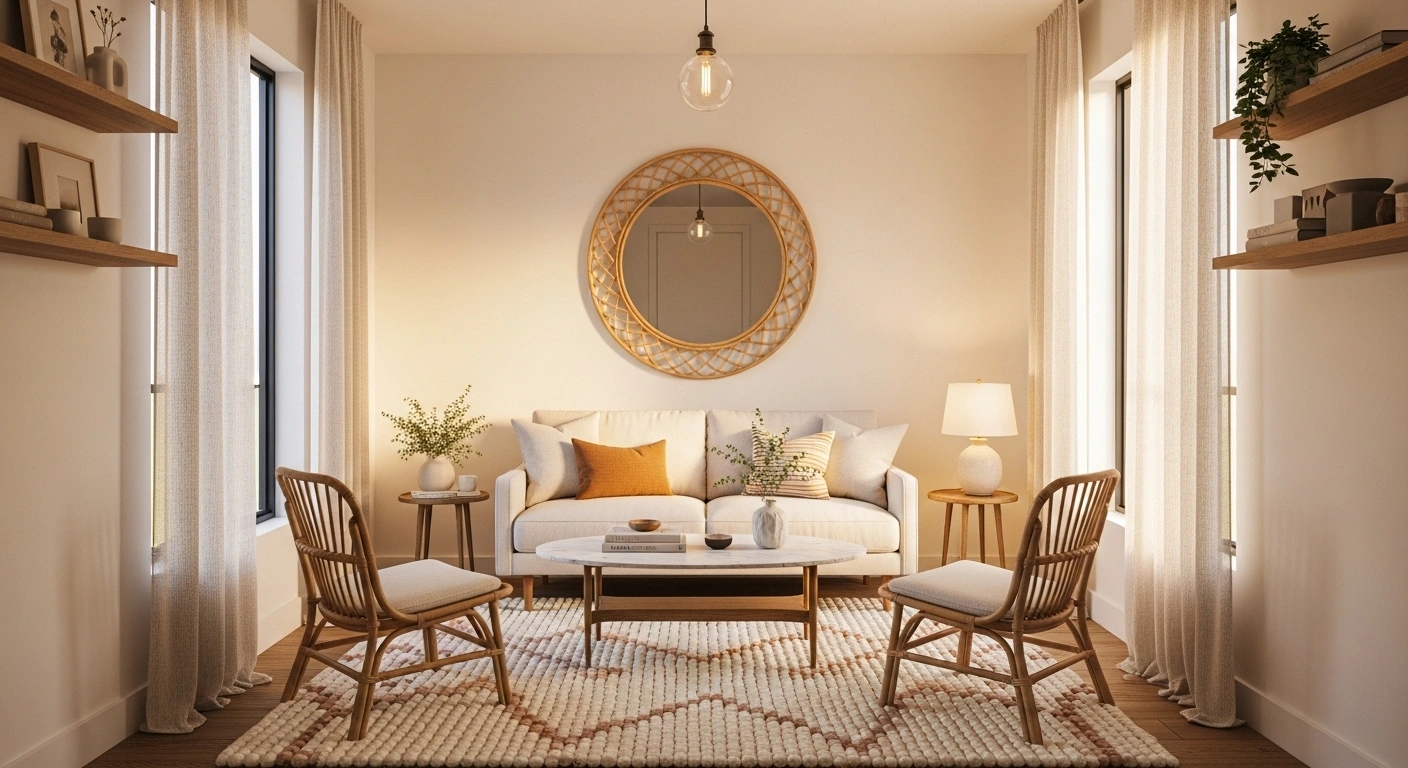
14 Tiny Living Room Designs: Fresh Ideas for Small Cozy and Stylish Spaces
Small doesn’t mean sacrificing style. It never did. The most beautifully designed apartments in New York, San Francisco, and Chicago prove daily that a living room measuring 150 square feet can feel more intentional, more comfortable, and more genuinely inviting than a sprawling suburban room twice its size. Tiny living room designs require a different kind of thinking — sharper, more creative, more deliberate — and the reward for applying that thinking correctly is a space that feels curated rather than cramped, cozy rather than compromised. These 14 ideas give you every tool you need to transform your small living room into something genuinely extraordinary.
Why Tiny Living Room Design Is the Most Creative Design Challenge
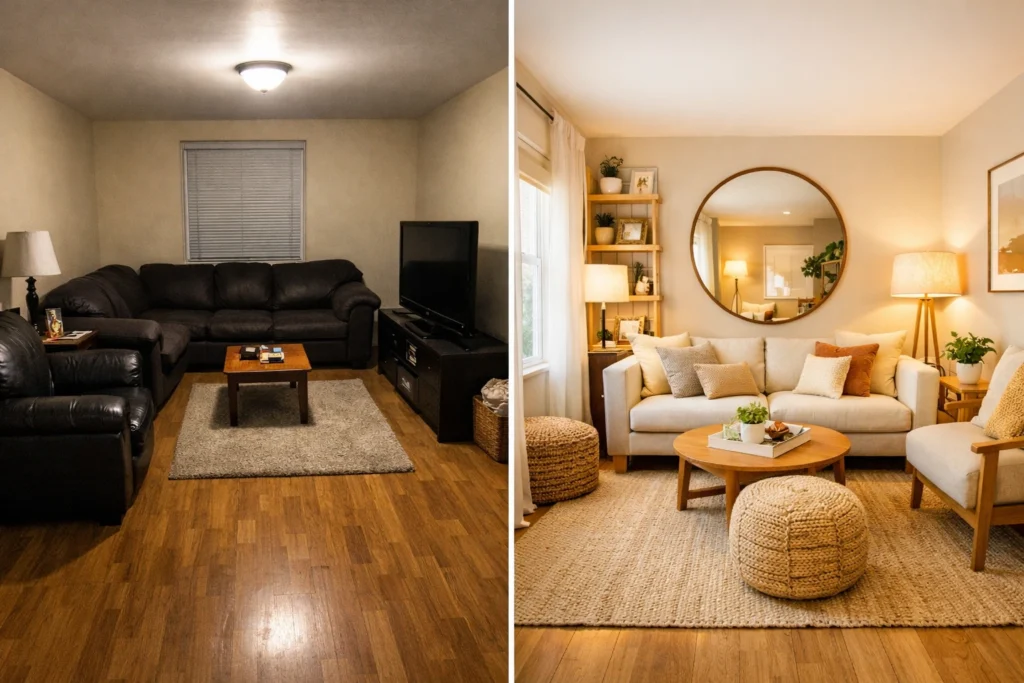
Constraints produce creativity. Every architect and designer knows this truth — the projects with the most restrictions produce the most innovative solutions because limitation forces ingenuity that unlimited space and budget never demands. Small living room design ideas operate within constraints that challenge designers to think more carefully about every single choice — the sofa’s depth, the coffee table’s height, the color’s light reflectance value, the curtain’s mounting position — because in a small space every decision has amplified consequences in both directions. Get it right and the room punches significantly above its square footage. Get it wrong and the space becomes genuinely uncomfortable despite your best intentions.
Tiny living room decor ideas that consistently produce the most impressive results share one common characteristic — they treat the small room as a design asset rather than a design problem. The Japanese aesthetic of wabi-sabi finds beauty in imperfection and limitation. The Scandinavian design tradition produces the world’s most functional and beautiful small-space interiors by accepting compact living as the norm rather than the exception. Best tiny living room design ideas for small spaces adopt this same philosophical reframe — stopping the mental negotiation with the room’s size and starting the intelligent conversation about how every square foot can contribute maximum beauty, function, and comfort simultaneously.
The Golden Rules Every Tiny Living Room Designer Must Know First
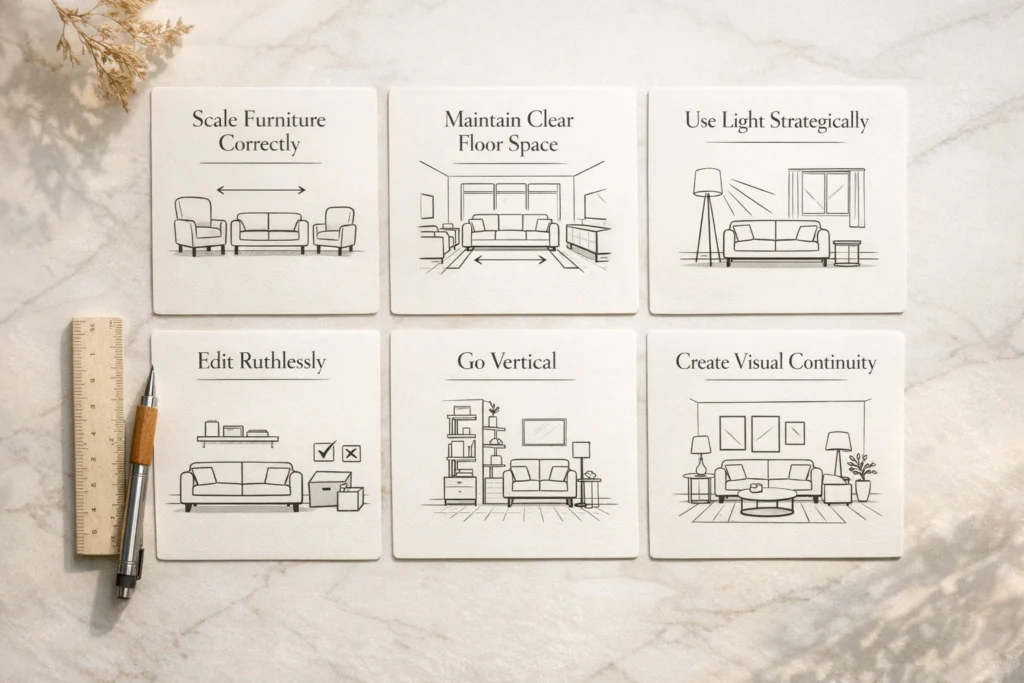
Six fundamental rules separate successful tiny living room designs from frustrating ones — and understanding them before making any purchasing or design decisions prevents the expensive mistakes that most small-space decorators make by working instinctively rather than strategically. Rule one: scale every piece of furniture to the room’s actual dimensions rather than the dimensions you wish it had. Rule two: maintain clear floor space — visible floor area makes rooms feel larger regardless of their actual size. Rule three: use light to your maximum advantage — natural and artificial light are the most powerful space-expanding tools available. Rule four: edit ruthlessly — every object that doesn’t serve a clear functional or aesthetic purpose actively makes the room feel smaller. Rule five: go vertical — walls above eye level represent untapped spatial resource in most small living rooms. Rule six: create visual continuity — consistent color, material, and style across all elements creates cohesion that reads as generous and spacious.
How to design a tiny living room effectively requires understanding the concept of visual weight — the perceived heaviness that different furniture pieces, colors, and materials create in a room’s composition. High visual weight elements — dark colors, large bulky furniture, busy patterns, and heavy textures — compress small room space visually while low visual weight elements — light colors, furniture with visible legs, simple patterns, and reflective surfaces — expand it. Small living room layout ideas that apply this visual weight principle consistently choose furniture pieces with slender profiles and visible legs over the floor-hugging, skirted pieces that block the visual floor plane and create the compressed, heavy quality that makes small rooms feel genuinely smaller than their actual dimensions.
Best Colors That Make a Tiny Living Room Feel Open and Airy
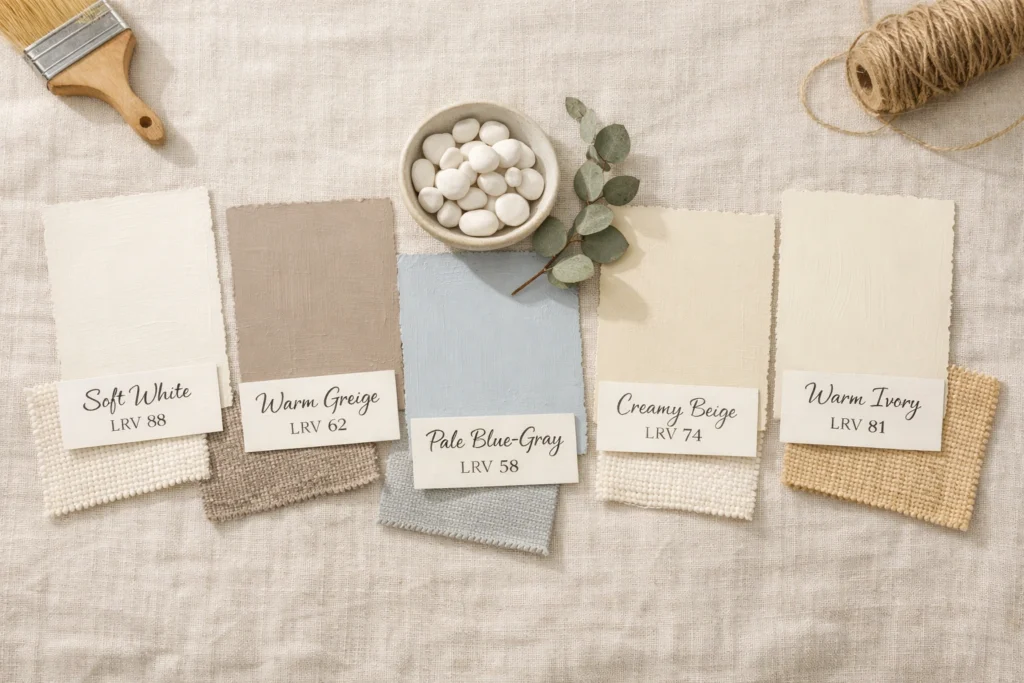
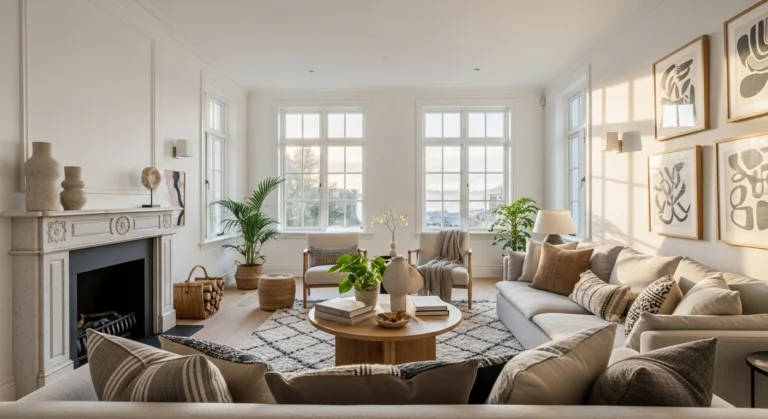
Color is the most immediately impactful and most reversible tool available in tiny living room designs — and the color decisions you make for your small living room’s walls, ceiling, and floor directly determine whether the space feels open and generous or tight and compressed before a single piece of furniture enters the equation. Small living room color ideas that consistently maximize perceived spaciousness favor light, warm neutrals rather than stark cool whites — a common misconception holds that brilliant white is always the best small room color choice when in fact warm off-whites, creamy beiges, and soft greiges with their warmer undertones create more spacious-feeling rooms than cool stark whites that can actually emphasize the room’s size limitations by providing stark contrast to any shadow or recessing surface. Best colors for a tiny living room design include Benjamin Moore’s White Dove OC-17 for warm white versatility, Sherwin-Williams Accessible Beige SW 7036 for warm neutral spaciousness, and Farrow & Ball’s Elephant’s Breath No.229 for a sophisticated warm grey that makes compact rooms feel deliberately intimate rather than accidentally small.
you may also like this: How To Create a Cozy Fall Evening Routine You’ll Look Forward To
| Color | Paint Name | Brand | Effect on Small Room |
|---|---|---|---|
| Warm white | White Dove OC-17 | Benjamin Moore | Bright, versatile |
| Warm greige | Accessible Beige SW 7036 | Sherwin-Williams | Spacious, warm |
| Soft grey | Elephant’s Breath No.229 | Farrow & Ball | Sophisticated |
| Pale blue | Borrowed Light No.235 | Farrow & Ball | Airy, calm |
| Warm cream | Pale Oak OC-20 | Benjamin Moore | Cozy, generous |
Choose the Perfect Sofa and Seating for Your Tiny Living Room
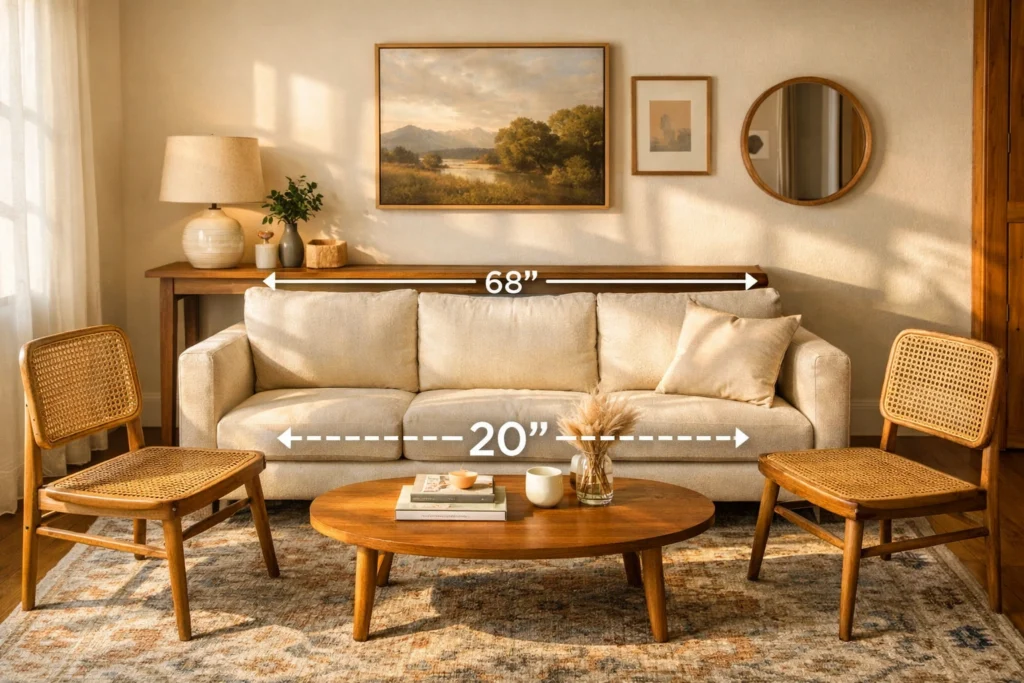
The sofa is the single most consequential furniture decision in any living room — and in a tiny living room design context it’s the decision that most dramatically determines whether the room works functionally and feels right spatially. Tiny living room with sofa ideas that consistently succeed in small spaces favor depth over length — a sofa measuring 65 to 72 inches in length with a seat depth of 32 to 34 inches provides comfortable seating for three adults while consuming significantly less floor space than the 84 to 96-inch sofas that most furniture retailers promote as standard. How to choose the right sofa for a tiny living room uses one non-negotiable principle — the sofa should leave at least 18 inches of clear pathway between its front edge and the coffee table or opposite wall, and at least 30 inches of clear walkway on any side that serves as a room access route.
How to arrange furniture in a tiny living room around the sofa specifically recommends floating the sofa away from walls rather than pushing it against them — a counterintuitive approach that actually creates more usable space by defining a clear seating zone and leaving wall-adjacent floor space for circulation. A sofa positioned 12 to 18 inches from the wall creates a balanced room composition while the space behind the sofa can accommodate a slim console table that provides additional surface area and storage without consuming separate floor space. Tiny living room design ideas with sectional sofa work beautifully in corner-positioned configurations — an L-shaped sectional positioned in a living room corner maximizes seating capacity relative to floor consumption while defining a clear seating zone boundary that makes the overall room layout feel organized and purposeful.
Tiny Living Room Furniture Arrangements That Actually Work
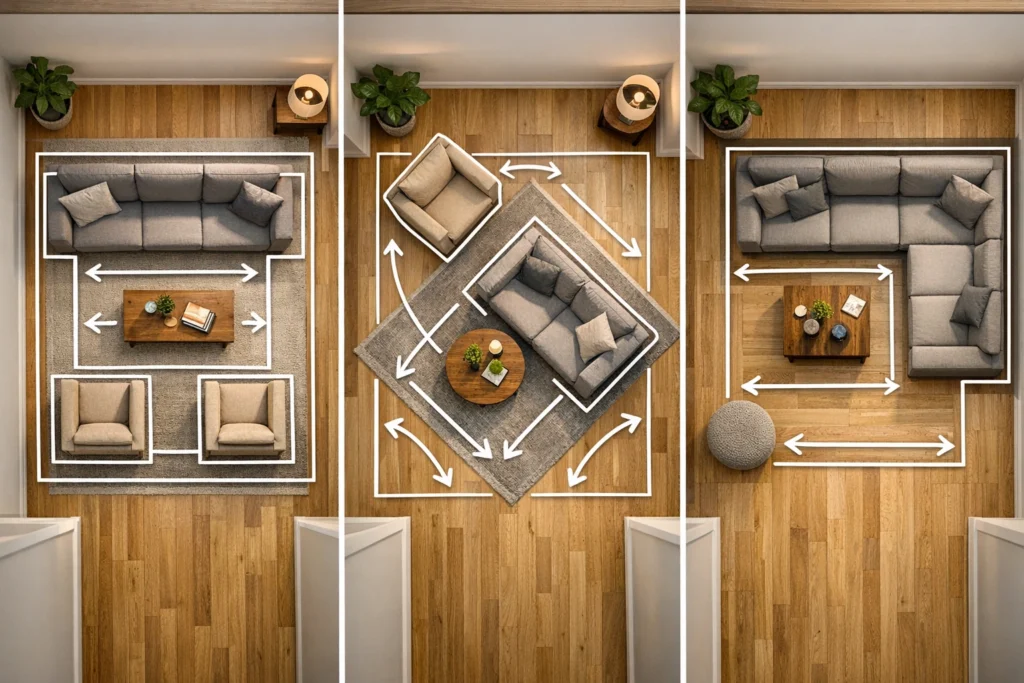
Furniture arrangement in a tiny living room is less about following rules and more about understanding the spatial relationships between pieces that create functional traffic flow, comfortable conversation distance, and visual balance simultaneously. Small living room layout ideas for the most common rectangular small living room configuration recommend the classic parallel seating arrangement — sofa on one long wall, accent chairs on the opposite side, coffee table centered between them — as the most spatially efficient arrangement for rooms measuring 10 by 12 feet or smaller. This arrangement maintains clear sight lines across the room, creates comfortable conversation distance between seating pieces, and leaves the room’s short walls entirely clear for storage, media, or decorative use. How to arrange furniture in a tiny living room in the most challenging scenario — a square room rather than a rectangular one — benefits from the diagonal arrangement approach that places the sofa at a 45-degree angle to the room’s walls, creating dynamic movement that breaks the static symmetry of square rooms and makes them feel more architecturally interesting.
Tiny living room furniture ideas for accent seating specifically favor lightweight, movable pieces over permanent heavy chairs — folding chairs in natural rattan, nesting stools in natural wood, and ottomans on casters all provide flexible seating capacity for entertaining without consuming permanent floor space when not needed. The Murphy bed sectional — a sofa system where seat cushions convert to a full bed surface — represents the ultimate space-efficiency solution for studio apartment living rooms that must also function as sleeping spaces. Small living room maximizing space through furniture arrangement always reserves a central floor zone — however small — that remains completely clear of furniture and creates the open breathing space that prevents small rooms from feeling genuinely claustrophobic regardless of how well-chosen their furniture pieces individually are.
Use Mirrors Strategically to Visually Double Your Tiny Living Room
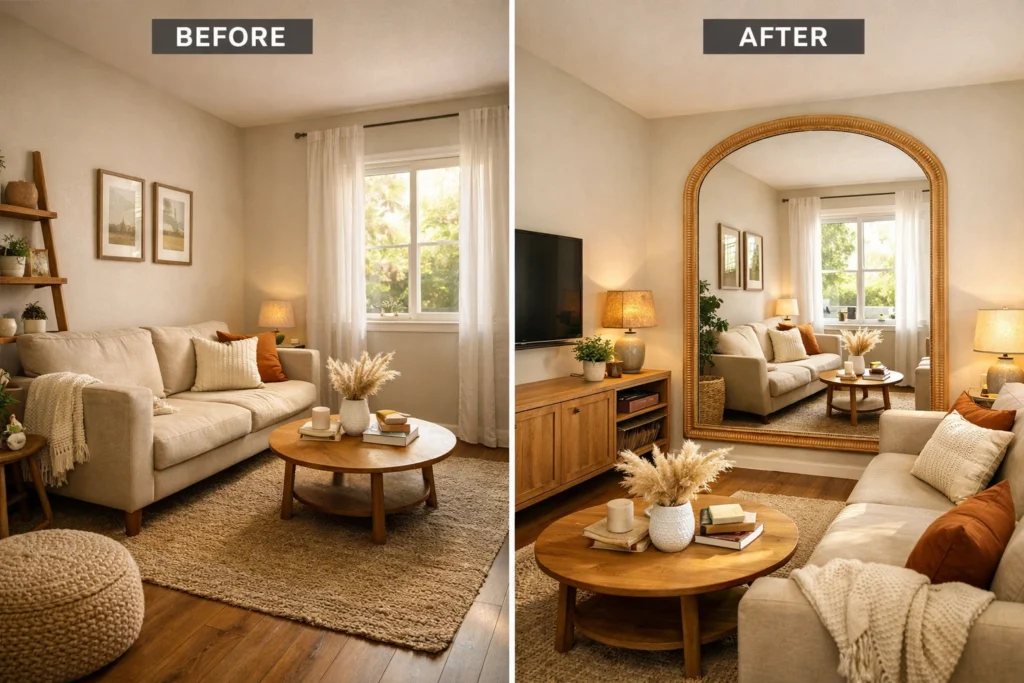
Mirrors are the closest thing to genuine magic available in tiny living room designs — physical objects that simultaneously create the illusion of doubled space, amplify every light source in the room, and serve as statement decorative pieces that contribute significant aesthetic value beyond their spatial trickery. Small living room mirror ideas that deliver maximum spatial impact place the mirror directly opposite the room’s primary light source — a large mirror on the wall opposite the main window reflects the entire window’s light and outdoor view back into the room, creating the impression of a second window and effectively doubling the room’s perceived luminosity and spatial depth simultaneously. How to use mirrors in a tiny living room design most effectively uses mirrors that are large enough to reflect a substantial portion of the room rather than small decorative mirrors that provide insufficient reflective surface area to create meaningful spatial illusion.
How to make a tiny living room look bigger through strategic mirror placement follows three proven configurations. The leaning floor mirror — a large rectangular mirror leaning against a wall rather than hanging from it — creates an instant vertical spatial illusion that makes ceiling height appear significantly greater than actual dimensions. The gallery mirror arrangement — multiple mirrors of varying shapes and sizes grouped as a gallery wall — creates a dynamic focal point that reflects light and movement throughout the room while functioning as sophisticated wall art. The mirrored furniture approach — a coffee table with a mirrored top, a sideboard with mirrored cabinet fronts, or a console table with mirror-backed shelving — introduces reflective surfaces at furniture level that expand the perceived floor space in the room’s lower visual register where spatial compression is most acutely felt.
Smart Storage Solutions That Keep Tiny Living Rooms Clutter Free
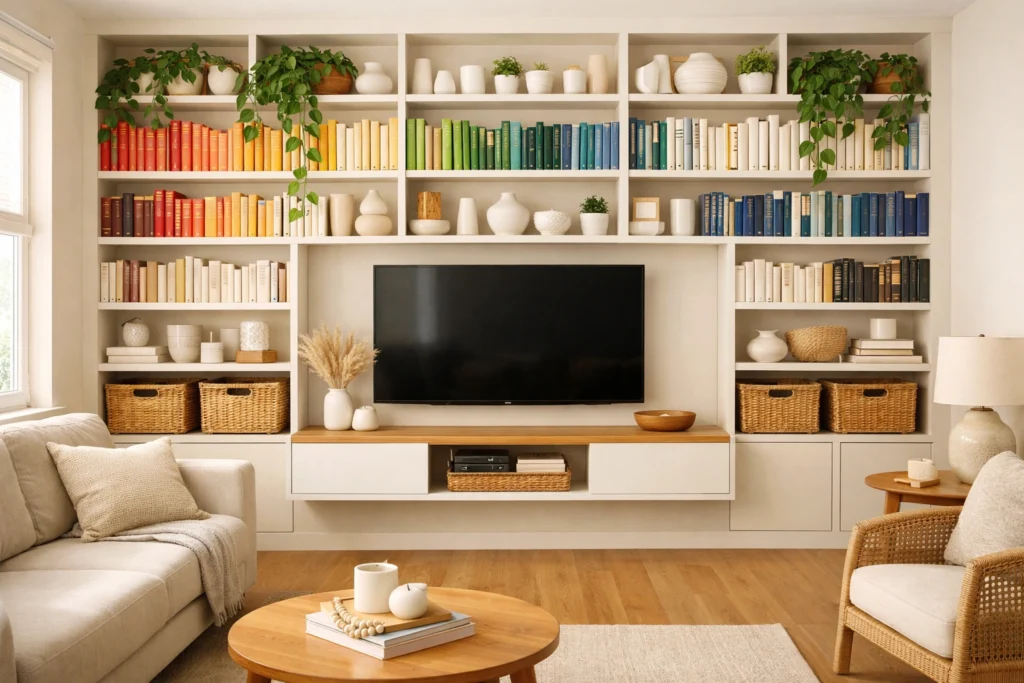
Clutter is the tiny living room’s most destructive enemy — more damaging than dark colors, wrong-scale furniture, or poor lighting — because clutter multiplies the visual complexity of an already-compact space and creates the chaos that makes small rooms feel genuinely oppressive rather than intimately cozy. Tiny living room storage ideas that solve the clutter problem permanently rather than temporarily use the built-in approach — storage solutions that are physically integrated into the room’s architecture rather than added on top of it as afterthoughts. How to add storage to a tiny living room most effectively identifies and activates every available storage opportunity in the room’s existing architecture — the alcoves flanking a chimney breast, the space above doorways, the wall area above the sofa’s back, and the floor space beneath floating furniture pieces all represent storage opportunities that most small-space occupants completely overlook.
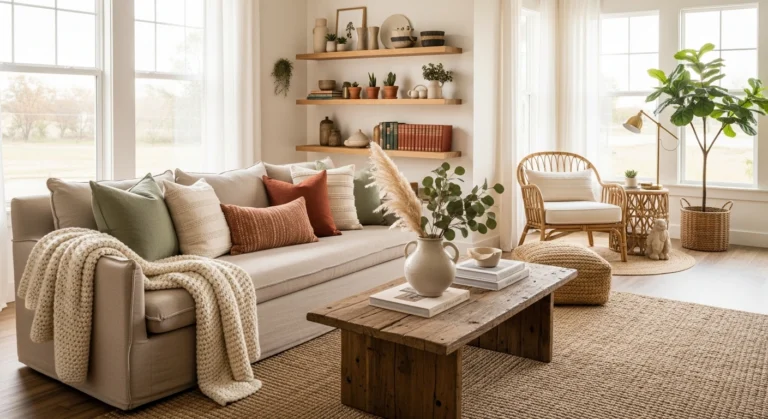
Tiny living room floating shelves ideas represent the single most versatile and most widely applicable small living room storage solution — open shelving mounted directly to walls at strategic heights provides generous display and storage surface area without consuming any floor space whatsoever, making them the only storage form that adds organizational capacity without subtracting living space. Small living room wall decor ideas that incorporate storage function alongside decorative value include picture ledges with objects arranged in front of artwork, wall-mounted magazine racks in natural rattan, and floating media consoles that replace floor-standing entertainment centers with wall-mounted units that free the floor beneath for clear open space that makes the room feel significantly more spacious.
Best Lighting Ideas That Transform a Tiny Living Room Atmosphere
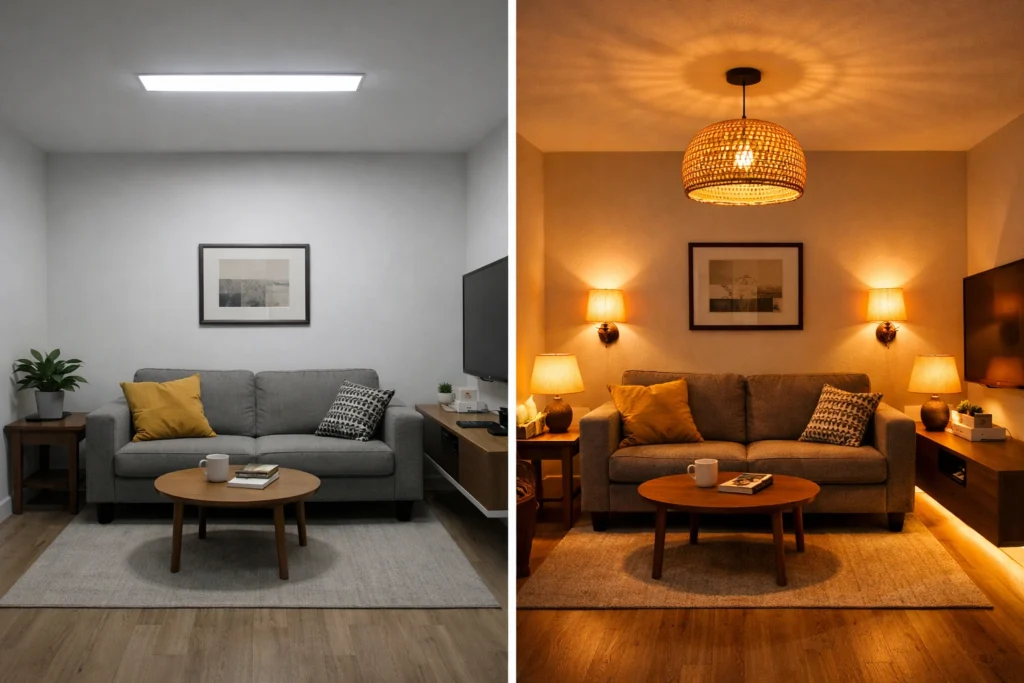
Lighting transforms tiny living room designs more dramatically and more immediately than any other single design intervention — and poorly lit small rooms feel significantly more cramped than well-lit ones of identical dimensions because light literally creates the appearance of space by revealing depth, height, and detail that shadows obscure. Small living room lighting ideas that produce the most impactful results layer three distinct light source types at different heights — overhead ambient lighting for general room illumination, task lighting for reading and specific activity areas, and accent lighting that highlights architectural features and creates warm pools of atmospheric light that make the room feel genuinely inviting after dark. Best lighting ideas for a tiny living room specifically recommend avoiding a single central overhead light as the room’s only source — this flat, shadowless illumination creates the institutional quality that makes any room feel functional rather than comfortable and provides none of the dimensional depth that layered lighting creates.
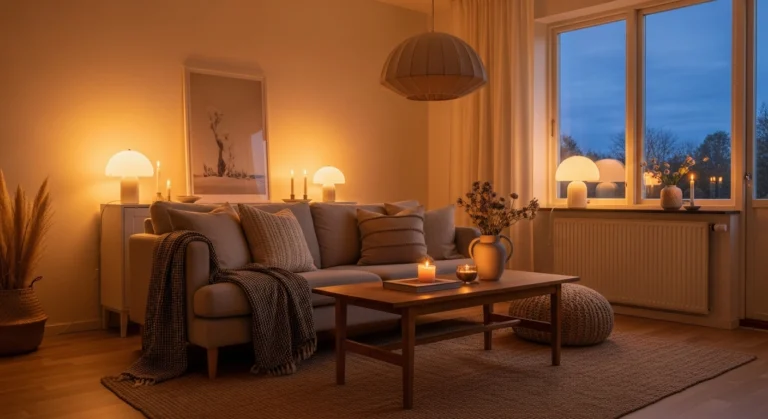
Tiny living room design ideas that feel luxurious through lighting invest specifically in dimmer switches on every circuit — the ability to modulate light intensity from bright task-level illumination to intimate atmospheric warmth at any moment transforms the room’s character continuously throughout the day and evening in a way that fixed-intensity lighting simply cannot achieve. Wall sconces mounted at eye level on either side of the sofa create warm, flattering side lighting that makes faces look beautiful during conversation and creates the intimate, restaurant-quality ambiance that most residential lighting completely misses. Small living room natural light ideas through lighting design also include mirror-adjacent lamps — placing a floor or table lamp immediately beside a large mirror doubles its apparent light output through reflection, effectively providing two light sources for the energy consumption and floor space of one.
Create a Stunning Accent Wall in Your Tiny Living Room
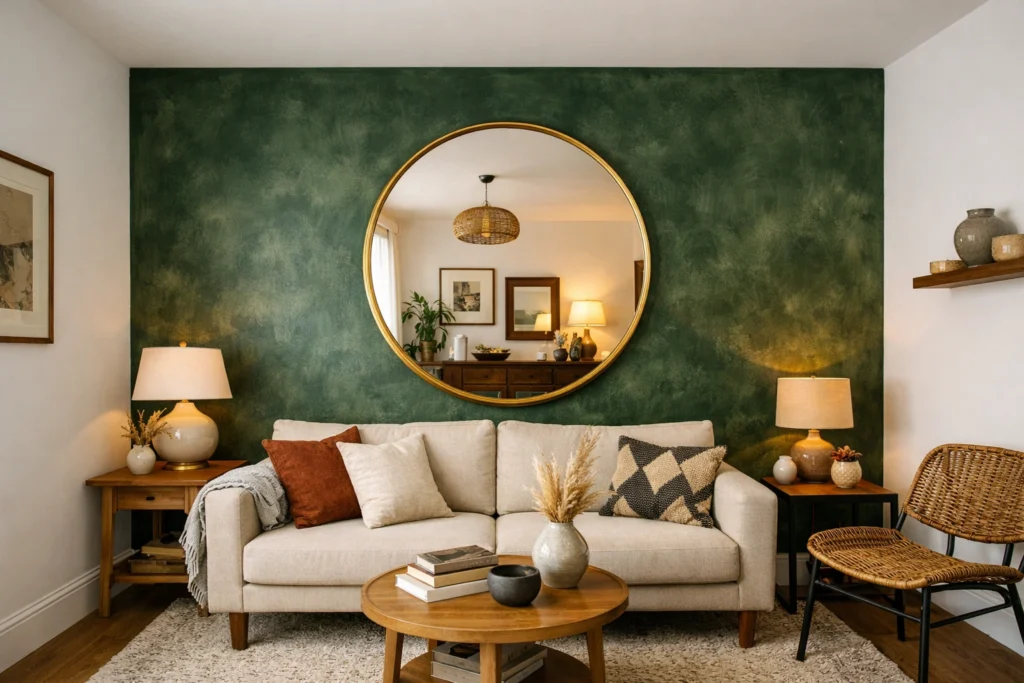
Accent walls in small living rooms require more strategic thinking than in large rooms because the wrong accent wall treatment can make a compact space feel smaller and more enclosed while the right one creates dramatic focal interest that actually makes the room feel larger by drawing the eye to a specific point and creating perceived depth. Tiny living room accent wall ideas that consistently succeed in small rooms favor deep, rich colors or bold pattern treatments on the room’s shortest wall — the wall that the room’s primary seating faces — rather than the longest wall where a bold treatment would visually bring that surface closer and compress the room’s depth. Best accent wall ideas for tiny living rooms include deep forest green on the chimney breast wall, dramatic navy on the media wall, bold geometric wallpaper behind the sofa, and textured limewash in warm terracotta on the primary focal wall — all treatments that add visual drama without reducing perceived spatial generosity when applied to the correctly chosen wall surface.
Small living room wall decor ideas for non-accent walls should support the primary accent wall’s drama through restraint rather than competing with additional focal points that fragment the room’s visual coherence. Simple, clean gallery arrangements on secondary walls — three matching frames in a horizontal line, a single large-format photograph, or a collection of small mirrors — provide wall interest at appropriate secondary priority without the visual weight that multiple competing focal walls create in small rooms. How to add personality to a tiny living room design through accent wall treatment specifically recommends the half-wall color approach — painting only the lower half of the room’s primary wall in a deep, bold color with the upper half remaining in the room’s neutral wall color — a two-tone wall treatment that adds design drama while keeping the upper portion of the wall light-reflective and spatially generous.
Tiny Living Room Rug Ideas That Define and Anchor the Space
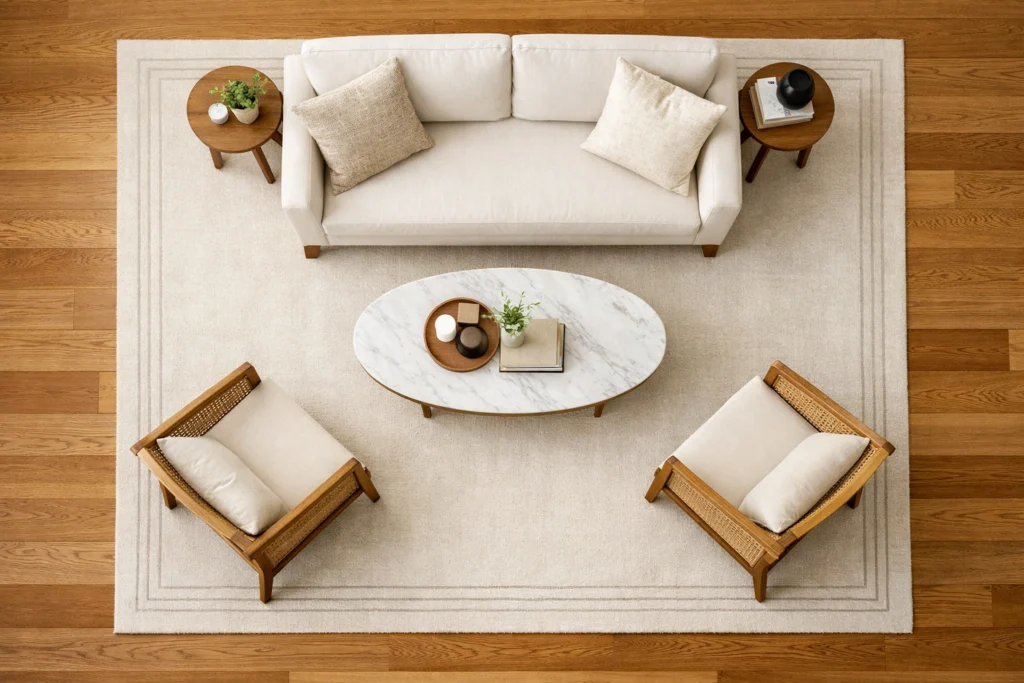
A rug in a tiny living room performs a specific spatial function that goes beyond decoration — it defines the seating area’s boundaries, creates a visual floor plane that anchors the furniture composition, and determines whether the room’s furniture arrangement reads as unified and intentional or scattered and disconnected. Tiny living room rug ideas that work most effectively in small rooms follow one counter-intuitive but consistently proven principle — larger rugs make small rooms feel bigger rather than smaller. A rug that extends beneath all primary seating furniture — with all front legs resting on the rug’s surface — creates a unified compositional plane that makes the seating area feel defined and expansive. A rug that’s too small creates a disconnected, floating furniture arrangement that fragments the room visually and makes both the rug and the furniture feel awkward and purposeless. Best rugs for a tiny living room design specifically recommend rugs sized at 8 by 10 feet or 9 by 12 feet for standard small living rooms — dimensions that consistently prove sufficient to anchor complete seating arrangements in rooms measuring 10 by 12 to 12 by 14 feet.
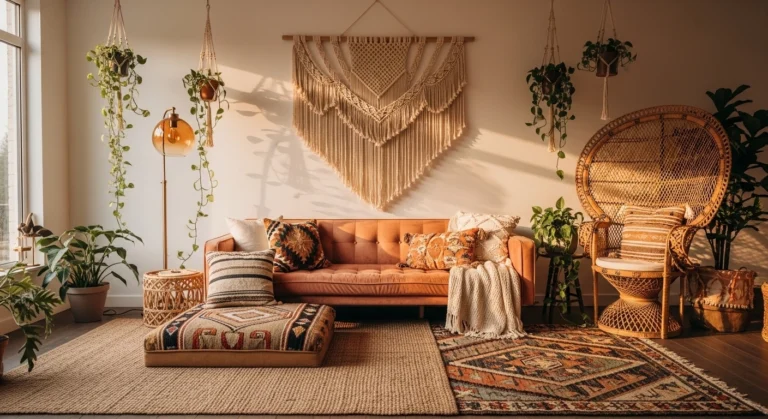
Tiny living room rug ideas for material and pattern selection favor low-pile constructions over plush high-pile alternatives in small spaces because lower pile heights visually recede rather than advancing toward the viewer and create less visual bulk in already-compressed floor areas. Pattern choice in small room rugs involves the counterintuitive principle that large-scale patterns often work better than small-scale ones in compact rooms — a bold, oversized geometric or abstract pattern reads clearly and confidently from across a small room while a small, busy pattern creates visual noise that makes the room feel cluttered rather than decorated. Tiny living room boho design ideas specifically favor the vintage Persian rug approach — warm, richly colored antique or vintage-style Oriental rugs that add maximum color, pattern, and personality to neutral small living rooms while their irregular, organically aged quality suits the eclectic, layered character of bohemian small-space design beautifully.
Use Vertical Space Brilliantly in Your Tiny Living Room Design
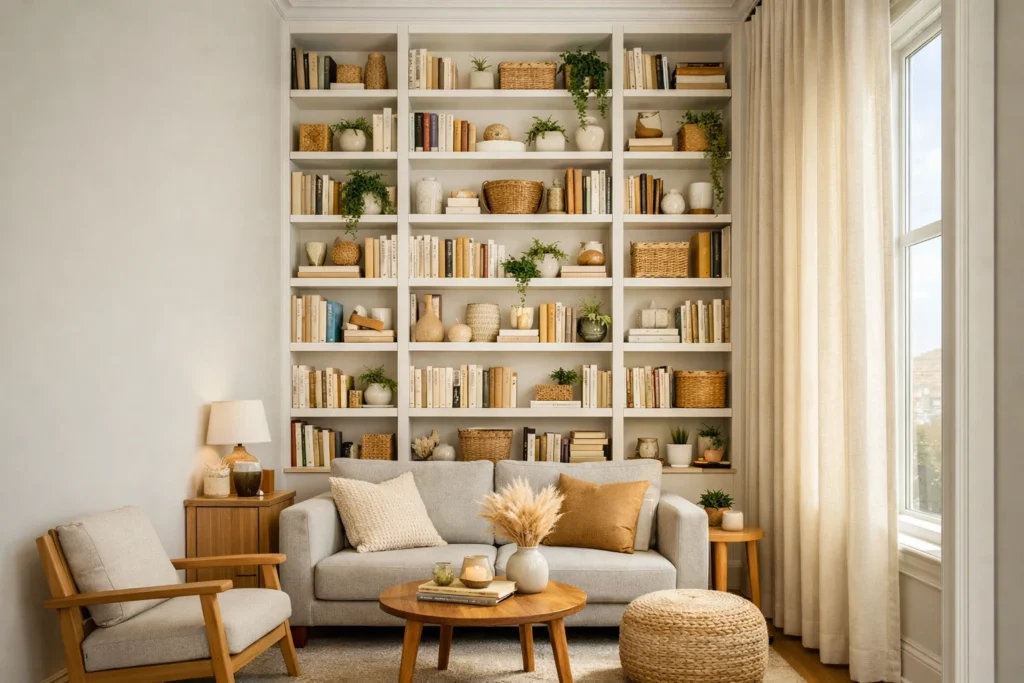
Vertical space is the most consistently underutilized resource in tiny living room designs across American homes — the entire wall area above eye level that most occupants leave completely blank despite its extraordinary potential for storage, display, and the visual height illusion that makes rooms feel dramatically taller and more spacious than their actual ceiling heights. How to use vertical space in a tiny living room most effectively starts with a simple audit — stand in your living room’s center and look at the wall areas above 60 inches. Whatever exists there now almost certainly represents a fraction of what’s possible. Tiny living room floating shelves ideas mounted at 72 to 84 inches above the floor — well above standard furniture height — provide generous storage and display surface while drawing the eye upward and creating the vertical visual rhythm that makes ceiling heights feel greater than they actually measure.
Tiny apartment living room ideas for vertical space activation go beyond simple shelf installation into genuinely architectural territory — floor-to-ceiling built-in shelving that spans the full height of a wall creates a library-quality installation that makes any living room feel significantly more sophisticated and spatially generous regardless of its actual dimensions. Curtains mounted at ceiling height rather than window frame height create one of the most powerful vertical visual illusions available in small room design — curtain panels that run from ceiling to floor make standard 8-foot ceilings appear to be 10 or 11 feet through the vertical line they draw from the room’s highest point to its lowest. Small living room minimalist design applied to vertical space specifically embraces the one-category approach — dedicating an entire wall’s vertical space to a single category of storage or display rather than fragmenting it across multiple competing installations creates the calm, intentional quality that distinguishes truly sophisticated small-space design from merely space-efficient storage accumulation.
Multifunctional Furniture Ideas Every Tiny Living Room Needs
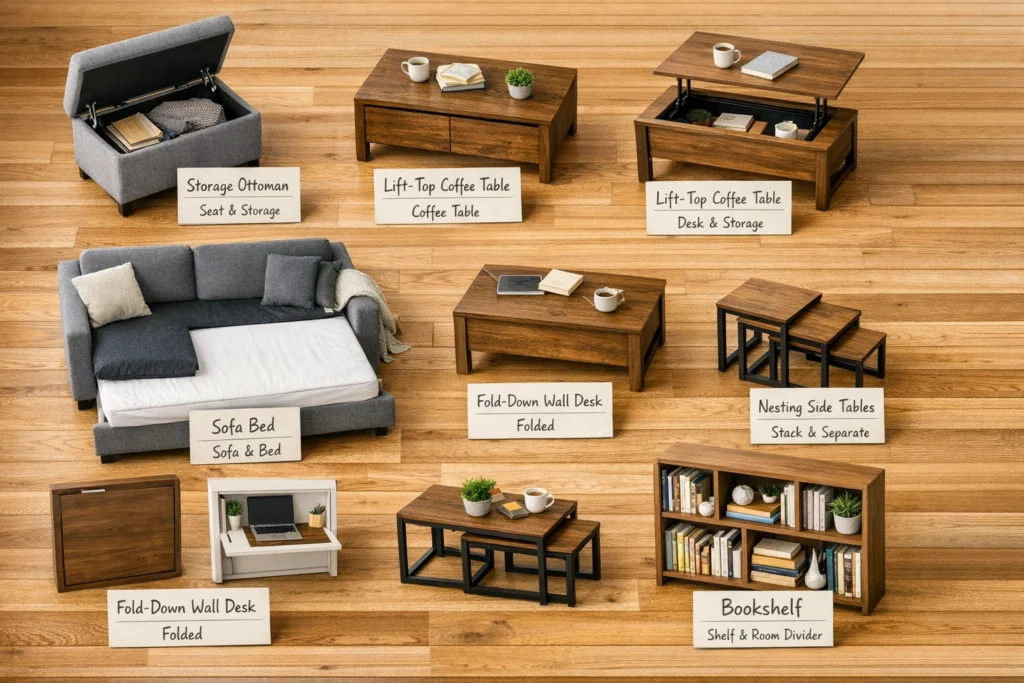
Multifunctional furniture is the tiny living room’s greatest ally — pieces that perform two or three distinct functions simultaneously without requiring additional floor space for each individual function represent the most effective space multiplication available to small-room designers. Small living room multifunctional furniture at its most essential level includes the storage ottoman — a piece that functions as coffee table surface, additional seating for guests, and concealed storage for blankets, remote controls, and other living room essentials all within the single floor footprint of a conventional coffee table. Best multifunctional furniture for tiny living rooms extends this principle across every furniture category — a sofa with built-in chaise that conceals a pull-out bed, a wall-mounted fold-down desk that provides work surface when needed and disappears when not, and a console table positioned behind the sofa that functions as both a working surface and a room divider in open-plan studio layouts.
How to create a cozy tiny living room design through multifunctional furniture specifically means choosing pieces whose secondary functions are genuinely usable rather than theoretically possible — a sofa bed that actually deploys comfortably as a sleeping surface, a coffee table that genuinely raises to dining height with a simple mechanism rather than requiring disassembly, and storage ottomans with sufficient interior volume to meaningfully organize the items they conceal. Tiny living room coffee table ideas in the multifunctional category include the nesting table set — two or three tables that stack together occupying the footprint of one when not in use and separate to provide multiple surface positions when entertaining — and the lift-top coffee table that reveals concealed storage beneath while simultaneously providing an elevated work or dining surface that eliminates the need for a separate home office desk in studio apartment living rooms.
Tiny Living Room Design Ideas for Open Plan Apartment Spaces
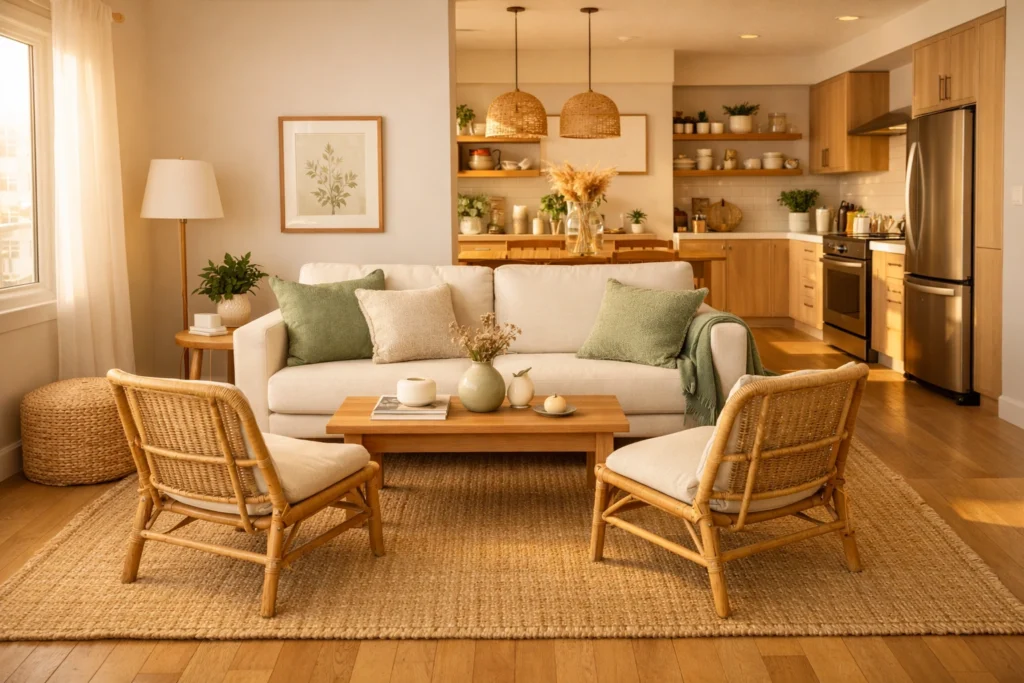
Open plan studio and one-bedroom apartments present the most complex tiny living room design challenge available — defining a functional, comfortable living room zone within a larger open space that simultaneously serves as dining room, bedroom, and home office without the benefit of walls to create natural spatial boundaries. Small living room open plan ideas solve this boundary-definition challenge through zone-creating design tools that establish clear spatial identity for the living area without physical walls. Area rugs are the most powerful zone-creation tool — a large living room rug positioned beneath the seating furniture instantly communicates “this is the living room” to anyone entering the open plan space and creates a visually bounded zone of genuine cohesion. How to create zones in an open plan tiny living room uses the back-of-sofa strategy as a secondary zone definition tool — positioning the sofa with its back facing the dining area rather than a wall creates a natural visual and functional boundary between the living zone and the adjacent zone without any physical barrier.
Tiny apartment living room ideas for open plan spaces also use consistent color and material language across the living zone’s elements to create cohesion that distinguishes it clearly from adjacent zones — a living room zone where all furniture, textiles, and accessories share a unified color palette reads as a defined, intentional space even within a completely open floor plan. How to create an open feel in a tiny living room within an open plan apartment paradoxically benefits from the addition of a transparent room divider — a bookshelf open on both sides, a glass-and-steel grid partition, or a sheer fabric curtain panel all create spatial definition between zones while maintaining the visual openness and light flow that makes open plan living spaces feel generous and connected rather than subdivided and compressed.
Budget Friendly Tiny Living Room Design Ideas That Look Expensive
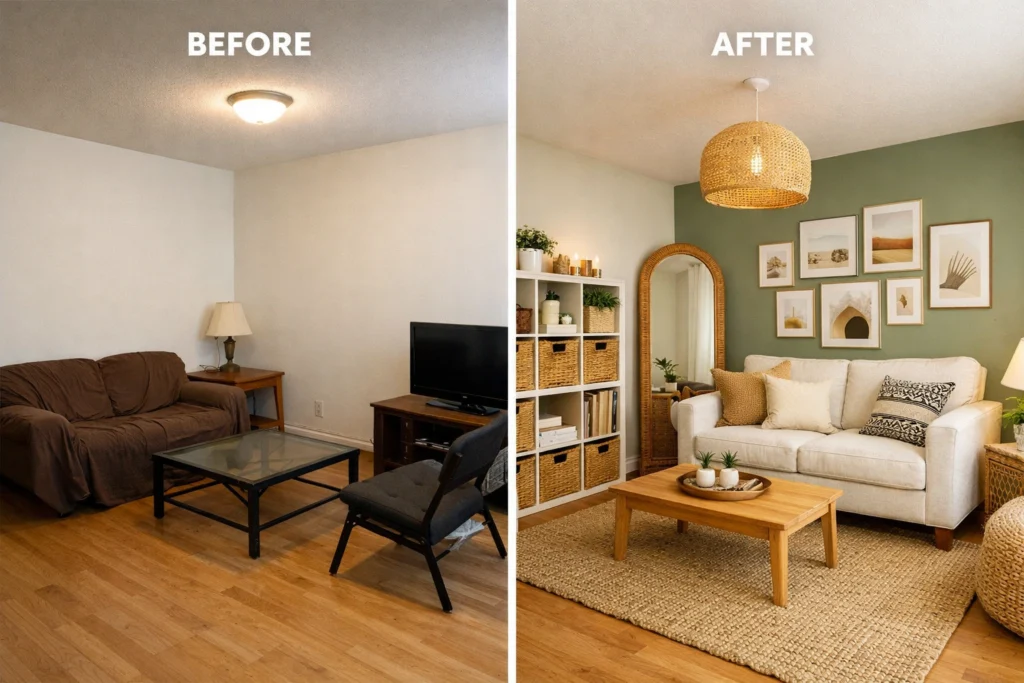
Beautiful tiny living room designs and significant budgets are categorically not the same requirement — and the most thoughtfully designed small living rooms frequently outperform expensive ones because intentionality and creativity consistently produce better spatial results than simply purchasing premium versions of standard elements. How to decorate a tiny living room on a budget starts with the highest-impact lowest-cost intervention available — paint. A $40 can of carefully chosen paint applied to a single accent wall, or a consistent neutral color applied across all walls and ceiling simultaneously, delivers room transformation that no $400 furniture purchase can approach for the same investment. Tiny living room design ideas that feel luxurious on a restricted budget invest strategically in the three most-touched, most-seen, most-used elements — a quality sofa that feels genuinely comfortable, a quality area rug that feels genuinely soft underfoot, and quality lighting that creates genuine atmosphere — while saving aggressively on purely decorative accessories, artwork, and accent pieces that can be sourced beautifully and affordably from thrift stores, IKEA, and Etsy.
How to add personality to a tiny living room design on a minimal budget uses the gallery wall approach most cost-effectively — a gallery wall assembled from printable art downloaded from sites like Society6.com or Desenio.com, printed locally at a copy center, and framed in coordinating IKEA RIBBA frames creates a sophisticated, personalized wall installation of genuine design quality for under $50 total. Tiny living room boho design ideas on a budget specifically leverage the thrift store textile strategy — woven throw blankets, embroidered cushion covers, macramé wall hangings, and vintage rugs found at Goodwill, Facebook Marketplace, and estate sales for $5 to $30 each create the layered, richly textured boho living room atmosphere that retail bohemian decor collections charge hundreds of dollars to approximate with significantly less character and authenticity.
Conclusion
Every tiny living room design challenge is ultimately an invitation — to think more carefully, choose more intentionally, and design more creatively than a larger space ever demands. From using mirrors to double perceived depth to choosing the perfectly scaled sofa, activating vertical wall space, incorporating multifunctional furniture, and defining zones within open plan apartments — every strategy in this guide transforms spatial limitation into genuine design opportunity. Start with one idea this weekend. Your tiny living room is ready to become the most beautifully designed room in your entire home.
Frequently Asked Questions
Q1: How do I make a tiny living room look bigger?
How to make a tiny living room look bigger uses five proven strategies simultaneously — light wall colors with warm undertones, large-format mirrors opposite windows, furniture with visible legs, rugs sized to anchor all furniture, and curtains mounted at ceiling height to create vertical illusion.
Q2: What sofa works best in a tiny living room?
How to choose the right sofa for a tiny living room prioritizes compact dimensions — 65 to 72 inches in length with 32 to 34-inch seat depth — with visible legs rather than floor-level bases, and light upholstery colors that reduce visual weight in compressed spaces.
Q3: What colors make a tiny living room feel larger?
Best colors for a tiny living room design include warm off-whites, creamy beiges, and soft greiges with warm undertones that reflect light generously — specifically Benjamin Moore White Dove, Sherwin-Williams Accessible Beige, and Farrow & Ball’s Pale Oak for consistently beautiful results.
Q4: How do I add storage to a tiny living room?
How to add storage to a tiny living room most effectively uses vertical wall space — floating shelves mounted above eye level, floor-to-ceiling built-in shelving, wall-mounted media consoles, and storage ottomans that replace conventional coffee tables without consuming additional floor space.
Q5: What rug size works best in a tiny living room?
Best rugs for a tiny living room design are consistently larger than most people instinctively choose — an 8-by-10 or 9-by-12 foot rug that allows all primary seating furniture’s front legs to rest on its surface creates the unified compositional plane that makes small rooms feel intentionally designed and spatially generous.

One Comment