
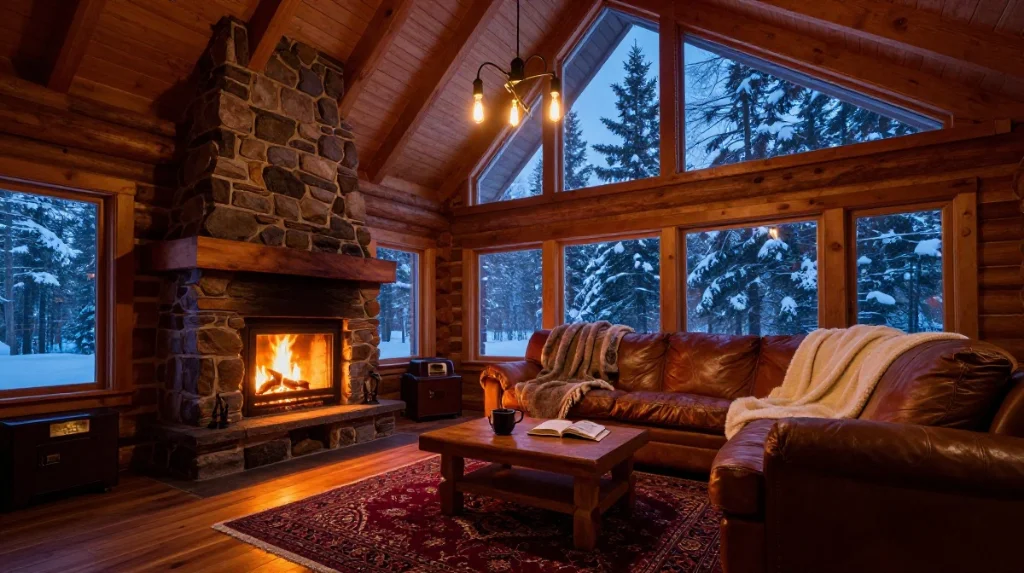
17 Winter Cabin Living Room Ideas to Create the Ultimate Cozy Retreat
A winter cabin living room isn’t just a room. It’s a feeling — the specific sensation of being completely warm while the world outside is completely cold. Frost on the windows. Snow muffling every sound. And inside, a space so deliberately layered with warmth, texture and amber light that leaving it feels like a small act of courage. These winter cabin living room ideas aren’t about following trends — they’re about building the kind of room that makes January feel like the best month of the year.
The Fireplace Is Not Decoration — It Is the Living Room’s Entire Reason for Being
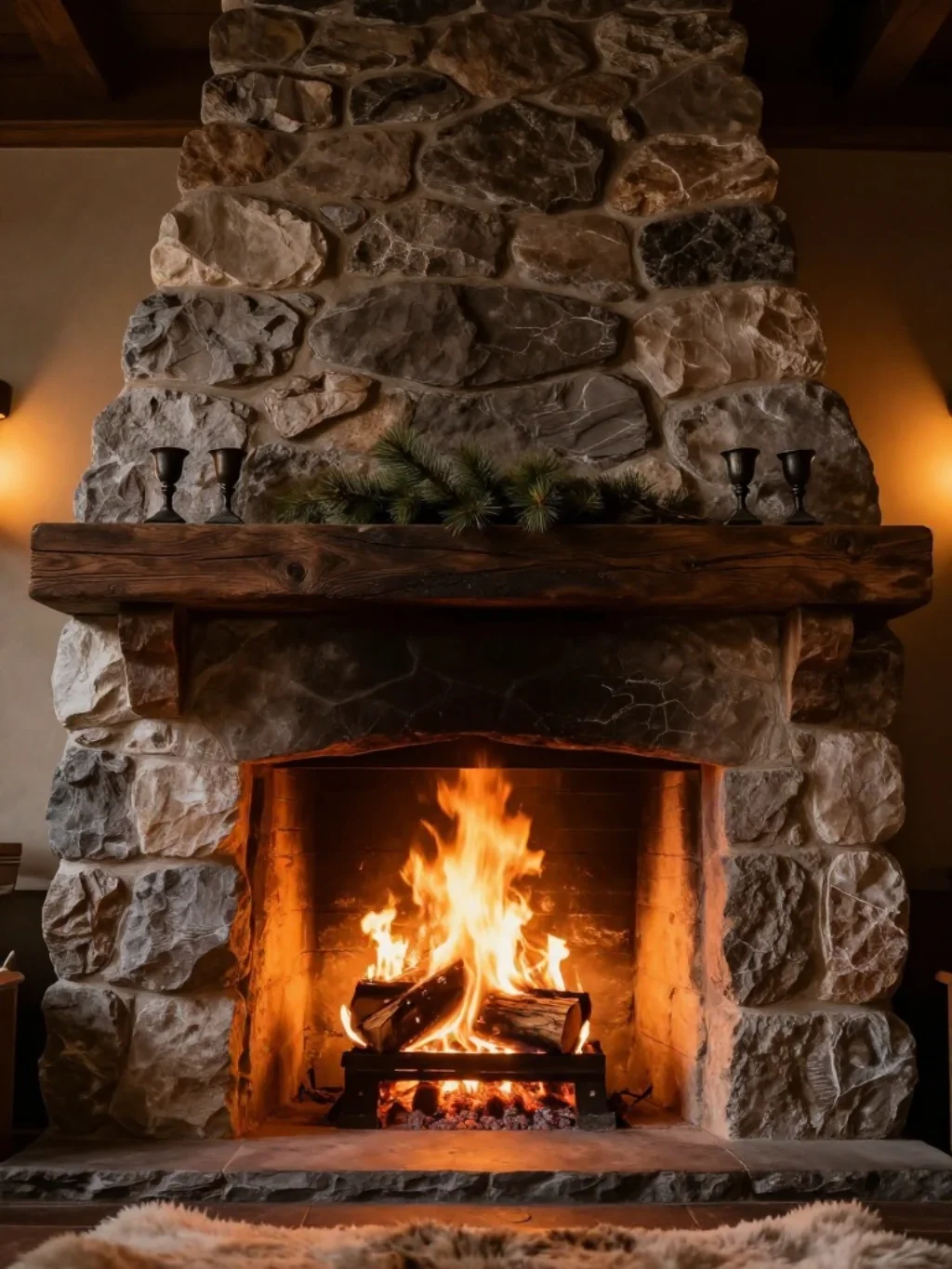
Every winter cabin living room organizes itself around one non-negotiable gravitational center: the fire. A stone fireplace or wood burning stove doesn’t just heat the room — it defines the room’s entire social and visual logic. Furniture turns toward it. Light radiates from it. Conversation gravitates around it. Design everything else in service of this center and your cabin living room achieves coherence effortlessly.
A cozy cabin fireplace living room that lacks a working fire compensates with an electric insert or a candle-filled hearth but the honest truth is that nothing replaces the sensory experience of actual flame — the crackle, the smell of wood smoke, the dancing amber light that changes the quality of every surface in the room. Stone fireplace cabin decor that emphasizes the fireplace’s architectural presence — a thick timber mantel, flanking built-in log storage, a sheepskin rug placed directly before the hearth — creates a hearth centered living space whose design logic feels completely inevitable rather than arranged.
Winter Cabin Living Room Ideas That Start With the Right Color Foundation
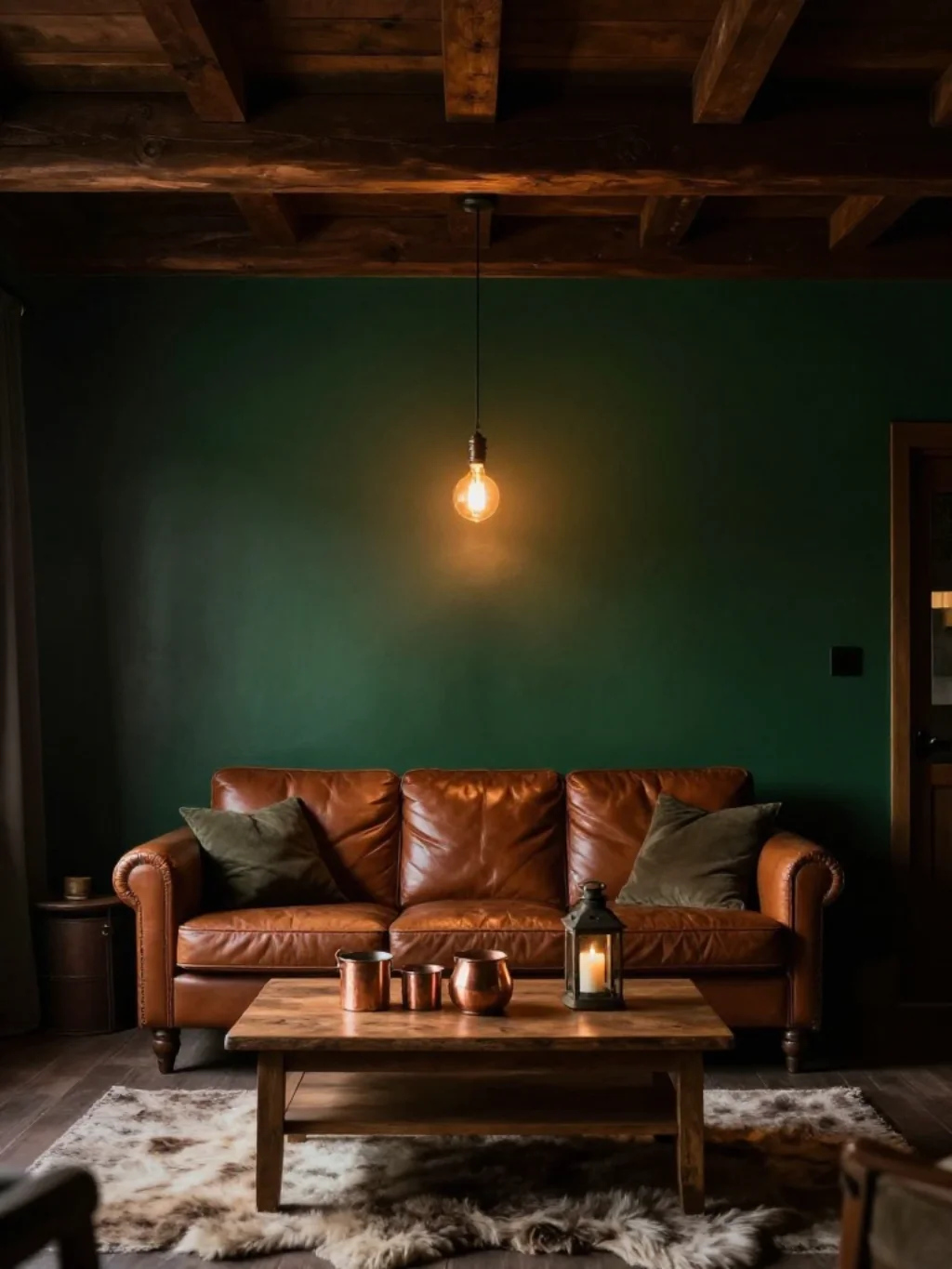
Color does more work in a winter cabin living room than any piece of furniture or textile. It sets the room’s emotional temperature before you’ve added a single throw blanket or lit a single candle. Winter cabin living room color schemes that create genuine warmth lean toward the palette of the winter forest itself — deep bark brown, mossy sage, heathered grey, warm ochre and the near-black of wet timber at dusk.
Cabin living room color warmth built on this foundation creates a dark moody winter interior that feels protective rather than oppressive — the visual equivalent of being inside something solid and sheltering while the storm happens outside. Winter living room color palette decisions that avoid the reflex toward crisp white and bright neutral tones produce rooms with genuine character and season-appropriate depth. A deep forest green accent wall behind the stone fireplace. Warm walnut brown on the ceiling beams. Charcoal grey on the built-ins. These are rustic winter interior ideas that feel architecturally intentional rather than seasonally decorated.
Exposed Wood Beams and Stone Walls That Do All the Heavy Lifting for You
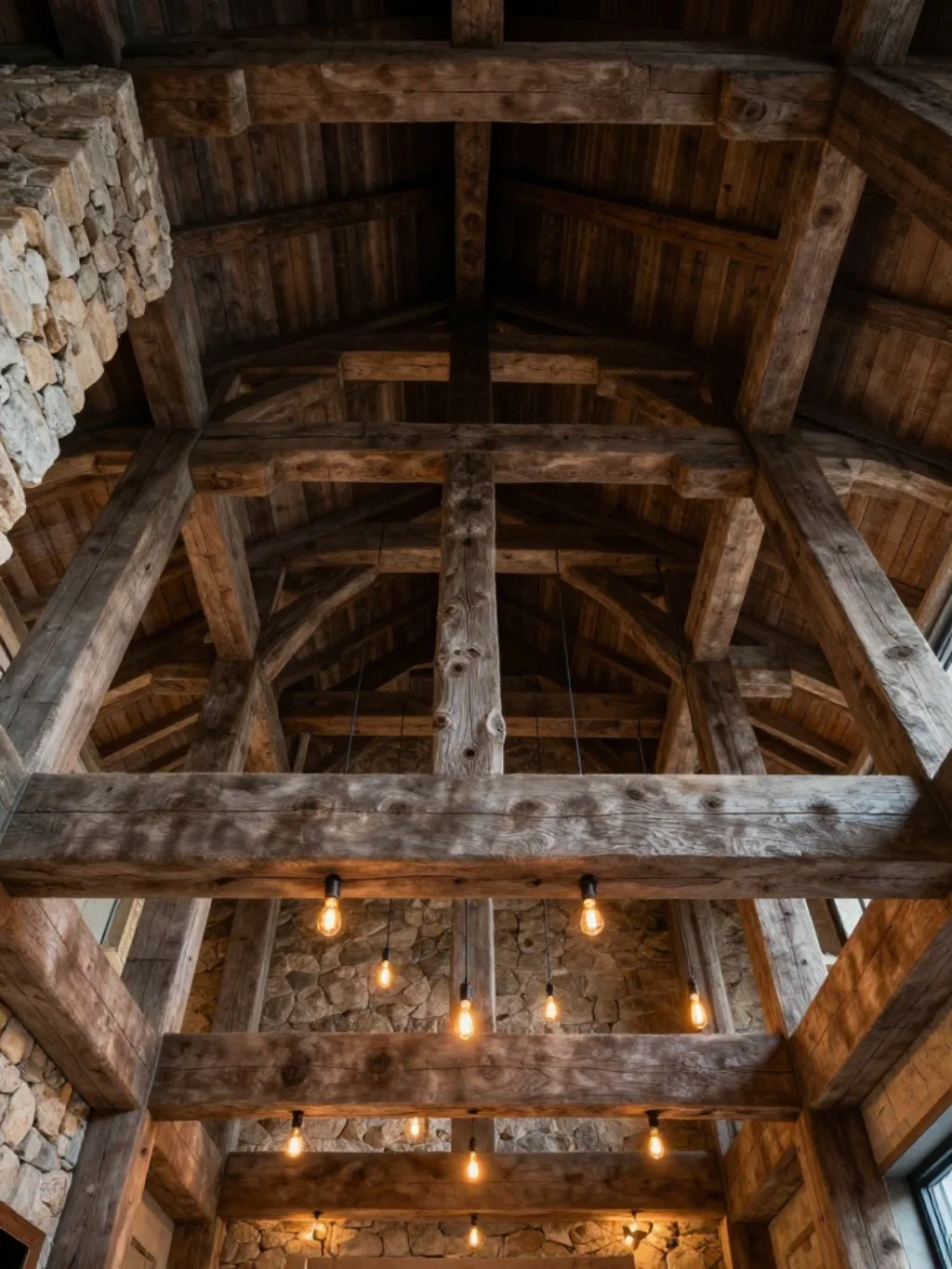
Cabin living room wood beams and stone walls are the two architectural elements that most decisively establish a cabin living room’s character — and they’re also the elements that require the least styling effort once they exist. Exposed timber ceiling beams carry an entire visual vocabulary of woodland shelter, artisan construction and historical depth without a single decorative object placed beneath them.
Wood and stone living room decor operates on the principle of honest material expression — the stone was quarried locally, the timber was milled from the land, and both are shown without apology or concealment. Stone and timber interior style at its best leaves both materials as raw and textural as possible rather than finishing them into smoothness that eliminates their character. Cabin living room ideas with wood beams that paint over the original timber or clad the stone in tile lose the material authenticity that gives the log cabin living room decor tradition its timeless appeal. Let the bones of the room speak and your styling job becomes much simpler.
Textile Layering Secrets That Make a Cabin Room Feel Impossibly Warm
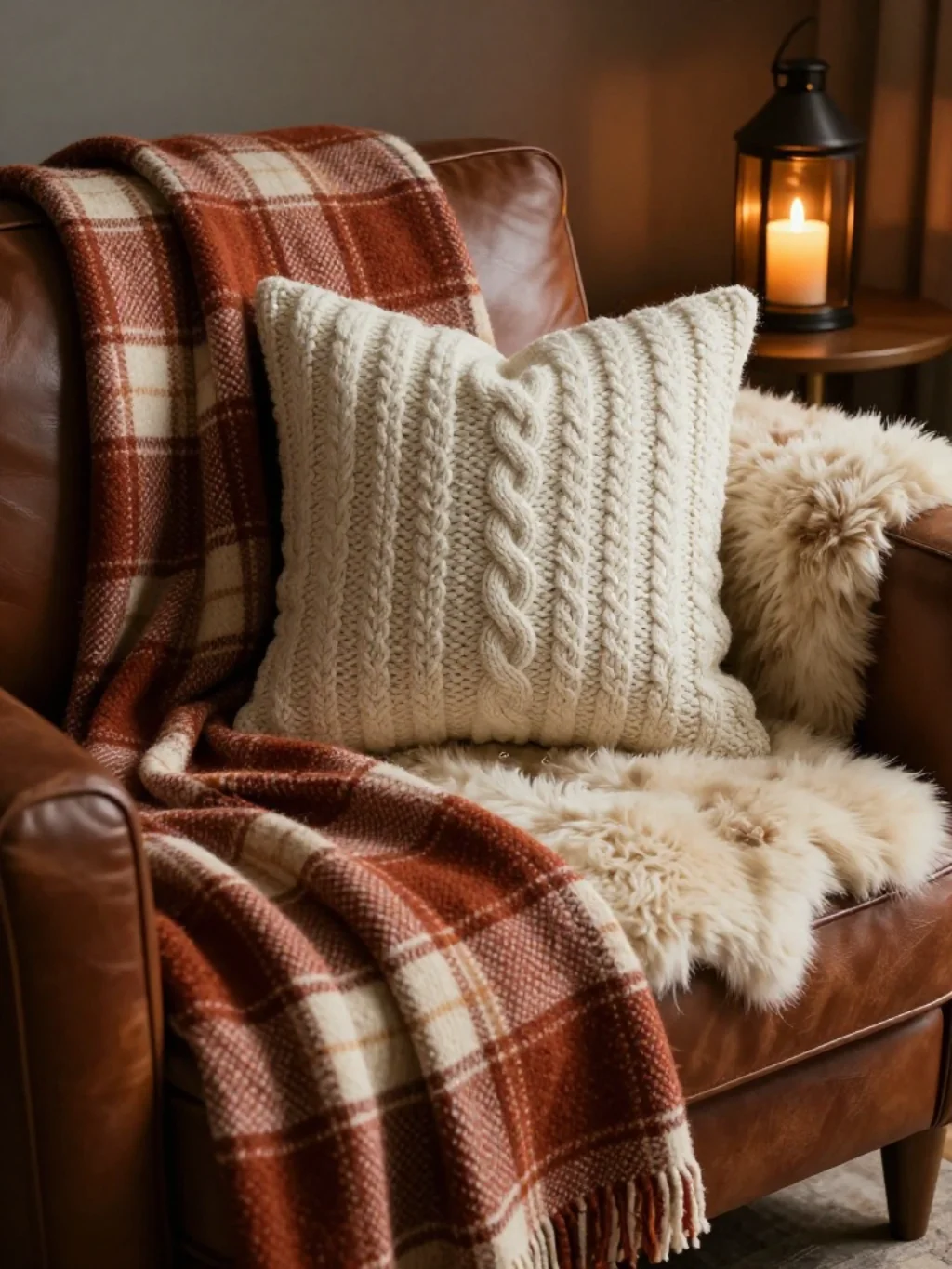
How to layer textures in a winter cabin living room is the single technique that separates a cabin room that looks styled from one that actually feels warm. Textural layering works because different materials trap warmth differently — a wool throw blanket over a leather sofa creates warmth through contrast as much as through insulation. The eye registers the visual variety of textures as warmth before the body even makes contact.
Layered cabin textile winter decor builds in sequences: start with a foundational textile at the floor level — a sheepskin rug or woven rattan area rug — layer upward through upholstery in leather or heavy linen, add cable knit pillow covers and cabin pillow and throw ideas in multiple weights and weaves on every seating surface, then finish with wool and fur cabin accents draped asymmetrically over armrests and the backs of chairs. Winter cabin textile layering done correctly creates a room where every surface invites touch — a tactile comfort home design approach that makes the room feel as warm as it looks. Fur and wool home accents should vary in scale from large throw blankets to small pillow covers so the layering reads as abundant without feeling stuffed.
Furniture Choices That Anchor a Winter Cabin Living Room in Total Comfort
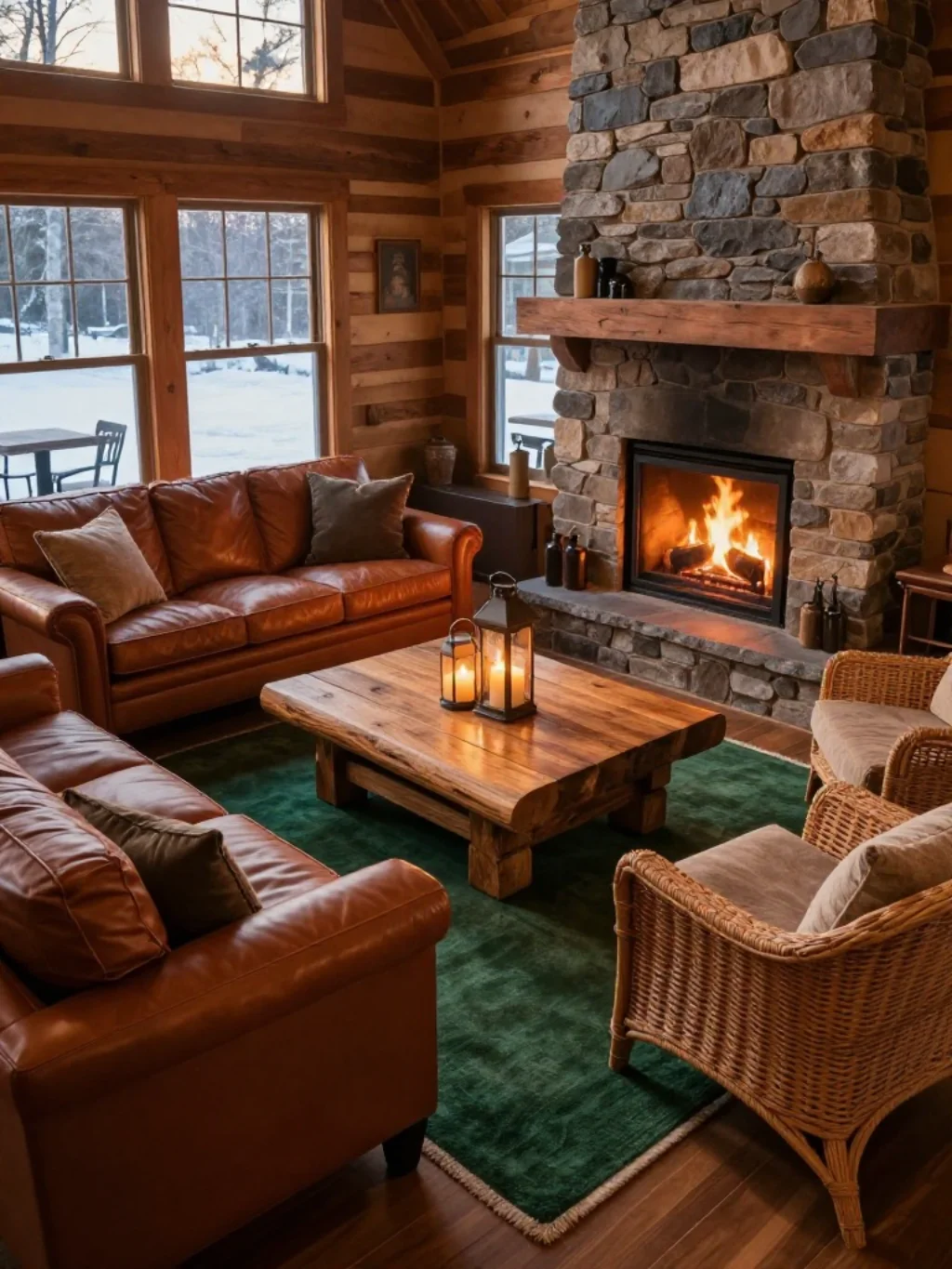
Cabin living room furniture warmth comes not just from material choices but from scale and arrangement. Cabin furniture should be generous — pieces that are slightly oversized for the room, that sink rather than perch and that suggest that sitting down is a commitment rather than a pause. A leather sofa with deep cushions and wide arms. A log coffee table with the visual weight of something that grew in the forest and was minimally processed on the way to your living room.
How to choose furniture for a winter cabin living room begins with the material hierarchy: natural over synthetic, heavy over light, aged over pristine. A distressed wood furniture piece with genuine wear and patina communicates something about time and use that new furniture with artificial distressing cannot. Cabin style furniture ideas that incorporate woven rattan furniture as accent chairs alongside heavier upholstered primary seating create visual variety within a cohesive material family. Winter cabin living room furniture arrangement ideas should organize every seat toward the fireplace so the room’s social center is also its visual center — a layout principle that makes the space feel both larger and more coherent simultaneously.
Cabin Lighting Done Right Turns Every Winter Evening Into a Golden Ritual
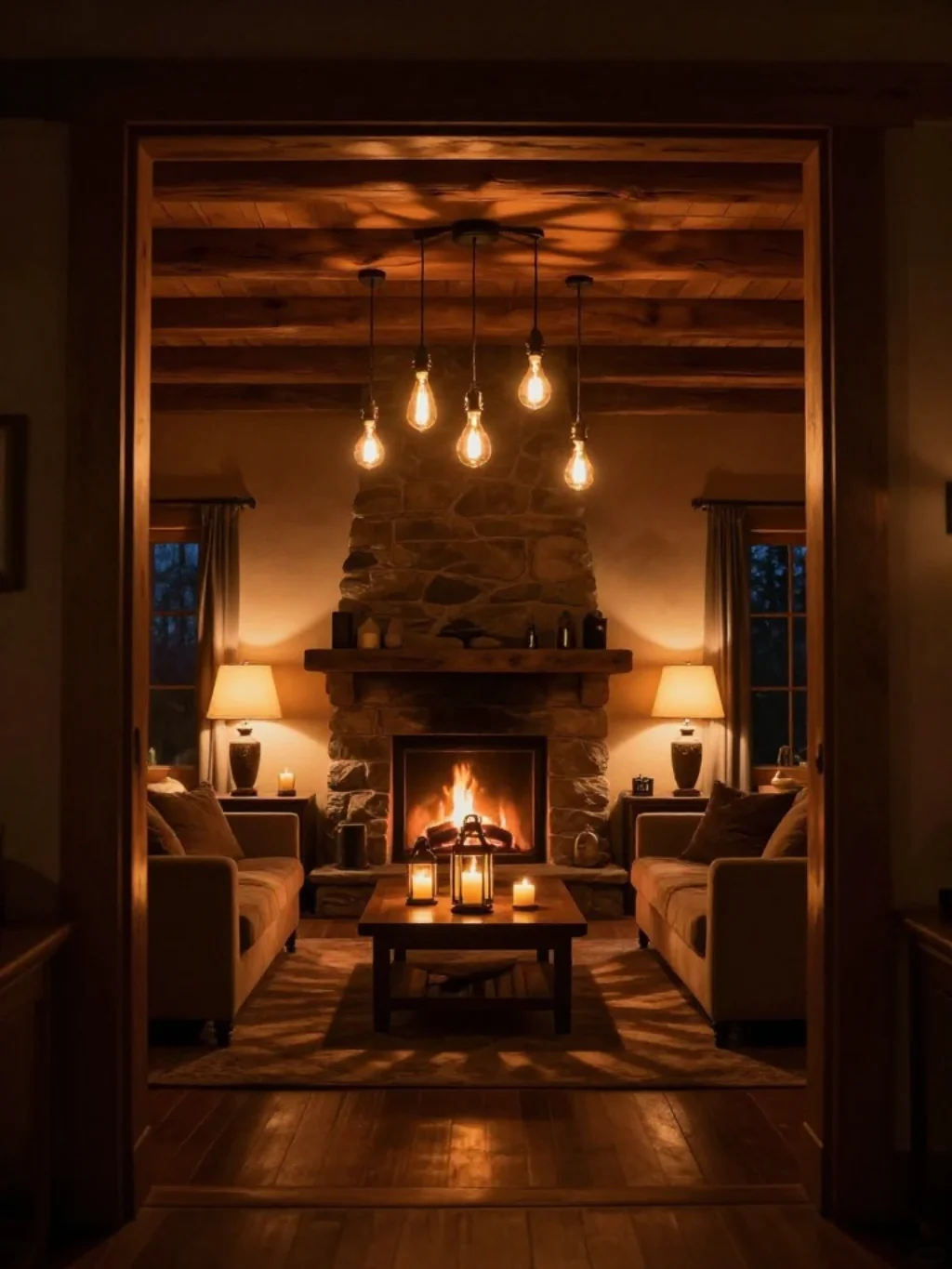
Winter cabin mood lighting is one of the most transformative and most underinvested aspects of cabin interior design. Most people add lighting as functional afterthought — a ceiling fixture for general illumination and nothing else. The winter cabin living room demands a completely different approach: multiple low-level light sources at varied heights that eliminate overhead lighting as the primary source and replace it with layered amber warmth.
Cabin living room warm lighting built correctly uses Edison bulb lighting in pendant fixtures over the seating area, candle lanterns on the coffee table and side tables, tabletop lamps with warm-toned shades at armchair height and firelight as the room’s primary ambient source during evening hours. Cabin lighting ideas winter that prioritize bulbs in the 2200K to 2700K range — the warmest end of the residential lighting spectrum — give every surface in the room a golden quality that cooler bulbs completely destroy. The winter cabin mood lighting difference between 2700K and 4000K in a cabin interior is the difference between a warm evening at a mountain lodge and a fluorescent-lit office that happens to have a fireplace.
Winter Cabin Living Room Ideas That Work in Small and Compact Spaces
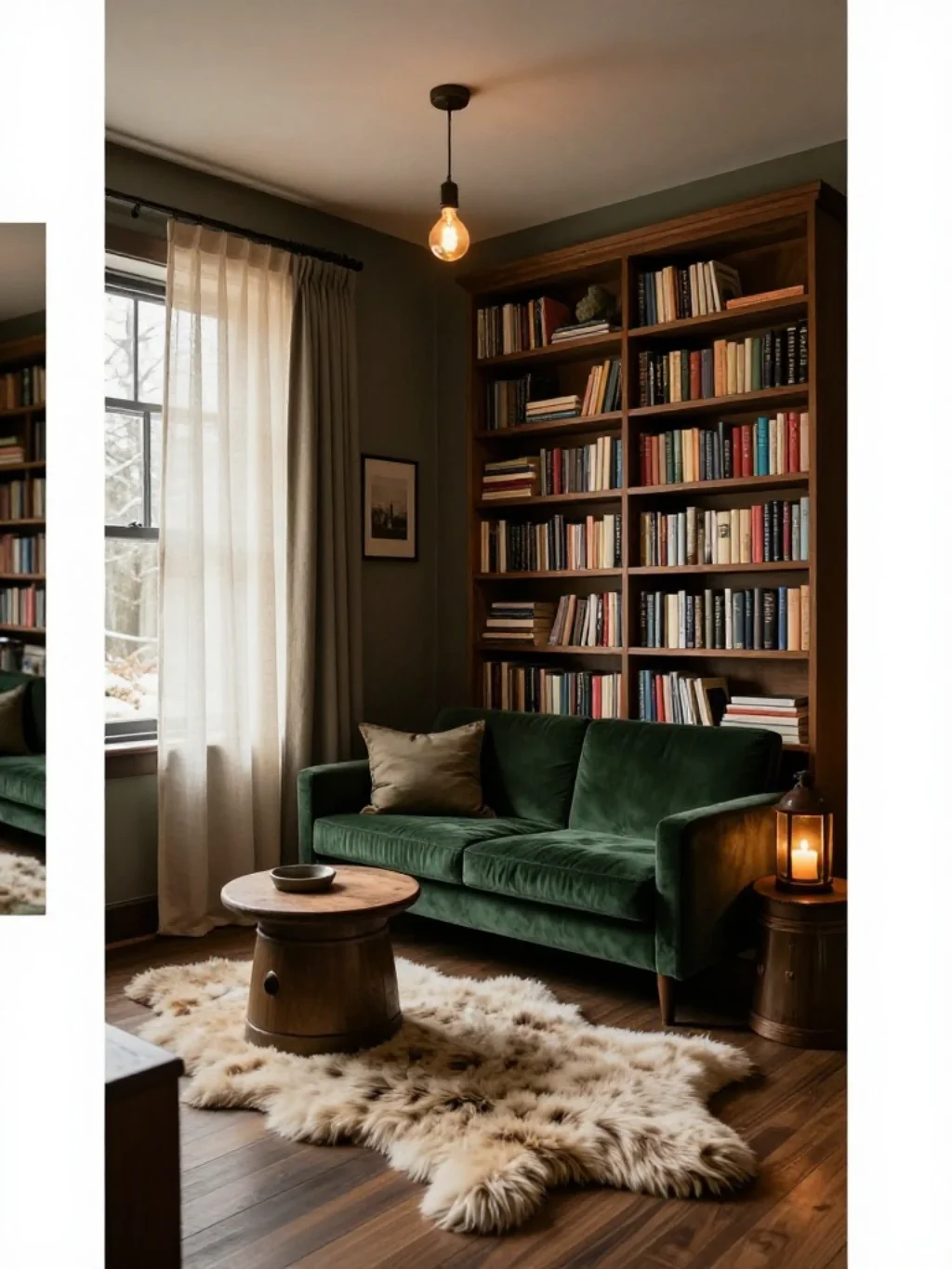
Cabin living room small space design presents a specific challenge: the furniture and textiles that create warmth in a cabin room tend toward generous scale while small rooms reward restraint. The resolution isn’t to eliminate the warmth elements — it’s to select fewer of them at appropriate scale and allow each one to breathe within the space rather than crowding them together.
you may also like this:17 Bookshelf Ideas for Small Spaces That Make Every Inch Beg to Be Noticed
How to make a small cabin living room feel larger in winter uses three specific strategies. First, choose one large area rug rather than multiple small ones — a single winter cabin rug selection that anchors the entire seating area creates visual cohesion that makes the room read as intentionally scaled rather than cramped. Second, use vertical space for bookshelves with books, candle lanterns and cabin curtain ideas that draw the eye upward and amplify the room’s perceived height. Third, limit the color palette strictly — cabin living room small space rooms that use three or fewer colors from the same warm tonal family feel more expansive than small rooms scattered with competing hues. Cabin living room ideas for small spaces in winter work best when every piece earns its place through both function and visual contribution.
The Rug That Grounds the Room — Choosing the Right Foundation Piece
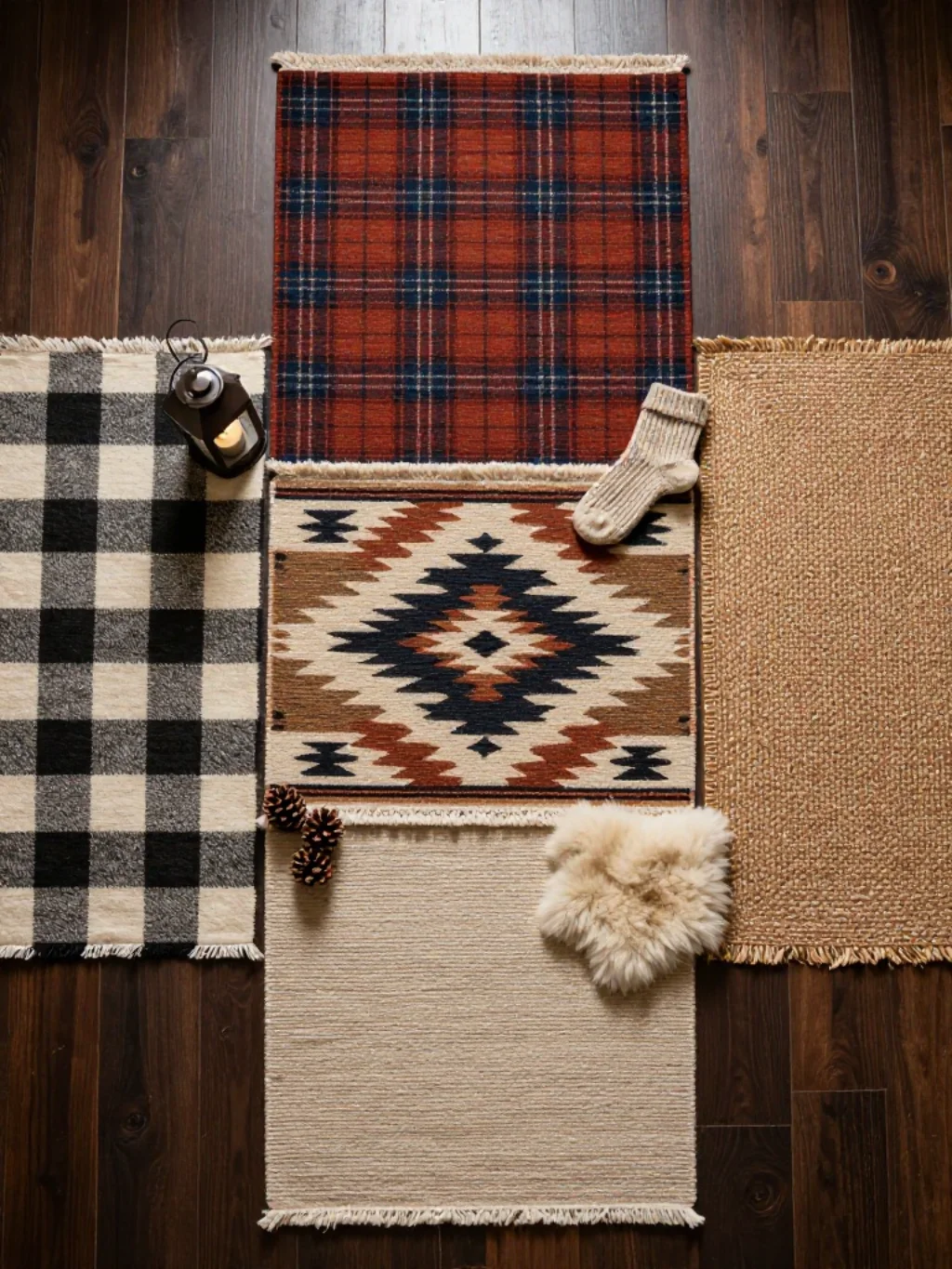
The winter cabin rug selection is the single largest decorative decision in the cabin living room because it covers more visual real estate than any other element. A rug that’s too small makes furniture float disconnectedly. A rug that’s too light in color and texture reads as summery and visually cool. A rug that’s too thin fails its primary job of adding sensory warmth underfoot when you walk barefoot from the kitchen at midnight.
Cabin rug ideas living room that consistently deliver both visual and sensory warmth include hand-knotted wool rugs in deep plaid patterns, natural jute rugs layered under a smaller sheepskin rug in front of the fireplace and flatweave wool rugs in geometric Southwestern patterns. Best rugs for a cozy cabin living room in winter share three characteristics: natural fiber construction for genuine warmth underfoot, adequate thickness for cushioning and visual depth and a color palette that sits within the room’s established warm tonal range. Hygge cabin living room design specifically recommends layering rugs — a large natural fiber base rug with a smaller animal hide or sheepskin layered on top — creating the visual richness and textural variety that single-rug approaches cannot achieve.
Plaid Flannel and Wool Accents That Signal Winter Without Overdoing It
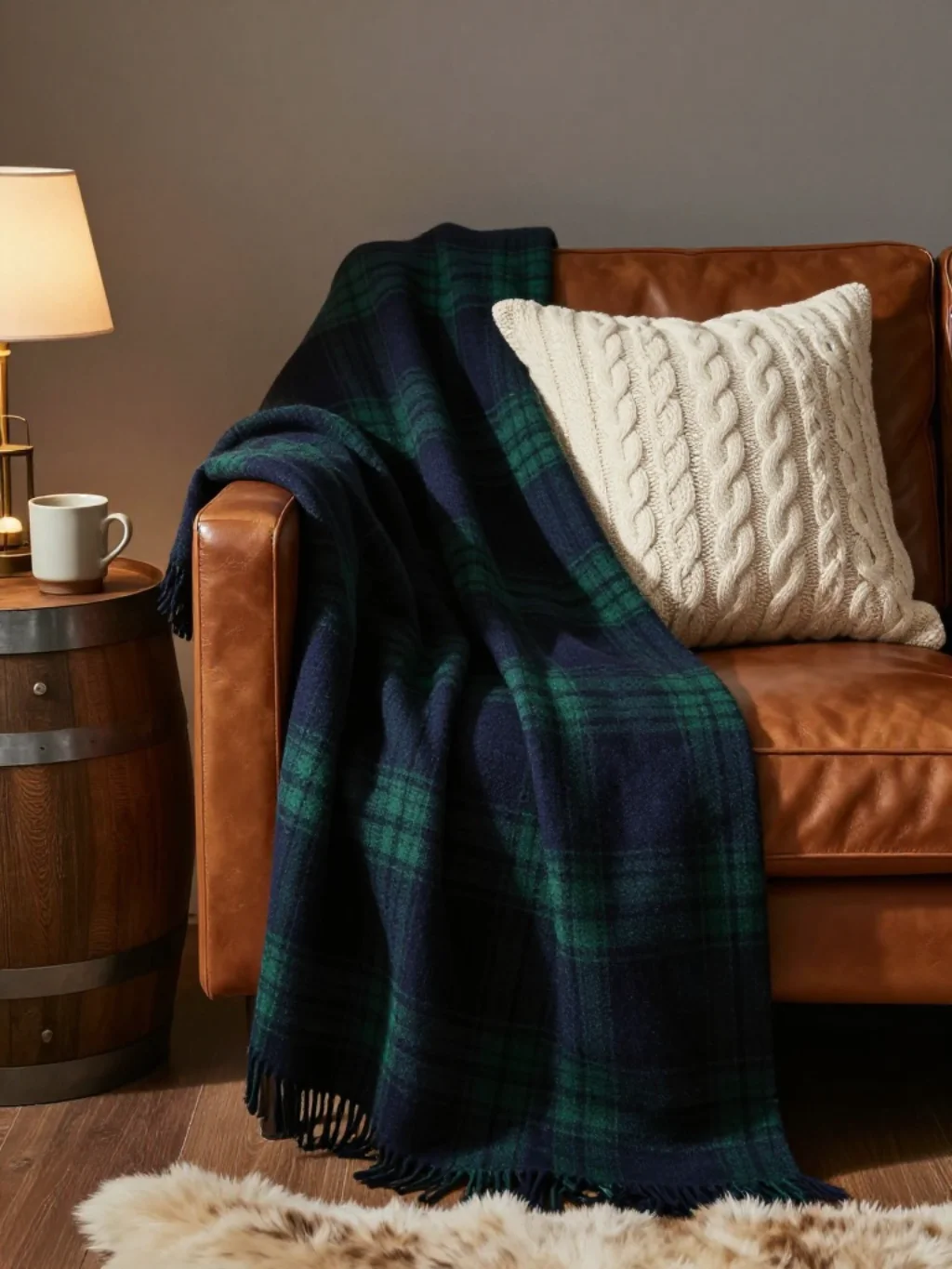
How to use plaid in a winter cabin living room without tipping into seasonal cliché requires understanding plaid as a textile tradition rather than a holiday decoration. Tartan plaid in deep navy and forest green. Oversized buffalo check in charcoal and cream. Hunting plaid in rust and brown. These are plaid and flannel home decor choices with genuine heritage and visual authority that signal winter through material authenticity rather than seasonal decoration.
Plaid cabin living room decor works best when plaid appears in one or two dominant textiles rather than across every surface simultaneously. A plaid flannel blanket draped over the arm of the sofa and coordinating cable knit pillow covers in a complementary solid tone is more sophisticated than a plaid sofa, plaid pillows, plaid curtains and plaid rug competing for attention in the same room. Cabin pillow and throw ideas that use plaid as an accent within a larger textile system — neutral linen pillows, a solid wool throw blanket, one plaid throw — create the warmth association of the pattern without its potential for visual excess.
Mantel Styling for Winter That Turns a Shelf Into a Seasonal Masterpiece
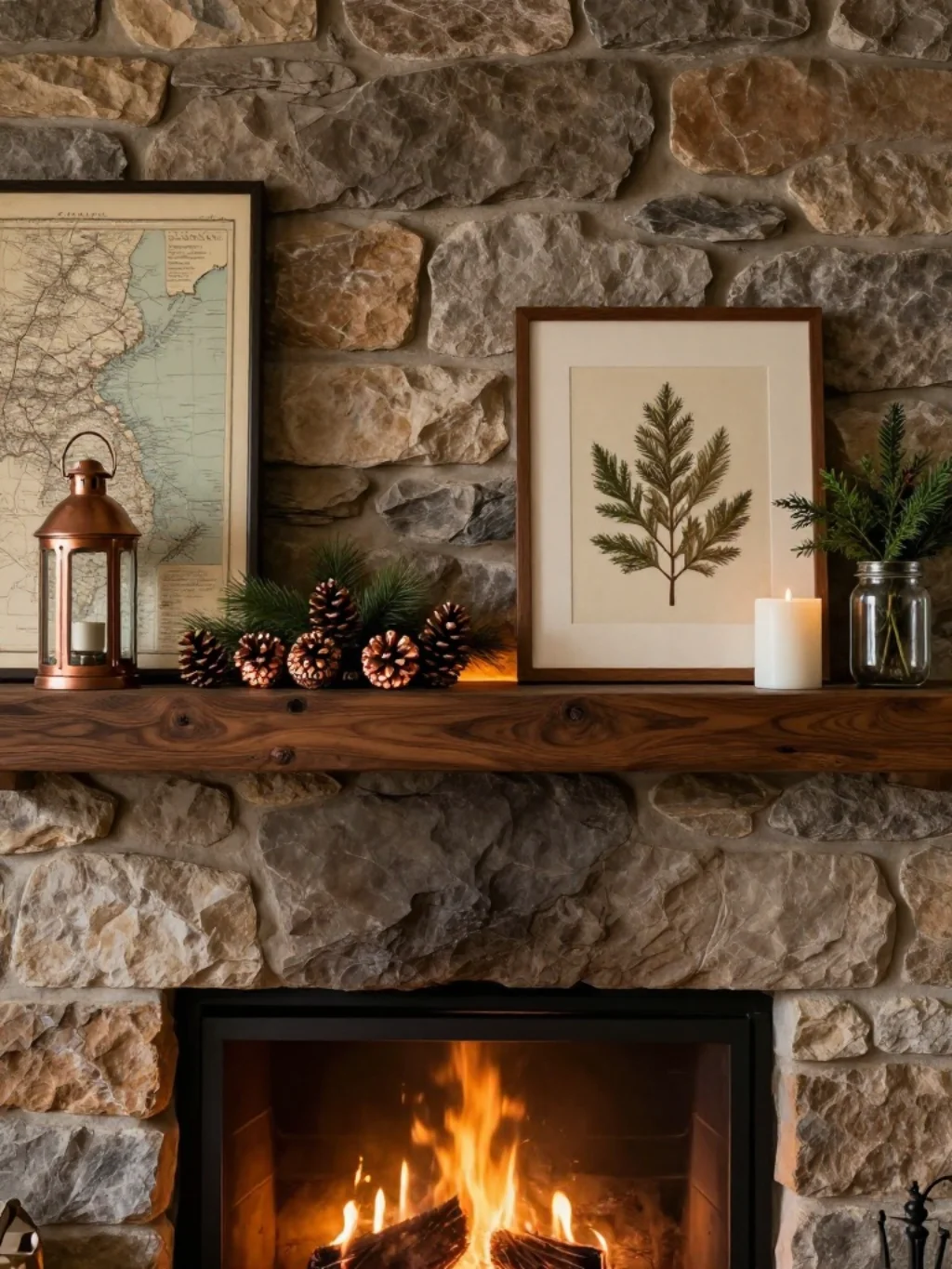
Cabin mantel winter styling is one of the most searched aspects of winter cabin interior design and one of the most consistently overcrowded in execution. The impulse to fill every inch of mantel space with objects produces a surface that reads as cluttered rather than curated. Winter mantel decor ideas that actually work use deliberate asymmetry, varied heights and generous empty space as an intentional design element.
How to decorate a cabin mantel for winter correctly begins with one strong anchor — a large piece of moose or bear artwork, a vintage map wall art piece or an oversized mirror — flanked asymmetrically by objects of varied heights. A candle lantern at the far left. A cluster of pine cone decor with copper accent pieces at mid-height. A single botanical pressed art prints piece leaning rather than hung. How to decorate a cabin mantel for winter without it looking cluttered means following the interior designer’s rule of three — odd numbers, varied heights and one natural organic element among the styled objects. Mason jar decor filled with pine branches, dried berries or small candles provides the organic element that keeps mantel compositions from reading as purely decorative rather than seasonally alive.
Reading Nook Concepts That Make Staying Inside Feel Like the Best Decision
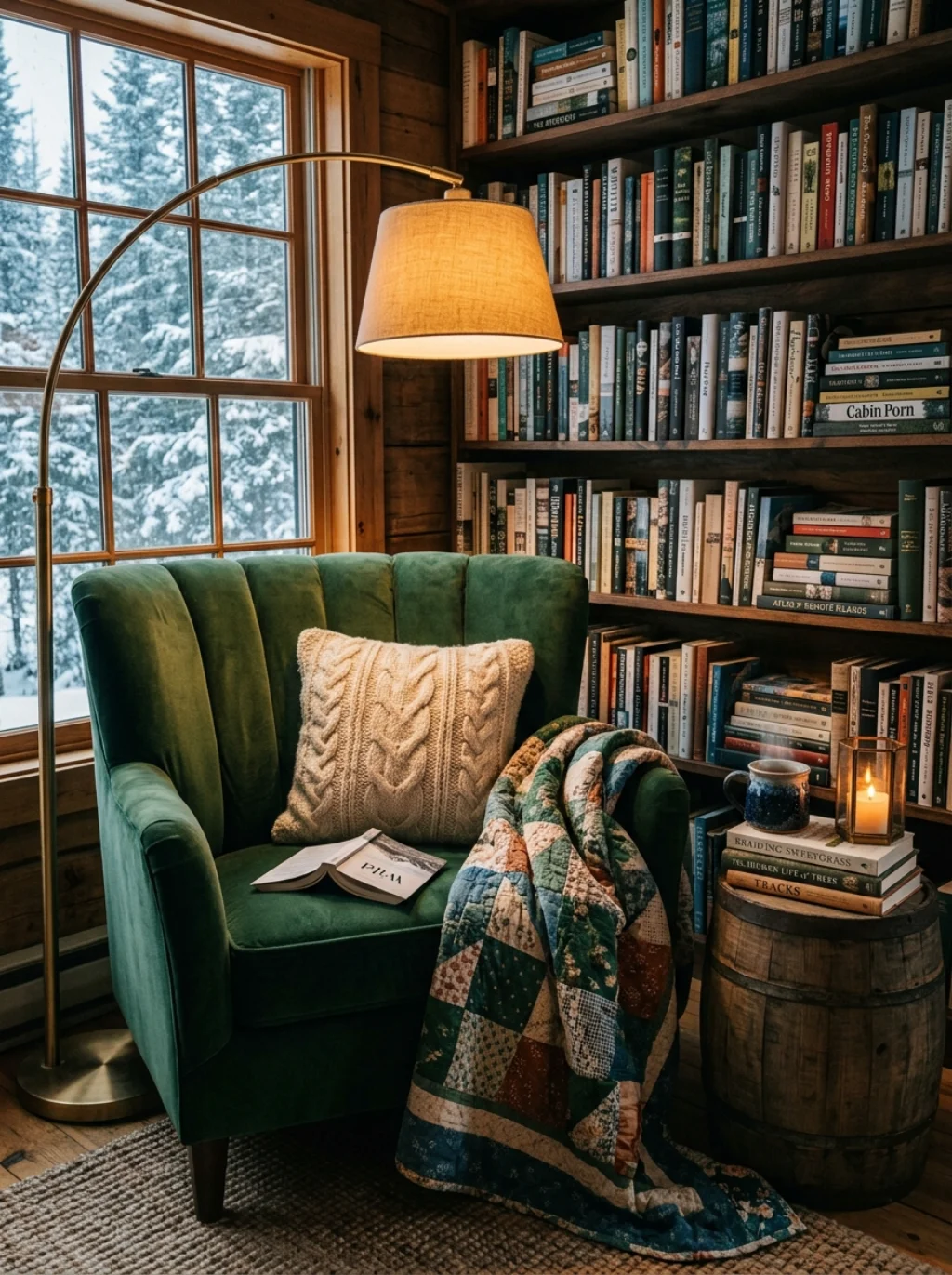
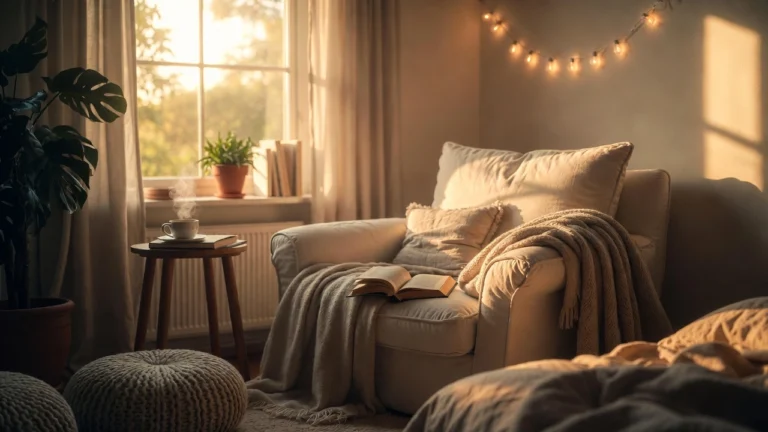
Cozy reading nook ideas for winter cabin living rooms tap into a specific human desire that winter amplifies — the desire to be completely enclosed in warmth and comfort while engaged in something absorbing and quiet. A reading nook doesn’t require dedicated architecture. It requires a winter accent chair ideas implementation that carves out a distinct sense of place within the existing room through furniture positioning, lighting focus and textile density.
Cabin reading nook ideas that consistently create the most compelling sanctuary feeling combine an oversized armchair in a deep upholstery — leather sofa scaled down to single-chair format, or a channel-tufted velvet in deep forest green — positioned near the window to maximize winter light during daytime reading, a small barrel side table at the right height for a tea cup and a book, a floor lamp with a warm-toned shade positioned over the left shoulder and bookshelves with books within arm’s reach. The cozy reading corner cabin room that adds a handmade quilt throw draped over the chair arm and a cabin throw blanket ideas implementation across the footrest creates a complete small-scale retreat within the larger living space. Slow living interior design philosophy that prioritizes the quality of a single seated experience over the efficiency of a multi-purpose space produces the most genuinely restful reading nook results.
Dark Moody Cabin Interiors That Prove Light Rooms Are Not Always the Answer
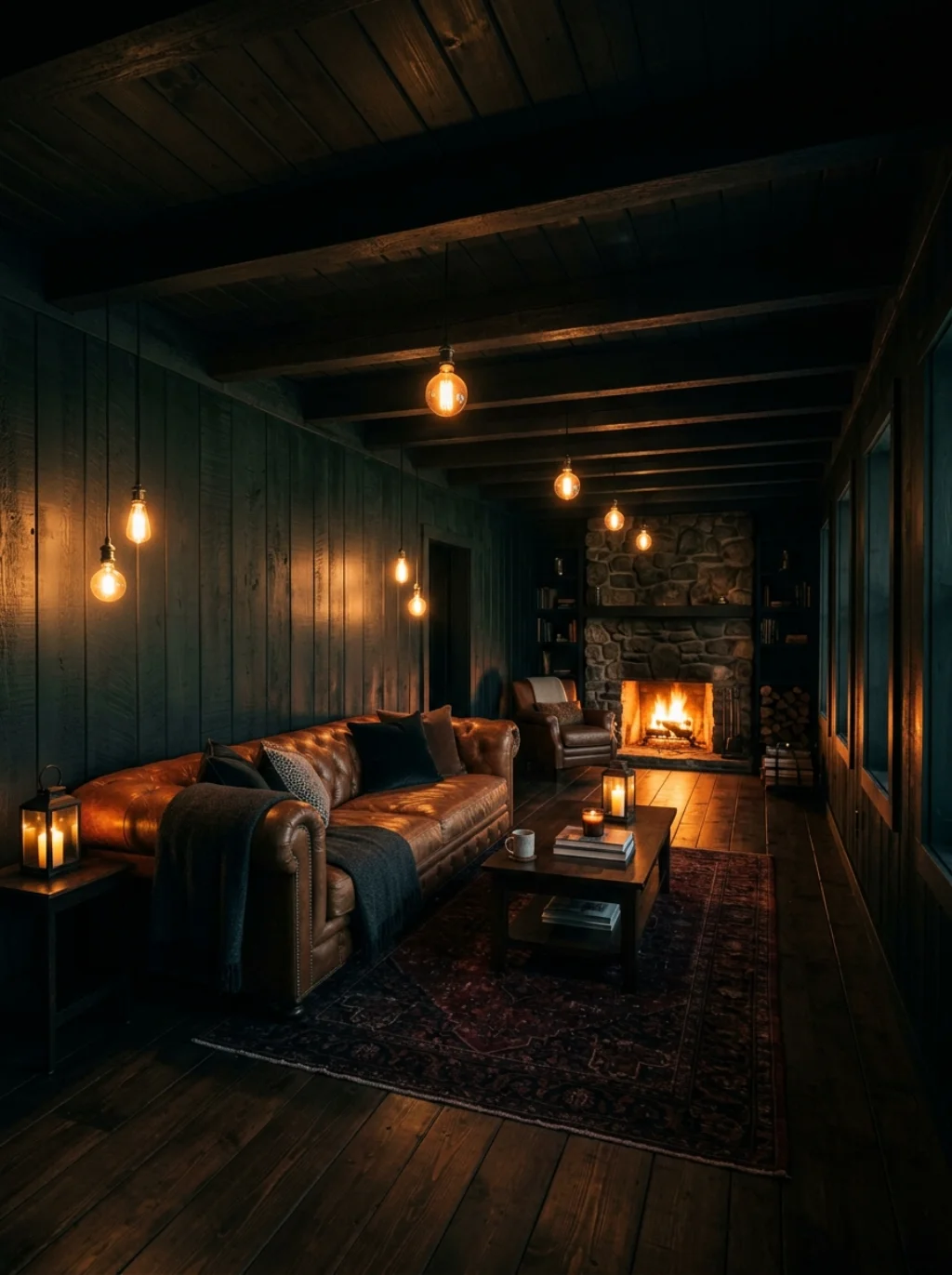
The dominant interior design advice of the past decade has relentlessly favored light — white walls, pale floors, maximum natural light amplification. The dark moody winter interior tradition of cabin design operates on the opposite principle: that a room wrapped in deep, absorbing color creates a warmth and safety that bright rooms simply cannot replicate. Dark rooms feel like shelter. Bright rooms feel like open space. Winter calls for shelter.
Dark wood cabin living room design using deep walnut, aged mahogany or blackened pine on walls, ceilings and millwork creates a winter sanctuary home concept of extraordinary visual power. The dark moody winter interior gains its livability from lighting — Edison bulb lighting at low levels, candle lanterns on every surface and firelight as the primary evening source all perform dramatically better against dark surfaces than against light ones because the contrast between the warm light sources and the dark surrounding walls amplifies the amber quality of every light in the room. Winter cabin living room ideas with dark wood consistently photograph more dramatically than light-painted equivalents precisely because the contrast makes every light source glow rather than simply illuminate.
Budget Cabin Living Room Decor That Looks Like a Mountain Lodge Retreat
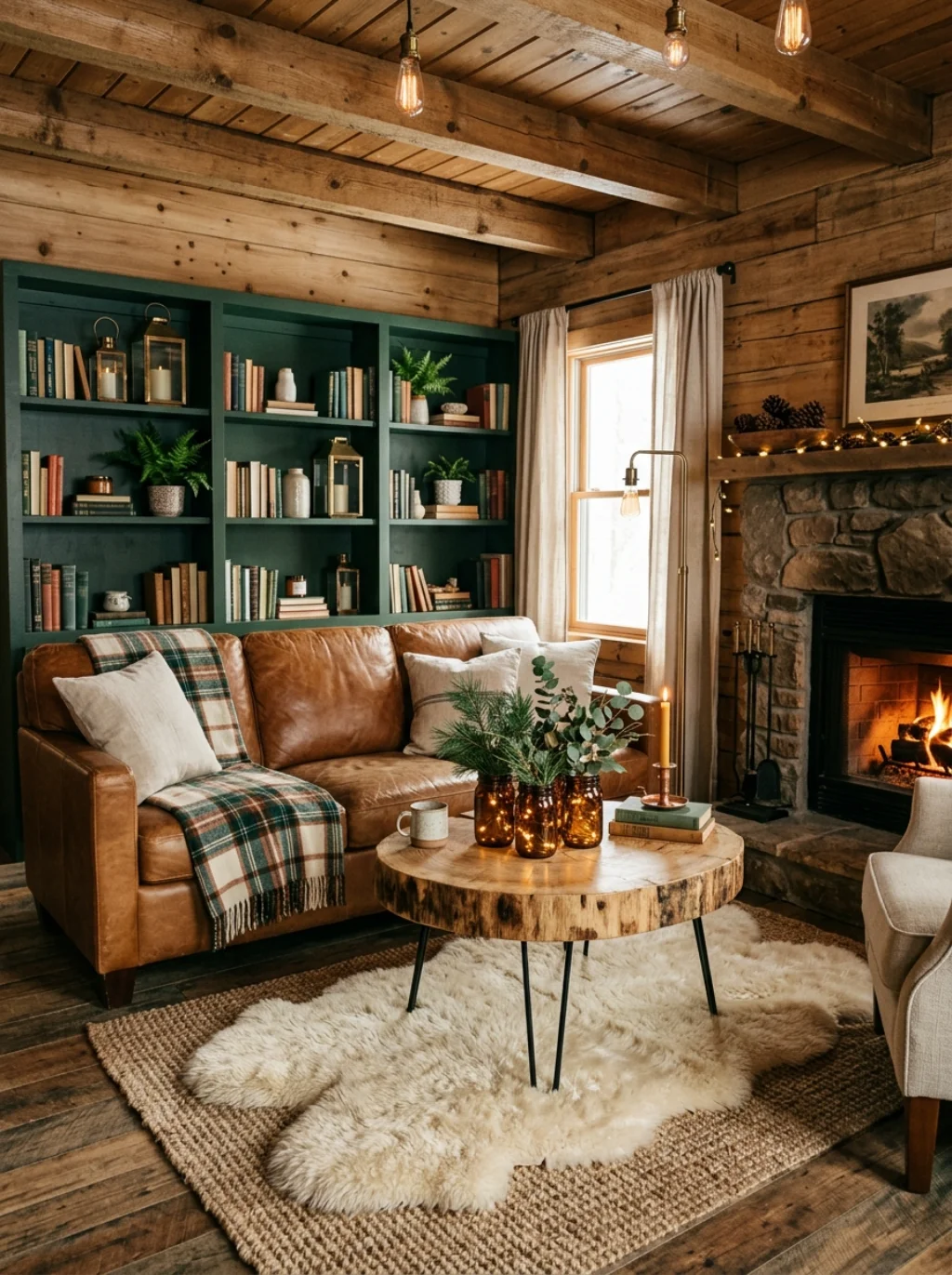
Cabin living room budget decor that achieves genuine mountain cabin living room atmosphere without significant financial investment requires strategic prioritization: spend on the few elements that make the most visual impact and find alternatives for everything else. The rule in cabin budget decorating is to invest in what you touch — rugs, throw blankets, pillow covers — and find creative alternatives for what you only look at.
Winter cabin living room ideas on a budget that consistently deliver outsized visual returns include thrifted distressed wood furniture refinished with dark wood stain, secondhand woven rattan furniture accent chairs reupholstered in an inexpensive wool fabric, DIY candle lanterns made from mason jars and tea lights and pine cone decor collected directly from the surrounding landscape. Cabin living room budget decor that uses gathered natural materials — dried branches, pine cones, river stones, birch logs — as primary decorative elements achieves the biophilic winter home design quality of expensive nature-inspired decor at literally zero cost. Mountain cabin interior warmth doesn’t require a large budget — it requires the right material choices applied with deliberate intention.
Natural and Organic Elements That Bring the Frozen Forest Indoors
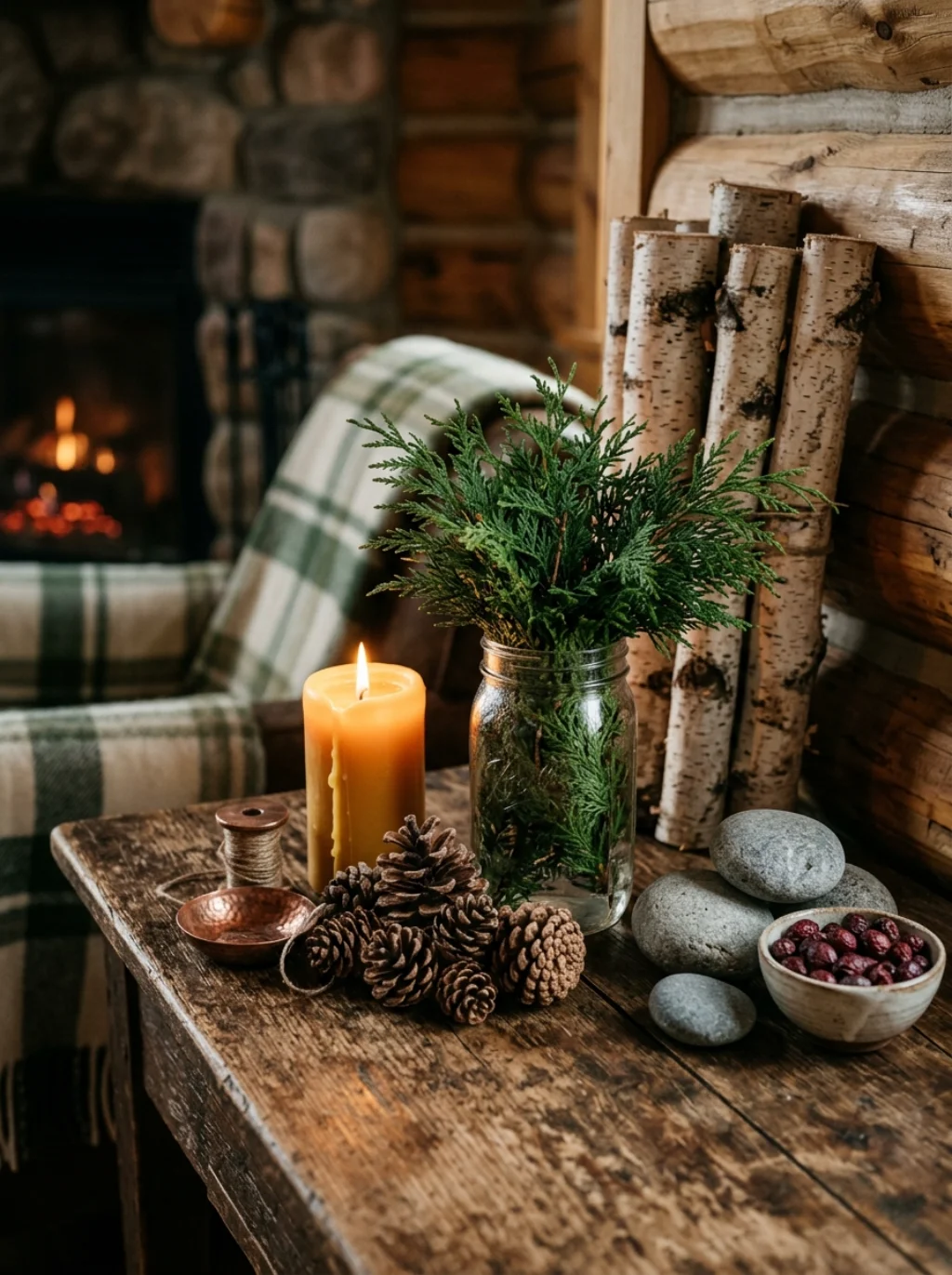
Natural material cabin interior design draws from the landscape immediately outside the cabin windows — the materials, colors and forms of the winter forest translated into indoor objects and arrangements. Biophilic winter home design in this tradition treats the barrier between inside and outside as permeable — the cabin interior should feel like a continuation of the natural landscape in a sheltered form rather than a complete departure from it.
Natural material home styling for a winter cabin living room uses birch logs stacked beside the wood burning stove as both functional firewood and visual texture, dried botanicals in vintage map wall art and botanical pressed art prints frames, pine cone decor arranged in a mason jar decor display with copper accent pieces and branches of cedar or pine in oversized mason jar decor arrangements that bring living forest scent indoors. Grounded earthy home interior design that prioritizes unprocessed or minimally processed natural materials — rough stone, raw timber, dried plant matter — over manufactured decorative objects creates a forest retreat home aesthetic of extraordinary authenticity that manufactured cabin decor simply cannot replicate regardless of budget.
Artwork and Wall Decor That Tells a Winter Story Without Saying a Word
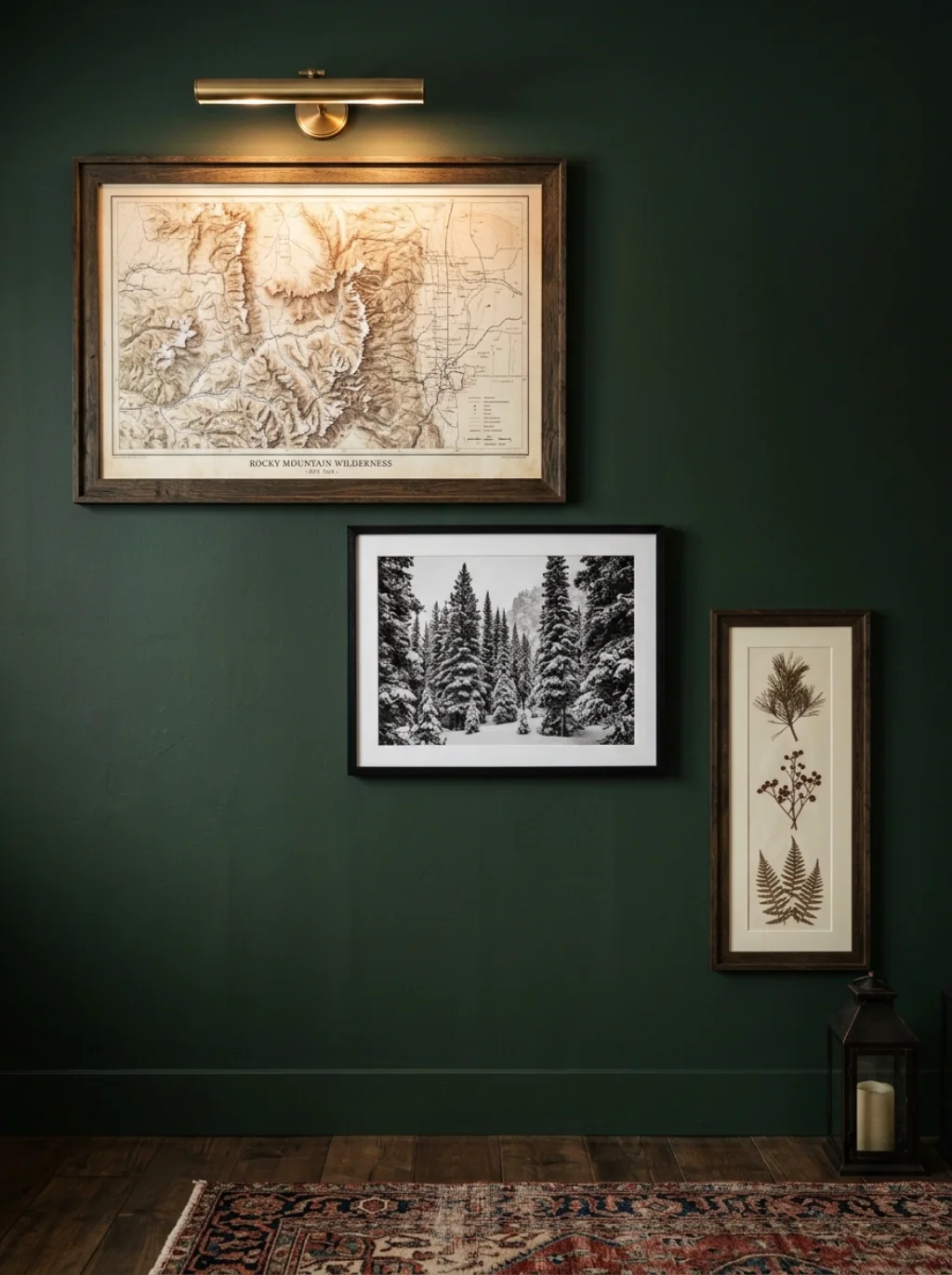
Winter cabin artwork selection operates on a thematic principle: the art should be of the place and the season. Moose or bear artwork in the tradition of American wilderness painting — Hudson River School landscapes, Ansel Adams-influenced black and white photography, folk art wildlife representations — places the cabin interior in visual relationship with the specific North American wilderness experience.
Cabin living room window treatment and wall decor work together to frame the winter landscape outside as the room’s most dramatic artwork — a cabin with large windows looking onto snow-covered pines needs minimal wall art because the window is already doing all the visual work. Natural linen curtains in an unlined weight that can be fully opened during daylight hours to maximize winter light and the view, then drawn in the evening to create enclosure and warmth, serve both functional and aesthetic purposes simultaneously. Vintage cabin living room decor through the addition of hunting and fishing decor — antique fishing lures in a shadow box frame, a vintage topographic map of the surrounding mountain range, reclaimed wood shelving displaying antique outdoor tools — creates visual narrative depth that purely decorative objects cannot achieve.
Scent Sound and Atmosphere — the Invisible Layer of Winter Cabin Design
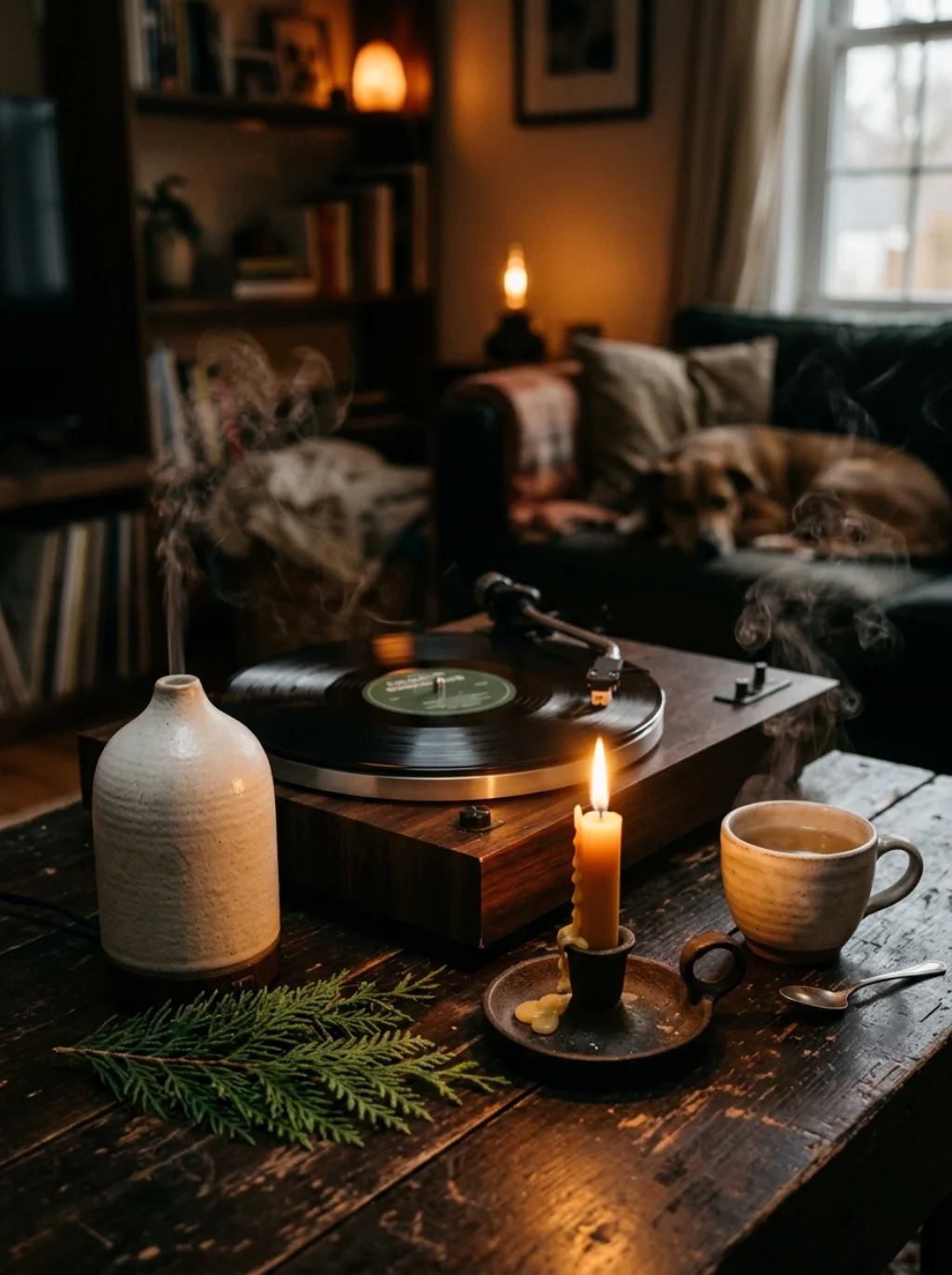
Seasonal home styling concept in a winter cabin living room extends far beyond what the eye sees to include what the nose smells and the ear hears — the sensory dimensions that professional interior designers address and amateur decorators almost universally overlook. A room that smells of cedar, pine smoke and beeswax candles communicates warmth before a guest has taken in a single visual detail.
Slow living interior design philosophy applied to scent and sound in a winter cabin creates a complete sensory experience: cedar and fir essential oils diffused subtly in the morning, a real wood fire burning in the evening, candle lanterns using beeswax candles with their characteristic honey scent, a record player in the corner playing jazz or folk music at a volume that fills the space without dominating the conversation. Winter warmth interior concept at this sensory level treats the cabin living room as a complete atmospheric experience rather than a visual arrangement — and the rooms that achieve this multi-sensory warmth are the ones that guests remember for years after the visit. The intimate gathering space design is built not just from furniture and textiles but from everything the room makes you feel.
Pulling Every Element Together Into One Cohesive Winter Cabin Vision
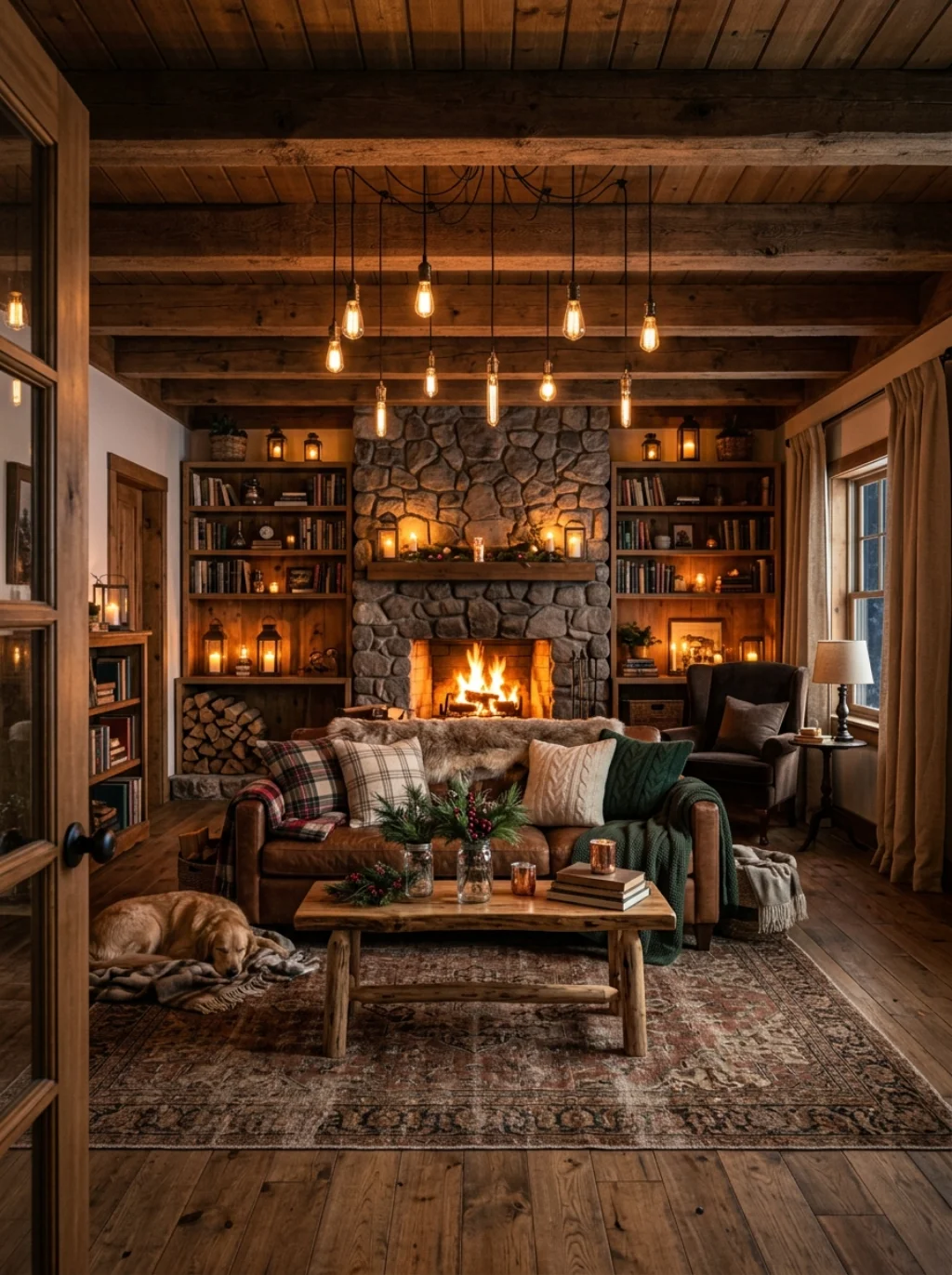
Winter cabin living room decor achieves its greatest power when every element speaks the same visual language — when the color palette of the rug is echoed in the throw pillows, the material of the furniture is referenced in the smaller accent pieces and the scale of the room’s architecture is respected by the scale of the furniture chosen to fill it. Coherence is what separates a cabin room that feels designed from one that feels accumulated.
Cabin living room layout winter planning that establishes the fireplace as the room’s visual and social center, then places the furniture, lighting, textiles and decorative elements in concentric rings of warmth outward from that center creates a spatial logic that every guest will unconsciously register as right even if they couldn’t articulate why. Mountain retreat living space design at this level of integration — where the architecture, the furnishings, the textiles, the lighting and the scent all reinforce the same core experience of sheltered winter warmth — produces the kind of room that makes people stop at the threshold before entering just to take in the whole picture. That pause is the measure of genuine success in winter cabin living room design.
Frequently Asked Questions
What colors work best for a winter cabin living room
Winter cabin living room color schemes that create genuine seasonal warmth lean toward the palette of the winter forest — deep bark brown, mossy sage, heathered grey and warm ochre. Cabin living room color warmth builds most effectively on a foundation of warm neutrals like deep cream and warm white rather than cool-toned whites, with accent colors drawn from earthy natural tones. Avoid cool blues, stark whites and any color in the grey-green range — these read as cold rather than cozy and undermine the winter warmth interior concept regardless of how many warm textiles you layer on top.
How do I make a small cabin living room feel cozy in winter
Cabin living room small space design achieves coziness through strategic density rather than minimalist restraint — but that density must be controlled. How to make a small cabin living room feel larger in winter uses one large rug rather than multiple small ones, vertical storage through bookshelves with books that draw the eye upward and a strictly limited color palette of warm tonal colors. Cozy cabin living room decor in a small space prioritizes tactile richness — wool throw blanket and cable knit pillow covers piled generously — over visual variety that requires more square footage to read correctly.
What type of rug works best for a cabin living room in winter
Winter cabin rug selection should prioritize natural fiber construction, adequate pile height for warmth underfoot and a color palette within the room’s warm tonal range. Best rugs for a cozy cabin living room in winter include hand-knotted wool rugs in plaid or geometric patterns, natural jute rugs in warm honey tones and layered arrangements that combine a large natural fiber base rug with a smaller sheepskin rug positioned in front of the fireplace. Synthetic fiber rugs fail in the cabin context regardless of their visual appearance because they provide no genuine warmth underfoot and communicate material inauthenticity that undermines the natural material ethos of the rustic cozy living room ideas tradition.
How do I style a cabin mantel for winter without it looking cluttered
How to decorate a cabin mantel for winter correctly uses the rule of three, asymmetrical arrangement and deliberate empty space as a design tool. Cabin mantel winter styling that avoids clutter starts with one large anchor piece — artwork, a mirror or a significant object — then adds two flanking elements at varied heights with generous space between each. Winter mantel decor ideas should include one organic natural element like pine cone decor or a branch of cedar, one source of light like a candle lantern and one personal or meaningful object. Remove anything that doesn’t contribute to either the visual composition or the seasonal narrative.
What lighting creates the best winter cabin atmosphere
Cabin living room warm lighting that creates genuine winter cabin atmosphere uses multiple low-level sources at varied heights rather than a single overhead fixture. Winter cabin mood lighting built on Edison bulb lighting in the 2200K to 2700K color temperature range, supplemented by candle lanterns, table lamps with warm-toned shades and firelight as the primary evening ambient source creates the layered amber warmth that defines the woodland lodge interior style at its best. Eliminate or dim overhead lighting entirely during evening hours — the ceiling fixture is the enemy of cabin atmosphere regardless of its bulb temperature.
Conclusion
Winter cabin living room ideas reach their highest expression when they stop being about decoration and start being about atmosphere — the deliberate construction of a sensory environment that makes cold nights genuinely irresistible rather than merely tolerable. The stone fireplace as the gravitational center. The layered cabin textile winter decor that makes every surface invite contact. The winter cabin mood lighting that turns every evening into a golden hour that lasts until bedtime. The natural materials that connect the room to the forest landscape outside. Each element covered in this guide contributes to a single coherent experience: the feeling of being completely, unconditionally warm in a world that is completely, unconditionally cold. That feeling is the goal. Every design decision should serve it.

One Comment