
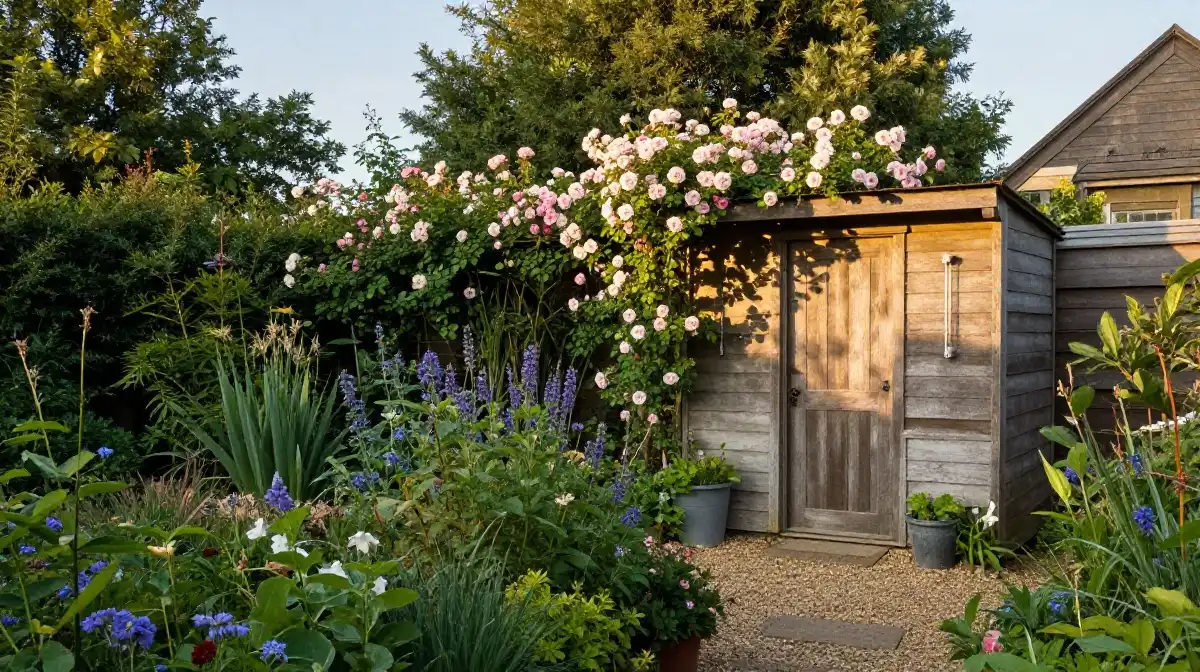
16 Backyard Shed Landscaping Ideas That Turn an Eyesore Into a Dream Garden Feature
That lonely shed sitting in your backyard deserves better. Most homeowners treat it like a necessary evil — something to tolerate rather than celebrate. But backyard shed landscaping ideas can flip that narrative completely. The right plants, paths, and borders transform it into the most magnetic corner of your entire yard.
According to the National Association of Landscape Professionals, well-executed yard landscaping increases property value by 15 to 20 percent. Your shed is part of that equation. Don’t ignore it any longer.
01 — Why Your Shed Looks Wrong and How Landscaping Fixes Everything Around It
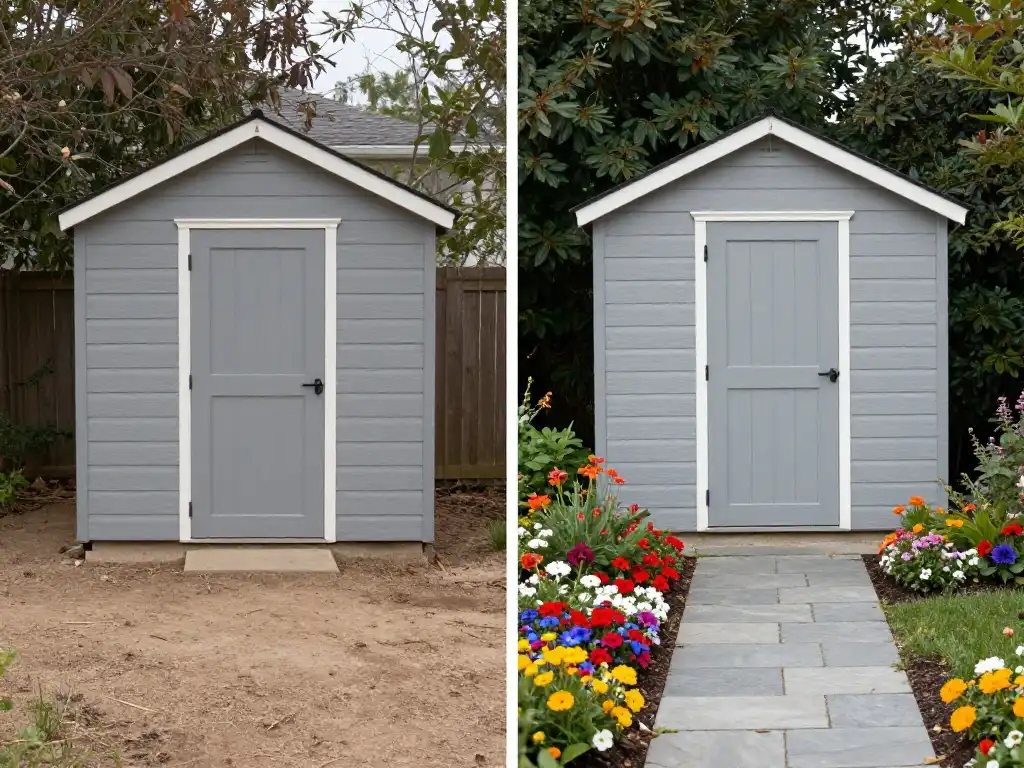
Most sheds look wrong for one simple reason. They sit in isolation. No plants soften their edges. No path connects them to the rest of the yard. Landscaping around shed structures creates visual continuity — it anchors the building into the garden so it belongs rather than intrudes.
Think of it like a picture frame. A beautiful painting without a frame looks unfinished. Your shed is the painting and the landscape is the frame. Backyard shed makeover projects consistently show that adding just a simple flower border and a gravel path raises the entire yard’s aesthetic by several degrees instantly.
02 — The Foundation Planting Rule That Makes Any Backyard Shed Look Rooted and Real
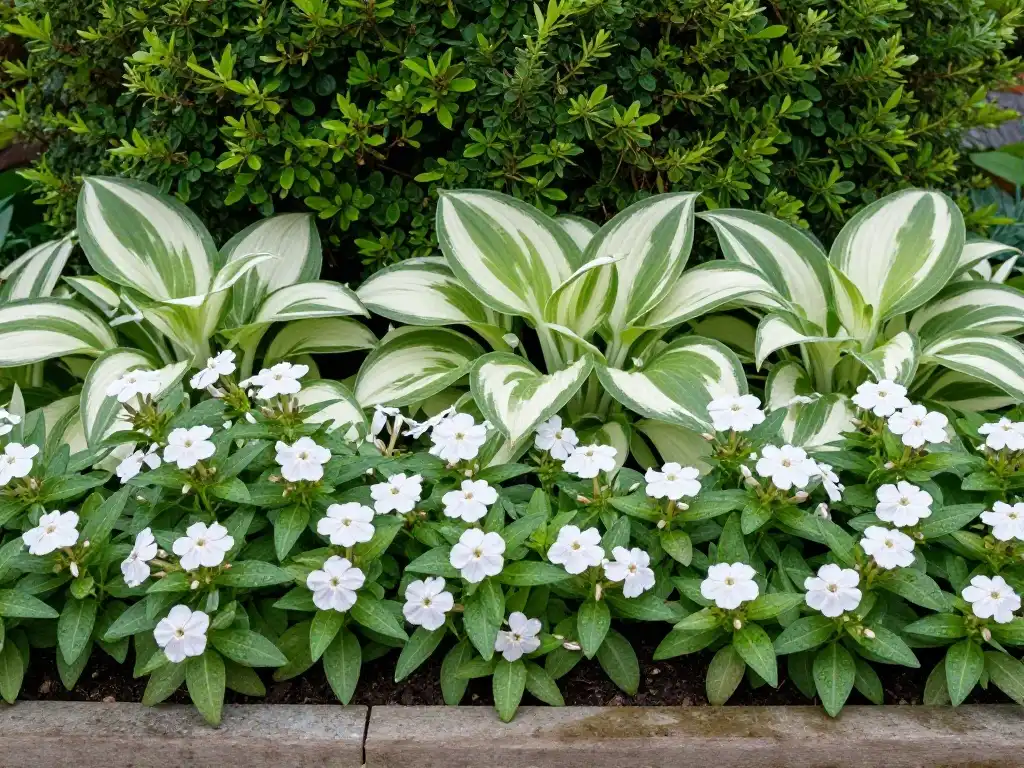
Shed foundation landscaping is the single most powerful technique in any backyard shed landscaping ideas playbook. It means planting a layered border directly at the base of your shed walls. Short groundcovers go first. Medium perennials sit behind them. Taller shrubs anchor the back row.
This three-layer system mimics naturalistic garden design and eliminates the harsh visual gap between your shed’s siding and the bare ground. Shed foundation planting ideas using hostas around shed base and creeping phlox ground cover work brilliantly in shaded yards. They’re hardy, forgiving and genuinely gorgeous without demanding constant attention from you.
| Layer | Plant Type | Examples | Height |
|---|---|---|---|
| Front (groundcover) | Low spreaders | Creeping phlox, sedum | 3–6 inches |
| Middle (perennials) | Flowering plants | Hostas, black-eyed Susan | 12–24 inches |
| Back (shrubs) | Structure plants | Boxwood, ornamental grass | 3–5 feet |
03 — Best Plants to Grow Around a Backyard Shed Without Killing Your Weekends
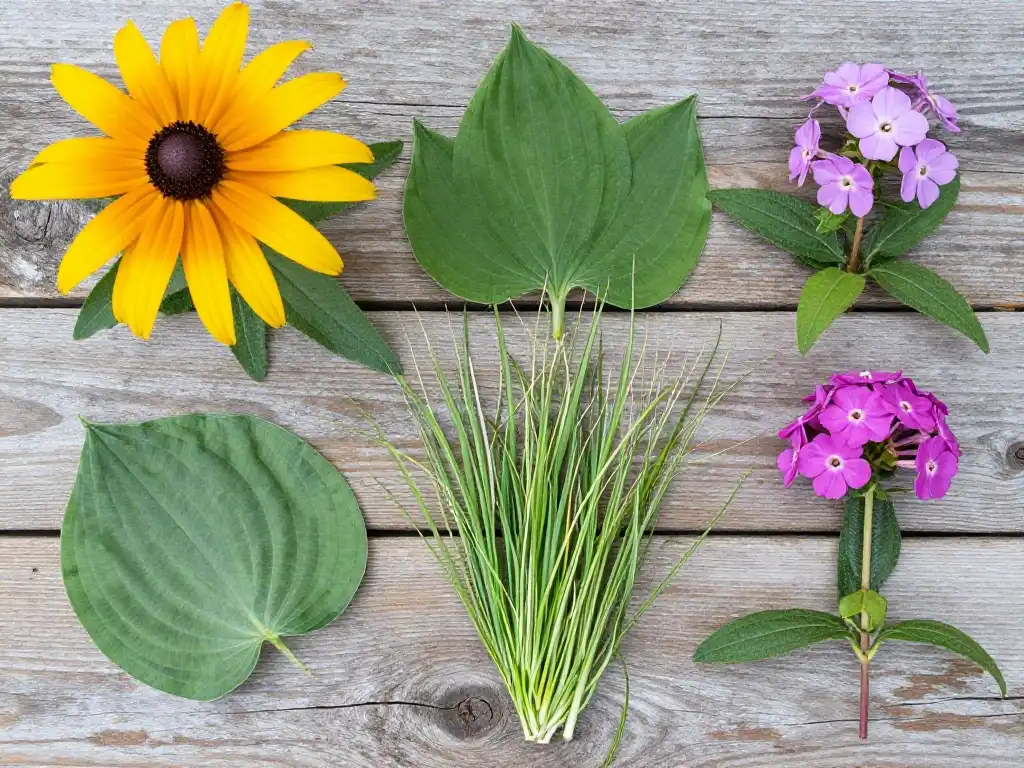
Knowing what to plant beside a backyard shed separates a thriving garden from a struggling one. Sheds create microclimates. The south-facing wall gets full sun. The north side stays shaded and cool. Matching plants to these conditions is everything.
Shade tolerant plants near shed like ferns, astilbe and hostas around shed base thrive on the dim north side. For the sunny south wall, black-eyed Susan shed border plantings and Rudbeckia shed flower border arrangements explode with color from July through October. Best plants to grow near a garden shed always include at least one native species — they support local pollinators and rarely need supplemental watering once established.
04 — Climbing Plants on Shed Walls: The Secret to a Cottage Garden That Stops Traffic
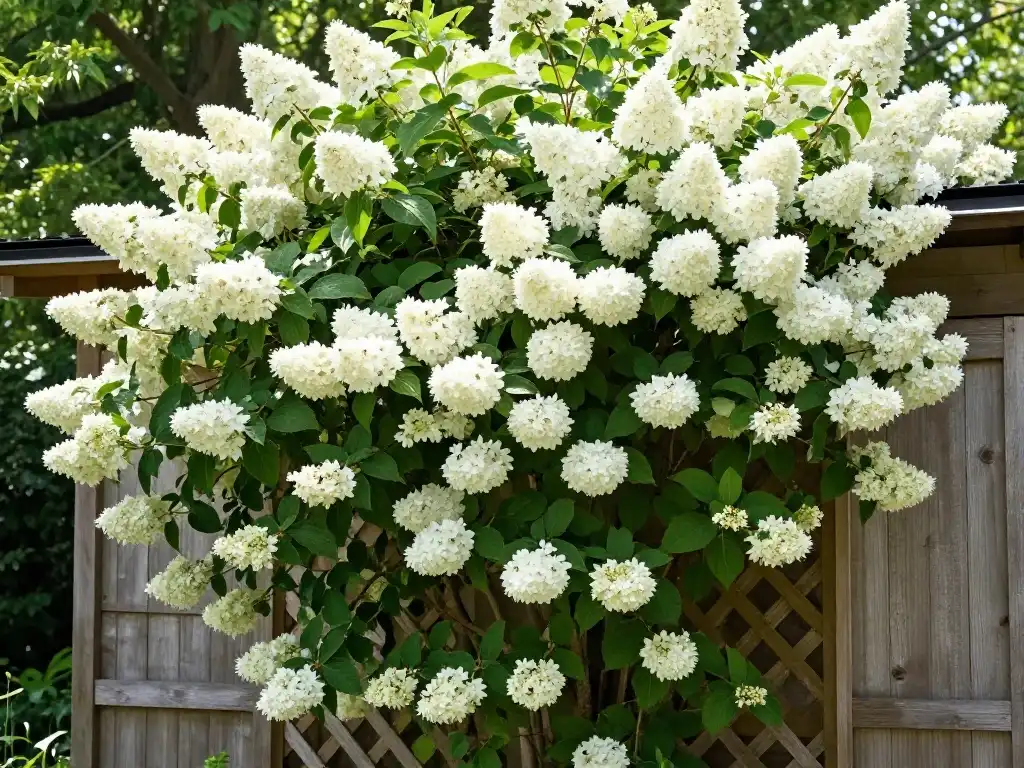
How to use climbing plants on shed walls is one of those questions that unlocks an entirely new dimension of garden design. Vertical planting multiplies your growing surface without consuming any additional ground space. It’s the most efficient square footage in your entire yard.
you may also like this: 15 Boho Front Porch Ideas Stunning Ways to Create a Wildly Beautiful Outdoor Sanctuary
Climbing hydrangea on shed walls creates a breathtaking summer display. It’s slow to establish but absolutely spectacular once mature — cascading white lacecap flowers against wooden siding is genuinely show-stopping. English ivy shed wall coverage works faster and provides year-round greenery. Pair either plant with a lattice panel shed trellis for structural support and the whole effect becomes deeply intentional rather than accidental.
05 — How to Build a Garden Path to Your Shed That Feels Intentional Not Accidental
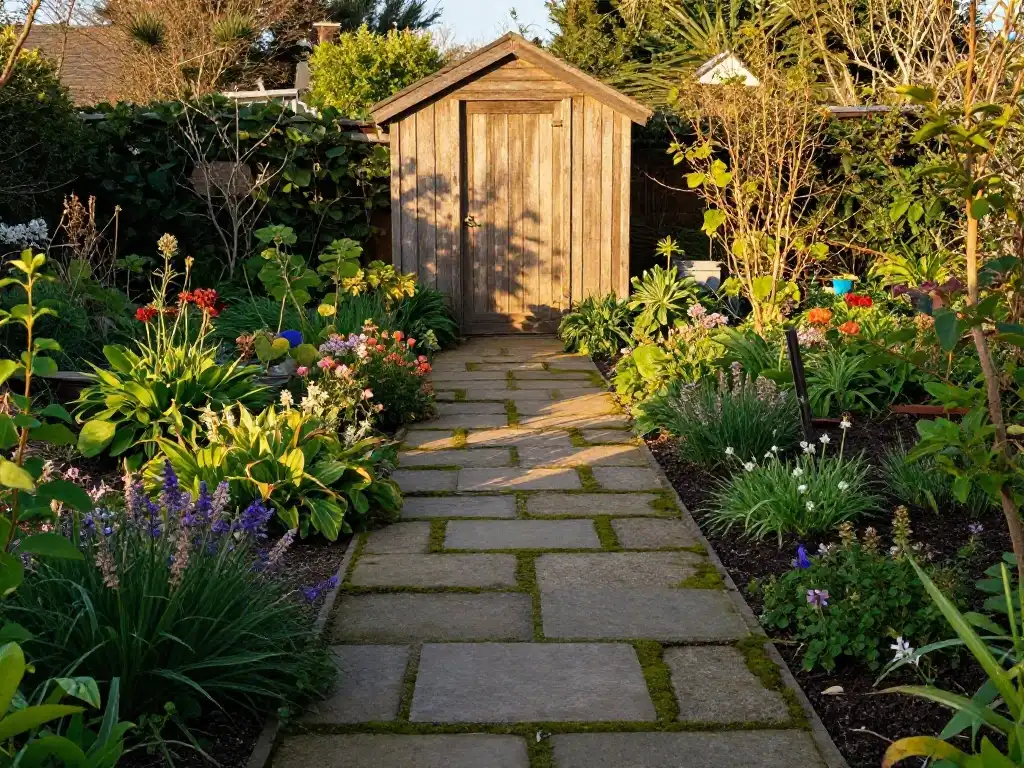
A path does more than direct foot traffic. It tells a visual story. A well-designed shed path and walkway ideas installation draws the eye from the main yard toward the shed and creates an invitation rather than an afterthought. Without a path, your shed looks stranded.
Stepping stone shed pathway designs work best for casual cottage gardens. Space them 18 to 24 inches apart — that’s natural human stride distance. A concrete paver shed walkway suits more formal or modern backyard styles. Gravel path to shed installations cost the least, drain perfectly and look effortlessly elegant when bordered by low flowering plants on both sides.
| Path Type | Cost Per Linear Foot | Style | Maintenance |
|---|---|---|---|
| Stepping stones | $2–$8 | Cottage, informal | Very low |
| Concrete pavers | $8–$20 | Modern, formal | Low |
| Gravel path | $1–$4 | Rustic, natural | Low |
| Wood chips | $0.50–$2 | Naturalistic | Medium |
06 — Privacy Plants Around Your Shed That Work Harder Than Any Fence Ever Could
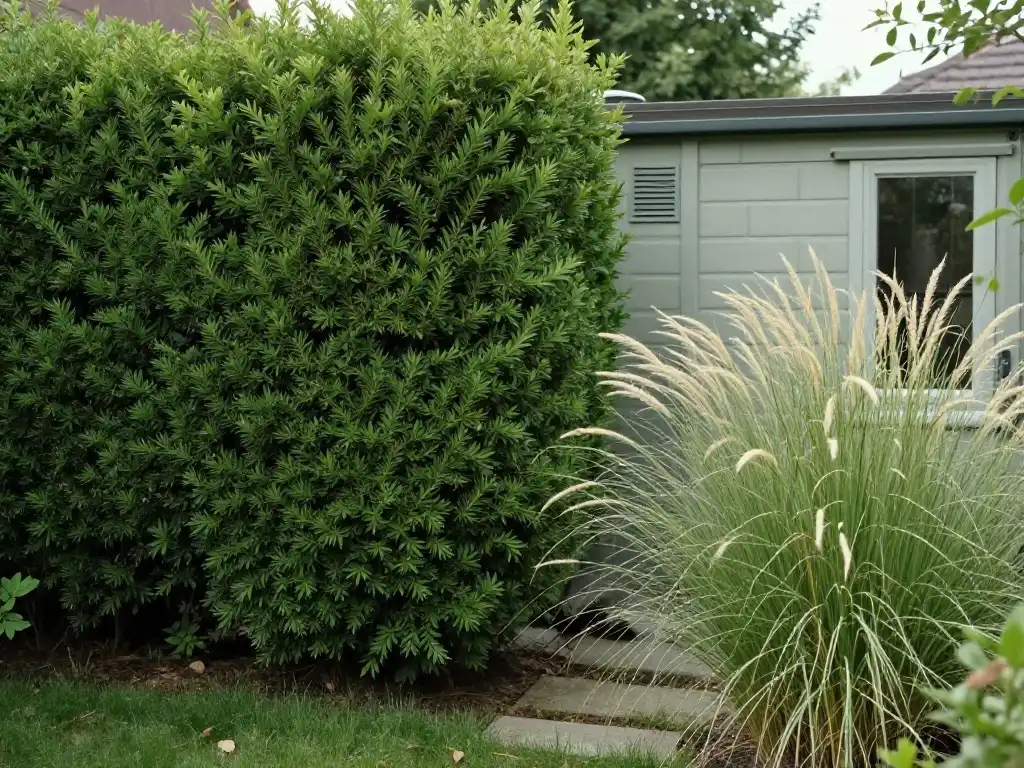
Privacy plants around shed installations serve two purposes simultaneously. They screen unsightly views and they add rich organic texture that no fence can replicate. Living walls breathe, change with seasons and attract wildlife. Fences just stand there.
Boxwood hedge around shed perimeters create crisp evergreen structure all year. For faster privacy, ornamental grasses like Karl Foerster or Maiden Grass reach 5 to 6 feet within a single growing season. Backyard privacy ideas using ornamental grass near shed placements deliver both speed and beauty without requiring any carpentry skills or building permits from your municipality.
07 — Raised Garden Beds Near the Shed: Double Your Growing Space Without Expanding Your Yard
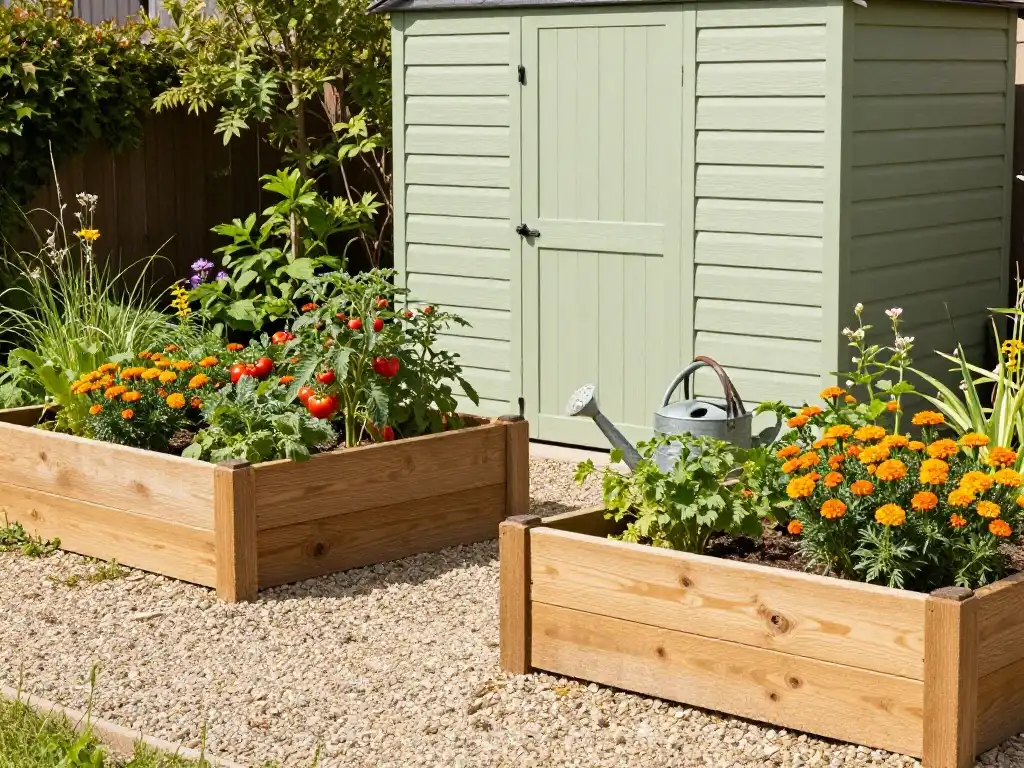
Raised garden beds near shed structures make extraordinary practical sense. The shed wall provides wind protection. The proximity allows you to store tools, soil amendments and watering equipment steps away from your plants. Efficiency and beauty arrive together in one smart layout decision.
Cedar raised garden beds are the gold standard for US gardeners. Cedar naturally resists rot and insect damage for 10 to 20 years without chemical treatment. A raised bed vegetable garden near shed on the south-facing side captures maximum daily sunlight. Home Depot shed landscaping departments stock cedar bed kits starting at around $60 — genuinely accessible for most American household budgets.
08 — Gravel, Mulch, and Pavers: Choosing the Right Ground Cover Around Your Shed
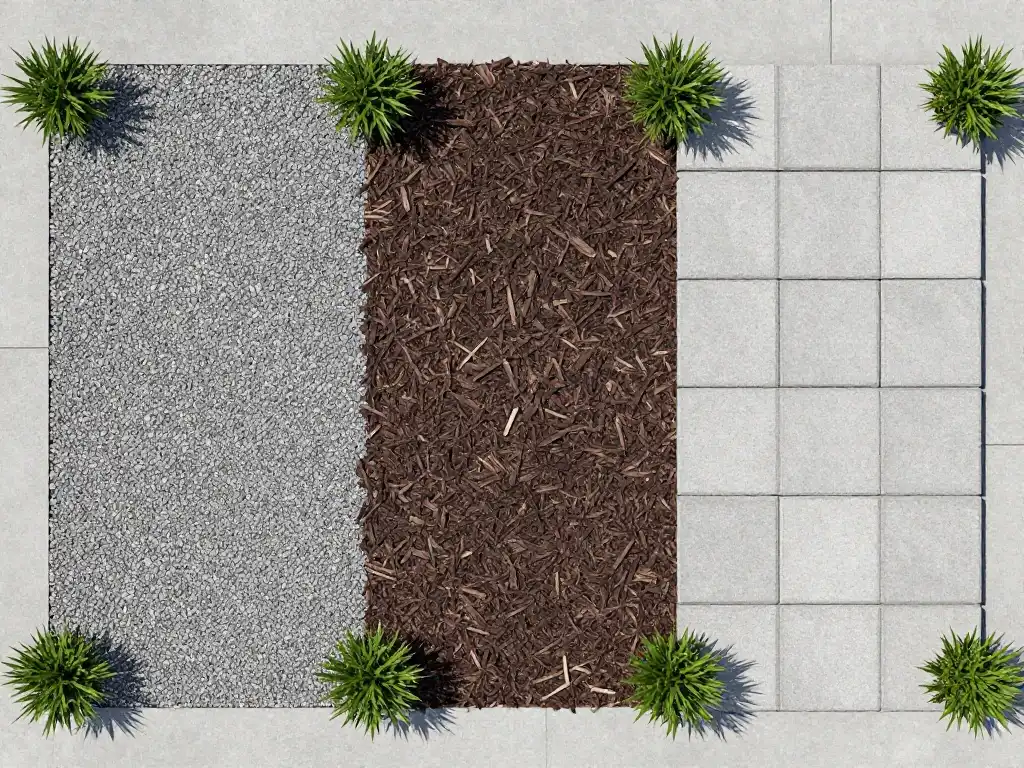
Best ground cover around a shed isn’t a one-size-fits-all answer. It depends on your climate, drainage situation and aesthetic goals. Each material behaves differently and communicates a different design intention to anyone walking through your yard.
Gravel landscaping around shed bases prevents erosion beautifully and allows rainwater to percolate into the soil rather than pool against the siding. Mulch border around shed areas retain soil moisture and suppress weeds for a full season from a single application. Wood chip shed surround installations go even further — they break down slowly over years and genuinely improve soil biology beneath them.
09 — Budget Shed Landscaping Ideas That Look Like You Spent Thousands of Dollars
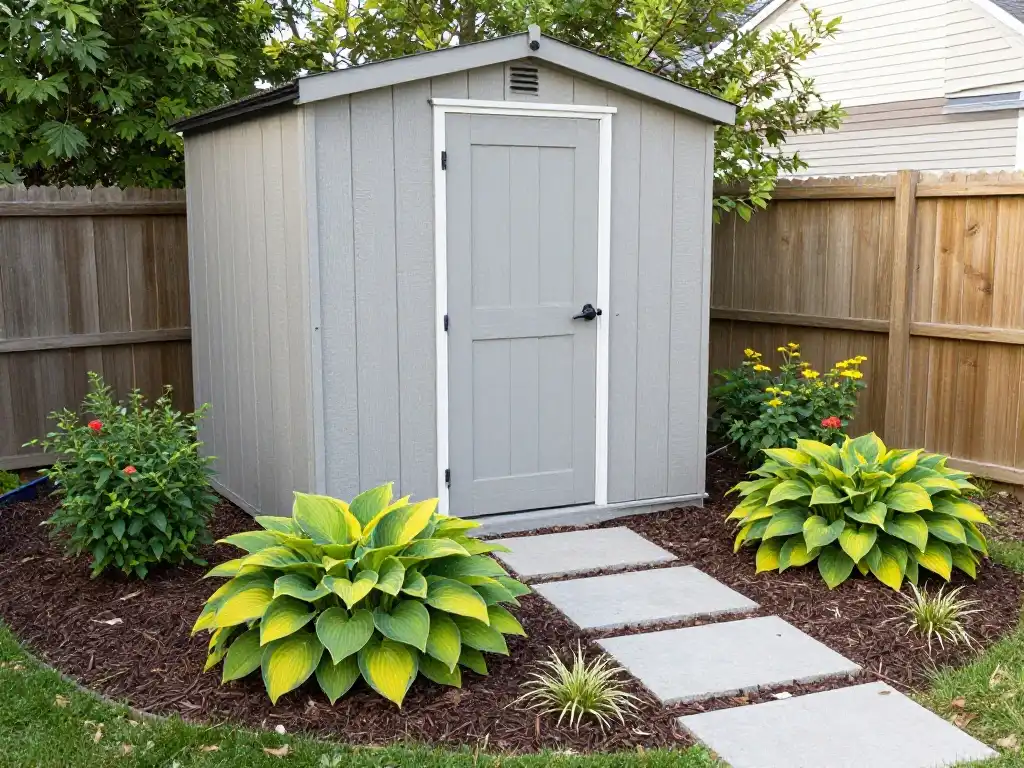
Backyard shed landscaping on a budget is absolutely achievable. Division is your best friend. Dividing existing perennials like hostas, daylilies and ornamental grasses costs nothing and generates dozens of new plants from your current garden stock within one afternoon.
Lowe’s shed landscaping kits offer bundled plant and mulch combinations starting around $40 that cover a 50-square-foot area. A crate bookshelf DIY style approach works for shed window boxes too — repurpose old wooden crates, fill them with potting mix and plant trailing lobelia or petunias for instant backyard shed curb appeal that costs under $15 total per window.
| Budget Level | Investment | What You Get |
|---|---|---|
| Under $50 | Divided perennials + mulch | Basic border + ground cover |
| $50–$150 | Kits + stepping stones | Full border + simple path |
| $150–$300 | Mixed planting + pavers | Complete landscape design |
| $300–$500 | Trellis + raised bed + lighting | Full transformation |
10 — Lighting Around Your Backyard Shed That Makes the Whole Yard Feel Alive at Night
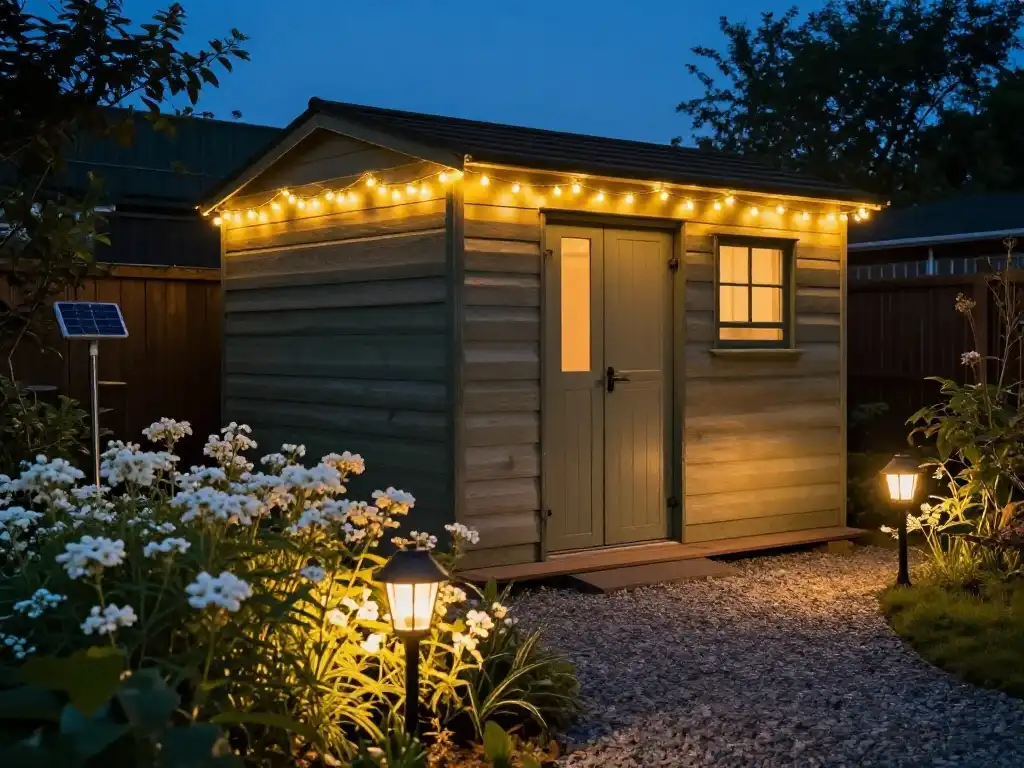
Lighting ideas around garden shed installations change everything after sunset. A shed that disappears into darkness at 7pm becomes a glowing garden focal point with four strategically placed solar stake lights. The transformation is immediate and requires zero electrical work.
Moon garden near shed designs take this further. Plant white-flowering species — white echinacea, white phlox, silver artemisia — that literally glow under moonlight and low-level lighting. Wrap warm LED string lights along the lattice panel shed trellis or roofline. Suddenly your backyard transformation ideas extend into the evening hours and your outdoor space gains an entirely new dimension of usability.
11 — Low Maintenance Landscaping Around a Shed for People Who Hate Constant Upkeep
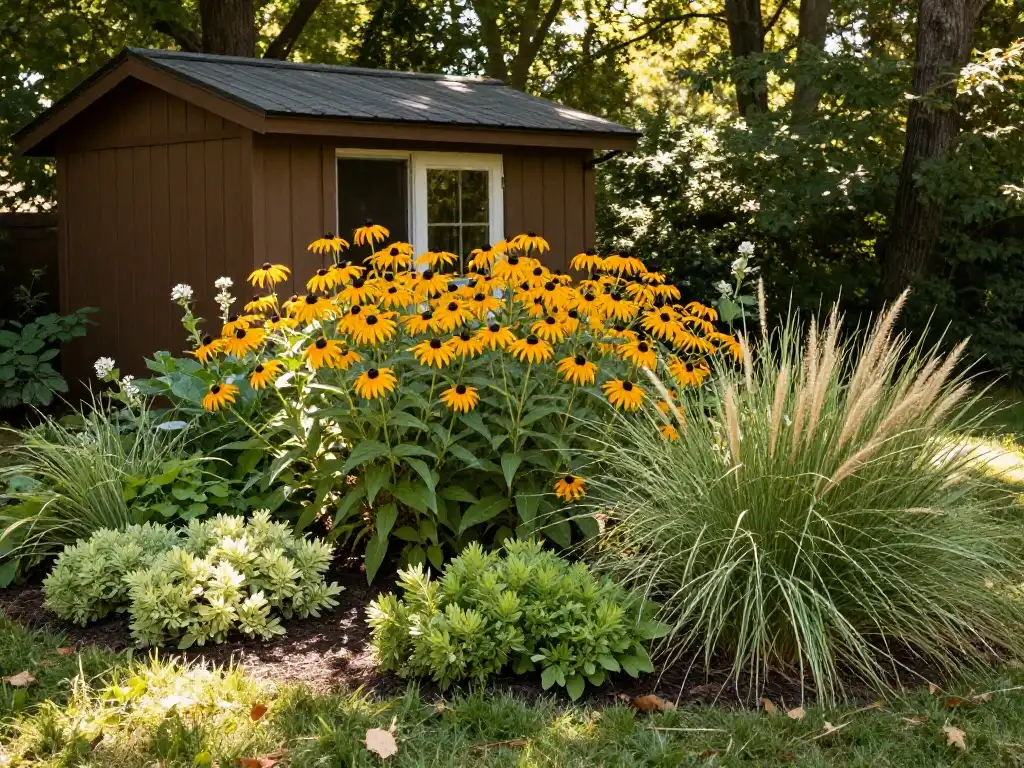
Low maintenance landscaping around shed structures relies on three non-negotiables: native plants, deep mulch and good drainage. Get these three elements right and your shed garden essentially manages itself through the growing season with minimal weekly input from you.
How to make shed area look natural without constant intervention means choosing plants adapted to your specific USDA hardiness zone. In Zone 5 to 7, black-eyed Susan shed border plantings naturalize readily and reseed themselves year after year. Shed drainage landscaping through a shallow French drain prevents waterlogging near the foundation — that single infrastructure investment saves your siding and your plants simultaneously.
12 — How to Hide an Ugly Shed with Plants, Trellises, and Clever Garden Design
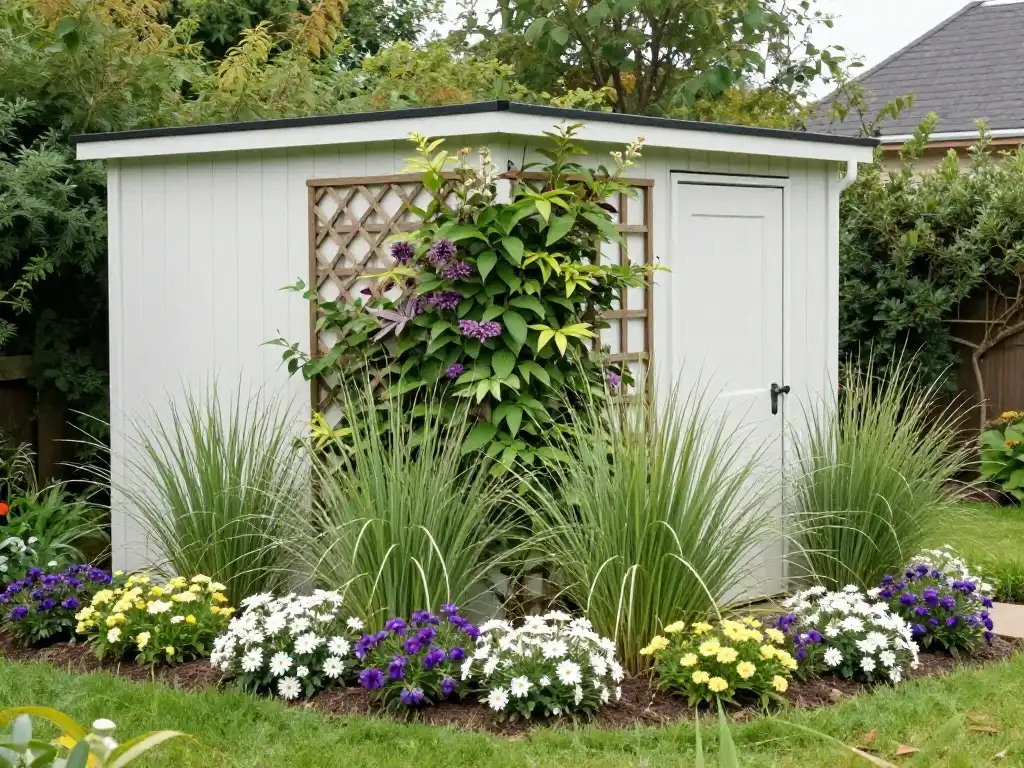
How to hide an ugly shed with plants is genuinely one of the most searched landscaping questions among US homeowners. The answer is layered screening — you don’t need to conceal the shed entirely but you do need to redirect attention away from its less attractive features toward your plantings instead.
A lattice panel shed trellis installed along the most visually problematic wall gives trellis plants for shed walls like clematis, morning glory or jasmine a surface to colonize rapidly. Shed utility area screening using tall ornamental grasses or a boxwood hedge around shed creates a soft visual barrier that reads as garden design rather than concealment. How to blend shed into backyard landscape successfully means making the plants the star and the shed a willing supporting character.
13 — Cottage Garden Shed Borders That Look Wild Intentional and Absolutely Beautiful
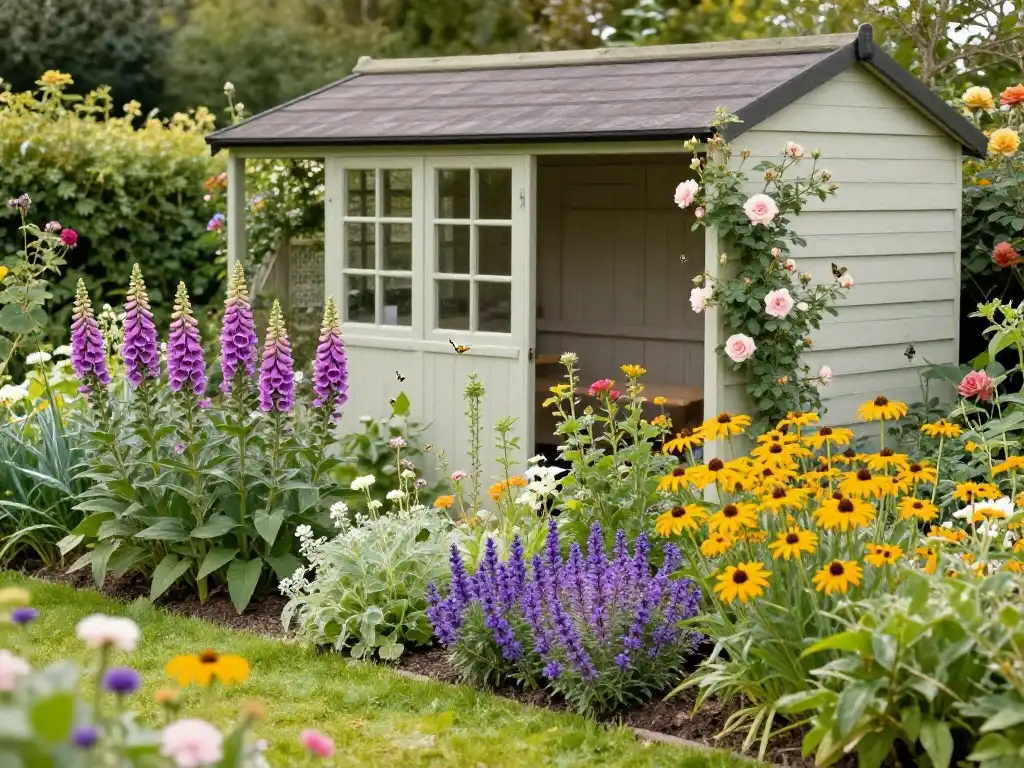
Cottage garden shed border design follows a beautiful paradox — it looks effortlessly wild but requires deliberate planning to achieve. The key is layering plants of varying heights, textures and bloom times so something is always performing visually regardless of the calendar month.
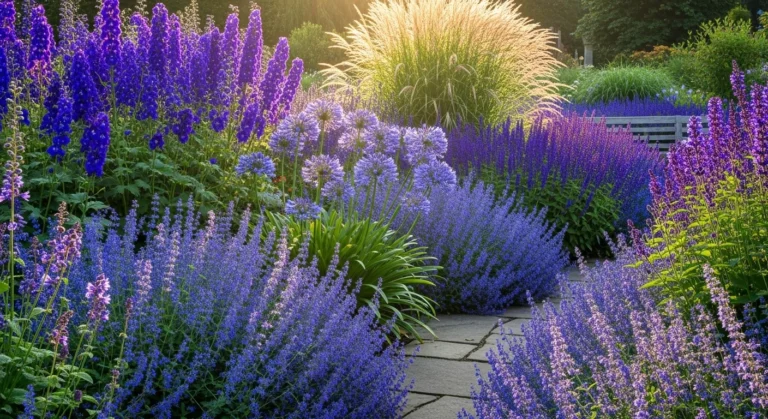
Shed flower bed ideas in the cottage style combine Rudbeckia shed flower border plants with foxglove, salvia, catmint and climbing roses for a sensory-rich planting that hums with bee activity from May through frost. Rustic shed yard landscaping aesthetics lean into imperfection — slightly sprawling plants, self-seeders that pop up in unexpected spots and a general abundance that feels generous rather than controlled. That generous spirit is exactly what makes cottage gardens so universally beloved across American suburbs.
14 — Side Yard Shed Landscaping When Space Is Tight But Your Vision Is Not
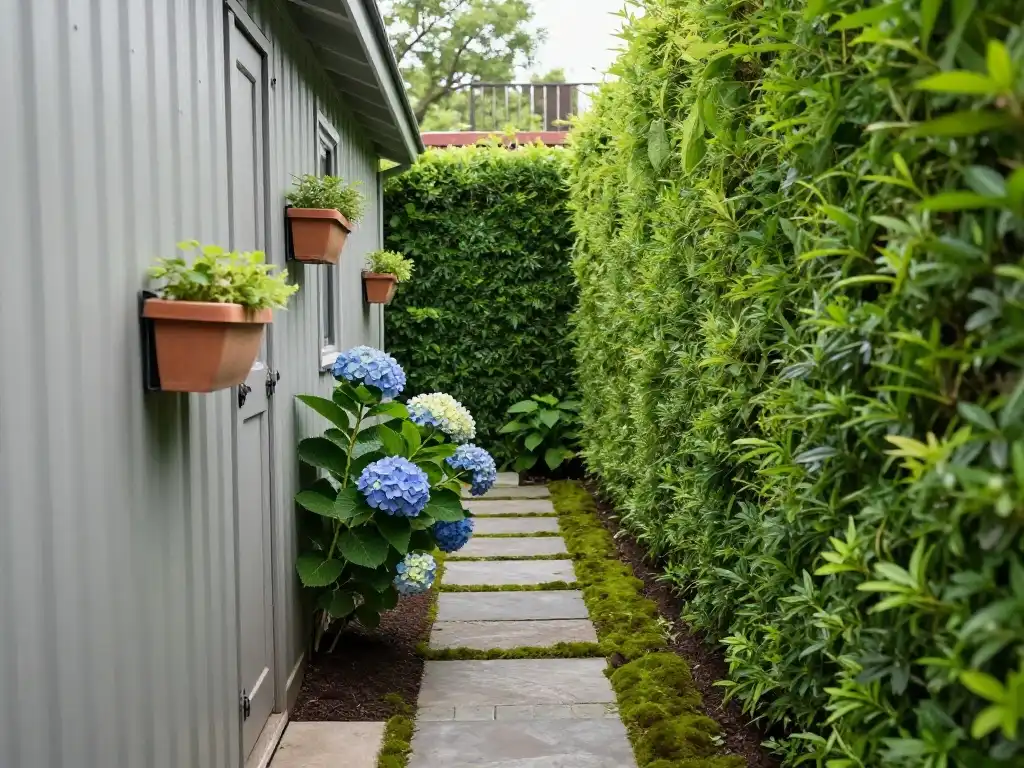
Shed side yard landscaping in narrow spaces demands vertical thinking. When horizontal ground is scarce, walls and fences become your primary canvas. Small shed landscape design in a side yard corridor as narrow as 4 feet can still accommodate a stunning planted display using wall-mounted planters and trained climbers.
Landscaping ideas for small backyard with shed in tight corridors work best with a single strong design statement — one bold fern collection, one climbing hydrangea, one gravel path with moss-covered stepping stones. Trying to do too much in a narrow space creates visual chaos. Shed side yard landscaping done well means editing ruthlessly and trusting that one excellent idea executed confidently always outperforms five mediocre ideas competing for attention simultaneously.
15 — Seasonal Planting Around Your Shed So Something Blooms Every Single Month
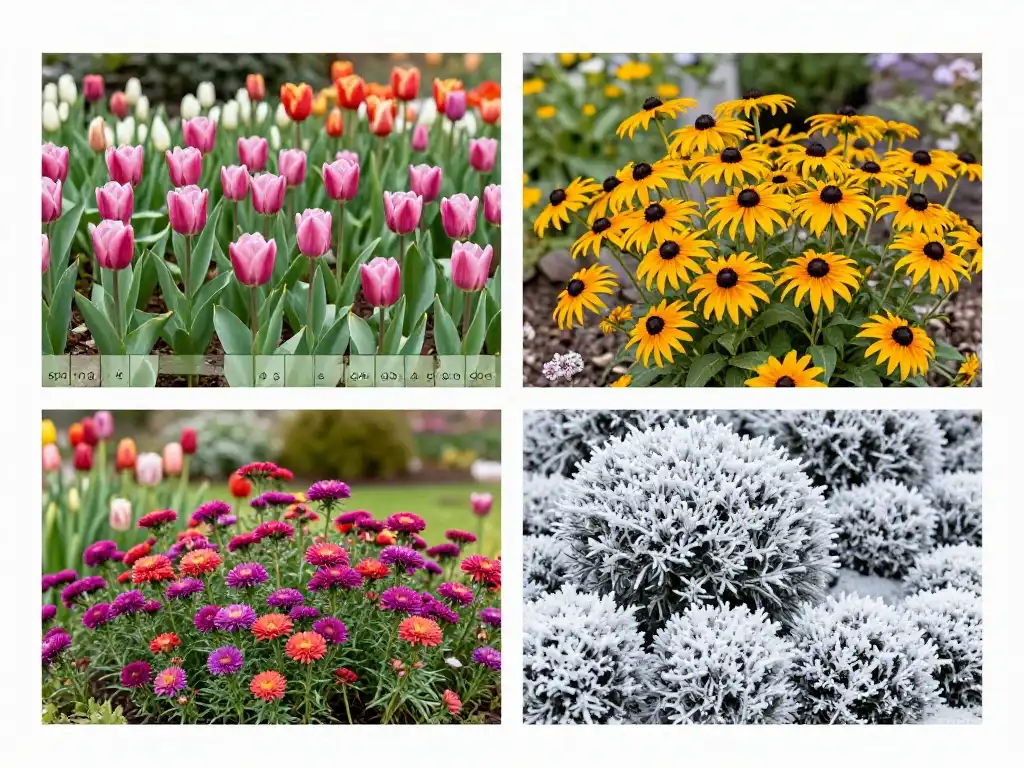
Seasonal planting around a shed requires a succession planning mindset. Spring bulbs emerge first — tulips, daffodils and alliums planted in autumn deliver color before most perennials even wake up. Summer then belongs to black-eyed Susan shed border plants and climbing roses. Autumn asters and ornamental kale carry the display through October.
Shed window box planting follows the same succession logic on a micro scale. Swap winter pansies for spring violas, summer petunias for autumn chrysanthemums. Each swap takes twenty minutes and costs under $12. That small consistent investment keeps your outdoor shed garden design looking intentional and alive through all four American seasons without requiring any major redesign work year to year.
| Season | Recommended Plants | Bloom Period |
|---|---|---|
| Spring | Tulips, daffodils, alliums | March–May |
| Summer | Black-eyed Susan, climbing roses, salvia | June–August |
| Autumn | Asters, ornamental kale, sedum | September–October |
| Winter | Evergreen boxwood, ornamental grasses, holly | November–February |
H2 16 — How to Plan the Perfect Backyard Shed Landscape from Scratch in One Weekend
Planning backyard shed landscaping ideas from scratch doesn’t require a professional designer. It requires a Saturday morning, a tape measure, graph paper and honest assessment of your light conditions. Measure your shed’s perimeter. Note which walls face which direction. Mark existing trees or structures that cast shade.
How to landscape around a backyard shed systematically means starting with hardscape — path, ground cover, edging — before purchasing a single plant. Tuff Shed garden design enthusiasts recommend establishing the structural bones first so every plant decision you make afterward feels purposeful rather than impulsive. Outdoor living space design around a shed follows the same principle: infrastructure first, then plants, then decorative details. Follow that sequence and your one-weekend planning session creates a roadmap that guides every future garden investment for years ahead.
FAQ Section
Q1. What is the best plant to put around a garden shed?
Hostas, black-eyed Susans and creeping phlox rank among the most reliable choices for American yards. Hostas thrive in shade on north-facing walls while black-eyed Susans deliver vivid summer color on sunnier exposures without demanding excessive maintenance from you.
Q2. How do I landscape around a shed on a tight budget?
Start with dividing existing perennials from elsewhere in your garden — it costs nothing. Add a mulch border around the shed base using bulk wood chips from a local supplier. Finish with a simple stepping stone path. Total investment can stay under $30 easily.
Q3. Should I put gravel or mulch around my backyard shed?
Gravel excels for drainage and longevity — it doesn’t decompose and won’t harbor moisture against your siding. Mulch is better for plant health as it retains soil moisture and feeds beneficial soil organisms. Many gardeners use gravel immediately around the foundation and mulch further out in planted borders.
Q4. What climbing plants grow best on a shed wall?
Climbing hydrangea, clematis and English ivy all perform excellently on shed walls across most US climate zones. Climbing hydrangea tolerates deep shade and produces stunning flowers. Clematis offers enormous variety in flower color and bloom time depending on which variety you select.
Q5. How do I stop weeds from growing around my shed?
Lay landscape fabric beneath your mulch or gravel layer before installing either material. Overlap the fabric edges by at least 6 inches to eliminate gaps. Top with 3 to 4 inches of mulch or gravel. Reapply mulch annually to maintain effective weed suppression through the growing season.
Q6. Can I put a raised garden bed right next to my shed?
Yes — with one important consideration. Leave 12 to 18 inches of clearance between the raised bed and the shed wall to allow air circulation and maintenance access. Position the bed on the south or east side to maximize sunlight exposure for your vegetable or flower crops.
Conclusion
Your shed has been waiting for this moment. Every wall is a trellis opportunity. Every bare patch of ground around it is a garden bed waiting to happen. Every gravel path you lay is an invitation for someone to walk toward something beautiful. Backyard shed landscaping ideas aren’t about perfection — they’re about intention.
Start this weekend with one simple step. Plant a hostas border on the shaded wall. Lay a stepping stone path to the door. Watch how one small change completely reframes how you and your guests perceive that entire corner of your yard. The shed doesn’t change. Your relationship with it does. That’s the real transformation worth chasing.

One Comment